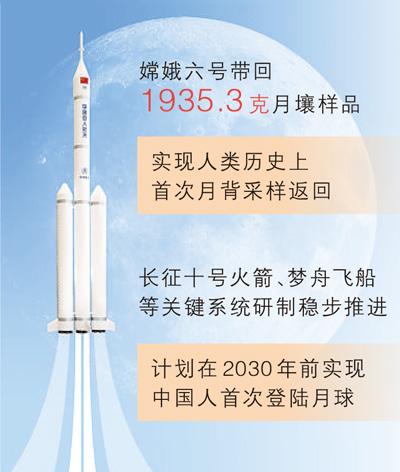
长征十号火箭

Search documents
中国首款不锈钢火箭:朱雀三号将再次发射,马斯克:能超越猎鹰9
Sou Hu Cai Jing· 2026-02-27 03:10
Core Viewpoint - The Zhuque-3 rocket, developed independently by China, is set to make another launch, showcasing advancements in reusable rocket technology and marking a significant breakthrough in the country's aerospace capabilities [1][3]. Group 1: Launch and Performance - The first launch of the Zhuque-3 rocket took place on December 3, 2025, and while it did not achieve complete success, it demonstrated several breakthroughs, including a successful orbital insertion and a 1400-second glide phase for the second stage [3][4]. - The rocket's recovery process faced challenges, particularly during the re-entry and landing phases, but it landed approximately 40 meters from the intended target, indicating potential for successful soft landings in future attempts [4][6]. Group 2: Future Plans and Developments - The development team is optimizing the landing process and plans to conduct a second recovery test in the second quarter of 2026, aiming for the first recovery and reuse flight in the fourth quarter of this year [4][13]. - The Zhuque-3 rocket's design allows for multiple uses, which could significantly reduce production costs compared to traditional expendable rockets [9][10]. Group 3: Technical Specifications and Comparisons - The Zhuque-3 rocket features a length of 66.1 meters, a launch weight of 570 tons, and a thrust exceeding 750 tons, with a low Earth orbit payload capacity of 21.3 tons [11][14]. - It utilizes environmentally friendly and cost-effective liquid oxygen-methane fuel, which enhances engine cleanliness and reduces maintenance costs [14]. Group 4: Strategic Importance - The Zhuque-3 rocket is positioned as a critical component in China's future space endeavors, complementing existing Long March rockets and enhancing the country's capabilities in launching satellites and space missions [6][7].

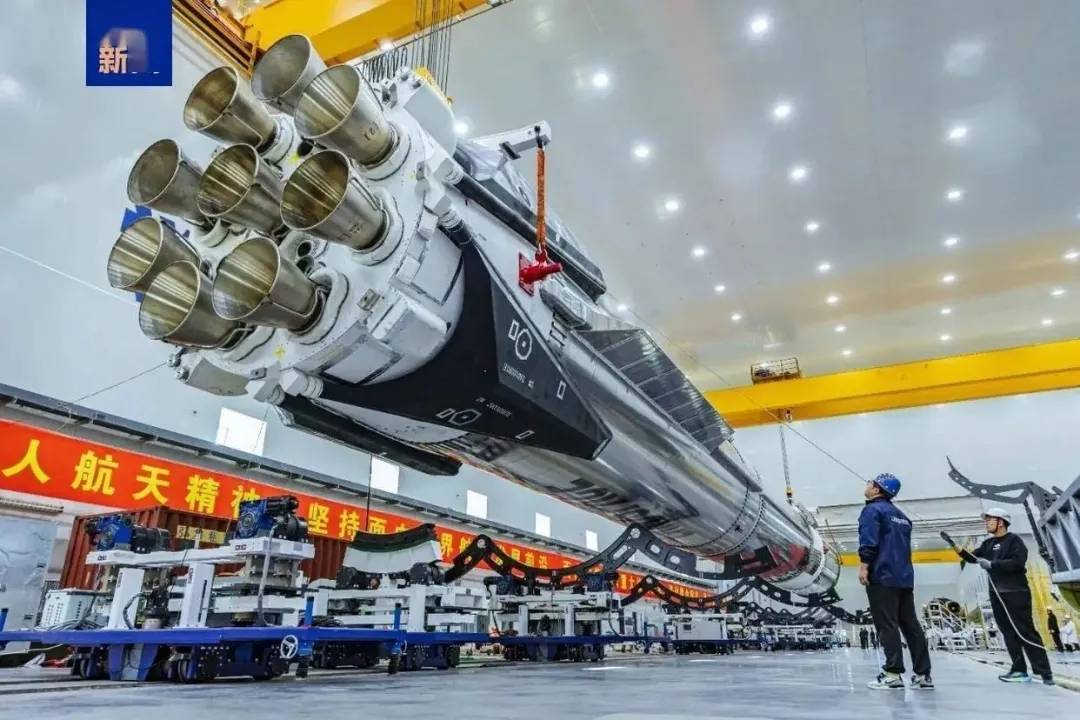
激浊扬清,周观军工:第157期:全面拥抱军贸、军转民占优赛道
Changjiang Securities· 2026-02-24 00:34
Investment Rating - The report maintains a "Positive" investment rating for the military industry [2]. Core Insights - The military trade and military-to-civilian transition are highlighted as dominant sectors for investment opportunities [4]. - The gas turbine industry is expected to experience long-term high prosperity driven by domestic and international demand [6]. - China's reusable rocket technology has made significant progress, potentially leading to a low-cost era in commercial aerospace infrastructure [32]. - The construction of low-altitude economic infrastructure is anticipated to accelerate due to a joint initiative from five government departments [64]. - There is a strong outlook for the expansion of Chinese high-tech equipment in overseas defense markets [4]. Summary by Sections Gas Turbine Industry - The rise in electricity consumption due to artificial intelligence (AI) is projected to increase by 160% by 2027, with data centers requiring 500 TWh annually [9]. - Global gas turbine installations are expected to reach nearly 60 GW in 2024, with major players like Mitsubishi Power, GE, and Siemens holding over 75% market share [19]. - Orders for GE and Siemens energy businesses are showing significant growth, reflecting strong downstream demand for gas turbines [20]. - Siemens Energy anticipates a substantial increase in profit margins for its gas business, projecting a rise to 14%-16% by 2026 and further to 18%-20% by 2028 [23]. Reusable Rocket Technology - China's Long March 10 rocket has successfully completed key tests in reusable rocket technology, marking a significant advancement [34]. - The domestic commercial aerospace sector is under pressure to meet ambitious satellite deployment goals, with over 15,000 satellites planned by 2030 [39]. - SpaceX's Starship is rapidly maturing, which may disrupt existing space launch capabilities and enhance Starlink's deployment speed [42]. Low-altitude Economic Infrastructure - A joint initiative from five departments aims to strengthen information communication capabilities to support low-altitude infrastructure development [66]. - The low-altitude economy is expected to mirror the rapid growth seen in the electric vehicle charging infrastructure, with significant investments projected [69]. - The low-altitude intelligent network system is crucial for the application of low-altitude industry scenarios, integrating various technologies for effective communication and navigation [72]. Commercial Aerospace - The commercial aerospace industry is advised to focus on investment opportunities related to space infrastructure construction, including satellite and rocket manufacturing [57]. - The industry is in a rapid expansion phase, with significant market potential driven by satellite deployment needs [63].
航天人以圆满成功给全国人民拜年
Xin Lang Cai Jing· 2026-02-15 11:37
Core Viewpoint - The successful test of the Long March 10 rocket, which carried the Dream Boat spacecraft, marks a significant milestone in China's manned lunar exploration program, demonstrating key technologies for rocket reusability after five years of preparation [1] Group 1: Mission Success - The Long March 10 rocket successfully completed its first low-altitude flight, maximum dynamic pressure escape, and sea recovery tasks [1] - The test validated critical technologies for the reusability of rockets, which is essential for future space missions [1] Group 2: Preparation and Execution - The test team prepared for five years, ensuring meticulous planning and execution of the mission [1] - During the launch, the coordination among the team was intense, with constant communication to address any uncertainties before ignition [1] Group 3: Recovery Operations - The search and rescue team provided location forecasts every 3-5 minutes, adjusting for faster ocean currents to ensure effective recovery [1] - Technical personnel on the sea recovery platform overcame adverse sea conditions, ready to implement emergency plans if necessary [1] Group 4: National Significance - The mission's success is presented as a New Year greeting to the people of the nation, symbolizing hope and achievement in space exploration [1]
新春走基层 | 万马奔腾开新局 中国航天再创辉煌
Yang Shi Wang· 2026-02-15 06:35
Core Viewpoint - The successful low-altitude flight test of the Long March 10 rocket, which carried the "Dream Boat" spacecraft, marks a significant milestone in China's manned lunar exploration program, validating key technologies for reusable rockets [1][16]. Group 1: Flight Test Details - The Long March 10 rocket, as China's fourth-generation rocket, features intelligent flight and reusability, with the low-altitude flight test serving as a critical technology validation for its reusable capabilities [3]. - The flight test was planned to last 470 seconds and included the first domestic maximum dynamic pressure escape and a world-first sea recovery system [3]. - The test team prepared for five years to ensure the success of this mission [3]. Group 2: Pre-Launch Preparations - Prior to the launch, three total checks and three full system rehearsals were conducted, involving coordination among various systems including the launch site, rocket, spacecraft, and recovery operations [4]. - Due to ongoing construction at the Long March 10's control building, a temporary control system was set up in a container to facilitate remote control and testing of the rocket [4]. Group 3: Recovery Operations - The recovery vessels set sail from late January to early February to reach the theoretical landing area of the rocket [5]. - The recovery team faced challenges due to the dynamic nature of ocean currents, requiring frequent updates on the landing coordinates every 3-5 minutes [9]. - The recovery platform, "Navigator," measures 144 meters in length and has a displacement of over 25,000 tons, presenting significant challenges in high seas [13]. Group 4: Technical Challenges - The recovery operation involved complex dynamics, including the need for high-speed movement to capture the rocket and manage energy absorption during recovery [13]. - The team utilized optical measurement systems and stabilization technologies to ensure clear tracking images despite rough sea conditions [9]. - The launch team faced logistical challenges, including temporary refueling methods due to incomplete facilities at the launch site [14].

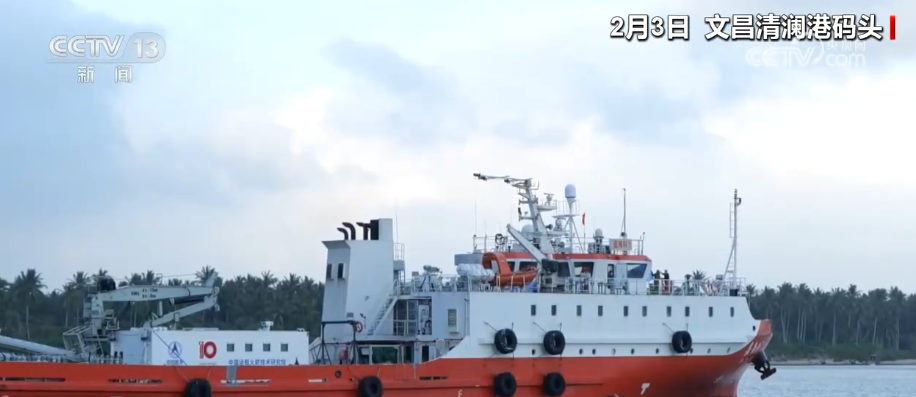
新春走基层丨离登月又近了一步!他们是梦舟飞船试验成功背后的逐梦人
Huan Qiu Wang Zi Xun· 2026-02-15 06:11
Core Viewpoint - The successful low-altitude flight test of the Long March 10 rocket, which carried the "Dream Chaser" spacecraft, marks a significant milestone in China's manned lunar exploration program, demonstrating key technologies for rocket reusability [1][34]. Group 1: Technical Achievements - The Long March 10 rocket, as China's fourth-generation rocket, features intelligent flight and reusability, with this test serving as a critical validation of its reusability capabilities [3]. - The maximum dynamic pressure escape test was conducted under atmospheric conditions of approximately 27 kPa, representing the highest domestic dynamic pressure conditions to date [5]. - The entire flight test was planned to last 470 seconds, with the test team preparing for five years [3]. Group 2: Operational Challenges - Due to the ongoing construction of the launch control building, the rocket's backend measurement and control system was temporarily set up in a container for remote control and testing [7]. - The recovery team faced challenges in tracking the spacecraft's position at sea, requiring updates every 3 to 5 minutes based on ocean current conditions [16][18]. - The recovery platform, "Navigator," is a large vessel measuring 144 meters in length and 50 meters in width, with a full displacement of over 25,000 tons, posing challenges due to its high center of gravity and adverse winter sea conditions [28]. Group 3: Team Coordination and Preparation - The test involved extensive pre-launch checks and system rehearsals, including three total inspections and three full-system drills to ensure all systems worked in coordination [5]. - The roles of command and coordination were enhanced with dual positions for better collaboration and redundancy during the testing process [12]. - The team has been working on the escape system technology for the "Dream Chaser" spacecraft for five years, ensuring that each member is fully familiar with their responsibilities [22].
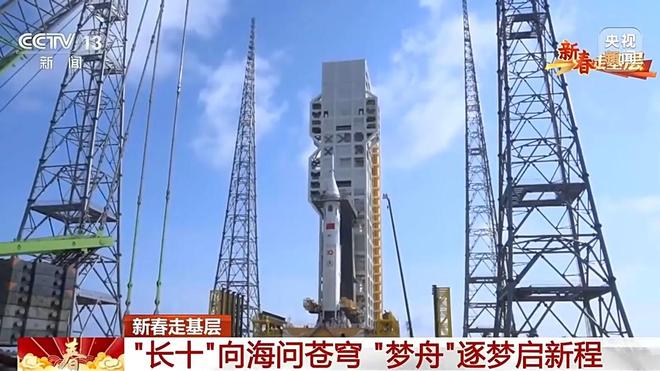
新春走基层丨“长十”向海问苍穹 “梦舟”逐梦启新程
Yang Shi Wang· 2026-02-15 02:55
Core Viewpoint - The successful low-altitude flight of the Long March 10 rocket, carrying the Dream Chaser spacecraft, marks a significant milestone in China's manned lunar exploration program, validating key technologies for rocket reusability [1] Group 1 - The Long March 10 rocket's first low-altitude flight successfully completed tasks such as maximum dynamic pressure escape and sea recovery [1] - This test is considered a major breakthrough in China's lunar exploration efforts [1] - The event was documented by multiple reporters from the state broadcaster, highlighting the significance of the achievement in space exploration [1]
焦点访谈|“长十”“梦舟”携手创下多个首次 载人登月刷新“进度条”
Yang Shi Wang· 2026-02-12 13:16
Core Viewpoint - The successful low-altitude flight test of China's new generation crewed spacecraft, the Dream Boat, and the Long March 10 rocket marks a significant milestone in the country's lunar exploration program, demonstrating enhanced capabilities and safety features essential for future manned missions to the Moon [1][21][23]. Group 1: Test Overview - The low-altitude flight test took place at the Wenchang Space Launch Site, featuring the Long March 10 rocket's core module and the Dream Boat spacecraft [3]. - The test aimed to evaluate the rocket's and spacecraft's performance under conditions similar to actual flight, with the rocket reaching a maximum altitude of approximately 105 kilometers [5]. Group 2: Technical Enhancements - The new generation crewed spacecraft features a two-cabin structure, allowing for increased capacity and longer missions, with a maximum crew of seven for near-Earth tasks [7]. - The Long March 10 rocket's first stage is designed for reuse over 10 times, equipped with advanced computer systems for fault detection and adaptive mission adjustments [7]. Group 3: Safety and Reliability - The flight test included critical escape scenarios, such as the maximum dynamic pressure escape test at 11 kilometers altitude, ensuring the spacecraft's ability to safely separate from the rocket in emergencies [11][13]. - The Dream Boat successfully executed escape maneuvers, demonstrating its capability to handle extreme conditions during launch [15]. Group 4: Recovery and Future Plans - The Long March 10 rocket's first stage successfully completed its return phase, landing in the designated sea area, which is crucial for future recovery operations [19]. - This test is part of a broader plan to establish a complete manned lunar launch system by 2030, with the Dream Boat spacecraft expected to conduct its first flight later this year [21][23].
不是失败,是胜利!中国火箭“掉海里”,却让马斯克都得重新算一笔账
Sou Hu Cai Jing· 2026-02-12 02:24
Core Viewpoint - The successful controlled splashdown of the Long March 10 rocket marks a significant milestone in China's space exploration efforts, demonstrating advanced technology and paving the way for future manned lunar missions [1][5][7]. Group 1: Historical Context - Previously, rocket stages falling into the ocean were seen as mission failures, representing uncontrolled descents that posed risks to civilian areas and marine environments [3]. - Early attempts at sea recovery by companies like SpaceX faced numerous challenges, highlighting the difficulties in achieving controlled landings [3]. Group 2: Technological Achievements - The Long March 10's splashdown was executed with extreme precision, with a deviation of less than 10 meters from the target, showcasing advancements in re-entry, trajectory control, and recovery technologies [5]. - The rocket maintained structural integrity during the splashdown, which is crucial for future reuse, indicating significant breakthroughs in core technologies [5]. Group 3: Future Implications - This test is a critical step towards achieving China's goal of manned lunar missions by 2030, ensuring astronaut safety and validating the escape capabilities of the spacecraft under maximum dynamic pressure [7]. - The development of reusable rocket technology could reduce launch costs by 40%-60%, making future space exploration more economically viable [7]. - The successful controlled splashdown reinforces China's position as a leading nation in space technology and responsible exploration [7].
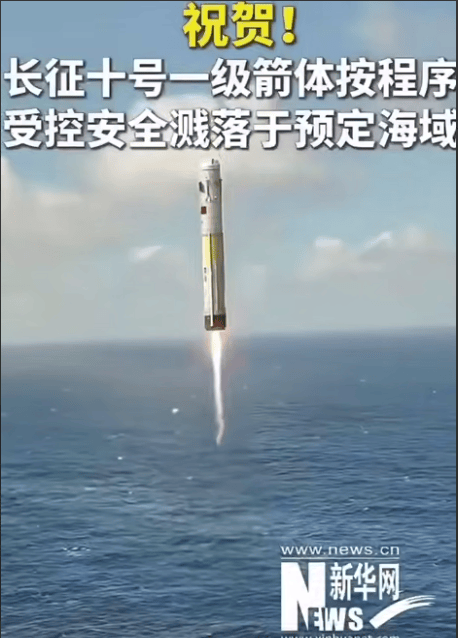
载人登月火箭,海上软着陆成功,不是美国的SpaceX,是中国的长征十号
3 6 Ke· 2026-02-12 00:32
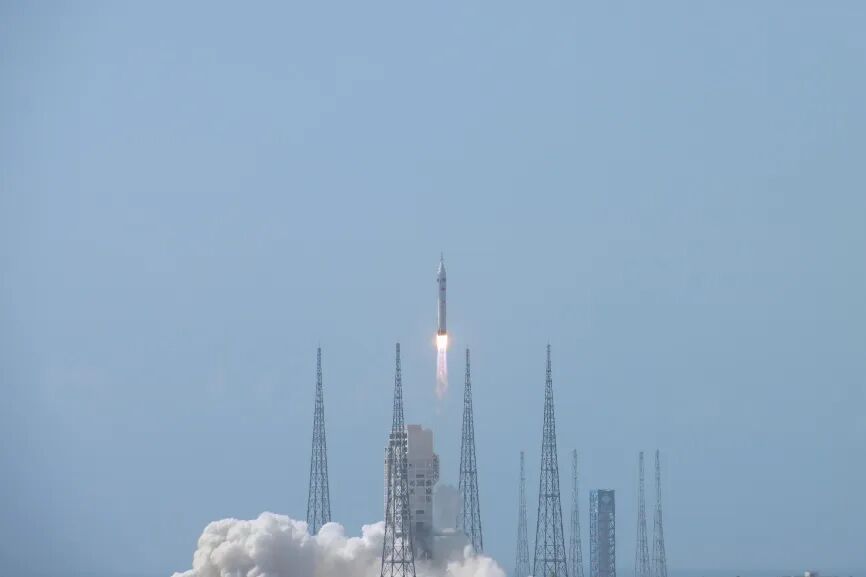
Core Viewpoint - The successful test of the "Dream Boat" manned spacecraft and the "Long March 10" rocket marks a significant advancement in China's manned lunar exploration program, particularly in validating critical safety technologies for astronaut escape systems during high-risk phases of flight [13][24]. Group 1: Test Overview - The "Dream Boat" spacecraft and "Long March 10" rocket were launched at 11 AM from the Wenchang Space Launch Site in Hainan, designed specifically to test emergency escape capabilities during the most dangerous phase of flight [1][2]. - The test involved the "maximum dynamic pressure escape" scenario, where the spacecraft had to execute an escape maneuver under peak atmospheric pressure conditions, which is critical for astronaut safety [14][16]. Group 2: Technical Details - The "Long March 10" rocket utilized a single-stage configuration for this low-altitude flight verification, differing from multi-stage launches [4][19]. - The escape system was successfully activated, with the escape tower igniting to separate the return capsule from the rocket, demonstrating the system's effectiveness in real flight conditions [4][18]. Group 3: Future Implications - The successful completion of this test is a crucial step towards China's goal of landing astronauts on the Moon by 2030, while also enhancing capabilities for future missions to the Chinese space station [24][28]. - The "Long March 10" rocket is designed for reusability, similar to SpaceX's Falcon 9, which will significantly reduce costs and improve the efficiency of future space missions [19][26].
出发,去月球!
Ren Min Ri Bao· 2026-02-09 05:44
Core Perspective - The article emphasizes the renewed global interest in lunar exploration, highlighting it as a convergence of technological advancement, national strength, and innovative spirit, transforming the dream of "going to the moon" into a tangible reality [2][3]. Group 1: Historical Context and Achievements - The history of lunar exploration reflects humanity's courage to innovate and collaborate, from ancient calculations to modern scientific discoveries [2]. - China's lunar exploration program, particularly the Chang'e series, has made significant strides, including the first soft landing on the moon's far side and the successful return of samples, contributing valuable geological data to the international scientific community [3]. Group 2: Future Plans and Trends - Looking ahead, China has announced plans for a manned lunar mission, with key systems like the Long March 10 rocket and the Dream Chaser spacecraft under development, aiming for a lunar landing by 2030 [3]. - The rise of commercial space ventures in China is notable, with the establishment of launch facilities and an expanding industry chain, indicating a shift towards a more diverse and innovative approach to lunar exploration [3]. Group 3: Technological and Collaborative Needs - Successful lunar exploration requires a robust foundation of national strength and critical technologies, including advancements in rocket technology and lunar exploration instruments [4]. - Continuous innovation in basic research, engineering technology, and management practices is essential for overcoming the challenges of lunar exploration, necessitating collaboration across various fields and borders [5].