通用Agent

Search documents
AutoGLM2.0升级发布,智谱:给每个手机装上通用Agent
Xin Lang Ke Ji· 2025-08-20 07:45
Core Viewpoint - The launch of AutoGLM 2.0 by Zhiyuan represents a significant upgrade, allowing the AI to operate independently across various devices and scenarios, enhancing user experience and accessibility [1] Group 1: Product Features - AutoGLM 2.0 can now function as an executive assistant, autonomously completing diverse tasks in the cloud without hardware limitations [1] - In daily life scenarios, users can command AutoGLM to perform tasks on popular applications like Meituan, JD.com, Xiaohongshu, and Douyin with simple voice commands [1] - In professional settings, AutoGLM 2.0 can execute full workflows across websites, including information retrieval, content creation, and social media posting [1] Group 2: User Experience - The upgrade allows users to engage with other applications on their devices while AutoGLM 2.0 operates in the background, enhancing multitasking capabilities [1] - The AI is equipped with dedicated intelligent agents for mobile and computer platforms, enabling it to work independently in the cloud [1]
智谱AI发布AutoGLM 2.0 - 首个为手机而生的通用Agent。
数字生命卡兹克· 2025-08-20 04:47
Core Viewpoint - The article discusses the launch of AutoGLM 2.0 by Zhipu, highlighting its advancements over the previous version, particularly the introduction of a cloud-based virtual phone that allows users to multitask while the AI performs tasks in the background [1][8][37]. Summary by Sections Introduction of AutoGLM 2.0 - AutoGLM 2.0 has been released, marking a significant update from AutoGLM 1.0, which was launched about 10 months ago [1]. - The initial version created excitement but had limitations, such as the inability to operate multiple apps simultaneously and requiring full control of the user's phone [4][5]. Key Features of AutoGLM 2.0 - The new version supports iOS and introduces a cloud phone concept, providing users with a dedicated virtual phone that operates 24/7 [6][8]. - Users can now interact with the AI while using their personal devices for other tasks, enhancing convenience and functionality [8][21]. Functionality and User Experience - The cloud phone includes pre-installed mainstream apps, allowing users to perform various tasks without needing to download new applications [20]. - Users can issue commands to the AI, which can execute tasks like ordering food or searching for product reviews while the user engages in other activities [21][23]. - The cost of executing tasks is low, approximately $0.2 per task, making it accessible to a broader audience [23]. Future Developments - Upcoming features include scheduled tasks, which will allow users to automate routine activities, such as ordering breakfast or managing subscriptions [26][28]. - This capability aims to reduce the burden of repetitive tasks, freeing users to focus on more meaningful activities [36][37]. Privacy and Security Concerns - There are concerns regarding the storage of sensitive information on cloud servers, prompting recommendations to use the service for low-sensitivity tasks only [40][42]. - The article emphasizes the need for trust in cloud services, particularly regarding privacy and data security [43]. Conclusion - The launch of AutoGLM 2.0 represents a significant step in AI technology, moving towards practical applications that enhance daily life rather than just offering advanced features [46][49].


Agent引爆产品新思维、奇点智能研究院正式成立!2025 全球产品经理大会首日精彩速览
AI科技大本营· 2025-08-15 13:56
Core Viewpoint - The role of product managers is evolving significantly due to advancements in AI technologies, particularly large models and agents, which are reshaping workflows and industry dynamics [1][6][10]. Group 1: Conference Overview - The 2025 Global Product Manager Conference, co-hosted by CSDN and Boolan, gathered over 1,000 attendees and featured insights from more than 40 experts in the internet and technology sectors [1]. - The conference highlighted the establishment of the Singularity Intelligence Research Institute, aimed at advancing AI technologies and their industrial applications [3][5]. Group 2: AI Industry Trends - Li Jianzhong, the director of the Singularity Intelligence Research Institute, emphasized that AI is experiencing exponential growth across various dimensions, including foundational models and human-computer interaction [6][10]. - The transition from training to reasoning paradigms in foundational models is driven by reinforcement learning, allowing models to learn from dynamic environments and accumulate experiential data [10][11]. Group 3: Application Development Paradigms - The concept of "Vibe Coding" is emerging, which allows for the creation of customizable software experiences through natural language, potentially reducing production and delivery costs [12]. - AI applications are evolving towards a service-oriented model, where natural language interfaces will redefine user interactions with intelligent systems [13][14]. Group 4: Generative AI and Product Innovation - The introduction of Skywork Super Agents by Kunlun Wanwei represents a significant advancement in AI productivity tools, capable of drastically reducing work time from 8 hours to 8 minutes [18][19]. - The AI industry is witnessing a shift towards specialized models rather than generalized agents, as industry-specific data is crucial for effective AI applications [23]. Group 5: User Experience and Interaction Design - The evolution of interaction methods from command lines to graphical interfaces and now to conversational interfaces presents unique challenges and opportunities for product managers [25]. - Effective GenAI product design requires a focus on context awareness and seamless integration with existing tools to enhance user experience [26][29]. Group 6: Future Outlook - The AI landscape is expected to foster a new generation of product managers who will lead innovations in AI products and business models, with a focus on rapid monetization and profitability [24][41]. - The importance of open-source models is growing, as they facilitate collaborative innovation across the AI industry, enabling faster development cycles and broader participation [44][45].



百度聚焦,心响失宠
3 6 Ke· 2025-07-30 09:51
Core Insights - The article discusses the challenges faced by Baidu's AI applications, particularly the general-purpose AI agents "Xinxiang" and the social app "Yuexia," which are experiencing resource cuts and organizational changes [2][5][10]. Group 1: Product Performance and Adjustments - Baidu has decided to reduce investment in several products, including Xinxiang, which was launched just a quarter ago and was previously considered a key offering [2][5]. - The AI social app Yuexia has undergone structural adjustments, with its team merged into another business line, indicating a downgrade in its operational scale [2][8]. - Internal sources claim that despite the resource cuts, both Xinxiang and Yuexia are still operational, but there are concerns about their future viability [2][7]. Group 2: Market Context and Competition - The general-purpose AI agent market is competitive, with Xinxiang being compared to the more successful Manus, which has recently relocated to Singapore [6][11]. - The domestic consumer software market is struggling with monetization, which poses a significant challenge for the growth of general-purpose AI applications like Xinxiang [6][11]. - Yuexia, as a fourth-generation AI social product, faces stiff competition from established players and has not demonstrated significant user growth since its launch [8][10]. Group 3: Strategic Reflections and Future Directions - Baidu's CEO, Li Yanhong, has emphasized the need for strategic focus, acknowledging that the company has faced challenges despite being an early investor in AI [12][14]. - The company is reportedly shifting its focus back to foundational model capabilities and search applications, indicating a potential "reshuffling" of its AI product strategy [12][13]. - Baidu's internal management issues, including a lack of long-term project planning, may hinder the success of its AI initiatives [14].

90%被大模型吃掉,AI Agent的困局
投中网· 2025-07-25 08:33
Core Viewpoint - The article discusses the challenges faced by general-purpose AI agents, particularly in the context of market competition and user engagement, suggesting that many agents may be overshadowed by large models and specialized agents [4][6][12]. Group 1: Market Dynamics - General-purpose agents like Manus and Genspark are experiencing declining revenue and user engagement, indicating a lack of compelling applications that drive user loyalty and payment [6][20][23]. - Manus reported an annual recurring revenue (ARR) of $9.36 million in May, while Genspark reached $36 million ARR within 45 days of launch, showcasing the initial market potential [20]. - However, both products have seen significant drops in monthly recurring revenue (MRR) and user traffic, with Manus experiencing a 50% decline in MRR to $2.54 million in June [22][23]. Group 2: Competitive Landscape - The article highlights that general-purpose agents are struggling to compete with specialized agents that are tailored for specific tasks, leading to a loss of market share [15][17]. - The high subscription costs of general-purpose agents, combined with the increasing capabilities of foundational models, make them less attractive to users who can access similar functionalities at lower costs [12][28]. - Companies like Alibaba and ByteDance are focusing on developing their own agent platforms while promoting developer ecosystems, indicating a strategic shift towards enhancing their competitive edge [26][29]. Group 3: User Experience and Application - General-purpose agents have not yet identified "killer" applications that would encourage users to pay for their services, often focusing on tasks like PPT creation and report writing, which do not sufficiently engage users [24][32]. - The lack of integration with internal knowledge bases and business processes limits the effectiveness of general-purpose agents in enterprise settings, where accuracy and cost control are paramount [15][16]. - Current agents often struggle with complex tasks due to their reliance on multiple steps, leading to inconsistent output quality, which further diminishes user trust and engagement [33][34]. Group 4: Technological Innovations - Some developers are exploring innovations like reinforcement learning (RL) to enhance the capabilities of agents, aiming to transition from simple tools to more autonomous and adaptable systems [36][40]. - The article notes that advancements in model architecture, such as the introduction of linear attention mechanisms, are being leveraged to improve the performance of agents in handling large volumes of text [35][36]. - The potential for RL to significantly improve agent performance is highlighted, with recent tests showing substantial improvements in task handling capabilities [38][40].

Manus“删博、裁员、跑路新加坡”后,创始人首次复盘经验教训
Hu Xiu· 2025-07-19 06:44
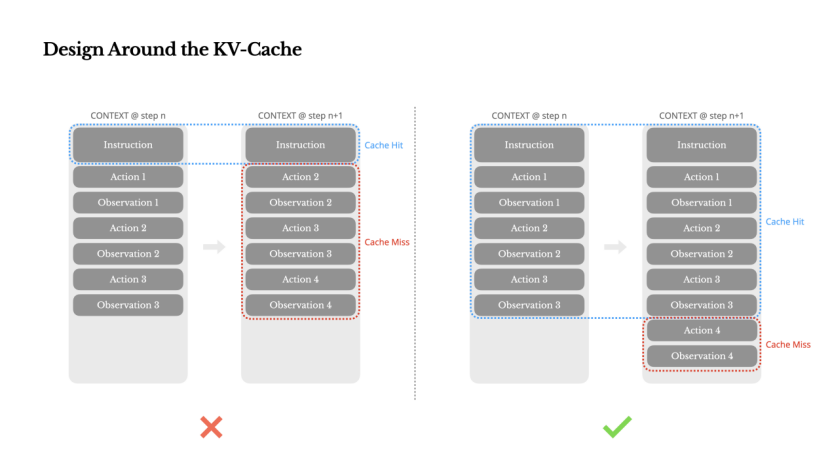
Group 1 - Manus experienced rapid growth and controversy within four months, transitioning from a successful startup to facing significant public scrutiny [1][4][6] - The company raised $75 million in Series B funding led by Benchmark, achieving a valuation of $500 million, which generated high expectations from the market [5] - Controversies arose in late June, including unannounced layoffs, mass deletion of posts by the founding team, and the company's relocation to Singapore, leading to public outcry [6][7] Group 2 - Co-founder Ji Yichao addressed the controversies through a lengthy blog post, focusing on the product and technology rather than the company's issues [3][8] - Manus chose to focus on context engineering instead of developing an end-to-end model, learning from past experiences with large models like GPT-3 [8][12] - Key insights from the blog include the importance of KV cache hit rate, managing tool availability without dynamic changes, and treating the file system as an external memory [8][9][10][34] Group 3 - The company emphasizes the need to retain error information in the context to help the model learn from mistakes, which is crucial for improving agent behavior [11][50] - Manus aims to avoid being limited by few examples by introducing structured variations in actions and observations, which helps break patterns and adjust model attention [52][54] - The conclusion highlights that context engineering is vital for agent systems, influencing their speed, recovery ability, and scalability [56]
90%被大模型吃掉,AI Agent的困局
3 6 Ke· 2025-07-18 10:48
Core Viewpoint - The general agent market is facing significant challenges, with companies like Manus experiencing declines in user engagement and revenue, indicating a lack of compelling use cases that drive sustained user loyalty and payment [2][9][11]. Group 1: Market Dynamics - Manus has relocated its headquarters to Singapore, laid off 80 employees, and abandoned its domestic version, reflecting a strategic shift rather than a failure in operations [2]. - The general agent market is being eroded by the overflow of model capabilities and competition from specialized agents, leading to a decline in revenue and user activity for general agents like Manus and Genspark [2][8]. - The market is witnessing a drop in monthly recurring revenue (MRR) for general agents, with Manus reporting a more than 50% decline in June [11]. Group 2: Product Performance - General agents have struggled to find killer applications that can attract and retain users, often being used for basic tasks like creating presentations or reports [2][9][11]. - The performance of general agents is hindered by their inability to match the precision of specialized agents in enterprise settings, leading to dissatisfaction among users [7][8]. - The pricing model of Manus, which relies on a points-based system, is seen as a barrier to user adoption compared to cheaper and more efficient model APIs [6][11]. Group 3: Technological Challenges - The rapid advancement of large models has made them increasingly agent-like, allowing users to directly utilize these models instead of relying on general agents [4][8]. - General agents often struggle with complex tasks due to their reliance on a step-by-step execution process, which can lead to errors and inconsistent output quality [16][19]. - Innovations in reinforcement learning (RL) are being explored to enhance the capabilities of agents, potentially allowing them to evolve from simple tools to more autonomous and adaptable systems [17][22]. Group 4: Competitive Landscape - The competitive landscape is shifting, with larger companies leveraging their resources to develop and promote their own agent products while also providing free services to attract users [12][13]. - The domestic market for general agents is becoming increasingly competitive, with major players like Baidu and ByteDance offering free testing and services, making it difficult for smaller companies to compete [12][13]. - The focus on deep research capabilities and multi-modal functionalities is becoming a common strategy among various agent developers to enhance their offerings [12][15].

梁文锋等来及时雨
虎嗅APP· 2025-07-16 00:05
Core Viewpoint - The article discusses the competitive landscape of AI models, particularly focusing on DeepSeek and its challenges in maintaining user engagement and market position against emerging competitors like Kimi and others in the "AI Six Dragons" group. Group 1: DeepSeek's Performance and Challenges - DeepSeek experienced a significant decline in monthly active users, dropping from a peak of 169 million in January to a decrease of 5.1% by May [1][2]. - The download ranking of DeepSeek has plummeted, moving from the top of the App Store charts to outside the top 30 [2]. - The user engagement rate for DeepSeek has fallen from 7.5% at the beginning of the year to 3% by the end of May, with a 29% decrease in website traffic [2][3]. Group 2: Competition and Market Dynamics - Competitors like Kimi and others are rapidly releasing new models, with Kimi K2 achieving significant performance benchmarks and offering competitive pricing [1][8]. - The pricing strategy of Kimi K2 aligns closely with DeepSeek's API pricing, making it a direct competitor in terms of cost [8]. - Other players in the market are also emphasizing lower costs and better performance, which is eroding DeepSeek's previously established reputation for cost-effectiveness [7][8]. Group 3: Technological and Strategic Implications - DeepSeek's reliance on the H20 chip has been impacted by export restrictions, which has hindered its ability to scale and innovate [3][4]. - The lack of major updates to DeepSeek's models has led to a perception of stagnation, while competitors are rapidly iterating and improving their offerings [6][12]. - The article highlights the importance of multi-modal capabilities, which DeepSeek currently lacks, potentially limiting its appeal in a market that increasingly values such features [13]. Group 4: Future Outlook - To regain market interest, DeepSeek needs to expedite the release of new models like V4 and R2, as well as enhance its tool capabilities to meet developer needs [12][13]. - The competitive landscape is shifting rapidly, and without significant updates or innovations, DeepSeek risks losing further ground to its rivals [12][14]. - The article suggests that maintaining developer engagement and user interest is crucial for DeepSeek's long-term success in the evolving AI market [11].

「0天复刻Manus」的背后,这名95后技术人坚信:“通用Agent一定存在,Agent也有Scaling Law”| 万有引力
AI科技大本营· 2025-07-11 09:10
Core Viewpoint - The emergence of AI Agents, particularly with the launch of Manus, has sparked a new wave of interest and debate in the AI community regarding the capabilities and future of these technologies [2][4]. Group 1: Development of AI Agents - Manus has demonstrated the potential of AI Agents to automate complex tasks, evolving from mere language models to actionable digital assistants capable of self-repair and debugging [2][4]. - The CAMEL AI community has been working on Agent frameworks for two years, leading to the rapid development of the OWL project, which quickly gained traction in the open-source community [6][8]. - OWL achieved over 10,000 stars on GitHub within ten days of its release, indicating strong community interest and engagement [9][10]. Group 2: Community Engagement and Feedback - The OWL project received extensive feedback from the community, resulting in rapid iterations and improvements based on user input [9][10]. - The initial version of OWL was limited to local IDE usage, but subsequent updates included a Web App to enhance user experience, showcasing the power of community contributions [10][11]. Group 3: Technical Challenges and Innovations - The development of OWL involved significant optimizations, including balancing performance and resource consumption, which were critical for user satisfaction [12][13]. - The introduction of tools like the Browser Tool and Terminal Tool Kit has expanded the capabilities of OWL, allowing Agents to perform automated tasks and install dependencies independently [12][13]. Group 4: Scaling and Future Directions - The concept of "Agent Scaling Law" is being explored, suggesting that the number of Agents could correlate with system capabilities, similar to model parameters in traditional AI [20][21]. - The CAMEL team is investigating the potential for multi-agent systems to outperform single-agent systems in various tasks, with evidence supporting this hypothesis [21][22]. Group 5: Perspectives on General Agents - There is ongoing debate about the feasibility of "general Agents," with some believing in their potential while others view them as an overhyped concept [2][4][33]. - The CAMEL framework is positioned as a versatile multi-agent system, allowing developers to tailor solutions to specific business needs, thus supporting the idea of general Agents [33][34]. Group 6: Industry Trends and Future Outlook - The rise of protocols like MCP and A2A is shaping the landscape for Agent development, with both seen as beneficial for streamlining integration and enhancing functionality [30][35]. - The industry anticipates a significant increase in Agent projects by 2025, with a focus on both general and specialized Agents, indicating a robust future for this technology [34][36].

为什么AI浏览器可以聚集一切
Hu Xiu· 2025-07-01 02:31
Core Insights - The article discusses the evolution of browsers in the context of the AI era, highlighting the browser's transition from a mere search container to an AI-enabled operational partner [1][4][12] - The competition in the AI browser space is intensifying, with various players, including startups and established companies, vying for dominance [2][7][12] - AI browsers are expected to become a central part of a new operating system paradigm, leveraging cloud capabilities to create a flexible software and hardware ecosystem [5][28] Group 1: Evolution of Browsers - Browsers have evolved from basic web navigation tools to essential components of AI experiences, integrating search, decision-making, and execution [4][6] - The AI browser is seen as a potential operating system for the AI era, aiming to replace traditional desktop systems [5][28] - The historical significance of browsers is emphasized, with Marc Andreessen's assertion that browsers have profoundly impacted daily life remaining relevant today [7] Group 2: AI Browser Competition - The competition for AI browsers is characterized by a race for control over new entry points, with various companies developing AI-enabled features [12][14] - Different types of AI browsers are emerging, including native AI browsers, AI-like browsers, and traditional browsers enhanced with AI capabilities [9][10] - The competition is not just about information retrieval but also about automating workflows, with browsers acting as operators in this process [13][15] Group 3: User Experience and Functionality - AI browsers are designed to enhance user experience by allowing for complex tasks to be executed through natural language commands [4][6] - The article categorizes AI browsers based on their functionality, with some focusing on seamless browsing experiences while others emphasize task automation [9][10] - User engagement with AI browsers is increasing, as evidenced by the demand for access to products like Fellou and Dia, which require invitations to use [7][10] Group 4: Future of AI Browsers - The future of AI browsers is envisioned as a convergence of various applications and services, potentially leading to a new ecosystem that integrates AI capabilities [24][28] - The development of AI browsers may lead to the creation of dedicated hardware, similar to how Chromebook operates within the Google ecosystem [27][28] - The integration of third-party services and applications is expected to enhance the functionality of AI browsers, making them more versatile and powerful [23][24]