
金砖国家

Search documents
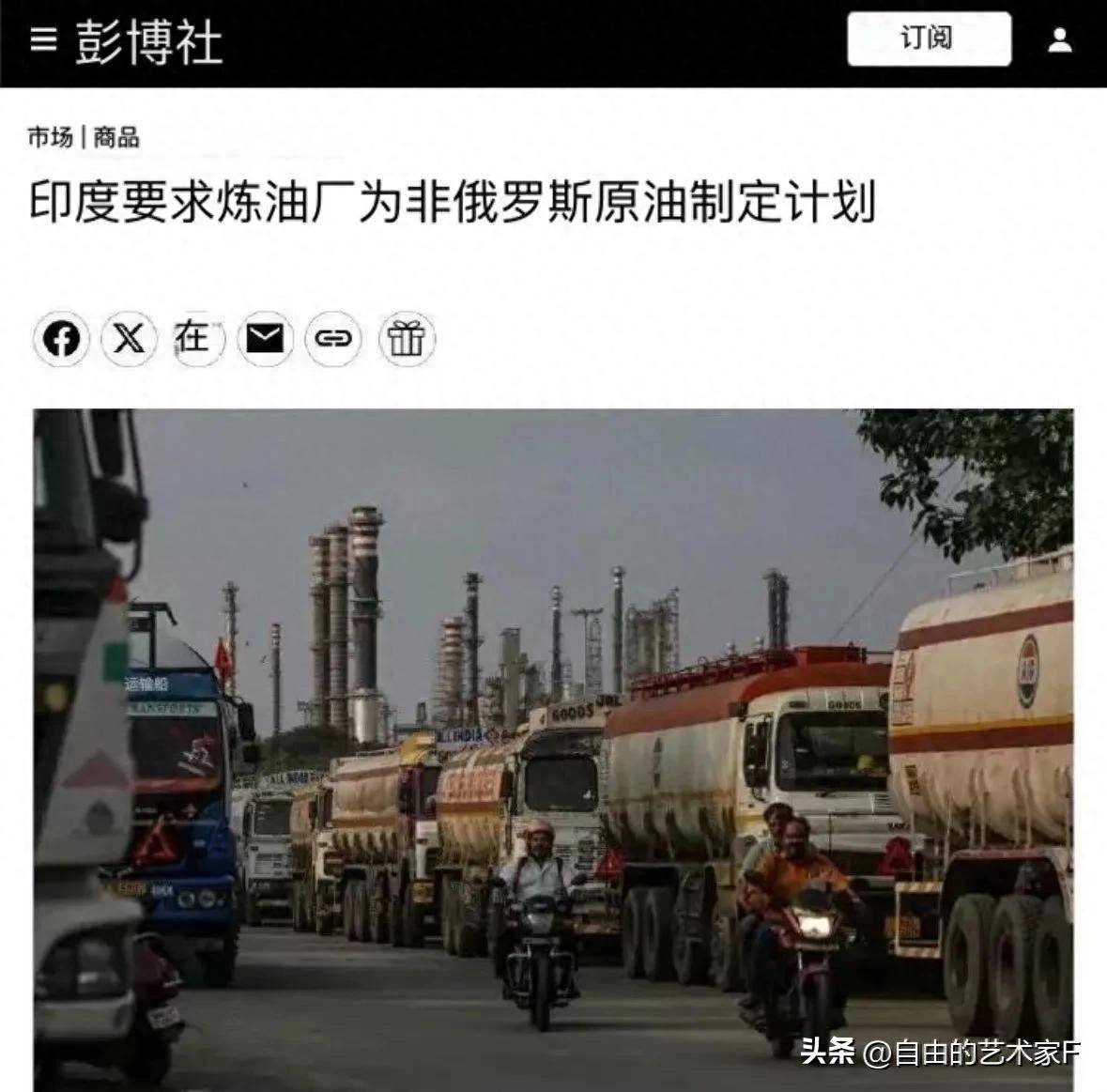
特朗普威胁125%关税后,莫迪一锤定音,下令停止购买俄罗斯石油?
Sou Hu Cai Jing· 2025-08-01 07:11
Core Viewpoint - Indian oil companies have completely halted purchases of Russian oil following the tariff threats from Trump, indicating a significant shift in India's energy sourcing strategy [4][6]. Group 1: Impact of Trump's Tariff Threats - The Indian government had already prepared for the potential impact of Trump's tariff threats by instructing state-owned refineries to develop plans to stop using Russian oil [6]. - Indian refiners have reached out to suppliers in the Middle East and Africa to compensate for the loss of Russian oil, demonstrating a proactive approach to mitigate supply disruptions [6]. Group 2: Russia's Anticipation and Response - Russia had anticipated India's shift away from its oil, leading to a reduction in discounts offered to India months prior, which contributed to India's decision to stop purchasing Russian oil [9]. - Despite halting oil purchases, India plans to procure 42 Su-57 aircraft from Russia, indicating a complex relationship where India seeks to balance its defense needs while managing diplomatic ties with Russia [9]. Group 3: Domestic Political Reactions - Modi faced significant domestic criticism following Trump's actions, with opposition leaders mocking his handling of the situation and questioning his leadership [11]. - The political atmosphere in India has become tense, with Modi's silence in the face of criticism highlighting the challenges he faces from both international pressures and domestic opposition [15]. Group 4: Broader Geopolitical Implications - Trump's actions are seen as a broader strategy to undermine the BRICS nations, with Modi being a key target due to India's unique geopolitical position [15]. - The situation reflects India's precarious position, caught between the interests of the US, China, and Russia, complicating its foreign policy and energy strategies [15].

厦门市民营企业进出口连续20个季度同比增长
Zhong Guo Chan Ye Jing Ji Xin Xi Wang· 2025-07-30 00:38
Group 1 - The core viewpoint of the articles highlights the continuous growth of private enterprises in Xiamen, Fujian Province, with import and export activities increasing for 20 consecutive quarters, outpacing the overall city growth by 7.1 percentage points in the first half of 2025 [1][2] - In the first half of 2025, Xiamen's private enterprises achieved an import and export value of 242.75 billion yuan, marking a 7.6% increase and accounting for 53.1% of the total import and export value, establishing them as the main force in the city's foreign trade [1] - Xiamen Customs has implemented policies focusing on better regulation, higher security, greater convenience, and stricter enforcement against smuggling, aimed at addressing the challenges faced by private enterprises and promoting high-quality development [1] Group 2 - Private enterprises in Xiamen are accelerating industrial upgrades and enhancing product competitiveness, with high-tech product exports reaching 11.61 billion yuan, a 12% increase, surpassing the city's overall export growth rate of 9.3% [2] - Notable growth in specific sectors includes a 171.1% increase in automobile exports, a 142.2% increase in computers and components, and a 61% increase in integrated circuits during the first half of 2025 [2] - Private enterprises are not only stabilizing traditional markets such as the EU and Taiwan but are also expanding into emerging markets, achieving double-digit growth in imports and exports with countries involved in the Belt and Road Initiative, RCEP member states, and other BRICS nations [2]
上半年黑龙江省货物贸易进出口规模创历史同期新高
Sou Hu Cai Jing· 2025-07-24 23:58
Group 1 - The total value of goods trade in Heilongjiang Province reached 160.12 billion RMB in the first half of 2025, marking a historical high for the same period, with a year-on-year growth of 2.4% [1] - Exports amounted to 46.68 billion RMB, showing a significant increase of 16.9%, while imports were 113.44 billion RMB, reflecting a decline of 2.5% [1] Group 2 - Trade with countries involved in the Belt and Road Initiative reached 144.01 billion RMB, growing by 3.5%, which is 1.1 percentage points higher than the overall growth rate, accounting for 89.9% of Heilongjiang's total foreign trade [3] - Exports to these countries were 36.32 billion RMB, increasing by 21.1%, while imports were 107.69 billion RMB, decreasing by 1.3% [3] Group 3 - Trade with the other 10 BRICS countries totaled 127.51 billion RMB, with a growth rate of 3.6%, surpassing the overall growth rate by 1.2 percentage points, representing 79.6% of the province's foreign trade [3] - Exports to these countries reached 23.38 billion RMB, up by 21.2%, while imports were 104.13 billion RMB, showing a slight increase of 0.3% [3] Group 4 - Exports of electromechanical products reached 18.61 billion RMB, growing by 9.5%, with automotive parts and electrical equipment increasing by 35.5% and 26.4% respectively [4] - Labor-intensive product exports totaled 10.63 billion RMB, marking a growth of 25.2%, with clothing and plastic products increasing by 85.4% and 37% respectively [4] - Agricultural product exports were 5.52 billion RMB, up by 17.4%, with vegetables and edible fungi, as well as dried and fresh fruits and nuts, increasing by 26.9% and 28.9% respectively [4] Group 5 - The import volume of energy products increased by 15%, totaling 34.851 million tons, with rises in crude oil, natural gas, coal, and lignite imports [5] - Soybean imports also saw a significant increase of 32.8% [5]

巴西明确表态:不会退出“金砖”
news flash· 2025-07-23 02:04
Core Viewpoint - Brazil has confirmed it will not exit the BRICS group despite recent pressures from the United States and media speculation regarding its membership [1] Group 1: Brazil's Position on BRICS - Brazil's Chief Special Advisor, Celso Amorim, stated that Brazil "will not exit BRICS" [1] - Amorim emphasized that BRICS is not an ideological group but a cooperation forum for emerging economies and developing countries [1] - The group includes countries like India and the UAE, which maintain good relations with the United States, indicating that BRICS does not inherently oppose U.S. interests [1]
中国前驻欧盟大使吴海龙:一些国家认为金砖是反美的,毫无道理
news flash· 2025-07-19 09:35
Core Viewpoint - The president of the China Public Diplomacy Association, Wu Hailong, stated that some countries view BRICS as anti-American, which he argues is illogical and unreasonable [1] Group 1 - The statement was made during a high-level forum of BRICS media think tanks held in Rio de Janeiro, Brazil [1]
为全球南方合作贡献金砖媒体智库力量
Xin Hua She· 2025-07-17 16:35
Group 1 - The BRICS countries are emerging as a significant force in the current global landscape, advocating for a more just and equitable international order [2][3] - The BRICS mechanism is increasingly recognized as a key channel for promoting unity and cooperation among Global South countries, contributing to global governance reform [2][3] - The forum highlighted the importance of BRICS media think tanks in addressing challenges such as unilateralism and misinformation while promoting the voices of the Global South [3][4] Group 2 - The BRICS media think tanks are seen as vital in building partnerships and sharing experiences among developing countries, enhancing their collective voice [5] - The forum serves as a platform for dialogue among media professionals, fostering collaboration and the exchange of ideas to strengthen the narrative from the Global South [5][6] - Participants emphasized the need for a narrative system that reflects the perspectives of the Global South, which the BRICS media think tanks are poised to develop [5][6]
韦斯特曼:特朗普只会加速美国霸权衰落,任何外国都不应干预巴西内政
Guan Cha Zhe Wang· 2025-07-17 00:54
Core Viewpoint - The recent imposition of a 50% tariff by the U.S. on Brazil is seen as politically motivated and contrary to the current global order, prompting Brazil to focus on diplomatic negotiations and potential reciprocal measures rather than outright retaliation [1][29][30]. Group 1: U.S. Tariff Impact on Brazil - The U.S. tariff is partly motivated by the prosecution of former President Bolsonaro, which Brazil views as an interference in its domestic affairs [1][30]. - Brazil is preparing to implement equivalent tariffs on U.S. products as a form of reciprocal measure [4][31]. - The Brazilian government emphasizes the importance of maintaining a rational approach to foreign policy while expressing dissatisfaction with U.S. actions [6][34]. Group 2: Brazil's Diplomatic Strategy - Brazil aims to diversify its partnerships, with China playing a significant role in this strategy [4][31]. - The country plans to take the tariff issue to multilateral institutions like the WTO to seek a resolution [4][31]. - Brazil's leadership under President Lula is characterized by a commitment to dialogue and peaceful conflict resolution, positioning the country as a mediator in international disputes [16][47]. Group 3: BRICS and Global Influence - The U.S. tariffs are perceived as a sign of the growing influence of BRICS nations, which Brazil views positively as a validation of their efforts to create an alternative global order [36][37]. - Brazil believes that the tariffs will not undermine BRICS solidarity but rather strengthen political and commercial ties among member countries [36][37]. - The recent BRICS summit resulted in several declarations on key global issues, reflecting the group's commitment to addressing contemporary challenges [40][41]. Group 4: China-Brazil Relations - The potential construction of a railway linking Peru's Chancay port to Brazil's east coast is seen as a significant opportunity to enhance bilateral relations, although it is still in the feasibility study phase [43][44]. - Brazil's trade with China is substantial, but there is a need to improve the quality of trade, particularly in high-tech products [43][44]. - The Brazilian government supports closer cooperation with China, especially in infrastructure projects that could benefit both economies [45][46]. Group 5: Brazil's Role in Global Peace Efforts - Brazil is positioning itself as a mediator in global conflicts, leveraging its tradition of peaceful conflict resolution and diplomatic engagement [16][47]. - The country is actively working with China on peace initiatives related to the Ukraine conflict, although significant progress has yet to be made [50]. - Brazil condemns the violence in Palestine and seeks to address the humanitarian crisis, emphasizing its role as a responsible global actor [51][52].

中国必须帮忙:印度已废,特朗普瞄准第二国想突破金砖!
Sou Hu Cai Jing· 2025-07-14 08:45
占豪认为,美国的这次"暂时罢战"并非真正的停火,反而预示着新一轮更激烈斗争的开端,只不过这一回合美国再次失利。自中国开始用稀土资源做反击 后,国内对矿产资源走私的打击力度明显加大,显示国内仍有损害国家利益的势力在活动,但相关部门已严厉整治,令美国想轻松获得稀土变得异常艰难。 此外,有传闻称我国部分技术团队跳槽至澳大利亚稀土企业,尽管真假难辨,但占豪断言,这种行为就是叛国,国家未来必将严惩这些人,且一旦失去利用 价值,他们也将被弃如敝履。 这里顺便讲一则深圳富二代教育失败的案例。深圳一位富二代女孩高某,为了获得美国绿卡,嫁给了年长美国男子,甚至参加了"服役换国籍计 划"(MAVNI计划),该计划允许符合条件的外籍人士通过加入美军获得绿卡和公民身份。目前,美军中有约2万亚裔士兵(包括华裔),其中不少通过该 政策入伍。然而,令人费解的是,尽管她服役,却未能成功取得美国国籍。更糟的是,她在遭受美籍丈夫家庭暴力后离婚,退伍后依然无身份,同时因学历 低而难以在美国找到工作。美国的种种挫败让她只得想回国发展,结果却被祖国"拉黑",禁止入境。正如所说,背叛祖国必遭恶报!那些为了眼前利益出卖 国家的人,结局都极为悲惨。当前中美 ...
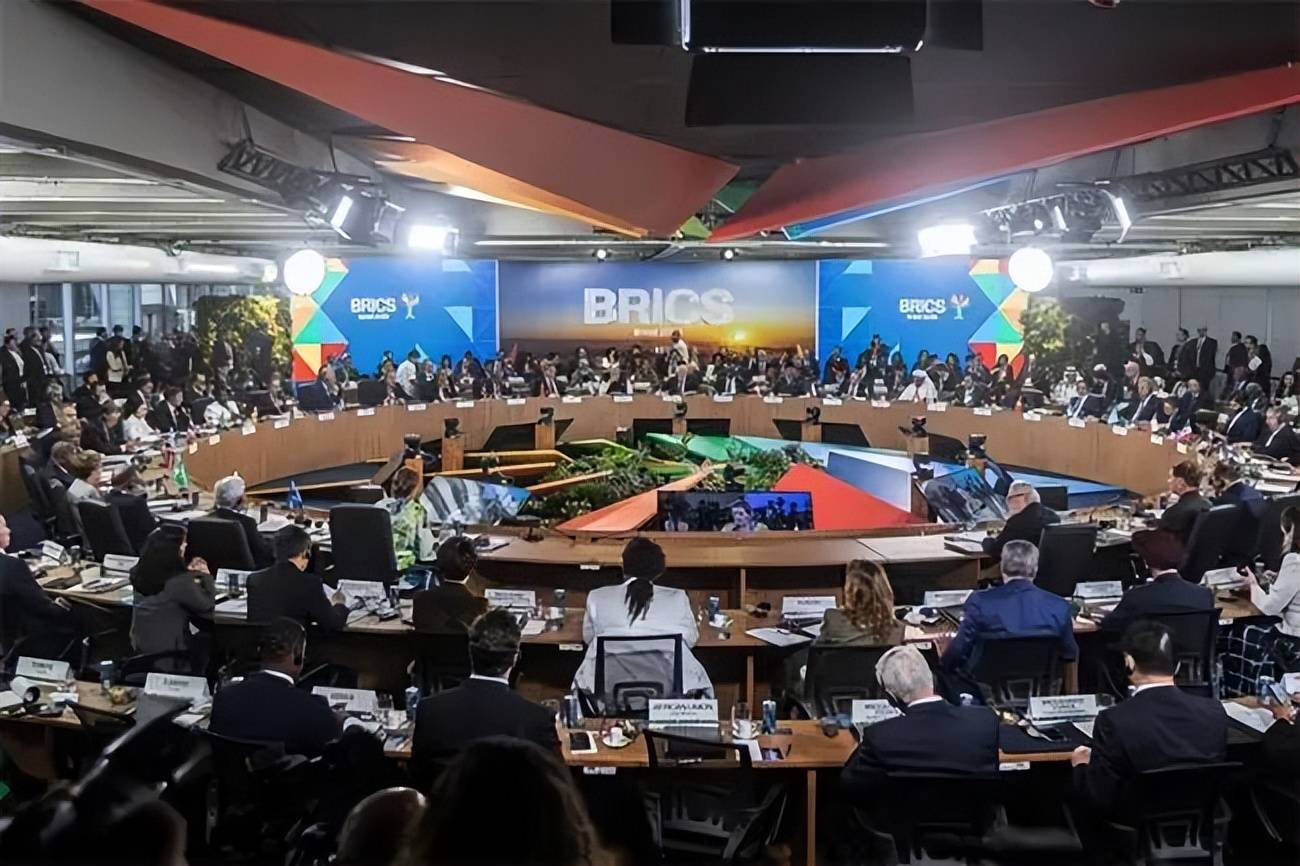
俄副外长:金砖国家并非“反美联盟”
Zhong Guo Xin Wen Wang· 2025-07-10 21:03
Group 1 - The Russian Deputy Foreign Minister Ryabkov stated that BRICS is not an "anti-American alliance" and that threats will not have any effect [1] - Ryabkov emphasized the importance of dialogue regarding tariffs and trade conditions, suggesting that negotiations should be conducted calmly to find compromises [1] - There is a significant potential for establishing a grain trading platform within the BRICS framework, with progress already made on conceptual documents [1] Group 2 - Russia is actively participating in seeking a political solution to the Iranian nuclear issue, engaging with various parties including the US, Iran, and the International Atomic Energy Agency [2]
马来西亚贸易部长:截至目前,美国尚未对与金砖国家结盟的国家加征额外10%的关税。
news flash· 2025-07-09 04:54
Core Point - The Malaysian Trade Minister stated that the United States has not imposed an additional 10% tariff on countries allied with BRICS as of now [1] Group 1 - The statement indicates a current lack of additional tariffs from the U.S. on BRICS-aligned countries, which may influence trade dynamics [1]