银行资产质量

Search documents
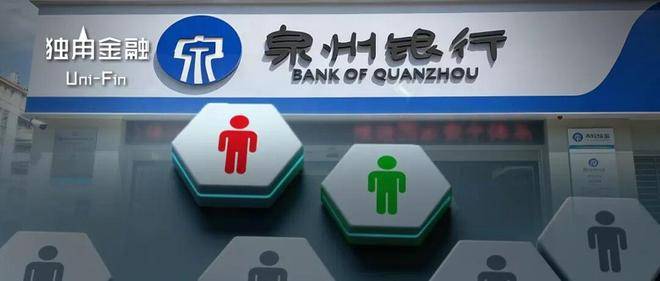
董事长、行长先后换任!泉州银行业绩“翻身仗”怎么打?
Sou Hu Cai Jing· 2025-12-19 10:43
Group 1 - Quanzhou Bank has undergone a leadership change with the appointment of Li Mingqin as the new president, following the retirement of former chairman Lin Yangfa and the nomination of Jiang Wenpeng as chairman [2][3] - Both the new president and the chairman have extensive experience in state-owned and joint-stock banks, particularly within the Fujian financial system, which is expected to provide strategic stability for the bank [2][4] - The bank is facing a "stress test" as it reports a decline in both revenue and profit for the first three quarters of the year, marking a shift after four years of steady growth [2][8] Group 2 - Quanzhou Bank's revenue for the first three quarters is reported at 2.396 billion yuan, a year-on-year decrease of 12.54%, while net profit is 245 million yuan, down 23.03% [9] - The bank's total assets reached 178.418 billion yuan, with a growth rate of 1.77%, indicating a slowdown compared to previous years [9] - The net interest income for the first three quarters is 1.832 billion yuan, reflecting a decline of 7.78%, continuing a downward trend from the previous year [9] Group 3 - The bank's deposit growth has also slowed, with growth rates of 1.96% and 6.78% for 2024 and the first three quarters of 2025, respectively, marking the lowest levels in recent years [11] - The net interest margin has been declining since reaching a peak of 2.5% in 2021, dropping to 1.53% by the third quarter of 2025 [11] - Investment income has seen significant fluctuations, with a decrease of 28.03% to 44.5 million yuan in the first three quarters of 2025, contributing to the overall revenue decline [11][12] Group 4 - The bank's asset quality is under pressure, with non-performing loan ratios increasing from 1.52% in 2022 to 1.83% in 2024, and the provision coverage ratio decreasing from 170.81% to 163.23% over the same period [13][14] - Credit impairment losses have risen significantly, with a reported increase of 3.16 billion yuan year-on-year, primarily due to higher provisions for loan impairments [18] - The bank's credit loans have expanded rapidly, but the overdue amounts have also increased, indicating rising credit risk [16][18]

1700亿城商行行长,任职获批
中国基金报· 2025-12-15 16:01
【 导读 】泉州银行行长李明钦任职资格获批,资产质量问题仍未明显改善 据悉,今年7月,泉州市人民政府发布通知,鉴于林阳发已达到退休年龄,免去其泉州银行董事长职务。同时,泉州市人民政府提名江文鹏 为泉州银行董事长人选,江文鹏不再担任泉州银行行长职务。10月9日,江文鹏任泉州银行董事长的任职资格正式获得监管批复。至此之 后,泉州银行行长一职便处于"空缺"状态。 李明钦泉州银行行长资格获批 福建金融监管局批复公告显示,核准李明钦泉州银行董事、行长的任职资格。同时,该局要求,上述核准任职资格人员严格遵守金融监管 总局有关监管规定,自行政许可决定作出之日起3个月内到任,并按要求及时报告到任情况。 从过往履历来看,泉州银行的新任行长李明钦具备较为丰富的银行从业经验,其曾历任农业银行泉州分行副行长、华夏银行福州分行副行 长等职务。 李明钦获批出任泉州银行行长,意味着该行核心高管层再次迎来调整。 简历显示,江文鹏历任平安银行泉州分行副行长、广发银行泉州分行行长;2023年5月受聘担任泉州银行行长(试用期一年),同年8月其 董事、行长任职资格获得监管核准。 前三季度归母净利润下滑超23% 中国基金报记者 嘉合 12月15日,福 ...

2026银行股前瞻:业绩企稳结构分化,机构看好“再出发”
2 1 Shi Ji Jing Ji Bao Dao· 2025-12-11 09:33
21世纪经济报道记者林汉垚 见习记者冯紫彤 随着 2026 年日益临近,银行股的业绩走向与结构分化逻辑再次成为机构研报的核心议题。 作为"十五五"规划的开局之年,银行业的经营环境与投资逻辑将如何演变?对于投资者而言,机会藏于何处? 近期,多家券商密集发布年度展望,普遍认为在宏观政策托底、息差有望筑底以及存量风险持续缓释的背景下,2026年上市银行整体业绩大概率将步入温和 修复通道。 然而,几乎所有机构都同时强调,行业内部的结构性分化将成为未来一年的主旋律,马太效应加剧,具备独特客户优势、负债成本管控能力或特定区域禀赋 的银行,将有望领跑新一轮周期。 业绩温和修复成共识,内部分化已成定局 对于2026年的行业整体业绩走势,机构观点呈现出显著共识。多数研报判断,得益于息差收窄压力的缓解和财富管理等中收业务的增长,上市银行营收与净 利润将告别低迷,实现小幅正增长,步入温和的修复通道。 然而,这并非一次普惠式的回暖,"分化"成为各机构策略报告中最高频的关键词之一。 机构普遍指出,银行业增长驱动逻辑正在发生根本性转变,从同质化的规模扩张,转向依赖客户粘性、业务结构和经营效率的差异化竞争。那些在结算业 务、财富管理领域建 ...

银行经营与定价思考:配置正当其时
Guotou Securities· 2025-11-16 09:35
Investment Rating - The report maintains an investment rating of "Outperform the Market - A" [4] Core Viewpoints - The banking sector is experiencing a significant divergence in credit growth, with state-owned banks increasing their share of new credit while smaller banks are seeing a decline [1][2] - The net interest margin for commercial banks has stabilized, with a slight increase observed in shareholding banks [3] - The report emphasizes the importance of increasing bond allocations to drive total asset growth, particularly for state-owned and city commercial banks [2] - The overall asset quality of banks remains stable, but there is a noticeable divergence, with non-listed banks experiencing a rise in non-performing loans [9][20] - The report suggests that the banking sector is currently undervalued, with A-share banks trading at a price-to-book ratio of 0.73 and Hong Kong-listed state-owned banks at 0.55 [10][11] Summary by Sections Section 1: Credit Growth and Market Dynamics - Recent financial data indicates that new RMB loans and social financing are significantly lower than the same period last year, reflecting weak financing demand [1] - The decline in real estate loans and the low credit dependence of light asset industries are impacting the competitive landscape among banks [1] Section 2: Asset Growth and Bond Allocation - State-owned and city commercial banks have shown a notable increase in total asset growth compared to joint-stock banks, attributed to their stronger liability bases and increased bond allocations [2] - The report anticipates a continued trend of credit expansion among banks with strong credit growth potential and increased bond allocations [2] Section 3: Net Interest Margin and Profitability - The net interest margin for commercial banks was reported at 1.42% for the first three quarters of the year, indicating stabilization [3] - The report notes that banks with a higher proportion of credit business and better middle-income advantages are likely to perform better in terms of fundamentals [10] Section 4: Asset Quality and Non-Performing Loans - The non-performing loan ratio for commercial banks was reported at 1.52%, with a slight increase observed [9][20] - State-owned and shareholding banks maintained stable non-performing loan ratios, while city and rural commercial banks experienced a faster increase [9][20] Section 5: Market Valuation and Investment Opportunities - The report highlights that the current valuation of the banking sector is significantly lower than that of banks in major international economies, suggesting potential for valuation recovery [10][11] - The report recommends focusing on state-owned banks, China Merchants Bank, and Ningbo Bank as investment opportunities [12]


交通银行中层调整涉及多家省直分行
Xin Lang Cai Jing· 2025-11-11 09:07
Core Viewpoint - The recent personnel adjustments at Bank of Communications involve several key appointments and changes in leadership across various branches, indicating a strategic focus on enhancing management and operational efficiency within the organization [1][2][3]. Personnel Changes - Tang Shuo has been officially appointed as the Director of Corporate and Institutional Business, having previously served as the President of the Beijing Branch [1]. - Qiao Hongjun, former President of the Anhui Branch, has been appointed as the General Manager of the Financial Institutions Department at the headquarters [1]. - Xie Jinhai has taken over as the President of the Anhui Branch, previously serving as the President of the Jiangxi Branch [1]. - Yue Mengxi, former Deputy General Manager of the Corporate and Institutional Business Department, is now the Party Secretary of the Wuxi Branch and a member of the Jiangsu Provincial Party Committee [1]. Financial Performance - As of September 30, 2025, the total assets of Bank of Communications reached 15.50 trillion yuan, reflecting a year-on-year growth of 4.02% [5]. - The bank reported operating income of 199.645 billion yuan for the first three quarters of 2025, a year-on-year increase of 1.80% [5]. - The net profit attributable to shareholders for the same period was 69.994 billion yuan, up by 1.90% year-on-year [5]. Asset Quality - As of September 30, 2025, the non-performing loan balance stood at 114.551 billion yuan, an increase of 2.57% from the end of the previous year, with a non-performing loan ratio of 1.26%, down by 0.05 percentage points [5]. - The provision coverage ratio improved to 209.97%, an increase of 8.03 percentage points from the end of the previous year [5]. - The bank is facing challenges with rising retail loan non-performing rates, particularly in credit cards, which reached 2.91%, an increase of 0.57 percentage points year-on-year [5]. Future Strategy - The bank plans to strengthen control over retail loans, focusing on new customer entry criteria to enhance asset quality from the outset [6]. - There will be a precise analysis of evolving trends and risk factors, with attention to key regional risk conditions [6].

中国区域性银行_2025 年第三季度回顾_核心盈利稳步复苏,我们偏好宁波银行和南京银行-China regional banks_ 3Q25 review_ Steady recovery in core earnings, we prefer BoNB and BoNJ
2025-11-10 03:34
Summary of China Regional Banks 3Q25 Review Industry Overview - The report focuses on the performance of China Regional Banks (CRBs) in the third quarter of 2025 (3Q25) - Overall profits for CRBs grew by 6% year-over-year (y/y), a decrease from 9% y/y in 2Q25, primarily due to a decline in non-fee income [1][3] Core Earnings and Profitability - CRBs demonstrated a core earnings recovery of 12% y/y, outperforming large banks which only saw a 1% y/y increase in core earnings [1][3] - Net Interest Income (NII) for CRBs grew by an average of 7% y/y, improving from 5% y/y in 2Q25, while large banks averaged only 0.4% growth [3][7] - Fee income increased by 16% y/y, reversing a contraction trend, supported by agency fee growth as market sentiment improved [3][7] - Non-fee income saw a significant decline of 32% y/y, primarily due to fair value losses in bond investments [3][7] Asset Quality - Asset quality remained stable, with the average Non-Performing Loan (NPL) ratio declining by 1 basis point (bps) q/q to 0.96% in 3Q25 [1][21] - The Special Mention Loan (SML) ratio increased by 3 bps q/q, indicating some pressure on asset quality compared to large banks [21] - The NPL coverage ratio decreased slightly by 1 bps q/q, suggesting a cautious approach to provision releases [21] Capital and Growth Constraints - The Common Equity Tier 1 (CET1) ratio for CRBs decreased by 11 bps q/q, raising concerns about growth constraints due to lower capital levels [3][21] - CRBs reported a 2% q/q loan growth, consistent with industry trends, but with significant variations among banks [20] - Deposit growth was flat on average, with BoNB experiencing the highest contraction at -1.4% q/q [20] Investment Recommendations - Top picks among regional banks include BoNB and BoNJ, both showing double-digit growth in core earnings and stable asset quality [1][3] - BoBJ's performance was the weakest, with a profit contraction of 2% y/y and a low CET1 ratio, although its high dividend yield of 5.8% provides some downside protection [1][3] - Caution is advised regarding CSRCB until clearer signs of improvement in SME asset quality are observed [1][3] Valuation Insights - The report includes a valuation comparison of various regional banks, highlighting differences in price-to-earnings (P/E) ratios, price-to-book (P/B) ratios, and return on equity (ROE) [5] - The average P/E for CRBs is projected at 6.1 for FY25E and 5.7 for FY26E, with an average dividend yield of 5.0% for FY25E [5] Conclusion - The overall performance of China Regional Banks in 3Q25 indicates a steady recovery in core earnings, although challenges remain in non-fee income and capital levels. The investment outlook is cautiously optimistic for select banks, particularly BoNB and BoNJ, while caution is warranted for others like CSRCB and BoBJ.





江苏银行(600919):业绩增长确定性强,规模高增长
Changjiang Securities· 2025-11-09 13:15
Investment Rating - The investment rating for the company is "Buy" and is maintained [8] Core Views - The company shows strong certainty in performance growth, with a significant increase in scale [12] - Revenue growth for the first three quarters is 7.8%, with net interest income growth at 19.6% and net profit growth at 8.3% [5][12] - Total assets increased by 24.7% compared to the beginning of the year, with loans growing by 17.9% [5][12] - The non-performing loan (NPL) ratio remains stable at 0.84%, with a provision coverage ratio of 323% [5][12] Summary by Sections Performance - Net interest income continues to grow significantly, with a 19.6% increase in the first three quarters [12] - Non-interest income decreased by 16.0%, primarily due to adjustments in the bond market [12] - The effective tax rate has decreased, which has positively impacted profitability [12] Scale - Total assets grew by 24.7% compared to the beginning of the year, with a quarter-on-quarter increase of 2.9% [12] - Corporate loans saw a substantial increase of 26.3% compared to the beginning of the year [12] - Retail loans increased by 1.7%, although there was a quarter-on-quarter decrease of 1.3% [12] Interest Margin - The net interest margin for the first three quarters is estimated at 1.68%, with a narrowing decline compared to the previous period [12] - The cost of interest-bearing liabilities has decreased significantly, which is expected to continue improving [12] Asset Quality - The NPL ratio is stable at 0.84%, with a provision coverage ratio of 323% [12] - Retail asset quality shows signs of improvement, with a decrease in the NPL generation rate [12] Investment Recommendation - The company presents a strong certainty in performance growth, with significant expansion in credit scale and improvement in deposit costs [12] - The stock price has corrected, leading to a projected dividend yield of 5.0% for 2025, highlighting its investment value [12]

六大行日赚39亿,农行利润增速领跑,中行营收增长第一
3 6 Ke· 2025-11-05 23:51
Core Insights - The six major state-owned banks in China reported a total operating income of 27,205.35 billion yuan for the first three quarters of 2025, representing a year-on-year growth of 1.87% [1] - The total net profit attributable to shareholders reached 10,723.43 billion yuan, with a year-on-year increase of 1.22%, equivalent to an average daily profit of 39.14 billion yuan [1] - Agricultural Bank led in net profit growth at 3.03%, while China Bank had the highest revenue growth at 2.69% [1][4] Financial Performance - The total asset size of the six banks reached 217.97 trillion yuan by the end of Q3 2025, marking a 9.16% increase from the previous year [2][9] - Total loans amounted to 127.14 trillion yuan, up 8.54%, while total deposits were 149.76 trillion yuan, reflecting a 6.92% growth [2][12] - The net interest margin for the banks faced pressure, with a decline noted across the board, although non-interest income showed growth, with five banks achieving double-digit increases [1][7] Revenue and Profit Breakdown - In terms of revenue, the banks achieved the following figures: Industrial Bank (6,400.28 billion yuan), Construction Bank (5,737.02 billion yuan), and Agricultural Bank (5,508.76 billion yuan) [4][5] - Non-interest income for the banks was as follows: Industrial Bank (1,666.12 billion yuan), Construction Bank (1,460.96 billion yuan), and Agricultural Bank (1,235.68 billion yuan), with Agricultural Bank showing the highest growth rate at 20.65% [7] - Investment income also saw significant growth, with Construction Bank leading at 150.55% year-on-year [8] Asset Quality and Capital Adequacy - The overall asset quality remained stable, with five banks reporting a decrease in non-performing loan ratios compared to the end of the previous year [15] - The highest non-performing loan ratio was recorded by Postal Savings Bank at 0.94%, while Agricultural Bank had the highest provision coverage ratio at 295.08% [16][17] - Core Tier 1 capital adequacy ratios were robust, with Construction Bank at 14.36%, the highest among the six banks [18] Dividend and Shareholder Returns - The rolling dividend yield for the banks was above 2.5%, significantly higher than the 5-year fixed deposit rates, with the highest yield from the Transportation Bank at 4.10% [1][18]





沪农商行(601825):Q3营收利润稳健增长,对公信贷驱动扩表
Guohai Securities· 2025-11-04 09:37
Investment Rating - The investment rating for the company is "Buy" (maintained) [1] Core Insights - The company's net profit attributable to shareholders has shown steady growth, with a year-on-year increase of 0.78% for the first three quarters of 2025, and a quarterly growth of 1.15% in Q3. Revenue has decreased by 3.18% year-on-year, but the decline has narrowed compared to the first half of the year [5] - The bank's loan and advance total increased by 1.60% compared to the end of the previous year, with a 4.17% increase in corporate loans, while personal loans decreased by 1.89% [5] - Asset quality has improved marginally, with a non-performing loan ratio remaining low at 0.97%, and the provision coverage ratio increased by 3.55 percentage points to 340.10% [5] - The report forecasts revenue for 2025-2027 to be 264.80 billion, 276.00 billion, and 293.31 billion yuan, with year-on-year growth rates of -0.60%, 4.23%, and 6.27% respectively. Net profit attributable to shareholders is projected to be 124.84 billion, 126.93 billion, and 132.31 billion yuan, with growth rates of 1.59%, 1.68%, and 4.24% respectively [5][6] Summary by Sections Financial Performance - For the first three quarters of 2025, the company's revenue decreased by 3.18%, a slight improvement from the 3.4% decline in the first half of the year. The net profit attributable to shareholders increased by 0.78% year-on-year, with Q3 showing a 1.15% increase [5] - Interest income decreased by 5.05% year-on-year, but the decline was less severe than in the first half of the year due to effective cost management [5] Loan and Deposit Growth - As of the end of Q3 2025, the total loans and advances increased by 1.60% compared to the end of the previous year, with corporate loans up by 4.17% and personal loans down by 1.89% [5] Asset Quality - The non-performing loan ratio remained stable at 0.97%, and the proportion of special mention loans increased by 4 basis points to 1.81% [5] - The provision coverage ratio improved to 340.10%, reversing a declining trend observed since September 2023 [5] Earnings Forecast - The forecast for revenue from 2025 to 2027 is 264.80 billion, 276.00 billion, and 293.31 billion yuan, with corresponding growth rates of -0.60%, 4.23%, and 6.27% [6] - The projected net profit for the same period is 124.84 billion, 126.93 billion, and 132.31 billion yuan, with growth rates of 1.59%, 1.68%, and 4.24% [6]
寻找绩优股:2026年银行业年度策略
GUOTAI HAITONG SECURITIES· 2025-11-03 05:20
Investment Rating - The report indicates a cautious outlook on the credit growth rate, suggesting a shift towards quality improvement, with expectations for a recovery in corporate loan increments by 2026 [5][9]. Core Insights - Credit growth is expected to slow significantly starting in 2024, but the decline in growth rate is anticipated to moderate by 2026, with corporate loans likely to see a year-on-year increase [7][9]. - The relationship between credit growth and economic growth is weakening, emphasizing the need to optimize credit structure and reduce idle financial resources [9]. - The report highlights that the banking sector's total asset growth will outpace loan growth in 2025, driven by government bond supply and fiscal policies [9]. Summary by Sections Credit Growth Forecast - New RMB loans are projected at 21.3 trillion, 23.6 trillion, and 18.9 trillion yuan for 2022, 2023, and 2024 respectively, with a further estimate of 14.7 trillion yuan for the first three quarters of 2025 [9]. - For 2026, new loans are expected to be between 17.2 trillion and 17.7 trillion yuan, corresponding to a growth rate of 6.3% to 6.5% [9]. Loan Composition - In 2023, the total RMB loans are expected to reach 237.59 trillion yuan, with a year-on-year growth rate of 10.6% [8]. - Retail loans are projected to grow from 80.10 trillion yuan in 2023 to 82.84 trillion yuan in 2024, reflecting a growth rate decline from 5.7% to 3.4% [8]. - Corporate loans are anticipated to increase from 157.07 trillion yuan in 2023 to 171.01 trillion yuan in 2024, with a growth rate of 12.7% [8]. Regional Performance - Regions such as Jiangsu, Zhejiang, Sichuan, and Shandong are expected to continue outperforming the national average in loan growth due to strong economic performance and support from new policy financial tools [12]. Banking Sector Dynamics - The report notes that state-owned banks are expected to maintain a competitive edge due to lower funding costs and capital injections from the Ministry of Finance [12]. - The net interest margin is in a downward trend, but the rate of decline is expected to slow starting in 2025, with some smaller banks potentially stabilizing their margins by 2026 [13][17]. Asset Quality - As of Q2 2025, the non-performing loan (NPL) ratio for listed banks is reported at 1.25%, indicating a stable asset quality despite pressures on retail credit [37]. - The report emphasizes that while retail loan NPLs have increased since 2021, corporate loan clearances have improved significantly, providing a buffer against retail risks [37].