
长寿经济

Search documents
瑞银财富管理胡一帆:减少美元现金,中国手上“有牌”
Hua Er Jie Jian Wen· 2025-06-11 07:11
Group 1: Investment Environment - The global investment environment is currently complex, requiring investors to be more cautious in asset allocation [1][5] - The focus for global investors in the second half of the year will be on tariffs, potential Fed rate cuts, and global diversification [2][4] - The "American exceptionalism" theory may no longer apply, prompting a shift towards global asset allocation [2][4] Group 2: Sector Opportunities - In the U.S., technology and power sectors are highlighted as attractive investment areas [1][7] - In Asia, China's technology sector shows significant appeal [1][7] - In Europe, defense, industrial sectors, and small-cap stocks present investment opportunities [1][7] Group 3: Economic Outlook - China's economy is expected to remain resilient, with potential monetary policy easing of 50-100 basis points, releasing approximately 1 trillion yuan in liquidity [4] - The U.S. economy may face challenges, with inflation expected to rise and GDP growth forecasted at 1.5% [4] - The U.S. faces significant debt repayment pressures, with interest payments reaching 1 trillion dollars [4] Group 4: Market Strategies - A neutral outlook is held for U.S. equities, with high valuations limiting upside potential [6] - Seeking permanent income through high-rated bonds is recommended, along with diversification in fixed income strategies [7] - A mid-term weakening of the dollar is anticipated, suggesting reduced exposure to dollar cash and increased allocation to currencies like yen, euro, pound, and Australian dollar [7] Group 5: Long-term Investment Directions - Focus on transformative innovation opportunities such as artificial intelligence, power and resources, and longevity economy [8] - Artificial intelligence is viewed as a significant investment opportunity, contributing to GDP growth [8] - Global electricity consumption is expected to grow, particularly in construction, industry, and transportation sectors [8]
Klotho(KLTO.US)基因疗法有望逆转器官退化 股价单日暴涨787%
智通财经网· 2025-06-10 00:49
Core Viewpoint - Klotho Neurosciences has announced early research results indicating that its proprietary gene therapy may fully reverse age-related organ degeneration, leading to a dramatic 787% surge in its stock price, which has attracted global investment interest in the biotech sector [1][2][3] Company Summary - Klotho Neurosciences is a micro biotech company focused on "anti-aging" and gene therapies for neurodegenerative diseases, with recent animal study data suggesting its α-Klotho gene therapy could delay or even reverse multi-organ aging [2][3] - The company utilizes a patented secretory α-Klotho (s-KL) gene delivery vector for its gene therapy, which aims to address age-related degenerative diseases in the central nervous system and multiple organs [3] - Klotho has obtained global exclusive patent licensing and plans to apply for FDA pre-IND meetings [3] Industry Summary - The surge in Klotho's stock price reflects a broader trend in the biotech industry, where innovative gene therapies targeting degenerative diseases are gaining traction and investor enthusiasm [2] - The market is witnessing a recalibration of investment focus towards cutting-edge technologies, particularly in the realms of gene therapy and AI, as exemplified by Synaptogenix's recent entry into the cryptocurrency and AI sectors [2] - The rapid pace of innovation in biotech is reshaping market dynamics and regulatory landscapes, making it a significant focal point for global market participants [2]
高盛:通往2075(全球老龄化的机会)未来30年养老市场大爆发
Xin Lang Cai Jing· 2025-06-09 01:29
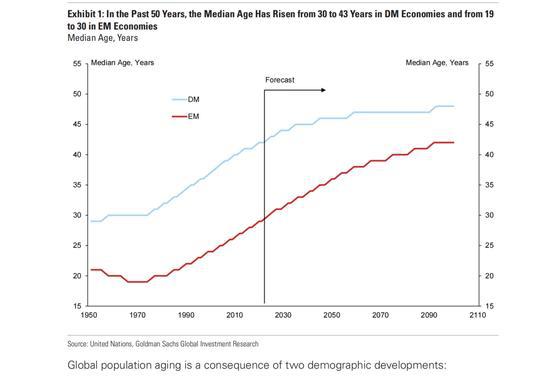
Global Population Trends - The median age of the global population has increased significantly over the past 50 years, with developed economies rising from 30 to 43 years and emerging economies from 19 to 30 years, projected to reach 47 and 40 years respectively by 2075 [2] - The average life expectancy has steadily increased, with developed economies rising from 72 to 82 years and emerging economies from 58 to 73 years, indicating a healthier aging population [4] - The global fertility rate has declined from 5.4 in 1963 to approximately 2.1 today, which is at the replacement level, but the actual threshold to maintain population stability is lower due to increased life expectancy [6] Labor Market Dynamics - Despite a decrease in the proportion of the working-age population in developed economies, the actual employment rate has increased, indicating a rise in labor force participation [10] - The trend of delayed retirement is largely driven by individuals' choices rather than policy changes, with many older adults opting to work longer due to improved health and longevity [11] - Women's participation in the labor force has also increased, contributing positively to overall employment rates and helping to mitigate the effects of an aging population [13] Longevity Economy - The aging population presents opportunities for economic growth through technological advancements and productivity improvements, particularly in sectors catering to elderly care [16] - The rise of "silver technology" is creating new markets, including smart healthcare solutions and elder care services, which are essential as the demand for elderly care increases [16] - The perception of older adults is shifting from being seen as a burden to being recognized as valuable consumers and contributors to the economy [16] China's Aging Population - China has officially entered a moderate aging phase, with over 310 million people aged 60 and above, representing 22% of the total population, indicating significant potential for the "silver economy" [18] - The market for silver economy in China is currently valued at approximately 8 trillion yuan and is rapidly expanding, driven by policy support and changing consumer demands [18] - The Chinese government is prioritizing the development of the silver economy as a national strategy, with various initiatives aimed at enhancing the quality of life for the elderly [19] Consumer Behavior Changes - The consumption patterns of older adults in China are evolving, with a shift from basic needs to quality consumption, including healthcare, cultural activities, and travel [20] - The demand for non-medical services among the elderly is expected to exceed 60% by 2030, indicating a significant market opportunity in sectors like entertainment and education [21] - The segmentation of the elderly population into different age groups allows for more targeted products and services, enhancing the potential for growth in the silver economy [21] Policy and Industry Development - China is actively developing its silver industry as a new driver of high-quality economic growth, focusing on urban-rural integration and technological innovation [22] - The silver economy encompasses a wide range of sectors, including smart devices, healthcare services, and financial products tailored for the elderly [22] - The integration of technology in elder care services is expected to enhance service quality and efficiency, leading to the emergence of a "smart elder care" ecosystem in China [22]

瑞银财管:料美股短期上行空间有限 金价回调是增配好时机
Zhi Tong Cai Jing· 2025-05-26 06:07
Group 1 - UBS Wealth Management's report predicts gold prices could reach $3,500 per ounce by Q1 next year, driven by geopolitical risks and expected declines in real interest rates [1] - The report suggests investors allocate about 5% of a diversified dollar portfolio to gold to hedge against potential risks [1] - The effective U.S. tariff rate is expected to stabilize around 15%, which could hinder economic growth and increase inflation without leading to a recession [1] Group 2 - The report indicates that while the dollar has stabilized recently, it is expected to weaken again due to a slowing U.S. economy and rising concerns over fiscal deficits [2] - Investors are advised to diversify excess dollar cash into other currencies and consider hedging dollar exposure back to local currencies [2] - The U.S. maintains strong credit quality, with Treasury bonds viewed as safe and low-yield dollar assets, supported by the strength of U.S. capital markets and the wealth held by American households [2]
NewLimit完成1.3亿美元B轮融资,推动AI赋能表观遗传重编辑疗法迈向临床
3 6 Ke· 2025-05-21 00:48
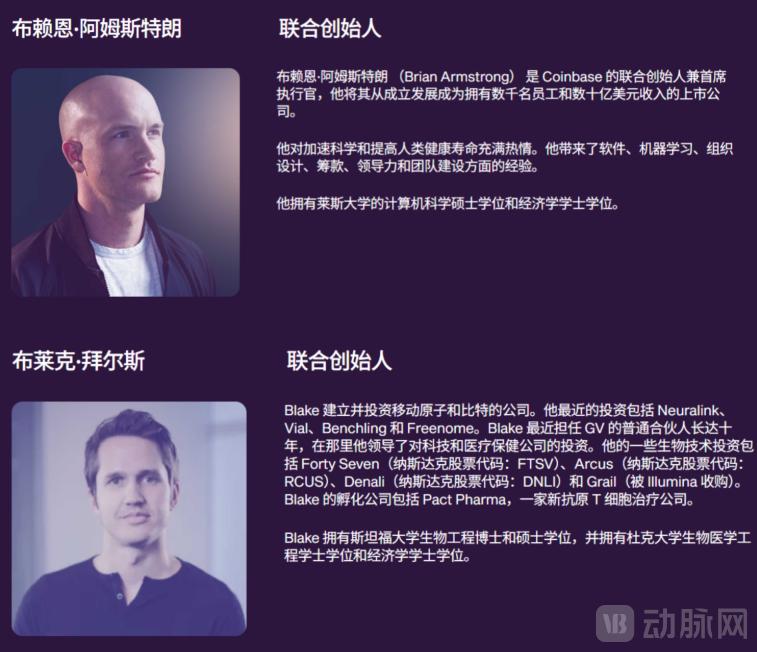
Core Insights - NewLimit, a startup focused on epigenetic reprogramming, raised $130 million in Series B funding led by Kleiner Perkins, with participation from existing investors like Founders Fund and Khosla Ventures, to address global health challenges posed by an aging population [1][15][16] - The company aims to leverage AI-driven epigenetic reprogramming technology to tackle the pressing issue of "healthy aging," as the global population aged 60 and above is projected to increase from 1 billion in 2020 to 2.1 billion by 2050 [1][15] Company Overview - Founded in 2021 by Brian Armstrong, co-founder of Coinbase, and Blake Byers, a former partner at Google Ventures, NewLimit embodies a "tech + bio" hybrid model, integrating venture capital and scientific expertise [2][3] - The company currently employs 34 scientists, engineers, and staff, with over 90% in technical roles, reflecting its commitment to innovation at the intersection of biotechnology and artificial intelligence [2] Scientific Foundation - NewLimit's approach is based on significant scientific discoveries, including the work of Shinya Yamanaka, who demonstrated that activating four key transcription factors can partially restore the youthful state of aging human skin cells [5][6] - The company aims to identify small molecules that can precisely modulate cellular epigenetic states, effectively "resetting" cells to a more youthful functional phenotype [5][6] Technological Advancements - NewLimit's "discovery engine" integrates high-throughput experimental platforms with AI predictive models, significantly enhancing the efficiency of drug target identification by hundreds of times [6] - The company has made substantial progress in transitioning from basic research to preclinical applications, with a focus on liver function restoration and immune rejuvenation [7][9] Clinical Applications - NewLimit's pipeline includes promising applications such as: - Liver function restoration targeting liver cells, with lead compound M003 showing an 85% recovery rate in alcoholic liver disease models [8][9] - Immune rejuvenation through specific transcription factor combinations that restore the functionality of aging CD8+ T cells [8][9] - The company has achieved key breakthroughs, including the establishment of a lipid nanoparticle delivery system for mRNA, facilitating the development of both small and large molecule therapies [9][11] Market Context - The global anti-aging market is projected to reach $348.3 billion by 2032, with a compound annual growth rate of nearly 5%, driven by the increasing population aged 60 and above [15][17] - NewLimit's funding trajectory reflects strong investor confidence in its technological approach and the broader trend of major tech companies entering the longevity economy [15][17] Implications for the Industry - NewLimit's development path offers insights for the Chinese anti-aging industry, emphasizing the importance of platform-based approaches, cross-disciplinary teams, and targeted applications in quantifiable functional restoration [19][20] - With ongoing advancements in AI, big data, and biomanufacturing, China is positioned to carve out a sustainable path in anti-aging technology development, contributing to high-quality growth in the biopharmaceutical sector [19][20]
厦门国际银行北京分行成为中国抗衰老促进会理事单位
Cai Jing Wang· 2025-05-19 06:04
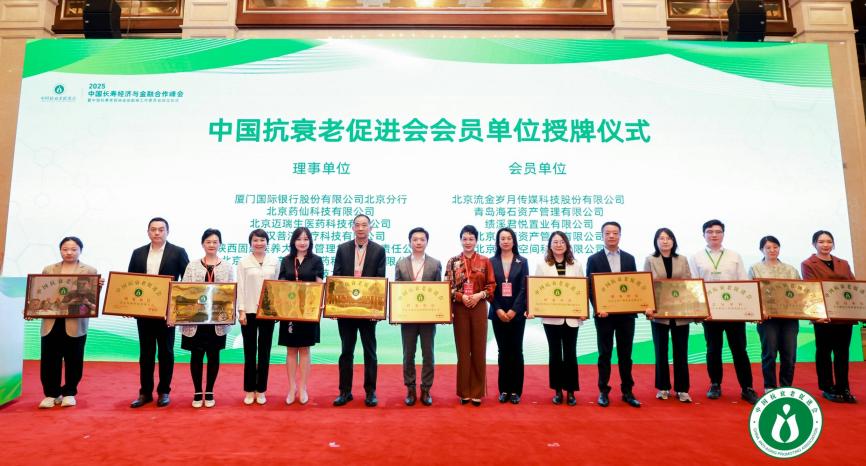
Group 1 - The 2025 China Longevity Economy and Financial Cooperation Summit was held in Beijing, focusing on "New Quality Productivity Driving Longevity Economy, Financial Empowerment Leading Healthy Future" [1] - The establishment of the Investment and Financing Working Committee of the China Anti-Aging Promotion Association aims to promote the transformation of innovative achievements in fields such as biopharmaceuticals and smart elderly care [3] - Xiamen International Bank's Beijing branch has become a council member of the China Anti-Aging Promotion Association, marking a new chapter in the development of elderly financial services [1][3] Group 2 - The newly formed committee will create an integrated platform for industry, academia, research, and investment, facilitating cross-sector collaboration and resource sharing [3] - Xiamen International Bank's Beijing branch has tailored its services for elderly clients, including traditional services and specialized facilities to enhance accessibility [3] - As of April 2025, the asset management scale for elderly clients at the Beijing branch exceeded 13.5 billion yuan, reflecting a nearly 35% increase since early 2024 [3] Group 3 - The Beijing branch plans to support the coordinated development of elderly finance and health industries through credit resources, connecting capital with industry via the Investment and Financing Working Committee [3]
清华五道口养老金融 50 人论坛:养老金融评论
清华五道口· 2025-05-13 02:00
Investment Rating - The report does not explicitly provide an investment rating for the industry Core Insights - The report emphasizes the need for a national action plan to address aging population challenges and the integration of technology in the elderly care sector [10][15][49] - It highlights the potential of the silver economy as a new growth point, predicting that by 2050, the elderly industry could account for over one-third of GDP [18][23] - The report discusses the importance of optimizing the pension system and enhancing the quality of pension finance to support China's modernization efforts [78] Summary by Sections Key Focus - The report discusses the government's comprehensive approach to aging, shifting from merely addressing elderly care to a holistic life-cycle support system [10][15] - It highlights the role of artificial intelligence in transforming the elderly care industry, improving service efficiency and quality [49][50] - The report also addresses the need for increased basic pension standards and a more scientific adjustment mechanism for pensions [57][59] Industry Research - The report includes insights on optimizing the pension system, emphasizing the need for a multi-pillar approach and improved structural design [63][74] - It discusses the progress and future outlook of China's pension insurance system, noting significant reforms and the need for further integration and coverage [69][73] - The report suggests enhancing the role of commercial insurance in the healthcare sector to alleviate funding bottlenecks [33][39] Forum Dynamics - The report reflects on the discussions held at the Tsinghua PBCSF Pension Finance Forum, focusing on the intersection of technology and finance in the elderly care sector [10][49] - It emphasizes the importance of collaboration among various stakeholders to create a robust elderly care ecosystem [10][49] - The report also highlights the need for policy support to facilitate the integration of technology in elderly care services [50][52]