
霸权行径

Search documents
中方表态:深表震惊,强烈谴责
Xin Lang Cai Jing· 2026-01-03 15:09
答:中方对美方悍然对一个主权国家使用武力并对一国总统动手深表震惊,予以强烈谴责。美方的这种 霸权行径,严重违反国际法,侵犯委内瑞拉主权,威胁拉美和加勒比地区和平与安全,中方坚决反对。 我们敦促美方遵守国际法及联合国宪章宗旨和原则,停止侵犯别国的主权安全。 来源:长安街知事微信公众号 1月3日,外交部官网发布《外交部发言人就美国对委内瑞拉实施军事打击答记者问》。 问:据报道,美国对委内瑞拉实施军事打击。特朗普在"真实社交"发文称,美国已成功对委内瑞拉及其 领导人马杜罗实施大规模打击行动,马杜罗及其夫人已被控制并移送出境。中方对此有何评论? 转自:北京日报客户端 ...
外交部:美方悍然对一国总统动手,中方深表震惊、强烈谴责
Xin Lang Cai Jing· 2026-01-03 15:09
外交部网站1月3日消息,外交部发言人就美国对委内瑞拉实施军事打击答记者问。 答:中方对美方悍然对一个主权国家使用武力并对一国总统动手深表震惊,予以强烈谴责。美方的这种 霸权行径,严重违反国际法,侵犯委内瑞拉主权,威胁拉美和加勒比地区和平与安全,中方坚决反对。 我们敦促美方遵守国际法及联合国宪章宗旨和原则,停止侵犯别国的主权安全。 问:据报道,美国对委内瑞拉实施军事打击。特朗普在"真实社交"发文称,美国已成功对委内瑞拉及其 领导人马杜罗实施大规模打击行动,马杜罗及其夫人已被控制并移送出境。中方对此有何评论? ...

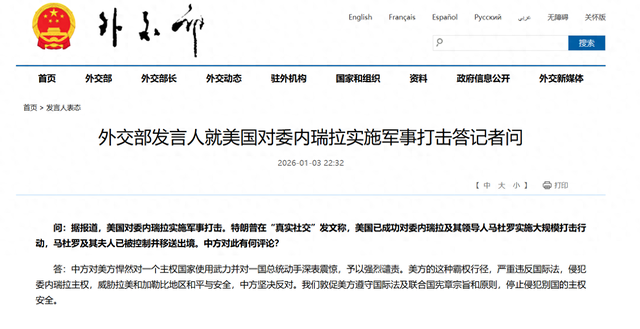
外交部发言人就美国对委内瑞拉实施军事打击答记者问
财联社· 2026-01-03 15:03
据外交部网站, 外交部发言人就美国对委内瑞拉实施军事打击答记者问。 问:据报道,美国对委内瑞拉实施军事打击。特朗普在"真实社交"发文称,美国已成功对委内瑞拉及其领导人马杜罗实施大规模打击行动, 马杜罗及其夫人已被控制并移送出境。中方对此有何评论? 答:中方对美方悍然对一个主权国家使用武力并对一国总统动手深表震惊,予以强烈谴责。美方的这种霸权行径,严重违反国际法,侵犯委 内瑞拉主权,威胁拉美和加勒比地区和平与安全,中方坚决反对。我们敦促美方遵守国际法及联合国宪章宗旨和原则,停止侵犯别国的主权 安全。 ...

外交部发言人就美国对委内瑞拉实施军事打击答记者问
21世纪经济报道· 2026-01-03 14:55
答:中方对美方悍然对一个主权国家使用武力并对一国总统动手深表震惊,予以强烈谴责。美 方的这种霸权行径,严重违反国际法,侵犯委内瑞拉主权,威胁拉美和加勒比地区和平与安 全,中方坚决反对。我们敦促美方遵守国际法及联合国宪章宗旨和原则,停止侵犯别国的主权 安全。 来源丨央视新闻 编辑丨江佩佩 美国司法部长:马杜罗已被起诉,被控多项罪名 特朗普称已抓获委内瑞拉总统 SFC 21君荐读 外交部发言人就美国对委内瑞拉实施军事打击答记者问。 问:据报道,美国对委内瑞拉实施军事打击。特朗普在"真实社交"发文称,美国已成功对委内 瑞拉及其领导人马杜罗实施大规模打击行动,马杜罗及其夫人已被控制并移送出境。中方对此 有何评论? ...
中方表态:深表震惊,强烈谴责
中国基金报· 2026-01-03 14:54
■ 中国基金报内容矩阵 ■ 外交部发言人就美国对委内瑞拉实施军事打击答记者问 问:据报道,美国对委内瑞拉实施军事打击。特朗普在"真实社交"发文称,美国已成功对委 内瑞拉及其领导人马杜罗实施大规模打击行动,马杜罗及其夫人已被控制并移送出境。中方 对此有何评论? 答:中方对美方悍然对一个主权国家使用武力并对一国总统动手深表震惊,予以强烈谴责。 美方的这种霸权行径,严重违反国际法,侵犯委内瑞拉主权,威胁拉美和加勒比地区和平与 安全,中方坚决反对。我们敦促美方遵守国际法及联合国宪章宗旨和原则,停止侵犯别国的 主权安全。 les & FR 点击下载中国基金报客户端 来源:外交部网站 巅峰对话 投资热点说 ETF风向标 IPO情报站 fe o 1 ■ a a - 444 and 4 4 CHINAFUND CHINAFUND CHINAFUND CHINAFUND 开盘速递 港股日报 全球早班车 数说人物 √ � [ 8 a 4 a g a d 4 4 4 CHINAFUND CHINAFUND CHINAFUND CHINAFUND ●微信搜一搜( 〔 〔 中国基金报 〕即刻获取财经资讯 ...
外交部发言人就美国对委内瑞拉实施军事打击答记者问
Yang Shi Xin Wen· 2026-01-03 14:38
外交部发言人就美国对委内瑞拉实施军事打击答记者问。 (文章来源:央视新闻) 问:据报道,美国对委内瑞拉实施军事打击。特朗普在"真实社交"发文称,美国已成功对委内瑞拉及其 领导人马杜罗实施大规模打击行动,马杜罗及其夫人已被控制并移送出境。中方对此有何评论? 答:中方对美方悍然对一个主权国家使用武力并对一国总统动手深表震惊,予以强烈谴责。美方的这种 霸权行径,严重违反国际法,侵犯委内瑞拉主权,威胁拉美和加勒比地区和平与安全,中方坚决反对。 我们敦促美方遵守国际法及联合国宪章宗旨和原则,停止侵犯别国的主权安全。 ...
4天过去了,中美还是没签协议,美财长告知中国,美国打算提高关税
Sou Hu Cai Jing· 2025-11-05 18:06
Core Viewpoint - The recent U.S.-China meeting in Busan appeared positive, but shortly after, U.S. Treasury Secretary Mnuchin announced plans to increase tariffs on China, indicating underlying tensions and urgency from the U.S. side due to China's rare earth export controls [1][5]. Group 1: U.S. Strategy and Actions - The U.S. is attempting to balance its need for China's rare earth materials, crucial for high-tech military applications, while simultaneously pressuring China through tariff threats [1][3]. - The U.S. aims to form alliances with other countries for rare earth mining and refining to reduce dependence on China, but faces significant challenges in achieving this goal [8]. - The U.S. is also engaging with South Korea to enhance military capabilities, including nuclear submarines, which is seen as a direct counter to China [3][8]. Group 2: China’s Response and Position - China maintains a firm stance on its diplomatic principles of mutual respect and peaceful coexistence, indicating that it will not be easily intimidated by U.S. threats [9][11]. - The lack of a signed agreement post-Busan suggests that while there may be some areas of cooperation, significant negotiation and strategic maneuvering are still required [11][12]. - China's ability to leverage its rare earth resources in response to U.S. actions highlights the potential for a tit-for-tat dynamic in the ongoing trade tensions [11].
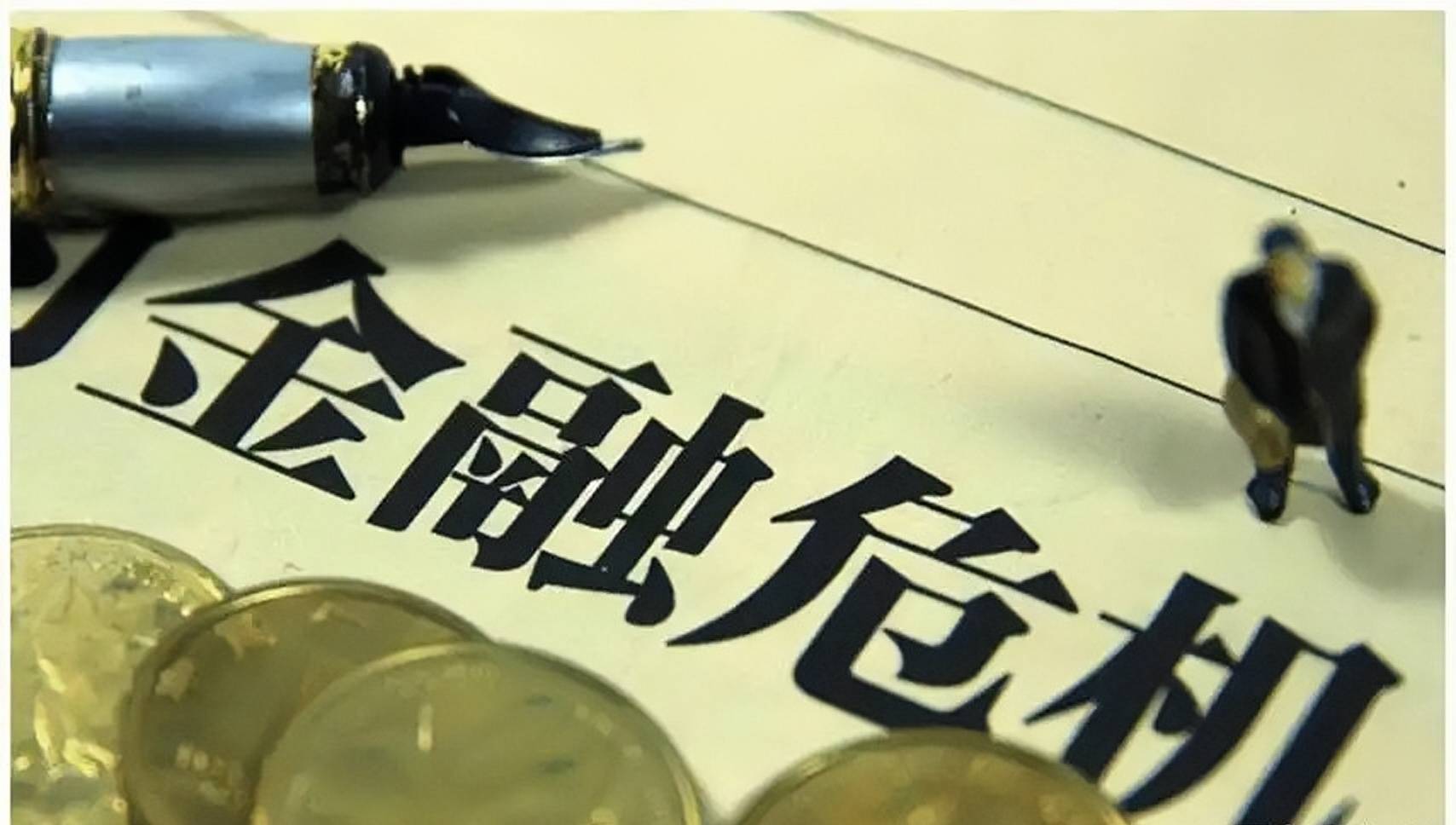
李在明警告:若按美国要求投资3500亿美元,会重现97年金融危机
Sou Hu Cai Jing· 2025-09-23 05:52
Group 1 - The article discusses the complex political situation faced by South Korean politician Lee Jae-myung, particularly regarding relations with China and the United States [1] - There is a rising anti-China sentiment in South Korea, which Lee Jae-myung attributes to possible orchestrated efforts, emphasizing the importance of maintaining cooperative relations with China for South Korea's economic development [3] - A significant issue is the trade dispute with the U.S., where a verbal agreement was reached for South Korea to invest up to $350 billion, but the U.S. later demanded renegotiation, claiming the terms were too favorable to South Korea [3][4] Group 2 - Disagreements have emerged regarding the execution of the $350 billion investment, particularly in terms of investment methods, areas of focus, and profit distribution [4] - Lee Jae-myung advocates for indirect investment methods through financial institutions, while the U.S. insists on direct cash investments [6] - South Korea aims to invest in its own key industries like shipbuilding and semiconductors, but the U.S. wants to control the investment direction [7] Group 3 - The U.S. proposed a profit-sharing model where it would take 90% of profits after cost recovery, which Lee argues is unsustainable given South Korea's economic context [7] - Lee Jae-myung warns that accepting U.S. conditions could lead to an economic crisis similar to the 1997 financial crisis, highlighting a shift from the previous administration's approach [9] - The ongoing negotiations reflect a broader struggle for South Korea to balance its alliance with the U.S. while protecting its national interests [12]
11国联手反美!抢在莫迪来中国之前,80岁总统下令,直接盯上美国!中国必须做好准备
Sou Hu Cai Jing· 2025-08-13 03:08
Core Points - The recent international situation has seen 11 countries unite against the U.S., particularly in response to aggressive tariff policies imposed by the U.S. government [1][3] - Brazil's President Lula has taken a strong stance against U.S. tariffs, which have significantly impacted trade relations, marking the lowest point in U.S.-Brazil relations in 200 years [3] - Brazil and India are collaborating to counter U.S. tariffs, aiming to increase bilateral trade to $20 billion by 2030 and expand trade agreements [3][5] - The 11 BRICS nations have collectively criticized the U.S. for its unilateral tariff actions, indicating a growing resistance to U.S. economic dominance [3][5] - Brazil is actively seeking to strengthen trade ties with emerging economies and has filed a request with the WTO to discuss U.S. tariffs [3][5] - India has also expressed its discontent with U.S. tariffs, emphasizing the need to protect its domestic industries while maintaining a firm stance against U.S. pressure [5] - The actions of these countries reflect a broader trend towards de-dollarization and a desire to reduce reliance on the U.S. dollar in international trade [5][7] - China plays a crucial role in supporting these nations, as evidenced by its quick response to U.S. tariffs on Brazilian coffee, allowing exports to China [7] Summary by Sections U.S. Tariff Policies - The U.S. has imposed significant tariffs on Brazilian and Indian products, with rates reaching as high as 50% [1][3] - These actions have provoked strong reactions from both Brazil and India, leading to discussions on how to respond collectively [3][5] Brazil's Response - Brazil is enhancing trade relations with emerging economies and has initiated discussions to expand trade agreements with Mexico [3] - The Brazilian government has also approached the WTO regarding U.S. tariffs and is considering joint actions with other countries [3][5] India's Position - India has declared U.S. tariffs as unfair and is committed to protecting its domestic industries, despite internal pressures to concede [5] - The Indian government is prepared to take necessary actions to safeguard its economic interests [5] BRICS Coalition - The 11 BRICS nations have united to challenge U.S. economic policies, indicating a shift towards greater cooperation among emerging economies [3][5] - This coalition reflects a growing sentiment against U.S. economic hegemony and a push for a more balanced global trade system [5][7] De-dollarization Efforts - The collective actions of these countries signify a move towards reducing dependence on the U.S. dollar, with agreements to conduct trade in local currencies [5][7] - This trend is expected to reshape global trade dynamics and reduce U.S. influence in international markets [7]
英媒曝美国施压越南减少对华科技依赖,专家:这是美国一贯的霸权行径
Huan Qiu Shi Bao· 2025-06-17 22:58
Core Viewpoint - The United States is pressuring Vietnam to reduce its reliance on Chinese technology in the assembly and export of equipment to the U.S., aiming to create a global technology supply chain that excludes China [1][2] Group 1: U.S. Pressure on Vietnam - The U.S. has announced a 46% tariff on Vietnamese products, which is set to take effect on July 9, potentially disrupting Vietnam's export-driven economic model [1] - Vietnam has been asked to "reduce dependence on Chinese high-tech," which is part of a broader supply chain restructuring to decrease U.S. reliance on Chinese components [1][2] Group 2: Impact on Vietnamese Economy - The high tariffs could significantly limit the entry of Vietnamese manufactured goods into the U.S. market, affecting major tech companies like Apple and Samsung that rely on Chinese components [1] - Vietnamese manufacturers are expressing willingness to cooperate with the government in sourcing local components, but they warn that achieving this goal will require time and technical support [2] Group 3: Ongoing Negotiations and International Relations - Recent trade negotiations between the U.S. and Vietnam have made progress, but key issues remain unresolved, with Vietnamese representatives finding U.S. demands to be "tough" and "difficult to meet" [2] - Despite U.S. trade pressures, Vietnam is actively pursuing international cooperation, recently joining the BRICS partnership, indicating a strengthening relationship with BRICS nations [2]