
靶向治疗

Search documents
乐普生物-B(02157.HK)中期扭亏为盈至2930万元
Ge Long Hui· 2025-08-20 08:43
Core Viewpoint - Lepu Biopharma-B (02157.HK) reported significant revenue growth and achieved profitability for the first time, with revenue of approximately RMB 466 million for the six months ending June 30, 2025, representing 3.5 times the revenue of the same period in 2024, and a profit of approximately RMB 29.3 million compared to a loss of RMB 197 million in the previous year [1][2]. Group 1 - The company focuses on innovative biopharmaceuticals in the oncology treatment field, particularly targeted therapy and immunotherapy, utilizing advanced ADC technology [1]. - The company has established an integrated end-to-end capability covering all key aspects of the biopharmaceutical value chain, from drug discovery to clinical development and compliant production [1]. - The company aims to continuously develop differentiated product pipelines through strategic collaborations and its own innovation capabilities [1]. Group 2 - The company has strategically laid out multiple oncology product pipelines, including one clinical/commercial candidate, nine clinical candidates, and three combination therapy candidates [2]. - Among the nine clinical candidates, seven are targeted therapies and two are immunotherapies, with several candidates receiving FDA designations such as Breakthrough Therapy Designation (BTD), Orphan Drug Designation (ODD), and Fast Track Designation (FTD) [2]. - The company is actively working on establishing and developing new technology platforms as part of its innovation engine [2].
全球抗癌症药物市场前10强生产商排名及市场占有率
QYResearch· 2025-08-19 08:42
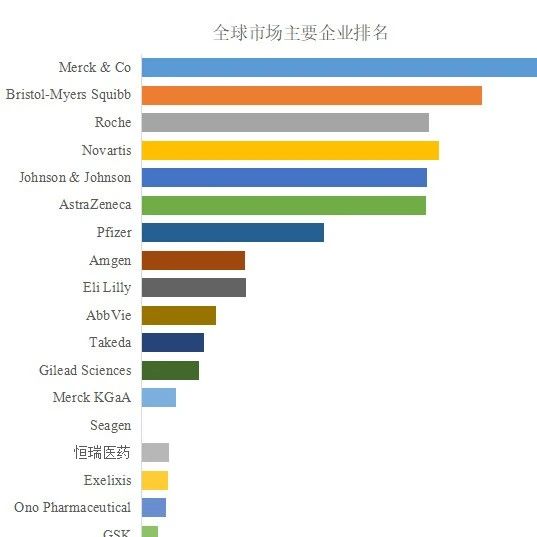
Core Viewpoint - The global cancer drug market is projected to reach $429.16 billion by 2031, with a compound annual growth rate (CAGR) of 11.1% in the coming years [1][11]. Market Overview - The major manufacturers in the global cancer drug market include Merck & Co, Bristol-Myers Squibb, Roche, Novartis, and Johnson & Johnson, which collectively hold approximately 55.0% of the market share in 2024 [5]. - Targeted therapy is the leading product type, accounting for about 55.1% of the market share [6]. - Blood-related cancers represent the largest demand source, making up approximately 22.3% of the market [9]. Market Drivers - The continuous rise in global cancer incidence and mortality rates, particularly for lung, breast, and colorectal cancers, drives the demand for effective treatment drugs [11]. - Increased health awareness and advancements in diagnostic technologies have led to earlier cancer detection, expanding the market size [11]. - Rapid developments in biotechnology have introduced revolutionary breakthroughs in cancer drug research, such as targeted therapies, immunotherapies, ADC drugs, and CAR-T cell therapies, significantly improving treatment outcomes and patient survival rates [11]. - Supportive government policies, including expedited drug reviews and incentives for rare disease medications, create a favorable environment for innovation [11]. - Growing investment enthusiasm in the capital market for innovative oncology drugs provides strong research and development motivation for small and medium-sized biotech companies [11]. Market Challenges - The cancer drug market faces challenges such as high research and development costs, long timelines, and high failure rates, with new drugs taking years to transition from the lab to clinical use [12]. - Despite the introduction of new drugs, many innovative treatments are expensive, and limited insurance coverage restricts accessibility and affordability in certain regions [12]. - Scientific issues like targeted resistance, tumor heterogeneity, and immune evasion remain unresolved, affecting the sustainability and broad applicability of treatment effects [12]. - Increasing regulatory scrutiny on clinical trial data quality, safety assessments, and ethical compliance raises the industry entry barriers [12]. Future Trends - The future development of cancer drugs will focus on more precise, individualized, and diversified approaches [13]. - Advances in genomics, transcriptomics, and proteomics will refine tumor molecular typing, shifting cancer treatment from traditional broad-spectrum therapies to targeted and precise models [13]. - Targeted drugs will continue to be developed for more mutation sites, such as KRAS, HER2, and EGFR, enabling precise interventions for specific patient populations [13]. - Immunotherapy will expand its application boundaries, with PD-1/PD-L1 inhibitors and CTLA-4 inhibitors being used in combination with other therapies to enhance efficacy and overcome immune tolerance issues [13]. - The concept of personalized treatment will be integrated throughout the drug development process, utilizing patient biomarkers and dynamic efficacy assessments to improve treatment outcomes and quality of life [13].

靶向施策补短板 就业服务“不断线”
Zhong Guo Qing Nian Bao· 2025-08-09 22:42
Group 1 - The core viewpoint emphasizes the importance of continuous employment services for graduates, highlighting the "never disconnect" approach in job placement and support [2][10] - Yuxi Normal University has established a service hub for unemployed graduates, focusing on job matching, entrepreneurial incubation, and skills training [1][2] - The "night economy" is leveraged to enhance recruitment efforts, with night job fairs and interactive activities to provide efficient employment services [1] Group 2 - Many universities are adopting a "precise portrait" strategy to identify and assist graduates facing employment challenges, ensuring tailored support for each individual [3][4] - Specific measures include one-on-one mentoring, skills training, and psychological counseling to enhance graduates' employability [4][6] - Schools are implementing targeted programs, such as alumni-led workshops and practical training sessions, to address specific skill gaps among students [7][8] Group 3 - The education sector is actively promoting grassroots employment opportunities, encouraging graduates to consider positions in local communities [9] - Initiatives like financial subsidies and structured recruitment programs are being introduced to attract graduates to rural and community service roles [9] - The Ministry of Education is advocating for a correct employment mindset among graduates, emphasizing the value of practical experience in job readiness [9][10]
2025年结直肠癌药物品牌推荐:掌握市场新动态,抢占治疗先机
Tou Bao Yan Jiu Yuan· 2025-07-07 12:11
Investment Rating - The report does not explicitly provide an investment rating for the colorectal cancer drug industry Core Insights - Colorectal cancer is the third most common malignant tumor globally, with 2 million patients in 2023, including 537,000 in China, driving market growth due to rising incidence rates [4] - The domestic pharmaceutical industry is increasingly looking to expand internationally, with innovative drugs like furmonertinib setting benchmarks [4][18] - The market is expected to grow from 31.4 billion RMB in 2024 to 39 billion RMB by 2028, with a compound annual growth rate (CAGR) of 5.57% [8] Market Background - Colorectal cancer drug types are diverse, with treatment plans tailored to individual patient conditions [5] - The evolution of colorectal cancer drugs has seen significant advancements from the introduction of 5-FU in 1957 to the recent approval of innovative therapies [6] Market Status - The colorectal cancer drug market size increased from 22.3 billion RMB in 2019 to 29.7 billion RMB in 2023, with a CAGR of 7.43% [7][8] - The demand for treatment is urgent, with 83% of patients diagnosed at advanced stages and 44% experiencing metastasis [11] Market Competition - The competitive landscape includes a tiered structure with leading companies like Fuhong Hanlin and Meiji Pharma in the first tier, followed by others like Hengrui Medicine and Akeso [17][18] - The report highlights ten recommended brands, including Xiansheng Pharmaceutical and Weicheng Bio, which have made significant advancements in drug development [19][20][21] Development Trends - Precision therapy is becoming mainstream, with targeted and immune therapies establishing their roles in treatment [31] - Local innovative pharmaceutical companies are rapidly emerging, supported by global collaborations and comprehensive product lines [32] - Upgraded patient demands are driving innovations in service models, focusing on unmet clinical needs [33]
每周股票复盘:昭衍新药(603127)参与投资设立基金及股本情况更新
Sou Hu Cai Jing· 2025-07-05 18:05
Group 1 - The stock price of Zhaoyan New Drug (603127) increased by 16.95% this week, closing at 22.36 yuan, with a weekly high of 22.76 yuan and a low of 18.92 yuan [1] - Zhaoyan New Drug's current total market capitalization is 16.758 billion yuan, ranking 9th in the medical services sector and 950th among all A-shares [1] Group 2 - Zhaoyan New Drug announced its plan to invest up to 20 million yuan in the Huaxia Zhiyuan Venture Capital Fund, which has a target fundraising scale of 35 million yuan [2][4] - The fund will focus on equity investments in unlisted companies related to molecular diagnostics and targeted therapy, with a management fee of 1% per year based on the total capital contributions [2] - As of June 30, 2025, the legal registered capital of Zhaoyan New Drug's H-shares and A-shares remains unchanged at 118,995,206 shares and 630,482,128 shares, respectively [3][4]

创新药BD专题论坛 - 买全球最好的中国创新药
2025-06-26 15:51
Summary of Key Points from Conference Call Records Industry Overview - The Chinese pharmaceutical industry is projected to exceed $60 billion in total transactions in 2024, with a significant increase in profitability expected for innovative drug companies between 2025 and 2026 due to increased scale and operational leverage [1][4][5]. - The gap between the Chinese pharmaceutical industry and that of Europe and the US is gradually narrowing, with some areas achieving synchronization or even surpassing Western counterparts in drug development timelines [1][7]. Core Insights and Arguments - The capital market has a significant impact on the development of China's biopharmaceutical sector, with the Hong Kong Stock Exchange and the STAR Market providing essential funding support for research and production capacity expansion [1][3][8]. - Collaborations with Big Pharma typically yield higher commercialization returns, with the amount of transactions closely linked to the project stage, where later stages present lower R&D risks and higher chances of successful drug development [1][10]. - The trend of Chinese innovative drugs entering international markets is strengthening, primarily through licensing agreements, with expectations for more companies to establish commercialization teams in Europe and the US [1][11]. Financial Performance and Market Dynamics - The domestic innovative drug market is accelerating, with A-share companies (excluding BeiGene) experiencing revenue growth rates of approximately 30%-40%. The operational leverage effect is evident, with a projected 78% reduction in losses in 2025 and expectations for sector-wide profitability in 2026 [1][12]. - The success rate of product licensing is generally higher than that of non-collaborative products, although inherent R&D risks remain [1][6]. Emerging Trends and Future Outlook - The Chinese market environment is improving, with stable policies and pricing for medical insurance, laying a solid foundation for both domestic and international market development [1][5]. - The innovative drug export trend began around 2010, reaching a critical point between 2020 and 2021, with a notable increase in the number of Chinese innovative drugs entering international markets [1][4]. Additional Important Insights - The rapid development of Contract Research Organizations (CROs) like WuXi AppTec has provided substantial support to the industry, alongside continuous investment in basic scientific research [1][3]. - The unique characteristics of innovative drugs, such as the PD-1/TIGIT bispecific antibody CG005, highlight the potential for enhanced immune response and tumor suppression through multi-target exploration [2][16][17]. - The clinical development of drugs like CG006 and the exploration of combination therapies in oncology demonstrate the innovative approaches being taken to address complex cancer treatment challenges [14][22][25]. This summary encapsulates the key points from the conference call records, focusing on the Chinese pharmaceutical industry's growth, financial performance, emerging trends, and the innovative strategies being employed by companies within the sector.


21CC|从“绝症判决”到“带瘤生存”十年:如何推动肺癌罕见靶点规范化诊治?
2 1 Shi Ji Jing Ji Bao Dao· 2025-05-21 05:25
Core Insights - Lung cancer is the most prevalent and deadly malignancy in China, with approximately 1.0606 million new cases and 733,300 deaths reported in 2022, accounting for 22.0% and 28.5% of all cancer cases respectively [1][3] - Advances in genetic testing and targeted therapies have improved survival rates for patients with rare targets like ALK and ROS1, transforming lung cancer into a manageable chronic disease for some patients [1][2] - There is a pressing need to enhance awareness and understanding of rare targets among clinicians and to ensure equitable access to medical resources for comprehensive lung cancer diagnosis and treatment [1][5] Group 1: Disease Burden and Treatment Advances - Lung cancer accounts for 80%-85% of all cases of non-small cell lung cancer (NSCLC) in China, with ROS1 fusion positivity occurring in about 2% of patients, most of whom are diagnosed at advanced stages [3][4] - The introduction of targeted therapies has shifted the treatment paradigm from chemotherapy to personalized molecular treatments, with FDA-approved therapies targeting mutations such as EGFR, ALK, and ROS1 [4][7] - Research indicates that with appropriate targeted treatment, patients with rare targets can significantly extend their survival, with some achieving over ten years [1][2] Group 2: Challenges in Diagnosis and Treatment - The actual rate of genetic testing for ROS1 fusion is significantly lower than recommended, influenced by regional differences in physician awareness and patient access to testing [5][6] - Economic burdens and the high costs of testing contribute to the underutilization of targeted therapies, with many patients opting for chemotherapy due to delays in obtaining test results [6][8] - There is a need for improved detection methods and faster turnaround times for test results to enhance patient outcomes [6][10] Group 3: Standardization and Education - Standardization and quality control in cancer diagnosis and treatment are critical, with ongoing efforts to improve the skills of clinicians in rural areas through education and training programs [9][10] - The establishment of efficient testing platforms is essential to manage the increasing number of lung cancer patients, requiring collaboration among manufacturers, enterprises, and government [10]
Nuvectis Pharma(NVCT) - 2025 FY - Earnings Call Transcript
2025-05-20 15:30
Financial Data and Key Metrics Changes - The company finished the first quarter with just under $30 million in cash, with a projected cash runway extending into the first quarter of 2027, indicating a strong financial position for a small company in the current market [51]. Business Line Data and Key Metrics Changes - NXP-800 is currently in a Phase Ib program targeting aggressive subsets of ovarian cancer, with early data showing a partial response and stable disease in initial patients, although there were concerns regarding thrombocytopenia [15][17]. - NXP-900 is in a Phase 1a dose escalation, with early indications of safety and significant SRC inhibition, suggesting it may be a best-in-class SRC inhibitor [35][39]. Market Data and Key Metrics Changes - The addressable patient populations for NXP-800 and NXP-900 vary significantly, with potential expansions into larger indications like endometrial cancer if positive signals are observed in ongoing studies [22]. Company Strategy and Development Direction - The company is focused on precision medicine in oncology, aiming to address severe unmet medical needs with targeted therapies [4]. - There is a strategic emphasis on developing NXP-900 as a transformational drug with potential applications across multiple tumor types, leveraging its selective inhibition of SRC kinases [24][28]. Management's Comments on Operating Environment and Future Outlook - Management expressed optimism about the upcoming data updates for both NXP-800 and NXP-900, indicating that the next few months could be eventful and potentially transformational for the company [51][53]. - The management team highlighted their extensive experience in successfully bringing drugs to market, which they believe positions the company well for future success [6]. Other Important Information - The insider ownership is significant, with co-founders and major shareholders collectively owning about 50-55% of the company, reflecting strong alignment with shareholder interests [51]. - The company has seen consistent insider buying since going public, indicating confidence in the company's future prospects [51]. Q&A Session Summary Question: What is the current status of NXP-800 and NXP-900? - NXP-800 is in a Phase Ib program with encouraging early results, while NXP-900 is completing Phase 1a and preparing to enter Phase 1b soon [51][53].
Coherus BioSciences (CHRS) Update / Briefing Transcript
2025-04-28 21:30
Coherus BioSciences (CHRS) Update Summary Company Overview - **Company**: Coherus BioSciences - **Focus**: Development of CHS-114, a cytolytic CCR8 targeting antibody for cancer immunotherapy Key Points from the Call Industry and Product Development - **Phase I Study**: The call discussed the Phase I study results of CHS-114 as a CCRA antibody, evaluated both as monotherapy and in combination with Torpalumab in patients with advanced solid tumors, particularly head and neck cancer [2][4] - **Target**: CHS-114 targets CCR8, a G protein-coupled receptor, which is selectively expressed on tumor-resident T regulatory cells (Tregs) [7][6] - **Mechanism**: The goal is to deplete Tregs to enhance the immune response against tumors, turning "cold" tumors "hot" by allowing CD8 T cells to infiltrate [5][6] Clinical Results - **Preclinical Data**: Preclinical models showed that treatment with CHS-114 led to significant depletion of Tregs and enhanced antitumor activity when combined with PD-1 inhibitors [8][9] - **Patient Population**: The study included patients with advanced solid tumors, primarily head and neck cancer, with a median age of around 60 years and a majority being male [23] - **Safety Profile**: The Phase I study demonstrated an acceptable safety profile with no dose-limiting toxicities (DLTs) and a stable disease rate of approximately 50% in heavily pretreated patients [17][25] Efficacy and Biomarker Data - **Response Rates**: The combination therapy showed promising results, with a notable partial response in a patient who had previously failed multiple lines of therapy [26][29] - **Biomarker Analysis**: Significant reductions in CCR8 positive Tregs were observed, with a decrease of 52% to 97% after treatment, indicating a shift towards a more inflamed tumor microenvironment [43][44] - **Durability of Response**: The combination therapy demonstrated durable responses, with ongoing evaluations to assess long-term efficacy [28][26] Future Directions - **Expansion Studies**: Coherus is expanding its studies to include gastric cancer, with ongoing recruitment for trials assessing CHS-114 in combination with Torpalumab [20][19] - **Market Potential**: The second-line treatment space for metastatic head and neck cancer is identified as an unmet medical need, with current standard treatments showing low response rates [77][78] Additional Insights - **Combination Therapy**: The potential for combining CHS-114 with T cell engagers and bispecific antibodies was discussed, emphasizing the importance of a robust CD8 T cell infiltrate for effective treatment [64][65] - **Patient Characteristics**: The responder in the study had a low PD-L1 score, suggesting that targeting Tregs may provide benefits even in patients with traditionally low immunogenicity [81][82] Conclusion - Coherus BioSciences is advancing its clinical development of CHS-114, showing promising early results in targeting CCR8 positive Tregs to enhance immune responses in cancer therapy. The ongoing studies aim to address significant unmet needs in the treatment of advanced solid tumors, particularly in head and neck cancer.

医药:CRO龙头业绩持续向好,全球医药投融资市场有望转暖
Tai Ping Yang· 2025-03-20 07:39
Investment Rating - The industry investment rating is "Positive" with expectations of overall returns exceeding the CSI 300 Index by more than 5% in the next six months [15]. Core Insights - The leading CRO company, WuXi AppTec, has shown continuous improvement in performance, with a revenue of 39.241 billion RMB in 2024, reflecting a year-on-year growth of 5.2% after excluding COVID-19 commercialization projects [3]. - The adjusted non-IFRS net profit for WuXi AppTec reached 10.583 billion RMB, with a net profit margin of 27.0%, marking a historical high [3]. - The company anticipates a revenue growth of 10%-15% in 2025, projecting total revenue to reach between 41.5 billion and 43 billion RMB [5]. - The global medical investment market is showing signs of recovery after two years of decline, with 2,291 investment deals completed in 2024, totaling 58.2 billion USD, a slight increase of 1% compared to 2023 [7]. - Despite the positive outlook for global investment, domestic medical health financing in China decreased by 33% in 2024 compared to 2023, with only 7.3 billion USD raised [8]. Summary by Sections Company Performance - WuXi AppTec's revenue and profit have been steadily increasing, with Q4 2024 revenue reaching 11.54 billion RMB, a 45% increase from Q1 [3]. - The company has maintained a strong performance despite challenges, indicating robust strength and trust from overseas clients in Chinese CROs [5]. Market Trends - The biopharmaceutical sector remains the largest category for investment, with oncology drugs being a hot topic in domestic investments [13]. - The global biopharmaceutical financing landscape is dominated by projects related to AI in pharmaceuticals, weight-loss drugs, and immunotherapy, reflecting significant investor interest [13].
