
高水平科技自立自强

Search documents
范波会见清华大学党委书记邱勇一行
Su Zhou Ri Bao· 2026-02-08 00:39
Group 1 - The meeting between Suzhou's Party Secretary Fan Bo and Tsinghua University's Party Secretary Qiu Yong emphasized the importance of collaboration for high-tech innovation and quality development in Suzhou [1][2] - Suzhou aims to integrate education, technology, and talent development, creating a conducive environment for various talents to thrive [1] - Tsinghua University has a strong tradition of nurturing outstanding talents and has established a solid foundation for cooperation with Suzhou in areas such as innovation and talent cultivation [2] Group 2 - Both parties expressed a commitment to deepen practical cooperation in key areas such as core technology breakthroughs, talent training, and major platform construction [2] - The collaboration aims to provide strong support for achieving high-level technological self-reliance and innovation [2]
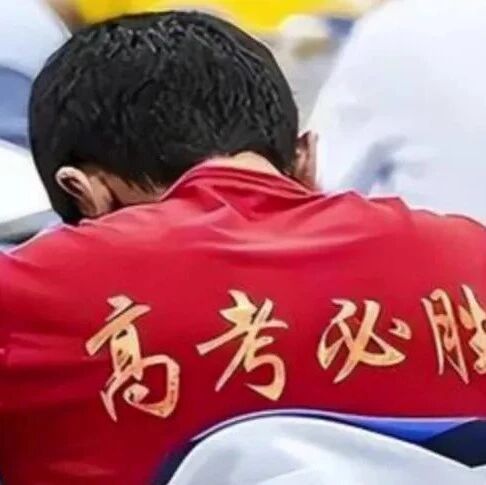
代表建议重塑上海高考选拔模式,不让理工人才被“刷”在门外
第一财经· 2026-02-07 04:11
Core Viewpoint - The article emphasizes the urgent need for reform in China's high school education system, particularly in the science curriculum, to better prepare students for the demands of the fourth industrial revolution, characterized by advancements in artificial intelligence and quantum technology [3][4]. Group 1: Current Education System Challenges - The current Shanghai high school academic level examination (referred to as "level examination") operates on a "3+3" model, where the three main subjects (Chinese, Mathematics, Foreign Language) have a maximum score of 150 each, while students choose three additional subjects from a selection of six, with each having a maximum score of 70 [3][4]. - The grading system for the additional subjects has led to a significant compression of differentiation in natural science subjects, which affects the ranking of top students, as the impact of these subjects is much less compared to the main subjects [4][6]. - A study from East China Normal University indicated that the proportion of students selecting Physics dropped from approximately 28% before the reform to 16% in 2017, although it has since increased to about 36,000 students due to university admission requirements [4][5]. Group 2: Recommendations for Reform - The article suggests a need to reshape the strategic importance of subjects by making Physics a core subject, giving it equal or near-equal weight to the main subjects in terms of scoring [6][7]. - It advocates for a reform in the evaluation and grading system to implement an "enhanced" grading system that provides raw score references for key subjects, particularly for admissions into specialized programs [6][7]. - The examination design should be optimized to include more comprehensive application questions, experimental design questions, and open-ended reasoning questions to assess higher-order thinking and scientific inquiry skills [7].

“十四五”石化行业经济运行整体稳中有进
Zhong Guo Hua Gong Bao· 2026-02-06 12:04
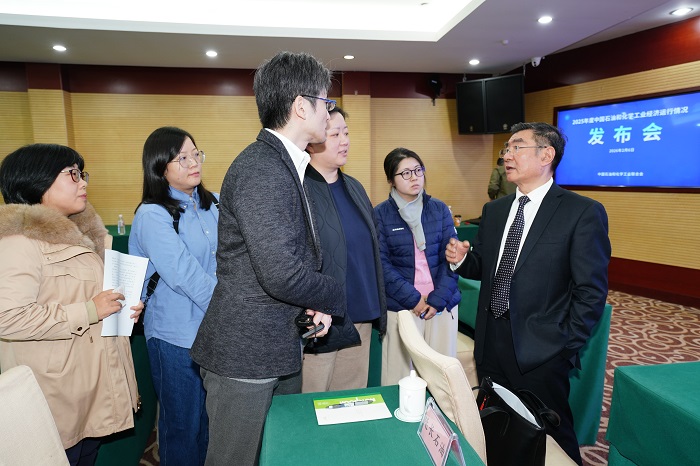
2025年营收、利润较2020年分别增长41.4%、36.2% 中化新网讯 2月6日,在京召开的2025年度中国石油和化学工业经济运行情况发布会上,记者了解 到,"十四五"石化行业经营业绩整体稳中有进,2025年营业收入、利润总额较2020年均实现大幅增长。 展望2026年,石化市场有望迎来"探底回升"、开启新的景气周期。中国石油和化学工业联合会(下称中 国石化联)党委书记、会长李云鹏参加发布会。会议由中国石化联副秘书长兼综合办公室(政策研究 室)主任薛学通主持。 对于2026年行业形势,中国石化联党委副书记、副会长傅向升在主旨报告中指出,石化产业结构调 整与优化的任务还很艰巨,原始创新、关键核心技术创新、高水平科技自立自强面临的挑战还很严峻。 但同时也面临全球产业链重构、全球经济温和增长等方面的机遇。随着全球产业布局重构和产能调整, 以及国内整治"内卷式"竞争效果的显现,2026年我国石化行业总体来看机遇将大于挑战,有利条件强于 不利因素,石化市场将走出前期的"底部徘徊"期,迎来"探底回升"。 面对新发展阶段高质量发展的新要求,傅向升指出,石化行业需把握并处理好传统产业与战略性新 兴产业、新旧发展动能转换、 ...
知名分析师张忆东履新
2 1 Shi Ji Jing Ji Bao Dao· 2026-02-05 09:17
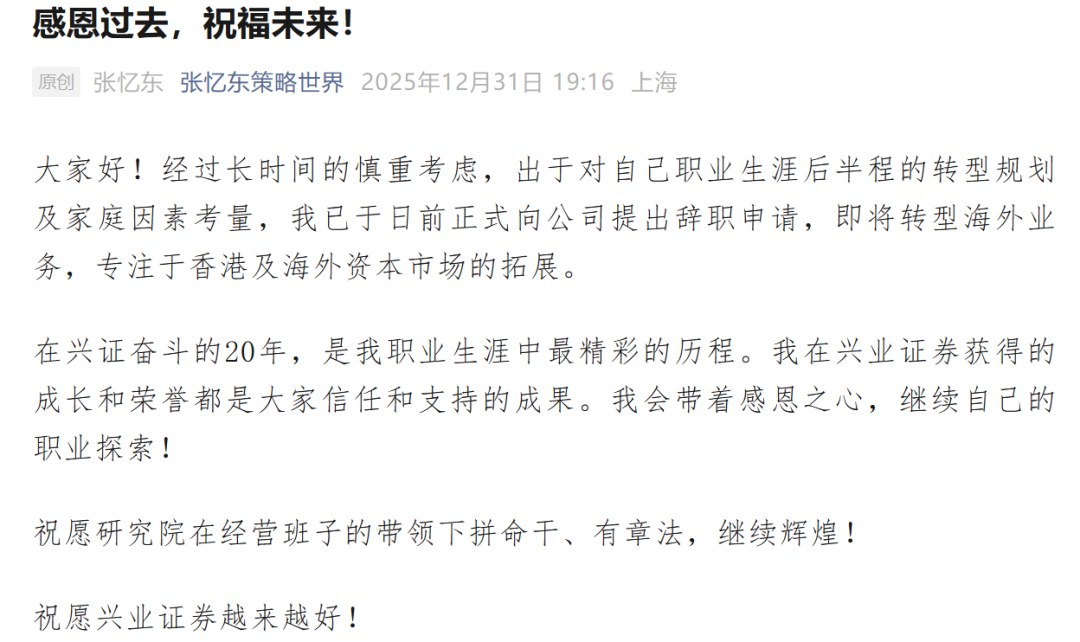
Group 1 - Zhang Yidong, a prominent strategist and chief economist, has officially joined Guotai Junan Securities, taking on roles in the executive committee and as head of the equity research department [1][4] - His departure from Industrial Securities was motivated by a desire to focus on overseas markets, particularly in Hong Kong, as part of his career transition [3][4] - Zhang has a strong academic background and extensive experience in the industry, having worked for nearly 20 years at Industrial Securities and received numerous awards for his research [4] Group 2 - Zhang Yidong maintains a positive outlook for the Chinese stock market in 2026, emphasizing the importance of structural opportunities and long-term growth over short-term economic fluctuations [5] - He identifies four key areas for investment in 2026: AI and technology, dividend assets in a low-interest environment, value discovery in traditional industries, and strategic assets like gold and rare earths [5] - Zhang highlights the return of foreign capital to China, particularly through passive ETFs and active management strategies, indicating an increased allocation towards Chinese assets [7]

开局之年如何布局?工银瑞信12位投研强将解码2026投资十大关键词
Cai Fu Zai Xian· 2026-02-04 03:34
Core Insights - The article emphasizes the importance of capturing investment opportunities aligned with China's 14th Five-Year Plan, focusing on high-quality development and technological self-reliance [1][2] Investment Strategies - The investment landscape for 2026 is shaped by the "14th Five-Year Plan," which serves as a guiding framework for strategic investments, emphasizing high-quality development and innovation [2] - Key investment opportunities are identified in three main sectors: traditional industries (e.g., chemicals, shipbuilding), emerging industries (e.g., AI, energy storage), and frontier technologies (e.g., embodied intelligence, nuclear fusion) [2] Innovation in Pharmaceuticals - Chinese innovative pharmaceutical companies are expected to experience significant growth, with the total amount of License-out agreements projected to exceed $121.6 billion by 2025, doubling from 2024 [3] - The introduction of AI models is anticipated to shorten drug development cycles and enhance success rates, leading to a revaluation of the innovative drug sector [3] Hong Kong Market Outlook - The Hong Kong stock market is viewed positively, with major investment banks highlighting the resilience and vitality of the Chinese economy, making it a preferred choice for asset allocation [4][5] - The analysis of Hong Kong tech assets reveals two main investment themes: a return to EPS growth and cash flow recovery, alongside a focus on leading internet platforms and emerging industries like smart driving [5] AI Industry Insights - AI is positioned as a transformative force comparable to previous industrial revolutions, with significant growth potential as applications become more widespread [6] - The commercialization of AI applications, particularly in smart driving and robotics, is expected to gain momentum, presenting investment opportunities in related companies [6] Renewable Energy Sector - The renewable energy sector is forecasted to continue its upward trend, with significant opportunities in lithium battery technology and new materials, particularly solid-state batteries [7] - The chemical industry is also expected to see a recovery in profitability, driven by demand growth and supply-side reforms [7] Financial and Real Estate Sector - The financial and real estate sectors are showing signs of recovery, with a rebound in second-hand housing transactions and improved profitability for insurance companies [8] - Investment opportunities are emerging in quality real estate firms and banks with strong wealth management capabilities [8] Consumer Sector Trends - The consumer sector is experiencing a shift, with new growth areas such as smart home products and outdoor lifestyle gaining traction [11] - The changing demographics and consumer preferences are expected to drive growth in sectors like travel, healthcare, and wellness [11] Fixed Income Investment Strategies - The fixed income market is anticipated to remain stable, with a focus on short-term and medium-term bond funds for liquidity and steady growth [14] - The overall bond market is expected to exhibit a fluctuating pattern, influenced by monetary policy and economic data [14]
300项重点工程当年投资超3000亿
Bei Jing Wan Bao· 2026-02-03 06:44
Group 1: Key Projects and Investments - Beijing's 2026 key project plan includes 300 major projects with an investment exceeding 300 billion yuan, focusing on technology innovation, infrastructure, and public welfare [1] - The 100 technology innovation and modernization projects will receive the highest investment of 142.8 billion yuan, including significant research infrastructure projects [1] - The 100 major infrastructure projects will have an investment of 67.4 billion yuan, covering railways, subways, highways, and urban roads [1] Group 2: Public Welfare and Urban Development - The 100 major public welfare improvement projects will receive an investment of 102.7 billion yuan, focusing on housing, education, healthcare, and cultural spaces [2] - Plans include enhancing urban living conditions and promoting high-quality public spaces, as well as optimizing educational and healthcare services [2] Group 3: Transportation Infrastructure - The plan includes the completion of 71 "broken road" projects and comprehensive renovations of major roads, enhancing urban connectivity [3] - Nine urban rail transit lines, totaling 150.6 kilometers, will be advanced, with two lines expected to open this year [5] - The 22nd line will connect Beijing and Hebei, creating a seamless transit experience and expanding the "one-hour traffic circle" [6] Group 4: Cultural and Tourism Development - The transformation of the Garden Expo Park into an international innovation bay area and the establishment of a 5A-level tourist attraction at Lugou Bridge are key initiatives [9][10] - The development will include a hotel product matrix and high-quality rural homestays to enhance tourism and local economy [11]
委员分组审议市政协常委会工作报告和提案工作报告 有实干力度 更有为民温度
Jie Fang Ri Bao· 2026-02-03 01:51
Core Viewpoint - The Shanghai Municipal Political Consultative Conference (CPPCC) has made significant contributions to the city's development by actively engaging in various activities and discussions, focusing on key issues such as consumer spending, artificial intelligence, green transformation, and financial openness [1][2]. Group 1: Activities and Engagement - A total of 207 meetings and activities were held, with 3,374 participants involved [1] - The CPPCC received 1,269 proposals, of which 1,046 were officially registered and 1,041 were addressed [1][2] - Over 180 discussion sessions were organized to gather opinions and suggestions for the "14th Five-Year Plan," resulting in more than 1,200 recommendations [1] Group 2: Focus Areas and Future Directions - The CPPCC's work has emphasized practical efforts to address public concerns, including urban safety, health initiatives, and the implementation of people's livelihood projects [2] - There is a strong interest in proposals that focus on high-level technological self-reliance and the transformation of high-tech achievements [2] - Future recommendations include deepening collaboration across different sectors to address small yet significant issues, enhancing the role of the CPPCC as a think tank, and leveraging cultural resources to improve the city's cultural soft power [2]
21社论丨将更多财力用于促消费和惠民生
21世纪经济报道· 2026-01-31 01:35
Group 1 - The core viewpoint of the article emphasizes the effectiveness of proactive fiscal policies in stabilizing and improving China's economic performance in 2025, with a focus on enhancing public spending and supporting consumption [1][2][3] - Fiscal revenue showed a gradual improvement throughout 2025, reflecting a stable economic recovery, with a notable increase in public budget expenditures to support economic and social development [1][2] - The fiscal policy included a 1% increase in the deficit ratio to 4%, alongside the issuance of special bonds to bolster state-owned banks' core capital, effectively stimulating domestic demand and ensuring social welfare [1][2] Group 2 - A special fund of 300 billion yuan was allocated to support the replacement of consumer goods, directly reducing costs for residents and promoting green and intelligent products, thereby enhancing living standards and driving industrial upgrades [2] - The fiscal policy also focused on strengthening social welfare, with increased employment subsidies, healthcare funding, and the establishment of a national childcare subsidy system, benefiting over 30 million families [2] - For 2026, the fiscal policy is expected to remain proactive, with an emphasis on expanding spending in key areas such as consumer support and social welfare, while ensuring long-term fiscal sustainability [3][4] Group 3 - The focus of fiscal support will shift towards high-level technological self-reliance, with increased investment in strategic scientific research and innovation, aiming to foster new productive forces for future growth [4] - Government investment funds will play a crucial role in supporting leading enterprises in cutting-edge technology sectors, enhancing collaboration between fiscal and financial resources to drive industrial upgrades [4]

21社论丨将更多财力用于促消费和惠民生
Xin Lang Cai Jing· 2026-01-30 22:49
Group 1 - The core viewpoint of the news is that China's fiscal policy for 2025 is focused on maintaining stable revenue while ensuring strong support for key expenditures, reflecting a gradual improvement in economic conditions [1] - Fiscal revenue showed a pattern of decline in the first quarter, followed by recovery in the second quarter, and stability in the third and fourth quarters, indicating a steady economic recovery [1] - The proactive fiscal policy has increased counter-cyclical adjustments, with the deficit rate rising by 1 percentage point to 4%, and the issuance of special bonds to support state-owned banks' core capital [1] Group 2 - The fiscal policy aims to boost market consumption confidence by allocating 300 billion yuan in special bonds to support consumer upgrades, thereby promoting green and low-carbon products [2] - Measures include personal consumption loan subsidies and support for new consumption models, enhancing both supply and demand sides to stimulate consumption potential [2] - Continuous strengthening of social welfare is emphasized, with increased funding for healthcare, pensions, and childcare subsidies, effectively enhancing residents' consumption capacity [2] Group 3 - For 2026, a more proactive fiscal policy is expected, maintaining necessary deficit levels and expanding total fiscal expenditure to support key areas like national strategy and basic livelihoods [3] - The focus will shift towards optimizing transfer payment structures to enhance local financial autonomy and stimulate economic vitality [3] - More resources will be directed towards consumption and social welfare, aiming to increase disposable income and consumption propensity, thus expanding domestic demand [3] Group 4 - Fiscal support will concentrate on high-level technological self-reliance, with increased investment in key laboratories and research institutions to strengthen foundational research [4] - The government will leverage investment funds to support leading enterprises in pioneering technological advancements in cutting-edge fields [4] - Collaboration between fiscal and financial sectors will be enhanced through special funds and risk compensation tools to support industries like AI and quantum information [4]
政策、需求双轮驱动 科技保险瞄准增量市场
Xin Lang Cai Jing· 2026-01-30 19:41
Group 1 - The core viewpoint of the articles is that the development of technology insurance in China is expected to accelerate due to dual drivers of policy support and industrial demand, with a projected annual growth rate of over 20% in the next 3-5 years [1][3][4] - Recent policies from cities like Shenzhen and Nanjing aim to support technology insurance, with Shenzhen targeting an average annual premium income growth of over 10% and providing risk protection exceeding 5 trillion yuan annually for tech companies [1][2] - The rapid growth of technology insurance is attributed to the necessity for risk protection in the technology sector, as traditional financial tools are inadequate for covering the unique risks faced by innovative enterprises [3][4] Group 2 - As of the end of 2024, the insurance industry is expected to provide approximately 9 trillion yuan in technology insurance coverage, with a 30% year-on-year increase in premium income in the first three quarters of 2025 [4] - New technology insurance products are being launched, including coverage for robotics and AI, indicating a vibrant innovation landscape within the sector [5] - Different types of insurance companies are facing varied opportunities in the technology insurance field, with larger firms focusing on major project underwriting and smaller firms targeting niche markets [6][8] Group 3 - Despite the promising outlook, the technology insurance sector faces challenges such as difficulties in risk recognition and pricing, product homogeneity, and a lack of specialized talent [7][8] - To overcome these challenges, a multi-faceted approach is suggested, including government-driven initiatives to establish data-sharing mechanisms and encourage collaboration among insurance companies [9][10] - The future strategy for insurance companies involves enhancing partnerships with technology firms and innovating products to better meet the unique needs of the tech industry [10]