AI图像生成

Search documents
谷歌“香蕉”爆火启示:国产垂类AI的危机还是转机?
3 6 Ke· 2025-09-26 10:44
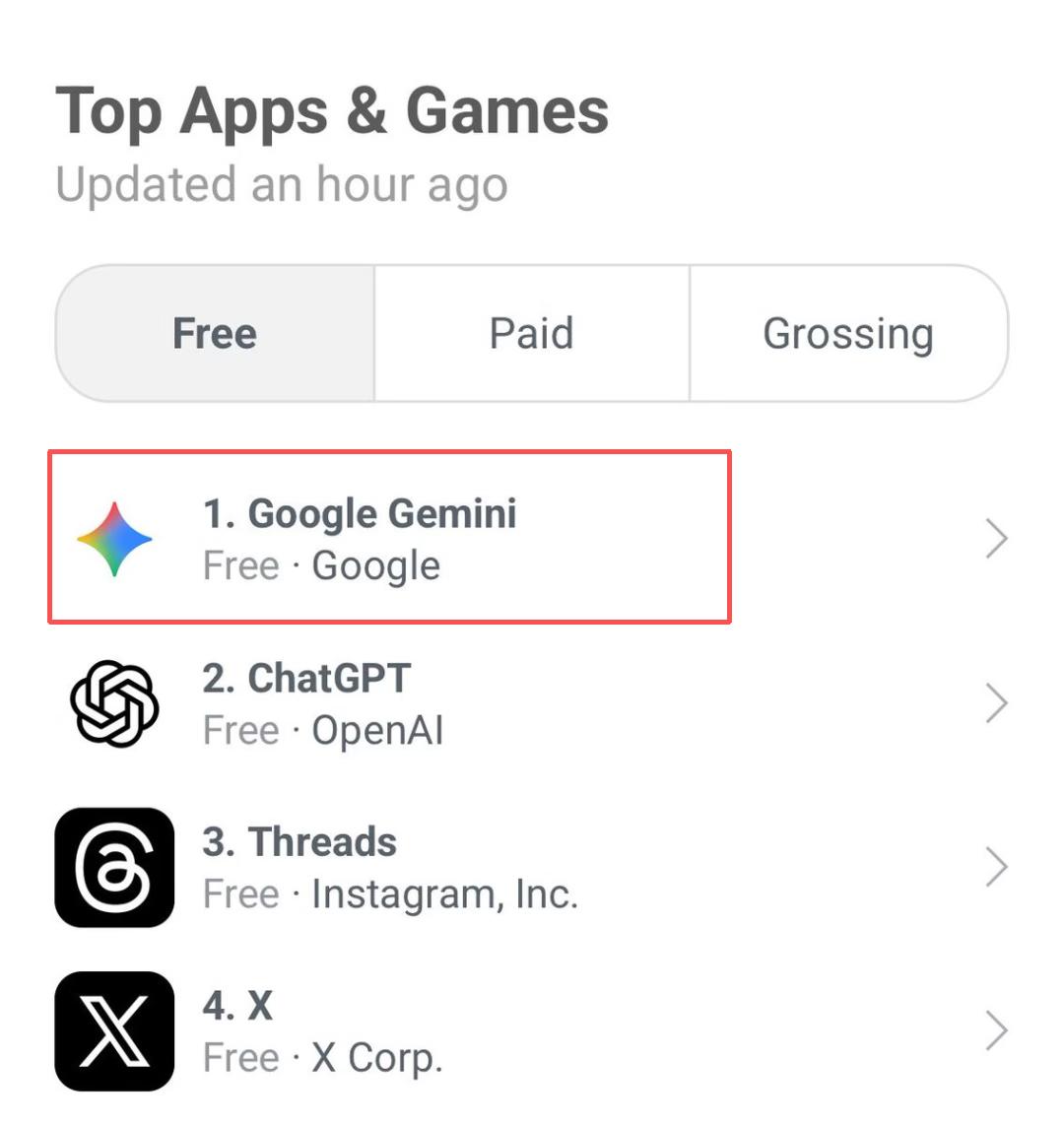
Core Insights - The rapid rise of Nano Banana, a product from Google, has led to the generation of over 200 million images globally within two weeks, with significant user engagement in the Asia-Pacific region [1] - Nano Banana has contributed to the growth of the Gemini App, adding over 10 million new users and surpassing ChatGPT in the Apple App Store rankings [1] - OpenAI has responded to the competition posed by Nano Banana by acquiring Statsig for approximately $1.1 billion in an all-stock deal, indicating a strategic move to enhance its product offerings [3] Industry Impact - The emergence of Nano Banana has prompted ByteDance to launch seedream 4.0 to strengthen its user base, while Meitu faces challenges as general models threaten its market position, leading to significant stock price volatility [5] - Analysts suggest that while Meitu's stock has been supported by foreign investment banks, the potential of general models like Nano Banana looms as a significant threat [5] - The debate continues on whether general models will replace niche AI applications, with some experts arguing that niche applications have a better understanding of user needs and specific market scenarios [5][19] Technological Advancements - Nano Banana has transformed image creation by allowing users to interact in a more conversational manner, eliminating the need for structured prompts [9][11] - The cost of using Nano Banana is approximately $0.039 per image, with a pricing model of $30 per million tokens, making it a cost-effective solution for image generation [11] - The technology behind Nano Banana includes advanced capabilities such as text rendering and world knowledge integration, which enhances its performance in generating images with deep semantic accuracy [12][9] Competitive Landscape - Meitu's strategy involves integrating new technologies like Nano Banana into its products while maintaining a focus on its core competencies in the beauty and aesthetics sector [14][19] - The partnership with Alibaba, involving a $250 million investment, aims to enhance e-commerce experiences through AI-driven solutions like "AI fitting" and "AI product image generation" [17] - The competition between large model companies and niche AI firms is intensifying, with the need for niche players to adapt and leverage large models to remain relevant in the market [22][25]


生数科技完成数亿元A轮融资:刚发布正面对标Nano Banana的Vidu Q1参考生图
IPO早知道· 2025-09-19 02:37
Core Insights - The article discusses the recent A-round financing of Shengshu Technology, which raised several hundred million RMB to enhance model research and technological innovation in multi-modal large models [2][3] - Shengshu Technology's core product, Vidu, is designed for AI image, video, and audio generation, targeting various industries such as internet, advertising, e-commerce, and education [2][3] Financing and Investment - The A-round financing was led by Liangxi Digital Industry Fund managed by Bohua Capital, with participation from Baidu's strategic investment, Beijing AI Industry Investment Fund, and other existing shareholders [2] - The investment focus of Liangxi Digital Industry Fund is on the artificial intelligence sector, aligning with Shengshu Technology's ongoing development in the multi-modal field [3] Product Development and Market Impact - Vidu, launched globally in July 2024, has achieved an annual recurring revenue (ARR) of over $20 million within eight months, covering over 200 countries and regions [3] - The product has rapidly gained traction, reaching over 30 million users and 6,000 developers and enterprises globally [3] Competitive Landscape - Shengshu Technology's Vidu product is positioned against competitors like Google Nano Banana, showcasing its capabilities in AI video generation and image creation [3]

用光学生成图像,几乎0耗电,浙大校友一作研究登Nature
机器之心· 2025-09-15 04:00
Core Viewpoint - The article discusses the development of an ultra-low power AI image generator based on optical methods, which significantly reduces energy consumption compared to traditional AI models [1][3]. Group 1: Technology Overview - The optical generative model is inspired by diffusion models and operates by generating static noise through a digital encoder, which consumes minimal energy [2][11]. - The system utilizes a spatial light modulator (SLM) to imprint the noise pattern onto a laser beam, which is then decoded into the final image by a second SLM [2][3]. - Unlike traditional AI that relies on millions of computational operations, this optical system performs all core tasks using light, resulting in almost no energy consumption [3][11]. Group 2: Applications and Potential - The technology has broad application prospects, including generating images and videos for VR and AR displays, as well as for wearable devices like smartphones and AI glasses [6][9]. - The optical generative model can produce monochrome or color images based on target data distributions, showcasing its versatility [11][12]. Group 3: Experimental Results - Initial experiments using the MNIST and Fashion-MNIST datasets achieved FID scores of 131.08 and 180.57, respectively, indicating that the generated images align well with the target distributions [22]. - High-resolution experiments for generating Van Gogh-style artworks demonstrated the model's capability to produce both monochrome and color images with excellent quality [24][28].

Nano-Banana核心团队首次揭秘,全球最火的 AI 生图工具是怎么打造的
3 6 Ke· 2025-09-02 01:29
Core Insights - The article discusses the advancements and features of the "Nano Banana" model developed by Google, highlighting its capabilities in image generation and editing, as well as its integration of various technologies from Google's teams [3][6][36]. Group 1: Model Features and Improvements - Nano Banana has achieved a significant leap in image generation and editing quality, with faster generation speeds and improved understanding of vague and conversational prompts [6][10]. - The model's "interleaved generation" capability allows it to process complex instructions step-by-step, maintaining consistency in characters and scenes across multiple edits [6][35]. - The integration of text rendering improvements enhances the model's ability to generate structured images, as it learns better from images with clear textual elements [6][13][18]. Group 2: Comparison with Other Models - For high-quality text-to-image generation, Google's Imagen model remains the preferred choice, while Nano Banana is better suited for multi-round editing and creative exploration [6][36][39]. - The article emphasizes that Nano Banana serves as a multi-modal creative partner, capable of understanding user intent and generating creative outputs beyond simple prompts [39][40]. Group 3: Future Developments - Future goals for Nano Banana include enhancing its intelligence and factual accuracy, aiming to create a model that can understand deeper user intentions and generate more creative outputs [7][51][54]. - The team is focused on improving the model's ability to generate accurate visual content for practical applications, such as creating charts and infographics [57].
「香蕉革命」首揭秘,谷歌疯狂工程师死磕文字渲染,竟意外炼出最强模型
3 6 Ke· 2025-08-29 07:53
Core Insights - Google's new image model, nano banana, is revolutionizing AI image generation by merging multiple images into new creations and understanding geographical, architectural, and physical structures [1][6] - The model utilizes Gemini's extensive world knowledge and interleaved generation technology, allowing for multi-turn creative processes with high consistency and creativity [1][48] - The community's innovative use of nano banana has sparked significant interest, reminiscent of previous AI trends [1][2] Group 1 - Nano banana allows users to upload up to 13 images for merging, showcasing its versatile capabilities [2] - The model can convert 2D maps into 3D landscapes, demonstrating its advanced understanding of geography [19][25] - Users can customize images, such as trying on clothes or creating various views of a single object [28][29] Group 2 - The model's ability to generate images with a "memory" feature enables it to maintain context across multiple edits, enhancing the creative process [57] - Collaboration between the Gemini and Imagen teams has resulted in a balance between intelligent instruction adherence and high-quality image generation [68][70] - Future aspirations for the model include creating visually appealing presentations with accurate data, indicating a shift towards a more intelligent creative partner [74][76]

谷歌旗下最强图像模型来了,P图师要消失了?
Di Yi Cai Jing· 2025-08-27 11:20
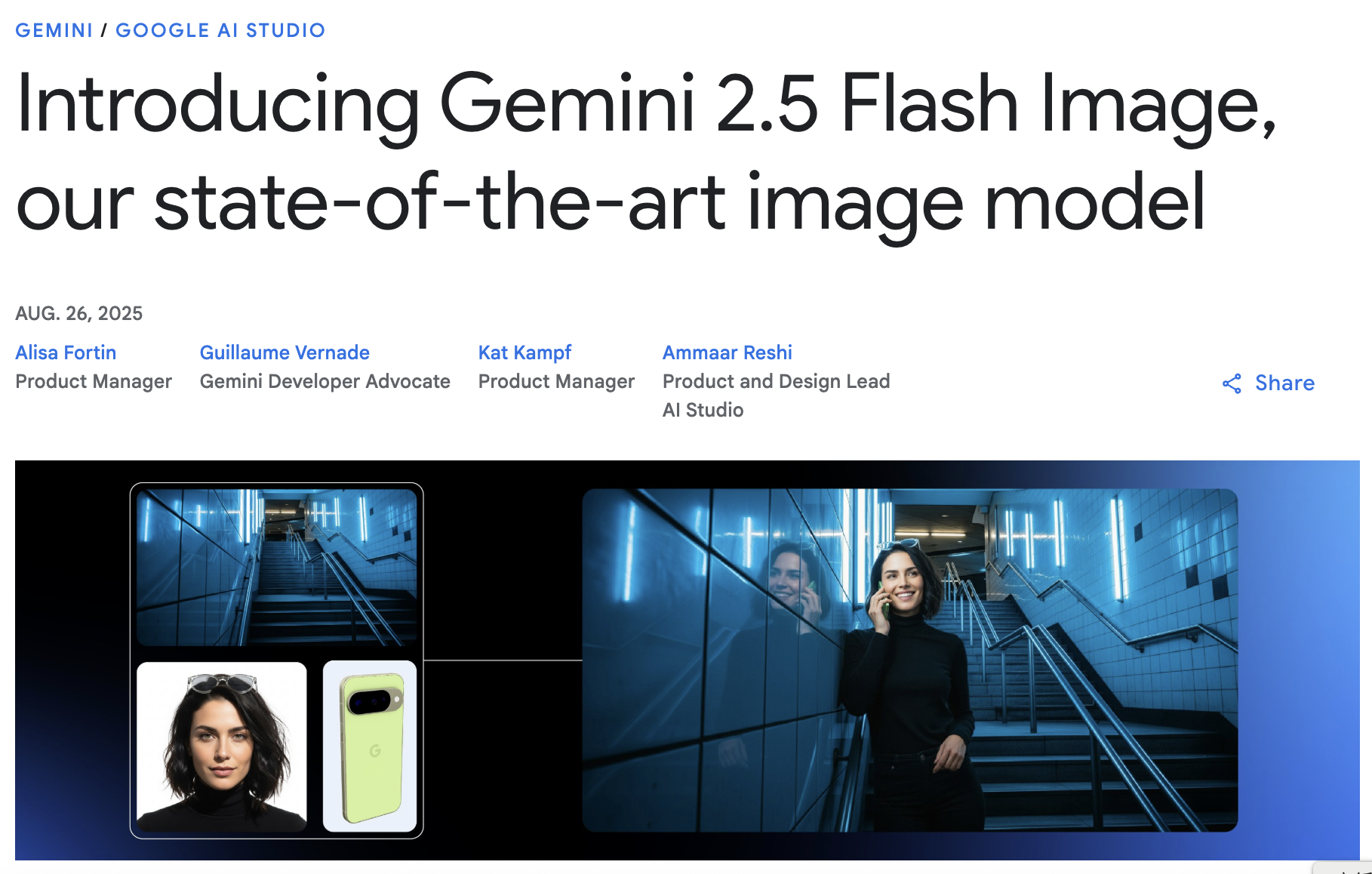
Core Viewpoint - Google has launched its latest image generation and editing model, Gemini 2.5 Flash Image, which has quickly become a top performer in various image generation rankings, showcasing its capabilities in the image editing and generation market [1][4]. Group 1: Model Performance - Gemini 2.5 Flash Image has been recognized for its excellent performance in character consistency, prompt adherence, physical logic realism, and aesthetic quality [4][18]. - The model achieved a score of 1362 in the image editing category, leading the second-place model by 171 points [5]. - In the text-to-image category, it ranked first with a score of 1147, surpassing competitors like OpenAI's GPT-4o and Alibaba's Qwen-Image-Edit [6][13]. Group 2: Cost Efficiency - The cost of generating a single image with Gemini 2.5 Flash Image is approximately $0.039 (around 0.28 RMB), significantly lower than OpenAI's $0.19 per image [17][39]. - The pricing structure is set at $30 for 1 million output tokens, with each image requiring about 1290 tokens [17]. Group 3: Limitations - The model does not support Chinese input, leading to a decline in performance when generating content related to Chinese language [4][18]. - During testing, the model occasionally produced structural errors, such as multiple limbs in generated images [4][18]. Group 4: Commercial Applications - Gemini 2.5 Flash Image is expected to significantly impact the commercial landscape, particularly in e-commerce, advertising, and design, by enabling quick and cost-effective image generation [39]. - The model can replace certain manual editing tasks, potentially redefining the roles of photo editors and visual designers [39]. Group 5: Technical Capabilities - The model excels in maintaining character consistency across different poses, lighting, and environments, and can blend multiple images into one while preserving details [13][20]. - It can accurately generate images with clear and readable text, making it suitable for logos, charts, and posters [18][39]. - The model demonstrates strong performance in physical knowledge, accurately predicting visual outcomes based on given scenarios [35].
00后看数博(二)| 社交媒体浪潮里的“科技印记”
Sou Hu Cai Jing· 2025-08-13 12:23
Core Insights - The 2025 China International Big Data Industry Expo (Big Data Expo) will be held from August 28 to 30 in Guiyang, focusing on the integration of data elements and artificial intelligence technology to drive industrial transformation and high-quality economic development [1] Group 1: Event Overview - The theme of this year's Big Data Expo is "Data Aggregates Industrial Momentum, Intelligent Development New Chapter," aiming to showcase the latest achievements in the fusion of data and AI technology [1] - The event is expected to highlight the efficient aggregation and utilization of data resources, providing strong momentum for industrial upgrades [1] Group 2: AI Innovations - Tencent Cloud showcased three PaaS products at the 2024 Big Data Expo, including the "Large Model Image Creation Engine," demonstrating the powerful capabilities of large model native toolchains in knowledge services and content creation [7] - The "Image Creation Engine" utilizes Tencent's self-developed image creation model to provide high-quality AI image generation and editing capabilities, significantly shortening the creative and production cycle for enterprise clients [7] - The release of Tencent's HunyuanImage2.0 model in May 2023 emphasized real-time efficiency and ultra-realistic image quality, addressing common issues in AI-generated art [7] Group 3: AI in Social Media - AI-generated user avatars are increasingly popular on social media, allowing users to upload several photos and receive diverse style images, catering to the aesthetic preferences of the younger generation [5] - AI synthetic anchors have become common symbols of the era, with advancements in digital human generation technology enabling realistic simulations of appearance, expression, and voice [13][15] - The integration of AI technology in content production has created new possibilities for virtual images and content creation, enhancing user engagement across various platforms [15] Group 4: AI Chat Solutions - NetEase Cloud's AI chat feature addresses social anxiety among the younger generation by generating personalized opening lines based on user interests and personality traits [19][23] - The AI chat function can monitor conversation dynamics and suggest engaging topics to maintain interaction, enhancing the overall social experience [25] - The technologies showcased at the Big Data Expo are already being applied in social media, enriching the daily lives of the younger generation and leaving a technological imprint on social platforms [25]



10 人 1600 万美金 ARR,华人团队 OpenArt 用了这 11 个 AI 技术栈
投资实习所· 2025-06-29 11:53
Core Insights - OpenArt, a 10-person team, has achieved an ARR of $16 million by focusing on user experience and precise market positioning in the competitive AI image generation space [1][4]. Group 1: Positioning - OpenArt initially struggled with its positioning in a rapidly evolving AI image generation market, where competitors like Midjourney and DALL-E dominated [1]. - The team realized that true differentiation lies not in technology but in user experience and understanding specific use cases [1]. Group 2: Growth Strategy - Traditional SEO strategies provided some traffic, but growth plateaued, leading to the exploration of programmatic SEO (pSEO) as a potential solution [2]. - Collaborating with pSEO company daydream, OpenArt identified a strategy to create targeted AI generator pages for specific user needs, resulting in significant traffic growth [2][4]. - By April 2024, OpenArt had created over 600 pSEO pages, achieving approximately 1 million monthly visits and ranking in the top 10 for "AI art generator" searches [4]. Group 3: Strategic Transformation - Recognizing the increasing competition in the AI image generation market, OpenArt aims to redefine itself as a leader in visual storytelling rather than just another player in a crowded category [5]. - The company sponsored an MIT AI film hackathon, demonstrating the potential of AI in creating high-quality visual narratives quickly and efficiently [5]. Group 4: Technology and Innovation - OpenArt addresses the challenge of character consistency across different scenes through a modular approach that integrates multiple open-source tools [8]. - This "Lego-like" architecture allows for rapid adaptation to technological advancements while providing end-to-end solutions for users [8]. Group 5: Future Vision - OpenArt envisions evolving from a tool provider to a content platform, focusing on interactive content formats that enhance user engagement [9]. - The long-term goal is to position OpenArt as a solution for visual storytelling, allowing users to save their characters, stories, and templates, thus maintaining value amid technological advancements [9]. Group 6: Product Development and Tools - The engineering team utilizes tools like Cursor and Windsurf to enhance productivity and streamline code management, enabling focus on building rather than communication [13]. - AI-driven tools such as Checkly and Stably are employed for backend monitoring and testing, significantly reducing manual QA efforts [15]. - Customer support is optimized with Serif, which automates over 70% of responses, and Claude, which analyzes user feedback in real-time [16][17]. Group 7: Marketing and User Acquisition - OpenArt leverages AI-driven workflows for SEO, producing hundreds of high-quality pages monthly, resulting in millions of organic traffic [20]. - The marketing strategy includes using tools like DeepSeek for effective SEM advertising and Beacons AI for influencer matching [21][22].
迪士尼(DIS.N)、宽带网络供应商康斯卡特起诉AI图像生成器Midjourney。
news flash· 2025-06-11 14:50
Core Viewpoint - Disney (DIS.N) and broadband network provider Comcast have filed a lawsuit against AI image generator Midjourney [1] Group 1 - The lawsuit highlights concerns over intellectual property rights and the use of copyrighted material in AI-generated content [1] - Disney and Comcast are seeking legal remedies to protect their creative assets from unauthorized use by AI technologies [1] - The case reflects a growing trend in the entertainment and technology industries regarding the regulation of AI and its implications for content creation [1]

混元与AI生图的“零延迟”时代
腾讯研究院· 2025-05-20 08:48
Core Viewpoint - Tencent's Hunyuan Image 2.0 model represents a significant advancement in image generation technology, enabling real-time, high-quality image creation with minimal latency, thus enhancing user experience and productivity in various applications [3][4][10]. Group 1: Model Features - Hunyuan Image 2.0 utilizes a high-compression image codec and a new diffusion architecture, achieving ultra-fast inference speeds and high-quality image generation [3]. - The model allows for "what you see is what you get" functionality, enabling users to see image changes in real-time as they input text prompts [4][11]. - Compared to existing models that take 5-10 seconds to generate images, Hunyuan Image 2.0 significantly reduces this time, providing a more efficient user experience [5][8]. Group 2: User Experience - The model supports strong adherence to text prompts, allowing for real-time modifications of images based on user input [8]. - It offers two modes for image generation: "reference subject" and "reference outline," allowing users to set the intensity of reference features for more tailored outputs [19][22]. - Users can upload reference images and adjust the strength of adherence to the original image, enabling creative flexibility [19][20]. Group 3: Applications and Use Cases - The technology serves as an instant design assistant, facilitating quick creation of illustrations for presentations and creative projects [5][8]. - For professional designers, the dual canvas feature allows for immediate previews of color and style changes, streamlining the creative process [27][30]. - The model's ability to generate images based on detailed prompts enables users to create complex visuals, such as character designs or themed illustrations, with minimal effort [15][33]. Group 4: Performance Metrics - Hunyuan Image 2.0 outperforms competitors in various evaluation metrics, achieving a score of 0.9597 in overall performance, surpassing models like DALL-E 3 and CogView4-6B [7]. - The model demonstrates strong capabilities in generating images with specific attributes, such as color and position, indicating its advanced understanding of user prompts [7]. Group 5: Accessibility - The model is currently available for public testing, allowing users to experience its capabilities firsthand [9]. - Its user-friendly interface enables individuals with no design background to easily create images, democratizing access to advanced image generation technology [27].