
AI Native

Search documents
不要拿AI造工具,要建设“新关系”
Hu Xiu· 2025-07-05 13:01
Core Insights - The current era is characterized by rapid advancements in AI technology, allowing a few individuals to create significant value for many [2][22] - The concept of "AI Native" products emphasizes building new relationships between AI capabilities and users, rather than merely creating new tools [7][11] - The AGI Playground serves as a platform for collaboration among innovators in the AI space, fostering connections and future possibilities [3][4] Group 1: New Goals of AI Native Products - The core focus of AI Native products is to establish new relationships between AI capabilities and users, rather than just creating new tools [7][11] - System prompts play a crucial role in defining the relationship between AI and users, indicating a shift towards a more interactive and relational approach [8][10] - Successful AI products define their identity and relationship with users at the outset, moving beyond traditional tool-user dynamics [12][13] Group 2: New Challenges in AI Native Products - Emotional intelligence has become a critical aspect of product design, as AI products now need to manage user relationships effectively [17][19] - Creating a sense of "life" in AI products enhances their relational capabilities, allowing for deeper user engagement [20][21] - The shift towards relationship-focused products introduces new challenges in understanding and managing user interactions [16][18] Group 3: New Opportunities from Relationships - New relationships between AI and users create opportunities for mixed-value delivery, combining functional and emotional benefits [24][25] - The blending of digital and physical experiences is essential for delivering higher value, as seen in products that integrate hardware and software [30][32] - The evolving nature of user relationships may lead to new distribution channels for services, moving away from traditional platform-based models [38][39] Group 4: New Pipeline for AI Native Products - The new pipeline for AI Native products involves broad input and liquid output, focusing on proactive data sensing and flexible delivery [52][63] - Broad input emphasizes the need for diverse data sources to enhance understanding and value delivery [53][55] - Liquid output encourages a collaborative journey with users, allowing for iterative feedback and engagement throughout the process [64][67] Group 5: New Value Models in AI Native Era - The value model for AI Native companies has shifted from a flat, two-dimensional approach to a three-dimensional model that incorporates AI capabilities [77][79] - Successful companies must consider both user needs and AI requirements in their product engineering to maximize value [75][76] - Traditional metrics for measuring value, such as user count and revenue, may no longer suffice in the AI Native landscape [78][80] Group 6: Future Considerations - The evolution of product economics and management practices is necessary to adapt to the changing landscape driven by AI [83][88] - New business models and growth strategies must be explored, including innovative payment structures and value exchange mechanisms [85][86] - The relationship between productivity and organizational structure will continue to evolve, necessitating a rethinking of traditional management principles [88][89]
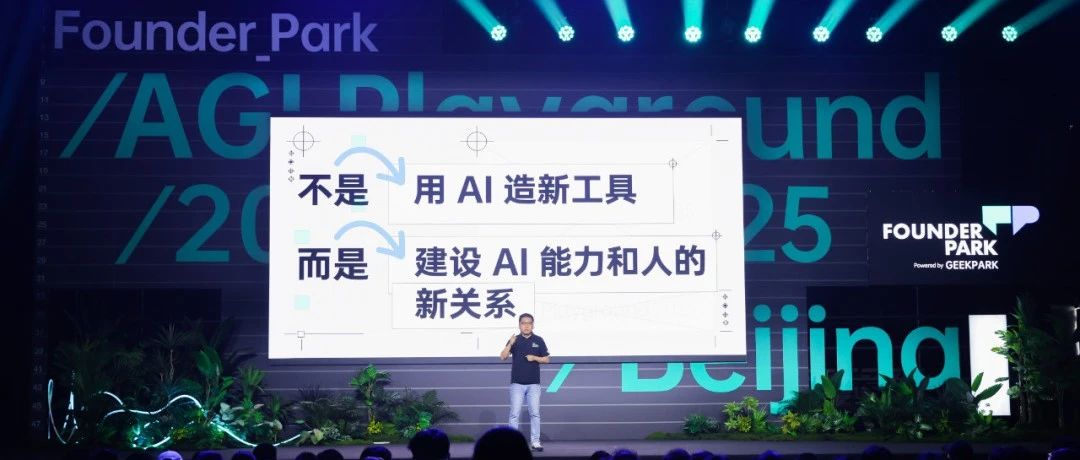
聊过 200 个团队后的暴论:不要拿 AI 造工具,要建设「新关系」
Founder Park· 2025-06-24 08:31
Core Viewpoint - The era of AI allows a few individuals to create significant value for a vast audience, emphasizing the importance of community and collaboration among innovators [4][6]. Group 1: AI Native New Goals - The core of AI Native products is not merely creating new tools but establishing a new relationship between AI capabilities and humans [12][13]. - The emergence of system prompts signifies a shift in how products define their relationship with users, moving from traditional branding to embedding this relationship in the product's core [15][20]. - Emotional intelligence becomes a critical aspect of product design, as AI products must now manage user interactions with a higher degree of empathy [21][23]. Group 2: New Challenges and Opportunities - AI Native products face new challenges, such as enhancing emotional intelligence and creating a sense of life in products to foster deeper user relationships [24][26]. - The establishment of new relationships presents opportunities for mixed-value delivery, combining digital and physical interactions to enhance user engagement [30][32]. - New relationships can lead to innovative service distribution channels, allowing for continuous value delivery and higher user lifetime value (LTV) [42][46]. Group 3: AI Native New Pipeline - The new pipeline for AI Native products emphasizes broad input and liquid output, focusing on proactive sensing and flexible delivery of user needs [60][72]. - Broad input involves actively gathering diverse data to enhance understanding and value delivery, while liquid output encourages a collaborative journey with users rather than a one-time interaction [62][73]. Group 4: New Value Models - The value model in the AI Native era shifts from a flat, two-dimensional approach to a three-dimensional model that incorporates AI capabilities and user relationships [85][87]. - Successful entrepreneurs in this era recognize the dual responsibility of serving both users and AI, ensuring that product engineering aligns with AI's needs [82][84]. - Traditional product economics and management principles are becoming obsolete, necessitating new frameworks for understanding growth, value creation, and organizational structure [92][99].

张鹏对谈李广密:Agent 的真问题与真机会,究竟藏在哪里?
Founder Park· 2025-06-13 20:27
Core Viewpoint - The emergence of Agents marks a significant shift in the AI landscape, transitioning from large models as mere tools to self-scheduling intelligent entities, creating new opportunities and challenges in the industry [1][2]. Group 1: The Rise of Agents - Agents have become the second major trend in the tech industry following large models, with a consensus forming around their potential [2]. - Despite the surge in consumer-facing products, many projects struggle to create a sustainable user value loop, often falling into the trap of applying new technology to old demands [2][3]. - The true barriers to the practical application of Agents lie in foundational infrastructure, including controlled operating environments, memory systems, context awareness, and tool invocation [2][3]. Group 2: Opportunities and Challenges - The conversation aims to uncover the real issues and opportunities within the Agent space, focusing on product forms, technical paths, business models, user experiences, and infrastructure construction [2]. - The transition from "Copilot" to "Agent" can be gradual, starting with user data collection and experience enhancement before evolving into fully automated solutions [9][19]. Group 3: Coding as a Key Area - Coding is viewed as a critical domain for achieving AGI, as it provides a clean, verifiable data environment conducive to reinforcement learning [24][25]. - The ability to code is seen as a universal skill that enables AI to build and create, potentially capturing a significant portion of the value in the large model industry [26][47]. Group 4: Evaluating Agents - A good Agent must create an environment that fosters a data feedback loop, with verifiable outcomes to guide optimization [27]. - Key metrics for assessing an Agent's effectiveness include task completion rates, cost efficiency, and user engagement metrics [30][31]. Group 5: Business Models and Market Trends - There is a shift from cost-based pricing to value-based pricing in the Agent market, with various models emerging, such as charging per action, workflow, or result [36][41]. - The trend of bottom-up adoption in organizations is becoming more prevalent, allowing products to gain traction without traditional top-down sales processes [35]. Group 6: Future of Human-Agent Collaboration - The concepts of "Human in the loop" and "Human on the loop" are explored to define the evolving relationship between humans and Agents, emphasizing the need for human oversight in critical decision-making [43][44]. - As Agents become more integrated into workflows, the nature of human interaction with these systems will evolve, presenting new opportunities for collaboration [45]. Group 7: Infrastructure and Technological Evolution - The foundational infrastructure for Agents includes secure execution environments, context management, and tool integration, which are essential for their effective operation [56][60]. - Future advancements in AI will likely focus on multi-agent systems, where different Agents collaborate to complete tasks, leading to a more interconnected digital ecosystem [53]. Group 8: The Role of Major Players - Major tech companies are beginning to differentiate their strategies in the Agent space, with some focusing on specific applications like coding while others leverage broader capabilities [54]. - The competition among giants like OpenAI, Anthropic, and Google is intensifying, with each company exploring unique paths to capitalize on the Agent trend [55].



细数31家AI应用小团队:平均20人、人均创收279万美元
创业邦· 2025-05-28 09:37
Core Insights - The article presents a list of 31 small teams (fewer than 50 employees) that have achieved significant revenue (ARR over $5 million), highlighting the potential for small teams to succeed in the AI era [2][4][6]. Company Overview - The list includes notable companies such as Telegram, which generates $1 billion in annual revenue with 30 employees, and Midjourney, which has an ARR of $500 million with 40 employees [3][4]. - Companies like Cal AI and OpenArt, with only 4 and 8 employees respectively, have also reached an ARR of $12 million and $12 million [3][4]. - The average employee count for the listed companies is around 20, with an impressive average revenue per employee of $2.79 million, significantly higher than the SaaS industry average [6][25]. Funding and Growth - Nearly half of the companies on the list are in early funding stages, with some like Midjourney and SubMagic not having raised external funding yet [4][25]. - The trend indicates a shift towards lean operations, where companies focus on self-sustainability and profitability rather than aggressive scaling and multiple funding rounds [6][25]. AI-Driven Efficiency - Many companies leverage AI tools to enhance productivity, allowing them to maintain small teams while achieving substantial revenue [17][20]. - For instance, AI programming tools like Cursor and Lovable have shown rapid revenue growth, with Lovable reaching $17 million ARR in just three months [18][19]. Unique Market Positioning - Companies like GPTZero have successfully identified and addressed specific market needs, achieving $10 million in ARR with a small team [8][9]. - The article emphasizes that the success of these companies often stems from their ability to create unique user value rather than relying solely on existing AI models [11][25]. Changing Entrepreneurial Mindset - There is a noticeable shift among new entrepreneurs who prefer to maintain control over their companies and focus on profitability rather than pursuing large-scale growth through extensive funding [25][26]. - This new mindset is reflected in the operational strategies of companies like SubMagic, which prioritize user needs and sustainable growth over traditional funding routes [26].

从AI原生看AI转型:企业和个人的必选项
3 6 Ke· 2025-04-23 11:41
Core Insights - The interview discusses the concept of AI Native companies, emphasizing that a key indicator of such companies is achieving a revenue per employee of at least $10 million, which may increase in the future [3][4][5] - AI Native organizations are expected to leverage AI to significantly enhance productivity and efficiency, potentially leading to a future where AI can operate autonomously without human intervention [6][9][10] - The conversation highlights the importance of curiosity and exploration within teams to effectively implement AI solutions in organizations [39][40] Group 1: Definition and Characteristics of AI Native - AI Native companies are defined by their ability to achieve high revenue per employee, with a benchmark of $10 million, indicating substantial exploration and practice in AI [3][4] - The concept of AI Native is compared to previous technological paradigms, suggesting that true AI Native applications will be those that cannot function without AI [6][7] - The ultimate goal for AI Native organizations is to reach a state of General Artificial Intelligence (AGI), where AI can autonomously manage operations and evolve [9][10] Group 2: Industry Applications and Implementation - Organizations are encouraged to start AI implementation in non-core business areas to build familiarity and confidence among employees [43][55] - Practical examples of AI applications include automating mundane tasks like document preparation and enhancing customer service through AI agents [39][40] - The importance of providing accessible AI tools and resources to employees is emphasized, allowing them to experiment and innovate within their roles [60][61] Group 3: Future of Work and AI Integration - The discussion touches on the potential for AI to replace repetitive tasks, allowing humans to focus on more creative and fulfilling work [21][22] - There is a recognition of the need for a societal shift in wealth distribution as AI takes over more cognitive tasks, potentially leading to a universal basic income model [20][21] - The conversation concludes with the notion that AI can enhance organizational efficiency by better matching individuals to roles based on their strengths, facilitated by AI's ability to process and analyze data [23][27]

为什么我们对 25 年 AI 极度乐观?| 42章经
42章经· 2025-01-05 13:54
我对当下的 AI 市场和明年的发展都极度乐观,明年肯定是个 AI 大年,我发现市场太悲观了,这 就是我拖延了两周,最后决定一定要做这期内容的原因。 来,我们直入主题,先来看这两年 AI 发生了什么。 23 年,AI 来了,很多互联网人和美元基金就直接冲了,因为不管从什么角度看,AI 这波都和大 家熟悉的互联网那波机会太像了,而且天下其实已经苦互联网人久已,从 15 年以后大机会其实就 不多了,18 年以后更是几乎没有,我记得过去两年涨起来的到千万日活的产品可能也就是番茄小 说等极少数的几个。 那互联网人发现我练成一身武功绝学,江湖却没了,这怎么能忍? 然后市场做了个判断,AI 是不是大机会?肯定是,是什么量级先不说,是对标电、互联网还是云 也先不管,但这里又有个判断,就是 AI 肯定还在早期,所以很多人有个结论,说 AI 要先投技术 背景的人,所以像清华的教授都被撸了一遍,然后 23 年最多的钱就都流向了大模型公司,很少量 的钱流向了做中间层和应用的公司。23 年的时候,但凡你是从 OpenAI 出来的,都像是神坛上的 人,大家到美国去学习也是千方百计拼谁能约到个 OpenAI 的人聊聊。 那冲的结果怎么样呢 ...
Green Voltis完成千万美元天使轮融资, AI Native虚拟电厂聚合运营商
IPO早知道· 2024-11-15 01:20
作者|Stone Jin 微信公众号|ipozaozhidao 据IPO早知道消息,欧洲虚拟电厂企业Green Voltis日前完成近千万美元天使轮融资,由创世伙伴领 投,云启资本、九合创投共同参与。此次融资将主要用于AI Native虚拟电厂的技术创新和市场拓 展。 聚焦于欧洲市场。 Green Voltis是一家聚焦于欧洲市场的AI Native虚拟电厂聚合运营商,通过AI native技术电力现货 交易以及参与电网辅助服务为储能等新能源资产持有方、工商业客户、售电代理商等电力市场参与方 提供智能、高效的灵活性交易运营解决方案。同时,Green Voltis还帮助深度合作的基础设施投资 基金进行欧洲的项目开发与资产投资。 本文为IPO早知道原创 事实上,Green Voltis目前欧洲部分区域调频收益非常可观,但未来储能创造的价值将会是调频、 容量、平衡等辅助服务市场与现货交易市场的实时多市场优化场景。 Green Voltis团队从欧洲创业之初,就以AI Native平台架构为基础、实时多市场优化为目标构建解 决方案。从商业模式来看,Green Voltis的运营主要围绕提供虚拟电厂服务展开。公司通过软 ...