AI to B

Search documents
从“丑拖鞋”卖到145美元,看1688如何借AI重构B2B电商
Sou Hu Cai Jing· 2025-08-01 09:02
Core Insights - Alibaba's 1688 has launched a new AI strategy, introducing the "1688AI version" App and a free enterprise query tool "88查," marking a significant step in the application of AI in B2B e-commerce [2][6] - The new app integrates five core AI functionalities, enhancing the entire business process from opportunity discovery to product design and innovation, thus positioning AI as a crucial partner for small and medium-sized enterprises (SMEs) [2][4] - AI is transforming traditional business practices, allowing SMEs to operate with increased efficiency and productivity, akin to hiring digital employees [2][3] AI Application in E-commerce - The AI capabilities enable real-time data analysis for product selection, significantly reducing the time and cost associated with traditional market research [3][6] - AI-generated designs and marketing materials have drastically shortened product development cycles and improved market responsiveness, exemplified by a case where a shoe design was completed in just 72 hours [3][6] - AI-driven customer service and marketing strategies have led to a notable increase in order conversion rates, demonstrating the effectiveness of AI in enhancing sales performance [3][6] Upgraded AI Digital Employees - The upgraded AI digital employees now function at a decision-making level, moving beyond basic operational tasks to actively analyze market trends and develop business strategies [4][6] - This shift allows SMEs to leverage AI for strategic decision-making, thereby enhancing their operational efficiency and profitability [4][6] Future Vision and Market Impact - Alibaba's 1688 aims to transform into a supply chain technology company within the next five years, with AI as the core engine driving this transformation [6][8] - The platform's focus on personalized product recommendations and flexible supply chain solutions addresses the uncertainties faced by SMEs in the B2B market [6][7] - The integration of AI into the e-commerce ecosystem is expected to enhance key performance indicators significantly, with projections of a 50% to 100% increase in conversion and repurchase rates by 2025 [7][8] New Tools and Features - The "88查" tool facilitates quick verification of factory credentials and capabilities, streamlining the decision-making process for businesses [8] - This tool, along with the AI enhancements, positions 1688 as a leader in the digital supply chain technology space, emphasizing the importance of AI in modern business operations [8]



1688也要All in AI了
Hua Er Jie Jian Wen· 2025-08-01 03:04
Core Insights - 1688, Alibaba's sourcing platform, is fully implementing AI in its B2B operations, marking a significant shift towards AI-driven services for small businesses and manufacturers [2][4] - The launch of the "1688 AI version" app and the free enterprise query tool "88查" represents a comprehensive upgrade aimed at enhancing business decision-making and operational efficiency [2][3] - The introduction of AI digital employees signifies a transition from execution to decision-making roles, focusing on generating revenue through market analysis and strategic planning [3][4] Group 1 - 1688 has launched multiple AI products and upgrades, including the "1688 AI version" app, which integrates five core functions to support the entire business process from opportunity discovery to product design [2][3] - The platform currently serves over 1 million manufacturers, with more than 60% being large-scale factories, and aims to leverage AI to support small and medium enterprises in seizing new business opportunities [3][4] - The company has initiated over 70 AI projects, narrowing them down to 10 prioritized initiatives, reflecting a strategic focus on AI integration within its operations [4] Group 2 - The AI transformation is expected to create new entrepreneurial opportunities, particularly for younger entrepreneurs who can now leverage flexible supply chains enabled by AI [4][5] - AI is compressing product iteration cycles to a daily basis, necessitating that entrepreneurs establish mechanisms for real-time awareness and rapid action to remain competitive [5] - The shift towards AI is seen as a natural evolution for 1688, integrating over two decades of B2B service experience with new AI capabilities to navigate both opportunities and challenges in the market [5]
1688发布AI版App “AI to B”商业浪潮开启
Zheng Quan Ri Bao Wang· 2025-07-31 13:45
Core Insights - Alibaba's 1688 platform launched the "1688 AI version" app, integrating AI capabilities to enhance business operations for buyers and suppliers [1][2] - The platform reported over 100 million active buyers in 2024, indicating significant user engagement and demand for AI-driven solutions [1] - AI technology has improved key performance metrics such as conversion rates and repurchase rates by 20% to 30% over the past year, with expectations of a 50% to 100% increase by 2025 [2] Group 1: AI Integration and Features - The new app includes five core AI functionalities: AI search, AI product selection, AI creation, AI image search, and AI company inquiry, addressing the entire business process from opportunity discovery to product design [1] - The introduction of a free "AI digital employee" enhances operational efficiency by providing virtual roles that support both execution and decision-making tasks for merchants [2] - The platform aims to create measurable business value through AI, focusing on improving operational efficiency and product innovation for suppliers [2] Group 2: Strategic Initiatives and Market Impact - 1688 is launching a new business brand "1688 Source Selection" to collaborate with manufacturers in creating innovative consumer products, targeting high-frequency market segments [4] - The platform has initiated over 70 AI projects in the past two and a half years, refining its focus to 10 core areas to enhance AI capabilities across the organization [4] - The transformation facilitated by AI is breaking down barriers between B2B and B2C, domestic and international trade, and online and offline markets, leading to a more open industrial ecosystem [4][5] Group 3: Industry Trends and Future Outlook - The widespread adoption of AI in the manufacturing sector is evident, with significant AI application at trade fairs and local businesses utilizing AI for global order management [5] - 1688's AI usage reached 85 million calls in 2024, demonstrating the platform's pivotal role in the "AI to B" commercial paradigm [5] - The comprehensive AI integration at 1688 signifies a shift in the B2B landscape, positioning AI as a new engine for business growth [5]
AI表格再掀战事,大厂争夺“下一代Office”
3 6 Ke· 2025-07-15 12:45
Core Viewpoint - The competition among Tencent, Alibaba, and ByteDance in the B-end collaborative office sector has intensified, particularly with their recent launches of AI-driven spreadsheet tools, indicating a fierce rivalry in the market [1][3][10]. Group 1: AI Spreadsheet Developments - Alibaba's DingTalk launched a new AI spreadsheet on July 8, which integrates AI capabilities into every cell, allowing for enhanced data management and productivity [5][10]. - ByteDance's Feishu introduced a new generation of AI-driven multi-dimensional spreadsheets aimed at maximizing employee potential and improving operational efficiency [5][10]. - Tencent's WeChat Work upgraded its intelligent spreadsheet features, focusing on AI capabilities such as batch tagging and custom fields to simplify business analysis [7][10]. Group 2: Competitive Landscape - The simultaneous focus on AI spreadsheets by these three companies reflects the intense competition in the collaborative office space, with each company striving to avoid falling behind [3][10]. - The competition is not only about technological advancements but also about capturing user mindshare in a saturated market, where all three companies are vying for dominance [15][18]. - As of 2023, DingTalk leads in user scale, followed by WeChat Work and Feishu, highlighting the ongoing battle for user acquisition among these platforms [15][17]. Group 3: Strategic Implications - The push for AI spreadsheets is part of a broader strategy by Alibaba, ByteDance, and Tencent to solidify their positions in the AI-driven B-end market, with each company viewing this as a critical area for future growth [11][12][21]. - The competition extends beyond the B-end to the C-end market, where these companies are also engaged in fierce battles across various sectors, including e-commerce and digital entertainment [22][24]. - The overarching goal for these companies is to expand their business ecosystems and secure a foothold in emerging technologies, particularly AI, which is seen as a key driver for the next decade [26].
钉钉陈航交出首个AI答卷
Hua Er Jie Jian Wen· 2025-07-09 03:28
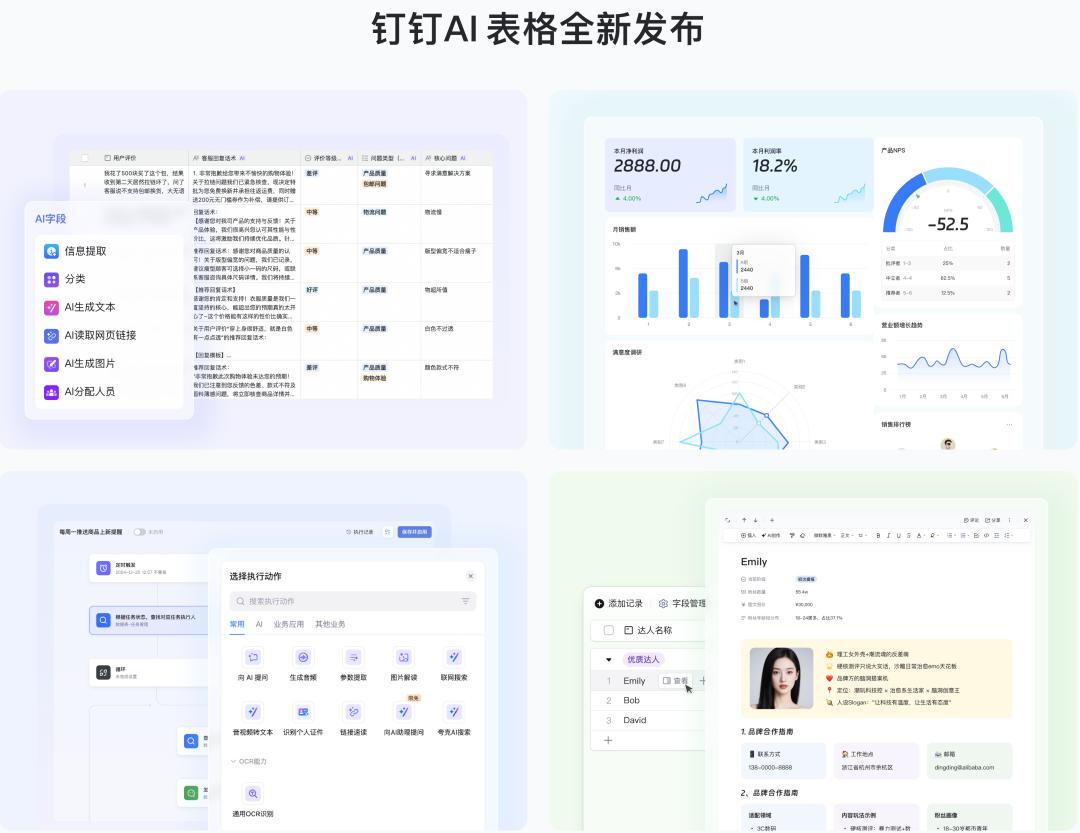
Core Viewpoint - Alibaba is making significant investments in the enterprise-level AI sector, with DingTalk as a central focus, marking a substantial transition towards "intelligent" capabilities [1] Group 1: Product Development - DingTalk has launched the AI spreadsheet, which serves as an entry point for AI in every cell, allowing real-time data analysis and rapid business process construction [1] - The AI spreadsheet introduces the "spreadsheet as a document" feature, transforming each row into an independent document, thus creating a powerful business knowledge repository [1] - The launch of the AI spreadsheet is a critical step in Alibaba's AI to B strategy, indicating a tangible shift towards DingTalk's transformation into an "intelligent entity" [1] Group 2: Strategic Focus - Since the return of former key figure Chen Hang as CEO in March, DingTalk's strategic focus has shifted towards enhancing user experience and co-creating AI-native productivity tools [2] - Chen Hang emphasized two main objectives: optimizing product experience and returning to frontline operations to listen to user needs [2] Group 3: AI Integration and Efficiency - The AI spreadsheet allows for the extraction, classification, understanding, and matching of information, generating multi-modal content based on user requirements [2] - Users can create automated processes by setting "trigger conditions" and "execution actions," enabling immediate responses to data changes, thus addressing efficiency pain points in business processes [2] - The AI spreadsheet has become a vital tool for many enterprises, with applications in e-commerce operations, brand promotions, and market management [2] Group 4: Market Position and Challenges - For e-commerce brands, the AI spreadsheet significantly reduces the time required for data analysis, transforming a three-day task into a ten-minute process [3] - Despite having a strategic advantage, DingTalk faces challenges in establishing the AI spreadsheet as a leading product in the enterprise market, requiring rigorous testing in practical applications [4] - The competition in the collaborative office sector is intensifying, with ByteDance's Feishu and Tencent's enterprise services rapidly advancing their product capabilities and AI applications [3][4]
除了外卖和网约车,年轻人有了新出路
晚点LatePost· 2025-05-13 10:12
Core Viewpoint - The trend of "light entrepreneurship" and "side hustles" is emerging, allowing individuals to generate additional income through simple and creative business ideas, often with minimal startup costs [1][2][3]. Group 1: Examples of Successful Light Entrepreneurship - New mothers and young entrepreneurs are finding success with minimal investment, such as a new mother earning 2.6 million yuan from creative products with a startup capital of 500 yuan [1]. - Car enthusiasts are also capitalizing on niche markets, with one individual earning 1.3 million yuan in six months by creating affordable alternatives for high-end automotive accessories [1]. - Various young entrepreneurs are innovating with unique products, such as themed bracelets and stress-relief toys, reflecting a shift towards fulfilling emotional and practical consumer needs [2][3]. Group 2: Market Trends and Consumer Behavior - There is a growing preference among young people for "pain-free" and "light" entrepreneurship, focusing on simple business models that cater to emotional value, aesthetics, and social attributes [2][3]. - The number of active buyers on Alibaba's 1688 platform is projected to increase by 55% in 2024, indicating a significant shift towards small-scale, low-inventory business models [3]. - The "no inventory" drop shipping model is gaining traction, with a 75% increase in active buyers, allowing individuals to sell products without upfront costs [3]. Group 3: The Role of AI in Light Entrepreneurship - The integration of AI is making supply chains more agile, lowering the barriers for young entrepreneurs to start businesses [4][6]. - AI is enhancing operational efficiency for "one-person companies," allowing them to manage various business functions effectively [7][10]. - The application of AI in B2B platforms like 1688 is transforming traditional business models, enabling better targeting and customer engagement [8][11]. Group 4: Challenges and Opportunities in E-commerce - The e-commerce industry is facing challenges such as low-price competition and the need for significant investment to establish new stores [5][15]. - AI is seen as a potential solution to help the e-commerce sector transition from unhealthy growth models to more sustainable and efficient practices [15]. - The focus is shifting towards creating products that meet actual consumer needs, with AI playing a crucial role in identifying and responding to these demands [6][12].

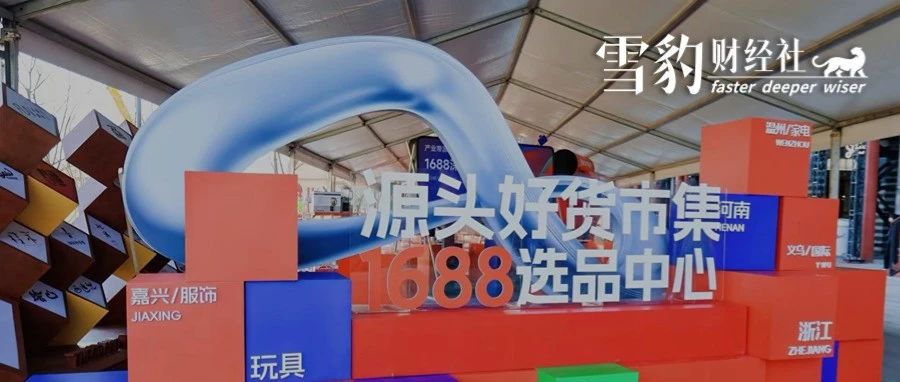
年度活跃买家破亿后,1688开始“AI闯关”
雪豹财经社· 2025-03-17 15:51
Core Viewpoint - The article discusses the emergence of the "AI to B" era in China, highlighting Alibaba's 1688 platform as the first B2B platform to surpass 100 million annual active buyers, driven by a surge in small businesses and young consumers seeking personalized and customized procurement solutions [1][2]. Group 1: User Growth and Characteristics - 1688's annual active buyer count reached over 100 million, marking a 55% year-on-year growth in 2024 [1]. - The platform has attracted a new demographic of buyers, including influencers and community group leaders, who engage in high-frequency, low-value purchases with a strong demand for customization [4][5]. - The number of active buyers engaging in drop shipping on 1688 increased by 75% year-on-year in 2024 [5]. Group 2: Challenges and Opportunities - 1688 faces challenges in improving buyer experience and efficiency, particularly in serving the new wave of small business owners who have different procurement needs compared to traditional buyers [9][10]. - The platform has historically struggled with service capabilities, as many factories were not equipped to handle small batch and customized orders [7][8]. - New buyers often encounter difficulties in communication with factories, leading to issues such as poor logistics and product discrepancies [8]. Group 3: AI Integration and Solutions - To address these challenges, 1688 has launched various AI applications aimed at enhancing the buyer experience, including AI-driven sourcing, product selection, and inventory management [10][11]. - The platform has made all AI products available for free to buyers since March, indicating a strong commitment to leveraging AI for efficiency [10][11]. - 1688 has implemented measures to improve order fulfillment and customer service, achieving a 98.5% on-time delivery rate and offering a return shipping fee service for 96% of orders [12]. Group 4: Competitive Landscape - Despite its growth, 1688 must remain vigilant against emerging vertical B2B platforms that could attract its new buyers if their needs are not adequately met [13]. - The article emphasizes that while 1688's approach to integrating AI is promising, the path to successfully implementing "AI to B" will be more challenging than "AI to C" [13].