
粮食安全

Search documents
国家统计局:2025年全国粮食实现丰收 粮食总产量增加167.5亿斤
Guo Jia Tong Ji Ju· 2025-12-12 10:20
2025年全国粮食实现丰收 ——国家统计局农村司司长魏锋华解读粮食生产情况 2025年,虽然部分地区遭遇干旱、洪涝和连阴雨天气,对粮食生产造成一定影响,但全国大部农区光温 水匹配良好,气象条件总体有利于粮食作物生长发育和产量形成。各地进一步扩大粮食单产提升工程实 施规模,加大合理增密、水肥一体化等技术推广力度,促进粮食单产水平持续提升。全国粮食单产 399.1公斤/亩,每亩产量比上年增加4.4公斤,增长1.1%。 (一)玉米、稻谷单产有所提高,小麦单产持平。2025年,全国谷物单产437.4公斤/亩,每亩产量比上年 增加4.6公斤,增长1.1%。其中,玉米单产446.7公斤/亩,比上年增加7.2公斤,增长1.6%;稻谷单产480.4 公斤/亩,比上年增加3.4公斤,增长0.7%;小麦单产396.0公斤/亩,与上年持平。 (二)豆类和薯类单产均有所增加。2025年,全国豆类单产135.4公斤/亩,每亩产量比上年增加2.2公斤, 增长1.6%。其中,大豆单产135.9公斤/亩,比上年增加2.5公斤,增长1.9%。全国薯类单产292.3公斤/ 亩,比上年增加2.7公斤,增长0.9%。 三、粮食总产量增加167.5亿 ...
“粮食安全看山东”之平度:“五提升”构建粮食产业发展新格局
Zhong Guo Fa Zhan Wang· 2025-12-12 08:56
粮食安全保障实现新提升。推动粮食生产高质量发展,由"增产导向"向"提质导向"转变,深入推进良 田、良种、良法、良机、良制"五良"融合,稳步提高粮食综合生产能力,确保国家粮食安全,全市耕地 面积稳定在260万亩以上,粮食种植面积稳定在300万亩以上,粮食总产量稳定在140万吨以上。放大地 理标志产品、"青岛面粉"区域性粮油公共品牌效应,打造中国北方高端粮食产品原产地。 粮食科技创新实现新提升。健全以企业为主体、市场为主导、产学研深度融合的技术创新体系,鼓励粮 食企业采用先进绿色储粮和加工技术,开展系列化、多元化、功能化主食产品和全谷物食品开发,重点 企业研发投入占比提升到7%左右,有效增加优质粮油产品供给,推动平度"粮食加工"向"食品加工"拓 展。同时,发挥青丰小麦育种院士专家工作站引领作用,培育新品种小麦数量进一步增加,种植流域面 积进一步拓展。 粮食应急保障实现新提升。完善粮食应急供应、配送和加工网络布局,构建现代粮食应急保供体系。促 进应急供应网络与现有储备体系有效配套、衔接,实现成品粮油城区2小时、乡镇3小时、乡村4小时保 障能力,日粮食应急储运能力达到820吨,日粮食应急加工能力达到7600吨,日粮食 ...
“粮食安全看山东”之青岛西海岸新区:推动港口项目集群,夯实粮食安全根基
Zhong Guo Fa Zhan Wang· 2025-12-12 08:48
Group 1 - Food security is a national priority, and the Qingdao West Coast New Area is leveraging its port advantages to develop a world-class grain unloading, storage, processing, and trading center [1] - The Dongjiakou Port area has made significant progress in grain storage logistics, with the completion of 68 modern concrete grain silos, providing a total storage capacity of nearly 700,000 tons and an annual throughput capacity of 11.5 million tons [1] - Future expansions include an investment of approximately 1.8 billion yuan to build 46 new silos, increasing storage capacity by about 460,000 tons, enhancing the port's unloading efficiency and storage scale [1] Group 2 - The Dongjiakou Port area is attracting leading global food processing and agricultural technology companies, with projects aimed at extending the value chain towards high-end production [2] - A bio-protein and bio-feed production project with a total investment of 1 billion yuan is set to start construction in September 2025, aiming for a storage capacity of 100,000 tons and an annual grain turnover of 800,000 tons [2] - The Louis Dreyfus Food Technology Industrial Center, with an investment of 7 billion yuan, will focus on oilseed processing and specialty feed protein, contributing to local agricultural modernization and linking port logistics with high-end manufacturing [2] Group 3 - The China Grain Reserve (Qingdao) storage project, with a total investment of 1.46 billion yuan, will have a storage capacity of 746,000 tons, enhancing food security and optimizing the regional grain and oil processing industry [3] - This project will fill the gap in national policy grain storage and logistics at Qingdao Port, significantly increasing grain throughput and enhancing the port's economic benefits and industry leadership [3] - The Qingdao West Coast New Area aims to create an efficient modern grain logistics hub, accelerating port upgrades and industry clustering to strengthen national food security [3]
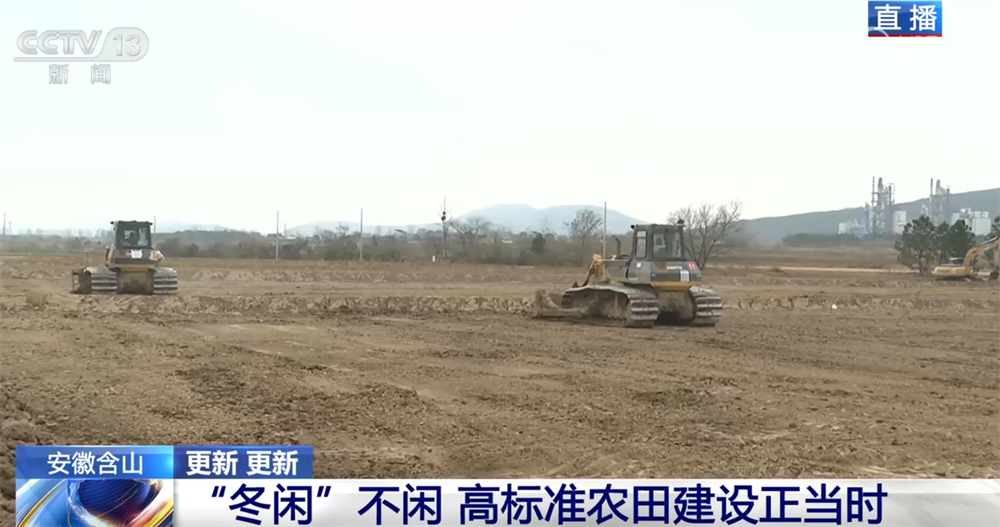
“冬闲”不闲、农机驰骋绘“丰”景 高标准农田建设筑牢粮食安全“根基”
Yang Shi Wang· 2025-12-12 08:22
Core Viewpoint - The "updating" of agricultural practices and infrastructure is a significant change in China's economy, enhancing productivity and living standards for citizens. Group 1: Agricultural Transformation - High-standard farmland construction is actively progressing in Ma'anshan, Anhui, focusing on consolidating fragmented small plots into larger, more efficient farming areas [3][10] - The use of agricultural machinery is emphasized, with mechanized harvesting significantly increasing efficiency compared to manual labor [3] Group 2: Infrastructure Improvement - The project includes the construction of 116 new channels totaling 28.332 kilometers, 9 new agricultural bridges, and 49 new roads spanning 18.891 kilometers to enhance agricultural production conditions [5] - Drainage capabilities are being improved through the construction of ditches, which are required to be at least 0.8 meters deep to manage water effectively during rainy conditions [6] Group 3: Regional Agricultural Impact - Anhui province is a major grain-producing area, maintaining a grain output of over 800 billion jin for eight consecutive years, with 76.21 million acres of high-standard farmland established, accounting for 78.4% of the arable land [10]

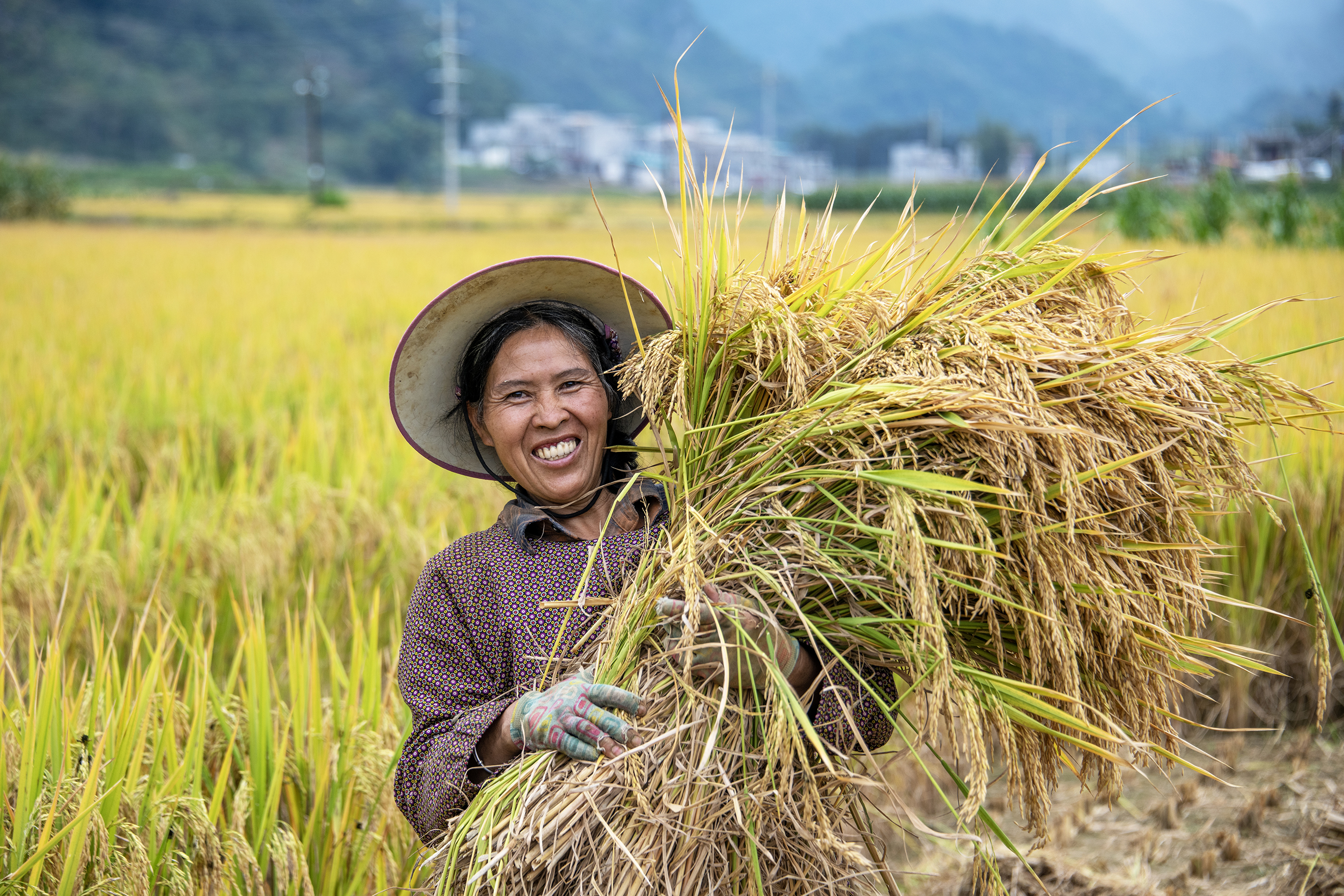
14297.5亿斤!今年粮食再获丰收
Xin Hua She· 2025-12-12 07:28
Core Viewpoint - In 2025, China's total grain production reached 14,297.5 billion jin, an increase of 167.5 billion jin or 1.2% from the previous year, demonstrating resilience despite adverse weather conditions [1][4]. Production Summary - Summer grain production was 2,994.9 billion jin, a decrease of 29 million jin or 1% year-on-year [4]. - Early rice production was 570.3 billion jin, an increase of 68 million jin or 12.7% from last year [4]. - Autumn grain production was 10,732.3 billion jin, an increase of 163.6 billion jin or 1.5% year-on-year, despite challenges such as continuous rainy weather affecting some crops [4]. Sowing Area Summary - The total grain sowing area was 179.1 million acres, an increase of 1.348 million acres or 0.1%, marking six consecutive years of growth [5]. - Corn sowing area was 67.4 million acres, an increase of 3.301 million acres [5]. - Rice sowing area was 43.5 million acres, an increase of 79,000 acres [5]. - Wheat sowing area was 35.4 million acres, remaining stable with a slight decrease of 83,000 acres [5]. Yield Improvement - The national grain yield was 399.1 kg per acre, an increase of 4.4 kg or 1.1% from the previous year [10]. - Corn yield was 446.7 kg per acre, an increase of 1.6% [10]. - Rice yield was 480.4 kg per acre, an increase of 0.7% [10]. - Wheat yield remained stable at 396 kg per acre [10]. - Soybean yield was 135.9 kg per acre, an increase of 2.5 kg or 1.9% [10]. Disaster Response - The central government allocated over 6 billion yuan to support disaster relief efforts, including drought and flood prevention measures [10]. - More than 300,000 agricultural experts and technicians were dispatched to assist in disaster-stricken areas [15]. - Emergency plans were implemented to facilitate the timely harvesting and drying of crops affected by adverse weather [15].
新华鲜报丨14297.5亿斤!今年粮食再获丰收
Xin Hua Wang· 2025-12-12 07:19
Core Viewpoint - In 2025, China's grain production reached 14,297.5 billion jin, an increase of 16.75 billion jin or 1.2% compared to the previous year [1] Group 1: Grain Production Overview - The summer grain production was 2,994.9 billion jin, a decrease of 29 million jin from last year [3] - Early rice production was 570.3 billion jin, an increase of 68 million jin from last year [3] - Autumn grain production was 10,732.3 billion jin, an increase of 163.6 billion jin or 1.5% compared to last year, despite adverse weather conditions [3] Group 2: Agricultural Policies and Support - The grain planting area in 2025 was 1.791 billion mu, an increase of 1.348 million mu or 0.1%, marking six consecutive years of growth [4] - The area for corn planting was 674 million mu, an increase of 3.301 million mu; rice planting area was 435 million mu, an increase of 79,000 mu; while wheat planting area was 354 million mu, remaining stable [4] Group 3: Technological Advancements - The average grain yield was 399.1 kg per mu, an increase of 4.4 kg or 1.1% from last year [5] - Corn yield was 446.7 kg per mu, an increase of 1.6%; rice yield was 480.4 kg per mu, an increase of 0.7%; wheat yield remained stable at 396 kg per mu; soybean yield was 135.9 kg per mu, an increase of 2.5% or 1.9% [5] Group 4: Disaster Response and Mitigation - The central government allocated over 6 billion yuan to support disaster relief efforts, including drought and flood prevention [6] - Over 300,000 agricultural experts and technicians were dispatched to assist in disaster-stricken areas [9] - Emergency plans were implemented to facilitate the timely harvesting and drying of crops affected by adverse weather [9]
黑龙江粮食总产量1640.06亿斤实现“二十二连丰”
Xin Hua She· 2025-12-12 07:03
这个种植面积达16万亩的合作社,今年玉米平均亩产突破2200斤。联合社经理杜伟介绍,今年合作 社更新了播种机,让出苗率较以往提高了2%-3%,达到了95%,为高产打下了坚实基础。 良法配套与技术推广同样功不可没。黑龙江省农业农村厅编制发布《2025年黑龙江省农作物栽培技 术模式汇编》,为各地生产提供科学指导。全省测土配方施肥技术实现全覆盖,今年共落实大垄密植和 水肥一体化技术分别为6782万亩和400.7万亩,同比分别增加1656万亩和188.7万亩,技术红利持续转化 为产量优势。 今年以来,黑龙江省通过高质量备耕、高标准春种、精细化田管、高效率秋收,以及全过程防灾减 灾,筑牢国家粮食安全"压舱石"。 在哈尔滨市双城区的黑龙江省铧镒农机专业合作社联合社,新粮销售现场一派繁忙。社员陈立峰攥 起一把金黄的玉米,籽粒饱满、色泽光亮:"今年又获得了好收成,玉米品质好于往年,卖价也不错!" 新华社哈尔滨12月12日电(记者孙晓宇)国家统计局最新公布数据显示,2025年,黑龙江省粮食总 产量达到1640.06亿斤。记者从黑龙江省农业农村厅了解到,今年黑龙江省粮食生产实现"二十二连 丰",继2024年粮食总产量首次突破16 ...
国家统计局:2025年全国粮食实现丰收 产量稳定在1.4万亿斤以上
Xin Hua Cai Jing· 2025-12-12 02:49
Core Viewpoint - The article highlights that China's grain production is projected to reach 14,297.5 billion jin in 2025, an increase of 167.5 billion jin or 1.2% from the previous year, ensuring food security and contributing to global food stability [1][5]. Group 1: Grain Planting Area - The grain planting area is expected to increase by 1.348 million acres, a growth of 0.1%, reaching 1.791 billion acres, marking six consecutive years of growth [2]. - The corn planting area is projected to rise significantly, with an increase of 3.301 million acres to 674 million acres, a growth of 0.5% [2]. - The rice planting area is expected to remain stable at 435 million acres, with a slight increase of 79,000 acres, while the wheat planting area will decrease slightly by 83,000 acres to 354 million acres [2]. Group 2: Grain Yield per Acre - The grain yield is anticipated to increase by 4.4 kg per acre, or 1.1%, reaching 399.1 kg per acre [4]. - Corn yield is expected to rise to 446.7 kg per acre, an increase of 7.2 kg or 1.6%, while rice yield will increase to 480.4 kg per acre, up by 3.4 kg or 0.7% [4]. - The yield for beans and tubers is also projected to increase, with bean yield at 135.4 kg per acre, up by 2.2 kg or 1.6%, and tuber yield at 292.3 kg per acre, up by 2.7 kg or 0.9% [4]. Group 3: Total Grain Production - Total grain production is projected to increase by 167.5 billion jin, or 1.2%, reaching 14,297.5 billion jin [5]. - Summer grain production is expected to be 2,994.9 billion jin, a decrease of 29 million jin, while early rice production will increase by 6.8 billion jin to 570.3 billion jin [5]. - The autumn grain production is projected to increase by 163.6 billion jin, or 1.5%, totaling 10,732.3 billion jin, despite some losses due to adverse weather conditions [5]. Group 4: Regional Production Trends - Most provinces are expected to see an increase in grain production, with 29 out of 31 provinces reporting gains [6]. - Key producing regions such as Inner Mongolia, Liaoning, Jilin, Heilongjiang, and Xinjiang are expected to contribute significantly to the overall increase, accounting for nearly 70% of the national growth [6].
从粮食安全到县域发展,2026年“三农”工作划重点
2 1 Shi Ji Jing Ji Bao Dao· 2025-12-12 00:45
Group 1 - The central economic work conference held on December 10-11, 2023, outlined eight key tasks for economic work in 2026, emphasizing coordinated development and urban-rural integration [1] - The conference highlighted the importance of promoting high-quality development in county economies, which are crucial for urbanization and rural revitalization [2][3] - The report indicates that by the end of 2024, there will be 1,869 counties in China, contributing 38.35% to the national economic output and over 75% to national agriculture [2] Group 2 - The conference stressed the need to maintain reasonable prices for important agricultural products and ensure food security, with grain production expected to exceed 1.4 trillion jin in 2024 [4][5] - It was noted that China has achieved 21 consecutive years of grain harvests, but challenges remain due to resource constraints and rising consumer demand [4] - The conference called for strict adherence to farmland protection and the promotion of high-standard farmland construction to enhance agricultural productivity [5] Group 3 - The meeting emphasized the importance of integrating regular assistance into the rural revitalization strategy to prevent large-scale poverty [7][8] - A five-year transition period from 2021 to 2025 was established to consolidate poverty alleviation achievements and ensure sustainable development in impoverished areas [7] - The conference proposed a systematic approach to assist underdeveloped regions, focusing on long-term support and improving rural infrastructure and public services [8][9]
尼泊尔农民面临廉价印度大米威胁
Shang Wu Bu Wang Zhan· 2025-12-11 07:51
尼泊尔班克地区农民潘迪今年收获了60公担稻谷,其中仅40公担能按政府保护价(每公担3463.81至 3628.33卢比)售予国家粮食贸易公司。剩余稻谷被迫以每公担2500-2600卢比的低价卖给私人贸易商, 差价近1000卢比。类似困境在该国普遍存在。尽管去年尼泊尔稻谷产量约590万吨,且今年预计持平, 但国家粮食公司计划收购量仅18万吨。与此同时,本财年前四个月,尼泊尔已进口价值超100亿卢比的 稻米。其中,从印度拍卖的廉价陈米严重冲击本地市场,导致国产稻谷价格受压。分析指出,进口激增 的原因包括:国内加工能力不足导致优质精米缺乏、农村劳动力短缺促使农民倾向售粮而非储粮加工、 以及边境地区化肥灌溉补贴差异影响竞争力。数据显示,尼泊尔稻谷种植面积虽在下降,但因杂交种子 与化肥使用,产量反呈上升趋势,然而进口量未减反增。上世纪七八十年代,尼泊尔曾是稻米出口国, 如今却严重依赖进口。专家警告,若不调整政策保护本土农业,尼泊尔稻农生计与粮食安全将面临长期 威胁。 ...