
物联网

Search documents
新股消息 | 德业股份(605117.SH)递表港交所 为全球第一大户用储能逆变器提供商
智通财经网· 2026-01-27 12:46
Core Viewpoint - Ningbo Deye Technology Co., Ltd. has submitted its listing application to the Hong Kong Stock Exchange, aiming to leverage its position as a leading provider of solar and energy storage products to offer sustainable energy solutions globally [1]. Company Overview - Deye Technology focuses on the renewable energy sector, particularly in energy storage inverters, photovoltaic inverters, and energy storage battery packs, while also maintaining a strong presence in environmental appliances such as dehumidifiers and solar air conditioners [3]. - The company has diversified its product offerings, selling to over 150 countries across six continents, which has contributed to its growth and resilience [3]. Product Details - Energy storage inverters are a core business for Deye, capable of converting direct current to alternating current and supporting energy storage functions. They offer seamless switching and customizable charging/discharging periods [5]. - Deye's energy storage inverters range from 3KW to 125KW, catering to residential and commercial applications, and it ranks first in global revenue for household energy storage inverters in 2024 [5]. - The company provides a full range of energy storage battery packs designed for various applications, ensuring compatibility with its inverters and featuring modular designs for flexibility and easy installation [6]. - Deye's photovoltaic inverters include string inverters and microinverters, with power ratings from 1kW to 136kW, and it ranks seventh in global revenue for household photovoltaic inverters in 2024 [7]. Financial Performance - For the fiscal year 2023, Deye reported revenues of approximately RMB 7.48 billion, with a projected increase to RMB 11.21 billion in 2024 [10]. - The company achieved a net profit of around RMB 1.79 billion in 2023, expected to rise to RMB 2.96 billion in 2024 [10]. - The gross profit margin for 2023 was 39.2%, with slight decreases projected for 2024 and 2025 [11]. Industry Overview - The global household energy storage inverter market is expected to grow significantly, with a projected market size increase from RMB 1.7 billion in 2020 to RMB 14.5 billion by 2024, reflecting a compound annual growth rate (CAGR) of 71.8% [12]. - The solar photovoltaic inverter market is also expanding, with revenues expected to rise from RMB 63.7 billion in 2020 to RMB 154 billion in 2024, indicating a CAGR of 24.7% [15].


*ST波导:2025年全年净利润同比预增17.39%—56.52%
2 1 Shi Ji Jing Ji Bao Dao· 2026-01-27 10:40
南财智讯1月27日电,*ST波导发布年度业绩预告,预计2025年全年归属于上市公司股东的净利润为600 万元—800万元,同比预增17.39%—56.52%;预计2025年全年归属于上市公司股东的扣除非经常性损益 的净利润为-650万元—-450万元。报告期内,公司紧紧围绕年度经营目标,全力以赴、齐心协力,加大 产品研发投入,积极拓展国内市场和国际市场,各业务板块营业收入较去年同期均有所增长。电子通信 业务板块,因客户需求增加,同时加大业务开拓,手机整机订单有所增加;车载电子业务板块,因国产 汽车市场销量增加及公司加大市场开拓,车载中控产品销量稳步提升,两轮车智能仪表产品开始批量出 货;智能设备业务板块,深圳子公司积极开发新产品、拓展销售渠道,销售规模有较大幅度增长。2024 年底公司增资控股的重庆子公司,其从事的公共安全智能设备业务2025年收入稳定增长,并且全年度收 入纳入公司合并范围;IoT(物联网)模块加工业务方面,产品质量和交付效率得到了客户认可,加工份 额持续增加,加工收入相应增长。 ...

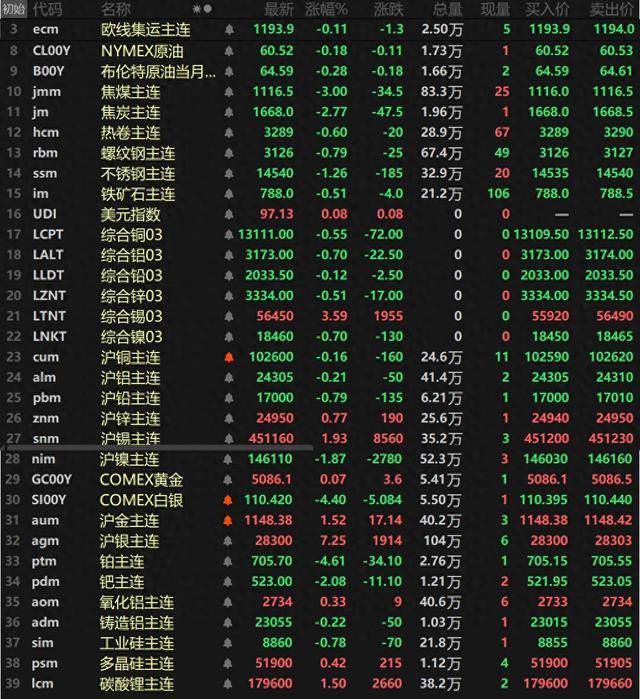
金属普跌 伦锡涨3.59% 沪银涨逾7%升破3万 沪金沪银续刷新高
Sou Hu Cai Jing· 2026-01-27 09:19
Metal Market - Domestic base metals experienced a general increase, with Shanghai tin rising by 1.93% and Shanghai zinc by 0.77%, while other metals saw declines, with Shanghai nickel leading the drop at 1.87% [1] - In the external market, most base metals fell, except for London tin, which increased by 3.59% [1] - Precious metals showed mixed results, with COMEX gold rising by 0.07% and COMEX silver dropping by 4.4%. In the domestic market, Shanghai gold rose by 1.52%, reaching a new historical high of 1154.46 yuan per gram, while Shanghai silver surged by 7.25%, breaking the 30,000 yuan per kilogram mark [1][2] Black Metals - The black metal sector collectively declined, with stainless steel down by 1.26% and rebar down by 0.79%. Other metals also saw minor declines [1] - In the coking coal sector, coking coal fell by 3% and coking coke by 2.77% [1] Lithium and Silicon - Lithium carbonate rose by 1.5%, while polysilicon increased by 0.42%. However, industrial silicon fell by 0.78% [1] Macro Economic Indicators - The National Bureau of Statistics reported that profits for large-scale industrial enterprises in China are expected to grow by 0.6% in 2025, totaling 73,982 billion yuan [4] - The People's Bank of China conducted a net injection of 780 billion yuan through reverse repos, maintaining the operation rate at 1.40% [5] Oil Market - Oil prices fell slightly, with WTI down by 0.18% and Brent down by 0.28%. Investors are closely monitoring the resumption of supply from Kazakhstan [8] - Canada and India are set to expand their oil and gas trade, indicating a strategic value in their energy relationship [8][9]
新恒汇(301678):芯联万物,智启未来
China Post Securities· 2026-01-27 05:54
Investment Rating - The report assigns an "Accumulate" rating for the company, marking its first coverage [1]. Core Insights - The company achieved a revenue of 700 million yuan in the first three quarters of 2025, reflecting a year-on-year increase of 18.12%. However, the net profit attributable to shareholders decreased by 11.72% to 120 million yuan [4]. - In Q3 2025 alone, the company reported a revenue of 226 million yuan, which is a 26.50% increase year-on-year, while the net profit attributable to shareholders was 31 million yuan [4]. - The company is focused on an integrated business model that combines key packaging materials and testing services, covering the entire supply chain from core materials to end services [5]. - The core business areas include smart cards, etched lead frames, and IoT eSIM chip testing, with significant R&D investments leading to breakthroughs in key technologies [5][6]. - The company has established stable partnerships with several well-known domestic and international manufacturers, enhancing its market position [6]. Financial Projections - The company is projected to achieve revenues of 950 million yuan, 1.17 billion yuan, and 1.43 billion yuan for the years 2025, 2026, and 2027, respectively. The net profit attributable to shareholders is expected to be 160 million yuan, 210 million yuan, and 270 million yuan for the same years [7]. - The report indicates a growth rate of 12.97% for 2025, 22.55% for 2026, and 22.85% for 2027 in terms of revenue [10]. - The EBITDA is forecasted to be 222.74 million yuan in 2025, increasing to 370.78 million yuan by 2027 [10].
机器人板块低位震荡,机器人ETF易方达(159530)半日净申购超5000万份
Mei Ri Jing Ji Xin Wen· 2026-01-27 05:14
Group 1 - The National Robot Industry Index declined by 1.6%, while the China Securities Intelligent Electric Vehicle Index fell by 1.3%. In contrast, the China Securities Consumer Electronics Theme Index rose by 0.9%, and the China Securities Internet of Things Theme Index increased by 1.3% [1] - The EasyOne ETF (159530) saw a net subscription exceeding 50 million units in the first half of the day [1] - Morgan Stanley has doubled its forecast for the sales of humanoid robots in China for 2026, now estimating sales at 28,000 units, up from a previous expectation of 14,000 units [1]

刚刚,两部委突发利好!A股,迎来三大变数!
券商中国· 2026-01-27 03:57
Core Viewpoint - The article discusses the rapid changes in the A-share market style, highlighting the influence of recent government policies on emergency management equipment innovation and the implications for investment strategies in the technology sector [1][3][4]. Group 1: Government Policies and Initiatives - The Ministry of Emergency Management and the Ministry of Industry and Information Technology issued guidelines to accelerate innovation in emergency management equipment, aiming to tackle over 20 key core technologies and develop more than 20 innovative equipment types by the end of 2027 [3]. - Recent favorable policies from various government departments aim to enhance the investment in technology innovation, including the promotion of artificial intelligence in manufacturing [4]. Group 2: Market Dynamics and Trends - The A-share market has experienced rapid style shifts, with funds rotating between technology, cyclical, and dividend sectors, leading to uncertainty among investors [1][6]. - The market is currently influenced by three main variables: the impact of deleveraging on bullish sentiment, the adjustment of large-cap stocks affecting theme speculation, and the potential for earnings surprises as the reporting season approaches [5][8]. - As of January 26, the financing balance in the Shanghai and Shenzhen stock exchanges remained high, indicating sustained market activity despite recent adjustments [7].

微电新能源正式递表港交所,为中国最大无线耳机电池供应商
Ju Chao Zi Xun· 2026-01-27 03:07
Core Viewpoint - Guangdong Micro Battery New Energy Co., Ltd. (referred to as "Micro Battery New Energy") has officially submitted its application to the Hong Kong Stock Exchange, aiming to leverage its position as a leading provider of high-performance, high-safety micro lithium-ion battery solutions in the global market [2]. Group 1: Company Overview - Micro Battery New Energy is recognized as a top five global supplier in various micro lithium-ion battery sectors, with a focus on addressing core challenges in battery materials and design [2]. - The company has established a broad customer base, including world-renowned smart device and consumer electronics brands [2]. - In 2024, the company is projected to ship 103.2 million consumer-grade smart terminal micro lithium-ion batteries, ranking fourth globally and second among Chinese suppliers [2]. - For wireless earphones, the company expects to ship 86.9 million micro lithium-ion batteries, ranking second globally and first among Chinese suppliers [2]. Group 2: Manufacturing and Production - The manufacturing system of Micro Battery New Energy is built around three global production bases located in Huizhou, Guangdong Province, Ganzhou, Jiangxi Province, and Bac Ninh Province, Vietnam, each optimized for specific battery types [3]. - The company implements end-to-end traceability and automation processes from raw material procurement to final packaging, ensuring quality consistency and compliance with regional regulations [3]. - The production process includes three core stages: battery manufacturing, testing and inspection, and battery pack assembly, with customized production processes for each battery type [3]. Group 3: Market Trends and Financial Performance - The micro lithium-ion battery market is experiencing long-term growth driven by trends in IoT, 5G, cloud computing, and artificial intelligence, with the global market expected to reach 2,496.1 million units in 2024 and grow at a compound annual growth rate of 12.4% from 2025 to 2029 [3]. - Micro Battery New Energy has successfully capitalized on market opportunities, with revenue increasing by 51.7% from RMB 351.2 million in 2023 to RMB 532.9 million in 2024 [3]. - The company's net profit is projected to rise significantly from RMB 6.8 million in 2023 to RMB 57.8 million in 2024, achieving a net profit of RMB 42.8 million for the nine months ending September 30, 2025 [3]. Group 4: Industry Landscape - The global consumer-grade micro lithium-ion battery industry is relatively concentrated, with the top five suppliers accounting for 27.6% and 37.7% of the market for consumer-grade smart terminal batteries and wireless earphone batteries, respectively [4]. - Micro Battery New Energy believes it is well-positioned to capture growth trends in the global consumer-grade micro lithium-ion battery industry due to its comprehensive product portfolio, diverse customer base, mature R&D capabilities, and advanced manufacturing processes [4]. - Chinese policies are also promoting technological innovation and standard-setting in lithium-ion batteries, with key battery materials and automated manufacturing equipment classified as "encouraged industries" in the 2024 Industrial Structure Adjustment Guidance Catalog [4].

两部门:推进应急管理装备与人工智能、5G、大数据等新技术融合创新
Zhi Tong Cai Jing· 2026-01-27 03:01
Core Viewpoint - The Ministry of Emergency Management and the Ministry of Industry and Information Technology have issued guidelines to accelerate the innovation and development of emergency management equipment, emphasizing the importance of integrating advanced technologies and enhancing the capabilities of emergency management systems [1][2]. Group 1: Overall Requirements - The guidelines are guided by Xi Jinping's thoughts and aim to enhance the modernization of emergency management equipment, focusing on reform and innovation to strengthen core technology development [2]. - The approach emphasizes a demand-driven and practical orientation, targeting urgent needs in emergency management and ensuring a systematic and comprehensive planning process [2]. Group 2: Key Equipment Research and Innovation - By the end of 2027, the goal is to overcome more than 20 key core technologies, develop over 20 innovative equipment types, and promote more than 30 advanced technology applications [3]. - A mechanism for continuous collection of equipment research needs will be established to ensure timely and precise responses to frontline demands [4]. Group 3: Promotion and Application of Advanced Equipment - There will be an increased focus on equipping emergency rescue teams with advanced and applicable technologies, enhancing their capabilities in extreme scenarios [6]. - The guidelines call for the establishment of a standardized equipment system to improve interoperability and efficiency among various emergency management tools [5]. Group 4: Strengthening Support Structures - The establishment of technology innovation platforms and support for key laboratories will be prioritized to enhance research and development capabilities in emergency management equipment [8]. - Talent development initiatives will be encouraged, including partnerships with educational institutions to cultivate professionals in emergency management and equipment technology [8]. Group 5: Standardization and Normative Support - A comprehensive standardization system for emergency management equipment will be developed to improve the relevance and performance of the equipment [10]. - The guidelines advocate for the creation of a classification system for emergency management equipment to enhance its practical application [10]. Group 6: Promoting Equipment Industry Development - A platform for professional exchange and supply-demand matching will be established to foster collaboration between various stakeholders in the emergency management equipment sector [11]. - The guidelines aim to cultivate a robust ecosystem for the emergency management industry, encouraging innovation and the development of high-tech enterprises [11]. Group 7: Implementation and Coordination - Mechanisms for research, validation, promotion, and standardization of emergency management equipment will be improved to ensure coordinated efforts across different levels of government and industry [12]. - The guidelines emphasize the need for diversified funding mechanisms to support the development of emergency management equipment and industry [12].
2025胡润全球瞪羚企业榜发布
Nan Jing Ri Bao· 2026-01-27 02:41
Core Insights - The HuRun Research Institute released the "2025 HuRun Future Unicorn: Global Gazelle Enterprises List," identifying high-growth companies likely to reach a $1 billion valuation by 2028, with 278 gazelle companies in China, including 27 from Jiangsu province [1] - The report highlights the rapid emergence of innovative companies in sectors like semiconductors and biotechnology, driven by technological breakthroughs and market expansion [1] Group 1: Technological Innovations - Cloud accounting systems developed by companies like Yunzhangfang utilize AI to automate accounting processes, significantly increasing efficiency by at least 30%, with some scenarios achieving up to a tenfold increase [2] - The semiconductor company Boliu Intelligent focuses on low-power IoT wireless connection chips, with their BL704L chip being used in Amazon products, demonstrating a standby power consumption of only 1 microamp [3] - The collaboration between STMicroelectronics and Aoteku resulted in a distributed audio solution for smart cars, addressing technical challenges in Ethernet audio transmission [5] Group 2: Market Expansion and Regulatory Approvals - Reindeer Biotech's CAR-T therapy, Ikiorun, received approval in China and is expanding into international markets, including Hong Kong and Saudi Arabia, showcasing the potential for innovative biopharmaceuticals [6] - Nanjing's policies aim to cultivate unicorn and gazelle companies, targeting a total of 800 such companies by 2027, with significant financial support for startups [7] Group 3: Supportive Ecosystem - Nanjing's government initiatives include financial backing and tailored policies to foster the growth of high-potential gazelle companies, exemplified by the recent funding round for Chipde Semiconductor totaling nearly 400 million yuan [7]
拧紧生态环境监测法治“阀门”
Jing Ji Ri Bao· 2026-01-27 00:02
Group 1 - The core viewpoint of the articles highlights the continuous improvement of ecological environment quality in China, with a notable decrease in PM_2.5 concentration and an increase in the proportion of good air quality days [1] - In 2025, the average PM_2.5 concentration was reported at 28 micrograms per cubic meter, a year-on-year decrease of 4.4%, while the proportion of good air quality days reached 89.3%, an increase of 1.9 percentage points [1] - The implementation of the "Ecological Environment Monitoring Regulations" marks a significant step towards the legalization and standardization of ecological environment monitoring in China [1] Group 2 - China has established a comprehensive ecological environment quality monitoring network that covers air, surface water, groundwater, marine, and ecological factors, ranking first globally [2] - The monitoring process for surface water has achieved full automation, enhancing the efficiency of data collection and analysis [2] - Despite advancements, there are still gaps in core technologies and high-end equipment compared to international standards, particularly in data processing and integration [2] Group 3 - The articles emphasize the need for legal safeguards and a robust regulatory framework to enhance ecological environment monitoring, including the establishment of a complete system covering monitoring, data, regulation, and accountability [2] - The promotion of new information technologies such as IoT, blockchain, and AI in environmental regulation is crucial for improving monitoring accuracy and foresight [3] - There is a call for market vitality and support for enterprises with core independent R&D capabilities, alongside measures to eliminate entities involved in data fraud [3]