
电动汽车

Search documents
Nio shares surge over 14%, extending gains for seventh session
CNBC· 2025-08-25 03:07
Group 1 - Nio's Hong Kong-listed shares surged by as much as 14.84%, marking the seventh consecutive session of gains [1] - The recent rally is attributed to the unveiling of Nio's latest ES8 SUV, priced at 308,800 yuan ($43,000) under a battery subscription plan, making it one of the company's most affordable models [2] - Nio's premium SUVs typically range from 338,000 yuan to 768,000 yuan, indicating a significant price differentiation with the new model [2] Group 2 - Following the announcement of the new vehicle, Nio's U.S.-listed shares increased by 9.27% to close at $5.54, and further rallied by 14.44% to end at $6.34 [3] - In Hong Kong, Nio's shares ended the trading session 11.12% higher on the same day [3] - Deliveries of the new ES8 SUV are set to begin in late September, which may further impact the company's stock performance [2]



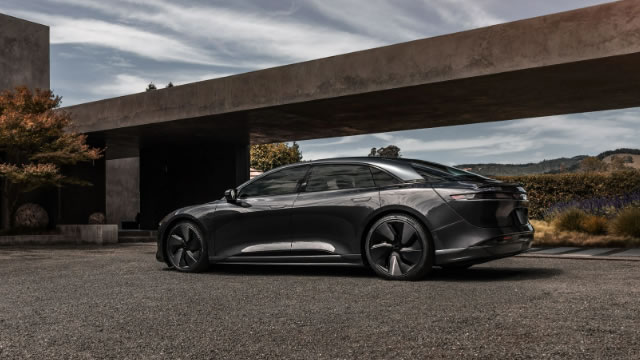
Is Lucid's $300 Million Deal With Uber a Buying Opportunity for Investors?
The Motley Fool· 2025-08-24 14:03
Core Viewpoint - The deal between Lucid Motors and Uber, involving the supply of at least 20,000 Gravity SUVs equipped with Nuro's self-driving systems, provides a significant cash infusion and guaranteed sales for Lucid, but concerns about cash flow and profitability remain [1][2][8]. Group 1: Deal Overview - Lucid Motors signed a deal with Uber and Nuro to supply a minimum of 20,000 Gravity SUVs for a luxury robotaxi service [1]. - Production of the self-driving Gravity is expected to commence by the end of 2026, with deliveries spread over six years [2]. - Uber will invest $300 million in Lucid as part of the agreement, which is expected to bolster Lucid's cash reserves [2][6]. Group 2: Benefits of the Deal - Selling 20,000 vehicles represents a significant business opportunity for Lucid, especially considering the company delivered only 10,241 vehicles in 2024 [3]. - The upscale robotaxi service could introduce potential customers to Lucid's high-quality vehicles, potentially leading to increased sales [4]. - The $300 million investment will enhance Lucid's cash position, which was $3.6 billion at the end of Q2, along with approximately $1.3 billion in available credit lines [6]. Group 3: Cash Flow Concerns - Lucid faces ongoing concerns regarding cash flow, as it currently does not generate enough cash to cover its expenditures [8]. - The company is developing new midsize models aimed at a broader customer base, which will require substantial cash investment [9][10]. - The Public Investment Fund of Saudi Arabia, which owns about 60% of Lucid, is expected to support the company financially until the new models are in production [10][11].


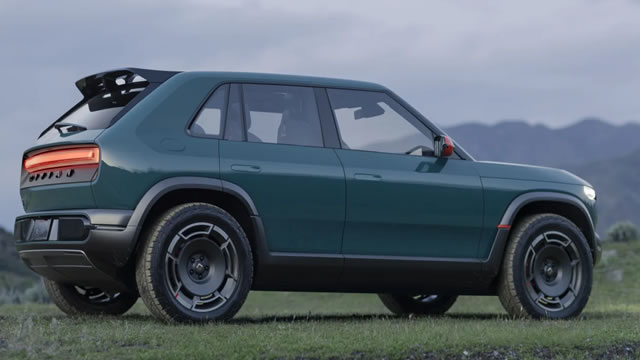
Rivian Shares Sink on Cautious Outlook. Is This a Buying Opportunity or Should Investors Run for the Hills?
The Motley Fool· 2025-08-23 07:12
Core Insights - Rivian Automotive has returned to negative gross margins in Q2 due to increased material costs and supply chain disruptions from China's export cut of heavy rare-earth metals [1][2] - The expiration of the $7,500 U.S. federal EV tax credit at the end of September has led Rivian to lower its 2025 regulatory credit sales expectations from $300 million to $160 million, impacting gross margins [2][3] - The company aims for breakeven gross profits for the full year, down from a previous modest profit outlook for 2025, highlighting the importance of gross margin for future profitability [3] Financial Performance - Rivian's Q2 revenue increased by 12% to $1.3 billion despite a decline in vehicle deliveries, producing 5,979 vehicles and delivering 10,661 [6][8] - Automobile revenue fell by 14% to $927 million, while software and service revenue rose significantly from $84 million to $376 million, aided by a joint venture with Volkswagen [7] - The company reduced its net loss from $1.5 billion a year earlier to $1.1 billion and decreased free cash outflows to $398 million from $1 billion [8] Future Outlook - Rivian is focusing on the launch of the lower-priced R2 SUV, expected to have a starting price of around $45,000, which is anticipated to appeal to a broader market compared to the luxury R1 SUVs [4][5] - The R2 is projected to have a healthier gross margin due to lower material costs and manufacturing efficiencies, with material costs expected to be around half of those for the R1 [5] - The company aims to achieve EBITDA breakeven by 2027 following a full year of R2 production and anticipates growth in its higher-margin software and services segment [6][11]

将在阿根廷生产汽车?比亚迪在该国提交申请或暗示了相关计划
Xin Lang Cai Jing· 2025-08-20 04:19
据报道,中国电动汽车巨头比亚迪在阿根廷成立了一家本地子公司,从事汽车制造业务。这一举动可能 暗示,这家全球最大的电动汽车制造商即将在南美洲第三大汽车市场开始生产汽车。该文件已向该国司 法部进行了登记,它授权比亚迪阿根廷股份有限公司不仅能够进口和销售汽车,还能制造和维护车辆、 电池以及汽车零部件。从本质上讲,此次登记允许该公司在整个电动汽车供应及服务链上开展业务。 ...

长城汽车巴西工厂将投产,中国电动汽车在巴西市场占据主导地位
Shang Wu Bu Wang Zhan· 2025-08-16 13:31
Core Viewpoint - Great Wall Motors is officially inaugurating its factory in Iracemapolis, São Paulo, Brazil, on August 15, with President Lula in attendance, marking a significant step in the company's expansion in the Brazilian market [1] Group 1: Company Developments - The factory will showcase the first pre-production models of the Haval H6 gasoline and hybrid SUVs assembled in Brazil [1] - The factory currently employs nearly 700 workers, indicating a substantial local investment in workforce [1] - The localization level for production in the first year is low, but there are plans to increase it quickly to meet export conditions [1] Group 2: Industry Trends - Chinese electric vehicle brands have been gaining traction in Brazil over the past three years, with companies like BYD and Great Wall becoming well-known [1] - The Brazilian market for hybrid and electric vehicles is experiencing significant growth, with total sales increasing by 46.83% year-on-year from January to July, compared to a mere 4.1% increase in total vehicle sales [1] - According to the Brazilian Electric Vehicle Association (ABVE), 139,200 electric vehicles were sold in Brazil from January to July, with 63.5% of these being Chinese brands [1] - BYD holds a dominant market share in Brazil, with 28.1% in hybrid vehicles and 76.78% in electric vehicles [1]

2025年上半年中印尼贸易额增长15%
Shang Wu Bu Wang Zhan· 2025-08-14 15:07
Core Insights - The trade relationship between Indonesia and China is strengthening, with trade volume reaching $70.8 billion in the first half of 2025, a year-on-year increase of 15.5% [1] - Indonesia's exports to China amounted to $30.5 billion, growing by 8.9%, driven by nickel, steel, and agricultural products [1] - Imports from China totaled $40.2 billion, marking a 21% increase, primarily in vehicles, electronic equipment, and machinery [1] Trade Performance - Indonesia's exports to China accounted for 22.5% of the country's total exports in the first half of 2025 [2] - The share of imports from China reached 34.7% of Indonesia's total imports during the same period [2] Sector Contributions - Significant growth in specific exports: rubber exports surged by 182%, coffee by 90%, cocoa by 88%, and fruits by 10% [1] - The increase in nickel and steel exports to China is closely linked to China's rising demand for materials needed for electric vehicles and infrastructure development [1]
MMG(01208) - 2025 Q2 - Earnings Call Transcript
2025-08-13 02:02
Financial Data and Key Metrics Changes - The company's net profit after tax reached USD 566 million, with USD 340 million attributable to equity shareholders, marking an increase of over 600% compared to the same period last year [6][7] - EBITDA reached USD 1.54 billion, up 98% year on year, while net operating cash flow increased to USD 1.185 billion, up 130% year on year [7][16] - The gearing ratio dropped from 41% at the end of the previous year to 33%, the lowest level since the acquisition of Las Bambas [7][22] Business Line Data and Key Metrics Changes - Total copper production in the first half of the year reached approximately 260,000 tons, a significant increase of 64% year on year [8] - Total zinc production reached about 110,000 tons, achieving stable operations [8] - Copper revenue accounted for 78% of total revenue, driven by increased production and higher prices [8] Market Data and Key Metrics Changes - The company benefited from rising prices of key metals such as copper, gold, silver, and zinc, which contributed to its strong performance [6][7] - The EBITDA margin increased to 55%, ranking among the top globally for similar companies [17] Company Strategy and Development Direction - The company focuses on copper and other base metals critical to a low carbon future, with expectations of strong demand for metals like copper, zinc, and nickel [26][28] - The company aims to enhance operational value and maximize asset growth potential while exploring diversification opportunities across different regions and commodity sectors [29] - Total copper production is projected to reach up to 520,000 tons this year, with Las Bambas expected to contribute 400,000 tons [29] Management's Comments on Operating Environment and Future Outlook - Management emphasized the importance of maintaining a strong safety culture and proactive safety measures [4][5] - The company is aware of potential risks related to road blockades at the Las Bambas mine, especially with the upcoming presidential election in Peru [41][42] - Management expressed confidence in the company's ability to maintain stable production and operational stability despite external challenges [45][46] Other Important Information - The company plans to adjust its capital expenditure estimation for 2025 to USD 1.1 billion to USD 1.25 billion, covering maintenance, development projects, and capitalized mining expenditures [23][24] - The acquisition of the Nickel Brazil asset is progressing and expected to be completed by the end of the year with an initial consideration of USD 350 million [24] Q&A Session Summary Question: What are the reasons behind the cost increase for the Las Bambas mine in the second half of the year? - Management stated that the full year cost guidance remains unchanged to allow for risk control, and if production volumes remain high, cash costs will continue to be low [34] Question: Have all inventory issues been cleared due to road blockades at Las Bambas mine? - Management confirmed that road blockages occurred for 15 days, but the issues have been resolved, and efforts are being made to clear inventory [36] Question: What is the outlook for finance costs in the second half of the year? - The finance cost for the first half was USD 139 million, a decrease from the previous year, and management aims to lower the finance cost to USD 320 million for the whole year [39] Question: What measures are in place to guard against potential disruptions due to the upcoming presidential election in Peru? - Management highlighted the importance of community relationship rebuilding strategies to maintain stable production and operational stability [43][45] Question: What is the long-term guidance for the gearing ratio? - Management indicated that the gearing ratio has decreased significantly, and they will continue to focus on optimizing the balance sheet and managing debt levels [42][46]
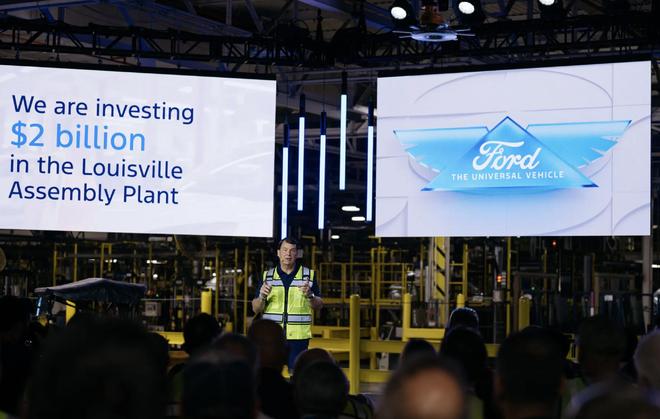
20亿美元翻修工厂,福特欲用更便宜的电动车与中国竞争
Guan Cha Zhe Wang· 2025-08-12 09:29
Core Viewpoint - Ford is investing $2 billion to revamp its Louisville plant in Kentucky to produce affordable electric vehicles, aiming to compete with Chinese brands, with the first model expected to launch in 2027 at a price of around $30,000 [1][3]. Group 1: Investment and Job Creation - The $2 billion investment in the Louisville plant is part of a total $5 billion investment that includes $3 billion for a battery plant in Michigan, which is expected to create or secure nearly 4,000 jobs in the U.S. [3]. - The new electric vehicle platform is designed to reduce parts usage by 20% and increase assembly line speed by 15%, thereby lowering production costs [3]. Group 2: Competitive Landscape - Ford's new electric vehicles aim to match the design of Chinese electric vehicles, with a focus on affordability and additional features to attract American consumers [3][5]. - The competition from Chinese brands like BYD is significant, as they have mastered the production of affordable electric vehicles using low-cost supply chains and efficient designs [5]. Group 3: Challenges and Market Position - Ford's previous electric models, such as the Mustang Mach-E, have struggled to compete with similar Chinese models, which offer better range and lower prices [5]. - The company is facing challenges due to the anticipated $5 billion loss in its electric vehicle business for 2024, with expectations of further losses this year [7]. - The end of federal tax credits for electric vehicle purchases and the rollback of emissions regulations under the Trump administration are expected to negatively impact electric vehicle sales in the U.S. [7]. Group 4: Industry Trends - Other automakers are also expanding electric vehicle production in the U.S. in response to competitive pressures, with companies like Audi and Volvo announcing significant investments in new facilities [8]. - Tesla and Rivian are also planning new production facilities to support their electric vehicle lines, indicating a broader trend of investment in electric vehicle manufacturing in the U.S. [8].

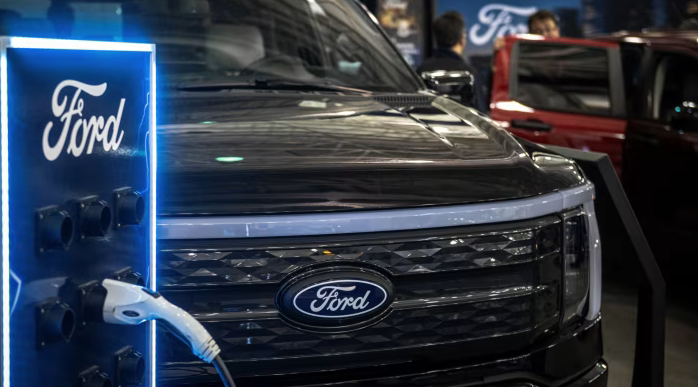
“我们找到和中企竞争的法子了”
Guan Cha Zhe Wang· 2025-08-12 05:26
Core Viewpoint - Ford is responding to competition from Chinese electric vehicle manufacturers by investing $5 billion to transform its electric vehicle production methods, aiming to create a more affordable electric pickup truck by 2027 [1][2][4]. Investment and Production Strategy - Ford plans to invest $2 billion to overhaul its Louisville, Kentucky plant to shift from producing gasoline SUVs to electric vehicles and $3 billion to build a new battery factory in Michigan, focusing on domestic production [1]. - The first product from this initiative will be a four-door mid-size electric pickup truck, with a target starting price of $30,000, significantly lower than the current average price of electric vehicles in the U.S. [1][2]. Competitive Landscape - Ford's CEO, Jim Farley, emphasized the need for these changes to compete with companies like BYD and other emerging startups in the electric vehicle market [2][4]. - Farley noted that while Ford cannot compete with Chinese companies on scale or vertical integration, it aims to leverage innovation in its power systems to gain a competitive edge [4]. Production Efficiency - The new production method is expected to reduce assembly time by 15%, decrease the number of workstations by 40%, and cut the number of parts needed for new electric vehicles by 20% [7]. - Ford claims that the total cost of ownership for its new electric vehicle will be lower than that of a three-year-old used Tesla Model Y [7]. Financial Performance and Challenges - Ford has faced significant losses in its electric vehicle segment, reporting a total loss of $12 billion over the past two and a half years, with an expected increase in losses for the current year [7]. - The company acknowledges the risks involved in its electric vehicle strategy, recalling past failures in producing smaller cars for profitability [7]. Industry Context - The rise of Chinese electric vehicle manufacturers is prompting U.S. automakers to increase investments in electric vehicle technology, despite high tariffs and regulatory barriers that hinder Chinese companies from entering the U.S. market [8][10]. - General Motors, another major U.S. automaker, is also scaling back its electric vehicle plans and returning to gasoline-powered models, indicating a cautious approach within the industry [9].


机构:中国乘用车销量应会保持强劲
Xin Lang Cai Jing· 2025-08-12 04:08
Core Viewpoint - Bernstein analysts project that China's passenger car wholesale sales will reach approximately 29.5 million units by 2025, representing an 8% growth, which includes 24 million units for domestic sales and 5.5 million units for exports [1] Group 1: Electric Vehicle Market - Despite the electric vehicle penetration rate nearing 50%, Bernstein remains optimistic about the continued adoption of electric vehicles, as current pricing is generally lower than traditional cars, making them increasingly attractive to Chinese consumers [1] - BYD and Xiaomi are identified as Bernstein's top "outperform" stocks in the electric vehicle sector [1] Group 2: Company Performance - BYD's strong overseas performance is offsetting pressures in the domestic market, and its battery sales to major clients like XPeng Motors and Xiaomi are also performing well [1] - Bernstein holds an optimistic view on Xiaomi's long-term electric vehicle development potential following the launch of the YU7 model [1]
