
知识产权保护

Search documents
四川宜宾销毁1.76万瓶假白酒,包括假冒茅台、五粮液等
Bei Jing Ri Bao Ke Hu Duan· 2025-12-05 15:54
Group 1 - The core activity involved the destruction of 17,600 bottles of counterfeit liquor, including famous brands like Moutai and Wuliangye, with an estimated market value exceeding 20 million yuan [1] - The local police have maintained a high-pressure crackdown on intellectual property crimes related to liquor, handling 158 criminal cases in the past three years, resulting in the arrest of 403 suspects and the dismantling of 112 counterfeit production sites [3] - The event served as a significant signal for establishing a new framework for intellectual property protection, with participation from major internet platforms like Alibaba and JD.com to discuss collaborative efforts against online counterfeiting [5] Group 2 - The action reflects the commitment of law enforcement to implement President Xi Jinping's directives on intellectual property protection, aiming to support the high-quality development of national brands and the real economy [7] - Future efforts will focus on enhancing cross-departmental, cross-regional, and cross-platform collaboration to intensify the crackdown on counterfeit liquor and protect market order and innovation [7] - The event was attended by representatives from various legal and regulatory bodies, including the provincial police and major liquor companies, indicating a unified approach to combating intellectual property crimes [9]


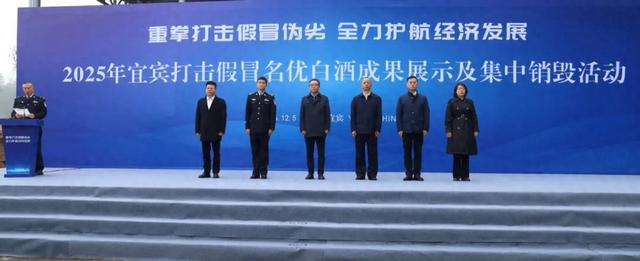
四川宜宾集中销毁1.76万瓶假冒名优白酒
Zhong Guo Xin Wen Wang· 2025-12-05 14:01
Core Viewpoint - The event focused on combating counterfeit products, particularly fake high-end liquor, to support economic development and protect intellectual property rights [1] Group 1: Destruction of Counterfeit Products - A total of 17,600 bottles of counterfeit liquor and over 86,000 pieces of packaging materials were destroyed, with an estimated market value exceeding 20 million yuan [1] - The destruction event was organized by multiple government departments and involved representatives from major internet platforms, highlighting a strong commitment to fighting counterfeit liquor [1] Group 2: Achievements in Fighting Counterfeiting - Over the past three years, significant progress has been made in combating counterfeit high-end liquor in Yibin, with 158 criminal cases investigated, including six cases supervised by the Ministry of Public Security [1] - A total of 403 suspects were arrested, 112 counterfeit production and sales sites were dismantled, and more than 150,000 bottles of counterfeit liquor and over 400,000 sets of packaging materials were seized, with a total involved amount exceeding 400 million yuan [1] Group 3: Collaborative Efforts and Future Directions - Following the destruction event, discussions were held among law enforcement, market regulation agencies, well-known liquor companies, and internet platform representatives on topics such as curbing online sales of counterfeit products and enhancing data sharing [1] - The aim is to build a collaborative governance model that integrates both online and offline efforts to combat counterfeiting effectively [1]
宜宾重拳打击假冒名优白酒 政企协同共治护航产业健康发展
Xin Hua Cai Jing· 2025-12-05 10:27
Group 1 - The core focus of the news is the strong commitment of Yibin City to combat counterfeit and inferior products, particularly in the liquor industry, showcasing significant actions taken to protect intellectual property and support high-quality economic development [1][2]. - A total of 17,600 bottles of counterfeit liquor, including famous brands like Moutai and Wuliangye, were destroyed, along with over 86,520 packaging materials and 84 counterfeiting tools, with a total value exceeding 20 million yuan [1]. - The Yibin Municipal Government has established a special working group for intellectual property protection, emphasizing a collaborative approach involving various departments and major liquor companies [2]. Group 2 - In the past three years, Yibin police have handled 158 criminal cases related to intellectual property infringement of Wuliangye and other liquor brands, resulting in the arrest of 403 suspects and the destruction of 112 production and sales sites, with a total value of over 400 million yuan involved [2]. - Wuliangye has called for enhanced collaboration across the industry to build a robust anti-counterfeiting and rights protection mechanism, emphasizing the importance of technology and social cooperation in safeguarding consumer rights [3]. - The liquor industry representatives expressed strong support for Yibin's efforts in combating counterfeiting, indicating a commitment to further collaboration with law enforcement to protect consumer rights and promote healthy industry development [3].
广州市市场监督管理局公布2025民生领域案件查办“铁拳”行动第四批典型案例
Zhong Guo Zhi Liang Xin Wen Wang· 2025-12-05 09:12
Group 1 - Guangzhou market regulatory authorities are focusing on service development and public welfare by launching the "Iron Fist" action in the field of people's livelihood for 2025, announcing the fourth batch of typical cases [2] - A hospital in Guangzhou was penalized for false advertising and violating pricing regulations, resulting in a confiscation of illegal gains amounting to 308,719.28 yuan and a fine of 1,200,000 yuan [2][3] - A food company in Guangzhou was fined 75,000 yuan for engaging in improper pricing practices during a live-streaming sales event, misleading consumers with false promotional claims [4] Group 2 - A restaurant management company in Guangzhou was fined 110,000 yuan and had illegal gains of 9,394 yuan confiscated for operating without a food business license and selling food with pathogenic microorganisms exceeding safety standards [5][6] - A business in Baiyun District was penalized for producing and selling food without proper licensing and for adding medicinal ingredients to food products, resulting in a fine of 20,000 yuan [6][7] - A clothing company in Guangzhou was fined 75,000 yuan for selling products that infringed on registered trademarks, with a total of 438 items confiscated [8][9] Group 3 - A biotechnology company in Guangzhou was reported to the police for illegally adding substances to food products, violating food safety laws [11] - A maintenance company was fined 38,000 yuan for failing to maintain elevators according to safety standards, highlighting the importance of compliance in safety management [12][13] - A medical beauty clinic was fined 60,000 yuan for publishing medical advertisements without proper approval, emphasizing the need for regulatory compliance in the medical advertising sector [14] Group 4 - A trading company was fined 50,000 yuan for selling electric tricycles without mandatory certification, with illegal gains of 13,869.91 yuan confiscated [15][16] - An environmental technology company was fined 10,000 yuan for issuing reports without proper accreditation, which could impact environmental protection efforts [17][18] - A children's products company was fined 40,000 yuan for selling substandard children's shoes, with illegal gains of 6,581.64 yuan confiscated [18][19] Group 5 - A trading company was fined 9,000 yuan for engaging in measurement violations related to imported candy products, highlighting the importance of accurate labeling and compliance with measurement regulations [20][21]
三态股份涨0.47%,成交额7189.46万元,近3日主力净流入-1641.82万
Xin Lang Cai Jing· 2025-12-05 07:35
Core Viewpoint - The company, Shenzhen SanTai E-commerce Co., Ltd., is benefiting from the depreciation of the RMB and is focused on cross-border e-commerce retail and logistics, with a significant portion of its revenue coming from overseas operations [3][7]. Group 1: Company Overview - Shenzhen SanTai E-commerce Co., Ltd. was established on January 7, 2008, and went public on September 28, 2023 [7]. - The company's main business segments include cross-border e-commerce retail (76.14% of revenue) and cross-border e-commerce logistics (23.80%), with minimal contributions from technology services and other business [7]. - As of November 28, the company had 28,500 shareholders, a decrease of 1.84% from the previous period, with an average of 7,690 circulating shares per person, an increase of 1.88% [8]. Group 2: Financial Performance - For the period from January to September 2025, the company achieved a revenue of 1.252 billion yuan, representing a year-on-year growth of 0.15%, while the net profit attributable to shareholders decreased by 25.94% to 31.8471 million yuan [8]. - The company has distributed a total of 110 million yuan in dividends since its A-share listing [9]. Group 3: Market Position and Trends - The company operates within the trade retail sector, specifically in the internet e-commerce and cross-border e-commerce segments, and is associated with concepts such as intellectual property and AIGC [8]. - The company has developed an AI-driven risk detection tool named "RuiGuan·ERiC," aimed at providing flexible and cost-effective risk monitoring solutions for cross-border e-commerce businesses [2][3]. - The company is also involved in the development of an AIGC project that utilizes Stable Diffusion for generating high-quality images, enhancing operational efficiency and reducing production costs [2]. Group 4: Stock Performance - On December 5, the company's stock rose by 0.47%, with a trading volume of 71.8946 million yuan and a turnover rate of 3.83%, resulting in a total market capitalization of 6.776 billion yuan [1]. - The average trading cost of the stock is 9.06 yuan, with recent trading activity indicating a decrease in holdings by major investors, suggesting a dispersed ownership structure [5][6].
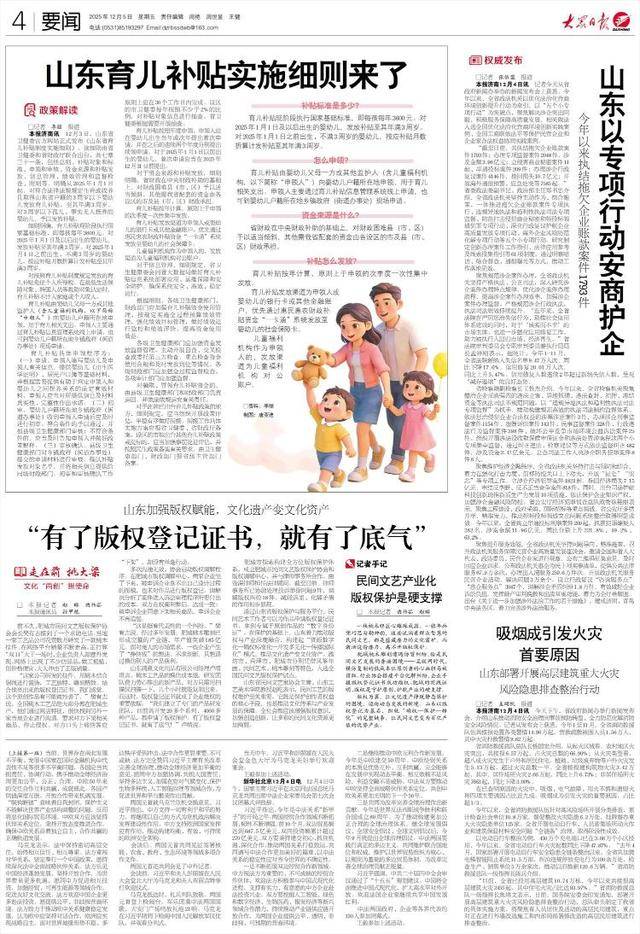
山东以专项行动安商护企 今年以来执结拖欠企业账款案件1793件
Sou Hu Cai Jing· 2025-12-05 03:56
2025年12月5日 星期五 贵仔演播 同地 同世是一三健 4 要闻 163.085193297 Email.diribssdap@163.000 本报清面讯 | 配油价 145-87 920 0 tra 《机年演) 之前回生,不用1周岁的第4 这种能力数打算日文相框金利 (A) Prv HERTELANJI度版 1. 份规定在合 的各直到的第三次回到 文地藏十八双人。 脚注意 , 转至人发手机 , 在线 作无利用(200 山东育儿补贴实施细则来了 园 政策解读 65 @baddit (原) 高峰团下 原因 ABER 04010 nts 危地多情形年 (展后) 新作的要注意过 用语 划3 H125 H P 2005 02 的體驗 处次位语影步步》 12.5 nton (n. 1 低层用用,各线工生息面 MALO TRANCE ll., 日本官东省全过程!! M., 德州城市的首席, 体育金体 品因 士加盟酒店( this contra 25万副负责 & 皮零托元 育儿补贴成阶段执行国家基础标准,即符夜得年2000元 第二次世一起一起名 对305年1月1日之前已参,不满3周岁的男幼儿,被应补贴牙看 析量(十分彩 ...
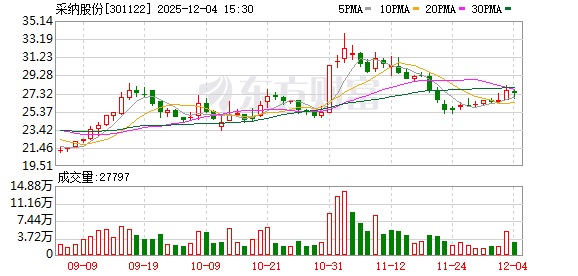
采纳股份:关于公司及全资子公司取得专利证书的公告
Zheng Quan Ri Bao· 2025-12-04 13:16
证券日报网讯 12月4日晚间,采纳股份发布公告称,公司及全资子公司采纳医疗近日取得国家知识产权 局颁发的2项实用新型专利证书,专利名称分别为"一种通用型细菌过滤盒"(专利号 ZL202423196620.5,授权公告日2025年12月2日)和"一种注射器拧杆机构"(专利号 ZL202423192593.4,授权公告日2025年12月2日)。上述专利为公司自主研发,与公司主营业务技术相 关,虽不会短期显著影响业绩,但有助于完善知识产权保护体系、保持技术领先并提升核心竞争力。 (文章来源:证券日报) ...
具身智能技术创新的知识产权新边界:从知识产权布局到价值实现
Xin Lang Cai Jing· 2025-12-04 11:28
Core Insights - The article discusses the challenges and opportunities in the field of embodied intelligence, emphasizing the need for a new paradigm in intellectual property governance that includes "proactive governance, multidimensional protection, and systematic layout" [2][24]. Group 1: Challenges in Intellectual Property Protection - The rise of embodied intelligence presents significant challenges to traditional intellectual property systems, as products may involve multiple layers of protection, including patents, trade secrets, and copyright [4][25]. - The complexity of embodied intelligence products leads to intertwined intellectual property risks, where a single system may face issues related to patent infringement, trade secret leakage, and copyright violations [26]. - Technological advancements necessitate a shift from "single-point breakthroughs" to "systematic collaboration" in intellectual property protection, as embodied intelligence relies on physical entities for interaction with the environment [25][26]. Group 2: Development Trends in Intellectual Property Protection - The protection of intellectual property in embodied intelligence is becoming a core competitive factor for companies, with notable cases of infringement and strategic use emerging [30]. - The patent application for embodied intelligence has seen explosive growth since 2022, indicating a shift towards a focus on patent quality and standardization [31]. - The global landscape shows that China leads in the number of humanoid robot-related patents, reflecting a robust research and development ecosystem based on manufacturing [34]. Group 3: Recommendations for Intellectual Property Governance - Companies are encouraged to establish a comprehensive intellectual property protection system that integrates data, algorithms, and software to enhance innovation value [37]. - A dual strategy of "patent + trade secret" is recommended for algorithm protection, allowing companies to secure legal rights while maintaining competitive advantages [40]. - The importance of compliance with open-source licenses is highlighted, as misuse can lead to legal conflicts; companies should implement approval mechanisms for open-source components to mitigate risks [42].

【省知识产权局】知识产权保护工作成绩突出陕西6集体11人受国家6部门表扬
Shan Xi Ri Bao· 2025-12-03 22:53
Core Viewpoint - The recognition of outstanding contributions in intellectual property protection in Shaanxi Province reflects the effectiveness of the region's efforts in this area, showcasing the commitment and responsibility of its guardians of intellectual property [1][2]. Group 1: Recognition and Achievements - Six collectives and eleven individuals from Shaanxi Province were recognized for their outstanding contributions to national intellectual property protection [1]. - The recognized collectives include various departments such as the Shaanxi Provincial Intellectual Property Office and the Shaanxi Provincial High People's Court [1]. - The recognition serves as a strong affirmation from the national level regarding the achievements in intellectual property protection in Shaanxi [2]. Group 2: Future Initiatives and Goals - The Shaanxi Provincial Intellectual Property Office plans to enhance its coordination role and improve comprehensive management of intellectual property through four dimensions: horizontal departmental collaboration, vertical system promotion, point-to-surface advancement, and social co-governance [2]. - The province aims to optimize the connection between intellectual property enforcement and criminal prosecution, and to build a comprehensive innovation ecosystem that encourages innovation, empowers industries, and serves openness [2].
中国国家知识产权局局长申长雨在京会见中国欧盟商会主席彦辞一行
Di Yi Cai Jing· 2025-12-03 12:39
Core Viewpoint - The meeting between the head of the China National Intellectual Property Administration and the President of the European Union Chamber of Commerce emphasizes the importance of intellectual property protection and the commitment to fostering a fair competitive market environment for both domestic and foreign enterprises [1] Group 1: Strategic Cooperation - This year marks the 50th anniversary of diplomatic relations between China and the EU, with leaders reaching significant consensus on deepening bilateral relations [1] - The Chinese government places high importance on intellectual property protection, ensuring equal treatment for both domestic and foreign enterprises [1] Group 2: Future Initiatives - The China National Intellectual Property Administration will maintain open communication with foreign enterprises and continue to optimize services [1] - The administration aims to provide stronger support for international innovation cooperation and economic trade exchanges [1]