物联网

Search documents
中颖电子(300327) - 300327中颖电子投资者关系管理信息20260123
2026-01-23 08:18
Group 1: Market Overview and Product Strategy - The company focuses on chip design, particularly in the specialized MCU sector, achieving significant market share in industrial-grade home appliance MCUs and motor control MCUs, positioning itself among leading domestic chip manufacturers [2] - The company’s products are gradually becoming more high-end and specialized, primarily serving major brand clients, with plans to continue launching new products [2] - The domestic home appliance MCU market faces price pressures, but the company expects overseas business, which accounts for over 50% of revenue, to double this year, primarily targeting Europe and Japan [3] Group 2: Production and Supply Chain Management - Long-term agreements with wafer fabs were established to secure MCU production capacity amid tight supply, and overall capacity has stabilized [3] - The company is adjusting its procurement strategy to increase purchasing volume in 2026, which is expected to lower costs through better negotiation [9] Group 3: Product Development and Market Trends - The company is developing WiFi/Bluetooth MCU products to provide wireless connectivity solutions and is collaborating with partners to offer WiFi6 solutions, enhancing competitiveness in the IoT market [5] - The lithium battery management chips are primarily used in 3C products and home energy storage, with significant growth in demand in Africa and Europe, particularly in areas with unstable power supply, showing a growth rate of approximately 20-30% [6] Group 4: Competitive Landscape and Challenges - The small appliance MCU market is highly competitive, with a clear demand for MCU replacements and compatibility; the company aims to maintain its position in the mid-to-high-end segment [7] - Challenges in overseas expansion include the need to establish after-sales service points, which complicates recruitment [8]

半导体用真空闸阀市场洞察:市场规模及增长趋势(附龙头企业名单)
QYResearch· 2026-01-23 05:40
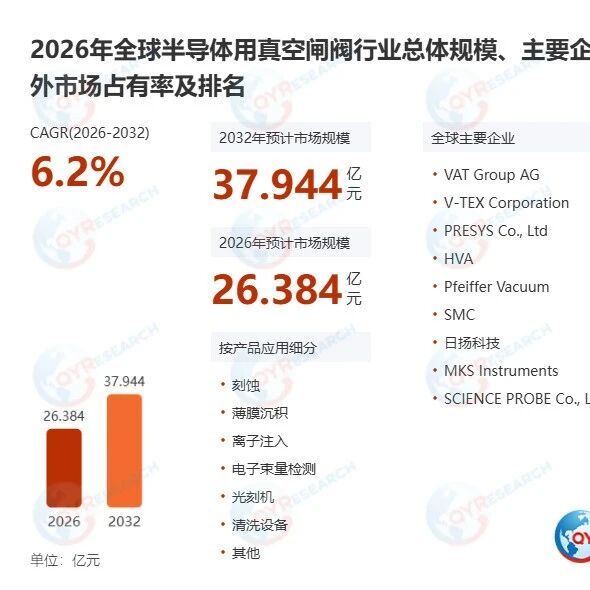
Core Viewpoint - The semiconductor vacuum gate valve is a critical component in semiconductor manufacturing, providing low leakage and low particle contamination isolation between vacuum chambers, with a projected global market size of $558 million by 2032 and a CAGR of 6.24% [6][18]. Market Overview - The global market for semiconductor vacuum gate valves is expected to reach $558 million by 2032, with a CAGR of 6.24% [6]. - Major manufacturers include VAT Group AG, V-TEX Corporation, PRESYS Co., Ltd, HVA, and Pfeiffer Vacuum, which collectively hold approximately 80.1% of the market share [10]. - The primary demand source is vertical furnaces, accounting for about 41% of the market share [13]. Product Types - The product categories include: 1. Chamber/load lock gate valves for chamber doors and isolation [2]. 2. Slit/transmission gate valves for wafer transfer interfaces [2]. 3. All-metal sealed gate valves suitable for ultra-high vacuum and high-temperature environments [2]. Market Drivers - The growth of the semiconductor vacuum gate valve market is driven by the expansion of the global semiconductor industry and advancements in process technologies, particularly in 5G, AI, and IoT, which increase the demand for high-purity vacuum environments [18]. - The trend towards "vacuumization" in semiconductor manufacturing processes, such as EUV lithography, necessitates a higher number of vacuum chambers, thus increasing the demand for high-performance vacuum gate valves [18]. - The development of 3D stacking technology, requiring enhanced corrosion resistance and durability in vacuum gate valves, is another significant driver [18]. Challenges - The industry faces technical challenges, including the need to meet extreme cleanliness standards, as even particles as small as 0.3 microns can affect wafer yield [21]. - The valves must have a long service life, with isolation valves requiring over 200,000 cycles and control valves up to 3 million cycles, which poses high demands on materials [21]. - The lack of specific technical standards for semiconductor vacuum valves and reliance on imported high-end components also hinder domestic manufacturers [22]. Policy Environment - In China, the government supports the vacuum valve industry through tax incentives and the "14th Five-Year Plan," recognizing it as a key component [23]. - Local governments are promoting industry clusters and standardization efforts to accelerate domestic replacement [23]. - In contrast, developed regions like the US and Europe focus on funding for R&D and maintaining high environmental and safety standards to sustain their market leadership [23].

高德红外(002414):内需外贸双轮驱动 军民业务共振有望迎来爆发
Xin Lang Cai Jing· 2026-01-23 04:32
Core Viewpoint - The company has established a comprehensive research and production layout in the infrared field, focusing on the core infrared detector chip technology and expanding along the industrial chain, making it one of the most competitive enterprises in the domestic equipment manufacturing and optoelectronic systems sector [1] Group 1: Business Overview - The company was founded in 1999 and went public in July 2010, focusing on the localization of infrared thermal imaging technology [1] - The main business includes infrared focal plane detector chips, infrared thermal imaging systems, comprehensive optoelectronic systems, and traditional non-lethal munitions [1] - The company has built a technology innovation platform covering dozens of professional directions, from core infrared components to complete equipment systems [1] Group 2: Financial Performance - In 2024, the company faced performance pressure due to project procurement delays and price reductions, but is expected to see a significant turnaround in 2025 with a projected net profit of 582 million yuan, a year-on-year increase of 1059% [2] - The gross profit margin and net profit margin reached 57.91% and 18.97%, respectively [2] Group 3: Market Opportunities - The company has gained various qualifications for complete equipment systems and has made significant progress in multiple categories and fields, establishing itself as a key supplier in the domestic market [2] - The company has formed strategic partnerships for foreign trade and is recognized internationally, breaking the long-standing monopoly of Western giants in the field [3] - The company is actively integrating infrared technology with emerging technologies such as IoT, autonomous driving, and artificial intelligence, which is expected to open up new business opportunities in emerging markets [3] Group 4: Profit Forecast - The company is projected to achieve revenues of 47.14 billion yuan, 86.67 billion yuan, and 116.69 billion yuan from 2025 to 2027, with corresponding net profits of 7.06 billion yuan, 14.02 billion yuan, and 19.73 billion yuan [4] - The company is rated with a PE of 103.01, 51.83, and 36.84 for the years 2025, 2026, and 2027, respectively [4]

内外兼修,当好医疗创新排头兵
Xin Lang Cai Jing· 2026-01-22 23:18
Core Viewpoint - The continuous advancement of new technologies such as brain-computer interfaces, artificial intelligence, and the Internet of Things is expected to provide breakthroughs in previously challenging medical issues and unsolved healthcare problems [1] Group 1: Role of National Regional Medical Centers - National regional medical centers, equipped with strong research capabilities and high-level talent, can deeply engage in clinical practice while understanding patient needs, thus driving medical technology innovation [1] - To lead in medical innovation, healthcare institutions must strengthen their internal capabilities and establish integrated platforms for industry, academia, research, and application [1] Group 2: Strategies for Medical Innovation - Establishing research outpatient clinics can help doctors identify problems from clinical practice, enhancing the quality and relevance of research [1] - A reformed research evaluation system is necessary to encourage the identification of research topics from frontline clinical experiences, allowing clinical and research efforts to mutually benefit and ultimately serve public health [1] Group 3: Collaborative Innovation - Medical innovation is not a solitary endeavor but requires cross-disciplinary collaboration to achieve synergistic effects [1] - As a national team in medical innovation, national regional medical centers should actively expand their roles as cross-border hubs, collaborating with universities, research institutions, and enterprises to create a cooperative mechanism that shares demands, resources, and risks [1]
航投低空经济(红河)有限公司成立,注册资本500万人民币
Sou Hu Cai Jing· 2026-01-22 16:58
企业名称航投低空经济(红河)有限公司法定代表人高建明注册资本500万人民币国标行业科学研究和 技术服务业>科技推广和应用服务业>技术推广服务地址云南省红河哈尼族彝族自治州弥勒市福城街道 章保社区康健路7号研发楼203室企业类型有限责任公司(法人独资)营业期限2026-1-22至无固定期限 登记机关弥勒市市场监督管理局 来源:市场资讯 天眼查显示,近日,航投低空经济(红河)有限公司成立,法定代表人为高建明,注册资本500万人民 币,由航投低空经济技术(北京)有限公司全资持股。 序号股东名称持股比例1航投低空经济技术(北京)有限公司100% 经营范围含技术服务、技术开发、技术咨询、技术交流、技术转让、技术推广;工程和技术研究和试验 发展;计算机系统服务;人工智能基础软件开发;人工智能应用软件开发;软件开发;信息技术咨询服 务;软件销售;电子产品销售;智能机器人的研发;智能机器人销售;物联网技术研发;信息系统集成 服务;人工智能理论与算法软件开发;人工智能硬件销售;物联网设备销售;货物进出口。(除依法须 经批准的项目外,凭营业执照依法自主开展经营活动) ...
蓝箭电子:公司正积极拓展新型功率器件、车规级器件以及针对5G通讯基站等领域的创新产品开发
Zheng Quan Ri Bao Wang· 2026-01-22 13:41
Core Viewpoint - Blue Arrow Electronics (301348) is actively expanding its development of innovative products in new power devices, automotive-grade devices, and applications for 5G communication base stations, the Internet of Things, and big data industries [1] Group 1: Product Development - The company is focusing on the development of new power devices and automotive-grade devices [1] - Innovative product development is targeted at sectors such as 5G communication base stations, the Internet of Things, and big data [1] Group 2: Technology Research - The company is conducting in-depth research in advanced technology areas including embedded board-level packaging, chip-level packaging, and multi-process platforms [1] Group 3: R&D Investment - The company is increasing its R&D investment to enhance its technological reserves [1] - Efforts are being made to attract top talent and strengthen collaborations with research institutions [1]
三清互联完成数亿元C轮融资,75后董事长魏文辉为清华博士
Sou Hu Cai Jing· 2026-01-22 10:54
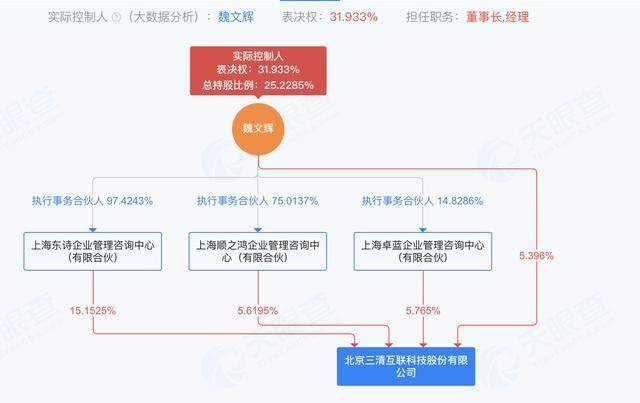
Group 1 - Beijing Sanqing Huilian Technology Co., Ltd. successfully completed a C-round financing of several hundred million yuan, led by Fosun Chuangfu and October Capital, with Wanchuang Investment Bank serving as the chief financial advisor for this round of financing [1] - The company was established in 2011 and focuses on reshaping energy management and consumption through IoT technology, covering key technologies such as communication, sensing, embedded systems, edge computing, cloud computing, and artificial intelligence [1] - Main products include smart sensors, smart terminals, and smart control terminals, specifically high-precision fault indicators, online monitoring sensors for partial discharge, and various automation terminals [1] Group 2 - Wei Wenhui, born in February 1976, is the actual controller, chairman, and general manager of Sanqing Huilian, holding a 25.23% stake and 31.93% voting rights [3] - Wei Wenhui holds a bachelor's, master's, and doctoral degree in power system automation from Tsinghua University and has worked at Beijing Kedong Electric Control Systems before joining Sanqing Huilian in December 2016 [3] - The company applied for an IPO on the ChiNext board in September 2023 but withdrew the application in June 2024 [3]
存储太火!铠侠今年产能已全部售罄
Hua Er Jie Jian Wen· 2026-01-22 10:21
Core Insights - The strong demand driven by the AI boom is reshaping the global storage market, marking the end of the era of cheap solid-state drives (SSDs) [1] - Kioxia has confirmed that its production capacity is fully sold out for the year, with supply shortages expected to persist until 2027 [1] - The price of 1TB SSDs has significantly increased, with some mainstream models experiencing price hikes of over 130% in recent months [1][3] Price Surge - The price increase for 1TB SSDs spans from traditional SATA drives to advanced PCIe 5.0 models, ending the period where prices were below $50 [3] - Specific examples include the Corsair MP700 Pro XT 1TB, which rose from $159.99 to $219.99, a 38% increase, and the Samsung 990 Pro 1TB, which saw an 83% increase to $199.99 [3] - Shunsuke Nakato anticipates that this upward price trend will continue through 2026 and possibly into 2027, indicating that the low-cost window for system upgrades has closed [3] Supply Chain Challenges - Kioxia's management has indicated that the company cannot accelerate delivery through physical means due to order backlogs, necessitating adjustments in allocation strategies [2] - The global NAND flash supply chain is facing severe supply-demand imbalances, exacerbated by AI infrastructure demands [2][6] Allocation Strategy - Kioxia has opted for a trust-based allocation strategy rather than a "highest bidder wins" approach, focusing on long-term partnerships for capacity distribution [4] - This strategy aims to maintain long-term stability in the supply chain rather than maximizing short-term profits [4] Technological Responses - To address ongoing supply constraints, storage manufacturers are enhancing production efficiency through technology [5] - Kioxia's Yokkaichi factory is utilizing AI and IoT technologies to collect approximately 50TB of manufacturing data daily to maximize yield [5] - The Kitakami factory is expected to begin full production of Kioxia's 8th generation BiCS flash memory soon, which may help alleviate the global NAND supply shortage [5] Market Dynamics - Other industry leaders, such as Phison and SanDisk, have reported similar trends, with NAND prices doubling and significant price increases to meet AI-driven demand [6] - The seller's market characteristics in the storage industry are expected to become more pronounced in the coming years due to the AI boom [6]
智慧楼宇赋能“好房子”:从垂直交通服务到全要素楼宇服务的全面升级
Xin Lang Cai Jing· 2026-01-22 10:15
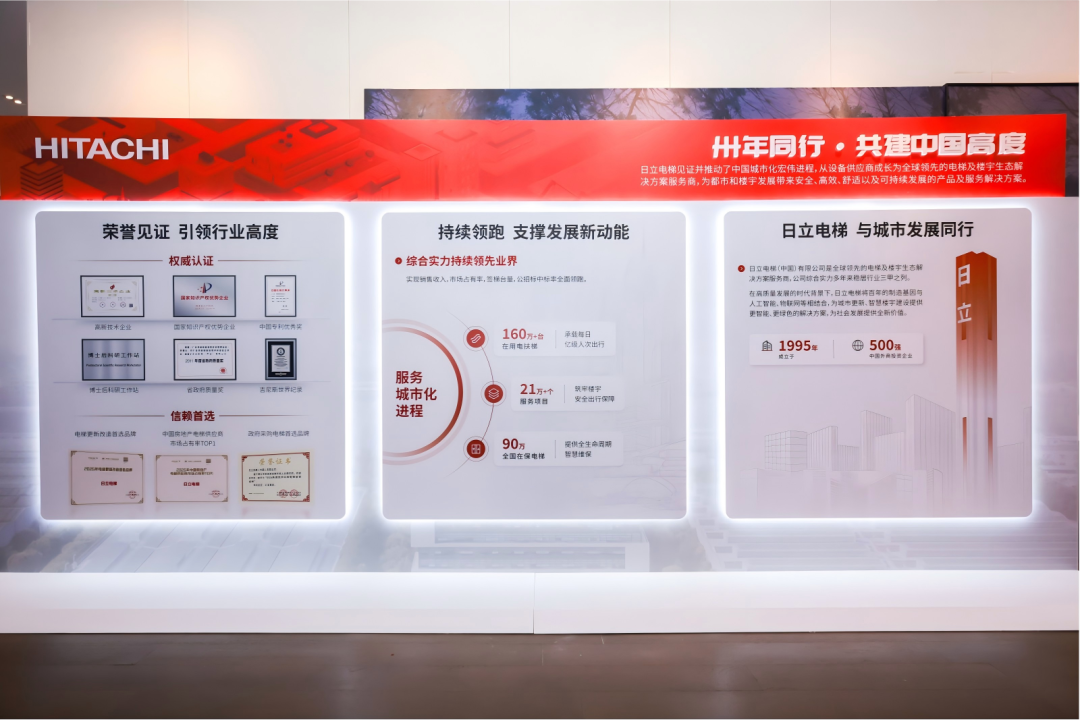
Core Insights - The article emphasizes the importance of high-quality urban development in the context of China's new urbanization and smart city initiatives, highlighting the role of innovative technology in creating livable and business-friendly environments [1][20][22] Company Overview - Hitachi Elevator (China) has been operating for 30 years, establishing a comprehensive industry chain covering research, manufacturing, and services, with over 1.6 million elevators in use nationwide and a market coverage rate among the highest in the industry [2][13] - The company has contributed significantly to urban development, delivering over 2,400 projects to top hospitals and providing 66,000 units for urban rail transit across 36 cities [3][15] Technological Advancements - Hitachi Elevator has introduced the new generation smart elevator NCA, which integrates five core technologies, enhancing peak transport capacity by 50% and reducing average waiting time by 22% [6][18] - The company has also launched the ELECLOUD® service center, utilizing over 600 AI diagnostic technologies for proactive fault warnings, transitioning the industry from reactive to preventive maintenance [6][18] Urban Development Initiatives - In response to urban renewal demands, Hitachi Elevator has implemented the "Hitachi Installation" and "Hitachi Renewal" solutions, completing over 47,000 projects in 324 cities for old residential buildings [3][15] - The company aims to evolve from an "equipment supplier" to a "city service provider," integrating AI and IoT technologies to enhance urban living and contribute to smart city development [5][17] Future Outlook - The "15th Five-Year Plan" proposes the construction of safe, comfortable, green, and smart housing, marking a shift from quantity to quality in housing development [20][22] - Industry experts predict that from 2026, the push for "good housing" will strengthen, leading to new growth opportunities for related industries, including elevators [20][22]
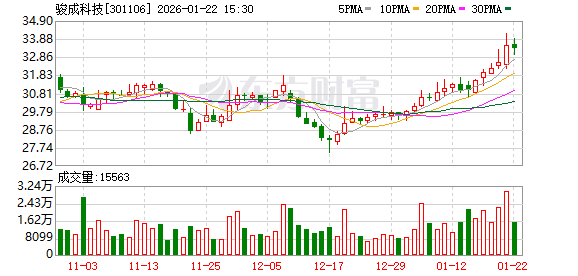
骏成科技:公司液晶显示器已广泛大批量应用在国家电网上的智能电表,物联网电表上,集中器电表上
Mei Ri Jing Ji Xin Wen· 2026-01-22 08:53
Group 1 - The company, Jun Cheng Technology (301106.SZ), primarily focuses on the display sector, with customized development projects [2] - The company's liquid crystal displays are widely used in the State Grid's smart meters, IoT meters, and concentrator meters [2]