
工业4.0

Search documents
晶盛机电涨2.01%,成交额2.72亿元,主力资金净流出473.45万元
Xin Lang Cai Jing· 2025-10-14 02:00
Core Viewpoint - The stock of Jing Sheng Mechanical & Electrical Co., Ltd. has shown significant volatility, with a year-to-date increase of 40.31%, but a recent decline of 1.84% over the last five trading days [1] Financial Performance - For the first half of 2025, Jing Sheng Mechanical reported a revenue of 5.799 billion yuan, a year-on-year decrease of 42.85%, and a net profit attributable to shareholders of 639 million yuan, down 69.52% year-on-year [2] - Cumulative cash dividends since the company's A-share listing amount to 3.241 billion yuan, with 2.027 billion yuan distributed over the last three years [3] Shareholder Structure - As of June 30, 2025, the number of shareholders decreased by 1.41% to 68,900, while the average circulating shares per person increased by 1.43% to 17,861 shares [2] - The second-largest circulating shareholder is Hong Kong Central Clearing Limited, holding 43.0251 million shares, an increase of 2.7754 million shares from the previous period [3] - The fourth-largest shareholder, E Fund's ChiNext ETF, reduced its holdings by 389,600 shares, while the fifth-largest, Huatai-PB's CSI 300 ETF, increased its holdings by 1,005,900 shares [3] Stock Performance - As of October 14, the stock price was 44.20 yuan per share, with a market capitalization of 57.881 billion yuan [1] - The stock has experienced a 58.76% increase over the past 60 days, indicating strong performance in the medium term [1] Business Overview - Jing Sheng Mechanical specializes in the research, development, manufacturing, and sales of crystal growth equipment and control systems, with its main business revenue composition being 70.48% from equipment and services, 21.18% from materials, and 8.34% from other sources [1] - The company operates within the photovoltaic equipment sector, which is part of the broader new energy and industrial 4.0 concepts [1]
美盈森涨2.01%,成交额3666.84万元,主力资金净流入63.05万元
Xin Lang Cai Jing· 2025-10-14 01:58
Core Viewpoint - The stock price of Meiyingsen has shown a significant increase of 32.21% year-to-date, despite a recent decline of 1.30% over the last five trading days, indicating volatility in the market [2]. Company Overview - Meiyingsen Group Co., Ltd. is located in Guangming New District, Shenzhen, Guangdong Province, and was established on May 17, 2000, with its listing date on November 3, 2009 [2]. - The company specializes in the research, production, and sales of transportation packaging products, premium packaging products, label products, and electronic functional material die-cut products, offering integrated packaging services [2]. - The revenue composition includes lightweight packaging products (57.54%), third-party procurement (35.96%), other (3.28%), heavyweight packaging products (3.07%), and food industry (0.15%) [2]. Financial Performance - For the first half of 2025, Meiyingsen achieved a revenue of 1.949 billion yuan, representing a year-on-year growth of 5.46%, and a net profit attributable to shareholders of 176 million yuan, up 17.29% year-on-year [2]. - The company has distributed a total of 2.628 billion yuan in dividends since its A-share listing, with 1.175 billion yuan distributed over the past three years [3]. Shareholder Information - As of June 30, 2025, the number of shareholders reached 51,900, an increase of 0.87% from the previous period, with an average of 18,646 circulating shares per person, up 0.64% [2]. - The second-largest circulating shareholder is Hong Kong Central Clearing Limited, holding 27.6145 million shares, an increase of 12.6974 million shares from the previous period [3].

科沃斯涨2.12%,成交额5453.67万元,主力资金净流出312.95万元
Xin Lang Cai Jing· 2025-10-14 01:56
Core Viewpoint - Ecovacs Robotics has shown significant stock performance with a year-to-date increase of 113.88%, despite a recent decline in the last five trading days [1] Group 1: Stock Performance - As of October 14, Ecovacs' stock price reached 99.56 CNY per share, with a market capitalization of 57.632 billion CNY [1] - The stock experienced a net outflow of 3.1295 million CNY in principal funds, with large orders accounting for 9.52% of purchases and 15.26% of sales [1] - Over the past 60 days, the stock has increased by 55.49% [1] Group 2: Financial Performance - For the first half of 2025, Ecovacs reported a revenue of 8.676 billion CNY, representing a year-on-year growth of 24.37%, and a net profit of 979 million CNY, up 60.84% [2] - Cumulative cash dividends since the A-share listing amount to 2.021 billion CNY, with 944 million CNY distributed over the last three years [3] Group 3: Shareholder Information - As of June 30, 2025, the number of shareholders increased to 34,200, with an average of 16,633 circulating shares per person, a decrease of 5.25% [2] - The top ten circulating shareholders include Hong Kong Central Clearing Limited and Huaxia CSI Robotics ETF, with notable increases in their holdings [3]

工业智能化转型的必经之路:5G+边缘计算赋能智慧工厂(PPT)
Sou Hu Cai Jing· 2025-10-13 15:20
Core Insights - The article emphasizes the importance of industrial internet and smart factory solutions driven by 5G and edge computing for digital transformation in enterprises [3][9] - It highlights the challenges faced by traditional industrial models and how the proposed solutions can address these pain points, leading to cost reduction and efficiency improvement [3][9] Industrial Internet and Smart Factory Solutions - The integration of 5G and edge computing is crucial for creating smart factories, enabling real-time data processing and enhanced operational efficiency [4][5] - Edge computing addresses issues of high latency, bandwidth costs, and data security that traditional cloud computing struggles with in industrial settings [4][10] Cloud-Edge Collaboration - The cloud-edge collaborative architecture combines the powerful data processing capabilities of central cloud with the real-time responsiveness of edge computing, forming a distributed computing model [6][9] - This model supports various industrial processes including research and design, manufacturing, quality control, and supply chain management [5][9] Case Studies and Implementation - Beijing's Changping District has successfully implemented an industrial internet service platform, aiding local SMEs in their digital transformation [7] - An industrial park has deployed smart factory solutions that meet the needs of SMEs for low latency, data security, and localized deployment [8] Benefits of the Proposed Solutions - The 5G and edge computing-based smart factory solutions provide comprehensive support for government, parks, and SMEs, enhancing competitiveness and operational efficiency [9] - Key features include ultra-low latency (1-5ms), local data storage for security, and reduced bandwidth costs, which are essential for real-time industrial applications [10] Technical Capabilities - The solutions support over 30 industrial protocols, ensuring compatibility across various devices and systems [10] - Edge computing devices, such as the Edge Intelligent Station (EIS), facilitate local data processing and compliance with data security requirements [10][74] Future Trends - The article suggests that the industrial internet will continue to evolve, focusing on customized solutions for different industries and enhancing collaborative management capabilities [25][27] - The integration of AI, big data, and other emerging technologies will drive further innovation in industrial internet platforms [25][31]


“成都造·全球销”系列活动欧洲行启动 40余家成都工业企业赴德法拓展市场
Mei Ri Jing Ji Xin Wen· 2025-10-13 08:12
Group 1 - A delegation of over 40 industrial enterprises from Chengdu is visiting Germany and France to expand into the European market, focusing on six key industries: electronic information, equipment manufacturing, pharmaceutical health, new materials, green food, and advanced energy [1] - The delegation includes companies from 12 key manufacturing industry chains, showcasing Chengdu's industrial strength and aiming to deepen practical cooperation with Europe [1] - During the visit, the delegation will hold 10 high-level exchange activities, including an economic cooperation seminar and company site visits, to promote cooperation projects [1] Group 2 - In Germany, the delegation will participate in a seminar on "Industry 4.0 and EU Market Insights" and visit Audi and Siemens facilities to learn about advanced manufacturing processes and digital solutions [2] - The highlight of the Germany trip will be the "2025 China (Chengdu) - Munich Industry Cooperation and Matching Conference," which will involve over 40 Chengdu enterprises and representatives from German Fortune 500 companies [2] - In France, the delegation will attend the "Invest in China, Invest in the Future" investment conference to connect Chengdu enterprises with French investment resources [2] Group 3 - The delegation will conduct a series of site visits and exchanges focusing on themes such as green energy transition, traditional energy industry trends, and logistics infrastructure for entering the European market [3] - Companies like Schneider Electric and Total Energy will be visited to explore energy management innovations and the transition to clean energy [3] - In the first half of the year, Chengdu's Economic and Information Bureau organized three delegations to five countries, resulting in 12 on-site contracts with an intended signing amount exceeding 6 billion yuan, highlighting the global competitiveness of "Chengdu-made" products [3]
星徽股份跌0.97%,成交额3.71亿元,近3日主力净流入-901.70万
Xin Lang Cai Jing· 2025-10-13 07:21
Core Viewpoint - The company, Guangdong Xinghui Precision Manufacturing Co., Ltd., is experiencing fluctuations in stock performance and is heavily involved in the cross-border e-commerce sector, particularly benefiting from the depreciation of the RMB. Group 1: Company Overview - Guangdong Xinghui Precision Manufacturing Co., Ltd. specializes in the research, production, and sales of precision metal connectors and smart home appliances, with a significant focus on products like slides, hinges, and small household appliances [4][8]. - The company's main revenue sources include slides (71.62%), smart home appliances (16.77%), and power supply products (8.01%) [8]. - As of June 30, the company had 27,100 shareholders, an increase of 8.00% from the previous period, with an average of 13,104 circulating shares per shareholder, a decrease of 7.40% [8]. Group 2: Financial Performance - For the first half of 2025, the company reported a revenue of 726 million yuan, a year-on-year decrease of 9.38%, and a net profit attributable to shareholders of -10.14 million yuan, a decline of 208.43% [8]. - The company has distributed a total of 71.16 million yuan in dividends since its A-share listing, with no dividends paid in the last three years [9]. Group 3: Market Activity - On October 13, the company's stock price fell by 0.97%, with a trading volume of 371 million yuan and a turnover rate of 12.74%, resulting in a total market capitalization of 3.75 billion yuan [1]. - The stock has seen a net inflow of 2.03 million yuan from major investors today, with the industry ranking at 3 out of 18, indicating a lack of clear trends in major investor activity [5][6]. Group 4: Product and Market Segments - The company’s audio products, primarily under the brand TaoTronics, have annual sales reaching tens of millions of USD, with TWS technology widely applied in Bluetooth earphones [2]. - The cross-border e-commerce segment includes small household appliances such as aroma machines, coffee machines, air fryers, and milk frothers, primarily sold overseas [2][3].

行业聚焦:全球单向离合器市场头部企业份额调研(附Top 10 厂商名单)
QYResearch· 2025-10-13 05:31
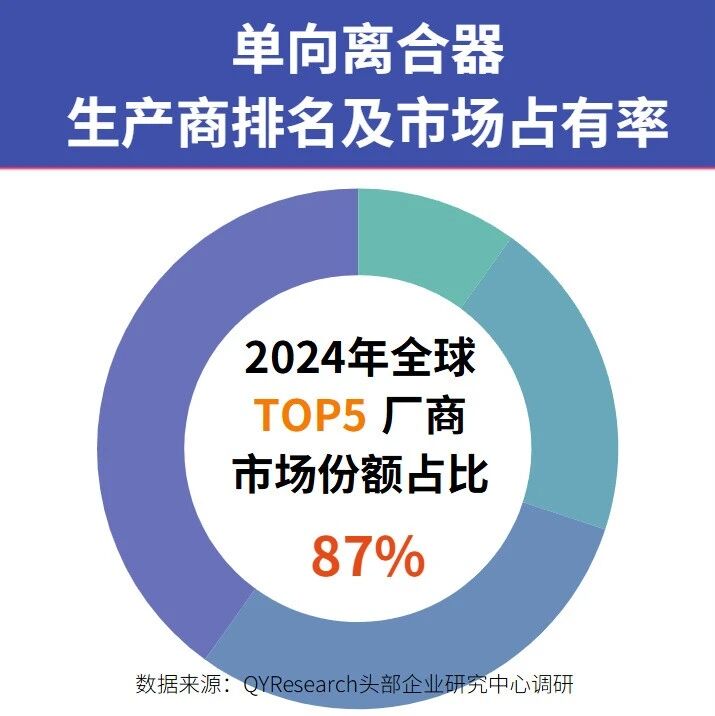
Core Insights - The article discusses the single-direction clutch market, highlighting its expected growth and key drivers, including the rise of electric vehicles and advancements in industrial automation [1][15][16]. Market Overview - The global single-direction clutch market is projected to reach $822 million by 2031, with a compound annual growth rate (CAGR) of 3.76% over the coming years [1]. - The leading manufacturers in the single-direction clutch market include NTN, NSK-Warner, Schaeffler, SKF, and Jiangsu Nanfang Precision, which collectively hold approximately 87% of the market share [5][20]. Product Segmentation - Roller-type single-direction clutches dominate the market, accounting for about 51% of the total market share [7]. - In terms of application, the transportation sector is the largest downstream market, representing approximately 42% of the demand [9]. Regional Insights - Major production regions for single-direction clutches are primarily located in North America and Europe, while key consumption areas include Japan and Europe [12][15]. Growth Drivers - The explosion of the electric vehicle market is increasing demand for high-performance, low-noise, and long-life clutches, particularly in electric drive systems and energy recovery systems [15]. - The advancement of industrial automation and smart manufacturing is driving the need for precision, reliability, and durability in transmission components, leading to stable growth in demand for single-direction clutches [16]. - Technological advancements and product innovations, such as the use of new materials and smart control systems, are enhancing the performance and applicability of single-direction clutches [17]. - Policy support for high-end manufacturing and the expansion into emerging markets are creating favorable conditions for the growth of the single-direction clutch industry [18].
行业聚焦:全球三轴等离子清洗机市场头部企业份额调研(附Top 5 厂商名单)
QYResearch· 2025-10-13 05:31
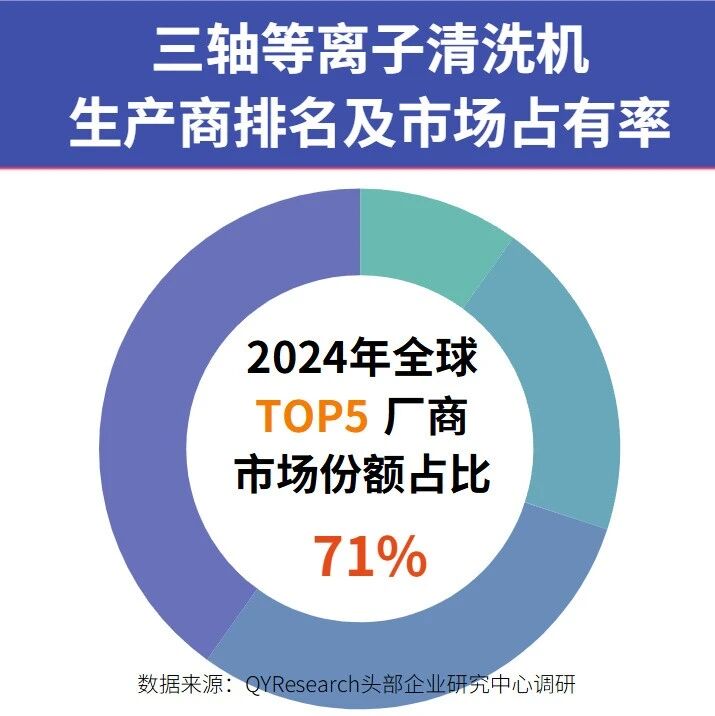
Core Viewpoint - The 3-Axis Plasma Cleaner is an automated surface treatment device that integrates XYZ three-axis motion systems and plasma generators, primarily used for cleaning, activation, and modification of material surfaces, driven by the increasing demand from high-end manufacturing sectors such as electric vehicles, semiconductors, and micro-medical devices [1][2]. Global Trends and Drivers - The global market for 3-Axis Plasma Cleaners is primarily driven by the surging demand for precision cleaning and surface activation in high-end manufacturing, particularly in the electric vehicle, advanced semiconductor packaging, and micro-medical device sectors [1]. - The technological trend is moving towards smart and integrated solutions, requiring devices to connect with MES systems and incorporate AI vision and process monitoring for real-time closed-loop control and traceability [1]. Competitive Landscape - The market exhibits a highly concentrated competitive landscape dominated by technology leaders from Germany and the United States, such as Plasmatreat, Nordson, and Diener, which have established significant technical barriers and brand moats [2]. - These leading companies provide customized solutions and continuous technological iterations, forming strong binding relationships with top clients across various industries, making it challenging for new entrants to compete [2]. Opportunities and Challenges from Policies and Regulations - Opportunities arise from global "carbon neutrality" policies that promote the expansion of emerging industries like electric vehicles, photovoltaics, and hydrogen energy, which heavily rely on reliable plasma cleaning processes [2]. - Challenges include increasingly stringent environmental and energy efficiency regulations that require manufacturers to reduce harmful chemicals and energy consumption, raising R&D costs and technical complexity while pushing the industry towards greener and more sustainable technologies [2]. Market Size and Growth - According to QYResearch, the global market size for 3-Axis Plasma Cleaners is expected to reach USD 321 million by 2031, with a compound annual growth rate (CAGR) of 5.5% over the next few years [3]. Market Segmentation - Currently, offline systems dominate the market, accounting for approximately 70% of the share, while online systems hold about 30%. The share of online systems is expected to steadily increase, but offline systems will continue to play a significant role due to their unmatched flexibility [10]. Key Drivers and Barriers - The core driver for the 3-Axis Plasma Cleaner market is the high-end manufacturing industry's pursuit of surface treatment quality and process consistency, with smart manufacturing and Industry 4.0 pushing for fully automated production line integration [11]. - The primary barrier is cost, as online systems are expensive and complex to integrate, deterring many small and medium-sized enterprises. Additionally, insufficient standardization of processes limits technology adoption, and while offline systems are flexible, they face efficiency limitations [12]. Future Opportunities - Future opportunities are concentrated in emerging fields requiring large-scale production, such as electric vehicle battery cells, electronic control, and sensor manufacturing, which depend on online cleaning to ensure quality and efficiency [13]. - The demand for ultra-precision cleaning processes in advanced semiconductor packaging and Micro-LED applications will further drive the market, alongside the modular and intelligent upgrades of equipment that will open broader mid-market opportunities [13].
南钢股份跌2.04%,成交额1.31亿元,主力资金净流出169.57万元
Xin Lang Cai Jing· 2025-10-13 02:38
Core Viewpoint - Nanjing Steel Co., Ltd. (南钢股份) has experienced fluctuations in stock price and trading volume, with a notable increase in stock price year-to-date, despite a recent decline in trading activity [1][2]. Financial Performance - For the first half of 2025, Nanjing Steel reported operating revenue of 28.944 billion yuan, a year-on-year decrease of 14.06%, while net profit attributable to shareholders increased by 18.63% to 1.463 billion yuan [2]. - Cumulatively, the company has distributed 13.436 billion yuan in dividends since its A-share listing, with 4.954 billion yuan distributed over the past three years [3]. Stock Market Activity - As of October 13, the stock price was 5.27 yuan per share, with a market capitalization of 32.49 billion yuan. The stock has increased by 17.48% year-to-date [1]. - The trading volume on October 13 was 131 million yuan, with a turnover rate of 0.40%. There was a net outflow of 1.6957 million yuan in main funds [1]. Shareholder Structure - As of June 30, 2025, the number of shareholders increased to 63,700, with an average of 96,856 circulating shares per person, a decrease of 4.85% [2]. - The top ten circulating shareholders include various funds, with notable changes in holdings among major institutional investors [3].

江南化工跌2.10%,成交额1.92亿元,主力资金净流出1330.02万元
Xin Lang Cai Jing· 2025-10-13 02:11
Core Viewpoint - Jiangnan Chemical experienced a stock price decline of 2.10% on October 13, with a current price of 6.99 CNY per share and a total market capitalization of 18.516 billion CNY [1] Financial Performance - For the first half of 2025, Jiangnan Chemical reported revenue of 4.614 billion CNY, representing a year-on-year growth of 3.71%, and a net profit attributable to shareholders of 427 million CNY, which is a 2.17% increase compared to the previous year [2] Stock Market Activity - Year-to-date, Jiangnan Chemical's stock price has increased by 30.53%, with a 1.01% rise over the last five trading days, 13.11% over the last 20 days, and 24.16% over the last 60 days [1] - The company has appeared on the "Dragon and Tiger List" once this year, with the most recent occurrence on July 22 [1] Shareholder Information - As of June 30, Jiangnan Chemical had 60,800 shareholders, an increase of 19.05% from the previous period, while the average number of circulating shares per shareholder decreased by 16.00% to 43,601 shares [2] Business Overview - Jiangnan Chemical, established on December 3, 1998, and listed on May 6, 2008, is located in Hefei, Anhui Province. The company specializes in the research, production, and sales of civil explosives, including industrial explosives, detonators, and related engineering services [1] - The revenue composition of Jiangnan Chemical includes 55.34% from blasting engineering services, 28.84% from the production and sales of civil explosive products, 7.86% from renewable energy generation, and 7.43% from other civil explosive businesses [1] Dividend Distribution - Since its A-share listing, Jiangnan Chemical has distributed a total of 1.639 billion CNY in dividends, with 517 million CNY distributed over the past three years [3]
