
新发展格局

Search documents
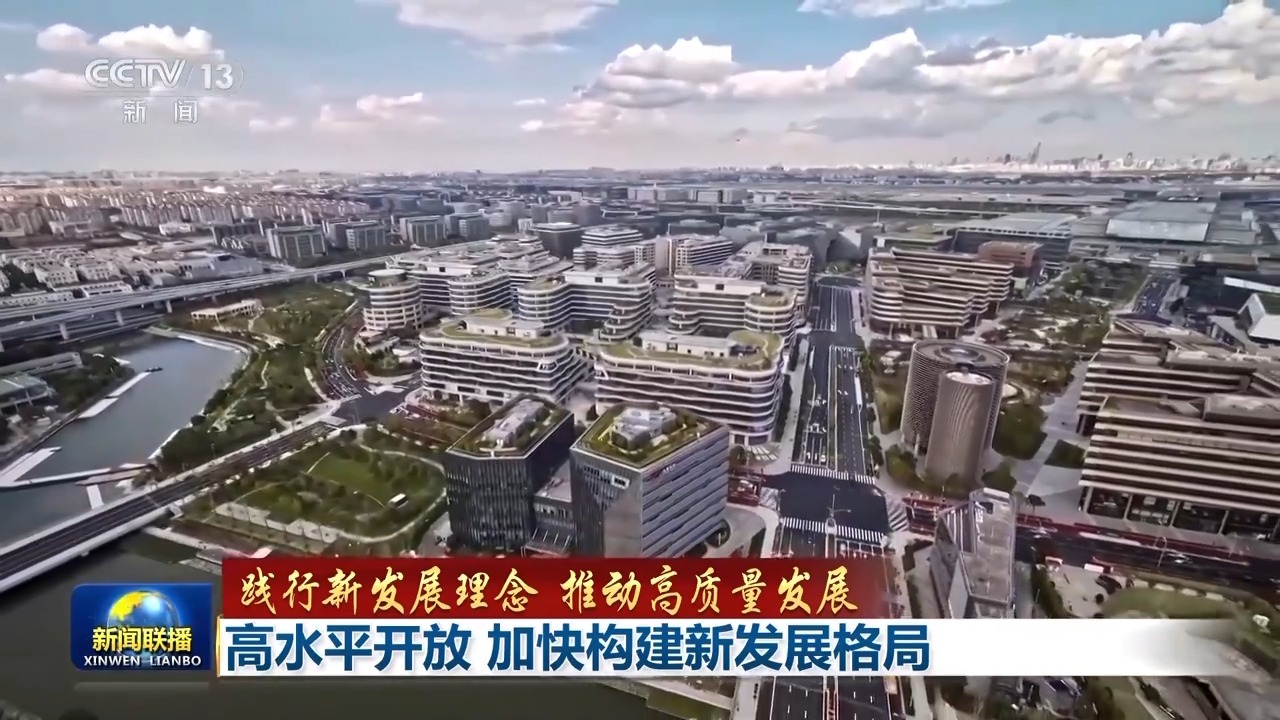
高水平开放 加快构建新发展格局
Yang Shi Xin Wen· 2025-10-22 13:08
Core Insights - The article emphasizes the importance of a new development model that promotes a higher level of open economy and high-quality development in China [1] Group 1: Shanghai Free Trade Zone Developments - Shanghai has expanded its Free Trade Zone to include eight key areas and five national economic and technological development zones, transitioning from "single-point experiments" to a multi-point linkage model [3] - Since the 14th Five-Year Plan, Shanghai's Free Trade Zone has implemented significant innovations, including data export management regulations and negative lists in finance, trade, and shipping [3] Group 2: Economic Growth in Pudong New Area - Pudong New Area aims for its three leading industries—integrated circuits, biomedicine, and artificial intelligence—to reach a scale of 832.3 billion yuan by 2024, with an average annual growth rate of 11.7% over the past three years [5] Group 3: Nationwide Free Trade Zone Initiatives - China has established 22 Free Trade Zones across the country, facilitating institutional openness and enhancing trade efficiency, particularly in Qingdao and Dalian [7] - In Hainan, efforts are underway to prepare for the island's full closure operation by December 18, creating a conducive environment for the free flow of people, goods, and capital [9] Group 4: Belt and Road Initiative and Regional Development - The Belt and Road Initiative is opening new development opportunities for central and western regions, with significant increases in trade volumes through key ports like Alashankou and Horgos [11] - In the first three quarters of this year, Hunan's trade with Africa reached 44.52 billion yuan, marking a nearly 20% year-on-year increase [11] Group 5: Infrastructure and Connectivity Enhancements - The Western Land-Sea New Corridor has reached 127 countries and regions, with a record import-export volume of 702.42 billion yuan in the first three quarters, reflecting a 17% year-on-year growth [13] - The Guangxi region is enhancing connectivity with ASEAN countries, projecting a 37.1% increase in port cargo volume by 2024 compared to the end of the 13th Five-Year Plan [15]

观察·中国创新动能持续迸发 经济发展蓝图中哪些是优先事项?一文了解↓
Yang Shi Wang· 2025-10-22 06:12
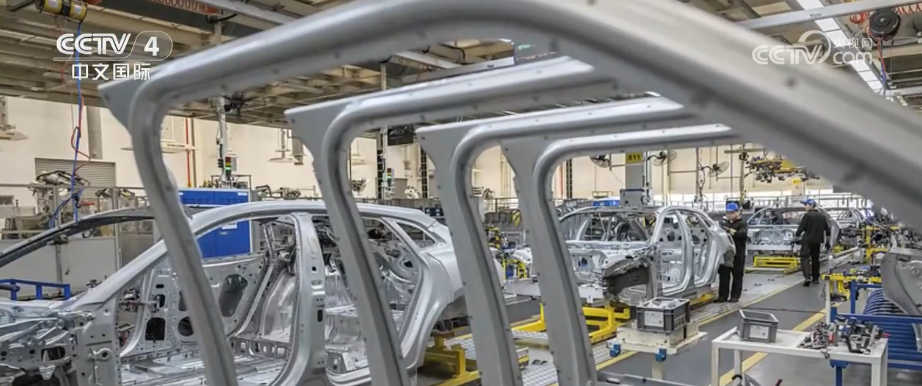
央视网消息:"十四五"时期,中国经济实力和国际影响力跃上新台阶。在中国经济发展蓝图中有哪些优先事项? 新加坡《联合早报》:人工智能产业发展迅速 中国人工智能产业发展迅速,目前有超过5000家AI企业。其中,国家级人工智能专精特新"小巨人"企业,专注于细分市场,有创新 能力强、市场占有率高、掌握关键核心技术等优势。为推动AI产业发展,中国围绕算力、算法、数据、应用四大环节开展投资布 局。通过政府引导和政策支持,企业逐渐向更高层级的智能工厂迈进。 法国《世界报》:科技创新仍是优先事项 中国正在审议新的五年规划,为2026年至2030年的经济发展制定框架,世界期待从中窥见世界第二大经济体的未来走向。在一些领 域,中国仍在努力追赶,而在另一些方面,例如电动汽车,中国已取得技术领先地位。文章强调,对中国来说,科技创新仍然是头 号优先事项。透过中国在人工智能与无人机等领域的突出进展,未来五年,中国创新的力量将对世界产生巨大影响。 英国广播公司:持续推动高质量发展 文章分析了中国过往的五年规划如何重塑全球经济,包括中国成为可再生能源和电动汽车领域无可争议的世界领先者;聚焦"高质 量发展",在多个高科技领域取得主导地位。专家 ...
思想之光照亮奋进之路 以习近平同志为核心的党中央引领中国经济社会高质量发展迈向新境界
Xin Hua She· 2025-10-22 00:12
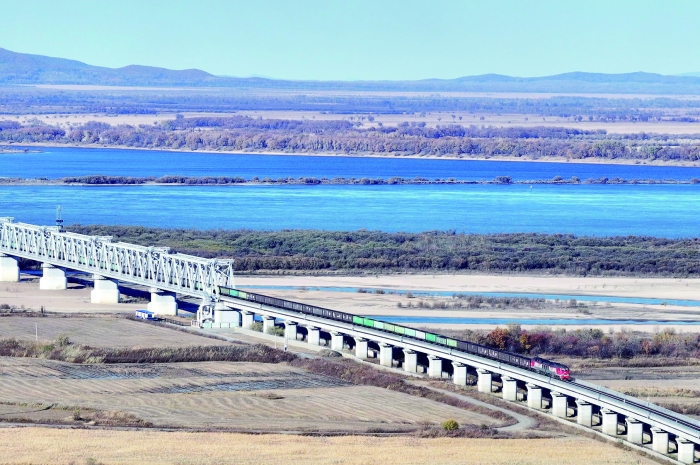
新华社北京10月21日电 题:思想之光照亮奋进之路——以习近平同志为核心的党中央引领中国经济社会高质量发 展迈向新境界 新华社记者 历史总是在接续奋斗中书写新篇。 即将收官的"十四五",新时代中国在风起潮涌中驶过壮丽的又一程—— 完整准确全面贯彻新发展理念,加快构建新发展格局,全面推动高质量发展,我国经济社会发展取得新的开创性 进展、突破性变革、历史性成就。 科学理论的磅礴之力,深刻塑造着一个大国的发展轨迹,指引通往强国建设、民族复兴伟业的伟大征途。 思想之光照亮奋进之路。以习近平同志为核心的党中央带领亿万人民不惧风雨、破浪前行,以无比的勇毅攻坚克 难,以坚定的信心开创未来,在理论创新和实践创新相互激荡、彼此辉映的进程中推动中国不断迈向发展新境界。 (一) 东海之滨,宁波舟山港,岸线上靠满万吨巨轮,桥吊装卸不停。截至9月11日,港口今年集装箱吞吐量突破3000 万标准箱,较去年提前23天,再次刷新历史纪录。 借由海铁联运、江海联运,这个全球年货物吞吐量16连冠的超级大港,已将港口腹地拓展至长江上游,助力畅通 长江黄金水道、西部陆海新通道、中欧班列和21世纪海上丝绸之路,在横跨东中西、衔接海陆空的开放型经济走廊 ...
打开高质量发展的新天地——站在“十四五”与“十五五”的交汇点上
Jing Ji Ri Bao· 2025-10-22 00:03
Core Viewpoint - The article emphasizes the journey of Chinese modernization, highlighting the interaction between the strategic goals of national rejuvenation and global changes, under the strong leadership of the Communist Party of China [1] Economic Development - The "14th Five-Year Plan" period marks the first five years after achieving the first centenary goal, focusing on building a modern socialist country and addressing challenges such as economic divergence and insufficient domestic demand [2] - China's GDP is projected to grow from 54 trillion yuan to nearly 135 trillion yuan from 2012 to 2024, with an average annual growth rate of 6% [3] - The share of China's economy in the global economy increased from 11.3% to 17.1%, with GDP growth nearly double the global average [3] Development Strategies - The new development concept aims to address unbalanced and insufficient development, emphasizing high-quality growth [6] - A new development pattern is proposed, focusing on domestic circulation while promoting international circulation to enhance economic resilience [7] - The article stresses the importance of optimizing the market environment and expanding development space to unleash the potential of a large-scale market [8] Innovation and Productivity - Technological innovation is highlighted as a key driver for high-quality development, with a focus on nurturing new productive forces [9] - High-quality development is positioned as a fundamental task for building a modern socialist country, aiming for effective qualitative improvements and reasonable quantitative growth [10] Global Engagement - The article advocates for high-level opening-up to inject new momentum into the global economy, emphasizing the importance of institutional openness and cooperation in key areas [10] Governance and Planning - The article underscores the significance of scientific planning and the mobilization of various societal forces to achieve modernization [11] - The "14th Five-Year Plan" includes multiple strategies aimed at enhancing resilience and addressing challenges posed by the pandemic and economic fluctuations [11] Investment Focus - The balance between investment in physical assets and human capital is emphasized, with policies aimed at improving livelihoods and economic growth [14] Regional Development - The article discusses the importance of regional strategies in the context of overall modernization, highlighting the need for coordinated development across different areas [15]
打开高质量发展的新天地
Jing Ji Ri Bao· 2025-10-21 22:28
Core Viewpoint - The article emphasizes the journey of Chinese modernization, highlighting the interaction between national strategies and global changes, and the challenges faced during the "14th Five-Year Plan" period, while underscoring the importance of high-quality development and strategic reforms to navigate uncertainties in both domestic and international contexts [1][2][3]. Economic Growth and Structure - From 2012 to 2024, China's GDP is projected to grow from 54 trillion yuan to nearly 135 trillion yuan, with an average annual growth rate of 6% [2] - China's share of the global economy increased from 11.3% to 17.1%, with GDP growth nearly double the global average [2] - The country has improved its global innovation index ranking to 10th and its soft power ranking to 2nd, surpassing the UK for the first time [2] Development Strategies - The "14th Five-Year Plan" focuses on high-quality development as a primary task, emphasizing the need for a stable and effective domestic economy to counter international uncertainties [7][8] - The article discusses the importance of balancing investments in both physical and human capital to enhance economic growth potential [12] Reform and Innovation - The article highlights the need for deepening reforms to address unbalanced and insufficient development, with a focus on practical measures for high-quality growth [4] - Emphasis is placed on technological innovation as a strategic support for national development, aiming to build a self-reliant and secure industrial supply chain [11] Global Engagement - The article advocates for a high level of openness to inject new momentum into the global economy, focusing on investment, trade, finance, and innovation [8] - It stresses the importance of strategic positioning for different regions in China to foster coordinated development and leverage local strengths [13]
坚持全国一盘棋思想 系统性增强我国经济发展韧性(深入学习贯彻习近平新时代中国特色社会主义思想·学习《习近平经济文选》第一卷专家谈)
Ren Min Ri Bao· 2025-10-21 22:06
Core Viewpoint - The concept of "national chess" is essential for transforming China's institutional advantages into economic resilience, emphasizing coordinated development as a key strategy for success [2][4]. Group 1: National Strategy and Economic Resilience - The "national chess" approach integrates various regional strengths and promotes coordinated development, which is crucial for enhancing confidence and collective efforts in economic growth [3][4]. - This strategy is rooted in Marxist systemic views and China's historical governance practices, aiming to optimize overall goals through collaboration among subsystems [3][4]. - The current complex global environment necessitates a unified approach to address risks and challenges, ensuring national security and long-term development goals [3][4]. Group 2: Economic Development and Challenges - The "14th Five-Year Plan" period is critical for solidifying the foundation of socialist modernization, facing both external geopolitical risks and internal economic transitions [5][6]. - Key internal challenges include the need for deeper integration of technological and industrial innovation, improved financial services for the real economy, and enhanced regional development strategies [6][7]. Group 3: Systematic Approaches to Economic Growth - Emphasizing a systematic and coordinated approach is vital for enhancing the stability and security of economic development, particularly in the face of external pressures [6][7]. - The integration of various sectors and the promotion of a unified national market are essential for maintaining economic circulation and resilience [15][19]. Group 4: Financial and Industrial Development - Financial high-quality development serves as a "shock absorber" for the economy, ensuring that financial systems support real economic growth while managing risks effectively [13][19]. - The development of a modern industrial system characterized by digitalization and sustainability is crucial for fostering new productive forces and enhancing economic resilience [16][17]. Group 5: Regional Coordination and Strategic Development - Strengthening regional strategies and promoting coordinated development across different areas can enhance overall economic resilience and stability [12][18]. - The focus on regional characteristics and advantages allows for a more tailored approach to economic development, fostering collaboration and resource optimization [12][18].
打开高质量发展的新天地 ——站在“十四五”与“十五五”的交汇点上
Jing Ji Ri Bao· 2025-10-21 22:03
Core Viewpoint - The article emphasizes the journey of Chinese modernization, highlighting the interaction between national strategies and global changes, and the challenges faced during the "14th Five-Year Plan" period, while underscoring the importance of high-quality development and strategic reforms. Economic Growth and Structure - From 2012 to 2024, China's GDP is projected to grow from 54 trillion yuan to nearly 135 trillion yuan, with an average annual growth rate of 6% [2] - China's share of the global economy increased from 11.3% to 17.1%, with GDP growth nearly double the global average [2] - The country has improved its global innovation index ranking to 10th and its soft power ranking to 2nd, surpassing the UK for the first time [2] Development Strategies - The "14th Five-Year Plan" is seen as a critical period for advancing high-quality development, addressing imbalances and inadequacies in growth [4] - A new development pattern is proposed, focusing on domestic circulation as the mainstay while promoting international circulation to enhance economic resilience [5] - Emphasis on optimizing the market environment and expanding development space through breaking down barriers and enhancing competition [6] High-Quality Development - High-quality development is identified as the primary task for building a modern socialist country, with a focus on internal motivation and effective growth [7] - The importance of high-level opening up to inject new momentum into the global economy is highlighted, with a focus on institutional reforms in key areas like investment and trade [8] Strategic Planning and Governance - The article discusses the significance of scientific planning and the mobilization of various societal forces to achieve modernization [9] - The integration of traditional and human investment is emphasized, balancing social welfare and productive investment to harness market potential [12] - The need for coordinated development across regions, with each area leveraging its strengths while contributing to national goals, is underscored [13]
思想之光照亮奋进之路
Shang Hai Zheng Quan Bao· 2025-10-21 18:17
Group 1 - The article emphasizes the importance of deepening understanding of economic work and the necessity of centralized leadership for effective economic governance [2][20] - It highlights the significant achievements in China's economic growth, with GDP expected to reach approximately 140 trillion yuan by 2025, contributing around 30% to global economic growth [5][17] - The article discusses the integration of innovation into economic development, showcasing advancements in technology and infrastructure, such as the launch of China's first domestically produced aircraft carrier and the completion of the Tiangong space station [9][10] Group 2 - The article outlines the commitment to ecological civilization and green development, with the concept of "green mountains and clear waters are as valuable as mountains of gold and silver" being central to China's economic transformation [3][4] - It mentions the establishment of a comprehensive education, social security, and healthcare system, enhancing the quality of life for citizens and promoting a sense of well-being [14] - The article notes the strategic focus on food security and agricultural productivity, with measures implemented to ensure stable grain production amidst challenges [15][16] Group 3 - The article discusses the importance of cultural confidence and the role of cultural development in driving economic growth, emphasizing the need for a harmonious relationship between culture and economy [4] - It highlights the ongoing reforms aimed at enhancing the market environment and promoting fair competition, particularly in the Yangtze River Delta region [23][27] - The article points out the significance of expanding domestic demand and building a unified national market to support economic resilience and growth [17][27]
思想之光照亮奋进之路——以习近平同志为核心的党中央引领中国经济社会高质量发展迈向新境界
Xin Hua She· 2025-10-21 12:13
Core Points - The article emphasizes the significant progress and achievements in China's economic and social development under the leadership of the Communist Party of China, particularly focusing on high-quality development and the new development paradigm [1][26][37] Group 1: Economic Development - Ningbo-Zhoushan Port has achieved a record container throughput of over 30 million standard containers by September 11, 2023, marking a 23-day earlier achievement compared to the previous year [2] - China's economy has consistently crossed major thresholds, with total economic output projected to reach approximately 140 trillion yuan by 2025, contributing around 30% to global economic growth [12][25] - The country has maintained its position as the world's second-largest consumer market and the largest manufacturing nation, with a focus on high-end, intelligent, and green manufacturing [25] Group 2: Innovation and Technology - The emphasis on innovation as a core element of development is highlighted, with significant advancements in technology such as the launch of China's first domestically produced electromagnetic aircraft carrier and the completion of the Tiangong space station [16] - The introduction of new quality productivity is seen as essential for high-quality development, with a focus on integrating technological and industrial innovation [7][16] Group 3: Social Development - The article discusses the importance of a people-centered development approach, with significant improvements in education, social security, and healthcare systems, contributing to the overall well-being of the population [21] - Employment remains a top priority, with over 12 million new urban jobs created annually during the "14th Five-Year Plan" period [21] Group 4: Environmental Sustainability - China's commitment to ecological civilization is underscored, with initiatives aimed at achieving a green transformation of the economy, including a target for non-fossil energy consumption to reach over 30% by 2035 [28] - The article mentions the successful completion of the Taklamakan Desert green barrier project, showcasing efforts in ecological restoration [9] Group 5: Strategic Planning - The "14th Five-Year Plan" and the upcoming "15th Five-Year Plan" are positioned as critical frameworks for achieving modernization and addressing both domestic and international challenges [36][37] - The article highlights the importance of maintaining strategic focus and confidence in navigating complex global dynamics while promoting high-quality development [26][37]
临商银行精彩亮相第三届商城国际采购商大会
Qi Lu Wan Bao· 2025-10-21 08:25
Core Viewpoint - The article highlights the active participation of Linyi Commercial Bank at the Third International Purchasing Conference, showcasing its international financial service capabilities and addressing the new demands and challenges faced by foreign trade enterprises in Linyi [1] Group 1: Company Initiatives - Linyi Commercial Bank organized a professional service team to present its settlement and financing products at the conference [1] - The bank engaged in face-to-face communication to gain insights into the current needs of Linyi's foreign trade enterprises [1] - The bank plans to continue innovating financial products and optimizing service processes to support Linyi's development as a new highland for opening up to the outside world [1]