
零碳园区

Search documents
绿色创新 绘就双碳新画卷
Bei Jing Ri Bao Ke Hu Duan· 2025-09-13 22:25
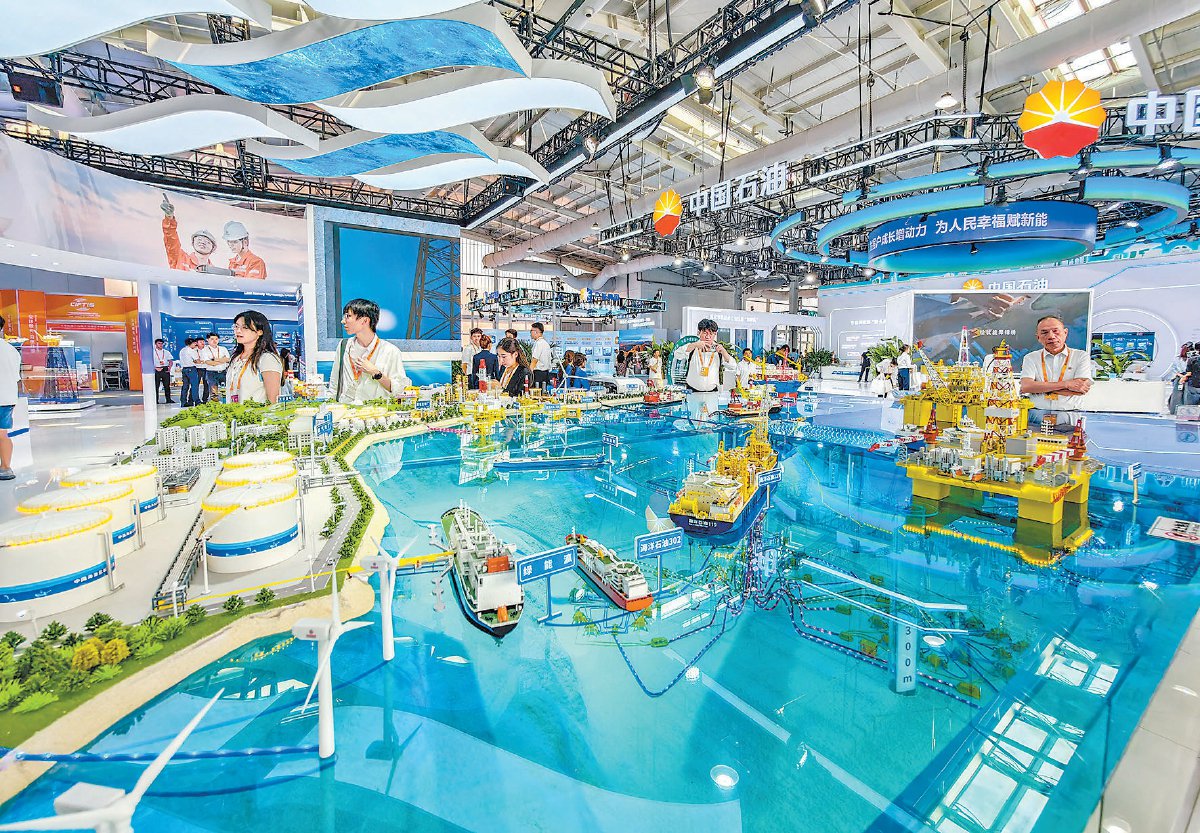
Group 1: Environmental Services Exhibition Highlights - The exhibition at Shougang Park focuses on three key areas: new energy and low-carbon services, ecological services and circular economy, and green low-carbon digital technologies [1] - The newly established zero-carbon park concept is gaining traction, with over 10 exhibitors showcasing innovative technologies and solutions for zero-carbon park construction [6] - Beijing Energy Group has completed a smart heating renovation of 72.5 million square meters in the past three years, enhancing energy efficiency and reducing carbon emissions [6][7] Group 2: Technological Innovations in Water Management - The exhibition features a water technology innovation area, showcasing new devices and technologies for water management, including satellite remote sensing and smart rain gauges [8][9] - The introduction of intelligent water quality monitoring systems allows for real-time data collection on various water quality parameters, enhancing environmental monitoring capabilities [8] Group 3: Global Green Economy Forum - The "Global Green Economy Development Forum" discussed innovations and global cooperation in green economy, emphasizing China's achievements in sustainable development [10] - The transition of China's foreign trade from traditional exports to new energy products like electric vehicles and solar components reflects a significant structural change towards sustainability [11] - Beijing's government plans to incorporate the development of an international green economy benchmark city into its upcoming "14th Five-Year Plan," focusing on seven strategic green industries [11]

寻路全球绿色经济新空间
Bei Jing Shang Bao· 2025-09-13 16:06
Group 1: Global Green Economy Development - The global green transition has entered a critical stage driven by innovation, focusing on sustainable development goals (SDGs) and global cooperation [1] - Future green bonds and SDGs bonds are expected to become important financial tools to achieve the UN's 2030 sustainable development agenda [1] - Emerging markets, particularly in Asia, Africa, and Latin America, are anticipated to become significant growth engines for China's green industry [1] Group 2: Carbon Market and Energy Transition - The expansion of the mandatory carbon market will create new growth points for enterprises by integrating various emission reduction costs and subjects into a unified management system [2] - The green low-carbon transition in the energy sector requires a multidisciplinary approach and tailored solutions for different projects and enterprises [2] - Artificial intelligence is emerging as a core engine driving the transformation of green energy and equipment manufacturing, enhancing efficiency and smart capabilities [2] Group 3: Zero Carbon Park Construction - The construction of zero carbon parks focuses on optimizing energy structure and improving energy efficiency through various steps, including energy supply and consumption accounting [3][4] - The core value of creating zero carbon parks lies in cost reduction and efficiency enhancement, which can improve economic benefits and brand image [4] - Zero carbon parks aim to foster green industries and create new economic growth drivers through technology development and industrial transformation [4]
调研速递|西子洁能接受国信证券等2家机构调研 透露火电改造及市场布局要点
Xin Lang Cai Jing· 2025-09-12 14:31
Group 1 - The company, Xizi Clean Energy, has a diversified business model covering multiple sectors, including waste heat boilers, clean energy equipment, and service solutions [1] - Xizi Clean Energy has been involved in the development of flexible transformation projects for thermal power, with significant results demonstrated in the Hebei Longshan 600MW project, enhancing load capacity and efficiency [2] - The company targets various downstream industries, including steel and building materials, with a clear market direction towards renewable energy, nuclear power, and international expansion [3] Group 2 - Xizi Clean Energy has established a strong presence in the solar thermal power sector, participating in numerous demonstration projects and achieving significant operational milestones [4] - The company is exploring new market opportunities in zero-carbon factories and green electricity connections, aligning with national policies for low-carbon development [4] - The company's diversified interests extend to other sectors, including aviation, where it has secured contracts related to the C919 aircraft, marking its position as a unique private supplier in the industry [4]

2025服贸会 | 国内外政、企、学界代表共话绿色经济创新与全球合作
Bei Jing Shang Bao· 2025-09-12 14:28
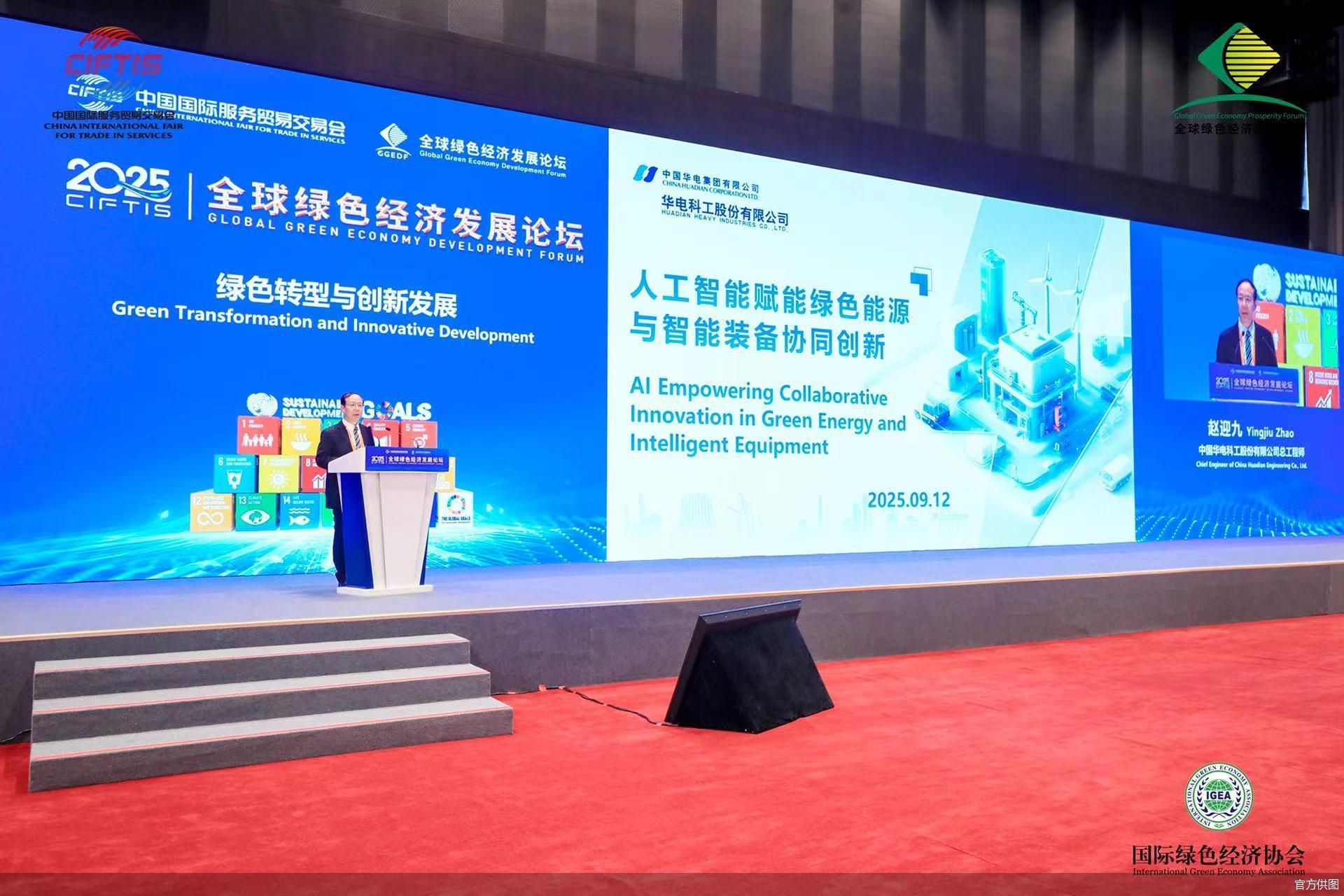
Group 1: Global Green Transition - The global green transition has entered a critical stage driven by innovation, with discussions focusing on green economic innovation and global cooperation at the 2025 Service Trade Fair theme forum [1] - Future green bonds and SDGs bonds are expected to become crucial financial tools for achieving the UN's 2030 Sustainable Development Goals, with multilateral development banks playing a significant role in financing and technical assistance [2] Group 2: Emerging Markets and Green Industry - Emerging markets in Asia, Africa, and Latin America are becoming increasingly important growth engines for China's green industry, shifting from "product export" to "industry export" through local operations and technology licensing [3] - The competitive advantage in the green industry will transition from price advantage to value leadership, focusing on brand competitiveness, technological originality, and standard-setting [3] Group 3: Carbon Market and Business Growth - The expansion of the mandatory carbon market in China will create new business growth opportunities for enterprises by broadening market control and integrating various stakeholders into a unified management system [4] - The improvement of the carbon market is expected to foster rapid development in emerging fields such as carbon verification, monitoring, consulting, and finance [4] Group 4: Energy Sector Transformation - The green low-carbon transition in the energy sector is a multidisciplinary technical integration challenge, requiring tailored solutions for each project and strong project management capabilities [5] - Artificial intelligence is becoming a core driver for the transformation of green energy and equipment manufacturing, enhancing efficiency and enabling cost reduction and zero-carbon goals [6] Group 5: Zero Carbon Parks - The construction of zero-carbon parks focuses on optimizing energy structure and improving energy efficiency through various steps, including energy supply and consumption accounting, carbon emission assessment, and feasibility analysis [7] - The core value of creating zero-carbon parks is to achieve cost reduction and efficiency improvement, enhance brand image, and foster green industry development through technological innovation and industrial transformation [8]
2025服贸会|国内外政、企、学界代表共话绿色经济创新与全球合作
Bei Jing Shang Bao· 2025-09-12 14:24
Group 1 - The global green transition has entered a critical stage driven by innovation, with discussions focusing on green economic innovation and global cooperation to advance the UN's 2030 Sustainable Development Goals (SDGs) [2] - Green bonds and SDGs bonds are expected to become crucial financial tools for achieving the UN's 2030 SDGs, with multilateral development banks playing a significant role in providing long-term loans and technical assistance [3] - Emerging markets in Asia, Africa, and Latin America are becoming increasingly important growth engines for China's green industry, shifting from "product export" to "industry export" through local operations [4] Group 2 - The expansion of the mandatory carbon market in China is expected to create new business growth opportunities for enterprises by enhancing the market mechanism for carbon reduction [5] - The energy sector's green and low-carbon transition is a multidisciplinary challenge requiring tailored solutions for each project and strong project management capabilities [6] - Artificial intelligence is emerging as a core driver for the transformation of green energy and equipment manufacturing, enhancing efficiency and enabling cost reduction in green energy production [7] Group 3 - The construction of zero-carbon parks focuses on optimizing energy structures, requiring a comprehensive approach to energy supply and consumption, as well as production processes [8] - The primary value of creating zero-carbon parks is to achieve cost reduction and efficiency improvement, enhancing economic benefits through the large-scale application of renewable energy [9]
国内外政、企、学界代表共话绿色经济创新与全球合作
Bei Jing Shang Bao· 2025-09-12 14:20
Group 1: Global Green Economy Development - The global green transition has entered a critical stage driven by innovation, with discussions on green economy innovation and global cooperation at the 2025 Service Trade Fair theme forum [2] - Future green bonds and SDGs bonds are expected to become crucial financial tools for achieving the UN's 2030 Sustainable Development Goals, with multilateral development banks playing a significant role in financing [2] - Emerging markets in Asia, Africa, and Latin America are identified as increasingly important growth engines for China's green industry development, shifting from "product export" to "industry export" [2] Group 2: Carbon Market and Business Growth - The expansion of the mandatory carbon market in China is set to create new business growth opportunities for enterprises by enhancing market mechanisms and reducing overall emission costs [3] - The improvement of the carbon market will stimulate the rapid development of new sectors such as carbon verification, monitoring, consulting, and finance [3] Group 3: Energy Sector Transformation - The green low-carbon transition in the energy sector is a multidisciplinary technical integration challenge, requiring tailored solutions for each project and strong project management capabilities [4] - Artificial intelligence is emerging as a core driver for the transformation of green energy and equipment manufacturing, enhancing efficiency and enabling cost reduction and zero-carbon goals [5] Group 4: Zero Carbon Park Development - The focus of building zero-carbon parks is on optimizing energy structure, improving energy efficiency, and enhancing production processes [6] - The creation of zero-carbon parks aims to achieve cost reduction and efficiency improvement, enhance brand image, and foster green industry development through technological innovation [7]

西子洁能(002534) - 002534西子洁能投资者关系管理信息20250912
2025-09-12 13:27
Group 1: Company Overview - Xizi Clean Energy Equipment Manufacturing Co., Ltd. was established in 1955 and listed on the Shenzhen Stock Exchange in 2011, focusing on waste heat boilers and clean energy equipment [3][4] - The company operates four main business segments: waste heat boilers, clean energy equipment, solutions, and spare parts & services [3][4] Group 2: Key Projects and Innovations - The company participated in the first "steam extraction and storage" molten salt energy storage project in China, which enhances load flexibility and can reduce the load to 51 MW (8.5% of Pe) for at least 4 hours [5] - The molten salt storage system achieves an internal heat exchange efficiency of no less than 98% and an electrical conversion efficiency of no less than 70% [5] Group 3: Market Opportunities - Future growth areas include the renewable energy market, nuclear power market, and international markets, leveraging molten salt storage technology and expanding into overseas markets [7][8][9] - The company aims to capture opportunities in the nuclear power sector by upgrading its manufacturing capabilities and establishing a joint venture for nuclear technology [10] Group 4: Competitive Advantages - The company has been involved in 17 solar thermal power demonstration projects since 2010, establishing a strong market presence and technical advantage [12] - The Qinghai Delingha 50 MW solar thermal project is recognized as a benchmark for solar thermal power generation, achieving a record annual output of 146.4 million kWh in 2022 [12] Group 5: Policy and Strategic Initiatives - Recent government policies encourage the development of green electricity projects and zero-carbon parks, which align with the company's initiatives in energy solutions [13] - The company has established China's first zero-carbon factory and is exploring market opportunities under the green electricity direct connection mechanism [13]
“敞开大门做生意”!开放迈向新高度 服贸会亮点频现
Yang Shi Wang· 2025-09-12 09:08
Group 1 - The 2025 Service Trade Fair has seen significant participation, with 63 enterprises and institutions releasing 100 new achievements, including innovative products like the first multi-use unmanned sanitation vehicle [1] - The first two days of the fair attracted a total of 245,000 visitors to the Shougang Park, showcasing new models and trends in the global service trade sector [4] - The fair features over 20 exciting events, including the Candy Carnival and Tennis Carnival, along with the Global National Cultural and Tourism Promotion Conference, creating immersive experiences in new consumption scenarios [7] Group 2 - The event plans to host three major thematic forums and 18 specialized forums, focusing on key topics such as sustainable development goals, green economy, green innovation, and zero-carbon parks [9] - The core message conveyed by the meetings and emphasized by government officials is a commitment to openness in business, elevating the concept of openness to a new level [11]
氢能技术为零碳园区发展筑基
Zhong Guo Hua Gong Bao· 2025-09-12 03:00
Core Insights - The hydrogen energy industry is seen as a key enabler for the development of zero-carbon parks, emphasizing the need for continuous technological exploration and industrial application [1][2] Group 1: Industry Development - The Daxing District in Beijing is positioning hydrogen energy development as crucial for optimizing the regional energy structure and achieving high-quality industrial growth, aligning with the "dual carbon" goals [1] - Experts suggest that large state-owned enterprises and central enterprises can lead key technological breakthroughs and build large-scale hydrogen production projects and refueling infrastructure in collaboration with local governments [1][2] Group 2: Practical Applications - Companies are exploring various green electricity hydrogen production methods, such as utilizing rooftop solar power stations to enhance green electricity utilization and hydrogen storage capabilities [2] - The establishment of the China-ASEAN hydrogen energy industrial base is being pursued, with innovative materials like basalt fiber being used to reduce hydrogen storage costs [2] - Hydrogen energy is recognized for its advantages in zero-carbon park construction, enabling cross-domain collaboration and forming a complementary energy network [2] Group 3: Collaborative Efforts - The seminar was co-hosted by the Zhongguancun Hydrogen Energy Industry Alliance and the Daxing International Hydrogen Energy Demonstration Zone, highlighting the collaborative nature of the hydrogen energy sector [3]
“绿色中国·零碳园区创新发展主题活动”成功举办
Shang Wu Bu Wang Zhan· 2025-09-11 14:27
唐颂副局长在致辞中表示,零碳园区作为实现双碳目标的重要载体,横跨能源、工业、建筑、交通等多 领域,涉及理念、技术、管理等多方面的系统性变革,零碳园区生态共建需要多方共同参与。投资促进 局将充分发挥平台作用,促进"源网荷储"各建设要素的资源高效匹配、务实对接,为零碳园区创新发展 注入新动能。 於俊杰副主任表示,零碳园区建设是深入推进绿色低碳转型的重要任务,需要园区企业和社会各界积极 参与。环发中心将持续加强绿色低碳领域基础研究和关键技术攻关,加大低碳技术的转化推广力度,积 极助力零碳园区创新发展。 康艳兵副主任以"建设零碳园区,加快绿色发展"为主题进行了主旨演讲,他从为什么建设零碳园区、怎 么建设零碳园区、怎么建好零碳园区三个方面深入剖析了零碳园区建设的核心要点和实施路径。 2025年9月9日,由商务部投资促进事务局和生态环境部环境发展中心联合主办的"绿色中国·零碳园区创 新发展主题活动"在厦门国际会展中心成功举办。活动以"零碳园区生态共建"为主题,旨在整合建设零 碳园区的多方资源,推进零碳园区创新发展。 商务部投资促进事务局副局长唐颂、生态环境部环境发展中心副主任於俊杰、国家节能中心副主任康艳 兵出席活动。施 ...