
3D打印

Search documents
铂力特涨2.07%,成交额1.44亿元,主力资金净流入226.32万元
Xin Lang Cai Jing· 2025-11-11 02:19
Core Viewpoint - The stock of Plater Technology has shown significant growth this year, with a year-to-date increase of 92.91%, indicating strong market performance and investor interest [1][2]. Company Overview - Plater Technology, established on July 6, 2011, and listed on July 22, 2019, specializes in providing comprehensive solutions for metal additive manufacturing (3D printing) and remanufacturing technology [1]. - The company's revenue composition includes 63.33% from customized 3D printing products and technical services, 27.89% from 3D printing equipment, parts, and technical services, and 8.78% from 3D printing raw materials [1]. Financial Performance - For the period from January to September 2025, Plater Technology achieved a revenue of 1.161 billion yuan, representing a year-on-year growth of 46.47%, and a net profit attributable to shareholders of 156 million yuan, reflecting a substantial increase of 234.83% [2]. - The company has distributed a total of 82.67 million yuan in dividends since its A-share listing, with 66.51 million yuan distributed over the past three years [3]. Shareholder Information - As of September 30, 2025, the number of shareholders for Plater Technology increased by 19.49% to 15,700, while the average number of circulating shares per person decreased by 15.52% to 17,462 shares [2]. - Among the top ten circulating shareholders, Hong Kong Central Clearing Limited is a new entrant, holding 4.1088 million shares [3].

美瑞新材:产品热塑性聚氨酯弹性体材料(TPU)可用于生产3D打印耗材
Ge Long Hui· 2025-11-10 09:18
Core Viewpoint - Meirui New Materials (300848.SZ) has indicated that its thermoplastic polyurethane elastomer (TPU) products can be utilized in the production of 3D printing materials, showcasing various performance advantages [1] Group 1: Product Characteristics - The TPU materials produced by the company exhibit excellent mechanical properties, high elasticity, durability, wear resistance, and tear resistance [1] - These materials are applicable in multiple fields, including models, toys, shoe materials, components, and crafts [1] Group 2: Business Segment - Currently, the business volume related to 3D printing materials represents a relatively small proportion of the company's overall operations [1]
美瑞新材(300848.SZ):产品热塑性聚氨酯弹性体材料(TPU)可用于生产3D打印耗材
Ge Long Hui· 2025-11-10 09:17
Core Viewpoint - The company Meirui New Materials (300848.SZ) has indicated that its thermoplastic polyurethane elastomer (TPU) products can be utilized in the production of 3D printing materials, showcasing various performance advantages [1] Group 1: Product Characteristics - The TPU materials produced by the company exhibit good mechanical properties, high elasticity, durability, wear resistance, and tear resistance [1] - These materials are applicable in multiple fields, including models, toys, shoe materials, components, and crafts [1] Group 2: Business Segment - Currently, the business volume related to 3D printing materials represents a relatively small proportion of the company's overall operations [1]
家联科技涨1.23%,成交额2457.91万元,近5日主力净流入-432.80万
Xin Lang Cai Jing· 2025-11-10 09:08
Core Viewpoint - Ningbo Jialian Technology Co., Ltd. is experiencing growth in its stock performance and is positioned to benefit from trends in biodegradable plastics, 3D printing, and cross-border e-commerce [1][2]. Company Overview - Ningbo Jialian Technology specializes in the research, production, and sales of plastic products, biodegradable products, and plant fiber products, with a revenue composition of 84.41% from plastic products, 14.25% from biodegradable products, and 1.34% from other sources [7]. - The company was established on August 7, 2009, and went public on December 9, 2021 [7]. Financial Performance - For the period from January to September 2025, the company achieved a revenue of 1.865 billion yuan, reflecting a year-on-year growth of 8.25%. However, the net profit attributable to shareholders was a loss of 73.81 million yuan, a decrease of 209.95% compared to the previous year [8]. - As of September 30, 2025, the company had a total of 6,828 shareholders, an increase of 15.61% from the previous period, with an average of 20,195 circulating shares per shareholder, down by 11.47% [8]. Market Position and Strategy - The company is a leading player in the global plastic dining utensils manufacturing industry, with 70.47% of its sales coming from exports as of 2021, primarily to developed regions such as North America, Europe, and Oceania [2][3]. - The company has also expanded its online market presence through cross-border e-commerce platforms [2]. Production Capacity and Expansion - The company has established a significant overseas production capacity in Thailand, which includes production lines for 3D printing materials, plastic dining utensils, and plant fiber products, with these lines gradually entering production [3]. Stock Performance - On November 10, the stock price of Jialian Technology increased by 1.23%, with a trading volume of 24.5791 million yuan and a turnover rate of 0.95%, bringing the total market capitalization to 3.693 billion yuan [1].
2025年9月中国3D打印机出口数量和出口金额分别为49万台和1.43亿美元
Chan Ye Xin Xi Wang· 2025-11-10 03:48
Core Insights - The report by Zhiyan Consulting highlights the growth of China's consumer-grade 3D printer industry, projecting significant market opportunities from 2026 to 2032 [1] Export Data - In September 2025, China exported 490,000 units of 3D printers, marking an 11.5% year-on-year increase [1] - The export value reached $14.3 million, reflecting a 36.9% year-on-year growth [1] Industry Analysis - Zhiyan Consulting is recognized as a leading industry consulting firm in China, specializing in in-depth industry research and providing comprehensive consulting services [1] - The firm emphasizes its commitment to delivering quality services and market insights to empower investment decisions [1]


安克创新跌2.00%,成交额1.51亿元,主力资金净流出975.71万元
Xin Lang Cai Jing· 2025-11-10 02:46
Company Overview - Anker Innovations is located in Changsha, Hunan Province, and was established on December 6, 2011. The company went public on August 24, 2020. Its main business involves the independent research, design, and sales of consumer electronics, including mobile device accessories and smart hardware products [1]. - The revenue composition of Anker Innovations is as follows: charging and energy storage products account for 52.97%, smart innovation products for 25.27%, smart audio products for 21.75%, and others for 0.01% [1]. Financial Performance - For the period from January to September 2025, Anker Innovations achieved a revenue of 21.019 billion yuan, representing a year-on-year growth of 27.79%. The net profit attributable to shareholders was 1.933 billion yuan, with a year-on-year increase of 31.34% [2]. - Since its A-share listing, Anker Innovations has distributed a total of 3.443 billion yuan in dividends, with 2.792 billion yuan distributed over the past three years [3]. Stock Performance - As of November 10, Anker Innovations' stock price decreased by 2.00%, trading at 108.68 yuan per share, with a total market capitalization of 58.270 billion yuan. The stock has increased by 13.87% year-to-date but has seen declines of 4.52% over the past five trading days, 8.03% over the past 20 days, and 19.36% over the past 60 days [1]. - The number of shareholders as of September 30 was 22,800, an increase of 25.71% from the previous period, while the average number of circulating shares per person decreased by 19.47% [2]. Institutional Holdings - As of September 30, 2025, the second-largest circulating shareholder is Hong Kong Central Clearing Limited, holding 43.4388 million shares, a decrease of 4.005 million shares from the previous period. The seventh-largest circulating shareholder is E Fund's ChiNext ETF, holding 4.6066 million shares, down by 682,600 shares [3].
首届消费电子创新大会CEIC深圳闭幕,未来科技可触、可感、可体验
Sou Hu Cai Jing· 2025-11-09 11:05
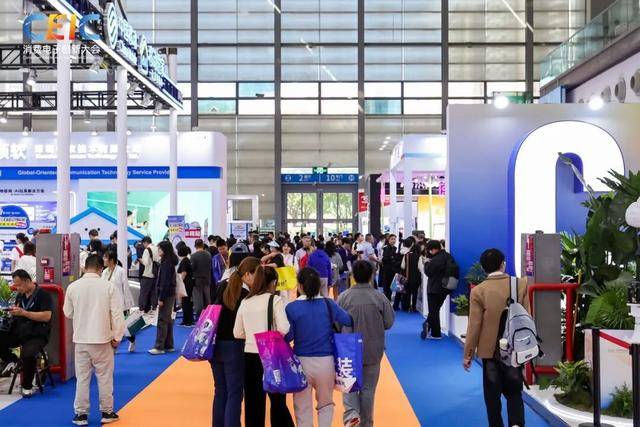
Group 1 - The first Consumer Electronics Innovation Conference (CEIC 2025) attracted 52,200 attendees globally, showcasing the growing interest in consumer electronics [1] - The event featured innovative technologies such as AI pets and dynamic photo frames, emphasizing the tangible impact of future technologies on daily life [3] - The conference aims to establish a complete closed-loop from technology to orders, positioning itself as a platform for defining global consumer electronics trends [5] Group 2 - Shenzhen's consumer electronics companies demonstrated strong competitiveness in traditional sectors like smartphones and computers, while also showcasing innovation in emerging fields such as AI technology and 3D printing [6] - Industrial Fulian, a leading company in the consumer electronics sector, reported record revenue and net profit in the first half of the year, driven by strong demand for AI servers [6] - The consumer electronics industry is expected to evolve towards smart, ecological, and sustainable development, with AI becoming the core engine driving industry growth [6]

预见2025:《2025年中国康复器械行业全景图谱》(附市场现状、竞争格局和发展趋势等)
Qian Zhan Wang· 2025-11-08 02:10
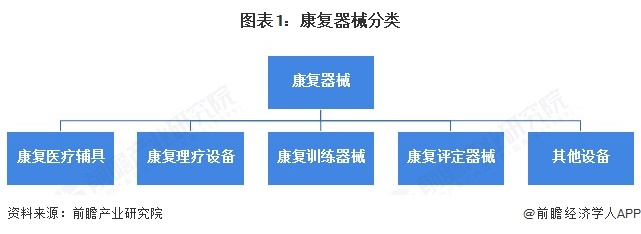
Industry Overview - Rehabilitation devices are defined as medical equipment or assistive tools used in rehabilitation to assess, train, and treat patients, helping them improve functionality and recover bodily functions or compensate for deficiencies [1] - The rehabilitation device industry can be categorized into rehabilitation medical aids, rehabilitation therapy equipment, rehabilitation training devices, and assessment instruments [1] Industry Chain Analysis - The upstream of the rehabilitation medical device industry mainly consists of raw materials and software systems, with raw materials being the core element affecting product quality and manufacturing efficiency [2] - The midstream involves the production of rehabilitation assessment instruments, training devices, therapy equipment, and other rehabilitation devices [2] - The downstream consumer segment primarily includes elderly, chronic disease, and disabled groups [2][5] Industry Development History - The Chinese rehabilitation device industry has gone through three stages: initial phase (1980-1989), transformation phase (1990-2011), and rapid growth phase (2012-present), with significant policy support and market expansion in the latter phase [7][8] Policy Background - Recent national policies have promoted high-level standardization and integration of rehabilitation devices with technologies like AI, IoT, and 5G, creating favorable conditions for high-quality industry transformation [10][11] Current Industry Status - The number of registered rehabilitation device products in China has seen explosive growth since 2019, with projections indicating 1,167 registrations by 2024 [14] - The market size for rehabilitation devices in China is expected to reach approximately 21.1 billion yuan in 2024, driven by an aging population and increasing chronic diseases [15] - Rehabilitation aids dominate the market, accounting for 82.15% of the total market size in 2024 [17] - The elderly care segment is projected to account for about 67% of the application structure in 2024 [18] Competitive Landscape - The competitive landscape of the rehabilitation device industry shows a concentration of core manufacturing enterprises in eastern coastal provinces like Jiangsu, Guangdong, and Shandong, while central and western regions focus on raw material supply [21] - The top three companies in the rehabilitation device market by share in 2024 are Kefu Medical, Yuyue Medical, and Xiangyu Medical, with market shares of 6.47%, 6.18%, and 3.51% respectively [24] Future Development Outlook - By 2030, the market size of the rehabilitation device industry is expected to exceed 47 billion yuan, driven by the aging population and increased demand for rehabilitation services [26] - The industry is predicted to grow at a compound annual growth rate (CAGR) of around 14% from 2025 to 2030 [26] Industry Trends - The rehabilitation device industry is experiencing a trend towards smart technology and product diversification, with the integration of AI, IoT, and 3D printing technologies [28] - The aging population and the rise in chronic diseases are expected to sustain the growth of rehabilitation demand, supported by favorable policies and market expansion [28]



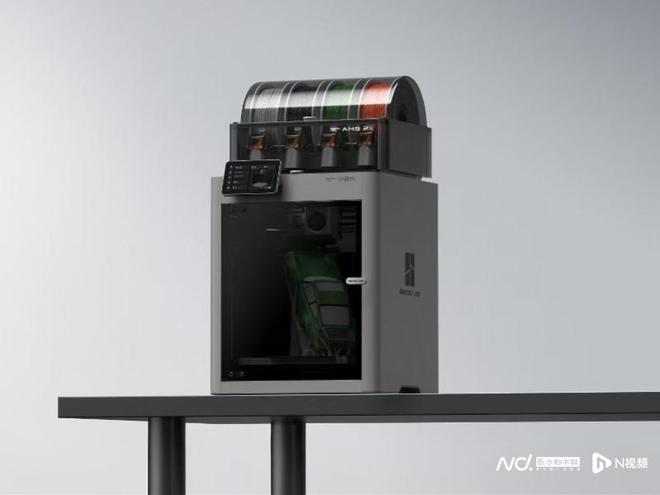
5年登顶全球第一!走进拓竹,解码3D打印背后的创新密码
Nan Fang Du Shi Bao· 2025-11-07 09:16
Core Insights - The global consumer-grade 3D printing market is dominated by two types of players: Tofu and others, highlighting the industry's preference for innovative disruptors [1] - Tofu Technology, established in 2020, has rapidly become the world's leading consumer-grade 3D printer company, achieving this status within just three years of launching its first product in 2022 [3][4] - The acceleration towards a consumer 3D printing era is supported by government initiatives aimed at expanding digital product consumption and encouraging innovation in various sectors, including 3D printing [4] Company Overview - Tofu Technology has emerged as a significant player in the consumer-grade 3D printing market, following the success of other Shenzhen-based tech companies like DJI and Anker Innovation [3] - The company opened its first flagship store in Shenzhen on September 30, 2023, marking a significant milestone after becoming the top player in the consumer-grade 3D printer sector [5] Industry Trends - The consumer-grade 3D printing market is experiencing a shift towards digital consumption, with applications expanding into personal creation, education, and home entertainment [8] - Advances in artificial intelligence, hardware performance, and digital manufacturing technologies are driving the growth of consumer-grade 3D printing, making it more accessible to the general public [8][9] - The introduction of user-friendly modeling tools and platforms, such as MakerWorld, is lowering the barriers for entry, allowing even novice users to create and print 3D models easily [9] Market Potential - The consumer-grade 3D printing market is at a "singularity moment," with expectations for rapid growth due to improved product experiences, reduced prices, and a thriving model community [9] - Tofu Technology aims to further enhance user experience and accessibility in 3D printing, with plans to achieve the top global sales position by 2024 and recognition in the MIT Technology Review's list of "50 Smartest Companies" in 2025 [8]
家联科技跌0.74%,成交额2135.68万元,近5日主力净流入-480.47万
Xin Lang Cai Jing· 2025-11-07 07:44
Core Viewpoint - Ningbo Jialian Technology Co., Ltd. is focusing on biodegradable plastics, 3D printing, and cross-border e-commerce, benefiting from the depreciation of the RMB and the Belt and Road Initiative [2][3]. Company Overview - Ningbo Jialian Technology Co., Ltd. specializes in the research, production, and sales of plastic products, biodegradable products, and plant fiber products, with a revenue composition of 84.41% from plastic products, 14.25% from biodegradable products, and 1.34% from others [7]. - The company was established on August 7, 2009, and went public on December 9, 2021 [7]. Financial Performance - For the period from January to September 2025, the company achieved a revenue of 1.865 billion yuan, representing a year-on-year growth of 8.25%. However, the net profit attributable to shareholders was a loss of 73.81 million yuan, a decrease of 209.95% year-on-year [8]. - As of September 30, 2025, the company had a total of 6,828 shareholders, an increase of 15.61% from the previous period [8]. Market Position and Strategy - The company is a leading player in the global plastic dining utensils manufacturing industry, with 70.47% of its sales coming from exports in 2021, primarily to developed regions such as North America, Europe, and Oceania [2][3]. - The company has also expanded its online market through cross-border e-commerce platforms [2]. Production Capacity - The company's factory in Thailand serves as a significant overseas production capacity node, with multiple production lines for 3D printing materials, plastic dining utensils, and plant fiber products gradually entering production [3]. Stock Performance - On November 7, the company's stock fell by 0.74%, with a trading volume of 21.36 million yuan and a market capitalization of 3.648 billion yuan [1]. - The average trading cost of the stock is 20.33 yuan, with the stock price near a support level of 18.61 yuan [6].