
人类命运共同体

Search documents
党和国家功勋荣誉表彰工作十年间书写新篇章
Xin Hua She· 2025-12-23 11:27
Group 1 - The establishment of the merit and honor recognition system in China has been significantly advanced over the past decade, with a focus on enriching institutional design and awarding practices under the leadership of the Communist Party of China [4][24][30] - The system aims to inspire the entire society to admire heroes and strive for excellence, contributing to the modernization and national rejuvenation efforts [4][30] - The recognition system has been formalized through various regulations and laws, including the issuance of the "Republic Medal" and "National Honorary Titles" to outstanding individuals [12][24][25] Group 2 - Major ceremonies and events, such as the 80th anniversary of the victory in the Anti-Japanese War, have been organized to honor heroes and promote national pride [7][8][10] - The ceremonies have been characterized by grandeur and solemnity, reflecting the importance of honoring those who have made significant contributions to the nation [10][14][15] - The recognition of heroes serves to strengthen the collective memory of the nation and promote a spirit of unity and resilience among the people [15][38] Group 3 - The recognition system has been integrated into various aspects of national governance, enhancing the governance capacity and modernizing the governance system [20][30] - The design of medals and honors reflects traditional Chinese culture and the innovative spirit of the socialist system [20][22] - The system emphasizes both spiritual encouragement and material rewards, aiming to motivate individuals to contribute to national development [25][26]

新华全媒头条|礼敬功勋,荣归英模——党和国家功勋荣誉表彰工作十年间书写新篇章
Xin Hua She· 2025-12-23 07:18
Core Viewpoint - The article highlights the significant advancements in the system of honors and awards established by the Party and the state over the past decade, emphasizing its role in promoting national pride and unity among the Chinese people [2][3][23]. Group 1: System Establishment and Development - In December 2015, the Central Committee of the Communist Party of China issued guidelines to establish a comprehensive system for recognizing national achievements, marking a new chapter in the honors and awards process [2][17]. - The system has evolved from inception to refinement, with the establishment of multiple regulations and supporting measures to ensure a structured and lawful approach to awarding honors [17][20]. - The honors system has been integrated into major national events, reflecting the Party's focus on recognizing contributions to national development and stability [9][17]. Group 2: Ceremonial Significance - Major ceremonies, such as the 80th anniversary of the victory in the Anti-Japanese War, have been characterized by grand displays and have served to inspire national pride and collective memory [4][9]. - The ceremonies are designed to honor heroes and promote the values of socialism, enhancing the cohesion and appeal of the socialist cause [5][9]. - The design of medals and honors reflects traditional Chinese culture, showcasing the integration of cultural heritage into modern state practices [14][16]. Group 3: Recognition of Contributions - The honors system has recognized various individuals and groups, including military personnel, healthcare workers during the COVID-19 pandemic, and poverty alleviation models, highlighting their significant contributions to society [9][19][26]. - The awards serve not only as recognition but also as motivation for continued service and dedication to the nation, fostering a spirit of heroism among citizens [26][27]. - The system emphasizes the importance of exemplary figures in shaping societal values and inspiring future generations [27][28].
新视野丨把握新时代中国特色社会主义文化发展要求
Zhong Yang Ji Wei Guo Jia Jian Wei Wang Zhan· 2025-12-23 00:14
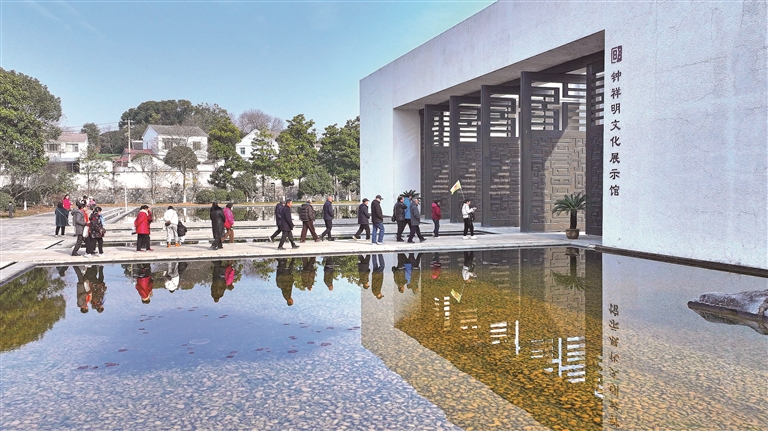
Group 1 - Hubei Province's Jingmen City is actively exploring effective mechanisms for the integration of culture and technology, transforming cultural resource advantages into development advantages, resulting in a robust cultural heritage matrix with eight museums [2] - The 20th Central Committee's Fourth Plenary Session emphasized the importance of cultural prosperity as a key indicator of modernization, aiming to stimulate cultural innovation and development [2] - The development of a new era of socialist culture with strong ideological leadership, spiritual cohesion, value appeal, and international influence is crucial for building cultural confidence and a strong socialist culture [2][3] Group 2 - The guiding principle for developing socialist culture in the new era is to adhere to scientific theory, particularly Xi Jinping's cultural thought, which combines Marxist principles with Chinese realities and traditional culture [3][4] - The current global cultural exchange and the information wave are reshaping cultural forms, necessitating a clear stance on Marxism's guiding role in ideology and the need to resist erroneous viewpoints [4] - The promotion of a shared cultural identity among various ethnic groups is essential for national unity, with a focus on the core values of socialism and the inheritance of revolutionary traditions [5][6] Group 3 - The socialist core values are central to contemporary Chinese spirit and must be integrated into all aspects of social development, enhancing emotional recognition and behavioral habits among the populace [6] - Cultural development should prioritize the people's needs, improving the quality of cultural products and fostering a modern cultural industry to meet rising expectations [7][8] - The ultimate goal of cultural development is to promote comprehensive human development and societal progress, enriching people's moral and cultural qualities [9] Group 4 - Enhancing international influence requires an open and inclusive spirit, focusing on effective communication of Chinese stories and values to the global audience [10] - Promoting mutual respect and dialogue among civilizations is essential, opposing cultural hegemony and advocating for shared human values [10] - The development of a strong socialist culture is a systematic project that demands cultural confidence and innovation to support the modernization of the nation and the realization of the Chinese Dream [11]
《中央社会主义学院学报》目录
Xin Lang Cai Jing· 2025-12-22 19:21
Group 1 - The article discusses the opportunities and pathways for the development of the private economy in China under the "new three-phase overlap" [1] - It highlights the importance of political consensus and agenda-setting in contemporary Chinese policy-making [1] - The article emphasizes the role of cultural self-awareness and the mission of promoting Chinese culture in global governance [2] Group 2 - The concept of a "community with a shared future for mankind" is presented as a framework for innovative global governance [2] - The article outlines the reconstruction of ideas and practical paths for four major global initiatives [2] - It mentions the significance of academic discussions on continuing the Chinese cultural legacy and promoting the Chinese spirit [2]
重磅预告:从大湾区到好望角,中非矿业合作新纪
Zhong Guo Ji Jin Bao· 2025-12-22 09:40
Group 1 - The G20 summit in Johannesburg, South Africa, in November 2025, highlights the deepening cooperation between China and Africa in the mining sector, emphasizing themes of unity, equality, and sustainability [1][2] - Chinese mining companies are increasingly localizing their operations in Africa, transforming from perceived outsiders to co-builders, as seen in the successful local management of previously abandoned mines [1][2] - The "Green Mineral International Trade Cooperation Initiative" announced by Premier Li Qiang at the G20 summit outlines seven key areas for cooperation, aimed at promoting sustainable development and a new type of partnership in mineral resource cooperation [2] Group 2 - Chinese companies like Luoyang Molybdenum and Huayou Cobalt are setting examples of successful local engagement and resource utilization in Africa, establishing mechanisms for shared benefits with local communities [2] - The shift from "resource-for-infrastructure" to a "mining symbiosis" model reflects a new chapter in China-Africa cooperation, fostering a more systematic and institutionalized framework for collaboration [2] - Beyond minerals like gold, copper, and lithium, Chinese mining enterprises are contributing to the development confidence of the Global South and the concept of a shared human destiny [3]
重磅预告:从大湾区到好望角,中非矿业合作新纪
中国基金报· 2025-12-22 09:33
Core Viewpoint - Chinese mining companies are increasingly establishing a significant presence in Africa, transforming from outsiders to co-builders in the region's mining sector, driven by a new model of cooperation and local engagement [4][5]. Group 1: Overview of Chinese Mining Companies in Africa - Chinese mining enterprises are deeply rooted in Africa, with operations spanning from cobalt mines in the Democratic Republic of Congo to lithium mines in Mali and gold mines in South Africa [4]. - The approach of these companies has evolved, focusing on local operations and community engagement, as exemplified by the successful revitalization of previously abandoned gold mines through localized management [4][5]. Group 2: Case Studies of Successful Operations - In the Democratic Republic of Congo, Luoyang Molybdenum's KFM copper-cobalt mine transitioned from greenfield to production in just 806 days, establishing a "shared benefits" mechanism with local communities [5]. - In Zimbabwe, Huayou Cobalt adapted to a lithium export ban by shifting to local manufacturing, effectively converting resource advantages into industrial capabilities [5]. Group 3: New Cooperation Frameworks - The G20 summit in Johannesburg highlighted new initiatives for international cooperation in green mining, emphasizing seven key areas such as creating a safe policy environment and enhancing technological exchanges [6]. - The initiatives aim to foster sustainable development and establish a fair and open partnership in mineral resource cooperation, reflecting a broader commitment to global development and community well-being [6].
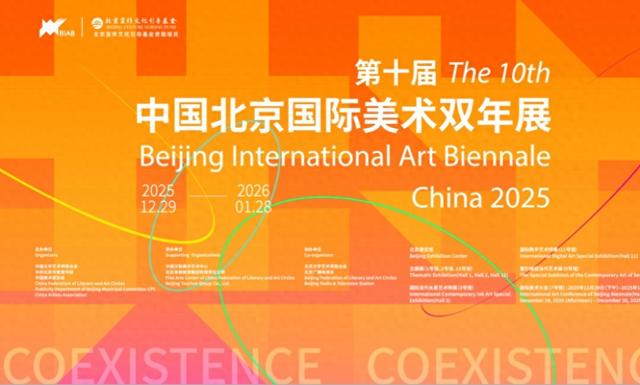
12月29日开幕!第十届北京国际美术双年展以“共生”为主题
Xin Lang Cai Jing· 2025-12-22 09:04
Core Viewpoint - The 10th China Beijing International Art Biennale, themed "Symbiosis," aims to promote the construction of a community with a shared future for mankind through artistic exchange, showcasing nearly 600 contemporary artworks from around 120 countries and regions [3][4]. Group 1: Exhibition Overview - The exhibition will open on December 29 and run until January 28, 2026, at the Beijing Exhibition Center, covering a total area of 15,228 square meters, marking an unprecedented scale [3]. - A total of over 9,000 artworks were submitted during the three-month call for entries, with over 7,300 submissions for the domestic theme exhibition and 1,585 from overseas, including participation from 124 countries and regions [3][4]. Group 2: Exhibition Structure and Themes - The exhibition features a structure of "thematic exhibitions + special exhibitions + country exhibitions," focusing on global issues such as peace development, ecological civilization, and technological ethics [4]. - The thematic exhibition is divided into five sub-themes: "Fission," "Growth," "Flow," "Refinement," and "Sound," addressing topics like war and peace, the conflict and harmony between industrial civilization and nature, and the reconstruction and hope following social turmoil [4]. Group 3: Special Features - The biennale will include an international digital art special exhibition titled "Human Intelligence Symbiosis," featuring nearly 50 cutting-edge artists presenting works in AI art, interactive installations, immersive imagery, and virtual reality [4]. - A country exhibition dedicated to Serbian contemporary art will showcase 32 works by 19 artists, interpreting global sustainable development and peaceful dialogue [5]. Group 4: Academic Engagement - The event will elevate its academic discussions to the "1st Beijing Biennale International Art Conference," scheduled for December 29-30, featuring around 50 art theorists, curators, and museum directors from five continents [5].
前瞻型国家,“可预期”对世界有多重要
Xin Lang Cai Jing· 2025-12-22 06:58
Group 1 - The core viewpoint of the articles emphasizes China's role as a forward-looking nation that contributes to global stability and development, showcasing its unique predictability and governance model [2][4][8] - China is recognized for its long-term strategic planning, exemplified by its 15th Five-Year Plan, which integrates economic, technological, and social goals, setting a clear direction for future development [3][5][6] - The stability and predictability of China's policies are seen as crucial for global economic cooperation, allowing international partners to plan and invest without fear of sudden policy reversals [4][8] Group 2 - China's approach to governance, combining strong government direction with active market participation, has been pivotal in maintaining its status as a stabilizing force in global trade [5][8] - The international community increasingly views China's development model as a viable alternative, especially in the context of rising global uncertainties and the need for sustainable growth [11][12] - The shift in global dynamics, with the rise of the Global South, positions China as a key player in shaping a new international order, moving from a historical participant to a shaper of global governance [13]
超九成受访者期待中国让国际秩序更公正
Xin Lang Cai Jing· 2025-12-22 06:00
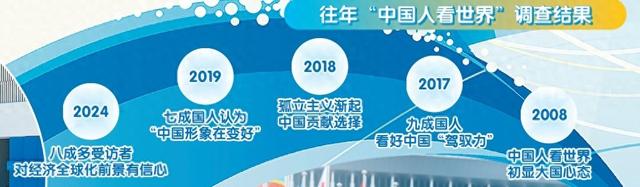
Core Insights - The survey indicates a significant increase in the perception of China as a global power, with the proportion of respondents affirming this view doubling over the past 20 years [2][4] - The importance of China-US relations has rebounded to the top position among bilateral relations, reflecting a growing confidence in China's ability to navigate this complex relationship [10][11] - There is a strong optimism among the Chinese public regarding future developments in various sectors, including defense and technological innovation, with high percentages of respondents expressing positive expectations [5][17] Group 1: Public Perception of China as a Global Power - The proportion of respondents who believe "China is a global power" rose from 20% in 2006 to 45% in 2025, while those who disagree decreased significantly [2] - Recognition of China's political, economic, military, and cultural strengths has increased, with over half of respondents acknowledging these attributes [4] - A significant majority of respondents feel safe living in China (76%) and express pride in their nationality (76%) [4] Group 2: China-US Relations - In 2025, 54% of respondents identified China-US relations as the most important bilateral relationship, marking a return to the top position after a decline in previous years [10] - The perception of the US as a strategic competitor has led to a balanced public sentiment, with equal proportions supporting various responses to US actions [10] - The primary concern affecting China-US relations is the US's strategic containment of China, with 40% of respondents highlighting this issue [10] Group 3: Optimism for Future Developments - High levels of optimism are reported regarding defense construction (86%) and technological innovation (84%) among the public [5] - Approximately 80% of respondents hold a positive or neutral outlook on global economic development and security situations for the coming year [17] - A strong majority (93%) expect China to take more action in international or regional issues to contribute to global peace and stability [17]
曲莹璞:在推动国际传播系统性变革中提升中华文明传播力影响力
Bei Jing Ri Bao Ke Hu Duan· 2025-12-22 03:13
转自:北京日报客户端 党的二十届四中全会通过的《中共中央关于制定国民经济和社会发展第十五个五年规划的建议》强 调,"提升中华文明传播力影响力。完善国际传播体制机制,创新传播载体和方式,加强重点基地建 设,增强主流媒体国际传播能力,全面提升国际话语权,讲好中国故事,展现可信、可爱、可敬的中国 形象"。这充分彰显了以习近平同志为核心的党中央对进一步加强和改进国际传播工作的高度重视。这 一战略部署为大力推进系统性变革,提升国际传播效能,加快形成同我国综合国力和国际地位相匹配的 传播能力指明了前进方向。 增强推动国际传播守正创新、提升中华文明传播力影响力的责任感、使命感、紧迫感 在百年变局加速演进的国际形势下,"十五五"谋篇开局,国际传播工作在党和国家事业发展中的全局性 战略性作用更加凸显,迫切需要把握大局大势,进一步创新对外话语体系,构建全媒体传播格局,建设 高素质队伍,不断提高国际影响力,更好介绍中国的发展理念、发展道路、发展成就,更好展示真实、 立体、全面的中国,为促进中国和世界交流沟通作出新的贡献。 把握"十五五"时期国际传播工作的地位和作用。"十五五"时期是基本实现社会主义现代化夯实基础、全 面发力的关键时 ...