
农业农村现代化

Search documents
中金 | 深度布局“十五五”:农业农村现代化篇
中金点睛· 2025-11-15 00:07
Core Viewpoint - The modernization of agriculture is driven by technological advancements and brand enhancement, which are essential for the transformation and upgrading of the modern agricultural industry chain [1]. Group 1: Agricultural Production Capacity Enhancement - The key to enhancing agricultural production capacity lies in agricultural technology modernization, with global food production increasing by 379% from 1961 to 2023, where yield growth contributed 75% [2]. - In China, the single crop yield for corn and soybeans in 2023 was only 59% and 57% of the levels in the United States, indicating significant room for improvement [2][4]. - The strategy of "storing grain in the land and technology" is crucial for ensuring food security, emphasizing the importance of land protection and quality improvement [2]. Group 2: Agricultural Technology Modernization - Agricultural technology modernization is vital for improving comprehensive agricultural production capacity, with a focus on seed technology and equipment technology [6]. - The 2025 Central Document No. 1 emphasizes the need for collaborative efforts in agricultural technology and the development of new agricultural productivity [6]. - The seed industry is experiencing a revival driven by strengthened intellectual property protection and technological advancements, with R&D investment by leading listed seed companies increasing from 40 million to 980 million yuan from 2010 to 2024 [7]. Group 3: Smart Agriculture - The continuous increase in policy support for smart agriculture is expected to drive long-term industry development, with land transfer areas rising from 450 million mu in 2015 to 590 million mu in 2023 [10]. - The penetration rate of smart agriculture in China is approximately 9%, compared to about 60% in Europe and the U.S., indicating significant future growth potential [10]. - The 2025 Central Document No. 1 and various action plans highlight the importance of smart agriculture in modern agricultural development [10]. Group 4: Intelligent Agricultural Equipment - The trend of urbanization has led to a decrease in agricultural labor supply, with the number of agricultural workers dropping from 330 million in 2005 to 160 million in 2023, resulting in rising labor costs [11]. - Technological advancements in intelligent agricultural equipment have improved efficiency across various agricultural operations, marking a turning point for "machine substitution" in agriculture [11][14]. - The cost of intelligent agricultural equipment is gradually decreasing, enhancing the competitiveness of machine-based operations over manual labor [11]. Group 5: Brand Agriculture - The high-quality development of the agricultural industry chain requires collaboration between upstream and downstream sectors, with a focus on enhancing the quality of agricultural products and processed foods [14]. - The development of brand agriculture is crucial for upgrading the overall value chain of agricultural products, with examples from kitchen foods and tea demonstrating successful practices [14][15]. - The kitchen food sector benefits from order agriculture, which ensures standardized and large-scale supply, while brand positioning enhances product value [15][19]. Group 6: Tea Industry - The tea industry faces challenges due to non-standardization and high trust costs, making brand positioning and channel layout critical for success [19]. - High-end brand positioning can effectively reduce consumer recognition difficulties and enhance brand value [19]. - The evolution of offline channels in the tea industry aims to strengthen customer experience and brand trust through differentiated services [19].

如何把握“十五五”时期经济高质量发展着力点?权威解读
Yang Shi Wang· 2025-11-14 13:54
Core Viewpoint - The core focus of the article is on the "15th Five-Year Plan" which emphasizes high-quality development as the central theme for China's economic and social development in the upcoming five years, building on the previous "14th Five-Year Plan" [1][2]. Economic Development Strategy - The "15th Five-Year Plan" outlines seven strategic tasks aimed at promoting sustained and healthy economic development, which include building a modern industrial system, enhancing technological self-reliance, and optimizing regional economic layouts [2][3]. - The plan stresses the importance of economic construction as a priority, reflecting the party's long-standing commitment to economic development [3]. Technological Innovation - The plan prioritizes the establishment of a modern industrial system and emphasizes the need for innovation in key technologies to overcome reliance on external sources [4][5]. - It aims to foster new pillar industries, particularly in sectors like renewable energy, aerospace, and advanced materials, to drive economic growth [3][4]. Financial Support and Policy - Financial systems are urged to enhance support for major strategic areas and weak links, with a focus on providing comprehensive financial services for technological innovation [2]. - The government plans to optimize fiscal resource allocation to ensure effective use of funds in high-quality development areas [2][7]. Market and Economic Structure - The plan emphasizes the construction of a strong domestic market and the need to break down barriers to create a unified national market [6][8]. - It calls for the enhancement of the socialist market economy to ensure sustainable high-quality development [6]. Agricultural and Rural Development - The plan highlights the importance of modernizing agriculture and rural areas, ensuring that rural populations benefit from modernization efforts [9]. - It aims to establish mechanisms to prevent poverty and ensure sustainable development in rural regions [9]. Regional Coordination - The plan includes measures to promote regional coordinated development, emphasizing infrastructure connectivity and collaboration across administrative boundaries [10]. - It aims to create a framework for sustainable cooperation among different regions to leverage their respective advantages [10].
山西晋中“十四五”奋力绘就农业农村新画卷
Zhong Guo Fa Zhan Wang· 2025-11-10 11:20
Core Viewpoint - The agricultural and rural development in Jinzhong City has shown a positive trend, contributing significantly to the high-quality economic and social development of the city during the "14th Five-Year Plan" period [1] Group 1: Agricultural Economic Performance - In 2024, the primary industry added value reached 15.38 billion yuan, with an annual growth rate of 4.9% [2] - The per capita disposable income of rural residents was 20,669 yuan, with an annual growth rate of 7%, and the urban-rural income ratio decreased from 2.27 to 2.15 [2] - By the third quarter of 2025, the total value and growth rate of the primary industry ranked third in the province, while the total per capita disposable income of rural residents ranked second [2] Group 2: Food Security and Agricultural Technology - Jinzhong City has taken strong measures for food security, with a grain sowing area of 3.7864 million acres in 2024, an increase of 18,600 acres compared to 2020 [2] - The total grain production reached 3.036 billion pounds, an increase of 2.8 million pounds compared to 2020 [2] - The city has built 2.6009 million acres of high-standard farmland, accounting for 59% of the permanent basic farmland, with a major crop seed coverage rate of 99.3% and a comprehensive mechanization rate of 81% [2] Group 3: Poverty Alleviation and Rural Development - Jinzhong City has effectively connected poverty alleviation with rural revitalization, eliminating risks for 7,581 households and 15,497 individuals, achieving a risk elimination rate of 74.9% [3] - The city has maintained a stable employment scale of over 95,000 for the impoverished labor force each year [3] - The agricultural industry has developed a "four pillars and eight clusters" system, with significant increases in the production of vegetables, fruits, and livestock products [3] Group 4: Rural Reform and Governance - The city has implemented the "Million Project" and established 74 boutique demonstration villages and 561 upgraded villages, improving living conditions significantly [4] - The governance efficiency in rural areas has improved, with comprehensive coverage of the "One Agreement and Four Meetings" system [4] - Jinzhong City has pioneered national-level pilot projects for collective asset utilization and rural reform, with 70% of crops under agricultural production management [4] Group 5: Innovation and Agricultural Modernization - The Jinzhong National Agricultural High-tech Zone has achieved significant results, with the introduction of 17 academicians and 739 doctors, and the establishment of 47 provincial-level key engineering laboratories [5] - The city has developed a scale in industrial development, with notable enterprises and projects contributing to the agricultural sector [5] - Jinzhong has hosted the China Rural Revitalization Forum for seven consecutive years, promoting organic dry farming and expanding external exchanges [5] Group 6: Overall Agricultural Strategy - Agriculture is considered the foundation of the nation and the economy, with Jinzhong City prioritizing the resolution of "three rural issues" to promote agricultural modernization and high-quality development [6]
全省巩固拓展脱贫攻坚成果同乡村振兴有效衔接暨当前农业生产工作推进会召开
He Nan Ri Bao· 2025-11-10 06:46
全省巩固拓展脱贫攻坚成果同乡村振兴有效衔接暨当前农业生产工作推进会召开 巩固拓展脱贫攻坚成果 加强农田水利建设 统筹抓好近期"三农"重点工作 刘宁出席并讲话 王凯主持 11月8日下午,全省巩固拓展脱贫攻坚成果同乡村振兴有效衔接暨当前农业生产工作推进会在郑州召 开,安排部署巩固拓展脱贫攻坚成果、农播田管、农田水利和高标准农田建设等工作。省委书记刘宁出 席并讲话,省长王凯主持。 刘宁强调,习近平总书记高度重视"三农"工作,在河南考察时指出"要以城乡融合发展带动乡村全面振 兴,促进城乡共同富裕"。中央"十五五"规划《建议》对"加快农业农村现代化,扎实推进乡村全面振 兴"作出部署,提出一系列重大举措。全省上下要深入学习贯彻党的二十届四中全会精神和习近平总书 记在河南考察时重要讲话精神,落实全国冬春农田水利暨高标准农田建设视频会议精神,牢牢守住不发 生规模性返贫致贫底线,统筹抓好近期"三农"重点工作,加快推进乡村全面振兴和农业强省建设。 刘宁强调,今年是过渡期最后一年,巩固拓展脱贫攻坚成果容不得丝毫懈怠。要抓好精准监测帮扶,强 化筛查预警,紧盯重点群体落实落细帮扶措施,确保不落一户、不落一人。要抓好基本民生保障,聚焦 ...
巩固拓展脱贫攻坚成果 加强农田水利建设 统筹抓好近期“三农”重点工作
Zheng Zhou Ri Bao· 2025-11-10 01:06
Core Points - The meeting focused on consolidating and expanding poverty alleviation achievements and effectively connecting them with rural revitalization, as well as advancing current agricultural production work [1][2][3] Group 1: Poverty Alleviation and Rural Revitalization - Emphasis on the importance of not being complacent in consolidating and expanding poverty alleviation achievements, especially in the final year of the transition period [2] - Implementation of precise monitoring and assistance measures to ensure no household or individual is left behind [2] - Focus on basic livelihood guarantees, including education, healthcare, housing safety, and drinking water safety, to ensure all eligible individuals receive necessary support [2] Group 2: Agricultural Production and Management - Urgent need to advance autumn and winter agricultural production, with a primary focus on ensuring the sowing of wheat [3] - Accelerating the construction of agricultural water conservancy and high-standard farmland, utilizing the winter-spring period for effective investment and project completion [3] - Multi-faceted approaches to increase farmers' income, including enhancing various income sources such as wages, operational income, property income, and transfer income [3] Group 3: Policy Implementation and Leadership - The necessity of integrating the Party's comprehensive leadership throughout all aspects of agricultural work, ensuring accountability and capability enhancement [3] - A call to avoid formalism and bureaucratism to ensure effective implementation of policies and projects [3]
扎根乡土 服务乡村(记者手记)
Ren Min Ri Bao· 2025-11-09 22:20
Core Insights - The modernization of agriculture and rural areas is crucial for the overall progress of China's modernization, as highlighted by the 20th Central Committee's emphasis on accelerating agricultural modernization and promoting comprehensive rural revitalization [2] Group 1: Agricultural Development - The contribution rate of agricultural science and technology in China is expected to reach 63.2% by the end of 2024, with the comprehensive mechanization rate of crop planting, harvesting, and processing exceeding 75% [1] - The coverage rate of high-quality crop varieties is projected to surpass 96%, indicating significant advancements in agricultural productivity through technology [1] Group 2: Role of Talent and Innovation - The development of new agricultural productivity relies on the integration of agricultural technology talent, who are encouraged to root themselves in rural areas and contribute to agricultural innovation and application of research results [2] - There is a call for agricultural science and technology professionals to take on the responsibility of enhancing modern agriculture and rural development through innovative practices [2]
全省巩固拓展脱贫攻坚成果同乡村振兴有效衔接暨当前农业生产工作推进会召开 刘宁出席并讲话 王凯主持
He Nan Ri Bao· 2025-11-08 10:58
刘宁强调,习近平总书记高度重视"三农"工作,在河南考察时指出"要以城乡融合发展带动乡村全面振兴,促进城乡共同富裕"。中央"十五五"规划《建 议》对"加快农业农村现代化,扎实推进乡村全面振兴"作出部署,提出一系列重大举措。全省上下要深入学习贯彻党的二十届四中全会精神和习近平总书 记在河南考察时重要讲话精神,落实全国冬春农田水利暨高标准农田建设视频会议精神,牢牢守住不发生规模性返贫致贫底线,统筹抓好近期"三农"重点 工作,加快推进乡村全面振兴和农业强省建设。 刘宁强调,今年是过渡期最后一年,巩固拓展脱贫攻坚成果容不得丝毫懈怠。要抓好精准监测帮扶,强化筛查预警,紧盯重点群体落实落细帮扶措施,确 保不落一户、不落一人。要抓好基本民生保障,聚焦义务教育、医疗健康、住房安全、饮水安全等,排查薄弱环节,做到应享尽享、应兜尽兜。要抓好群 众稳定增收,推动帮扶产业提质增效,促进脱贫人口稳岗就业,做好重点地区增产增收。要抓好项目资金使用,加力推进项目实施,强化管理调度,提升 监督效能。要抓好帮扶资产管理,全面开展帮扶项目资产清查,提升经营性资产运营质量和公益性资产管护水平。要抓好问题整改整治,开展问题整 改"回头看",逐项对照检 ...
青春有梦 未来可期
Jing Ji Ri Bao· 2025-11-07 22:09
(文章来源:经济日报) 全面建设社会主义现代化国家,最艰巨繁重的任务在农村,最广泛最深厚的基础也在农村。"十四五"期 间,越来越多的90后、00后"归雁"回到乡村,成为"慧"种地的新农人。他们为农村注入科技力量的同 时,也带来新观念新思路。 农村稳则天下安,农业强则国家强。农业农村的现代化,将释放出巨大的创造动能和消费潜能,推动全 社会加快高质量发展。新农人们也在希望的田野上,实现自己的人生价值。青春有梦,未来可期! 农业农村现代化关系中国式现代化全局和成色。在五年规划的字里行间,我们可以看到发展的脉 络。"十四五"时期经济社会发展主要目标提出"农业基础更加稳固","十五五"规划建议则明确"农业现 代化取得重大进展"。经过5年努力,农业基础进一步夯实,未来可以在现代化方面迈出更大步伐了。纸 面上的规划需要一代代人接续实施,李金阳正是其中代表性的一员。 ...
中国饭碗如何端得更牢?以怎样面貌迈向农业农村现代化?你好!“十五五”↓
Yang Shi Wang· 2025-11-07 06:50
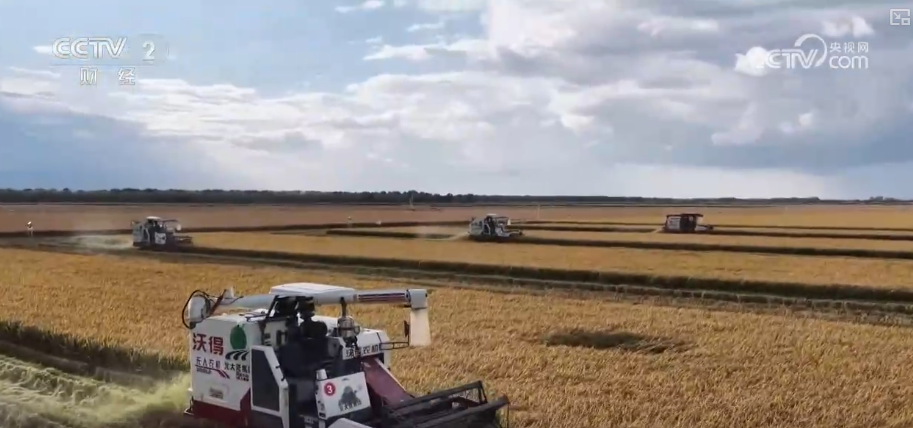
Core Viewpoint - The article emphasizes the importance of modernizing agriculture in China, aiming to transform it into a strong industry and ensure food security for the population of 1.4 billion people. Group 1: Agricultural Modernization - The "14th Five-Year Plan" suggests making agriculture a modernized large industry and accelerating the construction of a strong agricultural nation [1] - China's per capita grain possession has reached 500 kilograms, ensuring food security for its population [1] - The transition from traditional farming methods to modern technology, such as unmanned agricultural machinery, is highlighted as a significant advancement [3][5] Group 2: Technological Advancements - In the Beidahuang region, unmanned farming equipment is now operational, showcasing a shift from skepticism to practical application within five years [3][5] - The precision of unmanned rice harvesters and tractors is noted, with positioning errors controlled within 2.5 centimeters [9] - The mechanization rate at Qixing Farm has reached over 99.8%, indicating a high level of technological integration in farming practices [15] Group 3: Crop Yield and Production - By 2025, Qixing Farm aims to achieve a grain output of 15.22 billion jin from 1.26 million mu of farmland, with a yield exceeding 640 kilograms per mu [10] - The average yield of corn in Ili Prefecture has surpassed 1200 kilograms per mu, with some areas achieving over 1500 kilograms, setting new national records [25] - The total output of aquatic products in China reached 73.58 million tons in 2024, marking a 12.3% increase since 2020, maintaining its position as the world's largest producer [34] Group 4: Future Prospects - The article discusses the potential for continuous improvement in agricultural practices through scientific methods, such as greenhouse seedling cultivation and smart management [19][21] - The development of ecological aquaculture is highlighted, with the expectation that by 2025, the salmon production in Xinjiang will account for one-third of the national total [31][32] - The modernization of agriculture is seen as a way to enhance the comprehensive competitiveness of the agricultural sector [36]
加快农业农村现代化
Ren Min Ri Bao· 2025-11-06 00:24
Core Viewpoint - The modernization of agriculture and rural areas is essential for the overall modernization of the country, as emphasized by General Secretary Xi Jinping [1][2]. Group 1: Significance of Accelerating Agricultural and Rural Modernization - The achievements in "three rural issues" since the 18th National Congress have been historic, with significant improvements in rural conditions and agricultural production capabilities [2]. - The comprehensive grain production capacity remains above 1.3 trillion jin, with expectations to exceed 1.4 trillion jin in 2024 [2]. - The contribution rate of agricultural science and technology has reached 63.2%, and the mechanization rate of crop farming exceeds 75% [2]. - The eradication of absolute poverty has been a historic achievement, with all farmers entering a moderately prosperous society [2]. - The per capita disposable income of rural residents is projected to reach 23,119 yuan in 2024, with the urban-rural income ratio decreasing to 2.34:1 [2]. Group 2: Relationship of Agricultural Modernization to National Goals - Agricultural modernization is a critical task for building a modern socialist country, addressing the imbalances and weaknesses in rural development [3]. - Strengthening the agricultural foundation is vital for national stability and food security, especially in the face of international uncertainties [3]. - Achieving agricultural modernization is essential for ensuring food security and providing a solid foundation for the modernization of China [3]. Group 3: Basic Requirements for Agricultural Modernization - Agricultural modernization is a major and urgent strategic task that requires prioritizing rural development and urban-rural integration [5]. - The relationship between setting goals and maintaining historical patience is crucial, as agricultural modernization is a systematic and dynamic process [6]. - Local conditions must be considered in the implementation of agricultural modernization, avoiding a one-size-fits-all approach [6]. - The integration of traditional agricultural practices with modern elements is necessary to preserve cultural heritage while advancing modernization [6]. Group 4: Strategic Deployment for Agricultural Modernization - The focus is on enhancing agricultural production capacity and quality, ensuring food security through modern agricultural practices [9]. - Establishing mechanisms to prevent poverty and ensure sustainable development in rural areas is essential [10]. - Building beautiful and livable rural areas is a priority, with an emphasis on improving infrastructure and public services [11]. - Strengthening policies that support farmers and enhance agricultural productivity is critical for achieving modernization goals [12].