
AI制药

Search documents
港股医疗ETF(159366)成交额3.57亿!第二大成分股京东健康涨超10%
Xin Lang Cai Jing· 2025-08-18 05:47
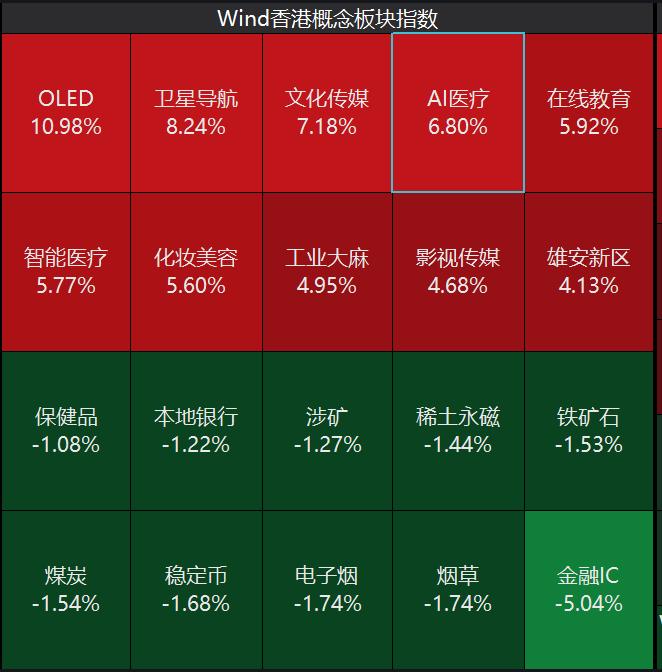
Group 1: Market Performance - The CSI Hong Kong Stock Connect Medical Theme Index (932069) has risen by 2.27% as of August 18, 2025, with notable increases in constituent stocks such as JD Health (06618) up 9.88% and Yiyang Sunshine (02522) up 8.90% [1] - The Hong Kong Medical ETF (159366) has increased by 1.93%, reaching a latest price of 1.64 HKD, and has seen a cumulative increase of 8.71% over the past week as of August 15, 2025 [1] - The average daily trading volume of the Hong Kong Medical ETF over the past month is 311 million HKD, with the latest fund size reaching a record high of 2.93 billion HKD [1] Group 2: Company Performance - JD Health reported a 22.7% year-on-year increase in sales revenue for pharmaceuticals and health products, reaching 29.3 billion HKD in the first half of 2025, driven by an increase in annual purchasing users exceeding 200 million and higher average spending per user [2] - The platform, advertising, and other service revenues for JD Health grew by 34.4% to 5.96 billion HKD, attributed to sustained growth in advertising revenue and an expanding commission scale supported by transaction growth [2] - JD Health launched over 30 innovative drugs online in the first half of 2025 and has seen a significant increase in the number of merchants on its platform, exceeding 150,000 compared to over 100,000 at the end of 2024 [2] Group 3: Industry Trends - The global AI medical investment and financing landscape is thriving, with significant breakthroughs in AI medical research, including FDA approval for the first AI wearable treatment device and advancements in AI drug development [3] - The Hong Kong Medical ETF (159366) is noted for having the highest CXO content in the market, focusing on internet medical services, CXO, and medical devices, and closely tracks the CSI Hong Kong Stock Connect Medical Theme Index [3] - The CSI Hong Kong Stock Connect Medical Theme Index includes 50 listed companies involved in medical devices, medical services, and pharmaceutical sectors, reflecting the overall performance of the medical sector within the Hong Kong Stock Connect [3] Group 4: Index Composition - As of June 30, 2025, the top ten weighted stocks in the CSI Hong Kong Stock Connect Medical Theme Index include WuXi Biologics (02269) at 14.58% and JD Health (06618) at 10.83%, collectively accounting for 56.9% of the index [4]

医药行业周报:本周医药上涨3.1%,医保局发布按病种付费管理暂行办法和医保“双目录”初审名单,司美在美获批治疗MASH-20250817
Shenwan Hongyuan Securities· 2025-08-17 11:06
Investment Rating - The report maintains a positive outlook on the innovative drug sector, recommending it as an investment opportunity [3][10]. Core Insights - The pharmaceutical sector saw a 3.1% increase in the Shenyin Wanguo Pharmaceutical Bio Index, outperforming the Shanghai Composite Index, which rose by 1.7% [3][4]. - The overall valuation of the pharmaceutical sector is at 33.4 times PE (2025E), ranking 6th among 31 primary industries [4][8]. - The National Medical Insurance Administration announced the preliminary review of the "dual directory" for medical insurance, with a significant increase in the number of drugs passing the initial review compared to 2024 [10]. - The introduction of the "Interim Measures for Disease-based Payment Management" aims to standardize medical insurance payments and improve the efficiency of fund usage [10]. - Notable events include the FDA's accelerated approval of Wegovy for treating MASH and the listing of Yinnuo Pharmaceutical on the Hong Kong Stock Exchange, raising approximately 635 million HKD [11][12]. Market Performance - The pharmaceutical sector's performance is detailed with various sub-sectors showing mixed results, such as chemical preparations (+4.3%) and medical research outsourcing (+7.8%) [4][6]. - The report highlights the growth in product revenue and external licensing in the innovative drug sector over the past three years, with expectations for continued high growth and reduced losses [3][10]. Key Events - The FDA's approval of Wegovy for MASH treatment marks a significant milestone in innovative therapies [11]. - The investment of 1.3 billion USD by Eli Lilly in an AI pharmaceutical company aims to accelerate drug development for obesity and other metabolic diseases [12].
600亿BD大单,美元LP突然想给GP投钱了
3 6 Ke· 2025-08-17 07:35
Core Insights - The Chinese innovative drug sector has gained global recognition, with the Hang Seng Medical ETF rising over 90% and the Hong Kong Stock Connect Innovative Drug Index increasing by 130% this year, indicating a shift to the first tier of global pharmaceutical capabilities [1] - There is a trend where investors are actively engaging in business development (BD) transactions rather than waiting for IPOs, with international capital looking to invest in domestic biopharmaceutical firms to explore promising drug development projects [1][2] - The investment model has evolved, focusing on direct investments in drug development projects and supply chain management, leading to opportunities for domestic general partners (GPs) to raise USD funds and enter international supply chains [1][2] Investment Trends - BD transactions have become mainstream in the industry, particularly large deals exceeding USD 1 billion related to overseas licensing of drug pipelines [2] - For instance, the collaboration between 3SBio and Pfizer involves a potential total transaction amount exceeding USD 6 billion, with an upfront payment of USD 1.25 billion [2] - The total value of BD transactions in the first half of the year surpassed USD 60 billion, highlighting the significance of this investment approach [2] Target Investment Institutions - International limited partners (LPs) are seeking three types of domestic GPs for investment in innovative drug projects: 1. GPs that invest in U.S. biopharmaceutical companies, primarily to introduce Chinese drug projects [3] 2. GPs that invest in foreign companies with Chinese drug authorizations [3] 3. GPs that lead investments in newly established domestic companies (NewCos) focused on overseas sales of Chinese drugs [3] NewCo as a Strategy - Establishing NewCos allows domestic GPs to enhance their bargaining power in international collaborations by determining their share of profits and selecting international teams for management [5][6] - NewCos can be established at a low valuation, enabling domestic GPs to leverage investments while providing accountability to domestic LPs [6] - However, the effectiveness of this model depends on the specific terms of agreements, particularly regarding profit-sharing and distribution [6] Challenges and Market Alignment - Despite the potential advantages of NewCos, challenges remain, particularly in aligning drug development with international market demands [7][8] - Domestic GPs need to better understand U.S. market needs and integrate into the drug project initiation phase to facilitate marketization and internationalization [8] - The use of AI technology is being explored to match Chinese drug projects with international buyer demands, enhancing the likelihood of successful collaborations [8][9] Investment Focus Areas - International LPs are also interested in investing in AI pharmaceutical companies, platforms that incubate multiple projects, and specific types of research and development projects [9] - The emphasis on supply chain management capabilities is crucial for the success of these investments, reflecting a shift in biopharmaceutical investment strategies [9]

影石就向员工“撒钱”致歉;多位投资人辟谣DeepSeek完成7亿美元C轮融资;京东完成收购香港佳宝超市丨邦早报
创业邦· 2025-08-16 01:10
Group 1 - YingShi Innovation's founder Liu Jingkang apologized for a viral video showing cash being thrown at employees during a team-building event, clarifying it was meant to celebrate the launch of their A1 drone after extensive overtime work [3] - Weibo's official account denied rumors about IP location being precise to the city level, emphasizing that the platform's IP location display aims to reduce impersonation and misinformation [5] - DeepSeek's reported $700 million Series C funding was labeled as false by multiple investors, with claims that the company had not previously raised funds before entering this round [6] Group 2 - Xia Haijun, former CEO of Evergrande, was reported to be hiding in California, with evidence showing his wife holds assets worth $24 million in the U.S. [11][14] - JD.com completed the acquisition of Hong Kong's Jia Bao supermarket, aiming to enhance its supply chain and retail presence in the Greater Bay Area [15] - Meta's market capitalization surpassed $2 trillion for the first time, making it the sixth U.S. company to reach this milestone [21] Group 3 - WeChat denied rumors about a palm payment service franchise, stating it is still in the internal testing phase and warning users against scams [17] - Amazon founder Jeff Bezos's mother passed away at 78, with her early investment in Amazon contributing to the family's wealth [19] - Tencent Cloud launched CloudBase AI CLI, a tool that can reduce coding workload by 80% for developers [28] Group 4 - The National Bureau of Statistics reported significant growth in the manufacturing value of smart drones and vehicle equipment, with increases of 80.8% and 21% respectively in July [30] - Li Lai announced a $1.3 billion deal with AI pharmaceutical company Superluminal to accelerate drug development for obesity and heart diseases [26] - WeRide secured a multi-million dollar investment from Grab to deploy L4 Robotaxis in Southeast Asia [27]

港股收盘(08.15) | 恒指收跌0.98% 互联网医疗股逆势走强 银诺医药-B(02591)首挂暴涨200%
智通财经网· 2025-08-15 09:27
Market Overview - The Hong Kong stock market continued its downward trend, with all three major indices in the red but maintaining above the 25,000 mark. The Hang Seng Index closed down 0.98% at 25,270.07 points, with a total turnover of HKD 312.69 billion [1] - Short-term market focus is on mid-year performance and value for money, with potential volatility from US-China trade negotiations and fluctuations in US stocks [1] - The outlook for the second half of the year remains positive, with expectations of upward movement and new highs for the Hong Kong stock market, supported by potential interest rate cuts from the Federal Reserve [1] Blue Chip Performance - JD Health (06618) led blue-chip stocks, rising 11.67% to HKD 61.25, contributing 11.31 points to the Hang Seng Index. The company's H1 2025 performance exceeded market expectations due to strong growth in the pharmaceutical category [2][4] - Other notable blue-chip movements included Xinyi Solar (00968) up 5.96%, Alibaba Health (00241) up 4.92%, while Sun Hung Kai Properties (00016) fell 5.35% [2] Sector Highlights - Internet healthcare stocks showed strong performance, with Dingdang Health (09886) up 36.07% and JD Health (06618) up 11.67% [3] - The recent surge in the two financing balances indicates a high level of market trading sentiment, with Chinese brokerage stocks performing well [5][6] - The photovoltaic sector saw a general rise, attributed to a shortage and price increase of solar components, with Xinyi Solar (00968) up 8.15% [6][7] Company-Specific Developments - JD Health reported a 24.5% year-on-year revenue increase to HKD 35.3 billion for H1 2025, driven by strong user growth and performance in the pharmaceutical sector [4] - Silver诺医药-B (02591) debuted with a significant increase of 206.48%, reflecting strong market interest in GLP-1 drug treatments [9] - Lijin Technology (00558) rose 46.02% after announcing a strategic partnership for the development of magnesium alloy humanoid robots [10] - Yuanda China (02789) saw an 84.34% increase following a profit warning, projecting a net profit of HKD 150-210 million for H1 2025 [11]
礼来13亿美元投资了背靠英伟达的AI制药商
第一财经· 2025-08-15 08:28
Core Insights - Eli Lilly announced a $1.3 billion deal with AI pharmaceutical company Superluminal to accelerate AI drug development, particularly for small molecule drugs targeting obesity and other cardiometabolic diseases [3] - The partnership will allow Eli Lilly to utilize Superluminal's AI-driven drug discovery platform, focusing on G protein-coupled receptor (GPCR) drug development, which plays a crucial role in various physiological processes [3] - The obesity treatment market is projected to reach $150 billion over the next decade, with major pharmaceutical companies like Eli Lilly and Novo Nordisk enhancing their positions through drug development and acquisitions [3] Group 1 - Superluminal is a Boston-based AI pharmaceutical startup that has received investments from companies including NVIDIA [3] - GPCRs are identified as significant targets in cardiometabolic diseases, yet many potential drug targets remain unexplored [4] - Eli Lilly's collaboration with Chinese company Lykai Pharmaceuticals aims to develop next-generation weight loss drugs that help patients lose weight while preserving muscle [3] Group 2 - Novo Nordisk is also targeting GPCR small molecule drugs, having entered a $2.2 billion deal with Septerna to develop oral therapies for obesity and other cardiometabolic diseases [4] - In June, Novo Nordisk partnered with Deep Apple for over $800 million to co-develop and commercialize GPCR small molecule drugs [4] - GPCRs represent the largest and most diverse family of cell membrane receptors, with hundreds of types regulating physiological mechanisms across nearly all organ systems [4] Group 3 - AI pharmaceutical technology has significant potential in drug discovery, capable of screening billions of candidate molecules [4] - GPCRs account for approximately one-third of all FDA-approved drugs, yet about 75% of GPCR therapeutic targets remain undeveloped, indicating substantial future drug discovery potential [4]

礼来13亿美元投资了背靠英伟达的AI制药商
Di Yi Cai Jing· 2025-08-15 07:13
Group 1 - Eli Lilly announced a $1.3 billion deal with AI pharmaceutical company Superluminal to accelerate AI drug development, particularly for small molecule drugs targeting obesity and other cardiometabolic diseases [1] - Superluminal's AI-driven drug discovery platform will be utilized by Eli Lilly to develop drugs targeting G protein-coupled receptors (GPCRs), which play a significant role in various physiological processes [1] - The obesity treatment market, where Eli Lilly currently holds a dominant position, is projected to reach a value of $150 billion over the next decade [1] Group 2 - Novo Nordisk is also focusing on GPCR small molecule drug development, having signed a deal worth up to $2.2 billion with Septerna to develop oral small molecule therapies targeting specific GPCRs for obesity and other cardiometabolic diseases [2] - In June, Novo Nordisk entered into a collaboration valued at over $800 million with Deep Apple to jointly develop and commercialize GPCR small molecule drugs [2] - GPCRs represent the largest and most diverse family of cell membrane receptors, with hundreds of different GPCRs regulating physiological mechanisms across nearly all organ systems in the human body [2]


维亚生物再涨超13% AI制药领域高额合作频现 机构称公司AI制药平台优势明显
Zhi Tong Cai Jing· 2025-08-14 03:45
Group 1 - Via Biotechnology (01873) has seen a stock price increase of over 13%, with a cumulative rise of more than 40% in the month [1] - The company’s stock is currently trading at 2.4 HKD, with a trading volume of 50.34 million HKD [1] - The collaboration between Crystal Tech Holdings and DoveTree has set a new record for AI drug discovery orders, indicating a growing demand for AI-assisted drug development from traditional pharmaceutical giants [1] Group 2 - According to Shanxi Securities, the emergence of large orders from multinational corporations (MNCs) validates the profitability of AI pharmaceutical companies through technology licensing and revenue-sharing models [1] - Guoyuan International notes that Via Biotechnology has been involved in AI pharmaceuticals for five years, with AI-related orders now accounting for 12% of new signed orders, showing a growth trend [1] - The company possesses self-developed algorithms and platform capabilities in its AIDD and CADD platforms, leveraging its structural drug development advantages to transition from a computational method focus to AI-driven drug design [1]
港股异动 | 维亚生物(01873)再涨超13% AI制药领域高额合作频现 机构称公司AI制药平台优势明显
智通财经网· 2025-08-14 03:40
Group 1 - The core viewpoint of the article highlights that Viya Bio (01873) has seen a significant increase in its stock price, rising over 13% in a single day and accumulating a total increase of over 40% within the month [1][1][1] - The collaboration between Crystal Technology Holdings and DoveTree has set a new record for AI drug discovery orders, indicating a growing trend in the pharmaceutical industry towards AI-assisted drug development [1][1][1] - Shanxi Securities emphasizes that the large orders from multinational corporations (MNCs) to AI pharmaceutical companies validate the profitability of AI drug companies through technology licensing and revenue-sharing models, reflecting a strong demand from traditional pharmaceutical giants for AI-assisted R&D [1][1][1] Group 2 - According to Guoyuan International, Viya Bio has been investing in AI drug development for the past five years, with AI-related orders now accounting for 12% of new signed orders, showing a positive growth trend [1][1][1] - The company possesses self-developed algorithms and platform capabilities through its AIDD and CADD platforms, along with experience in developing various drug forms, leveraging its structural drug development advantages [1][1][1] - Viya is transitioning from a phase where computational methods empower various stages of drug development to a new phase driven by AI in drug design, aiming to change the paradigm of drug design [1][1][1]
AI入局,能否开启制药行业的下一场革命?
Hu Xiu· 2025-08-13 01:07
Group 1: Historical Context of Pharmaceutical Development - The average human lifespan has significantly increased from the late 19th century, driven by advancements in the pharmaceutical industry [1] - The rise of modern drug development began in 19th century Europe, where the industrial revolution led to the use of coal tar for synthetic dyes, inadvertently paving the way for pharmaceutical innovations [2] - The establishment of germ theory by scientists like Pasteur and Koch revealed the causes of diseases, creating a market for drug development aimed at combating these diseases [3] Group 2: Evolution of Drug Discovery - The emergence of pharmacology as a distinct field in the late 19th century provided a systematic approach to drug discovery, connecting chemistry, biology, and clinical medicine [4] - The development of antibiotics, such as penicillin, marked a significant milestone in the pharmaceutical industry, allowing for the mass production of effective treatments against bacterial infections [4] - The continuous pursuit of interdisciplinary collaboration and deeper understanding of life mechanisms has been a driving force behind the progress in the pharmaceutical sector [5] Group 3: Challenges in the Pharmaceutical Industry - Despite advancements, the pharmaceutical industry faces high failure rates, with approximately 90% of new drug applications not receiving market approval [8] - The cost of developing new drugs has escalated, with the average cost rising by 145% from 2003 to 2013, reaching $2.6 billion [8] - The industry is under pressure due to the "high investment, low return" scenario, particularly in the treatment of chronic diseases [8] Group 4: The Role of AI in Pharmaceutical Innovation - The integration of AI and information technology is seen as a potential solution to the challenges faced by the pharmaceutical industry, enabling efficient analysis of genomic data and drug discovery processes [9] - AI models, such as AlphaFold, have revolutionized protein structure prediction, significantly enhancing the efficiency of drug design and reducing development costs [10] - AI-driven drug candidates are beginning to show promise in clinical trials, with companies like Insilico Medicine and Recursion advancing multiple drug candidates through various trial phases [12] Group 5: Future Prospects and Innovations - The concept of "virtual cells" and "digital twins" is emerging as a method to simulate human responses to drugs, potentially improving the accuracy of drug efficacy predictions [13] - The collaboration between various tech and research entities aims to leverage digital and AI technologies in drug design, potentially leading to new therapeutic categories [14] - While AI in drug development is still in its infancy, the potential for breakthroughs remains high, with ongoing research and investment driving the field forward [15]