
信用卡利率上限

Search documents
美股收盘走低,中概股普遍承压
Di Yi Cai Jing Zi Xun· 2026-01-13 23:30
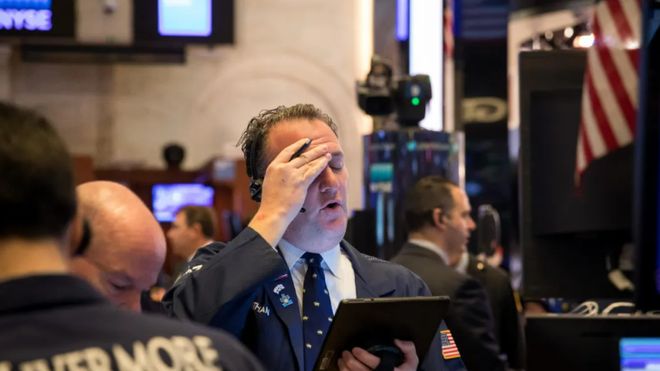
Core Viewpoint - The U.S. stock market closed lower, primarily driven by the financial sector, as investors reacted coldly to JPMorgan Chase's earnings report and expressed concerns over President Trump's proposed credit card interest rate cap, which could compress financial institutions' profit margins and impact consumer credit and the economy [2][4]. Financial Sector Performance - The financial sector led the decline among the 11 major sectors of the S&P 500, falling by 1.84%, with a cumulative drop of 2.6% for the week, marking the largest two-day decline since mid-November [3]. - The S&P Bank Subindex dropped by 2.4% on the same day [3]. JPMorgan Chase Earnings - JPMorgan Chase reported a 4.2% decline in its stock price, with adjusted revenue for Q4 2025 at $46.77 billion and net profit at $13 billion, translating to earnings per share of $4.63, exceeding market expectations due to strong performance in market trading [3]. - However, the investment banking segment underperformed, with Q4 2025 investment banking revenue at $2.35 billion, a 5% year-over-year decline, contrasting with prior expectations of low single-digit growth [3]. Market Reactions to Interest Rate Cap - Trump's proposal for a one-year 10% cap on credit card interest rates has negatively affected sentiment in financial stocks, with market participants already pricing in potential impacts despite the lack of detailed regulations [4][5]. - Major credit card companies, including Visa and Mastercard, saw declines of 4.5% and 4.3%, respectively, following JPMorgan's warning that the interest rate cap could erode bank profits and limit credit availability for lower credit score consumers, potentially affecting the economy [5]. Economic Indicators - The U.S. Labor Department reported that the Consumer Price Index (CPI) rose by 2.7% year-over-year in December, with core CPI at 2.6%, both unchanged from November and below market expectations [5]. - Following the CPI data release, U.S. Treasury yields fell, with the 10-year yield down by 2.4 basis points to 4.175% and the two-year yield down by 2.5 basis points to 3.522% [5]. Commodity Market - In the commodities market, international oil prices increased, with light crude oil futures for February delivery rising by $1.65 to $61.15 per barrel, a 2.77% increase [5].


美股收盘走低,中概股普遍承压
第一财经· 2026-01-13 23:24
Core Viewpoint - The U.S. stock market closed lower, primarily driven by the financial sector, as investors reacted coldly to JPMorgan Chase's earnings report and expressed concerns over President Trump's proposed credit card interest rate cap, which could compress financial institutions' profit margins and impact consumer credit and the economy [3][4]. Financial Sector Performance - The financial sector was the biggest loser among the 11 major sectors of the S&P 500, falling by 1.84%, with a cumulative decline of 2.6% for the week, marking the largest two-day drop since mid-November [4]. - The S&P Bank Subindex dropped by 2.4% on the same day [4]. JPMorgan Chase Earnings Report - JPMorgan Chase's stock fell by 4.2% after reporting Q4 2025 adjusted revenue of $46.77 billion and net profit of $13 billion, with earnings per share of $4.63, exceeding market expectations due to strong performance in market trading [5]. - However, the investment banking segment underperformed, with revenues of $2.35 billion, a year-on-year decline of 5%, contrasting with prior expectations of low single-digit growth [5]. - Bond underwriting fees unexpectedly fell by 2%, against an anticipated growth of 19% [5]. Market Reactions to Interest Rate Cap - Trump's call for a 10% cap on credit card interest rates, effective January 20, negatively affected financial stock sentiment, with major players like Visa and Mastercard seeing declines of 4.5% and 4.3%, respectively [6]. - JPMorgan's CEO warned that the interest rate cap could erode bank profits and potentially lead to reduced credit limits for lower credit score consumers, impacting both consumers and the economy [6]. Economic Indicators - The U.S. Consumer Price Index (CPI) for December rose by 2.7% year-on-year, with core CPI also up by 2.6%, remaining stable compared to November and below market expectations [6]. - Following the CPI data release, U.S. Treasury yields fell, with the 10-year yield down by 2.4 basis points to 4.175% and the 2-year yield down by 2.5 basis points to 3.522% [6]. Commodity Market Insights - In the commodities market, international oil prices increased, with light crude oil futures for February delivery rising by $1.65 to $61.15 per barrel, a gain of 2.77% [6]. - Gold prices saw a slight decline, with spot gold down by 0.19% to $4,588.82 per ounce, while COMEX gold futures fell by 0.43% to $4,595 per ounce [7].

美股三大指数自历史高位回落,热门中概股多数下跌,拼多多跌超5%
Feng Huang Wang· 2026-01-13 23:00
Market Overview - On January 4, U.S. stock indices collectively declined, with financial stocks leading the drop due to concerns over Trump's proposed credit card interest rate cap [1][2] - The Dow Jones fell by 398.21 points (0.80%) to 49,191.99, the Nasdaq decreased by 24.03 points (0.10%) to 23,709.87, and the S&P 500 dropped by 13.56 points (0.19%) to 6,963.71 [3] - The financial sector within the S&P 500 fell by 1.84%, contributing significantly to the overall market decline [3] Financial Sector Impact - JPMorgan Chase executives, including CEO Jamie Dimon, warned that Trump's plan to cap credit card interest rates at 10% could severely impact consumers, reigniting a sell-off in financial stocks [1][2] - Visa and Mastercard experienced significant stock price declines as a result of the proposed credit card interest rate cap [2] - Analysts expect S&P 500 companies to report an 8.3% year-over-year increase in earnings per share for the last quarter of 2025, despite the current market pressures [2] Company Performance - JPMorgan Chase's stock fell by 4.23%, despite exceeding revenue and earnings expectations for Q4, due to challenges in its investment banking and Apple Card provisioning [4] - Delta Air Lines' stock dropped by 2.4% after reporting profits above market expectations but failing to meet revenue forecasts [4] - Boeing's stock rose by 2% as the company reported net orders of 1,173 aircraft in the previous year, surpassing European competitor Airbus for the first time since 2018 [4] Notable Stock Movements - Moderna's stock surged by 17.1%, becoming one of the best performers in the S&P 500, as the company projected higher revenues for 2025 than previously forecasted [5] - Major tech stocks showed mixed performance, with Intel rising over 7% to reach a near two-year high, while others like Tesla and Amazon saw declines [4][5] Upcoming Developments - Delta Air Lines announced an agreement to purchase 30 Boeing 787-10 wide-body aircraft, with an option for an additional 30, scheduled for delivery starting in 2031 [8] - Meta Platforms is in discussions to double the production capacity of its AI smart glasses to 20 million units by the end of 2026, in response to growing demand [6]

Stock Market Today, Jan. 13: American Airlines Falls After Delta Outlook and Credit Card Rate Cap Concerns
The Motley Fool· 2026-01-13 22:49
Core Viewpoint - American Airlines' stock declined by 4.06% due to concerns over loyalty program economics, potential credit card interest rate caps, and a mixed earnings report from Delta Air Lines [1][2][4]. Company Summary - American Airlines Group closed at $15.35, down 4.06%, with a market capitalization of $11 billion [2]. - The stock has fallen 20% since its IPO in 2005, with a trading volume of 82.2 million shares, significantly above the three-month average of 56 million [2]. - The gross margin for American Airlines is reported at 19.99% [2]. Industry Summary - The S&P 500 and Nasdaq Composite experienced slight declines of 0.20% and 0.10%, respectively, while the airline sector saw Delta Air Lines and United Airlines drop by 2.38% and 0.76% [3]. - Delta's mixed earnings report raised concerns across the airline industry, particularly regarding its guidance falling below Wall Street expectations and a reported 3% decline in airfares in December [5].


图恩和约翰逊对特朗普的信用卡利率上限设想表示怀疑
Xin Lang Cai Jing· 2026-01-13 18:36
Core Viewpoint - The Senate Majority Leader John Thune does not support setting a cap on credit card interest rates, while House Speaker Mike Johnson indicates that significant work is needed to build consensus around this idea for legislative action [1][3]. Group 1 - Thune expressed that establishing such interest rate caps could likely result in many individuals losing access to credit [2][4]. - Johnson mentioned that he had discussed this idea with Trump on Monday [2][4].
特朗普拟对信用卡年利率设定10%上限
Sou Hu Cai Jing· 2026-01-13 13:05
Group 1 - President Trump proposed a cap on credit card interest rates at 10%, effective from January 20, 2026, for one year, aiming to alleviate the financial burden on American households [1][2] - The current average credit card interest rate is 22.3%, significantly higher than the 13.9% rate a decade ago, influenced by high overdue balances and the Federal Reserve's maintained high rates [2] - The proposed cap requires Congressional approval, and previous bipartisan efforts to limit credit card rates to 10% have not succeeded [2] Group 2 - Major banks and financial institutions oppose the proposed cap, arguing it could disrupt the profitability of credit card operations, potentially leading to reduced credit limits and increased fees [2][3] - Analysts warn that forcing companies to lower loan rates could undermine the fundamental economics of the industry, leading banks to cut credit limits and close high-risk accounts [3] - Market reactions indicate investor caution, with bank stocks declining following the announcement, reflecting concerns over potential impacts on bank profits and the broader financial sector [3]
Jim Cramer Says 'Wall Street Doesn't Seem To Care' About Trump's 10% Cap On Credit Card Rates, Warns 'Millions' Will Lose Access To Credit - American Express (NYSE:AXP)
Benzinga· 2026-01-13 06:51
Core Viewpoint - President Trump's proposal to impose a one-year 10% cap on credit card interest rates is largely ignored by Wall Street, indicating a lack of concern among investors and analysts [1][2][4]. Group 1: Market Reaction - The market has shown indifference to Trump's announcement, with bank stocks rebounding after an initial drop, suggesting that Wall Street does not view the proposal as a significant threat [4]. - Leading bank stocks closed in the red on the day of the announcement, with Capital One Financial Corp. experiencing a steep decline due to its reliance on credit card revenue [5][6]. Group 2: Legislative and Economic Implications - Congressional approval is required for the cap to take effect, and there are concerns that Trump may attempt to pressure banks into compliance without formal legislation [2][3]. - Industry organizations, including the Bank Policy Institute and American Bankers Association, expressed concerns that the cap could limit credit availability for consumers, particularly affecting those with lower credit scores [6]. - High interest rates are deemed necessary for lenders to justify the risk of lending to subprime borrowers, and capping rates could lead to a significant reduction in credit flow, potentially mandating an economic downturn [5].


特朗普呼吁设10%信用卡利率上限,瑞银警告:反而会对民众造成负面影响
Feng Huang Wang· 2026-01-13 03:50
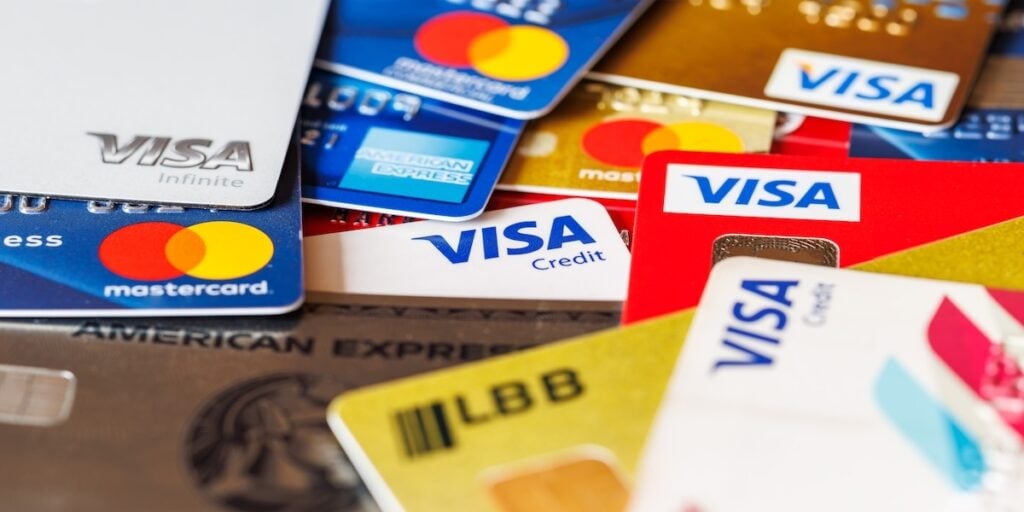
Core Viewpoint - UBS warns that President Trump's proposal to cap credit card interest rates at 10% may have counterproductive effects on consumers and the economy [1][2] Group 1: Impact on Financial Institutions - Trump's call for a 10% cap on credit card interest rates has led to a sell-off of major financial stocks, including Capital One, Synchrony Financial, JPMorgan Chase, and Citigroup [1] - Investors are reacting to the potential threat to the profitability of lending institutions due to the proposed interest rate cap [1] Group 2: Consumer Spending and Economic Implications - UBS analysts suggest that the proposed cap could suppress consumer spending and reduce lending to certain borrower groups, particularly low- and middle-income Americans [2] - The Federal Reserve Bank of Boston data indicates that credit card spending across different income groups could face severe impacts, with at least 26% of credit card consumption potentially affected [2] - Consumer spending accounts for approximately 70% of U.S. GDP, and credit card spending constitutes nearly half of Visa's total payment volume and over half of Mastercard's [2]
特朗普放话设信用卡利率上限 金融板块集体承压 分析人士称需国会立法支持
智通财经网· 2026-01-12 22:23
Core Viewpoint - The U.S. financial sector experienced a significant decline following President Trump's call for a 10% cap on credit card interest rates, raising concerns about the profitability of banks and credit card companies [1][2] Group 1: Impact on Credit Card Companies - Credit card-related stocks saw notable declines, with Bread Financial (BFH.US) dropping over 10%, Synchrony Financial (SYF.US) down more than 8%, and First Capital Credit (COF.US) falling over 6.4% [1] - Analysts indicated that the proposed interest rate cap would directly compress the credit card spread, challenging business models that rely on high rates to cover risk costs [1] - If the 10% cap is implemented, credit card businesses could face overall losses, particularly affecting subprime credit cards [2] Group 2: Impact on Large Banks - Major banks such as Bank of America (BAC.US), Citigroup (C.US), and JPMorgan Chase (JPM.US), which have significant exposure to credit card operations, also saw their stock prices decline [1] - Analysts noted that Citigroup has the highest exposure in credit card business, followed by JPMorgan Chase, which was reflected in their stock performance [2] - The financial sector is expected to remain volatile in the short term, with future movements dependent on the likelihood of Trump's affordability proposal advancing in Congress [2]



喜娜AI速递:昨夜今晨财经热点要闻|2026年1月13日
Sou Hu Cai Jing· 2026-01-12 22:15
Group 1 - The government has issued a systematic regulation for investment funds, outlining 14 measures to optimize layout and guide investments towards key industries [2] - A-share market has seen a record turnover exceeding 3.6 trillion, with major indices rising over 1%, indicating a strong market trend [2] - Precious metals prices have surged to new highs, influenced by geopolitical conflicts and central bank policies, prompting warnings about potential investment scams [2] Group 2 - The market is expected to experience a significant bubble by 2026, with precious metals likely to continue their upward trend due to anticipated interest rate cuts [3] - A-share market turnover exceeded 1 trillion within the first 20 minutes of trading, revealing several divergences in market behavior [3] - Progress has been made in the China-Europe electric vehicle negotiations, which may stabilize supply chains and international trade [3] Group 3 - The Chinese yuan has appreciated to a nearly 32-month high against the US dollar, with implications for asset values and potential risks to economic stability [4] - The global storage chip market has entered a "super bull market," with prices rising significantly due to AI demand, impacting downstream costs and consumer prices [5] - A-share companies have shown a positive earnings forecast for 2025, with over half expected to report improved performance, particularly in sectors like semiconductors and biomedicine [5]