
信用卡

Search documents
可选消费W07周度趋势解析:通胀降温信号带动海外消费类资产估值修复,美国政界跨党派联手推动信用卡利率上限立法
海通国际· 2026-02-23 10:50
Market Overview - Cooling inflation signals have led to a valuation recovery in overseas consumer assets, with the U.S. bipartisan push for credit card interest rate cap legislation creating uncertainty in the credit card sector[1] - Weekly performance of sectors shows U.S. hotels leading with a 3.1% increase, followed by overseas sportswear at 2.5% and luxury goods at 2.2%[11] Sector Performance - The U.S. hotel sector's strong performance is attributed to Marriott and Hilton, with Marriott's Q4 2025 adjusted EBITDA exceeding market expectations, reaching $5.84 billion to $5.93 billion[6] - Overseas sportswear saw a 2.5% increase, driven by a lower-than-expected January CPI of 2.4%, enhancing Fed rate cut expectations[13] - Luxury goods increased by 2.2%, with Hermès up 4.5% due to better-than-expected FY2025 results, while LVMH fell by 4.1% due to disappointing performance in key segments[8] Consumer Trends - The jewelry sector has shown resilience, with a year-to-date increase of 13.7%, outperforming other sectors[11] - Domestic sportswear increased by 0.3%, with Anta Sports rising 4.6% following the acquisition of a stake in PUMA[13] Challenges - The credit card sector faced a significant decline of 5.5%, influenced by proposed legislation to cap interest rates, which could severely impact profitability[14] - The snack sector dropped by 4.6%, with companies like Three Squirrels experiencing a 6.2% decline due to substantial drops in e-commerce sales across major platforms[14] Valuation Insights - Valuations across various sectors remain below the historical five-year averages, with overseas sportswear expected PE at 30.1x, only 57% of the past average[9] - The luxury sector's expected PE is 26.2x, representing 49% of its historical average, indicating potential for future growth as market conditions stabilize[9]
观点全追踪(2月第6期):晨会精选-20260213
GF SECURITIES· 2026-02-12 23:30
Core Insights - The report indicates that the U.S. labor market shows resilience, as evidenced by non-farm payroll data, unemployment rates, and wage data, which reduces the probability of interest rate cuts in June 2026 to 47.1% from a previous 48.9% [2] - Following the data release, the 2-year U.S. Treasury yield increased by 7 basis points to 3.52%, while the 10-year yield rose by 2 basis points to 4.18% [2] - The U.S. dollar index rebounded to 96.91, and U.S. stock markets experienced slight adjustments, with the Dow Jones Industrial Average down 0.13%, the S&P 500 down 0.01%, and the Nasdaq down 0.16% [2] Industry Performance - Leading sectors included storage/semiconductors, energy, machinery, railroads, industrial metals, chemicals, and department stores [2] - Underperforming sectors encompassed AI software, online brokerages, major central banks, credit cards, home builders, and airlines, with concerns about AI agents reducing demand for traditional SaaS software and seat licenses [2]
可选消费W06周度趋势解析:海外消费业绩密集发布带动股价波动,A H股期待26年可选消费恢复
海通国际· 2026-02-09 00:30
Investment Rating - The report assigns an "Outperform" rating to multiple companies in the discretionary consumption sector, including Nike, Li Ning, Midea Group, JD Group, Haier Smart Home, Gree Electric, Anta Sports, and many others [1]. Core Insights - The report highlights that overseas consumer earnings releases have led to stock price volatility, with A/H shares anticipating a recovery in discretionary consumption in 2026 [1]. - The performance of various sectors is analyzed, with gaming, U.S. hotels, snacks, and retail showing positive trends, while luxury goods and overseas cosmetics are experiencing declines [4][12]. - The report notes that the gaming sector saw a strong increase in gross gaming revenue, with a year-on-year growth of 24%, exceeding market expectations [6][14]. Sector Performance Summary - **Gaming Sector**: Increased by 5.5%, driven by strong January gross gaming revenue growth and positive earnings from MGM China [6][14]. - **U.S. Hotels**: Also up by 5.5%, with Marriott and Hilton showing positive earnings forecasts [6][14]. - **Snacks**: Grew by 3.6%, with companies like Youyou Foods and Qiaqia Foods reporting significant growth expectations [6][14]. - **Retail Sector**: Increased by 3.5%, led by Walmart and Target, which exceeded market sales forecasts [8][14]. - **Domestic Sportswear**: Rose by 2.6%, with Li Ning benefiting from its partnership with the Chinese Olympic Committee [8][14]. - **Credit Card Sector**: Gained 2.3%, supported by strong earnings from Visa and Mastercard [8][14]. - **Domestic Cosmetics**: Increased by 2.1%, benefiting from overall strength in the beauty and skincare sector [8][14]. - **Luxury Goods**: Slightly up by 0.9%, influenced by a rebound in the U.S. market [8][14]. - **Overseas Cosmetics**: Decreased by 5.7%, with concerns over the sustainability of growth for Estée Lauder [9][15]. - **Pet Sector**: Down by 0.7%, with companies like Guai Bao Pet and Zhongchong Co. experiencing declines [8][14]. - **Gold and Jewelry**: Fell by 1.2%, affected by fluctuations in gold prices [8][14]. Valuation Analysis - The report indicates that the valuation of various sectors remains below their historical averages, with expected P/E ratios for 2025 showing significant discounts compared to the past five years [10].
可选消费W06周度趋势解析:海外消费业绩密集发布带动股价波动,A/H股期待26年可选消费恢复-20260208
Haitong Securities International· 2026-02-08 14:59
Investment Rating - The report assigns an "Outperform" rating to multiple companies in the discretionary consumption sector, including Nike, Li Ning, Midea Group, JD Group, Haier Smart Home, Gree Electric, Anta Sports, and many others [1]. Core Insights - The report highlights that overseas consumer earnings releases have led to stock price volatility, with A/H shares anticipating a recovery in discretionary consumption in 2026 [1]. - The performance of various sectors is analyzed, with gaming, U.S. hotels, snacks, and retail showing positive trends, while luxury goods and overseas cosmetics are experiencing declines [4][12]. - The report notes that the valuation of discretionary consumption sectors remains below the average of the past five years, indicating potential investment opportunities [10]. Sector Performance Summary - **Gaming Sector**: Increased by 5.5%, driven by strong growth in gross gaming revenue and positive earnings from major companies like MGM China [6][14]. - **U.S. Hotels**: Also up by 5.5%, with positive earnings forecasts from Marriott and Hilton [14]. - **Snacks Sector**: Rose by 3.6%, with companies like Youyou Foods and Qiaqia Foods showing strong sales growth [14]. - **Retail Sector**: Increased by 3.5%, led by Walmart and Target, which reported better-than-expected same-store sales [14]. - **Domestic Sportswear**: Grew by 2.6%, with Li Ning benefiting from its partnership with the Chinese Olympic Committee [14]. - **Credit Card Sector**: Up by 2.3%, supported by strong earnings from Visa and Mastercard [14]. - **Domestic Cosmetics**: Increased by 2.1%, benefiting from the overall strength in the beauty and skincare sector [14]. - **Luxury Goods**: Slightly up by 0.9%, influenced by a rebound in the U.S. market [14]. - **Overseas Sportswear**: Increased by 0.7%, with Nike announcing the opening of its first ACG store in Beijing [15]. - **Pet Sector**: Decreased by 0.7%, with companies like Guobao Pet and Zhongchong Co. facing declines [15]. - **Gold and Jewelry**: Down by 1.2%, affected by fluctuations in gold prices [15]. - **Overseas Cosmetics**: Fell by 5.7%, with Estée Lauder experiencing a significant drop [15].
可选消费W05周度趋势解析:受美联储鹰派影响全球资产价格大跌,可选消费板块回撤较多
海通国际· 2026-02-02 00:25
Investment Rating - The report assigns an "Outperform" rating to multiple companies in the discretionary consumption sector, including Nike, Li Ning, Midea Group, JD Group, Haier Smart Home, Gree Electric, Anta Sports, and many others [1]. Core Insights - The discretionary consumption sector has experienced a significant pullback due to the hawkish stance of the Federal Reserve, leading to a decline in global asset prices [4][13]. - The report highlights that the domestic sportswear sector has shown resilience, with a weekly increase of 0.6%, while other sectors such as luxury goods and cosmetics have faced declines [5][15]. - The report notes that various sub-sectors within discretionary consumption have performed differently, with gold and jewelry being the top performers in the recent weeks [4][13]. Summary by Relevant Sections Weekly Performance Review - The report details the weekly performance of various sectors, indicating that domestic sportswear outperformed others with a 0.6% increase, while luxury goods saw a decline of 5.8% [4][13]. - Monthly performance shows gold and jewelry leading with a 14.8% increase, while luxury goods and overseas sportswear faced significant declines [4][13]. Sector Analysis - The domestic sportswear sector's growth is attributed to increased demand for warm clothing due to colder weather and strategic partnerships, such as Anta Sports' acquisition of a stake in PUMA [6][15]. - The credit card sector experienced mixed results, with Mastercard performing well while Visa and American Express faced declines due to varying financial performance [15]. - The retail sector saw a decline of 1.4%, with some companies like China Resources Vanguard performing well due to favorable policies [15]. Valuation Analysis - The report indicates that the expected PE ratios for various sectors in 2025 are below their historical averages, suggesting potential investment opportunities [11][18]. - For instance, the expected PE for the domestic sportswear sector is 13.4 times, which is 70% of its past five-year average [11][18].
可选消费W05周度趋势解析:受美联储鹰派影响全球资产价格大跌,可选消费板块回撤较多-20260202
Haitong Securities International· 2026-02-01 23:30
Investment Rating - The report assigns an "Outperform" rating to multiple companies in the discretionary consumption sector, including Nike, Li Ning, Midea Group, JD Group, Haier Smart Home, Gree Electric Appliances, Anta Sports, and many others [1]. Core Insights - The discretionary consumption sector has experienced a significant pullback due to the hawkish stance of the Federal Reserve, leading to a decline in global asset prices [4][13]. - The report highlights that the domestic sportswear sector outperformed other segments, while luxury goods and cosmetics faced notable declines [4][13]. - The report provides a detailed analysis of the performance of various sub-sectors, indicating that gold and jewelry, overseas cosmetics, and snacks have shown resilience compared to the MSCI China index [4][11]. Summary by Relevant Sections Weekly Performance Review - The domestic sportswear sector increased by 0.6%, while other sectors such as credit cards, U.S. hotels, and retail saw declines ranging from -0.4% to -5.8% [4][13]. - The report notes that the gold and jewelry sector has outperformed the MSCI China index, with a monthly increase of 14.8% [4][13]. Sector Analysis - The domestic sportswear sector's growth is attributed to increased demand for warm clothing due to colder weather and positive media coverage of brands like Bosideng [15]. - The credit card sector saw mixed results, with Mastercard rising by 2.7% while Visa and American Express declined [15]. - The retail sector's performance was driven by specific companies like China Resources Mixc Lifestyle, which saw a 10.8% increase due to favorable policies [15]. Valuation Analysis - The report indicates that the expected PE ratios for various sectors in 2025 are below their historical averages, suggesting potential investment opportunities [11][18]. - For instance, the expected PE for the domestic sportswear sector is 13.4 times, which is 70% of its past five-year average [18]. Conclusion - Overall, the report emphasizes the impact of macroeconomic factors on the discretionary consumption sector and identifies specific companies and sub-sectors that may present investment opportunities amidst the current market volatility [4][11][18].
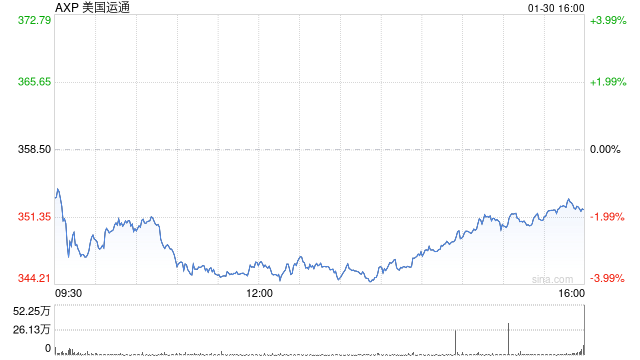
随着高收入消费者持续消费,美国运通收入增长
Xin Lang Cai Jing· 2026-01-31 01:32
Core Viewpoint - American Express reports an increase in spending among high-income customers on dining and luxury goods, along with a strong demand for its premium credit cards [2][7]. Group 1: Consumer Spending Trends - In the fourth quarter, restaurant spending grew by 9%, retail spending increased by 10%, and luxury merchant spending rose by 15%, indicating strong consumer strength [2][7]. - The company remains optimistic about consumer behavior, as stated by CEO Stephen Squeri, highlighting a stable and robust customer base [2][7]. Group 2: Product Demand and Strategy - American Express targets affluent consumers willing to pay high annual fees for premium credit cards, with a notable demand for the updated personal and business Platinum cards [3][8]. - The company has seen a significant increase in the sales of Platinum cards during the holiday season, contributing to the growth of its high-end product segment [3][8]. Group 3: Financial Performance - In the fourth quarter, net income reached $2.46 billion, with earnings per share of $3.53, up from $2.17 billion (or $3.04 per share) in the same period last year [4][10]. - Revenue grew by 10% year-over-year to $18.98 billion, driven by increased cardholder spending, higher credit card fee income, and rising interest income from revolving loan balances [4][10]. - The company expects revenue growth of 9% to 10% in 2026, with projected earnings per share between $17.30 and $17.90 [5][11]. Group 4: Shareholder Returns - American Express announced a 16% increase in its quarterly dividend to $0.95 per share, effective in the first quarter of the following year [5][11].

新浪财经隔夜要闻大事汇总:2026年1月31日
Sou Hu Cai Jing· 2026-01-30 23:18
Market - On January 31, U.S. stocks closed lower, but all three major indices recorded gains for January. The Dow Jones, Nasdaq, and S&P 500 all fell, with the Dow and Nasdaq down for the week, while the S&P 500 rose. In January, all three indices saw increases. Trump's nomination of Kevin Warsh to replace Powell as Federal Reserve Chairman is viewed as a relatively hawkish choice, leading to a sharp drop in gold and silver prices. Analysts suggest the sell-off may be due to profit-taking and multiple factors overlapping. Market uncertainty surrounds Warsh's future policy direction, as his appointment requires Senate confirmation, which may spark controversy. Additionally, the market is assessing tech earnings, with U.S. wholesale inflation in December exceeding expectations [1][2]. - Among the top 20 stocks by trading volume on January 31, SanDisk saw a cumulative increase of over 140% in January, driven by chip demand. Tesla rose 3.32%, with capital expenditures expected to more than double by 2026. Nvidia fell 0.72%, but was up 1.84% for the week, linked to its collaboration with Mercedes-Benz on autonomous taxi services. Microsoft continued its downward trend, down 7.65% for the week despite exceeding expectations in its Q2 earnings, attributed to slowing Azure growth. SanDisk rose 6.85%, with a 142.75% increase in January due to the AI boom driving chip demand. Other stocks like Micron and AMD experienced varying degrees of gains and losses, while Applovin suffered due to a new Google project [2]. Company - Apple’s artificial intelligence team is experiencing a wave of departures, with several researchers leaving for Meta and Google. This includes the loss of a Siri executive and at least four other researchers in recent weeks. The departures highlight ongoing turmoil within Apple's AI department, raising concerns about its competitiveness and employee dissatisfaction regarding outsourced technology [1]. - Google has launched an AI model called "Project Genie," which can create interactive digital worlds from simple prompts. This innovation has led to significant declines in the stock prices of video game companies such as Take-Two Interactive, Roblox, and Unity Software. The model's ability to simulate real-world environments may disrupt traditional game development, although there are concerns about potential job losses in the industry [2]. - American Express reported a 13% increase in fourth-quarter profits, reaching $2.46 billion, primarily driven by high-net-worth customers significantly increasing their spending on luxury goods, dining, and travel. The company’s performance aligns with analyst expectations, and it plans to raise its quarterly dividend while providing guidance for 2026 [3]. - Tesla's stock rose 4.1% as the company shifts focus towards robotics, with capital expenditures expected to more than double to approximately $20 billion by 2026. This investment will primarily support the development of autonomous driving technology and humanoid robots, indicating a strategic pivot in Tesla's business operations [7].
可选消费W04周度趋势解析:黄金持续创新高叠加新消费板块回暖,黄金珠宝板块本周表现最优
海通国际· 2026-01-26 10:20
Investment Rating - The report assigns an "Outperform" rating to multiple companies including Nike, Midea Group, JD Group, Haier Smart Home, Gree Electric, Anta Sports, and many others, indicating a positive outlook for these stocks [1]. Core Insights - The gold and jewelry sector has emerged as the top performer this week, driven by new consumer sentiment and the upcoming Spring Festival, which is expected to boost sales [4][14]. - The overall performance of various sectors shows significant fluctuations, with gold and jewelry leading the gains, while sectors like luxury goods and U.S. hotels are experiencing declines [12][15]. - The report highlights that the valuation of various sectors remains below their historical averages, suggesting potential investment opportunities [10][17]. Sector Performance Summary - **Gold and Jewelry**: This sector saw a weekly increase of 12.9%, with notable stock performances from Lao Pu Gold (+20.5%) and Chao Hong Ji (+12.3%) due to positive sales forecasts [6][14]. - **Gambling**: The gambling sector increased by 2.9%, with companies like MGM China and Galaxy Entertainment showing strong market share growth [14]. - **Overseas Cosmetics**: This sector rose by 2.1%, driven by E.L.F. Beauty's stock increase of 4.6% following positive earnings forecasts [14]. - **Retail**: The retail sector increased by 2.0%, with Wanchen Group's stock rising by 14.3% due to optimistic revenue expectations [14]. - **Domestic Cosmetics**: This sector saw a modest increase of 0.9%, with companies like Proya and Runben showing positive stock movements [8][14]. - **Snacks**: The snack sector increased by 0.6%, with Youyou Foods and Qiaqia Foods showing gains [14]. - **Pet Sector**: This sector experienced a slight decline of 0.4%, with Zhongchong Co. facing stock price pressures [14]. - **Domestic Sportswear**: This sector decreased by 1.4%, with Anta Sports experiencing a notable decline of 6.1% [14]. - **U.S. Hotels**: This sector fell by 1.4%, with major hotel chains like Marriott and Hilton reporting declines [15]. - **Credit Cards**: The credit card sector also saw a decline of 1.4%, influenced by uncertainties regarding proposed interest rate caps [15]. - **Luxury Goods**: This sector decreased by 1.6%, with Burberry facing significant stock price drops due to market concerns [15]. - **Overseas Sportswear**: This sector fell by 1.8%, with Adidas experiencing a notable drop of 8.7% due to downgrades from investment banks [16]. Valuation Analysis - The report indicates that the expected PE ratios for various sectors in 2025 are below their historical averages, suggesting potential undervaluation. For example, the expected PE for the gold and jewelry sector is 25.9, which is 49% of its historical average [10][17].
可选消费W04周度趋势解析:黄金持续创新高叠加新消费板块回暖,黄金珠宝板块本周表现最优-20260126
Haitong Securities International· 2026-01-26 09:54
Investment Rating - The report assigns an "Outperform" rating to multiple companies including Nike, Midea Group, JD Group, Haier Smart Home, Gree Electric, Anta Sports, and others, indicating a positive outlook for these stocks [1]. Core Insights - The gold and jewelry sector has emerged as the top performer this week, driven by new consumer sentiment and expectations of improved sales as the Spring Festival approaches. The sector saw a weekly increase of 12.9% [4][14]. - The report highlights a rebound in the new consumer sectors, with various segments such as gambling, overseas cosmetics, and retail also showing positive performance [4][14]. - The overall market sentiment is influenced by the performance of the MSCI China index, which has shown fluctuations in its weekly, monthly, and year-to-date performance [12][13]. Sector Performance Summary - **Gold and Jewelry**: Increased by 12.9%, with notable gains from Lao Pu Gold (20.5%) and Chow Tai Fook (5.9%) due to positive sales forecasts [6][14]. - **Gambling**: Rose by 2.9%, with MGM China and Galaxy Entertainment seeing increases of 4.0% and 3.6% respectively, attributed to market share gains [6][14]. - **Overseas Cosmetics**: Gained 2.1%, driven by E.L.F Beauty's strong performance and positive earnings outlook [6][14]. - **Retail**: Increased by 2.0%, with Wanchen Group rising 14.3% due to optimistic revenue forecasts [6][14]. - **Domestic Cosmetics**: Saw a modest increase of 0.9%, with companies like Proya and Runben showing positive trends [8][14]. - **Snacks**: Increased by 0.6%, with Youyou Foods and Qiaqia Foods showing gains [8][14]. - **Pet Sector**: Experienced a slight decline of 0.4%, with Zhongchong Co. facing market challenges [8][14]. - **Domestic Sportswear**: Decreased by 1.4%, with Li Ning showing a positive increase of 4.3% while Anta Sports faced a decline [8][14]. - **US Hotels**: Fell by 1.4%, with major hotel chains like Marriott and Hilton seeing declines [15][16]. - **Credit Card Sector**: Also decreased by 1.4%, with Visa and Mastercard facing market uncertainties [15][16]. - **Luxury Goods**: Declined by 1.6%, with Burberry experiencing a significant drop [15][16]. - **Overseas Sportswear**: Decreased by 1.8%, with Adidas facing a notable decline due to downgrades from investment banks [15][16]. Valuation Analysis - The report indicates that most sectors are currently undervalued compared to their historical averages, with expected PE ratios for various sectors such as overseas sportswear at 30.0x (56% of the past 5-year average) and domestic sportswear at 13.4x (70% of the past 5-year average) [10][17].