
区域全面经济伙伴关系协定(RCEP)

Search documents
日本经济蓝皮书:中国市场对日本企业仍至关重要
Sou Hu Cai Jing· 2025-10-22 02:19
Core Viewpoint - The "Japan Economic Blue Book: Research Report on Japan's Economy and China-Japan Economic and Trade Relations (2025)" indicates that the Chinese market remains crucial for Japanese companies, presenting opportunities for deepened cooperation in China-Japan economic relations [1]. Economic Outlook - In 2024, Japan's economy is expected to show signs of recovery, albeit at a slow pace, with nominal GDP projected to exceed 600 trillion yen, marking the highest level on record. However, the real GDP growth rate is anticipated to remain low, continuing a trend of ultra-slow growth. Japan's nominal GDP is still smaller than Germany's, making it the fourth-largest economy in the world [3]. - Factors such as improved employment conditions, increased investment demand, expanded consumption from tourists, and growth in export trade are expected to support Japan's economic recovery. However, challenges such as rising U.S. trade protectionism, geopolitical tensions, global supply chain disruptions, and slowing world economic growth may exert significant pressure on Japan's recovery [3]. China-Japan Trade Relations - Despite the widening asymmetry in trade dependence, the complementary nature of trade between China and Japan remains significant. Japanese direct investment in China has declined due to various internal and external factors, yet the Chinese market is still vital for Japanese enterprises. Under the Regional Comprehensive Economic Partnership (RCEP), China-Japan economic cooperation continues to deepen [4]. - In 2025, amid challenges like escalating protectionism, global supply chain fragmentation, and slowing economic growth, there are opportunities for enhanced cooperation in China-Japan economic relations. Both countries are encouraged to deepen economic cooperation in the Asia-Pacific region and under the Belt and Road Initiative, focusing on structural complementarity to unleash collaborative potential in areas such as the "silver economy," "dual carbon," and digital economy [4]. Japan's Global Economic Diplomacy - The status of the Global South in Japan's economic diplomacy is beginning to rise. Historically, Japan has not given sufficient attention to developing countries, but since former Prime Minister Shinzo Abe's administration, there has been a shift towards a more proactive diplomatic stance, emphasizing economic strength, technological advantages, and the dissemination of values to shape Japan's role in the international community [4][5]. - Abe's initiatives, such as "Earth Observation Diplomacy" and the "Free and Open Indo-Pacific Strategy," reflect Japan's active diplomatic efforts to include the Global South, including Africa, in its foreign policy to enhance its international influence [5].

香港共享基金会与柬埔寨机构携手防控登革热等疾病
Zhong Guo Xin Wen Wang· 2025-10-21 13:58
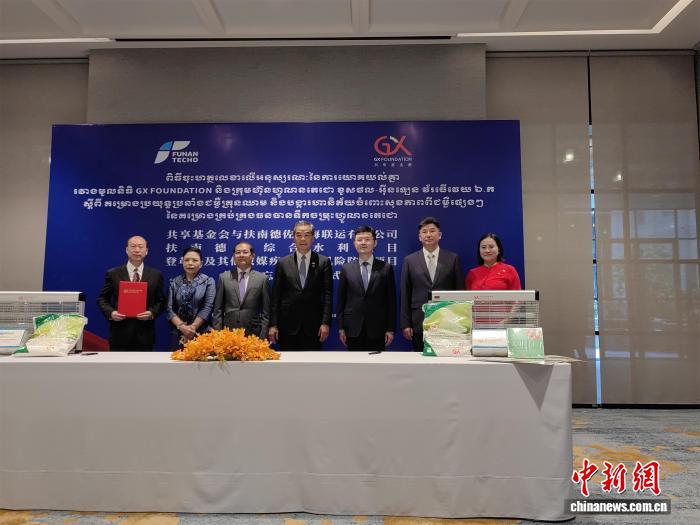
【东盟专线】香港共享基金会与柬埔寨机构携手防控登革热等疾病 中新社金边10月21日电 (记者 杨强)香港共享基金会与柬埔寨扶南德佐江海联运有限公司21日在金边签 署合作备忘录,双方将在扶南德佐综合水利项目建设中开展登革热及其他虫媒疾病防控合作。 中国全国政协副主席、香港共享基金会主席梁振英,中国驻柬埔寨大使馆代办姜楠,柬埔寨卫生部国务 秘书优克·桑巴特,扶南德佐江海联运有限公司董事长英·森利,中国路桥工程有限责任公司柬埔寨办事 处总经理杨杰等中柬嘉宾出席签署仪式。 当地时间10月21日,香港共享基金会与柬埔寨扶南德佐江海联运有限公司在金边签署登革热及其他 虫媒疾病防控项目合作备忘录,中国全国政协副主席、香港共享基金会主席梁振英(中)等中柬嘉宾出 席。中新社记者 杨强 摄 扶南德佐综合水利项目是柬埔寨首个国家级内河航运工程,也是中资企业在海外实施大型综合交通运输 类项目的一次创新突破。该项目是中柬高质量共建"一带一路"合作标志性项目,建成后将成为柬埔寨重 要的内陆出海新通道,促进柬埔寨同中国以及与《区域全面经济伙伴关系协定》(RCEP)成员国更加高 效便捷的联通和贸易。 梁振英在讲话中指出,从建设基础设施迈向守 ...
美对印加征高额关税后,印度傻眼!印智库:没中国市场,毫无意义
Sou Hu Cai Jing· 2025-10-09 07:10
Core Viewpoint - India's future economic development hinges on "looking east," driven by the trade war initiated by Trump, which has adversely affected not only China but also traditional allies of the U.S. [1] Group 1: Economic Relations with the U.S. - Despite good relations with the U.S., India faced a 50% tariff increase on exports due to Trump's policies, creating challenges for its export industries [3] - Continued negative impacts on trade with the U.S. necessitate India finding new avenues for economic growth [3] Group 2: Strengthening Economic Cooperation with China - Expert Subramaniam suggests enhancing economic cooperation with China as a solution, emphasizing that India should not solely rely on Western countries for economic growth [4] - India's export market is overly concentrated in developed countries, while the U.S. has diversified trade partners; India should learn from this and expand trade with other Asian nations, particularly China [6] - The potential of the Asian market is significant, and India should seize opportunities to increase its market share, especially in China, which is the world's second-largest economy [6] Group 3: Trade Agreements and Export Diversification - India previously proposed joining the Regional Comprehensive Economic Partnership (RCEP), which could have enhanced economic cooperation with other Asian countries; not joining is viewed as a missed opportunity [6] - A significant portion of India's exports (approximately 90%) lacks diversification, indicating a need for government policies to encourage a broader range of exports, particularly in intermediate goods [6] Group 4: Import Tariffs and Manufacturing Development - High tariffs on raw material imports, while intended to protect domestic industries, actually hinder the growth of India's manufacturing sector [8] - In contrast, countries like Vietnam benefit from low or zero tariffs on raw materials, boosting their export trade; India could lower production costs and foster local manufacturing by reducing import tariffs [8] - A balanced approach to imports is essential for India's manufacturing sector to access necessary resources and enhance overall economic competitiveness [10] Group 5: Learning from China for Sustainable Development - "Looking east" signifies not only deepening trade ties with China but also learning from its advanced manufacturing practices to promote India's economic diversification and sustainable growth [10]
中国外长立下大功,美国万没料到,中方果断接下了“战书”!
Sou Hu Cai Jing· 2025-10-08 08:55
Core Viewpoint - The article discusses the impact of the Trump administration's decision to impose high tariffs on certain goods starting August 1, which has caused significant market turbulence globally and complicated the economic landscape for ASEAN countries closely tied to China [1][3]. Group 1: U.S. Tariff Policy and Its Implications - The U.S. tariff policy not only pressures the domestic economy but also places ASEAN countries in a difficult position due to rising trade costs [1]. - The unilateral nature of the U.S. tariffs undermines the interests of American businesses and reveals contradictions in the U.S. "Indo-Pacific Economic Framework" proposed by Secretary of State Rubio [1][3]. Group 2: China's Diplomatic Strategy and Economic Cooperation - China continues to promote deep cooperation with ASEAN based on principles of equality and mutual benefit, contrasting sharply with U.S. unilateralism [3][5]. - During the ASEAN Foreign Ministers' meeting, China engaged in negotiations for the China-ASEAN Free Trade Area 3.0 and reached significant agreements on regional economic cooperation, security, and cultural exchanges [3][5]. - China's infrastructure investments, such as the China-Laos Railway under the Belt and Road Initiative, exemplify successful cooperation and enhance economic connectivity between China and ASEAN [3][5]. Group 3: Response to Global Trade Dynamics - China's four-point cooperation proposal, particularly its stance against trade protectionism, resonates strongly with ASEAN countries amid rising global protectionism [3][5]. - The Regional Comprehensive Economic Partnership (RCEP) is highlighted as a framework that provides ASEAN countries with more market opportunities and strengthens China's economic ties in the Asia-Pacific region [5]. - China's diplomatic and economic policies are portrayed as more constructive and sustainable compared to the U.S. tariff war, showcasing China's growing influence in the global economic system [5].
中美交锋美国节节败退,特朗普对华政策为何大转弯?背后隐情揭晓
Sou Hu Cai Jing· 2025-10-02 07:50
Group 1 - The intensifying trade conflict between the US and China, particularly in tariffs, has led to unexpected consequences for the US economy, including rising domestic prices and increased business costs [1][3] - The US has begun to reconsider its tariff policies due to internal economic pressures, leading to multiple high-level trade talks with China [3][4] - There is a notable shift in the US's diplomatic strategy towards China, moving from a confrontational stance to a more conciliatory approach, as evidenced by recent statements from US officials [3][4] Group 2 - The US military's inability to support its global ambitions has prompted a reevaluation of its focus on Taiwan, particularly regarding semiconductor industry dependencies [4][5] - China's growing economic influence and partnerships with various regions, including ASEAN, Africa, and Latin America, highlight its role as a key player in global economic cooperation [5][6] - The potential implementation of a "new Monroe Doctrine" by the US to limit China's influence in Latin America is seen as too late, given China's established economic presence in the region [6][8]
商务部服贸司负责人谈2025年1-8月我国服务外包产业发展情况
Shang Wu Bu Wang Zhan· 2025-09-29 14:13
Group 1 - The total execution amount of offshore service outsourcing by Chinese enterprises from January to August 2025 reached 612.65 billion yuan, representing a year-on-year growth of 2.2% [1] - In USD terms, the execution amount was 85.43 billion USD, with a year-on-year increase of 0.4% [1] - The execution amount for offshore Information Technology Outsourcing (ITO) was 254.63 billion yuan, showing a decline of 1.7% year-on-year [1] Group 2 - The execution amount for offshore Business Process Outsourcing (BPO) was 112.51 billion yuan, reflecting a significant year-on-year growth of 21.2% [1] - The execution amount for offshore Knowledge Process Outsourcing (KPO) was 245.51 billion yuan, with a slight decline of 0.8% year-on-year [1] - Business operation services and maintenance services experienced rapid growth, with execution amounts of 69.9 billion yuan and 37.72 billion yuan, respectively, marking year-on-year increases of 19.7% and 30.4% [1] Group 3 - Among the 37 service outsourcing demonstration cities, the total execution amount was 535.27 billion yuan, a year-on-year increase of 2.1%, accounting for 87.4% of the total offshore service outsourcing execution [1] - The Yangtze River Delta region recorded an execution amount of 323.21 billion yuan, with a year-on-year growth of 1% [1] - The Beijing-Tianjin-Hebei region had an execution amount of 66.55 billion yuan, showing a year-on-year increase of 7% [1] Group 4 - The top three sources of offshore service outsourcing for China were the United States, Hong Kong, and Singapore, with execution amounts of 116.6 billion yuan, 105.67 billion yuan, and 79.45 billion yuan, respectively, together accounting for 49.2% of the total [2] - The execution amount from RCEP member countries reached 184.02 billion yuan, reflecting a year-on-year growth of 13.1% [2] - The execution amount from countries involved in the Belt and Road Initiative was 210.74 billion yuan, with a year-on-year increase of 12.7% [2] Group 5 - Domestic enterprises executed offshore service outsourcing worth 335.29 billion yuan, a year-on-year decline of 1.7%, accounting for 54.7% of the total [2] - Foreign enterprises executed offshore service outsourcing worth 277.36 billion yuan, showing a year-on-year growth of 7.3%, accounting for 45.3% of the total [2] - As of the end of August 2025, the cumulative number of employees absorbed by the service outsourcing sector was 17.307 million, with 11.348 million holding a university degree or higher, representing 65.6% [2]
中国福州跨境电商大会:数字丝路通全球,闽都商脉连世界
Sou Hu Cai Jing· 2025-09-28 20:16
Core Viewpoint - Fuzhou is emerging as a significant hub for cross-border e-commerce, leveraging its geographical advantages, digital economy, and unique conditions for cross-strait cooperation to create a distinctive development path in the industry [4][12]. Group 1: Cross-Border E-Commerce Development - Fuzhou's free trade zone features a new global commodity circulation chain, enabling products from countries like Japan, Australia, and Germany to reach consumers in China within 72 hours [1][5]. - The city has established a "two platforms, six systems" framework that integrates customs, tax, and foreign exchange data, significantly reducing customs clearance time from days to hours [4][5]. - Various business models such as cross-border e-commerce retail imports and B2B direct exports have been launched, forming a complete ecosystem for cross-border e-commerce [5][12]. Group 2: Cross-Strait E-Commerce Hub - Fuzhou is utilizing its advantages in cross-strait relations to create a new model where Taiwanese products are ordered and shipped from Fuzhou, enhancing logistics efficiency [7]. - The city has introduced measures like "fast customs clearance for cross-strait trade" and "digital identity certification for Taiwanese residents" to attract Taiwanese businesses [7][12]. Group 3: Empowering Traditional Manufacturing - Traditional manufacturing sectors in Fuzhou are leveraging cross-border e-commerce to directly sell products to consumers in Europe and the U.S., resulting in a 30% increase in profit margins [9]. - The city encourages the integration of cross-border e-commerce with industrial clusters, promoting sectors like textiles, furniture, and machinery to upgrade through digital platforms [9][12]. Group 4: Logistics Innovation - Fuzhou is developing a comprehensive logistics system that includes air, land, and sea transport, with over 20 overseas warehouses established to enhance global supply chain efficiency [11]. - The city is also opening international freight routes and developing international trains to facilitate smoother logistics for cross-border e-commerce [11][12]. Group 5: Future Outlook - With the implementation of the Regional Comprehensive Economic Partnership (RCEP), Fuzhou is transitioning from a simple cross-border "channel" to a comprehensive "hub" that integrates digital trade, supply chain finance, and brand incubation [12][13]. - The city aims to cultivate internationally influential cross-border e-commerce platforms and enterprises, contributing to the development of a highland for digital trade [12].
8月份全国贸促系统累计签发各类证书同比增长23.54%
Zheng Quan Ri Bao Wang· 2025-09-28 13:11
Core Insights - The total issuance of various certificates by the national trade promotion system reached 726,400 by August 2025, marking a year-on-year increase of 23.54% [1] - The issuance of non-preferential certificates amounted to $29.093 billion, with a year-on-year growth of 1.03%, while the number of certificates issued was 385,300, reflecting a 14.24% increase [1] - Preferential certificates saw a significant increase in both value and volume, with a total value of $8.823 billion, up 42.31%, and the number of certificates issued reaching 278,400, a 57.76% increase [1] Group 1 - The growth in the issuance of preferential certificates indicates that foreign trade enterprises are actively expanding into diverse markets and optimizing product structures, demonstrating strong resilience and vitality in China's foreign trade [2] - The substantial growth in the issuance of preferential certificates is attributed to the release of policy dividends, proactive enterprise actions, and upgraded services [2] - The Regional Comprehensive Economic Partnership (RCEP) has played a crucial role in enhancing the effectiveness of free trade agreements, with tariff reduction mechanisms and origin accumulation rules significantly benefiting enterprises [2] Group 2 - In August, the issuance of RCEP origin certificates amounted to $87.2 million, reflecting a year-on-year increase of 26.85%, with 29,482 certificates issued, up 26.29% [2] - Enterprises are encouraged to leverage RCEP policy benefits by optimizing supply chain layouts and enhancing cooperation with RCEP member countries to expand market reach [3]
丽江向澜湄国家青年企业家发出合作邀请 五大领域商机可期
Zhong Guo Xin Wen Wang· 2025-09-27 08:51
Core Viewpoint - Lijiang is actively promoting investment opportunities to young entrepreneurs from the Lancang-Mekong countries, focusing on five key areas: investment policies, foreign trade facilitation, highland特色 agriculture, green industry, and cultural tourism [1][2] Group 1: Investment Opportunities - Lijiang introduced its investment policies and cooperation opportunities to over 80 young entrepreneurs from six Lancang-Mekong countries during the 2025 Lancang-Mekong Youth Entrepreneurs Exchange Camp [1] - The city has achieved a total foreign trade import and export value of 1.098 billion RMB from 2021 to 2024, with significant exports of local products like porcelain tableware, dried mushrooms, and mangoes to Southeast Asian countries [1][2] Group 2: Trade and Economic Cooperation - Lijiang's trade with Lancang-Mekong countries has been increasing, with Vietnam and Myanmar identified as the most important trade partners in Southeast Asia [1] - The city has seen the establishment of 96 new foreign-funded enterprises since 2021, with a contracted foreign investment of 530 million USD [2] Group 3: Infrastructure and Connectivity - Improved transportation connectivity, including the completion of international flight routes to Bangkok and Hanoi, has facilitated trade and travel between Lijiang and Southeast Asian countries [1] - The implementation of the 240-hour visa-free transit policy and the opening of the China-Laos Railway have further enhanced economic cooperation [1] Group 4: Agricultural Development - Lijiang's agricultural sector is actively participating in events like the Lancang-Mekong Fruit Procurement Festival to promote high-quality local products in Southeast Asian markets [2] - The city aims to enhance the utilization rate of free trade agreements, including RCEP and the China-ASEAN Free Trade Agreement, to improve its business environment [2]
《区域全面经济伙伴关系协定》(RCEP)生效实施后第四次部长级会议联合媒体声明(参考译文)
Shang Wu Bu Wang Zhan· 2025-09-25 12:53
Group 1 - The RCEP meeting emphasized the importance of deepening trade and investment relationships to enhance economic resilience and support the implementation of the RCEP agreement [1][2] - The meeting acknowledged the significance of the comprehensive review of the agreement scheduled for 2027 to adapt to changing economic conditions [1] - The RCEP members committed to avoiding measures inconsistent with RCEP obligations and to maintaining an open, free, and rules-based market [1][2] Group 2 - The meeting welcomed the progress made by the RCEP Joint Committee and its subsidiary bodies in executing the RCEP agreement and encouraged continued efforts for transparent and effective implementation [2] - The meeting praised Japan for organizing the "RCEP E-commerce Dialogue Report" and encouraged member countries to promote the development and use of e-commerce [2][3] - The meeting reiterated the importance of economic and technical cooperation under RCEP to support inclusive and effective implementation of the agreement [2] Group 3 - The meeting welcomed the RCEP Joint Committee's establishment of guidelines for stakeholder engagement, facilitating collective communication with stakeholders [3] - The meeting noted the progress made during the first consultation with the RCEP Business Advisory Council (RBAC) [3] - The meeting encouraged further engagement with stakeholders to obtain strategic input and specific recommendations for better implementation of RCEP [3]