医疗器械出海

Search documents
医药板块中报总结及投资展望
2025-09-02 14:41
Summary of Key Points from the Conference Call Records Industry Overview - The pharmaceutical sector shows a clear performance divergence, with innovative drug companies outperforming generic drug companies. The focus should be on multi-antibody therapies, dual antibodies, and treatments for unmet clinical needs in chronic diseases, such as ADC dual antibodies and small molecule therapies [1][4] - The medical device sector benefits from favorable policies, with a recovery in bidding processes and reduced channel inventory pressure. Leading companies are expected to gain market share, and the infrastructure sector is anticipated to reach a turning point [1][5] - The distribution sector's revenue remains flat, but the net profit excluding non-recurring items has decreased year-on-year. Gross margins have slightly declined, and accounts receivable turnover days have increased, indicating significant collection pressure [1][6] - The formulation sector shows stable overall performance, with net profit growth benefiting from innovative formulation products entering overseas markets. R&D expenses are growing faster than revenue, indicating increased investment in innovation [1][7] - Biotech companies are experiencing rapid revenue growth, driven by the overseas expansion of core products and unique indications. R&D and sales expense ratios are declining, reflecting improved commercial capabilities [1][9] Key Insights on Sub-sectors Innovative Drugs - Innovative drugs represent one of the largest investment opportunities in 2025, particularly in areas with potential for multi-antibodies and dual antibodies, as well as innovative therapies for cancer [4] Medical Devices - The medical device sector is seeing significant policy support, with a notable recovery in bidding trends and reduced inventory pressure for manufacturers. This is expected to drive performance improvements in the infrastructure sector [5][22] Distribution Sector - The distribution sector's performance is under pressure, with a notable decline in net profit. However, leading companies like Guokong, China Resources, and Shanghai Pharmaceuticals are performing relatively well [6] Formulation Companies - Formulation companies are showing steady performance, with a 20% growth in net profit driven by innovative products. Companies with high barriers to entry and rapid transformation are demonstrating stronger profitability [7] Biotech Companies - From 2019 to 2024, the cumulative revenue of 22 representative biotech companies in China grew from 7.7 billion to 66.8 billion, with a compound annual growth rate (CAGR) of 54%. In the first half of 2025, total revenue reached 38.9 billion, reflecting nearly 30% growth [9][10] Performance Trends - The medical device sector's revenue declined by approximately 5% in the first half of 2025, with profits down 24%. This decline is attributed to the impact of centralized procurement and cost control measures [20] - The biotech sector's core products are experiencing significant growth due to overseas sales and unique therapeutic advantages, with some products seeing revenue increases of over 50% [11] - The traditional Chinese medicine sector is under short-term pressure, but several companies are advancing innovative pipelines that may drive future growth [3][27] Future Outlook - The medical device sector is expected to see a turning point in the second half of 2025, with improved bidding data and a recovery in demand anticipated [22] - The distribution sector is likely to stabilize, with leading companies expected to gain market share as the industry undergoes consolidation [40][41] - The overall outlook for the pharmaceutical sector remains positive, with expectations for continued growth driven by innovation and market expansion [12][41] Additional Considerations - The impact of regulatory changes, such as the drug traceability code policy, is expected to enhance compliance within the industry [39] - The performance of the vaccine sector has been under pressure, with many companies transitioning from profit to loss due to market saturation and pricing pressures [17][18] - The blood products sector is experiencing steady revenue but faces challenges due to price declines in key products [19] This summary encapsulates the key insights and performance trends across various sectors within the pharmaceutical and medical device industries, highlighting both opportunities and challenges ahead.
医疗器械出海深度(一)欧洲市场:高壁垒但可突破,未来中国企业销售有望提速
Changjiang Securities· 2025-09-02 09:46
Investment Rating - The report maintains a "Positive" investment rating for the medical device industry [14]. Core Insights - The European market is a core market for global medical devices, with a market size of approximately €160 billion in 2023, growing by 2.4% year-on-year. The global medical device market reached $582.6 billion in 2023, with Europe accounting for about 26% of the total market share [4][9]. - The report emphasizes that European medical device companies should focus on direct sales strategies in key markets such as Germany, France, and the UK, while utilizing distributors in other regions to penetrate the market [10][11]. - Chinese medical device companies are expected to accelerate their sales in Europe, leveraging their cost advantages and localizing their teams to adapt to the market [12][11]. Summary by Sections European Market Overview - Europe is the second-largest medical device market globally, with a stable growth rate and a concentration of market share among the top five countries: Germany, France, Italy, the UK, and Spain, which together account for 66% of the market [9][34]. - The average healthcare expenditure in Europe is about 11% of GDP, with approximately 7.9% allocated to medical technology [9][27]. Regulatory Environment - The report highlights the increased difficulty in obtaining regulatory approval under the new EU Medical Device Regulation (MDR), with costs for certification reaching approximately €4.25 million for medical devices and €2.34 million for in vitro diagnostics (IVD) [10][58]. - The certification process is lengthy, with an average duration of 1.5 to 2 years for mature technologies [10][58]. Sales Strategies - The report suggests that companies should prioritize direct sales in the UK, France, and Germany, while using distributors in other regions due to language barriers and varying regulatory environments [10][65]. - Distributors are increasingly providing comprehensive solutions, integrating product supply, technical services, training, and customer relationship management [10][73]. Market Opportunities for Chinese Companies - Chinese medical device companies are making inroads into the European market, with strategies including establishing local teams and partnerships to enhance market penetration [11][96]. - The report identifies that the medical consumables segment is the primary focus for Chinese exports to Europe, accounting for 49% of the total export value [125][130].


跨山海 竞全球:迈瑞引领高端器械走出国门,2025上半年国际业务占比提升至50% —— 体外诊断业务乘风破浪,创新与并购筑牢全球竞争力
Hua Xia Shi Bao· 2025-09-01 14:25
Core Insights - The medical device industry is facing challenges due to global trade tensions, tariff disputes, and delays in revenue recognition from equipment updates, leading to a normalization of industry growth [2] - Mindray Medical's 2025 semi-annual report shows international business revenue reached 8.332 billion yuan, accounting for 50% of total revenue, indicating a balanced domestic and international market presence [2] - The company's in vitro diagnostic (IVD) business generated revenue of 6.424 billion yuan, with international IVD business experiencing double-digit growth and international chemiluminescence business growing over 20% [2] Group 1: International Expansion and Market Performance - Mindray Medical has made significant strides in international markets, achieving over 210 high-end customer breakthroughs in the IVD field, including 160 new high-end clients and 50 existing clients expanding their product lines [3] - The company has successfully established partnerships with major healthcare institutions in various countries, such as Spain, Italy, South Korea, and Turkey, showcasing its ability to compete effectively in local markets [3][4] - In Romania, Mindray's technology has improved clinical efficiency by reducing sample testing time by 30%, further establishing its competitive edge in the international laboratory automation sector [5] Group 2: Market Potential and Growth Drivers - The global medical device market is projected to grow from $623 billion in 2024 to over $869 billion by 2030, with the IVD sector expected to grow faster than the industry average due to factors like aging populations and rising chronic disease rates [6] - Developing markets, particularly in Southeast Asia and Latin America, present significant opportunities for Mindray, as these regions are experiencing rapid improvements in healthcare infrastructure and demand for mid-to-high-end IVD equipment is growing over 10% annually [6] - Mindray's current global market share is less than 5%, indicating substantial room for growth, especially in developing countries where it could achieve annual growth rates of 15% to 20% in the next 3 to 5 years [6] Group 3: Policy Support and Domestic Market Dynamics - The National Medical Products Administration has introduced measures to support high-end medical device companies in expanding internationally, aligning with the government's goal of increasing medical device investment by 25% by 2027 [7] - In the domestic market, Mindray's ultrasound equipment has seen explosive growth, with cumulative winning bids reaching 1.742 billion yuan in the first five months of 2025, a 116% year-on-year increase [7] - Mindray's average market share in core IVD sectors remains low at 10%, while international brands dominate the high-end market with over 70% share, indicating significant potential for domestic expansion [7] Group 4: Strategic Acquisitions and Innovation - Mindray's global strategy relies on both independent innovation and strategic acquisitions, with acquisitions serving as a key accelerator for entering high-end markets and overcoming technological barriers [8] - The acquisition of HyTest Ltd. has enabled Mindray to gain control over critical raw materials for chemiluminescence, significantly enhancing the performance of its diagnostic reagents [9] - The acquisition of DiaSys has facilitated Mindray's localization efforts in Europe, with 40% of its European IVD revenue coming from locally produced products, driving growth in the region [10][11] Group 5: Future Outlook and Strategic Direction - Mindray aims to leverage its platform advantages and continue focusing on independent research and development while exploring external acquisition opportunities to enhance its core technology and supply chain stability [12] - The company's development trajectory reflects the broader trend of Chinese enterprises expanding globally, contributing to the global medical device landscape with innovative solutions [12]

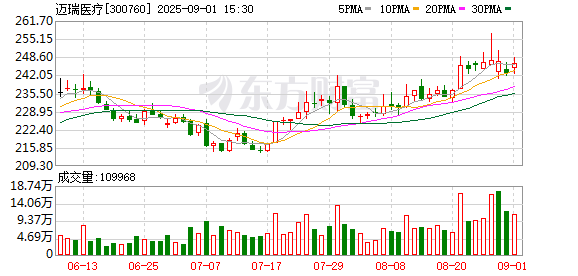
七年筑底 蓝帆医疗心脑血管业务终迎价值重估
Jing Ji Guan Cha Wang· 2025-08-31 23:40
Core Viewpoint - Bluefan Medical's half-year report for 2025 shows a net loss of 134.78 million yuan, a reduction in loss by 15.88% year-on-year, while net cash flow from operating activities increased by 407.48% to 335.15 million yuan, indicating a significant improvement in cash generation despite ongoing losses [1] Financial Performance - The cardiovascular division's sales revenue reached 695 million yuan in the first half of 2025, growing over 22% year-on-year, which is a notable increase compared to the 12% growth in the same period of 2024 [1] - The cardiovascular division achieved a turnaround to profitability despite a fair value loss of approximately 122 million yuan due to valuation changes in an associated company, indicating that the net profit from operations reached the billion yuan level [2] Strategic Initiatives - Bluefan Medical has maintained high levels of investment in R&D, leading to the approval of innovative products that meet clinical demands and establish competitive barriers [3] - The company has launched several new products and expanded existing ones into new indications and sales regions, contributing to sustained high gross margins in the high-end medical device sector [3][4] Product Development - The company’s flagship product, the BA9 drug balloon, saw domestic sales increase by over 300% and international sales grow by nearly 90% in the first half of 2025 [4] - The cardiovascular division has nearly 20 self-developed products sold globally, with significant sales growth expected from ongoing commercialization efforts [4] Investment and Ecosystem Development - Bluefan Medical is expanding its reach through investments, including a significant stake in Suzhou Tongxin Medical Technology, a leader in the artificial heart sector [6] - The company has also incubated Shanghai Bomaian Medical, which focuses on comprehensive treatment solutions for cerebrovascular and peripheral artery diseases [7] Global Market Positioning - Bluefan Medical is recognized as the only truly global player in its field, with a sales network covering over 8,000 hospitals in more than 100 countries [8] - The company collaborates with international brands and serves as a platform for domestic medical device companies to enter overseas markets, enhancing their global presence [8][9]

报告称中国医疗器械出海呈现“量质齐升”态势
Zhong Zheng Wang· 2025-08-29 14:38
Core Insights - The "2025 China Medical Device Export Status and Trend Blue Book" highlights the significant growth and diversification of China's medical device exports, showcasing strong global market competitiveness and industry chain upgrade momentum [1][2] - The global medical device market is projected to grow from $456.6 billion in 2020 to $623 billion by 2024, with a CAGR of 8.1%, and is expected to reach $1,157.6 billion by 2035 [2] - Chinese medical device companies are focusing on four key trends: increasing R&D investment, aligning with international standards, enhancing cross-cultural communication, and diversifying market strategies to strengthen brand presence [2][3] Industry Trends - The medical device market is experiencing steady growth driven by factors such as aging population, rising medical demands, and technological innovations, indicating further potential for growth [1][2] - Chinese enterprises are enhancing their competitive edge through self-driven R&D, focusing on high-end intelligent and specialized products, and transitioning from cost advantages to value innovation [3] - The strategic expansion into overseas markets, particularly in developed regions like North America and emerging markets in Southeast Asia, Africa, and the Middle East, is a key strategy for risk diversification and capturing new growth opportunities [1][2]
AI在医疗领域应用会更广泛!国投创新看好医疗器械出海前景
Zheng Quan Shi Bao Wang· 2025-08-27 11:59
Core Viewpoint - The article highlights the advancements in AI-driven medical technology, specifically focusing on the automated vascular intervention surgery robot developed by Shenzhen Ruixin Intelligent Medical Technology Co., Ltd. (Ruixin Medical), which showcases the potential of AI in enhancing surgical precision and efficiency [1]. Company Overview - Ruixin Medical was founded in 2017 in Shenzhen by three co-founders, all of whom hold PhDs from renowned American universities and have extensive experience in the U.S. medical industry [1]. - The company has completed five rounds of financing, with investors including Guotou Innovation, Jingwei Venture Capital, and Tencent [1]. Market Potential - The AI+ medical market in China reached a scale of 31.5 billion yuan in 2023 and is expected to exceed 80 billion yuan by 2025, with a compound annual growth rate of 58.3% [1]. - Cardiovascular diseases account for the highest mortality rate globally, with over one million deaths annually in China, indicating a significant market demand for related medical technologies [3]. Investment Insights - Guotou Innovation has invested in nearly 70 companies in the medical sector, with an investment scale of approximately 15 billion yuan [2]. - The investment director of Guotou Innovation expressed optimism about the future of AI in healthcare, citing advancements in computing power and algorithms, as well as supportive national policies [2][7]. Competitive Landscape - The market for blood flow reserve measurement is still in its early stages, with domestic companies like Ruixin Medical and Beixin Life generating only a few hundred million yuan in sales [5]. - There are other companies in the field, such as Beixin Life and Hong Kong-listed Runmaide, but Ruixin Medical's approach to blood flow reserve measurement is distinct [4]. Technology and Innovation - Ruixin Medical's products can accurately assess the degree of vascular blockage from a functional perspective, which is more precise than traditional morphological assessments [3]. - The core team of Ruixin Medical has strong educational and professional backgrounds, enhancing the company's execution capabilities [3]. Future Trends - The increasing integration of AI in medical devices is expected to improve product performance, particularly in diagnostic areas where AI can enhance efficiency and consistency [7]. - The company aims to leverage its technological advantages to expand into international markets, potentially replicating the successful overseas expansion strategies seen in other industries like home appliances and automotive [8].
国产药械出海重磅利好再诞生!医疗器械出海或复现创新药爆发趋势?
Sou Hu Cai Jing· 2025-08-12 02:29
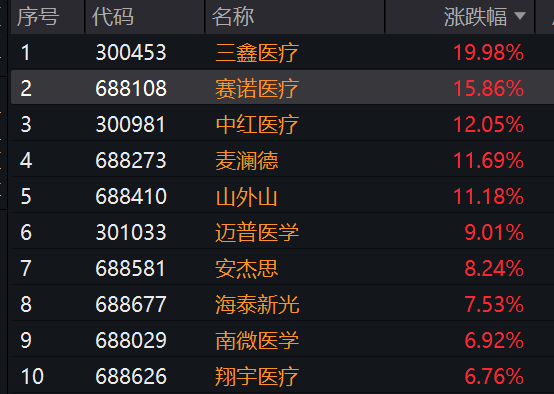
Core Viewpoint - The domestic medical device industry in China is accelerating its international expansion, supported by favorable policies and innovations in medical devices, leading to significant market activity and investment inflows [1][2]. Group 1: Market Performance - The largest medical device ETF in the market, $医疗器械ETF(159883)$, saw an increase of over 2%, with fund subscriptions exceeding 100 million shares and a growth of 1.48 billion shares in the past week, marking five consecutive days of net subscriptions [1]. - Notable stock performances include 一寨失7 with a rise of 19.98%, 赛诺医疗 up by 15.86%, and 中红医疗 increasing by 12.05% [1]. Group 2: Policy Support - Recent policies from seven ministries, including the Ministry of Industry and Information Technology, emphasize support for innovative medical devices, particularly in the brain-computer interface sector, aiming for significant advancements by 2027 and 2030 [2][3]. - The National Medical Insurance Administration has held discussions focused on supporting innovative medical devices, indicating a strong policy backing for the sector [2]. Group 3: Industry Growth - The Chinese medical device market is projected to exceed 1,032.8 billion yuan in 2023, maintaining its position as the second-largest globally, driven by policy support, aging population, and technological innovations [4]. - The industry is experiencing a transformation with the deepening of centralized procurement, reshaping market dynamics and promoting the development of domestic high-end medical devices [4].


中信建投:医疗器械行业拐点已至 创新并购出海造就全球性龙头
智通财经网· 2025-08-10 11:54
Core Viewpoint - The report from CITIC Securities highlights the transformation of China's medical device industry, focusing on domestic growth and international expansion, driven by improved product competitiveness and innovation [1] Group 1: Industry Growth and Trends - The medical device sector is transitioning from domestic substitution to internationalization and technological innovation, leading to a revaluation of the industry [1] - The international business space is expanding, with many companies experiencing high growth in overseas markets, which may surpass domestic business [1] - The industry is witnessing a rebound after four years of decline, with trends such as optimized procurement policies and improved bidding data indicating potential performance turning points in the second half of the year [1][2] Group 2: Market Segments and Performance Outlook - High-value consumables are expected to benefit from improved procurement policies, leading to a gradual recovery in valuation [2] - Medical equipment is projected to see a turning point in bidding growth starting Q4 2024, with leading companies likely to stabilize and achieve high growth due to product upgrades [2] - The in-vitro diagnostics (IVD) sector remains under pressure in the short term, but there is significant potential for domestic substitution in the long term [2] Group 3: Strategic Adjustments by Companies - Companies are focusing on cost reduction and efficiency improvements through automation and optimized production processes [3] - There is an emphasis on technological innovation and the development of differentiated products to mitigate procurement risks [3] - Many companies are exploring international markets, leveraging supply chain advantages and stable pricing [3] Group 4: Innovation and Global Competitiveness - Chinese medical device companies are achieving global leadership in certain innovative products, such as the world's first full-body PET/CT and unique 5T MR systems [4] - The report notes that several companies are positioned to become global leaders through innovation, international expansion, and strategic acquisitions [5] Group 5: Investment Opportunities - In the Hong Kong stock market, there are opportunities in companies with strong innovation capabilities and those poised for turnaround or high growth [6][7] - In the A-share market, attention is drawn to companies with potential performance turning points and strong internationalization capabilities [8]

三鑫医疗: 2025年半年度报告
Zheng Quan Zhi Xing· 2025-08-08 12:13
Core Viewpoint - Jiangxi Sanxin Medical Technology Co., Ltd. reported a revenue increase of 10.83% in the first half of 2025, driven by strong performance in blood purification products, which account for over 80% of total revenue [11][12]. Financial Performance - The company's operating income for the first half of 2025 was approximately 760.81 million yuan, compared to 686.45 million yuan in the same period last year, reflecting a growth of 10.83% [3]. - Net profit attributable to shareholders was approximately 115.12 million yuan, an increase of 8.35% from 106.25 million yuan year-on-year [3]. - The net cash flow from operating activities increased by 38.94% to approximately 189.19 million yuan [3]. Industry Overview - The global medical device market is projected to reach 623 billion USD in 2024, with a compound annual growth rate (CAGR) of approximately 8.1% from 2020 to 2024, and is expected to exceed 1 trillion USD by 2033 [4][5]. - The medical device industry is characterized as a knowledge-intensive and capital-intensive sector, with significant regulatory oversight due to its direct impact on human health [4]. - China's medical device market is the second largest globally, with a projected market size of approximately 595 billion yuan in 2024, growing at a rate of 2.9% year-on-year [4][5]. Company Positioning - The company is a key player in the medical device industry, focusing on research, manufacturing, and sales of blood purification products, drug delivery devices, and cardiothoracic surgery products [11]. - The company has established a comprehensive product chain for blood dialysis equipment and consumables, serving over 5,000 hospitals and dialysis centers domestically and internationally [11][12]. - The company has achieved significant advancements in domestic production of key materials for dialysis membranes, breaking the monopoly of foreign brands in this sector [12]. Market Trends - The medical device industry is experiencing a shift towards innovation, with policies encouraging the development of high-quality medical devices to enhance international competitiveness [7][8]. - The government has implemented measures to support the internationalization of medical device companies, including financial incentives and export credit insurance [5][6]. - The trend of centralized procurement is becoming normalized, with a focus on quality improvement and expansion of service coverage in the medical device sector [6][7].

全球及中国结扎夹企业出海开展业务规划及策略研究报告
QYResearch· 2025-08-07 09:07
Core Viewpoint - The ligating clip market is projected to grow significantly due to increasing demand for minimally invasive surgeries, an aging population, and improvements in medical infrastructure, with a global market size expected to reach between $1,882 million and $2,232 million by 2031, depending on various scenarios [2][4]. Market Overview - The global ligating clip market sales reached $13.22 million in 2024, with a compound annual growth rate (CAGR) forecasted between 5.26% and 7.62% from 2025 to 2031 [2]. - The market is driven by the rising demand for minimally invasive surgeries, aging demographics, and enhanced medical facilities [4]. Market Drivers - The increasing prevalence of surgeries related to tumors, cardiovascular diseases, and gastrointestinal disorders due to an aging population is boosting the clinical usage of ligating clips [4]. - The expansion of healthcare infrastructure in emerging markets is providing new growth opportunities for the ligating clip market [4]. Market Challenges - The ligating clip market faces challenges such as low technical barriers leading to intensified competition, continuous price declines, and a strong reliance on imported brands [5]. - The prevalence of product homogeneity has led to price wars among companies, squeezing profit margins [5]. Future Trends - The ligating clip market is expected to evolve towards high-value, intelligent, and personalized products, with a focus on high-performance clips that offer better safety and efficiency [6]. - Innovations such as absorbable ligating clips and advanced materials like PEEK are anticipated to replace traditional products in specific surgical fields [6]. Regional Insights - Emerging economies like China, India, and Brazil are becoming significant markets for ligating clips due to the rapid development of their healthcare systems [7]. - In mature markets, there is still potential for structural upgrades, particularly in high-end absorbable materials and customized surgical tools [7]. Internationalization of Chinese Companies - Chinese ligating clip manufacturers are experiencing both opportunities and challenges in their internationalization efforts, driven by technological advancements and cost advantages [8][9]. - The lack of brand trust and complex international regulations pose significant challenges for Chinese companies seeking to enter global markets [9]. Conclusion - The ligating clip market is poised for growth, driven by technological advancements and increasing surgical demands, while facing competitive pressures and the need for differentiation in product offerings [5][6][8].