
医疗器械国产替代

Search documents
投资观点&研究专题周周谈第163期:血制品2025年行业总结及2026年展望-20260223
Huachuang Securities· 2026-02-23 07:59
Investment Rating - The report maintains a positive outlook on the blood products industry, suggesting that the sector has clear long-term growth potential due to increasing supply and demand elasticity [12][19][36]. Core Insights - The blood products industry is expected to benefit from a more relaxed approval process for plasma collection stations during the 14th Five-Year Plan, leading to increased production capacity and a diverse range of products [12][19]. - The report highlights a significant shift in the industry from a supply surplus to a supply-demand balance, with expectations for improved performance in 2026 as supply constraints tighten and demand remains stable [36][34]. - Key companies to watch include TianTan Biotech, BoYa Bio, and HuaLan Bio, which are expected to see performance improvements as the market stabilizes [12][36]. Summary by Sections Market Review - The report notes that the CITIC pharmaceutical index fell by 0.85%, underperforming the CSI 300 index by 1.22 percentage points, ranking 21st among 30 primary industries [6]. - The top-performing stocks in the sector included AidiTe and ZhenDe Medical, while stocks like BeiXin Life and HuaYuan Bio faced significant declines [6][12]. Industry and Stock Events - The blood products sector has experienced a prolonged adjustment period, with a cumulative decline of 18.1% since early 2025, significantly underperforming the broader pharmaceutical sector [16]. - The report indicates that the performance of major blood product companies has varied, with some like WeiGuang Bio and HuaLan Bio performing better than the sector average [16]. Overall Perspective and Investment Themes - The report emphasizes the transition from a quantity-driven to a quality-driven approach in the innovative drug sector, suggesting a focus on differentiated products and international expansion [10]. - In the medical device sector, there is a notable recovery in bidding volumes for imaging equipment, with companies like MaiRui and LianYing expected to benefit from ongoing upgrades [10]. - The report also highlights the importance of the CXO and life sciences services sectors, predicting a recovery in domestic investment and a return to high growth rates [10]. Blood Products - The blood products industry is characterized by a clear growth trajectory, with both supply and demand expected to show significant elasticity [12][19]. - The report suggests that the industry will see improved performance due to a combination of increased plasma collection and a tightening supply situation, which is expected to stabilize prices and enhance profitability for key players [36][34].
盈利预喜!股价一度涨逾13.6%,微创医疗业绩拐点已至?
Sou Hu Cai Jing· 2026-01-23 04:01
Core Viewpoint - MicroPort Medical's stock price surged significantly due to positive earnings expectations, with a projected turnaround to profitability in 2025, anticipating a net profit of at least $20 million after a forecasted net loss of approximately $268 million in 2024 [2][3]. Group 1: Financial Performance - The company has experienced a cumulative net loss of nearly $1.6 billion from 2020 to 2024, indicating significant operational pressure [5]. - The anticipated improvement in profitability for 2025 is attributed to four key factors, including strong performance in overseas business, cost optimization leading to a gross margin increase of 2-3 percentage points, and a reduction in operating expenses by approximately 10-11% [6]. Group 2: Business Strategy and Market Position - MicroPort Medical has established itself as a leading international high-end medical device group in China, with a diversified core business cluster covering critical areas such as cardiovascular intervention, neurointervention, orthopedics, cardiac rhythm management, and surgical robotics [5]. - The company has maintained its leading market share domestically while accelerating the market entry of new products and technologies, enhancing its core competitiveness [5]. - The company is leveraging its overseas channels to expand its international business footprint, integrating resources to facilitate rapid market penetration [5]. Group 3: Future Outlook - Analysts suggest that MicroPort Medical's growth momentum may further accelerate due to the vast growth potential in the global medical device market and the ongoing high-quality development of China's medical industry, alongside the deepening process of domestic medical device substitution [6].


华创医药投资观点&研究专题周周谈 · 第158期:海外脑机接口代表企业布局情况-20260110
Huachuang Securities· 2026-01-10 11:12
Investment Rating - The report maintains a "Recommended" rating for the medical device sector, particularly highlighting opportunities in innovative drugs and medical devices [49]. Core Insights - The report emphasizes a transition in the innovative drug sector from quantity to quality, suggesting a focus on differentiated products and internationalization by 2025 [11]. - In the medical device sector, there is a notable recovery in bidding volumes for imaging equipment, with a focus on companies like Mindray and United Imaging [11]. - The report identifies a significant growth potential in the orthopedic market due to aging demographics and increasing surgical penetration rates in China [43]. - The life sciences service sector is experiencing a demand recovery, driven by both domestic and international market needs, with a focus on the importance of mergers and acquisitions for growth [50]. Summary by Sections Market Review - The medical index rose by 7.70%, outperforming the CSI 300 index by 4.91 percentage points, ranking 5th among 30 sectors [7]. - The top-performing stocks included Baitai, Innovation Medical, and Sanbo Neuroscience, while the worst performers were Baihua Pharmaceutical and Jinhao Medical [7]. Overall Views and Investment Themes - Innovative drugs are expected to see a shift towards quality, with a focus on companies like BeiGene and Innovent [11]. - Medical devices are benefiting from a recovery in bidding for imaging equipment and a push for domestic substitutes in the market [11]. - The innovative chain (CXO + life sciences services) is anticipated to see a rebound in investment, with a focus on high-growth potential companies [11]. - The report highlights the potential for growth in the blood products sector, with an emphasis on companies like TianTan Biological and Boya Biological [11]. Specific Company Insights - Neuralink is positioned as a leader in the invasive brain-computer interface sector, with significant advancements in its technology and clinical trials [21]. - Synchron is noted for its endovascular brain-computer interface, which offers a safer solution for severely paralyzed patients [25]. - Paradromics focuses on high-bandwidth brain-computer interfaces, aiming to decode complex human intentions [32]. - CorTec is pioneering closed-loop brain-computer interfaces, providing real-time interaction between the brain and external devices [36]. - Precision Neuroscience is innovating minimally invasive implantation techniques for brain-computer interfaces [39]. - Blackrock Neurotech is recognized for its comprehensive solutions in the brain-computer interface field, aiding patients with sensory restoration and control [42].
华创医药投资观点&研究专题周周谈·第157期:2025年度医药业绩前瞻-20260104
Huachuang Securities· 2026-01-04 05:22
Investment Rating - The report maintains a "Recommended" rating for several companies in the healthcare sector, including Weili Medical, Zhend Medical, Aohua Endoscopy, and others [33]. Core Insights - The report highlights a shift in the innovative drug sector from quantity to quality, emphasizing the importance of differentiated products and internationalization for future profitability [11]. - The medical device sector is experiencing a recovery in bidding volumes, particularly in imaging equipment, and is expected to benefit from government subsidies for home medical devices [11][19]. - The life sciences service sector is showing signs of recovery, with increasing demand driven by both domestic and international markets [23]. - The pharmacy sector is poised for growth due to the acceleration of prescription outflow and an improving competitive landscape [24]. Summary by Sections Market Review - The report notes a 2.02% decline in the CITIC Medical Index, underperforming the CSI 300 Index by 1.44 percentage points, ranking 27th among 30 sectors [7]. Innovative Drugs - The innovative drug sector is expected to see a significant increase in the number of products launched, with projections of over 30 products by 2027, and a revenue share from innovative products expected to exceed 50% by 2025 [15]. Medical Devices - The report identifies a recovery in bidding for imaging devices and highlights the potential for domestic companies to increase market share through product upgrades and international expansion [19][20]. Life Sciences Services - The life sciences service sector is anticipated to benefit from a recovery in overseas demand and an increase in domestic industrial demand, with a focus on mergers and acquisitions to strengthen market positions [23]. Pharmacies - The pharmacy sector is expected to benefit from the acceleration of prescription outflow and an improved competitive landscape, with recommendations to focus on leading pharmacy chains [24]. Traditional Chinese Medicine - The report emphasizes the importance of basic medicines and state-owned enterprise reforms, suggesting a focus on companies like Kunming Pharmaceutical and Kangyuan Pharmaceutical [27]. Medical Services - The report recommends focusing on companies with national expansion capabilities in the medical services sector, particularly those in traditional Chinese medicine and ophthalmology [26]. Blood Products - The blood products sector is expected to see growth due to relaxed approval processes for plasma stations and an increase in product offerings [12].
华创医药投资观点&研究专题周周谈·第155期:失眠治疗蓝海大市场,看好上市新药销售表现-20251220
Huachuang Securities· 2025-12-20 12:16
Investment Rating - The report maintains a positive outlook on the insomnia treatment market, highlighting the potential for new drug sales performance in this sector [20][32]. Core Insights - The insomnia treatment market in China is characterized by a significant unmet need, with over 200 million individuals estimated to suffer from insomnia symptoms, representing a large consumer market potential [16][24]. - The report emphasizes the shift towards innovative insomnia medications, particularly focusing on new types of benzodiazepine receptor agonists (BZRAs) and dual orexin receptor antagonists (DORAs) as key areas for development [25][38]. - The introduction of new drugs like JY-202 (地达西尼) and DORA medications is expected to reshape the market dynamics, with a forecasted rapid increase in market share and sales [34][39]. Market Overview - The insomnia drug market in China has seen stagnant growth due to a lack of new effective treatments, with the market size in 2023 estimated at 31.62 billion yuan [24]. - The report outlines the historical sales performance of major insomnia medications, indicating a long gap since the last new product launch in 2007, which has contributed to the current market stagnation [24][25]. - The report projects a significant increase in the market size and sales for innovative insomnia drugs, particularly with the anticipated approval and market entry of new products [34][39]. Drug Development Trends - The report identifies two main directions for insomnia drug innovation: improvements on existing BZRAs and the development of DORAs, which are expected to have lower addiction risks and better patient compliance [25][38]. - The new drug JY-202 is highlighted for its selective action on the GABAA receptor, which may reduce side effects associated with traditional insomnia medications [34]. - The report also notes the successful clinical trial results for DORAs, which have shown significant improvements in sleep quality without the risk of addiction, making them suitable for broader consumer use [38][39]. Key Players and Recommendations - The report suggests focusing on companies like 京新药业 (JY-202) and 先声药业 (DORA medications) as they are positioned to capitalize on the emerging market opportunities in insomnia treatment [34][39]. - It recommends monitoring the sales performance of these new drugs as they enter the market, particularly in the context of changing consumer behavior and increasing awareness of sleep health [20][32].


华创医药周观点:失眠治疗蓝海大市场,看好上市新药销售表现2025/12/20
华创医药组公众平台· 2025-12-20 11:15
Core Viewpoint - The article emphasizes the significant market potential for insomnia treatment, highlighting the promising sales performance of newly listed drugs in this sector [16][22][24]. Market Overview - The current insomnia medication market in China is estimated at 31.62 billion yuan, with a large unmet demand due to existing medications failing to meet treatment needs [26]. - The proportion of individuals experiencing insomnia symptoms in China is reported at 16.8%, indicating a potential patient population exceeding 200 million [20][31]. Drug Development and Innovation - The development of insomnia medications has evolved through four generations, with the latest focusing on physiological regulation rather than merely sedative effects [21][32]. - New insomnia drugs, particularly novel benzodiazepine receptor agonists (BZRAs) and dual orexin receptor antagonists (DORAs), are gaining traction, with several products recently launched [24][34]. Specific Drug Insights - The newly launched drug, Dazadiline, is expected to capture a significant market share due to its unique mechanism of action and favorable safety profile, with projected peak sales of 15.6 billion yuan [33]. - Dazadiline's pricing is set at 13.88 yuan per day, making it competitive in the market [33]. - DORAs, such as Daridorexant, are noted for their non-addictive properties and potential for broader consumer acceptance, as they do not fall under strict regulatory controls [38]. Market Dynamics - The article discusses the competitive landscape, noting that the introduction of new insomnia treatments could disrupt the existing market dominated by older, less effective medications [26][27]. - The sales performance of insomnia drugs is expected to improve significantly as new products enter the market and address the needs of a large patient population [16][24]. Future Projections - The article forecasts a steady increase in the number of patients treated for insomnia, with the treatment rate projected to rise from 7.5% in 2024 to 12.1% by 2033 [31]. - The market for insomnia medications is anticipated to grow rapidly, driven by the introduction of innovative therapies and an increasing awareness of sleep health [16][24].
李西廷2亿增持迈瑞医疗,名下持股平台曾套现超百亿
第一财经· 2025-12-18 08:19
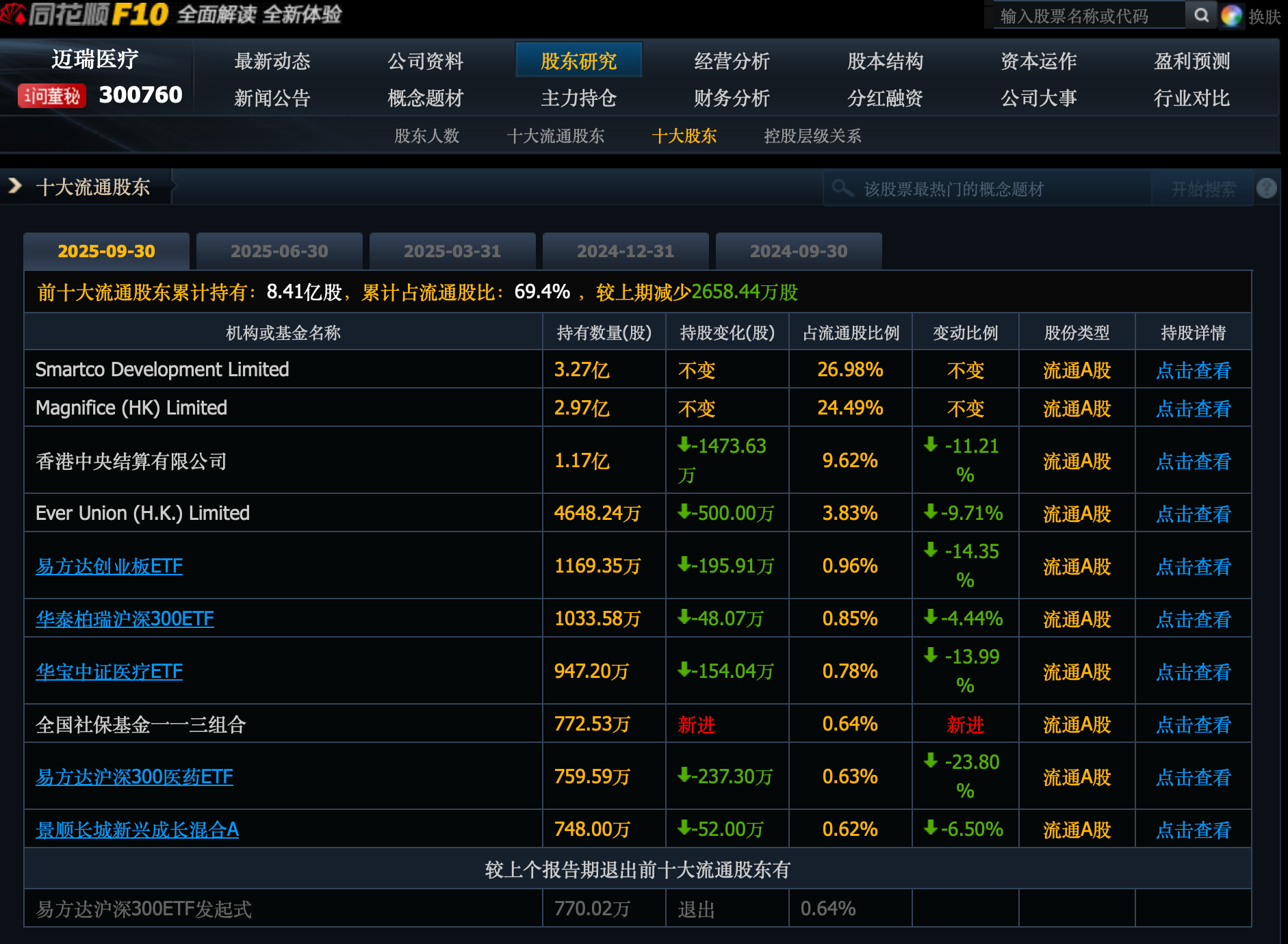
Core Viewpoint - The stock price of Mindray Medical (300760.SZ) has fallen below 200 yuan, significantly down from its historical high of nearly 500 yuan, indicating a substantial decline in market value. The actual controller, Li Xiting, has recently increased his stake by approximately 200 million yuan, but this is minor compared to the over 10 billion yuan he has cashed out through significant reductions in shareholding over the past three years. Analysts suggest that while the company faces ongoing challenges in the domestic medical supply market and overseas tariff risks, there may be potential for a turnaround in both stock price and fundamentals after four years of adjustment [3][4][5][9]. Group 1: Shareholding Changes - From November 27 to December 12, Li Xiting used 200 million yuan to acquire 1.005 million shares of Mindray Medical, representing 0.08% of the total share capital. This buyback was completed ahead of the originally planned six-month period [4]. - Following the buyback, Li Xiting and his associates hold a total of 625 million shares, accounting for 51.55% of the company [4]. - Over the past three years, Li Xiting's platforms have significantly reduced their holdings, cashing out approximately 25 billion yuan in a single quarter and over 10 billion yuan in total [5]. Group 2: Financial Performance - In the first three quarters of the year, Mindray Medical reported revenue of 25.834 billion yuan, a year-on-year decrease of 12.38%, and a net profit of 7.57 billion yuan, down 29%. However, the third quarter showed signs of recovery with a revenue of 9.091 billion yuan, a year-on-year increase of 1.53% [8]. - Analysts predict that with the recovery of domestic bidding and accelerated overseas expansion, the company's revenue and profit may gradually stabilize. However, the sales net profit margin has decreased to 30.2%, down 6.1 percentage points year-on-year [8]. Group 3: Market Outlook and Challenges - Mindray Medical has submitted an application for H-share issuance and main board listing, indicating a strategic move to enhance its market position [9]. - Despite the recent increase in shareholding by Li Xiting, analysts express concerns that this may signal a reduction in future support for share buybacks or increases. The ongoing pressure from domestic medical supply procurement and overseas tariff risks could further impact the company's profitability [9]. - The company faces challenges from pricing pressures and increased competition due to healthcare reforms and policies that may lead to price reductions in medical devices, which could affect future profitability [9].

李西廷2亿增持迈瑞医疗,名下持股平台曾套现超百亿
Di Yi Cai Jing· 2025-12-18 07:57
Core Viewpoint - The recent share buyback by the actual controller of Mindray Medical, Li Xiting, is seen as a weak response to the significant share reduction that has occurred over the past few years, with the company's stock price dropping sharply from nearly 500 yuan to around 200 yuan, indicating a potential undervaluation in the market [1][2][8]. Group 1: Share Buyback and Ownership - Li Xiting has increased his stake in Mindray Medical by approximately 200 million yuan, acquiring 1.005 million shares, which represents only 0.08% of the total share capital [2][3]. - After the buyback, Li Xiting and his associates hold a total of 625 million shares, accounting for 51.55% of the company [4]. - The buyback was completed ahead of the planned six-month period, indicating a swift response to the declining stock price [3]. Group 2: Historical Share Reduction - Since the beginning of 2023, Li Xiting and his holding platforms have significantly reduced their stakes, cashing out approximately 2.5 billion yuan in a single quarter and over 10 billion yuan in total [2][5]. - In the second quarter of 2023, while the stock price hovered around 300 yuan, Li Xiting's platforms collectively sold 8 million shares [4]. Group 3: Financial Performance - For the first three quarters of the year, Mindray Medical reported revenues of 25.834 billion yuan, a year-on-year decrease of 12.38%, and a net profit of 7.57 billion yuan, down 29% [6]. - The third quarter showed a slight recovery with revenues of 9.091 billion yuan, reflecting a year-on-year growth of 1.53%, although net profit still declined by 19% [6][7]. Group 4: Market Outlook and Challenges - Analysts suggest that with the recovery of domestic bidding and accelerated overseas expansion, the company's revenue and profit may gradually stabilize [7]. - However, the company faces ongoing price pressures and rising costs, with a projected decline in net profit margins for the year [7][8]. - The competitive landscape is intensifying due to increased supply and demand challenges, which may impact the company's future profitability [8].
深圳南山冲出一个IPO!迈瑞前高管创办,估值82亿
创业邦· 2025-12-16 03:43
Core Viewpoint - Shenzhen Maikedian Biomedical Technology Co., Ltd. (Maikedian) has transitioned from A-share listing guidance to applying for an IPO on the Hong Kong Stock Exchange, with a prospectus submitted in September 2025. The company has rapidly expanded its business through aggressive acquisitions, covering life support, minimally invasive intervention, and in vitro diagnostics, with products sold in over 140 countries and regions [2][4][11]. Financing History - Maikedian has completed multiple financing rounds since its establishment in 2011, raising approximately 2.259 billion RMB, with notable investors including Hillhouse Capital, Shenzhen Capital Group, and SoftBank China. The post-investment valuation reached 8.2 billion RMB after the E round in September 2023, which raised 88.75 million RMB [2][3][7]. Management Team - The company was founded by former executives from Mindray Medical, with a management team that includes key figures like Zhong Yaoqi and Liu Jie, who have extensive experience in the medical device industry. The team has established a dual-class share structure, allowing them to maintain significant control despite holding less than 40% of the shares [4][6][7]. Business Model Transformation - Initially focused on basic infusion and injection equipment, Maikedian shifted its strategy to become a comprehensive provider of high-end medical device solutions. This transformation involved a series of acquisitions to expand its product offerings and market presence [9][10]. Acquisition Strategy - The company has pursued an aggressive acquisition strategy to enter high-potential markets. Key acquisitions include Shanghai Runpu Biotechnology in 2017, which allowed entry into the in vitro diagnostics sector, and the acquisition of UK-based Penlon in 2022, enhancing its life support product line [10][11][12]. Revenue Growth - Maikedian's revenue has shown steady growth, with figures of 917.37 million RMB in 2022, 1.3 billion RMB in 2023, and projected 1.4 billion RMB in 2024. The gross margin improved from 43.7% to 49.7% during this period, indicating effective cost management and operational efficiency [17][18]. Market Position - The company holds a 15% market share in the domestic drug infusion market, ranking second behind Mindray. In the minimally invasive intervention sector, it has a 19.2% market share, showing potential for growth through strategic acquisitions and market expansion [19][20]. Distribution Channel Adjustments - Maikedian has undergone significant adjustments in its distribution channels, reducing the number of distributors from 3,694 to 2,566, while also addressing the increase in inactive distributors. This move aims to optimize channel structure and improve cash flow management [20][22]. Goodwill and Integration Challenges - As of June 30, 2025, Maikedian reported goodwill of 908 million RMB, primarily from acquisitions. The management has not recognized any impairment, indicating confidence in the integration and future profitability of acquired entities. Effective collaboration among business segments will be crucial for future growth [22].

佰仁医疗ePTFE心包膜产品获批注册
Bei Jing Shang Bao· 2025-12-03 10:17
Core Viewpoint - The approval of the ePTFE membrane product by the National Medical Products Administration marks a significant development for Baijun Medical, as it ends the reliance on imported ePTFE membranes in the domestic market [1] Company Summary - Baijun Medical (688198) announced the approval of its ePTFE membrane product for registration, which is a 0.1mm expanded polytetrafluoroethylene membrane [1] - The product is intended for the repair or reconstruction of the pericardium in cardiac surgery [1] Industry Summary - The current market for pericardial membranes in China has been dominated by foreign companies, leading to a long-standing dependence on imports [1] - The registration and upcoming market entry of Baijun Medical's product will disrupt this import reliance, potentially transforming the domestic market landscape for cardiac surgical materials [1]
