
国际公平正义

Search documents
外交部副部长华春莹出席第三届发展中国家与国际法论坛
news flash· 2025-06-27 01:45
Core Viewpoint - The Chinese government, represented by Vice Minister Hua Chunying, emphasizes the importance of upholding international law and the authority of the United Nations, advocating for a fairer global governance system [1] Group 1: International Relations - China expresses willingness to collaborate with Global South countries to maintain the authority of the UN and international law [1] - The principle of sovereign equality is highlighted, asserting that no individual or nation has the right to override international law [1] - Attempts to distort UN General Assembly Resolution 2758 are viewed as infringements on China's sovereignty and territorial integrity, as well as provocations against the post-war international order [1] Group 2: Conflict Resolution and Development - The importance of peaceful dispute resolution is stressed, with an invitation for more countries to actively participate in international mediation [1] - There is a call for promoting sustainable and shared development while upholding international fairness and justice [1]
【习近平会见新西兰总理拉克森】6月20日讯,6月20日上午,国家主席习近平在北京人民大会堂会见来华进行正式访问的新西兰总理拉克森。习近平指出,中新双方要把合作放在双边关系中更加突出的位置,发挥互补优势,深化贸易和投资合作,挖掘科技创新、应对气候变化、基础设施等领域合作潜力,加强教育、文化、青年、民间、地方交流,丰富双边关系内涵。中新之间没有历史恩怨纠葛,没有根本利益冲突,要相互尊重、求同存异,正确看待和处理两国差异和分歧。中新两国要共同捍卫以联合国为核心的国际体系,维护以世界贸易组织为核心的多边贸易体制,共
news flash· 2025-06-20 04:18
Core Points - The meeting between President Xi Jinping and New Zealand Prime Minister Luxon emphasizes the importance of enhancing cooperation in bilateral relations, focusing on trade and investment [1] - Both countries are encouraged to explore collaboration in technology innovation, climate change, and infrastructure, as well as strengthen exchanges in education, culture, youth, and local communities [1] - The relationship between China and New Zealand is characterized by mutual respect and the absence of historical grievances, with a call to manage differences constructively [1] - Both nations are urged to jointly uphold the international system centered around the United Nations and maintain a multilateral trade framework led by the World Trade Organization, promoting international fairness and justice [1]
中国政府中东问题特使翟隽访问埃及
news flash· 2025-06-05 10:09
Core Viewpoint - The Chinese government's special envoy for Middle East issues, Zhai Jun, visited Egypt to strengthen communication and coordination between China and Egypt, emphasizing the importance of Egypt's role in international and regional affairs [1] Group 1 - Zhai Jun met with Egyptian Foreign Minister Sameh Shoukry, the Director of the Presidential Office, and Assistant Ministers for Multilateral and Human Rights Affairs and Asian Affairs [1] - Zhai Jun expressed China's commitment to working with Egypt to uphold international fairness and justice [1] - The Egyptian side appreciated China's long-standing fair stance on hot issues such as Palestine and expressed willingness to collaborate with China to maintain multilateralism and ease international and regional tensions [1]
坚持正确二战史观 坚定捍卫历史正义(深入学习贯彻习近平新时代中国特色社会主义思想)
Ren Min Wang· 2025-05-20 21:58
Core Viewpoint - The visit of President Xi Jinping to Russia commemorates the 80th anniversary of the victory in World War II, emphasizing the importance of historical memory and the need to uphold the achievements of the war against fascism [1][3][10] Group 1: Historical Significance - The visit serves as a solemn commemoration of the joint efforts of China and Russia in achieving victory during World War II, reinforcing the need to maintain a correct historical perspective on the war [1][3] - Xi Jinping's article highlights the importance of learning from the lessons of World War II to oppose all forms of hegemony and to create a better future for humanity [1][5] Group 2: Contributions of China and Russia - China and the Soviet Union played crucial roles in defeating Japanese militarism and German fascism, which were essential for maintaining national independence and sovereignty [3][8] - The sacrifices made by the Chinese people during the Anti-Japanese War, with over 35 million casualties, significantly supported the Allied forces and contributed to the overall victory in World War II [8][10] Group 3: Defense of Historical Justice - Upholding historical justice requires acknowledging the achievements of World War II and remembering the shared historical memories of China and Russia [4][11] - Xi Jinping emphasizes that any attempts to distort the truth of World War II or deny its outcomes will not succeed, highlighting the importance of preserving historical facts [11][12] Group 4: International Order and Cooperation - The establishment of the United Nations and the return of Taiwan to China are seen as significant outcomes of World War II, which are integral to the post-war international order [12][13] - The joint declaration between China and Russia aims to deepen strategic cooperation and promote the correct historical perspective on World War II, including educational and commemorative activities [10][13]
共谱维护国际公平正义新篇
Jing Ji Ri Bao· 2025-05-14 07:50
Group 1 - The visit of President Xi Jinping to Russia is significant in the context of evolving global dynamics and increasing challenges, emphasizing China's commitment to maintaining international fairness and justice alongside Russia and other nations [1] - China and Russia, as influential countries, are seen as constructive forces in maintaining global strategic stability and improving global governance, with their relationship being a natural choice for mutual development and the defense of international justice [1][2] - The high-level operation of Sino-Russian relations has established a new model of major power relations, with close strategic communication between the two leaders injecting strong momentum into their partnership [1] Group 2 - The need for collective efforts among nations to uphold international fairness and justice is highlighted, as the world faces increasing deficits in peace, development, security, and governance [2] - China and Russia, as permanent members of the UN Security Council, have a special responsibility to support multilateralism and collaborate closely on various multilateral platforms to promote a more equitable and inclusive global order [2] - The successful leadership meeting of BRICS under Russia's presidency, supported by China, has led to positive outcomes in "Big BRICS cooperation," showcasing the effectiveness of their partnership in global governance [2] Group 3 - The call for a fair and sustainable multipolar world order is emphasized, countering the dominance of individual countries that engage in hegemonic and neo-colonial practices [3] - China and Russia aim to fully explore the potential of their bilateral relationship to uphold the UN-centered international system and promote the principles of the UN Charter [3] - The commitment to maintaining international fairness and justice, as well as the authority of the UN, is reinforced, with both countries working together to advance the process of global multipolarity and build a community with a shared future for humanity [3]
林剑:中国将与国际社会共同捍卫二战胜利成果
券商中国· 2025-05-12 14:13
Group 1 - The core viewpoint emphasizes the importance of maintaining international order and justice, particularly in the context of the 80th anniversary of the victory in World War II, highlighting the need for multilateralism and adherence to international law [1][2] - The article discusses the significance of China's historical contributions to the anti-fascist war and its role in establishing the United Nations, reinforcing the idea of collective security and cooperation among nations [1][2] - It stresses that the lessons from World War II indicate that militarism and power politics are not pathways to peace, advocating for a multipolar world and inclusive economic globalization [2] Group 2 - The article mentions that as a permanent member of the UN Security Council and the first signatory of the UN Charter, China is committed to upholding the authority of the United Nations and preventing a return to the "law of the jungle" [2] - It highlights the necessity of defending the achievements of World War II and the principles of true multilateralism to secure a brighter future for humanity [2]

从历史逻辑中感知习近平俄罗斯之行
Zhong Guo Xin Wen Wang· 2025-05-11 00:53
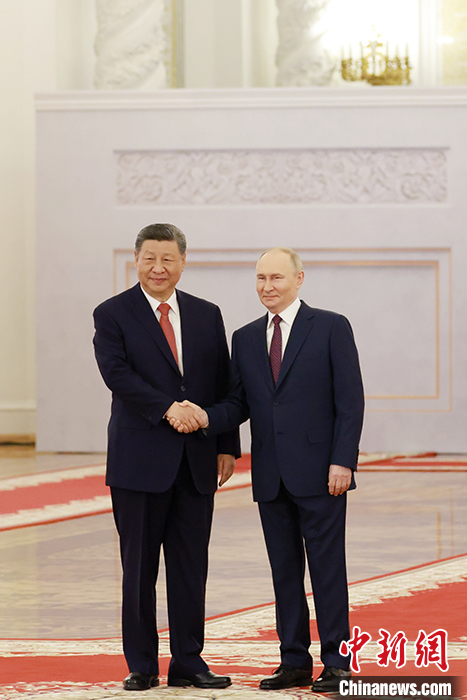
Core Viewpoint - The visit of Chinese President Xi Jinping to Russia from May 7 to 10 is significant, marking the 80th anniversary of the victory in the Soviet Great Patriotic War and the World Anti-Fascist War, highlighting the historical ties and future cooperation between China and Russia [1][4][6]. Group 1: Historical Context - The development of Sino-Russian relations is deeply rooted in history, with both nations being each other's largest neighbors and exemplifying a new type of international relationship [4]. - Xi Jinping emphasized the importance of historical memory, stating that both countries should be "guardians of historical memory" [7]. - The visit coincided with the 80th anniversary of the victory in the Great Patriotic War, where Xi participated in commemorative events alongside leaders from over 20 countries [6][10]. Group 2: Bilateral Cooperation - During the visit, Xi and Russian President Vladimir Putin engaged in extensive discussions, resulting in a joint statement outlining future cooperation across various sectors, including political trust, pragmatic collaboration, cultural exchanges, and multilateral coordination [4][10]. - Over 20 bilateral cooperation documents were exchanged, injecting new momentum into the Sino-Russian relationship [4]. - The joint statement and cooperation agreements reflect a strategic choice for both nations to face future challenges together [4][10]. Group 3: Global Order and Multilateralism - Xi Jinping articulated the need for both countries to uphold international fairness and justice, particularly in the context of rising unilateralism and protectionism [10]. - The two nations, as founding members of the United Nations and permanent members of the Security Council, have a special responsibility to maintain the international order centered around the UN [10]. - Xi's meetings with leaders from various countries during the visit underscored a commitment to promoting true multilateralism and guiding global governance reforms [10].
纠正对二战亚洲战场的“记忆不对称”(伟大胜利·历史贡献)
Ren Min Ri Bao· 2025-05-10 21:30
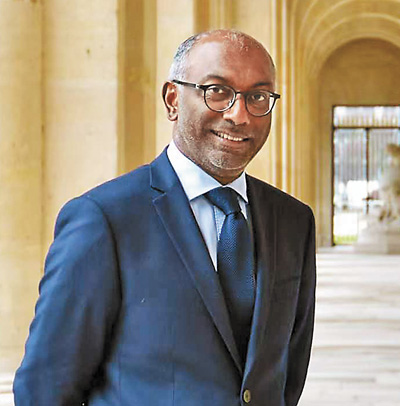
Core Viewpoint - The article emphasizes the significance of the 80th anniversary of the victory in the Anti-Japanese War and the World Anti-Fascist War, highlighting China's contributions and advocating for a correct understanding of World War II history [2] Group 1: Historical Context - The Caen Peace Memorial is located on the site of a WWII German command center, symbolizing the historical significance of the location [2] - The museum aims to present a global perspective on WWII, emphasizing that the war's impact extends beyond Europe and began earlier in Asia [3] - The museum is one of the few in Europe to exhibit content related to the Nanjing Massacre, addressing the "memory asymmetry" regarding the Asian front of WWII [3] Group 2: Educational Initiatives - The museum receives approximately 800,000 visitors annually, with about one-seventh being students, highlighting its role in educating future generations about history and peace [4] - The museum plans to host multiple exhibitions and cultural activities in 2025 to commemorate the 80th anniversary of the victory in the World Anti-Fascist War [4] Group 3: Exhibition Developments - In 2024, the museum will expand its "Resistance" exhibition from 13 meters to 47 meters, incorporating various artifacts, images, and testimonies to showcase resistance actions during WWII [5] - The focus on "resistance" aims to highlight its diversity across different regions and social classes, emphasizing collective and individual actions [5] Group 4: Current Relevance - The museum director notes the resurgence of extreme nationalism and hate speech, stressing the importance of education, diplomacy, and dialogue in today's turbulent times [5]
新华时评:中方决不会牺牲原则立场与国际公平正义与美达成协议
news flash· 2025-05-10 14:46
Core Viewpoint - The article emphasizes China's unwavering stance in maintaining international economic and trade order, highlighting the negative impacts of the U.S. unilateral tariff war on its own economy and global supply chains [1] Group 1: Impact of U.S. Tariff War - The U.S. initiated tariff war has caused significant economic repercussions for itself and has adversely affected the stability of global industrial and supply chains [1] - Dialogue between the two parties is seen as a positive step towards resolving differences and preventing escalation of conflicts [1] Group 2: Conditions for Dialogue - The effectiveness of any dialogue is contingent upon the sincerity and efforts of both parties, particularly the U.S. demonstrating rationality and pragmatism [1] - China insists that any negotiations must be based on mutual respect, equal consultation, and mutual benefit [1] Group 3: U.S. Responsibilities - The U.S. must acknowledge the severe negative impacts of its unilateral tariff measures on both the world and its own economy [1] - There is a call for the U.S. to recognize international economic rules, fairness, and rational voices from various sectors, and to show genuine willingness to negotiate [1] Group 4: Stance on Coercion - China firmly states that it will not compromise its principles or sacrifice international fairness and justice for any agreement if the U.S. continues to use coercion and intimidation under the guise of negotiation [1]
近4小时会谈、3项联合声明、20多份双边合作文本,中俄元首今年首次面对面会晤成果颇丰
Xin Lang Cai Jing· 2025-05-09 02:57
Group 1: Core Points - The visit of President Xi Jinping to Moscow is aimed at commemorating the 80th anniversary of the victory in the Great Patriotic War and strengthening Sino-Russian relations [1][2] - Both leaders agreed to deepen strategic cooperation and promote a stable, healthy, and high-level development of Sino-Russian relations [2][3] - The discussions emphasized the importance of maintaining the authority of the United Nations and upholding international fairness and justice [3][4] Group 2: Economic Cooperation - A significant focus was placed on enhancing trade and investment cooperation, with a goal to achieve substantial breakthroughs by 2030 [6][7] - China has maintained its position as Russia's largest trading partner for 15 consecutive years, with trade volume reaching $244.8 billion in 2024 [7] - The cooperation spans various sectors including energy, agriculture, aerospace, and digital economy, with a strong momentum in emerging fields [7][8] Group 3: Political and Strategic Alignment - The leaders discussed the need for close strategic communication to navigate global changes and promote a multipolar world [7][8] - Both countries expressed a commitment to oppose unilateralism and sanctions, advocating for a fair international trade system [8][9] - The discussions also included coordination on the Ukraine issue, aiming to present a constructive dialogue atmosphere [8]