
城乡区域协调发展

Search documents
社论丨向“新”而行 向“协”而进 ——广东“百千万工程”绘就城乡区域协调发展新图景
Nan Fang Nong Cun Bao· 2025-12-23 02:34
也是中国式现代 化进程中一道具 社论丨向"新"而 行 向"协"而进 ——广东"百千 万工程"绘就城 乡区域协调发展 新图景_南方+_ 南方plus 城乡区域发展不 平衡,是广东实 现高质量发展必 须跨越的关隘, 三年前,广东以 头号力度启 动"百县千镇万 村高质量发展工 程",正是对这 有普遍性的课 题。当岭南大地 以占全国1.9%的 陆地面积承载了 全国8.9%的人 口、创造了全国 10.8%的经济总 量时,其内部, 占地面积近七成 的粤东粤西粤北 地区经济总量却 不到全省两成。 这道"阿喀琉斯 之踵"般的难 题,考验着发展 一核心命题的正 面作答。它是广 东破解自身发展 瓶颈的"关键一 招",也是探索 中国式现代化路 径、为全国区域 协调发展先行探 路的"广东实 践" 。 从"千万工程"的 浙江经验中汲取 养分,结合岭南 实际进行创造性 转化,广东以县 镇村为主战场, 开启了一场范围 之广、力度之 深、影响之远均 属空前的深刻变 革。如今,"三 年初见成效"的 成绩单,无疑为 破解发展不平衡 不充分问题提供 了鲜活的广东方 案。 的智慧与战略的 定力。 逻辑:系统谋划 与内生驱动的战 略抉择 实施"百千万 ...


省委经济工作会议举行坚持稳中求进提质增效 确保“十五五”良好开局信长星讲话 刘小涛作会议总结 张义珍出席
Xin Hua Ri Bao· 2025-12-22 23:16
Core Viewpoint - The meeting emphasized the importance of maintaining economic stability and growth in Jiangsu Province, highlighting the need for strategic planning and implementation of policies to ensure a successful start to the 14th Five-Year Plan [1][2][3]. Economic Performance and Outlook - Jiangsu's economy has shown resilience and vitality, successfully navigating various challenges over the past five years, with significant achievements in high-quality development [1][2]. - The meeting acknowledged the complex global and domestic economic landscape but affirmed the long-term positive trends supporting China's economy, particularly in Jiangsu [2][3]. Strategic Focus for 14th Five-Year Plan - The meeting outlined the necessity to adhere to the guiding principles of Xi Jinping's thought, emphasizing the importance of expanding domestic demand, optimizing supply, and enhancing both qualitative and quantitative economic growth [2][3]. - Key strategies include deepening reform and opening up, stabilizing employment and market expectations, and ensuring social harmony [2][3][4]. Policy Implementation - The meeting stressed the need for a coordinated approach to policy support and innovation, focusing on enhancing the foundation of the real economy and fostering self-innovation capabilities [3][4]. - Specific actions include boosting consumer demand, promoting major projects, and enhancing the integration of technology and industry [4][5]. Regional Development and Coordination - Emphasis was placed on promoting coordinated development across regions, particularly in the Yangtze River Delta and other key areas, to enhance urban-rural integration and overall economic synergy [4][5]. - The meeting highlighted the importance of expanding high-level foreign trade and investment, aiming for quality improvements in these sectors [5][6]. Social Welfare and Stability - The meeting underscored the commitment to improving people's livelihoods, ensuring employment stability for key groups, and enhancing public resource allocation [5][6]. - It called for a focus on education, healthcare, and social services to promote common prosperity and social stability [5][6].
广东“潜力板”在激活:县域“黑马”跑赢全省经济增速
2 1 Shi Ji Jing Ji Bao Dao· 2025-12-22 23:07
Core Viewpoint - The "Hundred Counties, Thousand Towns, and Ten Thousand Villages High-Quality Development Project" in Guangdong has significantly transformed the regional economy, enhancing the vitality and resilience of county economies through targeted development strategies and infrastructure improvements [1][3]. Economic Growth and Development - In 2023, 57 counties in Guangdong have consistently outpaced the provincial GDP growth rate for two consecutive years, with a GDP growth rate exceeding the provincial average by 1.1 percentage points [2]. - The industrial added value in these counties has grown by 6.8%, contributing to a net inflow of population and an increase in urbanization rate to 46.48% [2][10]. - The income disparity between urban and rural residents has narrowed from a ratio of 2.41:1 to 2.31:1, indicating improved economic conditions [2][10]. Infrastructure and Investment - The completion of a scenic highway connecting key tourist areas has boosted local economies, with one village reporting an increase of nearly 200,000 yuan in monthly revenue due to increased visitor traffic [1][2]. - The Yuxin Co., Ltd. project in Huizhou has seen investments exceeding 5 billion yuan, showcasing the commitment to modern industrial development [2]. County-Specific Strategies - Guangdong's approach emphasizes "one county, one policy," fostering unique industrial clusters tailored to local resources and strengths [4]. - Bo Luo County has seen its GDP rise to 95.224 billion yuan, driven by a 73.2% contribution from industrial added value, focusing on high-tech industries [5]. - Si Hui City is concentrating on upgrading traditional manufacturing to high-quality sectors like new energy vehicles and electronic information [6]. Tourism and Cultural Integration - The "Hundred Counties" initiative has facilitated the integration of agriculture, culture, and tourism, enhancing local economies and creating new revenue streams [9]. - The development of cultural and tourism projects has attracted significant visitor numbers, with one village reporting over 200,000 visitors in a year, generating substantial income [9]. Urban-Rural Interaction - The initiative has improved urban-rural relationships, allowing for the flow of people and resources, which has revitalized local economies and enhanced living standards [10]. - The overall population in county towns has seen a net inflow, with approximately 25,000 people returning to their hometowns, contributing to local economic activities [10].
“百千万工程”为中国式现代化建设探索广东答卷
2 1 Shi Ji Jing Ji Bao Dao· 2025-12-22 23:03
Core Insights - The opening of the Guangzhan and Shantou South to Shantou sections of the high-speed rail marks a significant milestone in achieving a comprehensive high-speed rail network in Guangdong, facilitating the "14th Five-Year Plan" and the "Hundred Counties, Thousand Towns, and Ten Thousand Villages" initiative [1][2] - The "Hundred Counties, Thousand Towns, and Ten Thousand Villages" initiative aims to address the imbalance in urban-rural development in Guangdong, which has historically resulted in economic disparities, particularly in the eastern, western, and northern regions [1][3] Group 1 - The high-speed rail network enhances connectivity and supports the economic integration of Guangdong's regions, contributing to the "Hundred Counties, Thousand Towns, and Ten Thousand Villages" initiative [1][2] - The initiative has achieved preliminary results, exploring pathways for modern Chinese development and regional coordination [1][2] - Guangdong's economic growth strategy focuses on transforming its development shortfalls into potential strengths, emphasizing the need for effective market mechanisms and proactive government involvement [1][3] Group 2 - The "Hundred Counties, Thousand Towns, and Ten Thousand Villages" initiative employs a tailored approach based on local resources, promoting differentiated development and leveraging regional advantages [2][3] - The initiative has led to the establishment of significant agricultural industry clusters, including eight trillion-level and seventeen hundred-billion-level sectors, enhancing the region's economic output [2] - The development of marine economies and modern marine ranching is prioritized, with the new high-speed rail facilitating the rapid distribution of quality seafood and tourism resources across the province [2][3] Group 3 - A policy collaboration network has been established to optimize resource allocation and enhance regional asset utilization, promoting orderly industrial transfers within the province [3] - The initiative's success relies on comprehensive reforms that empower local governance and resource activation, with over 100 reform measures implemented to date [3] - The "Hundred Counties, Thousand Towns, and Ten Thousand Villages" initiative is at a critical juncture, aiming for significant changes over the next decade while addressing urban-rural disparities [3]
广惠两市协同发力 深入推进环南昆山—罗浮山引领区建设
Nan Fang Ri Bao Wang Luo Ban· 2025-12-22 07:45
Core Viewpoint - The integration of culture and tourism along the "most beautiful tourist road" between Nankun Mountain and Luofu Mountain is driving high-quality development in Guangdong, aiming to reduce urban-rural disparities and promote coordinated regional development [1][2]. Group 1: Cultural and Tourism Development - The "most beautiful tourist road" connects 9 towns and 54 villages, enhancing urban-rural coordination and tourism resource integration [2]. - The introduction of 16 themed rest stations and 5 art installations along the road is improving functional support for tourism [2]. - Major domestic rural homestay brands are establishing operations along the route, transforming transient visitors into overnight guests [2]. - In Guangzhou, the revitalization of idle resources is leading to the upgrade of cultural tourism, with a former mining site transformed into a 144-hectare nature resort attracting 1.6 million visitors and generating over 300 million yuan in revenue [2]. Group 2: Sports and Events - A national cycling event held in December attracted over 10,000 participants, boosting local tourism and generating over 5 million yuan in consumption along the route [3][4]. - The establishment of an outdoor sports town in Huizhou offers 39 outdoor activities, contributing to the region's appeal as a sports tourism destination [3]. Group 3: Economic Development and Industry - Guangzhou is developing a unique industrial system focused on ecological health, modern green agriculture, and high-tech manufacturing, with over 3.6 billion yuan invested in a rehabilitation hospital [5]. - Huizhou is leveraging its natural resources to create diverse tourism experiences, enhancing the value of local specialties and promoting the "Winter Health in Luofu" brand [5]. - The region is seeing the formation of six billion-yuan industrial clusters in Huizhou, focusing on electronics and intelligent equipment [5]. Group 4: Social Infrastructure and Community Development - The enhancement of public services in Huizhou is improving educational and healthcare access, with partnerships between local schools and hospitals [7]. - The "Beautiful Countryside Corridor" initiative is revitalizing rural areas, with over 28,000 rural houses upgraded since 2024 [7]. - The collaborative model in villages is revitalizing previously abandoned areas, leading to stable income for villagers and deep integration of primary, secondary, and tertiary industries [8].
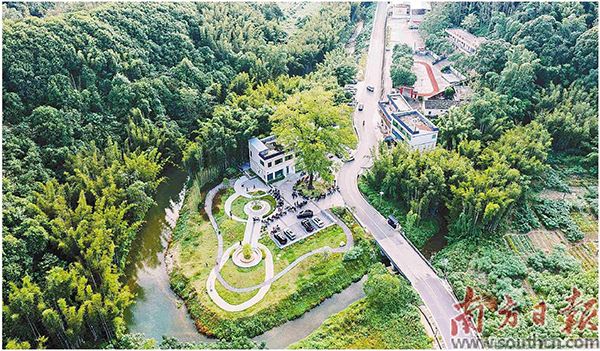
环南昆山—罗浮山引领区(广州)总规出台 在从化增城划定两大先行区
Nan Fang Ri Bao Wang Luo Ban· 2025-12-22 07:45
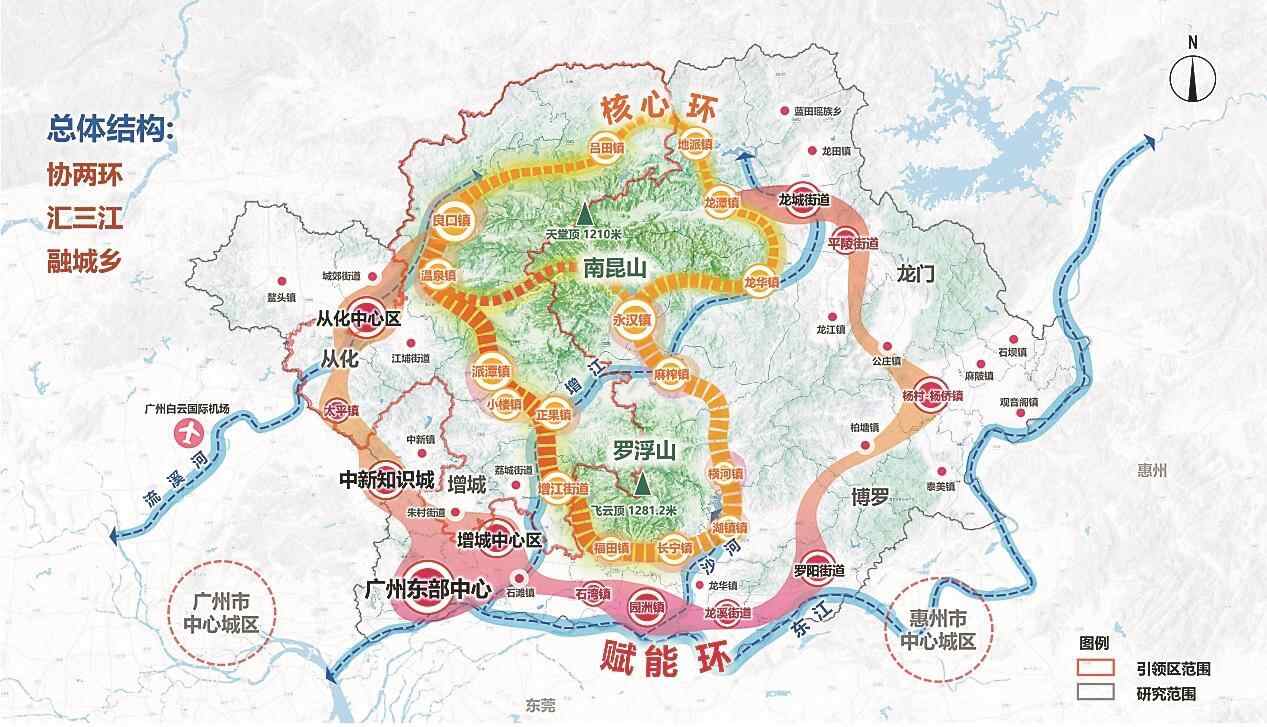
Core Viewpoint - The Guangzhou "Baiqianwan Project" aims to establish a high-quality development leading area in the Nankunshan-Luofushan region, focusing on ecological advantages and modern urbanization practices in China. Group 1: Planning and Structure - The planning emphasizes a comprehensive approach, proposing a spatial structure of "coordinating two rings, integrating three rivers, and merging urban and rural areas" to enhance the flow of various urban-rural elements and promote modernization and differentiation in towns and villages [1] - A transportation plan is outlined to connect domestic and international traffic, creating a 400-kilometer scenic tourism road to attract visitors and boost local economies [1] Group 2: Industry Layout - The plan focuses on four key industries: "Health +", "Cultural Tourism +", "Agriculture +", and "Innovation +". It aims to leverage local resources for developing wellness clusters, tourism brands, modern agriculture, and emerging industries [2] - Specific initiatives include creating 12 wellness zones, enhancing tourism attractions, modernizing 13 agricultural parks, and fostering strategic industries like low-altitude economy and biomedicine [2] Group 3: Implementation and Design - The plan designates two pilot areas covering approximately 278 square kilometers, with a focus on developing a 52-kilometer scenic tourism road by 2025 [3] - A design competition is initiated to engage local communities and design professionals in the planning process, ensuring that local needs align with design outcomes [3]
广东“潜力板”激活:县域“黑马”跑赢全省经济增速丨品粤百千万
2 1 Shi Ji Jing Ji Bao Dao· 2025-12-22 00:06
Core Insights - The article highlights the significant economic growth and transformation occurring in Guangdong's county-level economies, driven by the "Hundred Counties, Thousand Towns, and Ten Thousand Villages High-Quality Development Project" [2][6] Economic Growth - In 2023, 57 counties in Guangdong have consistently outpaced the provincial GDP growth rate for two consecutive years, with a 1.1 percentage point lead over the provincial average [2] - The industrial added value in these counties has increased by 6.8%, contributing to a net inflow of population and an urbanization rate of 46.48% [2][9] - The income disparity between urban and rural residents has narrowed from a ratio of 2.41:1 to 2.31:1 [2][9] Infrastructure Development - The completion of the "most beautiful tourism road" connecting major tourist attractions has significantly boosted local economies, with one village reporting an increase of nearly 200,000 yuan in monthly revenue [1] - The Huizhou New Materials Industrial Park is projected to attract over 5 billion yuan in investment by November 2025 [1] County-Level Strategies - Guangdong's approach emphasizes tailored strategies for each county, fostering unique industrial clusters and enhancing local economic capabilities [2][3] - The establishment of 64 provincial industrial parks and over 110 incubators has facilitated the transfer of industrial projects, with a total planned investment exceeding 720 billion yuan [3] Sector-Specific Developments - Bo Luo County has focused on integrating into the Greater Bay Area's industrial chain, achieving a GDP of 95.22 billion yuan in 2024, with industrial added value contributing 73.2% to this growth [3][4] - Huizhou has concentrated on developing a new materials industry park, resulting in over 26% year-on-year growth in industrial output for the first half of 2025 [6] Tourism and Cultural Integration - The article discusses the rise of cultural tourism, with counties leveraging local resources to attract visitors, such as the transformation of a warehouse into a popular cultural site [8][9] - The integration of rural ecological and cultural resources into economic activities has created new revenue streams for local communities [9]
环南昆山—罗浮山县镇村高质量发展引领区(广州)总体规划正式发布
Xin Lang Cai Jing· 2025-12-20 00:32
Core Viewpoint - The release of the overall planning for the Huannan Kunshan - Luofu Mountain Town and Village High-Quality Development Leading Area (Guangzhou) marks the transition from blueprint to reality, aiming to enhance the region's development through various cultural and tourism activities [2] Group 1: Strategic Positioning - The planning covers an area of approximately 2415 square kilometers, involving 7 towns and 5 streets in Conghua District and Zengcheng District, with four strategic positions: a model for ecological advantages in metropolitan areas, a world-class rare hot spring health resort, a benchmark for modernized construction in Lingnan characteristic towns and villages, and a paradigm for coordinated urban-rural regional development [2][3] Group 2: Spatial and Transportation Planning - The spatial structure aims to create a framework of "coordinating two rings, integrating three rivers, and merging urban and rural areas," leveraging Guangzhou's role as a significant national center city to facilitate the flow of various urban-rural elements [3] - The transportation plan includes opening domestic and international access for tourists and constructing a 400-kilometer scenic tourism road to enhance economic activity and accessibility [3] Group 3: Industry Focus - The planning emphasizes "project supremacy" with a detailed layout for four key industries: "Health +," "Cultural Tourism +," "Agriculture +," and "Innovation +" [4] - In the "Health +" sector, the focus is on developing 12 health clusters based on rare hot spring resources and forest ecology, integrating high-quality medical resources to create a health ecosystem [4] - The "Cultural Tourism +" aspect aims to establish nine key tourism brands and upgrade tourist attractions, including five themed sports towns [4] - The "Agriculture +" initiative supports the modernization and digital transformation of 13 agricultural parks, promoting local agricultural brands [4] - The "Innovation +" sector seeks to cultivate emerging industries such as low-altitude economy, electronic information, biomedicine, and new materials [4] Group 4: Implementation and Future Plans - The planning designates approximately 278 square kilometers in Conghua and Zengcheng as two pilot areas, with a focus on developing a 52-kilometer scenic tourism road demonstration section [5] - By 2025, the city planning and natural resources bureau aims to implement key projects like the scenic tourism road and various landmark stations through a "planning, design, and implementation" approach [5] - A "Yue Beautiful Countryside" design competition will engage design units, universities, and individuals to align local needs with planning [5]
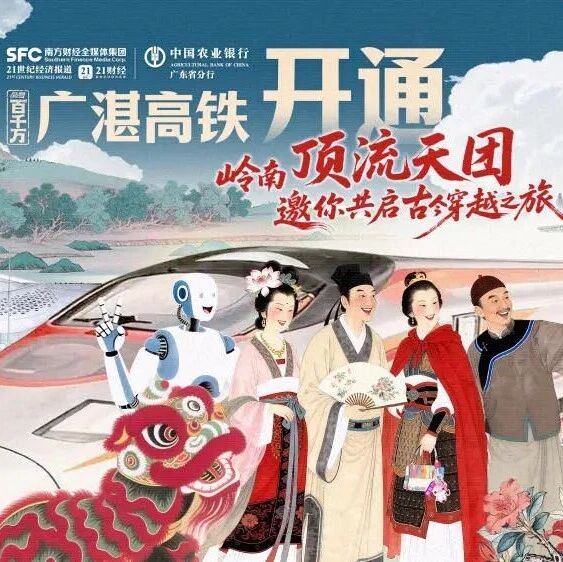
广湛高铁22日通车!岭南“顶流天团”集结,开启一场古今穿越之旅
21世纪经济报道· 2025-12-19 13:40
12月22日,广湛高铁正式建成通车, 广州白云站至湛江北站最快 1小时32 分 可达。 广湛高铁连接 广州、佛山、肇庆、云浮、阳江、茂名、湛江 等城市,线路全长401公里,设计 时速350公里,此次率先开通新兴南、阳春东、阳江北、马踏、茂名南、吴川、湛江北7座车 站,两端分别接入广州白云站和湛江北站。广湛高铁佛山站、佛肇站和接入广州站的线路正在 有序建设中。 广湛高铁的开通,意味着 粤西正式融入大湾区"90分钟生活圈" 。高铁经济带的形成,也将助 力"百千万工程"加速实施,为城乡区域协调发展插上"腾飞的翅膀"。 早晨在广州喝早茶,中午到湛江吃海鲜。 岭南古早"顶流天团" 带你打卡广湛高铁,来一场说 走就走的"省内一日游"! 此次参团的岭南古早"顶流天团"成员有: ·何仙姑(唐代"挂绿荔枝"故事的女主角) ·伦文叙(明代状元,"状元及第粥"命名者) ·冼夫人(历经梁、陈和隋三代,被誉为"巾帼英雄第一人") ·叶广祚(清代著名针灸学家) 广湛高铁之旅开启 请旋转手机横屏观看 记者丨 毕凤至 吴桂兴 设计丨吴怀宽 李基礼 编辑丨谭婷 这样 计划 北 本 国 中 ( 1) | 司书房 S III VI 0 eme e ...
“十四五”佛山经济总量连跨3个千亿台阶 规上工业企业突破1万家
Nan Fang Ri Bao Wang Luo Ban· 2025-12-18 07:39
Economic Growth and Development - During the "14th Five-Year Plan" period, Foshan's economic total is expected to reach 1.33 trillion yuan in 2024, achieving stable overall development this year [1] - Foshan has maintained a strong focus on manufacturing, with 10 industrial clusters reaching a scale of 100 billion yuan and over 10,000 industrial enterprises above designated size [1] Quality Improvement and Investment - Foshan has leveraged fiscal funds to mobilize nearly 400 billion yuan in social capital for technological transformation, with 78.7% of industrial enterprises undergoing digital transformation [1] - The city has established a 20 billion yuan new momentum industry fund and has attracted over 3,000 projects with investments exceeding 1 billion yuan, totaling 1.8 trillion yuan in signed investments [1] Innovation and Reform - Foshan has been approved to build a national innovative city and has led the province in the number of provincial science and technology awards for six consecutive years [2] - The city has pioneered local regulations to support market entities, resulting in a growth of 83.1% in operating entities, surpassing 1.72 million [2] Urban-Rural Coordination - Foshan has made significant progress in urban-rural coordination, being recognized as "excellent" in provincial assessments for two consecutive years [2] - The per capita disposable income of rural residents exceeds 43,000 yuan, with the urban-rural income ratio narrowing to 1.6:1, better than national and provincial averages [2]