大型语言模型(LLM)

Search documents
“多模态方法无法实现AGI”
AI前线· 2025-06-14 04:06
Core Viewpoint - The article argues that true Artificial General Intelligence (AGI) requires a physical understanding of the world, as many problems cannot be reduced to symbolic operations [2][4][21]. Group 1: Limitations of Current AI Models - Current large language models (LLMs) may give the illusion of understanding the world, but they primarily learn heuristic collections for predicting tokens rather than developing a genuine world model [4][5][7]. - The understanding of LLMs is superficial, leading to misconceptions about their intelligence levels, as they do not engage in physical simulations when processing language [8][12][20]. Group 2: The Need for Embodied Cognition - The pursuit of AGI should prioritize embodied intelligence and interaction with the environment rather than merely combining multiple modalities into a patchwork solution [1][15][23]. - A unified approach to processing different modalities, inspired by human cognition, is essential for developing AGI that can generalize across various tasks [19][23]. Group 3: Critique of Multimodal Approaches - Current multimodal models often artificially sever the connections between modalities, complicating the integration of concepts and hindering the development of a coherent understanding [17][18]. - The reliance on large-scale models to stitch together narrow-domain capabilities is unlikely to yield a fully cognitive AGI, as it does not address the fundamental nature of intelligence [21][22]. Group 4: Future Directions for AGI Development - The article suggests that future AGI development should focus on interactive and embodied processes, leveraging insights from human cognition and classical disciplines [23][24]. - The challenge lies in identifying the necessary functions for AGI and arranging them into a coherent whole, which is more of a conceptual issue than a mathematical one [23].


迈向人工智能的认识论:真的没有人真正了解大型语言模型 (LLM) 的黑箱运作方式吗
3 6 Ke· 2025-06-13 06:01
Group 1 - The core issue revolves around the opacity of large language models (LLMs) like GPT-4, which function as "black boxes," making their internal decision-making processes largely inaccessible even to their creators [1][4][7] - Recent research highlights the disconnect between the reasoning processes of LLMs and the explanations they provide, raising concerns about the reliability of their outputs [2][3][4] - The discussion includes the emergence of human-like reasoning strategies within LLMs, despite the lack of transparency in their operations [1][3][12] Group 2 - The article explores the debate on whether LLMs exhibit genuine emergent capabilities or if these are merely artifacts of measurement [2][4] - It emphasizes the importance of understanding the fidelity of chain-of-thought (CoT) reasoning, noting that the explanations provided by models may not accurately reflect their actual reasoning paths [2][5][12] - The role of the Transformer architecture in supporting reasoning and the unintended consequences of alignment techniques, such as Reinforcement Learning from Human Feedback (RLHF), are discussed [2][5][12] Group 3 - Methodological innovations are being proposed to bridge the gap between how models arrive at answers and how they explain themselves, including circuit-level attribution and quantitative fidelity metrics [5][6][12] - The implications for safety and deployment in high-risk areas, such as healthcare and law, are examined, stressing the need for transparency in AI systems before their implementation [6][12][13] - The article concludes with a call for robust verification and monitoring standards to ensure the safe deployment of AI technologies [2][6][12]
喝点VC|a16z谈搜索大变局:搜索迈入由语言模型主导的“生成式引擎优化(GEO)”全新范式
Z Potentials· 2025-06-12 04:24
Core Insights - The article discusses the transition from traditional Search Engine Optimization (SEO) to Generative Engine Optimization (GEO), highlighting the impact of large language models (LLMs) on search behavior and marketing strategies [3][5][21] - It emphasizes that the SEO market, valued at over $80 billion, is facing challenges as search behavior shifts from browsers to LLM platforms, fundamentally altering how exposure and content optimization are defined [3][5][9] Transition from Links to Language Models - Traditional search relied on link-based ranking, while GEO focuses on language and direct answers generated by models [4][5] - The average query length has increased significantly to 23 words, compared to just 4 words in traditional searches, indicating deeper user engagement [4] - LLMs provide personalized responses through memory and reasoning capabilities, changing the content discovery and optimization logic [4][5] New Metrics and Competitive Focus - The focus of competition has shifted from click-through rates to "model citation rates," where brands need to be encoded into AI layers to build new competitive barriers [5][12] - Emerging platforms like Profound and Goodie help brands analyze their presence in AI-generated answers and track sentiment in model outputs [12][13] Brand Strategy Evolution - A new brand strategy is emerging that prioritizes model recognition over public recognition, with "unprompted awareness" becoming a key metric in the AI era [12][14] - Tools like Ahrefs' Brand Radar and Semrush's AI toolkit are adapting to help brands monitor their visibility and mentions in generative platforms [13][14] The Rise of GEO Tools - GEO tools are not just about data measurement but also about actively shaping LLM behavior through insights and iterative feedback loops [20] - Companies that excel in GEO will create actionable infrastructures for real-time marketing activities and content optimization [20][21] Timing and Market Dynamics - The article notes that the transition to GEO is still in its early stages, with significant opportunities for brands to adapt as advertising budgets shift rapidly [21][22] - The ultimate question for marketers in the AI-driven landscape is whether models will remember their brands [22]

本周WWDC推出新Siri无望?华尔街质疑苹果AI能力
Hua Er Jie Jian Wen· 2025-06-09 02:43
Core Insights - Apple's upcoming WWDC on June 9 is expected to disappoint investors due to ongoing challenges in upgrading Siri and integrating advanced large language models (LLM) into its AI functionality, "Apple Intelligence" [1][4] - The integration of LLMs to enhance Siri's conversational abilities has faced significant technical difficulties, leading to numerous bugs that competitors like OpenAI and Google have not encountered [3][8] - The delay in launching the upgraded Siri has resulted in a decline of approximately 18% in Apple's stock price since the beginning of 2025, making it the worst performer among the "Tech Seven" giants [4] Siri Upgrade Challenges - Apple is attempting to improve Siri's capabilities to respond more like a human, but the integration process has been plagued by bugs, which has hindered progress [3] - A former Apple executive criticized the gradual development approach, stating that it cannot fundamentally transform Siri [3] - Analysts suggest that it may take Apple three years or more to deliver a modernized AI assistant, significantly lagging behind competitors [8] Market Reactions - Investor sentiment has soured due to repeated delays in the "Apple Intelligence" feature, leading to low expectations for the upcoming WWDC [4] - Analysts from Morgan Stanley and Bank of America have expressed concerns about Apple's ability to meet its previous commitments regarding AI advancements [4][8] Strategic Focus Shift - The upcoming WWDC may focus more on brand restructuring rather than significant technological breakthroughs, with plans to rebrand operating systems and repackage existing features as "AI-driven" [9] - Apple is expected to announce the opening of its foundational models to third-party developers, although its LLM capabilities are significantly less complex than those of competitors [9] - Internal sources indicate that expectations for the AI segment of the conference are low, raising concerns about Apple's visibility in the AI space [9]

ICML 2025 Spotlight | 谁导致了多智能体系统的失败?首个「自动化失败归因」研究出炉
机器之心· 2025-05-30 03:28
问题来了:到底是哪个 Agent 出了错?又是在对话流程的哪一环节?调试这样的多智能体系统如同大海捞针,需要翻阅大量复杂日志,极其耗时。 这并非虚构。在多智能体 LLM 系统中,失败常见但难以诊断。随着这类系统愈加普及,我们急需新方法快速定位错误。正因如此,ICML 2025 的一篇 Spotlight 论 文提出了「自动化失败归因(Automated Failure Attribution)」的新研究方向,目标是让 AI 自动回答:是谁、在哪一步导致了失败。 该工作由 Penn State、Duke、UW、Goolge DeepMind 等机构的多位研究人员合作完成。 论文标题:Which Agent Causes Task Failures and When? On Automated Failure Attribution of LLM Multi-Agent Systems 背景挑战 LLM 驱动的多智能体系统在诸多领域展现出巨大潜力,从自动化助手协同办公到多 Agent 合作完成 Web 复杂操作等。然而,这些系统 脆弱性 也逐渐显现:多个 Agent 之间的误解、信息传递错误或决策不当,都可能导致 ...

全球首个宠物翻译器,上线爆火
3 6 Ke· 2025-05-23 00:47
Core Insights - Google has launched the DolphinGemma AI model, aiming to facilitate real-time underwater communication between humans and dolphins, expanding the understanding of non-human languages [1][24] - The Traini application, developed by a Chinese team, is the world's first AI-based dog-human translator, achieving over 80% accuracy in translating dog barks into human language [2][5] - The pet economy in China has reached a scale of 592.8 billion yuan in 2023, with pet owners increasingly viewing pets as family members, driving demand for innovative communication solutions [4][22] Group 1: AI Applications in Inter-Species Communication - Traini allows users to upload dog sounds, images, and videos to interpret 12 different emotions and behaviors, achieving an accuracy rate of 81.5% in translating dog behavior into human language [9][20] - The development of Traini was inspired by user feedback, revealing a strong interest in understanding pet behavior, with 76% of surveyed users expressing a desire to comprehend their dogs better [7][10] - The DolphinGemma model, which utilizes 30 years of dolphin research data, aims to visualize dolphin sounds and predict their next vocalizations, enhancing research capabilities [24][26] Group 2: Market Trends and Consumer Behavior - The number of pets in China has surpassed the total number of children under four years old, indicating a significant shift in consumer demographics and pet ownership trends [4][22] - The emotional consumption trend among pet owners reflects a growing tendency to treat pets as children or friends, leading to increased interest in AI-driven communication tools [4][5] - The success of Traini has sparked curiosity and interest in similar applications, with users inquiring about the potential for translating other animal languages [22][27] Group 3: Technological Advancements and Challenges - The PEBI model, developed by Traini, incorporates multi-modal data from various dog breeds to enhance the accuracy of translations, although challenges remain in data diversity and sample size [17][20] - The emotional resonance in translating dog behavior into human language poses significant challenges, as the model aims to reflect the unique bond between pets and their owners [18][20] - The rise of AI in understanding animal communication is supported by various initiatives, including the Project CETI, which aims to decode sperm whale communication through natural language processing [26][27]

戴尔与英伟达合作,发布全新企业AI解决方案,推出新一代PowerEdge服务器
Hua Er Jie Jian Wen· 2025-05-19 20:31
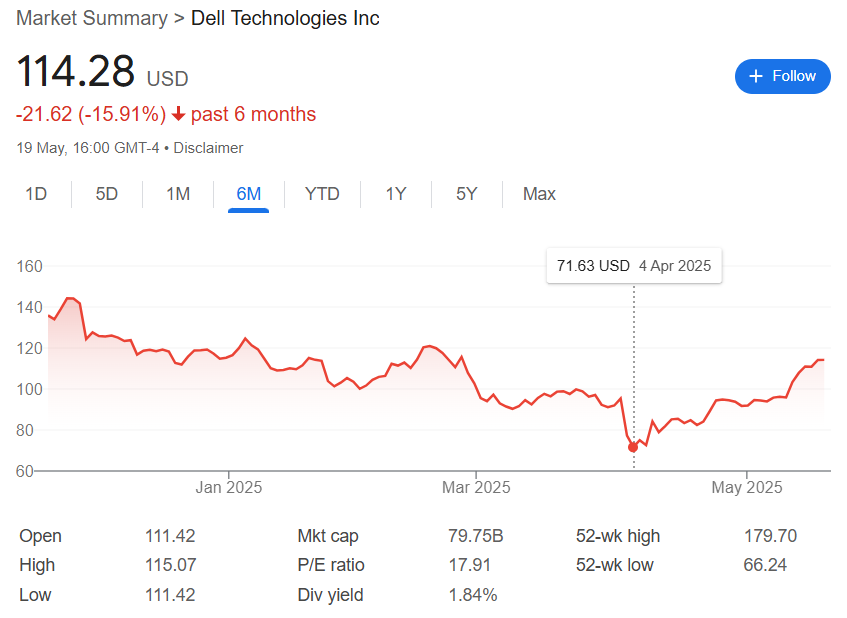
Core Insights - Dell has launched a new generation of enterprise AI solutions in collaboration with NVIDIA, aimed at simplifying the implementation of enterprise AI [1] - 75% of organizations view AI as a core strategy, with 65% successfully advancing AI projects to production, although challenges like data quality and costs persist [1][5] - Dell's AI factory solution offers a 62% cost advantage over public cloud for local deployment of large language models (LLM), appealing to budget-sensitive enterprises [1][5] Product Innovations - Dell introduced new PowerEdge servers, including air-cooled and liquid-cooled models, capable of supporting up to 192 NVIDIA Blackwell Ultra GPUs, enhancing LLM training speed by up to four times [4][5] - The upcoming PowerEdge XE7745 server will support NVIDIA RTX Pro™ 6000 Blackwell Server Edition GPU by July 2025, catering to various AI applications [5] - Over 3,000 customers are currently utilizing Dell's AI factory to accelerate their AI initiatives, indicating a growing ecosystem from enterprise AI PCs to data centers [5] Market Outlook - Dell is expanding its AI product line to meet deployment needs from edge to data center, signaling a commitment to comprehensive AI infrastructure [3] - The collaboration with NVIDIA may indicate sustained growth in the enterprise AI infrastructure market, particularly as local deployment proves more cost-effective than cloud solutions [5]

仅需1个数据,就能让大模型的数学推理性能大大增强?
机器之心· 2025-05-09 09:02
Core Insights - The article discusses significant advancements in large language models (LLMs) regarding reasoning capabilities, particularly in complex mathematical tasks, driven by Reinforcement Learning with Verifiable Reward (RLVR) [1][2]. Group 1: Research Findings - Researchers from the University of Washington and Microsoft found that using just one training data point (1-shot RLVR) can significantly enhance model performance in various mathematical reasoning tasks [2][3]. - The performance of Qwen2.5-Math-1.5B improved from 36.0% to 73.6% and Qwen2.5-Math-7B from 51.0% to 79.2% on the MATH500 dataset using 1-shot RLVR, achieving results comparable to using a larger dataset of 1.2k [3][13]. - The 1-shot RLVR approach also demonstrated effectiveness in non-mathematical reasoning tasks, such as ARC-Easy and ARC-Challenge [5]. Group 2: Methodology and Data Selection - The study employed a combination of policy gradient loss, KL divergence loss, and entropy loss in the training process, with a focus on policy gradient loss as the primary driver of improvement [7][19]. - Researchers utilized a metric called historical variance score to prioritize data selection from the dataset, although this method was not deemed optimal [8][19]. - The findings indicated that 1-shot RLVR could generalize well across different mathematical themes, suggesting that a single training example from one topic could enhance performance in others [13][16]. Group 3: Observations and Implications - The phenomenon of saturation and generalization was observed, where training accuracy approached 100% quickly, but downstream task performance continued to improve [10][11]. - The study highlighted the importance of encouraging exploration through entropy loss, which contributed to better performance in 1-shot RLVR [20]. - The results support previous conclusions that foundational models used for RLVR often possess inherent reasoning capabilities that can be activated with minimal data [22].

AI智能体协议全面综述:从碎片化到互联互通的智能体网络
欧米伽未来研究所2025· 2025-05-06 13:33
Core Viewpoint - The article discusses the evolution and categorization of AI agent protocols, emphasizing the need for standardized communication to enhance collaboration and problem-solving capabilities among AI agents across various industries [1][9]. Summary by Sections AI Agent Protocols Overview - The report introduces a systematic two-dimensional classification framework for existing AI agent protocols, distinguishing between context-oriented protocols and inter-agent protocols, as well as general-purpose and domain-specific protocols [1]. Model Context Protocol (MCP) - MCP represents a centralized approach where a core "MCP travel client" agent coordinates all external services, leading to a star-shaped information flow. While it is simple and easy to control, it lacks flexibility and scalability, making it challenging to adapt to complex tasks [2][3]. Agent-to-Agent Protocol (A2A) - A2A promotes a distributed and collaborative model, allowing agents to communicate directly without a central coordinator. This flexibility supports dynamic responses to changing needs but may face challenges when crossing organizational boundaries [4][5]. Agent Network Protocol (ANP) - ANP standardizes cross-domain interactions, enabling agents from different organizations to collaborate effectively. It formalizes the request and response process, making it suitable for diverse and secure environments [6]. Agora Protocol - Agora focuses on translating user natural language requests into standardized protocols for execution by specialized agents. This three-stage process enhances adaptability and allows agents to concentrate on their core functions [7][8]. Future Trends in AI Agent Protocols - The development of AI agent protocols is expected to evolve towards more adaptive, privacy-focused, and modular systems. Short-term goals include establishing unified evaluation frameworks and enhancing privacy protection mechanisms [9][10]. - Mid-term trends may involve embedding protocol knowledge into large language models and developing layered protocol architectures to improve interoperability [11][12]. - Long-term aspirations include creating a collective intelligence infrastructure and specialized data networks to facilitate structured, intent-driven information exchange among agents [13][14][15]. Conclusion - The exploration of AI agent protocols indicates a clear trajectory towards a more intelligent, autonomous, and collaborative future, with significant implications for technology, society, and economic models [16][17].

微软正式开源UFO²,Windows桌面迈入「AgentOS 时代」
机器之心· 2025-05-06 08:04
近年来,图形用户界面(GUI)自动化技术正在逐步改变人机交互和办公自动化的生态。然而,以 Robotic Process Automation(RPA)为代表的传统自动化工具通 常依赖固定脚本进行操作,存在界面变化敏感、维护成本高昂、用户体验欠佳等明显问题。 同时,近年来兴起的基于大型语言模型(LLM)的计算机智能体(Computer-Using Agents,CUA)虽然展现出灵活的自动化潜力,但多数方案仍停留在概念验证 或原型阶段,缺乏与操作系统深度集成的能力,制约了其在实际工作环境中的规模化应用。 针对这些行业痛点,作为前代纯 GUI 桌面智能体 UFO 的全面升级版, 微软研究团队近日正式开源了业内首个深度集成 Windows 操作系统的桌面智能体平 台 ——UFO² AgentOS 。 该平台不仅继承了 UFO 的强大 GUI 操作能力,还在系统层面进行了深度优化,显著提升了智能体在 Windows 环境下的操作效率与稳定 性。 本论文第一作者为微软 DKI 团队的 Chaoyun Zhang,其为 Windows 平台首个智能体系统 ——UFO 的核心开发者,该项目已在 GitHub 上开源并获得 ...