
实事求是

Search documents
中央经济工作会议上的这个细节,蕴含深意
Xin Hua Wang· 2025-12-16 01:38
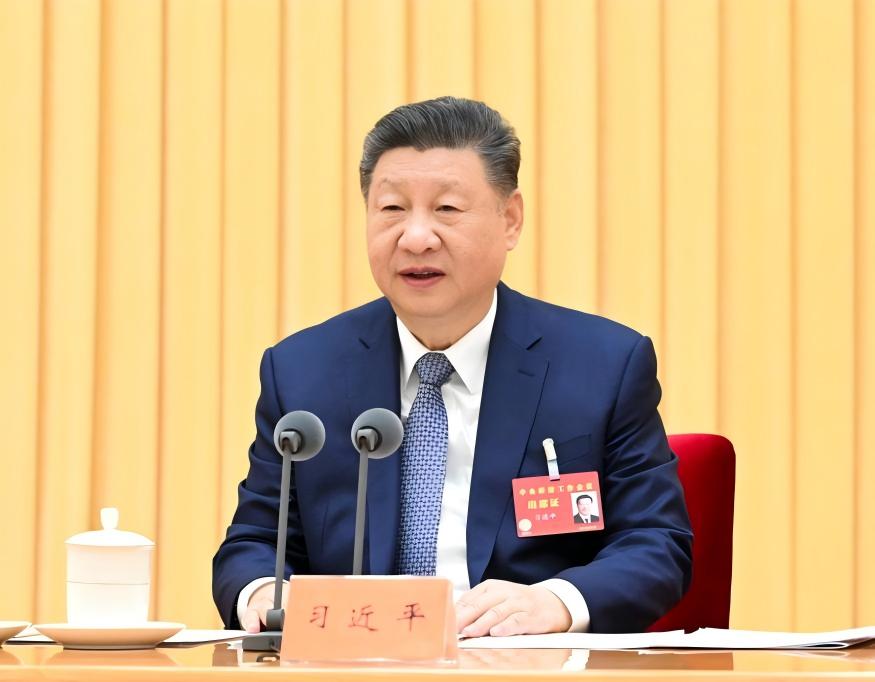
2025年12月10日至11日,中央经济工作会议在北京举行。中共中央总书记、国家主席、中央军委主席习近平出席会议并发 表重要讲话。新华社记者 燕雁 摄 【学习进行时】新华社近日播发2025年中央经济工作会议侧记,稿件记录下这样一个细节: "这次会议上,习近平总书记围绕发展新质生产力、生态环保、农村改厕等,进一步阐明因地制宜的重要性。 '因地制宜,本质就是实事求是。'总书记强调,落实中需要结合实际、因地制宜,但不能自行其是、搞本位主义。" 2018年,习近平总书记在深入推动长江经济带发展座谈会上一连提出几个问题,包括沿江三大城市群在各自发展过程中能 不能结合所在的区位条件、资源禀赋、经济基础,放在长江经济带高质量发展"一盘棋"中研究提出差异化协同发展的新目标新 举措?各大中小城市在明确自我发展定位和方向时能不能立足整个城市群的发展定位和方向,找到自己错位发展的重点方向, 解决好同质化发展的问题? 习近平总书记在中央经济工作会议上强调"结合实际、因地制宜,但不能自行其是、搞本位主义",着眼的既是明年经济工 作,也是"十五五"全局,是一以贯之的。 2025年12月10日至11日,中央经济工作会议在北京举行。中共中央 ...

学习进行时丨中央经济工作会议上的这个细节,蕴含深意
Xin Hua Wang· 2025-12-15 23:39
2025年12月10日至11日,中央经济工作会议在北京举行。中共中央总书记、国家主席、中央军委主席习近平出席会议并发表重 要讲话。新华社记者燕雁 摄 【学习进行时】新华社近日播发2025年中央经济工作会议侧记,稿件记录下这样一个细节: "这次会议上,习近平总书记围绕发展新质生产力、生态环保、农村改厕等,进一步阐明因地制宜的重要性。 '因地制宜,本质就是实事求是。'总书记强调,落实中需要结合实际、因地制宜,但不能自行其是、搞本位主义。" 因地制宜,就是根据不同地区的具体情况制定相应的妥善办法;实事求是,就是坚持一切从实际出发,理论联系实际,在实践 中检验真理和发展真理。强调因地制宜的本质是实事求是,凸显了落实党中央决策部署必须始终坚持的正确态度和科学方法。 习近平总书记在中央经济工作会议上强调"结合实际、因地制宜,但不能自行其是、搞本位主义",着眼的既是明年经济工作, 也是"十五五"全局,是一以贯之的。 2025年12月10日至11日,中央经济工作会议在北京举行。中共中央总书记、国家主席、中央军委主席习近平出席会议并发表重 要讲话。李强、赵乐际、王沪宁、蔡奇、丁薛祥、李希出席会议。新华社记者谢环驰 摄 会议强调 ...

习近平:“因地制宜,本质是实事求是”
Ren Min Ri Bao· 2025-12-15 06:08
"因地制宜,本质是实事求是" 时间:12月10日 日程:中央经济工作会议在京举行 "这些年我多次强调因地制宜的问题。"中央经济工作会议上,习近平总书记深刻解析做好经济工作的这 一方法论。 "党中央关于明年经济工作的思路、任务、政策,是经过充分论证、反复研究提出的。定了就要落 实。""落实中需要结合实际、因地制宜。" "十四五"即将收官,第二个百年奋斗目标新征程实现良好开局。迈向"十五五",战略机遇和风险挑战并 存、不确定难预料因素增多,发展形势错综复杂。 "形势越是复杂,越要加强党的领导,形成统一意志和强大合力。"围绕如何"加强党对经济工作的全面 领导",习近平总书记在会上条分缕析、语重心长,突出强调的关键之一就是"因地制宜"。 微镜头·习近平总书记在中央经济工作会议上 "生态环保要因地制宜。" 治理生态退化突出问题,要"宜林则林、宜草则草、宜沙则沙、宜荒则荒";保护利用水资源,要"以水 定城、以水定地、以水定人、以水定产"。提起这些具体的方法,总书记总结道,"人类发展就是一个与 自然共生的过程,脱离实际蛮干是行不通的。" "农村改厕也要因地制宜。" 习近平总书记对民生小事洞察深入:"南北差异那么大,改厕怎么 ...

在纪念胡耀邦同志诞辰110周年座谈会上的讲话
Xin Hua She· 2025-11-21 00:17
Core Viewpoint - The commemoration of Hu Yaobang's 110th birthday highlights his significant contributions to the Communist Party and the modernization of China, emphasizing his dedication to the people and the principles of socialism [1][3]. Group 1: Hu Yaobang's Life and Contributions - Hu Yaobang joined the Communist Youth League at 14 and became a member of the Communist Party at 18, participating in the Long March and holding various leadership roles throughout his life [2]. - His career spanned over 60 years, showcasing his commitment to revolutionary ideals, practical governance, and dedication to the people [3][4]. - Hu emphasized the importance of Marxism and practical approaches to governance, advocating for the integration of new ideas that align with the people's interests [4][5]. Group 2: Ideological and Practical Contributions - Hu Yaobang's advocacy for reform and openness was seen as essential for the success of socialism and modernization in China, stressing the need for deep reforms to achieve these goals [5][6]. - He promoted a practical approach to Marxism, encouraging the party to adapt to new realities and discard outdated practices that hinder progress [4][6]. - His focus on the people's welfare and economic development was evident in his belief that national strength and people's prosperity are interconnected [7]. Group 3: Party Integrity and Governance - Hu Yaobang was a strong proponent of maintaining party integrity and combating corruption, emphasizing that the party's image is crucial for its survival and effectiveness [8]. - He advocated for a culture of accountability and self-discipline among party members, insisting on high standards of conduct and transparency [8]. - His leadership style was characterized by a commitment to democratic practices within the party and a focus on serving the people's needs [8]. Group 4: Call to Action for Future Generations - The commemoration calls for unity among party members to continue Hu Yaobang's legacy, urging them to remain committed to the ideals of socialism and modernization [9]. - It emphasizes the importance of historical confidence and proactive engagement in achieving the goals set for the next century [9].
习近平:在纪念胡耀邦同志诞辰110周年座谈会上的讲话
证监会发布· 2025-11-20 09:22
Core Viewpoint - The article commemorates the 110th anniversary of Hu Yaobang's birth, highlighting his significant contributions to the Communist Party and the modernization of China, emphasizing the importance of his ideals and leadership in the context of socialism and reform [3][5][11]. Group 1: Hu Yaobang's Life and Contributions - Hu Yaobang was a dedicated communist fighter and a prominent leader who played crucial roles in various revolutionary and political positions throughout his life [4][5]. - His life exemplified a commitment to ideals, a spirit of service to the people, and a dedication to reform and modernization [5][6]. Group 2: Ideals and Beliefs - Hu Yaobang's unwavering belief in communism and socialism served as a spiritual pillar for the Communist Party, encouraging members to maintain faith in their ideals despite challenges [5][6]. - He emphasized the importance of practical approaches and the need for continuous theoretical exploration to adapt Marxism to Chinese realities [6][7]. Group 3: Reform and Modernization - Hu Yaobang viewed reform as essential for the success of socialism and advocated for comprehensive and planned reforms to overcome obstacles to modernization [7][8]. - He believed that economic development and improving people's livelihoods were paramount, urging the party to focus on the well-being of the populace [8][9]. Group 4: Party Integrity and Conduct - Hu Yaobang stressed the importance of maintaining a good party style and integrity, advocating for strict self-discipline among party members to combat corruption [10]. - He believed that the party's image and its ability to connect with the people were critical for its survival and success [10][11].
我国第一所现代大学:不从纸上逞空谈 要实地把中华改造
Yang Shi Xin Wen· 2025-11-16 04:13
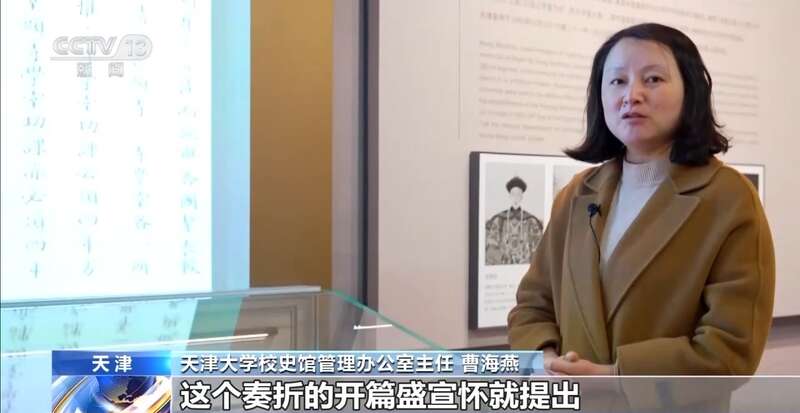
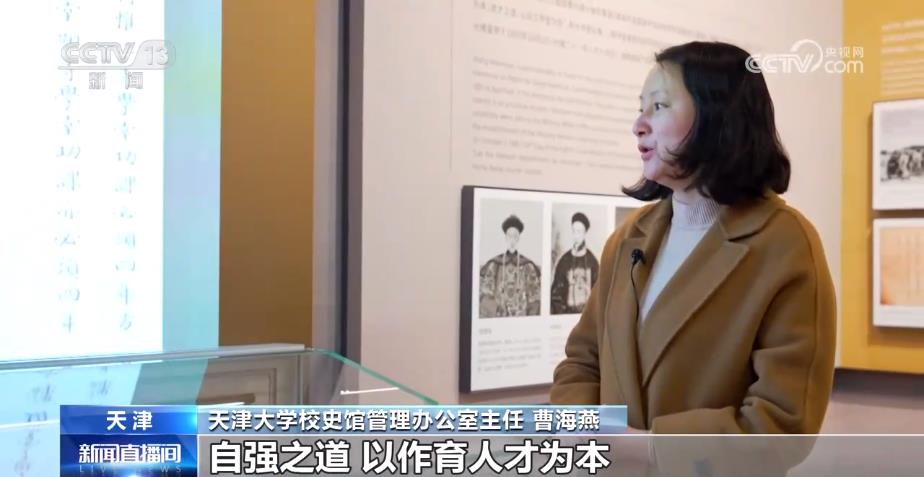
天津大学是我国第一所现代大学,今天的"校馆弦歌"系列节目,我们要走进的就是天津大学校史博物馆,透过丰 富的史料,去感受中国高等教育的发展历程与精神传承。 走进博物馆,首先映入眼帘的是一条宛若时光隧道的历史长廊,墙上镌刻着一个个重要的历史节点。时间回溯到 130年前,甲午战败,人心思变。时任津海关道的盛宣怀倡议设立新式学堂,经直隶总督王文韶上奏获准,中国第一所 现代大学应运而生。 天津大学校史馆管理办公室主任 曹海燕:奏折的开篇盛宣怀就提出,自强之道,以作育人才为本,求才之道,以 设立学堂为先。 当时,北方沿海地区统称北洋,这所新式大学也由此得名北洋大学堂。北洋大学堂开创了多个"第一":中国的第 一部大学章程、第一份招生启事、第一张大学毕业文凭。此外,它还设立了中国第一个工科研究所,培养了第一批工 科研究生,创立了第一个航空工程系,率先开展高等工程教育实践。几十年间,校名与校址几经变迁。直到1951年, 学校正式定名为天津大学。一路走来,学校始终秉持"实事求是"的校训,校歌中"不从纸上逞空谈,要实地把中华改 造"的词句,更是其精神传统的生动写照。 天津大学档案馆馆长 韩宝志:实事求是,求这个是什么?校歌里唱到" ...
校馆弦歌丨我国第一所现代大学:不从纸上逞空谈 要实地把中华改造
Yang Shi Wang· 2025-11-15 18:14
Core Viewpoint - The article highlights the historical significance and contributions of Tianjin University, the first modern university in China, emphasizing its role in the development of higher education and its enduring spirit of practicality and dedication to national needs [1][3][5]. Historical Development - Tianjin University was established 130 years ago following the First Sino-Japanese War, initiated by Sheng Xuanhuai, and was originally named Beiyang University [1][3]. - It pioneered several "firsts" in Chinese higher education, including the first university charter, the first admission notice, and the first university diploma [3]. - The university has undergone several name and location changes, officially becoming Tianjin University in 1951, while maintaining its motto of "seeking truth from facts" [3]. Educational Philosophy - The university's philosophy centers on cultivating talent for the nation, as reflected in its school song, which emphasizes practical contributions to national development [5][6]. - The spirit of perseverance and dedication to national needs is a recurring theme in the university's history, as demonstrated by its alumni's contributions during challenging times, such as the Anti-Japanese War [6][10]. Alumni Contributions - Notable alumni have made significant contributions to major national projects, including the design of the first electric flagpole in Tiananmen Square and advancements in aerospace technology [8][10]. - The university has a legacy of overcoming difficulties to meet national demands, exemplified by its involvement in the development of domestic penicillin and aerospace technologies [12][14]. Cultural and Educational Impact - The university's history museum serves as a cultural link, showcasing the achievements of past and present students, and inspiring current students to contribute to the nation [16][17]. - The dedication to excellence and the pursuit of knowledge are emphasized through the comparison of historical engineering drawings to modern designs, highlighting the university's commitment to quality and innovation [16].
任正非不需要崇拜!老方说:你崇拜任正非,那你就不懂任正非!
Sou Hu Cai Jing· 2025-11-13 02:16
Core Insights - The admiration for Ren Zhengfei often stems from a misunderstanding of his true philosophy and approach to business [3][6] - Learning from Ren should focus on his principles and mindset rather than idolizing him as a figure [4][5] Group 1: Understanding Ren Zhengfei - Admiration for Ren Zhengfei can lead to a lack of true understanding of his methods and principles [3] - Ren emphasizes the importance of practical learning and contributing to society rather than seeking personal glory [4][9] - The notion of success is often misinterpreted; it is not about formulas but about hard work and dedication to one's craft [7][8] Group 2: Entrepreneurial Mindset - True entrepreneurs possess a clear vision and belief in their goals, which is essential for inspiring others [8] - The importance of humility in leadership is highlighted; successful leaders should not seek personal accolades but rather empower their teams [9] - The distinction between genuine vision and mere hype is crucial for sustainable success in business [8][9]

新华时评·整治形式主义|岂容“数据美容”,“纸面发展”要不得!
Xin Hua She· 2025-11-11 03:31
Core Viewpoint - The article emphasizes the issue of "data beautification" and "paper development," highlighting the negative impact of inflated statistics and false reporting on local governance and development [1][2]. Group 1: Issues Identified - Some local governments exaggerate data and falsely report output values to create a misleading picture of development [1]. - The phenomenon of "data beautification" is linked to a distorted performance evaluation system that pressures officials to manipulate statistics [1][2]. - The practice of inflating numbers not only misguides decision-making but also undermines the credibility of the government and erodes trust between officials and the public [1]. Group 2: Recommendations - To eliminate "data beautification," there is a need to adhere to a fact-based approach and avoid superficial achievements that do not address real issues [2]. - It is crucial to correct the excessive pressure from performance evaluations that lead to bureaucratic responses through formalistic data [2]. - Strengthening supervision and checks is essential to ensure that data reflecting public welfare and development quality is accurate and reliable [2].
任正非的文章,我反复看了几十遍后,归纳为4个创业成功的法则!
Sou Hu Cai Jing· 2025-10-19 06:27
Core Principles - The first principle is customer-centricity, emphasizing that understanding and meeting customer needs is fundamental for business success. Companies must align their offerings with societal and market demands to thrive [3][5] - The second principle focuses on identifying and addressing the primary contradictions within the business, particularly balancing the interests of customers, employees, and owners. Establishing a cooperative relationship among these stakeholders is crucial for sustainable growth [5][7] - The third principle is to prioritize the interests of the contributors, ensuring that those who strive for the company's success are adequately rewarded. This creates a positive feedback loop where value creation and distribution are aligned [7][9] - The fourth principle is pragmatism, advocating for a reality-based approach to business operations. Companies should engage in self-criticism and maintain a commitment to core values to foster long-term stability and growth [9]

