斩杀线

Search documents
金融破段子 | 投资如何避免被“斩杀”
中泰证券资管· 2026-01-05 11:33
Core Viewpoint - The article discusses how to avoid being "slaughtered" in investments, emphasizing the importance of preserving capital and maintaining the ability, courage, and willingness to seize future investment opportunities [2]. Group 1: Caution with Leverage - The first step to "preserving the green mountains" is to use leverage cautiously, even when confidence is high. Past experiences in the Hong Kong stock market demonstrated that leverage can amplify volatility, leading to significant emotional and financial distortions [2][3]. - Leverage acts as an "amplifier" of emotional and cognitive flaws, significantly increasing the likelihood of permanent capital loss, especially during market downturns [3]. Group 2: Establishing a Clear Investment Framework - The second step is to establish a clear investment framework, which involves defining buy and sell logic and executing it consistently. Different frameworks, such as value investing, trend following, or macroeconomic cycles, require adherence to their specific principles [5]. - A well-defined investment framework helps confirm investment beliefs and allows for the transformation of abstract opportunities into actionable rules, fostering confidence during setbacks [5]. Group 3: Embracing the Power of Learning - The third step is to believe in the power of learning and to integrate it into daily life. As markets evolve, individuals must continuously update their cognitive frameworks to navigate complex systems effectively [6]. - Effective learning strategies include creating reading plans and maintaining investment journals to document core arguments and conditions for buying and selling, which aids in cognitive iteration and decision-making [6].


FT中文网精选:“斩杀线”是美国中产陷阱吗?
日经中文网· 2026-01-05 03:17
Group 1 - The article discusses the concept of "Alice" individuals, defined as those who are Asset Limited, Income Constrained, and Employed, highlighting their precarious financial situation [6] - The term "斩杀线" (kill line) is used to describe the vulnerability of many middle-class Americans who can quickly fall into poverty due to sudden events like job loss or illness [5] - It emphasizes that while many middle-class individuals can maintain a basic standard of living, the truly destitute are often illegal immigrants who have nothing [4]

求是网钟言文章:“斩杀线”上的美国政治困局
Xin Lang Cai Jing· 2026-01-04 15:53
Group 1 - The term "kill line" has emerged as a metaphor for the economic vulnerability faced by many American families, highlighting a state where financial stability is precarious and can lead to homelessness and bankruptcy with unexpected events like job loss or illness [1] - Official data indicates that the number of homeless individuals in the U.S. is projected to exceed 770,000 in 2024, marking an 18.1% increase year-on-year, which includes many individuals with formal employment, revealing significant gaps in the social safety net [1] - The "Make America Great Again" (MAGA) movement has arisen as a political response to the economic insecurities represented by the "kill line," but there is a disconnect between its political promises and the survival anxieties of the populace [1] Group 2 - The MAGA movement has reframed public economic demands into cultural identity conflicts, blaming specific cultural groups for economic pressures, such as illegal immigrants and foreign countries, rather than addressing the root economic issues [2] - The movement's strategies, including building border walls and initiating trade wars, primarily serve to create a sense of group identity and political mobilization, rather than providing tangible solutions to improve the economic conditions of ordinary families [2] Group 3 - Internal conflicts within the MAGA movement were highlighted during a recent annual gathering, revealing fractures over issues such as support for Israel and differing views on national identity, which complicate the movement's ability to form a unified approach to economic challenges [3] - Despite the MAGA movement's focus on "America First" to address public dissatisfaction in healthcare, employment, and housing, it has largely avoided tackling deeper issues related to social security and wealth distribution, resulting in stagnation in improving the livelihoods of ordinary citizens [3] Group 4 - The "kill line" phenomenon illustrates a harsh "capital-first" logic within the system, prioritizing capital security and returns over the survival and dignity of workers, leading to inadequate support for individuals facing economic risks [4] - Any genuine reform aimed at strengthening the social safety net or optimizing wealth distribution faces significant challenges as it threatens the fundamental interests of the existing economic structure [4]
“斩杀线”上的美国政治困局
Xin Lang Cai Jing· 2026-01-04 14:56
Group 1 - The term "kill line" has emerged as a metaphor for the economic vulnerability faced by many American families, highlighting the risk of financial collapse due to unexpected events like job loss or illness [1] - Official data indicates that the number of homeless individuals in the U.S. is projected to exceed 770,000 in 2024, marking an 18.1% increase year-on-year, with many being employed, underscoring significant gaps in the social safety net [1] - The "Make America Great Again" (MAGA) movement has arisen as a political response to the economic insecurities represented by the "kill line," yet there is a disconnect between its political promises and the survival anxieties it aims to address [1] Group 2 - The MAGA movement has reframed public economic demands into cultural identity conflicts, blaming specific groups such as illegal immigrants and foreign nations for economic pressures, rather than addressing the root causes of economic hardship [2] - The movement's strategies, including building border walls and initiating trade wars, serve to create a sense of group identity and political mobilization, but do not provide tangible solutions to improve the economic conditions of ordinary families [2] Group 3 - Internal conflicts within the MAGA movement were highlighted during a recent annual gathering, revealing fractures over issues such as support for Israel and differing views on national identity, which hinder the movement's ability to form a unified economic strategy [3] - Despite the MAGA movement's focus on "America First" to address public dissatisfaction in areas like healthcare and housing, it avoids tackling deeper issues related to social security and wealth distribution, resulting in stagnation in improving the livelihoods of ordinary citizens [3] Group 4 - The "kill line" phenomenon reflects a harsh "capital-first" logic in the U.S. system, prioritizing capital security and returns over the survival and dignity of workers, leading to inadequate support for individuals facing economic risks [4] - Attempts to reform the social safety net and wealth distribution face significant challenges as they threaten the entrenched interests of capital, making substantial reform difficult [4]
美国,正面临一个更严峻的现实!
Xin Lang Cai Jing· 2026-01-02 15:24
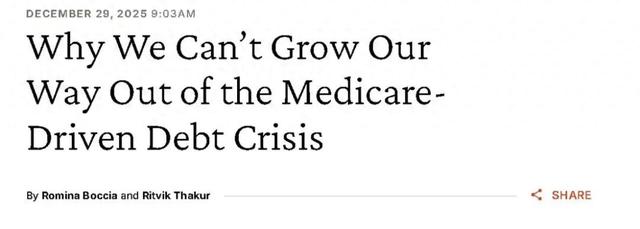
Core Viewpoint - The concept of "cut-off line" highlights the fragility of the U.S. social security system, indicating that ordinary citizens may face severe financial distress due to systemic vulnerabilities, leading to a potential debt crisis for taxpayers and the nation [1]. Group 1: Medicare System Challenges - The U.S. Medicare system is facing unsustainable growth in expenditures, which has become a primary driver of the national debt issue, contributing to a projected funding gap of over $53 trillion, accounting for 72% of the total long-term funding shortfall [1]. - In the next decade, the federal Medicare program is expected to generate a funding gap of $9.5 trillion, representing 45% of the anticipated $21 trillion federal deficit [1]. Group 2: Expenditure Growth Factors - Medicare spending is increasing at a rate faster than GDP growth, and without reform, economic growth alone will not resolve the issue [2]. - Key factors driving the accelerated growth in Medicare expenditures include advancements in medical technology and increased life expectancy, but the more fundamental issue lies in systemic inefficiencies and resource wastage within the Medicare framework [2]. Group 3: Systemic Inefficiencies - A significant portion of Medicare spending, potentially over one-third, does not yield tangible health benefits for patients, as the system incentivizes low-quality service providers [2]. - The inclusion of various diagnostic and treatment services in Medicare spending has not adequately considered the resulting resource wastage and the financial burden on taxpayers [4]. Group 4: Lobbying and Reform Resistance - Some insurance providers exploit diagnostic exaggeration to profit from Medicare, while a powerful lobbying group comprising insurers and healthcare providers actively resists reforms that would close these loopholes, spending six times more than military lobbying efforts [4]. - Proposed reforms to the Medicare system, which could significantly impact the healthcare industry's profits, face substantial resistance in Congress due to partisan conflicts and lobbying pressures [7].
如何才能避开人生路上的斩杀线
雪球· 2026-01-02 07:04
Core Viewpoint - The article discusses the concept of the "kill line" in the context of financial stability and personal resilience, emphasizing the importance of preparation and prudent financial management to avoid falling into dire situations [3][4][5]. Group 1: Financial Preparedness - The article highlights the rising cost of living in the U.S., where many individuals face significant financial burdens, leading to a precarious lifestyle [7][9]. - It suggests that having sufficient savings can provide a safety net during unexpected hardships, allowing individuals to maintain a stable mindset rather than resorting to high-risk financial behaviors [14][19]. - The importance of avoiding high debt levels when purchasing assets, such as homes, is emphasized, particularly for those in unstable job situations [20][21]. Group 2: Continuous Improvement and Adaptation - The article warns against complacency, stating that individuals must keep pace with technological advancements and societal changes to avoid being left behind [23][25]. - It discusses the potential for increased wealth disparity due to technological advancements and the necessity for individuals to adapt to these changes to remain competitive [26][28]. Group 3: Asset Management and Social Engagement - The article advocates for investing in quality assets that generate cash flow, such as dividend stocks and government bonds, as a means to enhance financial security [30][31][32]. - It stresses the importance of social connections and mutual support among peers, suggesting that strong relationships can provide emotional and practical support during challenging times [33][35][36].

“斩杀线”之下,“美国梦”暗淡
Zhong Guo Xin Wen Wang· 2025-12-31 12:41
Group 1 - The term "kill line," originating from the gaming world, is becoming a metaphor for understanding the realities of American society as 2025 approaches [2] - Many American middle-class families are experiencing a rapid decline in their economic stability due to rising medical bills, unemployment risks, and unexpected expenses, leading to a critical point where a single shock could trigger a chain crisis [2] - The facade of the "American Dream" is being stripped away, revealing a structural gap between hope and despair [3]

美媒也坐不住了:“斩杀线”存在,且仍在被抬高
Sou Hu Cai Jing· 2025-12-28 15:24
Core Viewpoint - The term "Death Line" has gained popularity in Chinese social media, highlighting the economic struggles faced by many Americans, particularly the middle class, who are at risk of financial ruin due to unexpected events [1][2]. Economic Conditions - Approximately 67% of Americans are living paycheck to paycheck, with 59% unable to cover an unexpected expense of $1,000 [1]. - Many middle-class Americans, despite having decent incomes, find their savings depleted after covering essential expenses such as food, housing, and healthcare [2]. Housing and Healthcare Costs - The cost of housing in the U.S. is higher than in China, and American families have a weaker capacity to withstand financial shocks [3]. - A report indicates that 42% of American households live below the ALICE threshold, which represents families that are employed but financially insecure [5]. Poverty Line and Living Costs - The current poverty line for a family of four in the U.S. is set at $32,150, which is considered inadequate to reflect the true cost of living today [6]. - A recalculated basic living cost for a family of four is estimated to be around $136,500, nearly four times the official poverty line, indicating a significant gap between reported poverty and actual living expenses [6]. Impact of Policy Changes - The recent tax and spending bill signed by former President Trump is set to cut over $1 trillion from healthcare funding, potentially affecting up to 10 million Americans' health insurance [7]. - The administration claims that these cuts will reduce waste and promote self-sufficiency, but they may increase pressure on millions of Americans living on the edge of poverty [7].
一条“斩杀线”,击碎“美国梦”
Sou Hu Cai Jing· 2025-12-28 11:27
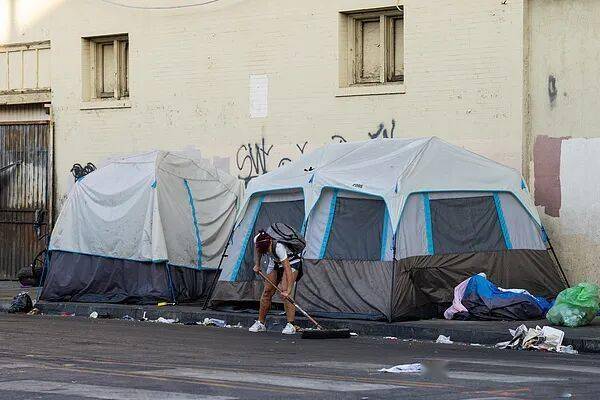
Core Insights - The term "kill line," originally from gaming, is now being used to describe the precarious financial situation of certain middle-class Americans, where a combination of risks like medical emergencies and unemployment can lead to a rapid descent into poverty [1][9] - A significant portion of the American population is facing economic difficulties due to unexpected expenses, with surveys indicating that 59% of Americans lack sufficient savings to cover a $1,000 emergency [3][4] - The concept of "ALICE" (Asset Limited, Income Constrained, Employed) highlights a demographic that, while employed, struggles to meet basic living costs, revealing deeper economic issues in the U.S. [4][5] Economic Conditions - A recent report from the Federal Reserve indicates that nearly 40% of American adults would be unable to pay for a $400 emergency using cash or its equivalent, underscoring the growing visibility of the "kill line" [3] - Financial strategist Michael Green argues that the poverty line in the U.S. is significantly underestimated, suggesting that a family of four needs an annual income of at least $136,500 to maintain basic living standards, which is much higher than the official poverty line [5][8] Social Implications - The existence of the "kill line" reflects a critical societal issue, as many Americans find themselves on the brink of financial disaster, with a single unexpected event potentially leading to a chain reaction of crises [9] - Discussions on social media reveal a consensus that the U.S. social safety net has significant gaps, with many feeling that the government is indifferent to the struggles of lower-income individuals [8][9]

美媒一定程度上承认了“斩杀线”存在
Xin Lang Cai Jing· 2025-12-28 08:05
Core Viewpoint - The article discusses the concept of the "kill line" in the U.S., which refers to the precarious financial situation many Americans face, where a small crisis could lead them into poverty. This term has gained traction on Chinese social media, highlighting the financial struggles of Americans despite the perception of wealth in the U.S. [2] Financial Situation of Americans - Approximately 67% of Americans are living beyond their means, according to a report by PNC Bank set to be released in 2025 [2] - A survey by Bankrate indicates that about 59% of Americans cannot afford an unexpected expense of $1,000 [2] Public Perception and Comparison - A user from Seattle noted that families earning less than $100,000 find it very difficult to manage financially unless they do not have to pay rent or mortgage or medical insurance [2] - The article highlights a shift in perception among Chinese people, who have traditionally viewed Americans as wealthy, as they now recognize the economic challenges faced by many in the U.S. [2] - While the article attempts to defend the U.S. by stating that China's social security system is limited compared to the U.S., it acknowledges that China has lower housing costs and stronger family support, making the financial struggles in the U.S. appear more severe [2]