
民营企业融资

Search documents
海创汇构建多元创投服务 精准赋能中小企业融资
Sou Hu Cai Jing· 2025-06-03 08:17
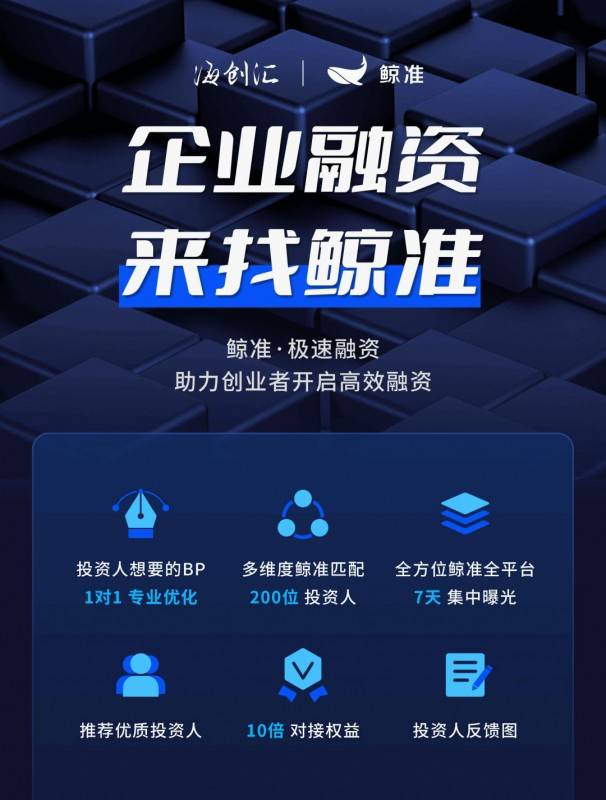
Group 1 - The core issue of financing difficulties for private enterprises, especially small and medium-sized enterprises (SMEs), has been highlighted, with a focus on the government's commitment to address these challenges [1] - The recent meeting on February 17 emphasized the need for continued efforts to resolve the financing issues faced by private enterprises, reinforcing the support from the highest levels of government [1] - Data from the 2024 Equity Investment Annual White Paper indicates a significant decline in financing amounts and the number of financing deals for non-listed "little giants," with a notable drop in average financing amounts for listed "little giants" as well [1] Group 2 - Haichuanghui's "Whale Accurate Financing" service has successfully facilitated financing connections for nearly 500 enterprises in 2024, aiding over 20 companies in completing nearly 30 financing transactions [3] - The service employs a systematic approach, including project highlight optimization, financing story development, and investor matching, to enhance the efficiency of financing for project parties [3] - The introduction of the "Specialized and Innovative Venture Capital Intelligent Body" provides entrepreneurs with a more convenient financing matching channel, allowing for rapid connections with relevant investors [3] Group 3 - Haichuanghui has accumulated a rich ecosystem in the venture capital service sector, gathering over 35,000 investment institutions and 50,000 certified investors, along with data on over 1 million quality entrepreneurial enterprises [5] - The company offers a variety of financing solutions through partnerships with multiple financial institutions, aiming to alleviate funding pressures for enterprises and support their rapid development [5] - The comprehensive services provided by Haichuanghui, including capital roadshows and emergency transfer loans, have created a more efficient connection between capital and enterprises, paving the way for the rapid growth of specialized and innovative SMEs [5]

“12345”工作法缓解民企融资难
Su Zhou Ri Bao· 2025-06-03 00:21
Core Viewpoint - The article highlights the establishment of a comprehensive financing coordination mechanism in Suzhou to address the financing challenges faced by private enterprises, particularly small and micro enterprises, aiming to create a more favorable business environment [1][2][3]. Group 1: Financing Coordination Mechanism - Suzhou has developed a "1+10+41" system for financing coordination, which includes one city-level mechanism, ten district-level responses, and 41 commercial banks actively participating [2]. - The city has implemented a "12345" working method that focuses on five dimensions: mechanism, process, big data, products, and publicity to create a new financing ecosystem [1][2]. Group 2: Policy Initiatives - The city plans to increase the growth rate of inclusive loans for small and micro enterprises to exceed the average growth rate of all loans, with a target of adding 100 billion yuan in new inclusive loans by 2025 [3]. - New policies aim to reduce intermediary steps and encourage banks to provide comprehensive financing services with stable or decreasing costs for small and micro enterprises [3]. Group 3: Accelerated Financing Processes - A three-tiered network has been established to enhance collaboration between government and banks, ensuring dedicated personnel are responsible for financing needs at various levels [4]. - By April 2023, the initiative has covered 770,000 small and micro enterprises, with 117,000 included in the recommendation list and 80,000 loan disbursements made [4]. Group 4: Diverse Financing Products - The city has focused on four types of loans: first loans, credit loans, non-repayment renewals, and transfer loans, significantly improving the financing experience for enterprises [5]. - As of now, 4,020 first loans have been supported, amounting to 15.7 billion yuan, while credit loans have reached 127.1 billion yuan, accounting for 26.2% of total loans [5]. Group 5: Innovative Financing Ecosystem - The city has conducted over 100 "one-time runs" to facilitate financing coordination and has enabled the issuance of 1.7 billion yuan in innovative bonds for enterprises [6]. - Digital technology is being leveraged to enhance service quality, utilizing extensive data to create precise profiles of enterprises for better financing solutions [6]. Group 6: Effective Communication and Outreach - A promotional matrix combining official and social media channels has been established to disseminate financing policies and services directly to enterprises, resulting in over 2,000 weekly inquiries [7]. - The city aims to continuously reduce burdens on private enterprises and empower them for high-quality development, establishing a model for financing services [7].
一月内至少六省发布支持政策,民营经济促进法加速落地
Hua Xia Shi Bao· 2025-05-30 10:38
Core Points - The National People's Congress has passed the "Private Economy Promotion Law," which will take effect on May 20, 2025, marking a significant step in supporting the private sector in China [2][4] - The private economy contributes over 50% of tax revenue, 60% of GDP, 70% of technological innovations, 80% of urban employment, and 90% of the total number of enterprises in China [2] - Various provinces have introduced policies to promote the high-quality development of the private economy, including financial support and reducing regulatory burdens [4][5][6] Policy Implementation - The National Development and Reform Commission plans to accelerate the establishment of supporting mechanisms related to investment, technology innovation, and rights protection to implement the new law effectively [3] - Recent policies from provinces like Beijing, Shaanxi, Jiangxi, and others focus on reducing financing costs for private enterprises and improving the business environment [4][5][6] - Specific measures include financial services for small and medium-sized enterprises, reducing administrative inspections, and protecting entrepreneurs' legal rights [5][6] Challenges and Market Conditions - Despite the supportive policies, the private sector still faces challenges such as tight funding and excessive regulatory enforcement, which have led to some enterprises exiting the market [8] - The bond issuance by private enterprises remains low, with only 1,022 billion yuan issued in the first four months of 2025, accounting for just 2% of the total credit bond issuance [9] - Ongoing efforts are needed to address the financing difficulties faced by private enterprises and to innovate financing tools [9]

破除民企融资隐形梗阻
Jing Ji Ri Bao· 2025-05-28 18:38
Core Insights - The data from the National Financial Supervision Administration indicates that as of the end of Q1 this year, the loan balance for private enterprises reached 76.07 trillion yuan, a year-on-year increase of 7.41%, while the balance of inclusive loans for small and micro enterprises was 35.3 trillion yuan, growing by 12.5% [1] - The availability of credit loans for private enterprises has improved, with a credit loan balance of 18.1 trillion yuan, reflecting a year-on-year increase of 15.4% [1] - The government is committed to supporting the high-quality development of the private economy, implementing a series of measures to address financing issues, including setting annual service targets for private enterprises and increasing support for key sectors such as technology innovation and green low-carbon initiatives [1] Group 1 - Financial institutions must ensure that policies supporting private enterprises are effectively implemented, aligning financial support with the contributions of the private economy to social and economic development [2] - It is essential to eliminate ownership discrimination in financing, allowing high-quality private enterprises to access external financing more fairly and conveniently [2] - Financial institutions should enhance service capabilities to alleviate information asymmetry, utilizing digital tools to improve credit data for enterprises and address financing constraints [2] Group 2 - Private enterprises are encouraged to strengthen their internal development capabilities by focusing on their core business, enhancing innovation, and improving quality and competitiveness to foster a healthy development of the private economy [3]
护航民企融资 金融力量持续释放
Zheng Quan Shi Bao· 2025-05-28 17:57
Core Insights - The Chinese government is enhancing financial support for private enterprises, with banks increasing credit and innovative financing products to improve the financing environment for these companies [1][2][5]. Group 1: Credit Financing Support - Credit remains the dominant financing method in China, with the People's Bank of China encouraging financial institutions to utilize structural monetary policy tools to support private enterprises [2]. - Major state-owned banks, such as Industrial and Commercial Bank of China, plan to provide at least 6 trillion yuan in financing to private enterprises over the next three years [2]. - Agricultural Bank of China reports that over 50% of its loans in technology finance and inclusive finance are directed towards private enterprises, with expectations of a loan balance exceeding 7.5 trillion yuan by the end of 2025 [2]. Group 2: Direct Financing Initiatives - The enthusiasm for bond financing among private enterprises has surged, supported by new tools and measures introduced since February [5][6]. - In the first quarter of 2025, private enterprises issued 85 debt financing instruments in the interbank market, totaling 76.25 billion yuan, accounting for over 90% of corporate credit bonds [6]. - The average issuance interest rate for private enterprise debt financing tools decreased to 2.86%, down 21 basis points from 2024 [6]. Group 3: Innovative Financial Products - Various innovative financial products have been launched to support private enterprises, including the first asset-backed securities (ABS) for equipment updates, which raised 4.554 billion yuan [8]. - The establishment of a credit information sharing platform for small and micro enterprises has facilitated financing for nearly 800 companies, with 90% being inclusive small and micro enterprises [8]. Group 4: Policy Support for International Expansion - Policy banks are also playing a crucial role in supporting private enterprises' international expansion, with the Export-Import Bank of China launching a special plan to enhance international trade cooperation [4]. - Financial institutions are developing comprehensive financial service plans to support foreign trade enterprises, particularly addressing the needs of small and medium-sized private enterprises facing funding shortages and exchange rate fluctuations [3].
威海采取系列扎实举措,破局民营企业融资难题
Qi Lu Wan Bao Wang· 2025-05-27 02:26
Group 1 - The financing difficulties and high costs faced by private enterprises in Weihai are part of a long-term, global issue, prompting the local government to implement effective measures to improve the financial environment [1] - The total loan balance in Weihai has doubled over five years, with an average annual growth rate of 15.36%, ranking among the top in the province; as of the end of March, the total loan balance reached 624.79 billion yuan, with private enterprise loans at 130.06 billion yuan, reflecting a growth of 6.68% since the beginning of the year [1] - The average interest rate for newly issued loans in March was 4.3%, a year-on-year decrease of 0.42 percentage points, indicating a stable decline in comprehensive financing costs [1] Group 2 - A "1+N" regular bank-enterprise connection mechanism has been established, with over 30 government-bank-enterprise connection activities held annually, addressing information asymmetry and enhancing cooperation effectiveness [2] - The "Financial Partnership" mechanism aims to provide comprehensive financing services tailored to individual enterprises, focusing on supporting small and micro enterprises and individual businesses [2] Group 3 - The Weihai Finance Bureau plans to address the issue of financial institutions being hesitant to lend, aiming to attract more credit resources and support for private enterprises [3] - The initiative includes reducing the threshold for first-time loans, targeting at least 2,500 new first-time loan enterprises within the year, and expanding direct financing channels for eligible private enterprises [3] - Emphasis will be placed on nurturing technology-oriented private enterprises for potential public listings, with increased guidance and expedited processes [3]
破解“首贷难”是支持小微企业的重要抓手(专家谈)
Ren Min Ri Bao· 2025-05-25 21:59
从信贷政策看,做深做实支持小微企业融资协调工作机制,有助于加强央地协同,从供需两端发力,进 一步破解企业和银行之间的信息不对称,实现直达基层、快速便捷、利率适宜等目标。同时,制定实施 护航外贸发展系列政策措施,将对受关税影响较大的民营企业提供精准服务,帮助企业拓展市场、稳定 经营。 总之,近期一揽子金融政策传递出明确的政策信号,有助于进一步稳定民营企业信心和预期,推动民营 企业高质量发展,为解决民营企业融资难融资贵问题创造更好条件。 记者:解决民营企业融资难问题,政策措施还需要进一步从哪些方面发力? 民营经济是推进中国式现代化的生力军,是高质量发展的重要基础。2月17日召开的民营企业座谈会强 调,继续下大气力解决民营企业融资难融资贵问题。民营企业座谈会召开以来,相关部门加快落实这一 部署,引导金融机构增加对民营和小微企业信贷投放。近期一揽子金融政策落地,民营企业也是支持重 点之一。 政策组合拳将如何发力?民营企业融资还有哪些方面需要政策持续用力?记者采访了招联首席研究员、 上海金融与发展实验室副主任董希淼。 记者:近期一揽子金融政策,对解决民营企业融资难融资贵问题将发挥哪些作用? 董希淼:从货币政策看,全面降 ...
破解民企融资难!民营经济促进法设专章,广东接连“放大招”
Nan Fang Du Shi Bao· 2025-05-20 09:29
金融是企业发展的源头活水。一段时间以来,民营企业融资难、融资贵、融资慢,一直是社会关注焦 点。 5月20日正式实施的《中华人民共和国民营经济促进法》(简称"民营经济促进法")设"投资融资促 进"专章,为破解民营企业融资难题提供了系统性解决方案。 广东民营经济发达,民营经济主体常年位居全国第一。如何让普惠金融实现精准滴灌,帮助民企走过初 创期、迈过成长期、跨过转型期,是摆在经济第一大省面前的重要命题。 民营经济促进法实施将对推动广东民营经济投融资产生哪些积极影响?广东如何培育形成争先创新的民 营企业"热带雨林"生态?针对这些问题,南都记者分别对话了多位专家学者及企业家。 渠道窄、成本高、周期长 如何破解民企融资难题? 资本是拉动企业扩大生产,形成规模化的重要因素。中小企业是民营企业的主力军,但往往面临较高的 投融资门槛。 中国政法大学法学教授、博导武长海。受访者供图 广东省工商联(总商会)副会长、汕尾市工商联主席,广东百利食品股份有限公司总裁兼首席执行官彭 晋谦。受访者供图 广东省工商联(总商会)副会长、汕尾市工商联主席,广东百利食品股份有限公司总裁兼首席执行官彭 晋谦向南都记者分析称,金融机构习惯以房产、土地 ...

降低非利息成本 让民企融资“体感”更好
Zheng Quan Ri Bao· 2025-05-19 16:53
■苏向杲 民营企业在推动经济增长、促进技术创新、增加就业、改善民生等方面发挥了不可替代的作用。当前, 进一步加大对民营企业的金融支持力度对促进我国经济高质量发展意义重大。2月17日召开的民营企业 座谈会提出,继续下大气力解决民营企业融资难融资贵问题。 其二,金融机构需持续完善激励考核机制。 民营企业中小微企业占绝大多数,这类企业普遍存在抵押物不足、违约成本低等特征。银行对这类企业 贷款时要求担保介入的一大原因是信贷员头顶追责机制的达摩克利斯之剑。因此,完善激励考核机制对 降低非息融资成本也至关重要。当然,完善激励考核机制不是忽略商业可持续性,而是在不放松风控的 前提下,不断提升容错纠错机制。当银行从业者在放贷时既能获得正当激励,也能确保尽职免责,民营 企业的非利息融资成本有望持续压缩。 其三,强化监管,形成政策合力。 5月20日起正式实施的《中华人民共和国民营经济促进法》提到,金融机构在依法合规前提下,按照市 场化、可持续发展原则开发和提供适合民营经济特点的金融产品和服务,为资信良好的民营经济组织融 资提供便利条件,增强信贷供给、贷款周期与民营经济组织融资需求、资金使用周期的适配性,提升金 融服务可获得性和便 ...
完善多层次资本市场服务体系 加力支持民营企业发展
Zhong Guo Zheng Quan Bao· 2025-05-13 20:54
Core Points - The "Private Economy Promotion Law" will take effect on May 20, 2025, focusing on addressing the financing difficulties and high costs faced by private enterprises [1] - The A-share market has seen 38 new listings this year, with 33 being private enterprises, accounting for 86.84% [1][2] - Private enterprises issued 312 bonds in the exchange bond market this year, with a total issuance amount of 104.336 billion yuan, a year-on-year increase of 23.46% [1][4] Group 1: Capital Market Support - The capital market serves as a crucial platform for the growth of private enterprises, with nearly two-thirds of A-share listed companies being private [2] - The introduction of the "Merger and Acquisition Six Guidelines" has led to significant mergers and acquisitions in the private sector, exemplified by the approval of a major new energy vehicle acquisition project [2][3] - The overall R&D intensity of private listed companies is 4.19%, significantly higher than the market average, indicating strong innovation vitality [3] Group 2: Bond Financing - The bond market is expanding to support private enterprises, with measures such as the introduction of a "Technology Board" and risk-sharing tools for technology innovation bonds [4] - The enthusiasm for bond issuance among private enterprises is rising due to declining interest rates and supportive measures from regulatory bodies [4][5] - The first batch of 36 technology innovation bonds has announced an issuance scale of 21 billion yuan, with private enterprises accounting for 6.3 billion yuan [4] Group 3: Institutional Mechanisms - The "Private Economy Promotion Law" aims to enhance the financing environment for private enterprises by establishing a multi-level capital market system [6] - Regulatory bodies are expected to introduce more policies to support private enterprises, focusing on improving market inclusivity and transparency [6][7] - Continuous engagement with private enterprises by regulatory authorities is anticipated to boost confidence and drive development [7]