游戏出海

Search documents
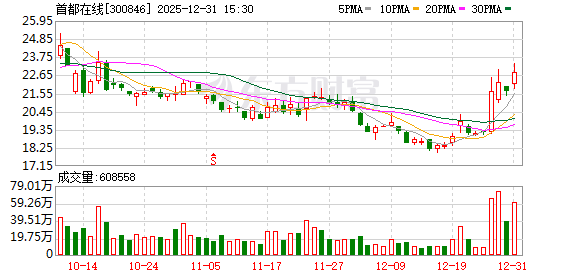
首都在线:重点对接商业航天、跨境电商、游戏出海等领域客户需求
Zheng Quan Ri Bao· 2025-12-31 08:39
Core Viewpoint - The company is leveraging its Wenchang Aerospace Supercomputing Center to capitalize on the growing demand for high-density, low-latency computing capabilities in the commercial aerospace sector, which includes satellite design, launch control, in-orbit operations, and data processing [2] Group 1: Business Operations - The Wenchang Aerospace Supercomputing Center is strategically located in the Wenchang International Aerospace City and is designed to meet the computing needs of commercial aerospace enterprises for satellite remote sensing data processing, aerospace simulation, and orbital calculations [2] - The center benefits from the Hainan Free Trade Port's "inside-outside" regulatory model and the negative list system for cross-border data flow, facilitating the processing of cross-border aerospace data [2] - The center aims to support cross-border data transmission, storage, and analysis for commercial aerospace companies, leveraging future international submarine cable connectivity [2] Group 2: Industry Integration - Wenchang is a significant aerospace launch base in China, attracting resources from the upstream and downstream of the commercial aerospace industry chain [2] - The Wenchang Aerospace Supercomputing Center integrates into the local industrial ecosystem, providing a comprehensive infrastructure service of "computing power + network + storage" for commercial aerospace enterprises [2] - The company is focusing on meeting the needs of clients in commercial aerospace, cross-border e-commerce, and gaming sectors, aiming to diversify its cloud network service scenarios [2] Group 3: Future Outlook - The company plans to continue leveraging policy, location, and computing facility advantages to enhance its cross-border computing service capabilities [2] - The company will keep stakeholders updated on business progress as it seizes opportunities presented by the closure of borders [2]


互联网行业2026年投资策略:AI、游戏和电商出海、外卖边际缓和是关键变量
Guoxin Securities· 2025-12-30 13:58
Group 1: Core Insights - The report emphasizes the importance of AI, gaming, and e-commerce expansion as key growth drivers for the internet industry in 2026, while also noting that the marginal easing of food delivery services will be a critical variable [1][30] - The historical performance of the Hang Seng Technology Index and the Hang Seng Index indicates that the Hong Kong stock market is heavily influenced by US dollar liquidity and macroeconomic factors, with a tendency for weak performance in Q4 and subsequent recovery in Q1/Q2 of the following year [4][10] Group 2: Company-Specific Insights - Alibaba is highlighted as a full-stack AI self-research company, with a focus on increasing market share of its Qianwen model globally, driving growth in cloud services through open-source community engagement, and enhancing profitability through self-developed chips [4][30] - Tencent's advertising business is expected to maintain rapid growth due to AI empowerment, while overseas gaming is identified as a significant growth area, with notable acceleration in 2025 [4][30] - Meituan's food delivery competition in 2025 is noted for its impact on cash flow and profitability, with a focus on monitoring changes in competitive dynamics and potential recovery in market share [4][30] - Baidu's announcement of the Kunlun chip IPO is seen as a significant narrative under the AI backdrop, with attention on the progress of its autonomous driving business [4][30] - Kuaishou is recognized as a rare AI video export player, with a focus on leveraging domestic models to capture more global market share [4][30] Group 3: Market Trends and Projections - The report projects that the domestic economic growth rate will marginally slow down in 2026, with GDP growth expected to be 4.9% [20][21] - The Hang Seng Technology Index is currently trading at a PE ratio of 23x, indicating a significant valuation gap compared to the Nasdaq, which is at 41x [24][30] - The report notes that the majority of stock price increases in 2025 were driven by PE expansion, particularly for Alibaba, which saw a 77% increase primarily due to valuation uplift [12][30]
游戏行业赚快钱的时代结束了
Di Yi Cai Jing· 2025-12-30 05:45
Core Insights - The Chinese gaming industry in 2025 is characterized by a complex landscape of "recovery" and "internal competition," with market revenue exceeding 350 billion yuan and user base surpassing 680 million, indicating a year of continued recovery despite intense competition [3][4][12] - The industry is experiencing a significant market divide, with the "winner-takes-all" trend intensifying, leading to a situation where a few leading companies dominate the market, while smaller teams find new opportunities in single-player and AI-native games [3][10][12] Market Performance - In 2025, the domestic gaming market revenue is approximately 350.8 billion yuan, reflecting a year-on-year growth of 7.7%, while the user base has grown by 1.4% to over 680 million [4][5] - Self-developed games have generated overseas revenue of about 20.46 billion USD, maintaining a scale exceeding 100 billion yuan for six consecutive years [4][5] - Despite the overall upward trend in the gaming and esports industry, the market has entered a phase of stock competition, with a saturated user base and increased self-developed game output [4][5] Industry Challenges - The competition among gaming companies has intensified, with many projects failing despite significant investments, as seen with NetEase's "射雕" and Kingsoft's "解限机," which faced substantial player drop-off and negative feedback [5][6] - The cost of developing successful mobile games has increased significantly, making it harder for companies to achieve profitability [6][9] Market Dynamics - The market recovery is largely driven by a few top-tier games from leading companies like Tencent and NetEase, which dominate the revenue charts [7][9] - Tencent's gaming revenue reached 636 billion yuan in Q3 2025, with total revenue for the first three quarters exceeding 1.8 trillion yuan, solidifying its position in the market [9][10] Future Trends - The rise of single-player games is a notable trend, with companies increasingly focusing on high-quality, creative content rather than just marketing [12][13] - AI technology is emerging as a potential game-changer, offering new opportunities for smaller developers to compete by lowering development costs and enhancing creativity [11][15] - The industry is expected to enter a new "golden decade" of growth, driven by improved game quality, expanded overseas markets, and supportive policies [12][15]


从区域深耕到全球适配:中手游出海增长的进阶之路
Xin Lang Cai Jing· 2025-12-29 07:50
Core Insights - The core viewpoint of the article emphasizes that the overseas expansion of Chinese gaming companies, particularly CMGE, is becoming essential due to the competitive nature of the domestic mobile gaming market. CMGE's overseas revenue reached 235 million yuan in the first half of 2025, accounting for 30.8% of total revenue, marking a 33.2% year-on-year growth [1][9]. Group 1: Overseas Expansion Strategy - CMGE's overseas strategy follows a clear "domestic-foreign" progression, where products are first validated in the Chinese market before being systematically introduced to culturally similar overseas regions [3][11]. - The game "New Sword and Fairy: Swinging Sword to Ask for Love" achieved over 8 million pre-registrations and generated over 200 million yuan in its first month domestically before launching in Hong Kong, Macau, and Taiwan, topping the free and sales charts in those regions [3][11]. - Another product, "New Legend of the Condor Heroes: Blood and Heart," maintained a leading position domestically before launching overseas five months later, achieving rapid success in the Hong Kong, Macau, and Southeast Asian markets through localized adaptations [3][11]. Group 2: Product Development and Localization - CMGE's approach is not merely about replicating successful products but involves deep adaptation of content, pacing, and marketing strategies to fit regional characteristics, thereby forming a reusable and refined overseas expansion model [4][12]. - The adaptation of the top national comic IP "Dou Po Cang Qiong: Peak Showdown" successfully integrated into users' daily lives, achieving high rankings in multiple regions after its overseas launch [4][12]. Group 3: Industry Trends and Future Challenges - Despite success in culturally similar markets, CMGE faces challenges in expanding into Western markets, where preferences lean towards original IPs and open-world gameplay, necessitating fundamental innovations in product design and cultural expression [6][13]. - The industry is evolving towards a hybrid monetization model centered on "free download + ad monetization," which now accounts for over half of global gaming revenue. CMGE is reportedly developing numerous IAA products for overseas validation [6][13][14]. - Future product launches include "Three Kingdoms: Heroes of the Flames" in multiple Asian markets, with plans for further expansion into Vietnam and South Korea, highlighting the need for CMGE to respond flexibly to global market dynamics [6][14]. Group 4: Overall Assessment - CMGE's 30.8% growth in overseas revenue is a rational outcome based on its regional deepening, IP operation, and gradual expansion strategy, reflecting a broader trend in the globalization of the Chinese gaming industry [8][16].

海外30.8%高增长背后:解码中手游的全球化进阶逻辑
Zheng Quan Shi Bao Wang· 2025-12-29 04:59
Core Insights - The core viewpoint of the article is that the overseas expansion of Chinese gaming companies, particularly CMGE, has transitioned from an optional strategy to a necessity as the domestic mobile gaming market enters a phase of stock competition. CMGE's overseas revenue has significantly increased, indicating a successful shift in strategy [1][3]. Group 1: Financial Performance - CMGE's overseas publishing revenue reached 235 million yuan, accounting for 30.8% of total publishing revenue, a substantial increase from 14.1% in the same period last year, representing a year-on-year growth of 33.2% [1]. - The company has achieved notable success in various overseas markets, particularly in culturally similar regions such as Hong Kong, Macau, Taiwan, and Southeast Asia [4][15]. Group 2: Localization Strategy - CMGE employs a "domestic verification, overseas publishing" strategy, initially testing products in the Chinese market before launching them in culturally similar overseas regions, which has proven effective [4][9]. - The localization efforts go beyond mere language translation, delving into local customs and user habits, allowing for precise control over localized operations [4][10]. Group 3: Successful Products - The game "New Legend of Sword and Fairy" achieved over 8 million pre-registrations in China and generated over 200 million yuan in its first month, leading to its successful launch in Hong Kong, Macau, and Taiwan [6]. - "True Three Kingdoms" has seen significant success in various markets, including a rapid ascent to the top of the iOS free charts in Japan shortly after its release [8]. - The "Douluo Continent" series has also followed a successful path, achieving top rankings in both domestic and Southeast Asian markets [9]. Group 4: Technological Integration - CMGE has begun integrating AI technology into its overseas marketing efforts, including areas such as storyline generation and multilingual text conversion, aiming to enhance development efficiency and reduce costs [11][24]. Group 5: Market Adaptation and Future Strategies - The company recognizes the need to adapt its strategies to address potential limitations in its current approach, particularly in rapidly evolving global markets [17][18]. - CMGE is exploring hybrid monetization models, which have gained traction in the gaming industry, to enhance its adaptability in overseas markets [20][23]. - The company aims to balance regional depth with global expansion, focusing on creating a systematic and replicable approach to product design and localization strategies [18][25].
凯撒文化“摘帽”经营压力尚存
Zhong Guo Jing Ying Bao· 2025-12-28 16:22
Core Viewpoint - Caesar Culture has successfully removed the risk warning after rectification but continues to face financial losses, indicating ongoing challenges in its business performance [2][5]. Financial Performance - In the first three quarters of 2025, Caesar Culture reported revenue of 420 million yuan, a year-on-year increase of 28.62%, but incurred a net loss of 108 million yuan, a decline of 12.49% compared to the previous year [2][6]. Regulatory Issues - A year ago, Caesar Culture was penalized for inflating revenue, resulting in a fine of 4 million yuan and warnings issued to several executives [3][4]. - The company was found to have reduced bad debt provisions by 15.55% of its reported profit in 2021, amounting to 15.2467 million yuan [3]. Business Strategy - The company is focusing on its core business by continuing product development and optimizing its product structure to improve overall performance [7]. - Caesar Culture has a significant reserve of IP resources, including popular titles like "One Piece" and "Saint Seiya," which it aims to leverage for growth [7]. Asset Management - To support its operations, Caesar Culture has been mortgaging or selling non-core real estate assets, with plans to sell properties valued at 255 million yuan [8]. - As of September 2025, the company's investment properties were valued at 327 million yuan, reflecting a strategic shift to focus on its gaming business [8].


凯撒文化“摘帽” 经营压力尚存
Xin Lang Cai Jing· 2025-12-26 19:59
Core Viewpoint - Caesar Culture has successfully removed its risk warning after rectifying issues related to inflated revenue, but its financial performance remains poor, continuing to report losses despite a year-on-year increase in revenue [2][5]. Group 1: Regulatory Issues - One year ago, Caesar Culture was penalized by regulatory authorities for inflating revenue, leading to a risk warning being imposed [2][3]. - The company received a notice from the China Securities Regulatory Commission regarding its violations, which included manipulating accounts to reduce bad debt provisions and inflating profits by 15.55% in 2021 [3][4]. - The company was fined 4 million yuan, and several executives faced penalties, including fines totaling 1.2 million yuan for key management personnel [4]. Group 2: Financial Performance - In the first three quarters of 2025, Caesar Culture reported revenue of 420 million yuan, a year-on-year increase of 28.62%, but still incurred a net loss of 108 million yuan, a decline of 12.49% compared to the previous year [2][7]. - The company has been unable to turn a profit since 2022, when it reported a loss of 687 million yuan [6][7]. Group 3: Business Strategy and Operations - Caesar Culture has shifted its focus to the gaming industry, which has become its primary source of revenue since acquiring several gaming companies in 2015 [6]. - The company launched new games and is exploring new platforms to extend the lifecycle of existing titles, although these efforts have not yet significantly impacted profitability [7]. - To improve its financial situation, Caesar Culture plans to optimize its product structure and reduce costs while leveraging its extensive IP resources [7][9]. Group 4: Asset Management - As of September 2025, Caesar Culture's cash reserves decreased by 63.40% compared to the end of 2024, prompting the company to consider mortgaging or selling its investment properties [7][9]. - The company has already used properties valued at 165 million yuan and 43.66 million yuan as collateral for loans to support its operations [8][9]. - Additionally, Caesar Culture plans to sell 14 investment properties with a total book value of 255 million yuan to streamline its business and focus on its core gaming operations [9].

深圳打造出海第一城 广州规划大湾区游戏谷 “粤游戏”拿下全国八成营收
Shen Zhen Shang Bao· 2025-12-24 23:37
Core Insights - Shenzhen aims to become China's leading city for game exports, while Guangzhou plans to develop the "Greater Bay Area Game Valley," indicating the expansion of Guangdong's gaming industry [1][3] Group 1: Market Growth and Projections - The global gaming market is projected to reach $188.8 billion by 2025, growing at a rate of 3.4%, with the Asia-Pacific market expected to be $87.6 billion, growing at 2.3%, and China's market estimated at $52.3 billion [1] - Guangdong's gaming revenue is forecasted to reach ¥283.613 billion by 2025, representing a year-on-year growth of 8.9% [2] Group 2: User Base and Revenue Distribution - China's gaming user base has surpassed 680 million, marking a historical high, with Guangdong's gaming revenue accounting for over 80% of the national total, up from 79.94% last year [2] - In 2025, mobile games are expected to generate ¥211.632 billion, client games ¥69.655 billion, and mini-program games ¥37.046 billion in Guangdong [2] Group 3: Industry Leadership and Development Trends - Guangdong's gaming industry has shown an average annual growth rate of 12% over the past decade, solidifying its position as a national leader [2] - The region is transitioning from "product management" to "emotional management," enhancing its role as the "heart" of China's gaming industry [3] Group 4: International Expansion - Guangdong's self-developed games are projected to generate overseas revenue of ¥42.36 billion in 2024, with expectations of reaching ¥46.427 billion by 2025, reflecting a growth of 9.6% [3] - The trend of "hardcore overseas expansion" is becoming a significant development strategy for Guangdong's gaming industry [3] Group 5: E-sports and Cultural Integration - E-sports are increasingly becoming a social activity for young people, evolving into an independent industry with a new ecosystem [4] - The integration of e-sports with various sectors, including culture and tourism, is creating new consumption patterns and opportunities within the industry [4]
“粤游戏”拿下全国八成营收
Shen Zhen Shang Bao· 2025-12-24 17:22
Core Insights - Guangdong is positioning itself as a leading hub for the gaming industry in China, with initiatives to become the first city for game exports and the establishment of the "Greater Bay Area Game Valley" [2][3] Group 1: Market Growth and Projections - The global gaming market is projected to reach $188.8 billion by 2025, growing at a rate of 3.4%, with the Asia-Pacific region expected to generate $87.6 billion, a 2.3% increase [2] - China's gaming revenue is estimated to reach $52.3 billion by 2025, while Guangdong's gaming revenue is forecasted to hit ¥283.61 billion, reflecting an 8.9% year-on-year growth [2][3] Group 2: Guangdong's Market Share - Guangdong's gaming revenue accounts for over 80% of the national total, increasing from 79.94% the previous year, with a significant contribution from mobile games, client games, and mini-program games [3] - The province has seen an average annual growth rate of 12% in its gaming industry over the past decade, solidifying its status as a national leader [3] Group 3: Industry Development and Trends - The gaming industry in Guangdong is transitioning from "product management" to "emotional management," reinforcing its position as the "heart" of China's gaming sector [4] - The esports sector is rapidly evolving into a standalone industry, driven by new consumer trends and policies, with significant growth in esports-related products and events [4] Group 4: International Expansion - Guangdong's self-developed games are projected to generate over ¥42.36 billion in overseas revenue in 2024, with expectations for this figure to reach ¥46.43 billion by 2025, marking a 9.6% increase [4]


从《原神》到《黑神话:悟空》,中国游戏出海进阶之路
2 1 Shi Ji Jing Ji Bao Dao· 2025-12-24 05:40
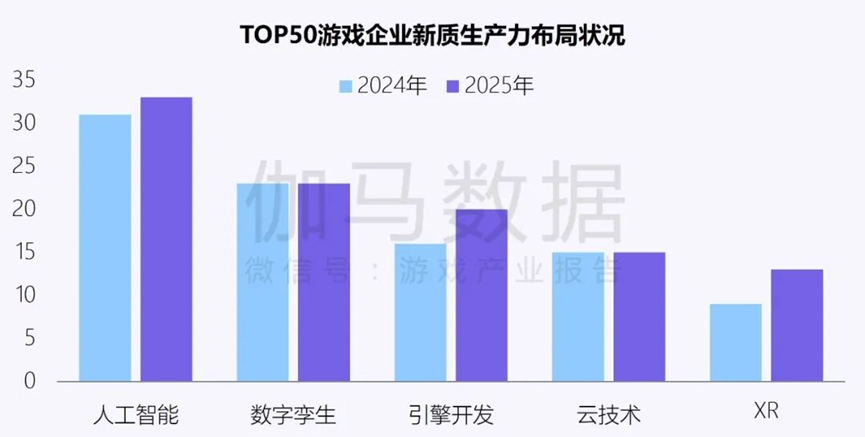
Core Insights - The Chinese gaming industry has experienced significant growth, with annual revenue increasing from 140.7 billion RMB to 325.7 billion RMB from 2015 to 2025, marking a doubling in revenue over the decade [1] - The focus has shifted from single product overseas distribution to a comprehensive global strategy encompassing investment, development, testing, publishing, and operation [2] - By 2025, the actual sales revenue of self-developed games in overseas markets is projected to reach 20.455 billion USD (approximately 144.03 billion RMB), reflecting a year-on-year growth of 10.23% [2] Industry Trends - The Chinese gaming industry has seen a comprehensive upgrade from government support to institutional backing and team enhancements, with initiatives like the "Game Shanghai Ten Articles" and the establishment of overseas service centers [3] - Major companies like Tencent and Century Huatong have reported substantial overseas revenues, with Tencent's overseas income reaching 20.8 billion RMB, accounting for about one-third of its total gaming revenue, and a year-on-year growth of 43% [4] - The diversification of game genres and gameplay has been crucial, with successful titles across various categories, including action, simulation, and RPGs, indicating a broadening of market appeal [4][5] Globalization Strategies - Chinese gaming companies are increasingly adopting global strategies from the outset, moving from localized adaptations to deep localization that considers cultural preferences and gameplay mechanics [8] - The shift in publishing strategies includes simultaneous global launches and prioritizing overseas versions, enhancing the relevance of products in international markets [8] - The use of interactive advertising and market testing has become common, allowing developers to gather real-time feedback and adjust their products accordingly [9] Technological Advancements - The integration of advanced technologies such as AI, VR, and cloud computing has become essential for Chinese gaming companies to enhance operational efficiency and market responsiveness [12][14] - AI technologies are being leveraged to streamline creative processes, allowing for rapid development and iteration of game concepts, thus reducing costs and time [15][16] - The 2025 report indicates that the growth in gaming revenue and user base is attributed to improved mobile game quality, successful long-standing titles, and the strong performance of mini-program games [16]