生态循环农业

Search documents
苏州全市秸秆综合利用率99.9%,走在全国前列
Su Zhou Ri Bao· 2025-08-08 23:39
Group 1 - The core viewpoint is that Suzhou has successfully implemented innovative straw resource utilization methods, achieving a straw comprehensive utilization rate of 99.9% and livestock manure resource utilization rate of 96.4%, leading the nation in these metrics [1][2] - The traditional methods of straw disposal, such as burning, have been detrimental to air quality and soil health, prompting the need for more sustainable practices [1] - Longyun Village has developed a cooperative farming model that utilizes scientific techniques to convert straw into organic fertilizer, enhancing rice growth and improving soil quality [1] Group 2 - Donglin Village in Taicang has upgraded its straw utilization to a "3.0 version," producing 30,000 tons of fermented straw feed annually, which is sold for 500 yuan per ton across various regions [2] - The transformation of straw from a waste product to a profitable resource has contributed to the economic development of local villages, showcasing a successful model of ecological circular agriculture [2] - Donglin Village was recognized as a "Zero Carbon Village Demonstration Village" by the Ministry of Agriculture and Rural Affairs and the United Nations Development Programme, highlighting its commitment to sustainable practices [2]
“丰”景如画!寨岗镇东升村早稻飘香收割忙
Nan Fang Nong Cun Bao· 2025-07-26 10:05
Core Viewpoint - The article highlights the successful harvest of early rice in Dongsheng Village, Zhaigang Town, showcasing the effective agricultural practices and modern technology employed by Renhe Family Farm to achieve high yields and efficiency in rice production [2][3][23]. Group 1: Agricultural Practices - Renhe Family Farm has cultivated 200 acres of early rice, utilizing the hybrid rice variety "Tai Feng You 208," which is known for its excellent taste and adaptability, laying a solid foundation for high yields [6][7]. - The farm has adopted an ecological circular agriculture model by integrating ducks into rice fields, which helps in soil aeration, pest control, and fertilization, creating a mutually beneficial relationship between rice and ducks [8][9][10]. Group 2: Technological Advancements - The farm has increasingly relied on modern agricultural technology, including mechanized planting and smart agriculture applications, to reduce production costs and enhance efficiency [11][12]. - The use of drones for pest control and fertilization has significantly improved operational efficiency, with one drone completing the work of one person in a fraction of the time, ensuring higher rice yields [14][15][16]. Group 3: Harvesting Efficiency - The harvesting process has been streamlined with the use of advanced machinery, allowing for quick and efficient collection of rice, with a single high-performance harvester capable of completing the task for 200 acres in 4 to 5 days [20][21][22]. - The farm anticipates a harvest of approximately 130,000 pounds of early rice this year, facilitated by favorable weather conditions and the establishment of stable sales channels for their quality rice [23][24].


二十四节气看蒙牛丨大暑走进和林一牧看科技防暑与生态反哺
Zhong Guo Jing Ji Wang· 2025-07-22 06:57
Core Insights - The article highlights the innovative practices in modern dairy farming, particularly in the context of high temperatures during the summer season, showcasing how technology and human care are utilized to maintain the comfort and productivity of dairy cows [1][3][5]. Group 1: Technological Innovations - The farm employs an automated sprinkler system and a fan system in the milking hall to maintain a comfortable temperature range of 16-18°C, ensuring that the cows' feed intake remains above 43 kilograms even during high temperatures [3][5]. - Each Holstein cow is equipped with a smart collar that captures real-time data on activity, rumination, and health, allowing for precise management and timely health alerts [5][9]. - The farm is transitioning to a "smart farm" model, implementing automated temperature control systems, precise feeding models, and health warning algorithms to enhance the quality assurance of milk production [9]. Group 2: Sustainable Practices - The farm utilizes a waste management system that converts cow manure into bedding material and organic fertilizer, promoting a green ecological cycle [7]. - A 300-acre windbreak forest of Xinjiang poplar trees, combined with an automated irrigation system, creates a unique microclimate that provides a comfortable environment for the cows and enhances the ecological value of the farm [7]. - The farm has been recognized as an "Ecological Circular Agriculture Demonstration Base" in Inner Mongolia for its sustainable practices [7]. Group 3: Production Efficiency - Despite the challenges posed by high temperatures, the farm maintains an average daily milk production of over 42 kilograms per cow [5]. - The farm has received multiple accolades, including being designated as a "National Standardized Demonstration Farm for Livestock and Poultry Breeding" and a "Source Base for Student Drinking Milk" [9].
秸秆“换”出牛口粮 牛粪“变”成生态肥 句容生态循环“串” 出乡村共富新路径
Zhen Jiang Ri Bao· 2025-07-13 23:39
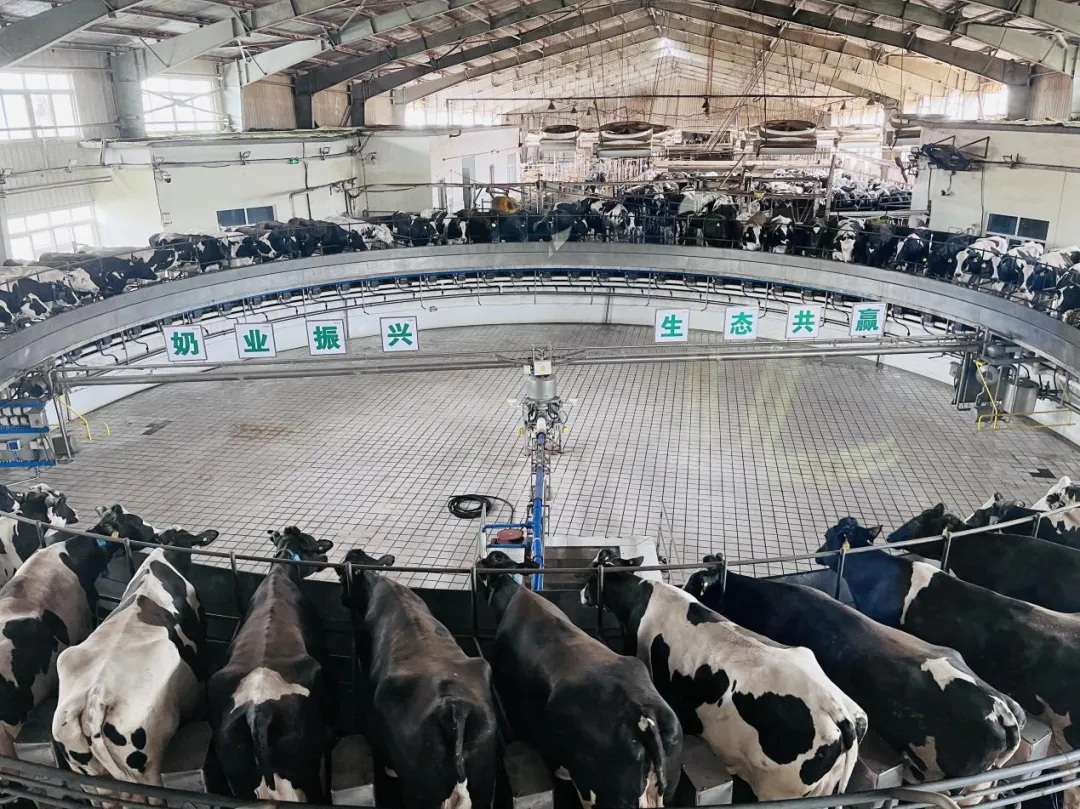
Core Insights - The article discusses a unique ecological agricultural collaboration between two villages in Jurong City, focusing on a "straw for manure" model to create a closed-loop industrial chain that enhances resource utilization and promotes rural revitalization [1][2][3]. Group 1: Resource Complementarity - The collaboration involves Dai Zhuang Village and Cai Men Village, where Dai Zhuang's family farm has been practicing "crop-livestock integration" since 2020, raising 110 cattle and utilizing corn straw for feed [2]. - Cai Men Village is developing a fresh corn industry in partnership with the Provincial Academy of Agricultural Sciences, with plans to expand its base from 110 acres to 200 acres [2]. - The agreement allows Cai Men Village to provide corn straw and substandard corn to Dai Zhuang Village, which will process it into high-nutrition silage for cattle, while returning fermented manure as organic fertilizer to improve soil quality [2][3]. Group 2: Ecological Closed Loop - The collaboration creates a complete ecological cycle where corn straw is processed into quality feed, and cattle manure is converted back into organic fertilizer for the fields [3]. - The projected yield from 400 acres of corn will generate enough straw to meet the fertilizer needs of the base, saving approximately 150,000 yuan annually on organic fertilizer costs [3]. - Dai Zhuang's cattle farm will also benefit from a stable feed supply, saving around 100,000 yuan in feed expenses each year [3]. Group 3: Mutual Benefits and Innovation - This initiative represents a significant step in promoting the "Dai Zhuang experience" across Zhenjiang and Jurong, showcasing a new model of agricultural integration between beef cattle farming and fresh corn production [3][4]. - The approach aims to enhance agricultural efficiency, improve soil quality, and reduce reliance on chemical fertilizers, thereby increasing the quality and competitiveness of fresh corn and meat products [4]. - The model is seen as a powerful exploration towards achieving common prosperity among small farmers, aligning with national goals for rural development [4].
7月3日起,济南白泉生态保护项目对市民免费开放
Qi Lu Wan Bao· 2025-07-02 02:42
Core Viewpoint - The Baiquan Ecological Protection Project in Jinan, which officially opened to the public for free on July 3, aims to revive the historical Baiquan spring group and provide high-quality ecological leisure space for residents, enhancing their connection to nature and the cultural history of the spring city [1][9]. Group 1: Project Overview - The Baiquan spring group is one of the top ten spring groups in Jinan and the only large spring group in the eastern area, known for its historical significance and natural beauty [3]. - The project began construction in September 2024, implementing a "three protections" strategy focused on preserving water sources, pathways, and historical essence [4]. - The project includes the restoration of ten historical springs and the creation of various scenic spots, allowing residents to experience the charm of spring water [4]. Group 2: Ecological and Cultural Impact - The transformed Baiquan area now serves as an urban oasis where ecology and culture coexist, featuring clear spring water, traditional architecture, and restored rice field landscapes [6]. - Innovative ecological practices, such as rice field aquaculture, have been introduced, promoting sustainable agriculture and providing educational opportunities for the community [6]. - The park includes various amenities for public use, such as a children's playground, waterfront trails, and fitness areas, enhancing the quality of life for residents in the eastern part of the city [6]. Group 3: Broader Significance - The Baiquan Ecological Protection Project exemplifies Jinan's commitment to ecological protection and sustainable development, aligning with the philosophy that "lucid waters and lush mountains are invaluable assets" [9]. - By reviving historical scenes and integrating community activities, the project aims to bring historical wisdom and cultural poetry into everyday life, enhancing the city's attractiveness [9].

农业科技特派员(轻骑兵)4月报 | 广东春耕科技赋能新实践:多维度护航稳粮保供
Nan Fang Nong Cun Bao· 2025-05-30 12:31
Core Viewpoint - The article emphasizes the integration of agricultural technology to enhance food security and production efficiency in Guangdong province through various innovative models and practices [25][27][30]. Group 1: Agricultural Technology Deployment - Agricultural technology specialists are actively engaged in providing precise services throughout the entire production cycle, focusing on seed selection, planting, management, and harvesting [35][36][37]. - In Guangzhou, a special action named "Protecting Spring Plowing and Ensuring Food Supply" has mobilized 3,434 agricultural technology specialists, conducting 853 technical services and addressing 1,292 technical needs [38][39][40]. Group 2: Mechanization and Automation - The province is promoting mechanization and automation to improve agricultural production efficiency, particularly in rice planting and harvesting [50][51]. - In Shaoguan, a demonstration of mechanized rice planting showed an increase in seedling density from 12,000 to 18,000 per acre, potentially increasing yield by over 15% [58][60]. Group 3: Green Agricultural Practices - To combat the excessive use of fertilizers and pesticides, Guangdong is implementing green pest control and circular agriculture practices [66][67]. - In Shantou, a reduction of over 30% in chemical pesticide usage has been achieved through the establishment of a pest control system that integrates pest scouting, precise application, and ecological regulation [68][69]. Group 4: Collaborative Mechanisms - The province is fostering collaboration among government, enterprises, and research institutions to create a synergistic effect in agricultural production [78][79]. - In Shenzhen, agricultural technology specialists are conducting demand surveys in typical villages to establish a mechanism for focused support in rice and specialty vegetable cultivation [80][81]. Group 5: Empowering Specialty Industries - Guangdong is leveraging technology to enhance the value of regional specialty agriculture while ensuring food security [84][85]. - In Dongguan, the introduction of agricultural technology specialists has led to a 12% increase in the yield of the local taro industry, with a 25% growth in product value [86][87]. Group 6: Comprehensive Service Model - The province has established a comprehensive service model that covers production guidance, disease prevention, ecological protection, and skills training [87][88]. - The "Agricultural Technology Specialist (Light Cavalry)" teams are extending their services beyond seasonal spring plowing to year-round support for rural revitalization [89][90]. Group 7: Talent Development and Skill Enhancement - Initiatives are in place to train rural youth in agricultural practices, with 12 out of 70 trainees starting their own family farms, creating 150 jobs [124][125]. - The training programs for agricultural technology specialists have improved the compliance rate of agricultural product inspections from 97.5% to 99.2% [126][127]. Group 8: Recognition and Impact - Four agricultural technology personnel from Guangdong have been recognized as national labor models, highlighting the importance of their contributions to agricultural development [133][136][137].
发展生态循环农业,先弄懂有机肥的门道
Zhong Guo Huan Jing Bao· 2025-05-27 03:10
Core Viewpoint - The article emphasizes the importance of accelerating the green transformation of agriculture through the development of ecological circular agriculture, which integrates agricultural production with environmental protection and efficient resource utilization [1] Group 1: Organic Fertilizer Quality - The variety of organic fertilizers includes manure, compost, green manure, cake fertilizer, and peat, with both commercial and homemade options available [2] - Commercial organic fertilizers must meet national standards and be registered with agricultural authorities, with labels indicating organic matter, nutrient content, moisture, and pH [2] - Farmers should assess the quality of organic fertilizers based on color, texture, and ensure they are free from harmful residues before application [2] Group 2: Application Quantity of Organic Fertilizer - Organic fertilizers are rich in organic matter but have lower nutrient content, requiring larger application amounts; for instance, organic fertilizers made from livestock manure typically contain 2%-4% nitrogen [3] - Proper dosage is crucial; insufficient application can lead to poor crop yield and health, while excessive application can harm soil structure and microbial activity [3] - A balanced approach to application is necessary to avoid soil compaction and ensure optimal nutrient supply [3] Group 3: Combined Application of Organic Fertilizer - The integration of organic and chemical fertilizers is encouraged to enhance nutrient efficiency and crop quality, particularly in ecological and circular agriculture [4] - Mixing different types of organic fertilizers can improve yield and protein content in crops, as demonstrated in trials with broccoli [4] - Timely application of liquid organic fertilizers during critical growth stages is essential to meet immediate nutrient needs of crops [4] Group 4: Conclusion - The development of ecological circular agriculture relies on the scientific application of organic fertilizers, with a focus on understanding their properties and adjusting application methods based on local conditions and crop needs [5] - This approach aims to improve soil quality, ensure crop yield and product quality, while minimizing environmental risks associated with over-application [5]
95后新农人做客国新办,分享农业创业经验谈如何帮农户创收
Nan Fang Du Shi Bao· 2025-05-24 14:15
Core Insights - The article highlights the journey of a young entrepreneur in the agricultural sector, focusing on the innovative practices adopted to enhance productivity and sustainability in farming [1][2]. Group 1: Entrepreneurial Journey - The entrepreneur, Hua Mengli, has been working in rural agriculture for ten years, starting her journey after high school by studying horticultural technology [1]. - In 2016, the company shifted from traditional farming methods to an ecological circular agriculture model, establishing a high-standard farm covering over a thousand acres [1]. Group 2: Agricultural Innovation - The company developed a plant tissue culture laboratory in 2018, optimizing strawberry seedling breeding technology and achieving mass production [1]. - By 2020, the company extended its agricultural supply chain, assisting farmers in selling 5.13 million pounds of agricultural products [1]. Group 3: Sustainable Practices - The company employs modern farming techniques to enhance productivity and has implemented strict green production standards, achieving multiple green food certifications [2]. - The farm operates as a small ecological circle, promoting biodiversity with over 30 species of wild animals, contributing to a healthier ecosystem and better quality agricultural products [2].

田野上的希望——农业农村领域代表分享拼搏故事
Xin Hua Wang· 2025-05-23 23:47
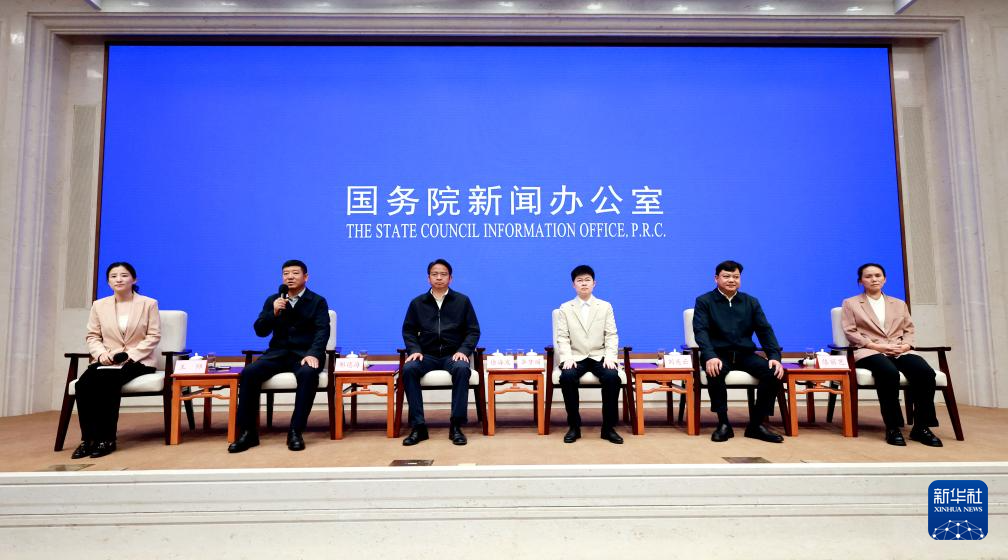
Core Insights - The event highlighted the achievements and experiences of representatives from the agricultural sector, focusing on their contributions to stabilizing production and promoting rural revitalization [3][4]. Group 1: Agricultural Innovations - The introduction of large agricultural machinery has significantly transformed planting methods and models, with one cooperative producing over 300 million pounds of grain in 14 years [3]. - A cooperative in Anhui has developed a production service model that assists small farmers in overcoming production challenges, leading to increased grain cultivation [3]. - A young entrepreneur in Jiangsu has integrated technology into agriculture, creating an ecological circular farming model that has generated over 400 job opportunities for local farmers [3][5]. Group 2: Economic Impact and Community Development - The development of a "selenium-rich + tourism" industry in a village has led to a 44-fold increase in collective income since 2018, with over 1.1 million tourists expected in 2024 [4]. - A fishery technician has improved the economic benefits for over 3,300 aquaculture households by promoting feed alternatives, resulting in a 10% increase in overall efficiency [4]. - The establishment of a food company by a cooperative aims to diversify product offerings, including vacuum-sealed corn products, enhancing food quality for consumers [4][5]. Group 3: Sustainable Practices and Skill Development - The implementation of ecological circular models in farming has led to multiple green food certifications, emphasizing sustainable production standards [5]. - Training programs for farmers in modern agricultural techniques have been initiated to enhance their skills and promote scientific planting practices [6]. - A cooperative has helped small farmers save over 300 yuan per acre through mechanized operations and collective procurement of production materials, while also enhancing the value chain of local rice products [6].
“在这片充满希望的田野上,成为田野上的希望”(权威发布)
Ren Min Ri Bao· 2025-05-23 21:56
Core Insights - The agricultural sector has made significant achievements in recent years, driven by the efforts of grassroots representatives and local communities [1] Group 1: Modern Agricultural Development - A cooperative in Heilongjiang has cultivated over 300 million pounds of grain over 14 years, focusing on high-quality corn and soybeans for local processing [1] - The cooperative has established a food company to produce new products like canned corn, utilizing advanced production lines [1] - Sustainable practices include using organic fertilizers and crop rotation to enhance soil quality [1] Group 2: Support for Small Farmers - A cooperative in Anhui has developed a modern agricultural service center to assist small farmers, resulting in a 200-pound increase in rice yield per acre for those using their services [2] - The focus on ecological farming practices has led to multiple green food certifications, ensuring consumer health and safety [2] Group 3: Fisheries and Aquaculture - A comprehensive traceability system has been established in Taizhou to ensure the quality of seafood from farm to table, promoting healthy aquaculture practices [3] - The county has become a national model for healthy aquaculture, expanding into deep-water farming [3] Group 4: Economic Empowerment of Farmers - Initiatives in Jiangxi have led to the establishment of a selenium-rich vegetable industry and a tourism model that attracts over 1 million visitors annually, generating over 50 million yuan in revenue [4] - The cooperative in Heilongjiang creates over 8 million yuan in income for surrounding farmers through various agricultural activities [4] Group 5: Encouraging New Farmers - Training programs have empowered traditional farmers to adopt new technologies, significantly increasing their income [5] - Young farmers are being attracted back to rural areas, with one individual reporting the employment of over 400 people and the return of 67 young individuals to agriculture [6]