
空天地一体化

Search documents
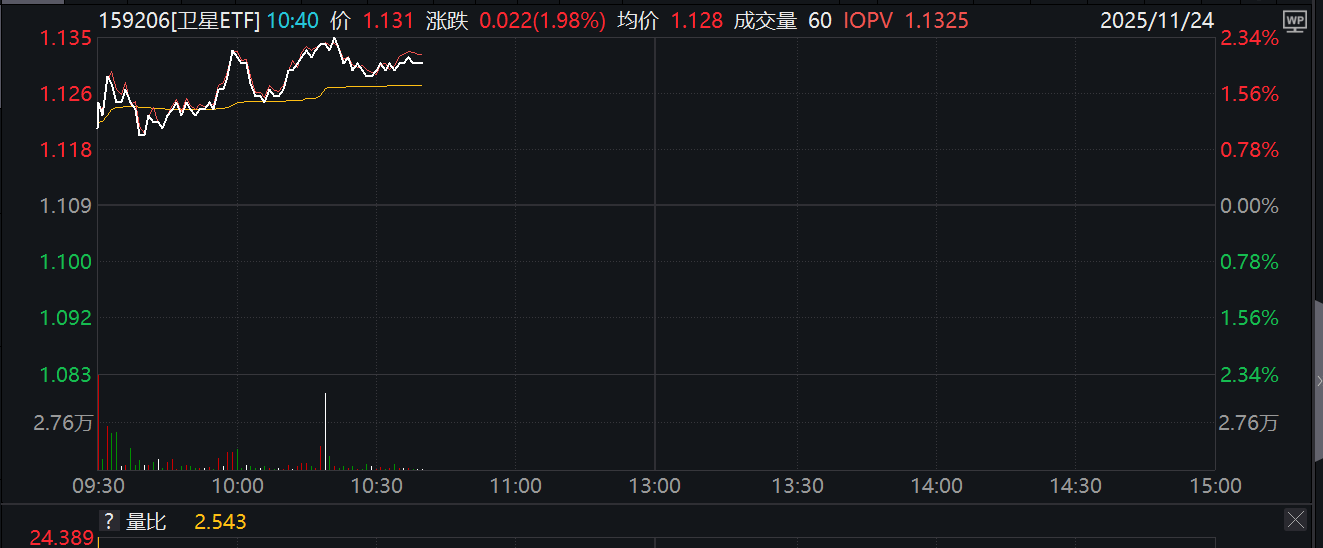
卫星物联网商用试验开启,空天地一体化加速!卫星ETF(159206)、通用航空ETF(159378)活跃!
Sou Hu Cai Jing· 2025-11-24 02:59
Core Insights - The launch of satellite IoT business trials by the Ministry of Industry and Information Technology marks a significant step towards commercial operations in China's satellite internet sector, expected to enhance market supply and support the growth of commercial aerospace and low-altitude economy [4][5] - The satellite ETF (159206) and general aviation ETF (159378) are leading the market, reflecting strong investor interest in these sectors, with notable gains in constituent stocks [1][4] Industry Developments - The satellite IoT business trials will last for two years, aiming to enrich the satellite communication market and promote the healthy development of emerging industries [4] - The anticipated issuance of licenses is expected to accelerate the entire industry chain towards large-scale development, enhancing communication capacity and reducing latency for applications like direct satellite connections for mobile phones and low-orbit satellite networks for intelligent driving [4] Investment Opportunities - The satellite ETF (159206) focuses on commercial aerospace and satellite communication, with a strong emphasis on satellite manufacturing, which is expected to see rapid growth under the "aerospace power" initiative [4][5] - The general aviation ETF (159378) targets the low-altitude economy and drone sector, benefiting from the rapid development of integrated air-ground-space systems [5] - Both ETFs are the first of their kind in the market, with the satellite ETF having a scale of 1.373 billion and the general aviation ETF at 889 million as of November 21, 2025 [5]

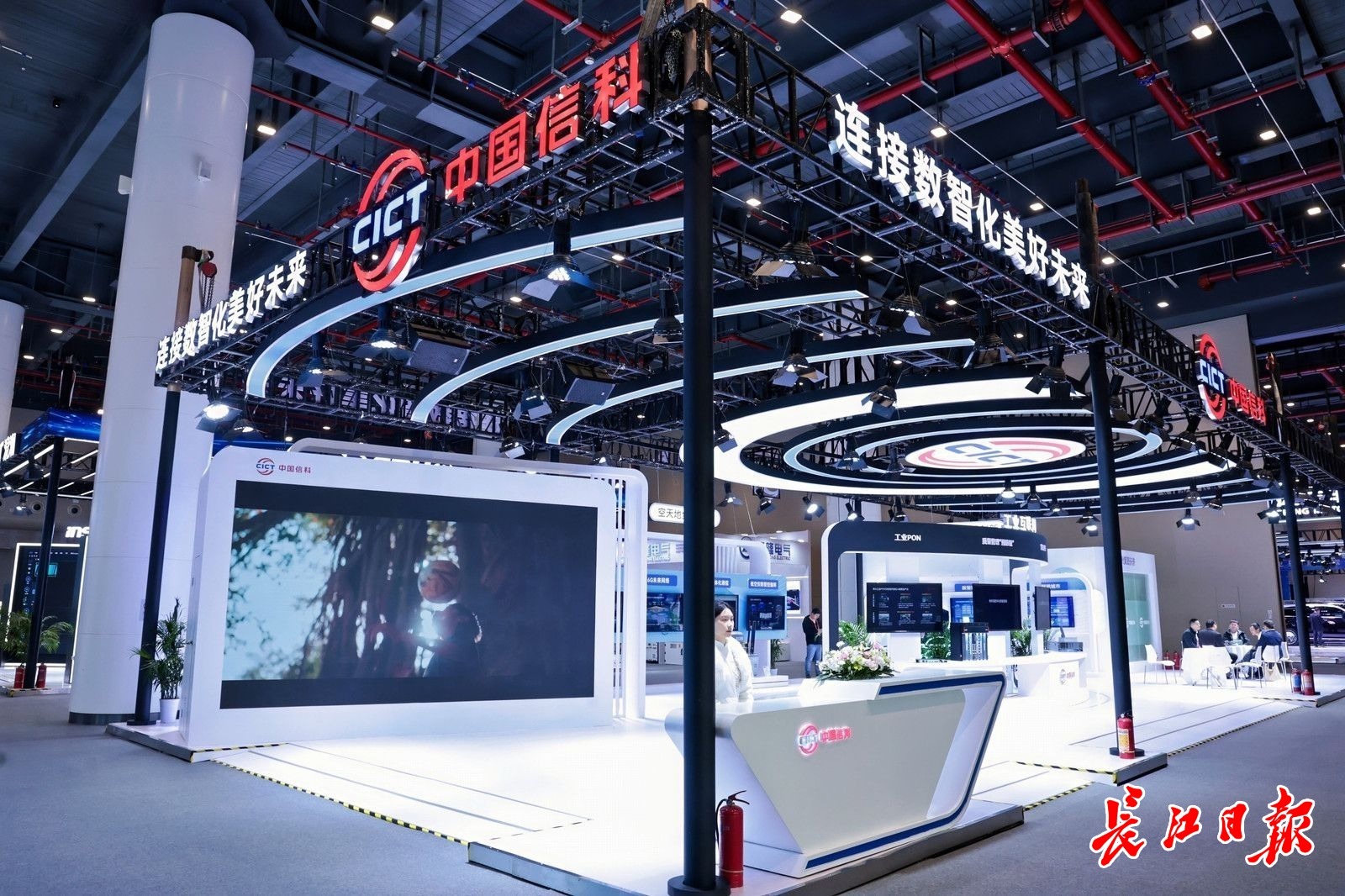
武汉提前打开6G的大门
Chang Jiang Ri Bao· 2025-11-24 00:25
Core Insights - The 2025 China 5G + Industrial Internet Conference held in Wuhan highlights the city's strategic positioning in the development of 6G technology, indicating a shift from 5G to 6G discussions [1][2] - The integration of communication, perception, computing, and artificial intelligence in 6G is expected to revolutionize connectivity and application scenarios, achieving "no dead zones" coverage [5][6] Group 1: 6G Technology Development - The development path of "5G compatibility and 6G integration" is seen as essential for seizing future technological leadership [4] - China holds approximately 40.3% of global 6G patent applications, leading the world, with over 300 key technologies accumulated from four years of systematic testing [4][7] - 6G is projected to be 10 to 100 times faster than 5G, with latency reduced to one-tenth, significantly benefiting applications like holographic communication and remote precision medicine [6] Group 2: Economic Impact and Innovation - The integration of 6G with cloud computing and artificial intelligence is expected to generate over $1 trillion in additional global GDP annually [10] - Wuhan's comprehensive ecosystem, including a robust industrial chain and research capabilities, positions it as a potential global leader in 6G innovation [11][12] - The establishment of the National Information Optoelectronics Innovation Center and collaborations with telecom operators and universities are aimed at fostering technological breakthroughs and practical applications [10][12] Group 3: Future Prospects - The 6G initiative is set to transition from "massive connectivity" to "intelligent connectivity," incorporating more intelligent entities into the network [10] - The upcoming launch of the communication equipment R&D and manufacturing base in Wuhan is expected to enhance the development of 6G technologies [12] - Wuhan's strategic initiatives, including talent attraction programs, aim to inject new momentum into the development of future industries [12]
重庆首支国家应急通信一类保障队伍正式揭牌
Zhong Guo Xin Wen Wang· 2025-11-18 09:31
Core Points - The establishment of Chongqing's first national emergency communication class support team marks its formal inclusion in the national specialized, standardized, and practical main force sequence for emergency communication support [1] - The team aims to provide national-level communication support for major emergencies such as flood control and geological disaster rescue in the upper reaches of the Yangtze River [1] Group 1 - The Ministry of Industry and Information Technology and 14 other departments have set a goal to achieve significant breakthroughs in key technologies for emergency communication by 2027, enhancing capabilities for extreme scenarios [1] - The national emergency communication class support team is required to quickly restore communication in extreme scenarios of "power outage, network disconnection, and road blockage" [1] - The team, formed by China Mobile Chongqing, consists of over a thousand personnel and a multi-dimensional support system that can restore core area communication within 4 hours and basic communication needs for affected individuals within 10 hours after a disaster [1] Group 2 - The team is equipped with various advanced technologies, including off-road satellite communication vehicles, integrated satellite portable stations, super base stations, and emergency cabins on the ground [1] - Aerial equipment includes 5G-A integrated drone high-altitude base stations and emergency drones, while portable terminals are equipped with "Beidou + Tiantong" satellite terminals, enabling rapid networking within 15 minutes in extreme scenarios [1] - The drone high-altitude base station can reach a height of 200 to 300 meters, covering a radius of approximately 3 kilometers and supporting the internet needs of 2,000 to 3,000 users [2]

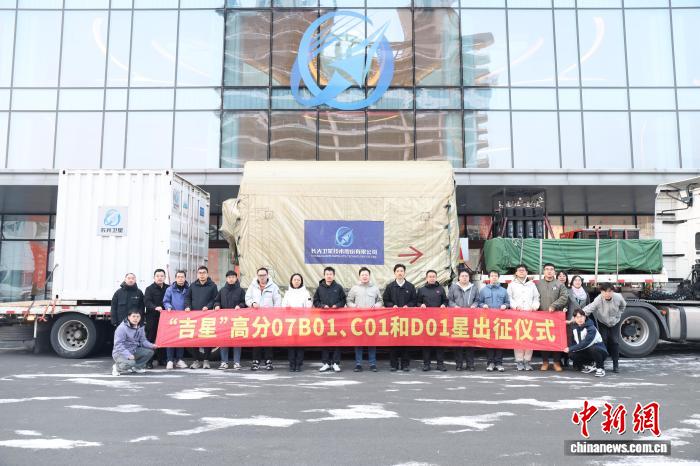
长光卫星三颗“吉星”出征:稳定、可靠、智能
Zhong Guo Xin Wen Wang· 2025-11-17 08:16
Core Points - Changguang Satellite Technology Co., Ltd. launched three new satellites, marking a significant step in their satellite development and application strategy [1][2][3] Group 1: Satellite Details - The "Yaohai Science and Technology" satellite is a high-precision optical remote sensing satellite developed in collaboration with Xinheng Aerospace Information Technology Co., Ltd., aimed at supporting urban management and digital transformation in the Yaohai District [2] - The "Electric Power Engineering B Satellite" is designed for the power sector, focusing on two-dimensional and three-dimensional monitoring of power engineering, including intelligent extraction of grid elements and power line inspections [2] - The "Jixing" high-resolution satellite series is capable of rapid response to various imaging tasks, featuring advanced technologies such as a new generation multi-core processor and onboard AI architecture, which enhance image accuracy and quality [2] Group 2: Technical Features - The satellites utilize a deep fusion concept for satellite design, incorporating precise orbit determination and high-frequency attitude data, which significantly improves image product positioning accuracy [2] - The satellites can achieve high-resolution imaging with a resolution better than 0.5 meters, characterized by stability, reliability, and intelligence [2]
实探2025年6G发展大会:从愿景到实景 6G创新生态加速成型
Zheng Quan Ri Bao Zhi Sheng· 2025-11-14 16:08
Core Insights - The 6G development landscape is becoming clearer, with a focus on the integration of 6G and AI, multi-technology fusion, and specific application scenarios [2][3][4] - The 6G industry is expected to empower various sectors and consumer markets, becoming a new economic growth point during the 14th Five-Year Plan period [1][2] - Continuous testing and validation are essential for the maturation of 6G technology, which must meet high performance, low cost, and compatibility with existing networks [7][8] Industry Developments - The 6G Development Conference is recognized as the most comprehensive and influential international event in the domestic 6G field, guiding the transition from technical vision to industrial reality [1] - China has completed the first phase of 6G technology testing, accumulating over 300 key technology reserves [2] - The integration of AI with 6G is expected to enhance user experiences and drive the development of new terminal innovations [2][3] Technological Integration - The trend of deep multi-technology integration is evident, with a shift from mere connectivity to intelligent connectivity, requiring collaboration with AI and satellite internet [4][5] - Companies like XinKe Mobile and Yinxing Aerospace are actively developing equipment and solutions that support the "space-ground integration" concept essential for 6G [5][6] Market Opportunities - Major telecom operators and companies like XinKe Mobile and AsiaInfo Technology are already investing in 6G, indicating a growing market interest [8] - As 6G standards are established, companies involved in network planning, infrastructure construction, and core component manufacturing are expected to benefit significantly [8] Future Outlook - The year 2026 is anticipated to be a pivotal year for the integration of 6G and AI, with more innovative technologies expected to emerge [3] - The complexity and collaborative nature of the 6G industry necessitate a comprehensive ecosystem that spans the entire value chain, from technology development to commercial application [7][8]

洲际航天科技附属港航科与中科星桥订立战略合作协议,共同推进中科星桥空天地一体化产业项目
Zhi Tong Cai Jing· 2025-11-13 09:31
Core Viewpoint - The announcement highlights a strategic cooperation agreement between the company's wholly-owned subsidiary, Honghang Technology (Shenzhen) Co., Ltd., and Quanzhou Zhongke Star Bridge Aerospace Technology Co., Ltd., aimed at advancing integrated aerospace projects [1] Group 1: Strategic Cooperation Agreement - The agreement involves collaboration on various projects, including the global commercial space-ground link network, satellite ground receiving stations, and an integrated aerospace industrial park [1] - Additional projects include high-resolution remote sensing satellite constellation plans, aerospace education and tourism bases, big data AI applications, drone and low-altitude control platforms, next-generation communication technologies, robotics, and intelligent computing centers [1] Group 2: Business Expansion - The company anticipates that the successful implementation of the cooperation projects and the establishment of a joint venture will further expand its existing aerospace business [1] - The terms of the strategic cooperation agreement are considered fair and reasonable, aligning with the overall interests of the company and its shareholders [1]

洲际航天科技(01725)附属港航科与中科星桥订立战略合作协议,共同推进中科星桥空天地一体化产业项目
智通财经网· 2025-11-13 09:29
Core Viewpoint - The company has entered into a strategic cooperation agreement with Zhongke Star Bridge to jointly advance integrated aerospace projects, which is expected to expand its existing aerospace business [1] Group 1: Strategic Cooperation Agreement - The agreement involves collaboration on various projects, including a global commercial space-ground link network, satellite ground receiving stations, and an integrated aerospace industrial park [1] - The projects also encompass high-resolution remote sensing satellite constellations, aerospace technology research and education bases, and applications of big data and artificial intelligence in aerospace [1] - The company believes that the terms of the strategic cooperation agreement are fair and reasonable, aligning with the overall interests of the company and its shareholders [1] Group 2: Expected Outcomes - If the cooperative projects and the establishment of a joint venture are realized, it is anticipated that the company's aerospace business will further expand [1]
中国技术集团(01725) - 战略合作协议之自愿性公告
2025-11-13 09:21
香港交易及結算所有限公司及香港聯合交易所有限公司對本公告的內容概不負責,對其準確性或 完整性亦不發表任何聲明,並明確表示,概不對因本公告全部或任何部分內容而產生或因倚賴該 等內容而引致的任何損失承擔任何責任。 USPACE Technology Group Limited 洲 際 航 天 科 技 集 團 有 限 公 司 ( 於開曼群島註冊成立之有限公司) (股份代號:1725) 戰略合作協議之 日期: 2025年11月11日 訂約方: (i) 港航科( 深圳 )空間技術有限公司( 為本公司之全資附屬 公司 );及 (ii) 泉州中科星橋空天技術有限公司 合作背景與內容 根據戰略合作協議,港航科與中科星橋擬合作開展( 包括但不限於 )中科星橋所屬 的全球商業天地鏈路網路基地暨全球商業遙感衛星地面接收站網項目、空天科技 和空天地一體化產業園、空天大數據科創中心、高分辨率遙感衛星「星座計畫」、 空天科技研學文旅基地、空天大數據人工智能應用項目、無人機與智能低空管控 平臺、新一代通信技術、機器人、智算中心及智算專網等商業航天、數字經濟、 低空經濟產業項目(「合作項目」)。 合作模式 自願性公告 本公告由洲際航天科技集 ...
北斗“国家队”18个月加速布局:构筑时空智能新生态
Hua Xia Shi Bao· 2025-10-17 12:46
Core Viewpoint - The establishment of China Space-Time Information Group represents a significant advancement in the integration of space and terrestrial technologies, aiming to enhance the application of the BeiDou system and promote digital economy development [2][5][11]. Group 1: Company Development - China Space-Time Information Group, formed by three major state-owned enterprises, has achieved rapid development within 18 months, transitioning from organizational setup to leading the BeiDou ecosystem [2][3]. - The company has a registered capital of 4 billion yuan and has made significant strides in the industrialization of the BeiDou system, moving from conceptualization to large-scale application [2][5]. - The first holding subsidiary is set to be established in Chongqing by September 2024, marking a key step in the construction of a national space-time big data center [5]. Group 2: Technological Integration - The integration of space and terrestrial technologies is becoming an industry trend, with the China Space-Time Information Group positioned to support this development [5][6]. - The company is focused on creating a comprehensive service network that combines BeiDou short messages and high-precision positioning to form a unified data infrastructure [5][6]. Group 3: Market Expansion - The BeiDou system is increasingly being adopted in various sectors such as transportation, agriculture, and disaster prevention, indicating a robust domestic market acceptance [9][11]. - The system is projected to cover over 200 countries and regions, with a complete industrial chain established, contributing to a total industry output value of 575.8 billion yuan in 2024, reflecting a year-on-year growth of 7.39% [11]. Group 4: Future Outlook - The company aims to balance "independent control" with "global adaptation" by promoting core component localization and establishing international cooperation platforms [12]. - The future growth of the BeiDou industry is expected to be driven by high-precision positioning services and emerging applications in smart driving, low-altitude logistics, and digital agriculture [12].

通宇通讯正式发布Micro WiFi产品 全链路参与卫星通信基础建设
Zheng Quan Ri Bao Wang· 2025-10-17 11:11
Core Viewpoint - Tongyu Communication has launched its Macro WiFi product, integrating WiFi and satellite communication technologies, and aims to capitalize on the growing satellite communication market [1][2][4] Company Developments - The Macro WiFi product enables connectivity between satellite networks and ground communications, covering a range of two kilometers and supporting over 200 users simultaneously [1] - The product has already secured large-scale orders in markets such as Australia and Southeast Asia, showcasing its commercial value and potential to drive overseas business growth [2] - The company plans to enhance its market expansion efforts for this product [2] Strategic Focus - The release event highlighted the company's strategy in satellite communication, showcasing its product layout in three categories: ground station terminals, satellite communication payloads, and satellite communication terminal applications [2] - Tongyu Communication is committed to advancing its satellite communication business through a combination of technology research and capital investment, with a satellite communication headquarters set to be established in Wuhan by mid-2025 [2][3] - The company is investing in key industry players like Blue Arrow Hongqing and Jingji Communication to build a comprehensive satellite communication ecosystem [2][3] Industry Context - The global low Earth orbit satellite industry is experiencing rapid growth, with satellite communication being a core component of the emerging 6G technology [4] - The national strategy for "new infrastructure" and strengthening aerospace capabilities is providing unprecedented support for the satellite communication sector [4] - Tongyu Communication aims to leverage its technological expertise and strategic planning to contribute to the construction of an integrated air-ground information network in China [4]
