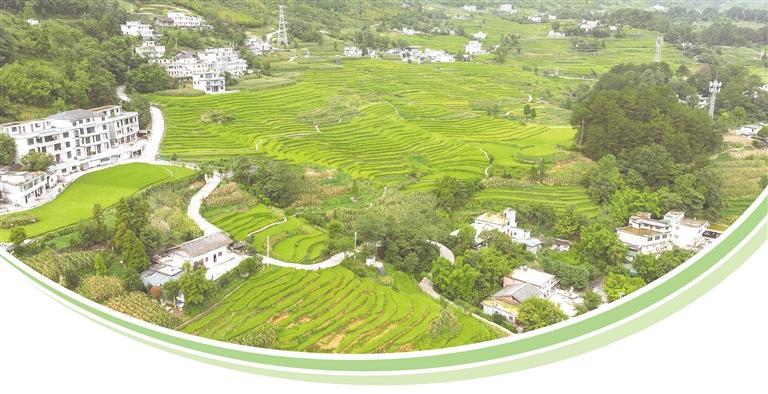
藏粮于技

Search documents
好地好种出好粮
Liao Ning Ri Bao· 2026-01-07 01:07
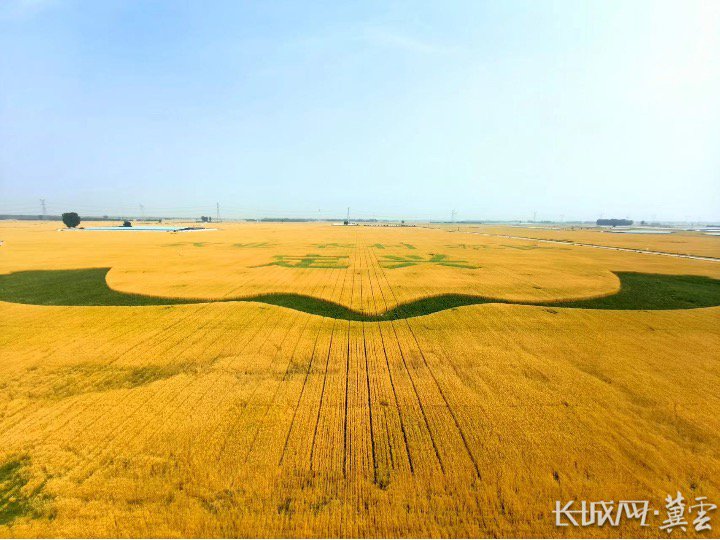
内容提要 2025年,辽宁粮仓实现高位增产,粮食总产量为515.56亿斤,增速位居全国粮食主产省第一位;单 产959.52斤,居全国第二位。令人惊喜的数字里,隐藏着什么样的丰收密码?扛牢国家粮食安全之责, 辽宁做对了什么? 要想多产粮,就得多养地 黑土地的肥沃不会一成不变,如何提升地力,各有各的绝招。 刚过去的一年,对于沈阳市沈北新区孟家台村来说,是特殊的一年。村里5600亩的高标准农田当年 建、当年用、当年见效,通过"小田并大田",修建灌渠及智慧灌溉系统、作业道、排水沟等设施,实 现"田成方、路相通、渠相连、旱能灌、涝能排"。村民们感慨:"全程机械化腿不沾泥,产量还比往常 高。" 持续推进高标准农田建设,通过实施田块整治、土壤改良、灌溉排水等措施,让过去一些中低产田 变成了稳产田。像孟家台村这样,辽宁聚焦"产能提升重点县"和"典型黑土区县",建设高标准农田476 万亩,使高标准农田总面积达4296万亩。 持续高质量开展保护性耕作,有力推进黑土地保护,是实现粮食丰收的关键举措。2025年,辽宁实 施黑土地保护1000万亩,尤其在农业科研机构的支持下,各地集成应用秸秆还田、禽畜粪污利用、深松 整地等技术,滋养农 ...


龙江县 深耕细“治”护良田
Xin Lang Cai Jing· 2026-01-05 22:49
Core Viewpoint - Longjiang County has transformed its agricultural landscape through high-standard farmland construction, erosion control, and agricultural technology promotion, ensuring food security and enhancing grain production capacity [4][6]. Group 1: High-Standard Farmland Construction - Longjiang County has a total arable land area of 5.8513 million acres, with 4.9124 million acres designated as permanent basic farmland [4]. - The county has invested 863 million yuan in high-standard farmland construction, achieving 1.5037 million acres of high-standard farmland, which constitutes 30.61% of the basic farmland area [4]. - High-standard farmland has increased grain production capacity by over 15% compared to ordinary farmland, with an average cost reduction of over 200 yuan per acre [4]. Group 2: Soil and Erosion Management - Longjiang County has addressed soil erosion by managing 2,524 erosion gullies, protecting 252,900 acres of farmland and controlling water and soil loss over an area of 168,585 hectares [5]. - The county has implemented a systematic approach to erosion control, improving water retention capacity by 139,800 cubic meters [5]. Group 3: Agricultural Technology Promotion - The county has implemented the "Cang Grain in Land, Cang Grain in Technology" strategy, promoting advanced irrigation techniques over 652,600 acres, resulting in an average increase of 300 jin per acre [6]. - The "Zhinnong Lianchuang" project has integrated 5,000 acres of scattered land into contiguous fields, utilizing smart irrigation systems that save over 30% water and 20% fertilizer, leading to an average grain yield of 1,973.37 jin per acre [5][6].
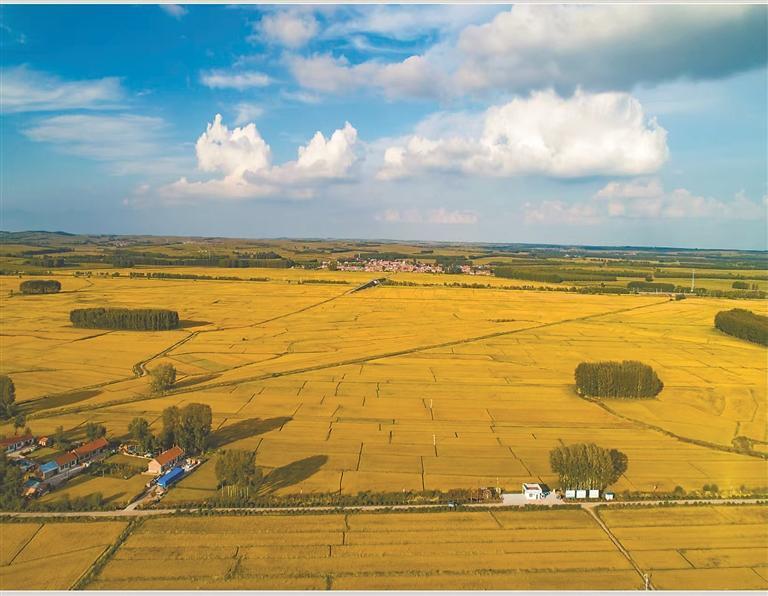
学习手记|始终绷紧粮食安全这根弦
Xin Hua Wang· 2026-01-05 15:24
学习中央农村工作会议精神 票 开关 进 始终绷紧粮食安全这根弦 a 新华社国内部出品 2026年是"十五五"开局之年,做好"三农"工作至关重要。近日中央农村工作会议召开,习近平总书 记作出重要指示,强调要毫不放松抓好粮食生产。 此前召开的中央经济工作会议也明确要求,严守耕地红线,毫不放松抓好粮食生产,促进粮食等重 要农产品价格保持在合理水平。 千叮咛万嘱咐,就是要求全国上下始终绷紧粮食安全这根弦。 习近平总书记强调,粮食多一点少一点是战术问题,粮食安全是战略问题。 今后一个时期粮食需求还会持续增加,供求紧平衡将越来越紧,再加上国际形势复杂严峻,确保粮 食安全的弦要始终绷得很紧很紧,宁可多生产、多储备一些,多了的压力和少了的压力不可同日而语。 粮食生产年年要抓紧,面积、产量不能掉下来,供给、市场不能出问题。 如果说耕地面积是常数,科技就是一个关键变量。面对耕地"天花板",科技是破局关键。 在耕地资源硬约束不可改变的前提下,必须依靠科技创新突破资源瓶颈,实现粮食产能的可持续提 升。不能走依赖资源消耗的老路,根本出路在于向科技要产量、要效益、要可持续性。 习近平总书记强调:"解决吃饭问题,根本出路在科技""农业现代 ...
中经评论:以“藏粮于技”筑牢大国粮仓
Zhong Guo Jing Ji Wang· 2026-01-05 02:33
Group 1 - The core viewpoint emphasizes that enhancing agricultural comprehensive production capacity and quality efficiency fundamentally relies on technology [1] - The Central Rural Work Conference analyzed the current challenges facing the "three rural issues" and outlined the deployment for agricultural work until 2026 [1] - In 2025, China's grain production faced various natural disasters but still achieved a high yield increase of 16.75 billion jin compared to the previous year [1] Group 2 - The article highlights the importance of self-reliance in ensuring food security for China's 1.4 billion people, with a focus on increasing grain production capacity [2] - It stresses the need to implement key agricultural technology breakthroughs and effectively apply scientific achievements [2] - The article mentions that in 2025, Northwest A&F University approved 12 new wheat varieties, marking significant advancements in breeding technology [2] Group 3 - The current agricultural machinery ownership in China exceeds 200 million units, with over 2.2 million applications of Beidou terminal devices [3] - The mechanization rate of agriculture has surpassed 75%, indicating a shift in demand for agricultural machinery from non-essential to essential [3] - The article calls for enhanced agricultural talent training and recruitment to support new farmers and promote smart farming practices [3]
中央农村工作会议三提“因地制宜”
Xin Lang Cai Jing· 2026-01-02 02:00
Core Viewpoint - The Central Rural Work Conference has set the direction for "Three Rural Issues" work in 2026, emphasizing the principle of "local adaptation" to promote rural revitalization and agricultural productivity [1][3]. Group 1: Policy Direction - The term "local adaptation" was mentioned three times, focusing on building livable and workable beautiful villages, developing new agricultural productivity, and improving rural construction implementation mechanisms [1]. - The emphasis on "local adaptation" signals a shift from a one-size-fits-all approach to a more tailored strategy that considers local conditions and needs [3]. Group 2: Implementation Strategies - The approach to rural construction should not follow a single model; different types of villages require different strategies, such as protecting traditional villages while allowing for development, merging or rebuilding underpopulated villages, and maintaining stability in populous villages [4]. - The strategy of "storing grain in the ground and technology" has led to a record grain output of 14,298 billion jin in 2025, with a per capita grain availability exceeding 500 kg, highlighting the importance of localized agricultural practices [5]. Group 3: Future Vision - The conference encourages exploring development models that respect local traditions and resource conditions, aiming to create unique "beautiful" examples across different regions [5]. - Achieving agricultural modernization and improving rural living conditions by 2035 is a key goal, with the vision of strong agriculture, beautiful countryside, and prosperous farmers becoming a reality [5].
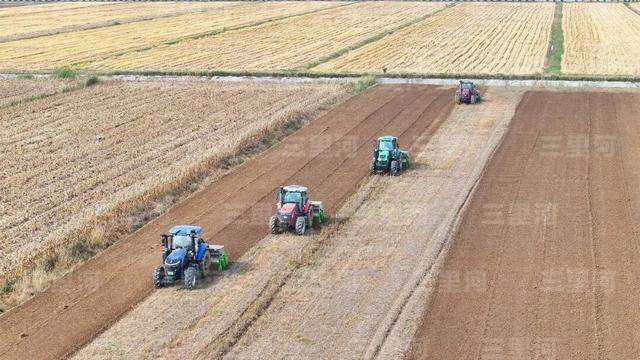
巴音陶亥人民法庭联合“两所一中心”用司法合力守护乡村振兴
Xin Lang Cai Jing· 2025-12-31 04:31
Group 1 - The article discusses the successful resolution of a dispute related to high-standard farmland construction in Uhu City, where a construction company failed to pay wages and labor fees totaling 743,000 yuan to 20 creditors [1] - The court, in collaboration with local governance bodies, quickly organized a joint mediation to address the issue, focusing on the unpaid project funds [1] - The mediation resulted in an agreement that stipulated the funds would be paid directly to the creditors according to a financial plan, ensuring the protection of legal rights and the advancement of key projects [1]
金融助力“大国粮仓”根基稳固
Jin Rong Shi Bao· 2025-12-31 02:10
Core Insights - The article emphasizes the stability and sufficiency of China's grain market during the "14th Five-Year Plan" period, with grain production consistently exceeding 1.3 trillion jin and projected to reach 1.4 trillion jin in 2024, ensuring food security for the population [1][8] - Financial support has been crucial in achieving these results, with a focus on enhancing the grain security system and adapting to complex domestic and international environments [1][8] Financial Support Framework - A clear and efficient financial support policy framework for grain security has been established, with collaboration between financial management departments and agricultural sectors [2] - Structural monetary policy tools have been optimized to direct more credit resources towards grain production and related sectors, with significant increases in agricultural insurance subsidies [2] Credit Supply and Services - Financial institutions have prioritized support for grain production, with agricultural loans reaching 53.4 trillion yuan, a year-on-year increase of 6.8% [3] - Specialized loan products have been developed to support key areas such as seed industry innovation and high-standard farmland construction, enhancing grain storage and logistics capabilities [3][4] Agricultural Bank Initiatives - The Agricultural Development Bank has actively implemented policies, with over 1 trillion yuan in loans for food security initiatives, including significant funding for grain circulation and production capacity [4] - The Agricultural Bank has also provided substantial loans to grain producers, enhancing financial services for the agricultural sector [4] Seasonal and Customized Financial Products - Financial institutions have introduced seasonal and customized loan products to support agricultural inputs and operations, stabilizing planting areas and improving yield levels [5] - Targeted financial products have been developed for family farms and cooperatives, addressing financing challenges and enhancing their capacity to support modern agriculture [5] Agricultural Insurance Role - Agricultural insurance has played a vital role in mitigating risks associated with grain production, with comprehensive coverage for major crops and increased subsidy rates encouraging farmer participation [6] - The integration of insurance with financial tools has created a robust risk-sharing mechanism, enhancing the resilience of grain production against natural disasters and market fluctuations [6] Technological Integration in Financial Services - The application of financial technology has transformed financial services in the grain sector, with online credit products becoming widely accessible to farmers [7] - Collaboration between financial institutions and agricultural tech companies has led to integrated services that enhance credit availability and risk management [7] Overall Achievements and Future Outlook - The financial system has significantly improved its capacity to support national grain security, with a multi-layered policy framework and increased credit supply [8] - Looking ahead, the financial sector is expected to strengthen its role in ensuring food security, adapting to ongoing challenges, and enhancing resource allocation and service innovation [8]
西和县:守牢86.8万亩红线 以“增地”答“丰产”
Xin Lang Cai Jing· 2025-12-25 10:11
Core Insights - Xihe County has achieved a forest coverage rate of 41.67%, an increase of 2.51 percentage points compared to the end of the 13th Five-Year Plan, indicating a strengthened ecological barrier [1] - The county maintains a stable grain planting area of over 560,000 acres, with a production exceeding 150,000 tons, and anticipates an agricultural output value of 3.02 billion yuan by 2025 [1] Group 1 - Xihe County has implemented strict measures to protect arable land, ensuring a maintained arable land area of 868,000 acres while completing a supplementary arable land area of 35,000 acres during the 14th Five-Year Plan [1] - The county has developed 30,000 acres of high-quality under-forest economy, generating an annual output value of 120 million yuan, effectively converting ecological resources into capital for the benefit of the people [1] Group 2 - The revival of previously abandoned land in towns such as Heba, Jiangxi, and Suhe has been achieved through various methods, including encouraging farmers to self-cultivate and implementing collective management [2] - Xihe County is actively enhancing arable land quality, with a task to construct 10,000 acres of high-standard farmland by 2025, which is expected to increase grain production in the project area by approximately 8% [2] - The county is focused on creating standardized, large-scale, and professional grain planting demonstration bases, exploring new models for food security development [2]
燕赵沃野喜三增 粮安菜丰惠民生——河北2025年粮食生产交出亮眼答卷
Xin Lang Cai Jing· 2025-12-25 05:03
Core Insights - The core message of the articles highlights the significant achievements in grain production in Hebei Province for 2025, with a total grain output of 784 billion jin and a planting area of 96.91 million acres, showcasing a steady growth in key agricultural metrics [1] Group 1: Grain Production Achievements - Hebei Province's grain planting area reached 96.91 million acres, with a total output of 784 billion jin and an average yield of 404.5 kg per acre, marking a steady increase across all three key indicators compared to the previous year [1] - The province has implemented the strategy of "storing grain in the ground and technology," focusing on agricultural high-quality development through technological innovation and facility upgrades [1] Group 2: Agricultural Infrastructure and Technology - Since the 14th Five-Year Plan, Hebei has constructed and upgraded 17.52 million acres of high-standard farmland, addressing issues like land fragmentation and declining quality [2] - The introduction of smart irrigation systems and precision farming techniques has led to an expected increase of over 20% in corn yields in demonstration farms [4] - Hebei has focused on the construction of high-standard farmland on saline-alkali land, with 520,000 acres planned for 2023-2024, improving crop yields significantly [4][5] Group 3: Agricultural Innovation and Expertise - The integration of new varieties, technologies, equipment, and skilled farmers has been identified as the key to increasing grain yields, with over 350 high-quality crop varieties developed [7] - The province has established 39 wheat and 69 corn yield demonstration counties, promoting high-yield farming techniques [7] Group 4: Vegetable Production and Supply Chain - Hebei is also enhancing its vegetable production, with an expected total output of over 58 million tons in 2025, and a significant portion of this supply directed towards the Beijing market [12] - The establishment of a "clean vegetable" initiative aims to standardize production processes and improve the quality of vegetables supplied to urban areas [16] Group 5: Future Agricultural Goals - The provincial government plans to continue enhancing grain production capacity and deepen agricultural collaboration with the Beijing-Tianjin-Hebei region, aiming to strengthen the "Hebei clean vegetable" brand [18]
守护一方地 端稳一碗饭
Xin Lang Cai Jing· 2025-12-21 22:46
Core Viewpoint - Guizhou province is implementing a comprehensive strategy to protect arable land and ensure food security, focusing on innovative practices and strict enforcement of regulations to combat the challenges posed by its mountainous terrain [5][9][19]. Group 1: Responsibility and Governance - Guizhou has established a multi-tiered responsibility system for arable land protection, involving provincial, municipal, and local levels to ensure accountability [6][7]. - The province has adopted a collaborative governance model, transitioning from isolated efforts to coordinated actions among various stakeholders [6][7]. - Specific measures include regular inspections by designated personnel and the establishment of clear responsibilities at different administrative levels [6][7]. Group 2: Quality and Quantity of Arable Land - The province emphasizes both the quantity and quality of arable land, aiming to expand high-quality farmland while improving the existing land's productivity [9][10]. - Recent initiatives have led to the recovery and addition of over 5,000 acres of arable land through land rehabilitation projects [10]. - High-standard farmland construction has been a key focus, with 146,000 acres developed since 2020, significantly enhancing agricultural capacity [9][10]. Group 3: Spatial Optimization - Guizhou is actively optimizing the spatial distribution of arable land to enhance efficiency and reduce ecological risks associated with fragmented farming [11][12]. - The province's 2025 plan includes transitioning unstable farmland to more suitable areas, thereby improving agricultural conditions [11][12]. - Pilot projects in various counties have successfully increased arable land by converting unsuitable land types, such as steep slopes, into productive farmland [11][12]. Group 4: Technological Empowerment - The province is leveraging technology to enhance monitoring and enforcement of arable land protection, moving from traditional methods to a more integrated approach using drones and satellite imagery [13][14]. - Innovative monitoring systems have improved the efficiency of inspections and the accuracy of data regarding land use [14][15]. - The integration of technology into land management practices is expected to significantly reduce illegal land use and improve compliance with regulations [14][15]. Group 5: Incentives and Community Engagement - Guizhou is exploring various incentive models to align arable land protection with farmers' economic benefits, ensuring that land conservation efforts also contribute to local income [16][17]. - Successful case studies demonstrate how community involvement in land improvement projects has led to increased financial returns for farmers [16][17]. - The province is fostering a culture of shared responsibility among farmers, encouraging them to actively participate in land protection initiatives [17][18].