非法吸收公众存款

Search documents
大连涉107亿余元非法集资案宣判
news flash· 2025-08-01 08:03
Group 1 - A major illegal fundraising case involving over 10.7 billion yuan was publicly sentenced by the Dalian Intermediate People's Court on August 1 [1] - Defendant Jin Cheng was sentenced to life imprisonment for fundraising fraud and money laundering, with all personal assets confiscated [1] - Defendant Li Jing received a 16-year prison sentence and a fine for similar charges, while defendant Cao Jingyu was sentenced to 13 years and 6 months in prison along with a fine for fundraising fraud and illegal public deposit acceptance [1]
金阿哥黄金寄卖忽悠客户 被指洗脑营销涉嫌非法吸收公众存款(一)
Sou Hu Cai Jing· 2025-06-20 00:47
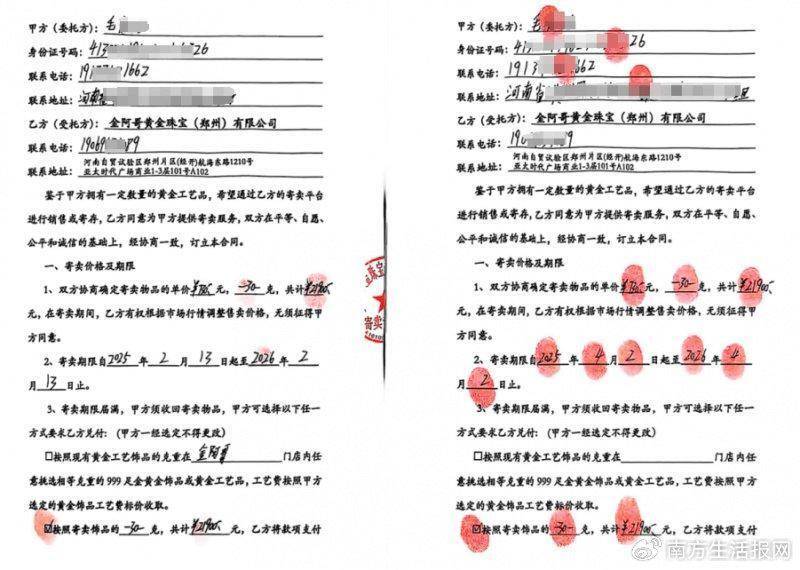
Core Viewpoint - The rise in gold prices has led to an increase in gold investment schemes, with some companies allegedly using "gold consignment" as a lure to attract investments from the public, particularly targeting older individuals, which raises concerns about potential illegal fundraising activities [1][24]. Group 1: Company Operations - A company named Jin A Ge has been accused of misleading customers into signing gold consignment contracts without actual delivery of gold, promising high returns of up to 30% annually [2][11]. - Customers, such as a woman named Mao, reported that they never received the gold they purchased but were instead given monthly dividends, raising suspicions about the legitimacy of the company's operations [3][10]. - The company claims to have a strong financial background and even asserts ownership of gold mines, which has attracted many investors despite the lack of evidence supporting these claims [13][15]. Group 2: Customer Experiences - Multiple complaints have emerged from customers who invested significant amounts of money, only to find themselves unable to retrieve their funds or the gold they were promised [20][23]. - The company has been reported to have a history of similar complaints, with some customers receiving refunds only after media intervention and police involvement [18][24]. - The contracts signed by customers often include clauses that impose penalties for early termination, further complicating the withdrawal of funds [3][11]. Group 3: Regulatory Concerns - Experts in the financial industry have raised alarms about the company's practices, suggesting that they may constitute illegal fundraising under Chinese law, as the operations appear to lack the necessary financial institution qualifications [24][26]. - The company's claims of having a gold mine and substantial financial backing have been scrutinized, with investigations revealing inconsistencies and a lack of credible evidence [15][17]. - Legal experts warn that if the company's operations are found to be fraudulent, it could lead to severe legal consequences for the individuals involved, especially if the fundraising is deemed to be of a particularly large scale [27].

法院发布“金融黑洞”警示
第一财经· 2025-06-13 14:29
Core Viewpoint - The article highlights the increasing prevalence of illegal financial activities in China, particularly in the context of real estate and auto loans, emphasizing the need for public awareness and caution to avoid financial fraud [1][2][3]. Group 1: Illegal Financial Activities in Real Estate - The Guangzhou Intermediate People's Court reported a case involving illegal fundraising through unapproved apartment projects, resulting in losses exceeding 27.5 million yuan for 112 investors [1]. - The accused, Zhang, and his accomplices were found guilty of illegally absorbing public deposits and were sentenced to prison terms ranging from four to eight years, along with fines between 250,000 to 400,000 yuan [1]. - The court urged the public to carefully examine project credentials and ensure legal compliance before investing in apartment projects to avoid significant financial losses [2]. Group 2: Loan Fraud Cases - A separate case involved a scheme where the accused, Ji, and his accomplices fraudulently obtained loans by purchasing cars and then selling them for cash, leading to a loss of over 860,000 yuan for financial institutions [2][3]. - The court determined that the actions of the accused constituted loan fraud, with Ji receiving a two-year prison sentence and a fine of 20,000 yuan, while another accomplice received a sentence of three years and a fine of 30,000 yuan [3]. - The article warns that individuals acting as "back borrowers" in such schemes may end up with substantial debts and face criminal charges, highlighting the risks associated with such fraudulent activities [3].

浙江永坤黄金暴雷,投资者:媳妇马上要和我离婚了
Hua Xia Shi Bao· 2025-06-09 08:43
Core Points - The article discusses the fallout from the collapse of Yongkun Gold, highlighting significant financial losses for investors and the ongoing investigation by local authorities [2][3][5]. Group 1: Company Overview - Yongkun Gold is a brand under Yongkun Group, with Yongkun Holdings being its core holding company [5]. - The company operated both online and offline channels for gold sales, promising high returns and a "no-loss" investment model [6]. Group 2: Investor Impact - Investors reported total losses estimated at around 4 billion yuan, with some individuals losing over 1 million yuan [2][3]. - Many investors, like Ah Xuan, expressed feelings of helplessness and financial distress due to their inability to withdraw or refund their investments [2][4]. Group 3: Legal and Regulatory Actions - The Hangzhou Public Security Bureau has initiated investigations into Yongkun Holdings and Yongkun E-commerce for suspected illegal public deposit absorption [3]. - The company has been listed in the abnormal business operations directory due to its inability to be contacted at its registered address [5]. Group 4: Insurance and Risk Management - Yongkun Gold provided insurance policies for the gold investments, but many investors found that the insurance companies did not recognize the validity of these policies after the collapse [8][12]. - Concerns were raised about the authenticity of the gold and the insurance coverage, with investors questioning whether the insurance companies colluded with Yongkun [11][12]. Group 5: Market Perception and Trust - The long-standing history and various accolades of Yongkun Gold contributed to investor trust, leading them to believe in the safety of their investments [6]. - The use of credit cards and lending platforms for purchasing gold further complicated the financial situation for many investors, as they now face mounting debts [6][8].

“稳赚不赔”神话崩塌!这家黄金现大规模兑付异常
第一财经· 2025-05-29 11:46
Core Viewpoint - The article discusses the risks associated with the investment practices of Yongkun Gold, highlighting the company's high promised returns and the subsequent inability of investors to withdraw their funds, indicating potential fraudulent activities [2][3][24]. Group 1: Investment Practices - Yongkun Gold attracted investors by offering annualized returns between 5% and 9% through gold storage and repurchase contracts [4][6]. - The company established a customer tiered return system, with higher returns for larger investments, promising returns that exceed typical gold investment yields [6][9]. - The online platform offered a "pre-order gold bar" product, which appeared to guarantee returns, allowing investors to either withdraw their principal or benefit from price increases [10][11]. Group 2: Financial Scale and Operations - Yongkun Gold has reportedly raised over 3.6 billion yuan through its pre-order gold bar sales, indicating a significant scale of operations [16]. - The company claims to have insured gold stored in a bank vault, with an insurance amount of approximately 857 million yuan and a total gold value exceeding 4.1 billion yuan [20][19]. Group 3: Regulatory and Legal Concerns - Yongkun Gold lacks the necessary qualifications to operate gold asset management services, which raises concerns about the legality of its investment practices [25][26]. - The company has been listed as operating abnormally by local authorities, indicating potential regulatory violations [25]. - Legal experts suggest that the company's practices may constitute illegal fundraising or disguised collective investment schemes, posing significant risks to investors [28][29].

教人避坑的网红老板,为180万粉丝亲手挖了一个大坑
阿尔法工场研究院· 2025-05-25 05:12
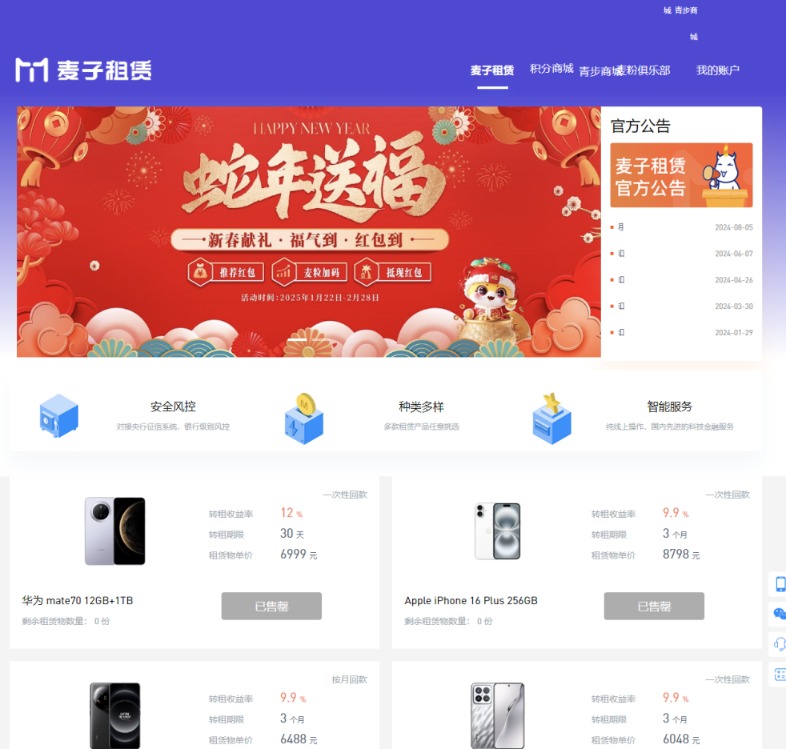
Core Viewpoint - The article discusses the downfall of Xiong Xiong, the chairman of Shanyuhai Group, who was previously celebrated for his motivational speeches but is now under investigation for illegal fundraising activities, highlighting the risks associated with high-return investment promises [1][2][4]. Group 1: Company Background - Shanyuhai Group, founded by Xiong Xiong, is a wellness and tourism enterprise focusing on high-end health services, with operations in real estate, e-commerce, overseas finance, and mining [10]. - The company has developed over 70 wellness bases domestically and internationally, offering vacation services and charging membership fees [10]. Group 2: Investment Products and Promises - Shanyuhai's main projects include residential properties in Zhoushan, promising annual rental returns of approximately 8% and additional profit-sharing options [13]. - The company also operates a financing leasing platform, providing rental services for electronic products with returns of 9.9%-12%, but investors have reported difficulties in withdrawing funds since March [15]. Group 3: Legal Issues and Investigations - The company is currently under criminal investigation for illegal fundraising, with law enforcement taking action against its branches in Hangzhou and Shanghai [4]. - The investigation was triggered by issues related to its internet finance projects rather than its real estate offerings [13]. Group 4: Market Context and Risks - The article notes a trend of similar investment firms facing legal troubles due to unsustainable high-return promises, leading to significant financial losses for investors [18]. - The case of Shanyuhai Group reflects broader concerns in the investment landscape, where companies often lack solid underlying assets and may operate as Ponzi schemes [18].

涉嫌非法吸收公众存款罪 瞄准老年人康养度假的山屿海集团遭立案侦查
Zhong Guo Jing Ying Bao· 2025-05-13 07:22
Core Viewpoint - Shanghai Shanyuhai Investment Group is under investigation by police in multiple locations for suspected illegal public deposit absorption, raising concerns about its business practices and financial stability [1][2][6]. Group 1: Company Overview - Shanyuhai Group, founded in 2009, initially focused on vacation farming and has since expanded into various sectors including real estate, overseas finance, and mining [7][8]. - The company targets high-net-worth elderly individuals, offering a range of services from tourism to health and wellness, and operates over 70 wellness bases both domestically and internationally [7][8]. Group 2: Legal Issues - The company is being investigated for its subsidiary, Maizi Leasing, which has been accused of illegal public deposit absorption, with claims of high returns attracting investors [2][5][6]. - Police in Hangzhou and Shanghai have taken criminal coercive measures against relevant personnel of Shanyuhai Group, indicating serious legal implications for the company [1][6]. Group 3: Financial Practices - Maizi Leasing offers rental returns of 9.9% to 12%, which are significantly higher than typical market rates, raising red flags regarding the legality of its operations [5][6]. - Investors have reported difficulties in withdrawing funds from the Maizi Leasing platform, suggesting potential liquidity issues and mismanagement of investor funds [5][6]. Group 4: Future Prospects - Despite current challenges, Shanyuhai Group is seeking to expand its business through IPO plans for its subsidiary, aiming for a listing on NASDAQ by December 2024 [8]. - The company is also required to clarify its business practices and compliance with regulations as part of the IPO process, particularly concerning any illegal activities [8].