
3D视觉

Search documents
奥比中光20250715
2025-07-16 00:55
Summary of the Conference Call for Aobo Zhongguang Company Overview - Aobo Zhongguang is the only company in China that has achieved full self-research in depth camera technology, from chips to algorithms, ensuring product consistency and effective cost control, with technology levels leading internationally [2][4] Core Industry Insights - The company has established ecological partnerships with giants like NVIDIA and Fei-Fei Li to expand its business scale in the robotics and humanoid robot sectors, consolidating its technological leadership and enhancing market influence [2][5] - Aobo Zhongguang's revenue is projected to reach 800-1,000 million yuan by 2025, an increase of approximately 200 million yuan from 2024, driven mainly by growth in orders for the Chuangxiang 3D scanner and downstream humanoid, service, and industrial robots [2][6] Revenue Sources - The main revenue sources include 3D visual modules and terminal product modules, with 40%-50% of revenue coming from biometrics and over 50% from AIoT, indicating significant future growth potential in AIoT and industrial applications [2][7] Competitive Advantages - Aobo Zhongguang is the only company capable of full-process self-manufacturing of depth cameras, providing significant advantages in consistency and cost reduction. Its products are leading globally, outperforming Intel's RealSense in measurement range, resolution, accuracy, and power consumption, with at least a 20% price advantage [4][12] - The company has a market penetration rate of 70%-80% among domestic robot companies, utilizing a composite solution of 2D cameras and laser depth sensors [2][9] Financial Performance and Projections - The company has shown signs of a bottom reversal in business, achieving a profit of approximately 55 million yuan in the first five months of the year, with expectations to exceed annual profit forecasts in the first half [3][17] - Profit forecasts indicate 70 million yuan in 2025, over 300 million yuan in 2026, and potentially exceeding 500 million yuan in 2027, reflecting significant profit growth [4][17] Market Position and Future Outlook - Aobo Zhongguang's long-term market potential is estimated to reach a trillion yuan, with a mid-term target of around 50 billion yuan. Assuming a market value of 10,000 yuan per robot, the overall market space could reach 100 billion yuan, with a market share of 30%-50% leading to profits of 6-8 billion yuan [13][14] - The company is expected to maintain a high market share due to superior technology, manufacturing stability, and a strong patent portfolio, making it difficult for competitors to enter the market [14] Strategic Partnerships - Collaborations with major companies like Microsoft and NVIDIA enhance Aobo Zhongguang's ecosystem, with NVIDIA's robot platform being used by over 80% of global robot development teams, exclusively recommending Aobo Zhongguang's depth cameras [15] Market Trends - The market is expected to see an increase in the adoption of depth cameras over 2D solutions, as companies recognize the higher cost-effectiveness and lower computational requirements of depth cameras [11][16] Investment Recommendation - Aobo Zhongguang is viewed as a strong investment opportunity, with a favorable market position and growth potential, making it a recommended hold for investors over the next two to three years [18]

从25年顶会论文方向看后期研究热点是怎么样的?
自动驾驶之心· 2025-07-06 08:44
Core Insights - The article highlights the key research directions in computer vision and autonomous driving as presented at major conferences CVPR and ICCV, focusing on four main areas: general computer vision, autonomous driving, embodied intelligence, and 3D vision [2][3]. Group 1: Research Directions - In the field of computer vision and image processing, the main research topics include diffusion models, image quality assessment, semi-supervised learning, zero-shot learning, and open-world detection [3]. - Autonomous driving research is concentrated on end-to-end systems, closed-loop simulation, 3D ground segmentation (3DGS), multimodal large models, diffusion models, world models, and trajectory prediction [3]. - Embodied intelligence focuses on visual language navigation (VLA), zero-shot learning, robotic manipulation, end-to-end systems, sim-to-real transfer, and dexterous grasping [3]. - The 3D vision domain emphasizes point cloud completion, single-view reconstruction, 3D ground segmentation (3DGS), 3D matching, video compression, and Neural Radiance Fields (NeRF) [3]. Group 2: Research Support and Collaboration - The article offers support for various research needs in autonomous driving, including large models, VLA, end-to-end autonomous driving, 3DGS, BEV perception, target tracking, and multi-sensor fusion [4]. - In the embodied intelligence area, support is provided for VLA, visual language navigation, end-to-end systems, reinforcement learning, diffusion policy, sim-to-real, embodied interaction, and robotic decision-making [4]. - For 3D vision, the focus is on point cloud processing, 3DGS, and SLAM [4]. - General computer vision support includes diffusion models, image quality assessment, semi-supervised learning, and zero-shot learning [4].


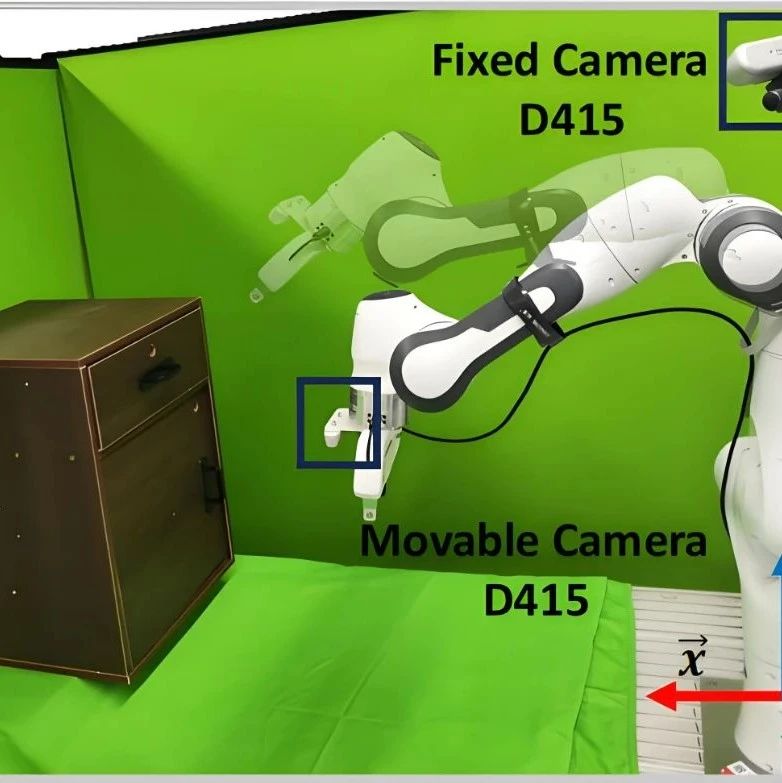
ArtGS:3DGS实现关节目标精准操控,仿真/实物双验证性能SOTA!
具身智能之心· 2025-07-04 09:48
Group 1 - The core challenge in robotics is joint target manipulation, which involves complex kinematic constraints and limited physical reasoning capabilities of existing methods [3][4] - The proposed ArtGS framework integrates 3D Gaussian Splatting (3DGS) with visual-physical modeling to enhance understanding and interaction with joint targets, ensuring physically consistent motion constraints [3][4][20] - ArtGS consists of three key modules: static Gaussian reconstruction, VLM-based skeletal inference, and dynamic 3D Gaussian joint modeling [4] Group 2 - Static 3D Gaussian reconstruction utilizes 3D Gaussian splatting to create high-fidelity 3D scenes from multi-view RGB-D images, representing the scene as a collection of 3D Gaussian spheres [5] - VLM-based skeletal inference employs a fine-tuned visual-language model (VLM) to estimate joint parameters, generating target views to assist in visual question answering [6][8] - Dynamic 3D Gaussian joint modeling implements impedance control for interaction with the environment, optimizing joint parameters through differential rendering [10] Group 3 - Experimental validation shows that ArtGS significantly outperforms baseline methods in joint parameter estimation, with lower angular error (AE) and origin error (OE) [12] - In simulation, ArtGS achieves a manipulation success rate ranging from 62.4% to 90.3%, which is substantially higher than other methods like TD3 and Where2Act [14] - Real-world experiments demonstrate a perfect success rate of 10/10 for drawer operations and 9/10 for cabinet operations, indicating the effectiveness of the optimized version of ArtGS [14][17] Group 4 - Ablation studies reveal that even with initial axis estimation errors exceeding 20°, ArtGS can still enhance operation success rates through 3DGS optimization [19] - ArtGS exhibits cross-embodiment adaptability, accurately reconstructing various robotic arms, particularly excelling in gripper rendering details [19][20] - The core contribution of ArtGS lies in transforming 3DGS into a visual-physical model for joint targets, ensuring spatiotemporal consistency in differentiable operation trajectories [20] Group 5 - Future directions for ArtGS include expanding capabilities to handle more complex scenarios and improving modeling and manipulation of multi-joint, high-dynamic targets [21]
从看见到看懂 机器人之“眼”看世界
Jin Rong Shi Bao· 2025-06-30 12:22
Core Insights - The article highlights the advancements in robotics and AI vision technology, particularly focusing on the capabilities of the robotic arm developed by Orbbec Technology, which can perform tasks with precision and flexibility through 3D vision and AI perception [1][3]. Policy and Market Drivers - The integration of machine vision and robotics is being propelled by a dual force of policy and market demand, as evidenced by the "Robot+" application action plan released by 17 government departments, which emphasizes the fusion of visual recognition technologies in various sectors [2]. - The Chinese government has set a target for the visual AI market to reach 187.3 billion RMB by 2025, indicating significant growth potential in this sector [4]. Industry Growth and Technological Development - Orbbec Technology holds over 70% market share in the 3D vision sensor field for service robots in China, showcasing its leadership in the industry [3]. - The development of 3D vision technology is characterized by its interdisciplinary nature, requiring integration across optics, mechanics, electronics, chips, and algorithms to drive breakthroughs and practical applications [4]. Financial Support and Investment - Orbbec Technology has benefited from strategic investments from various institutions, with a recent fundraising plan aiming to raise up to 2.187 billion RMB for projects related to AI vision and spatial perception technology [7]. - The article emphasizes the importance of patient capital in supporting technological innovation, particularly in high-risk fields like 3D vision technology, which often face long development cycles and substantial funding requirements [7].

具身的秋招马上要开始了,去哪里抱团呀?
具身智能之心· 2025-06-28 07:48
Core Viewpoint - The article emphasizes the rapid advancements in AI technologies, particularly in autonomous driving and embodied intelligence, which have significantly influenced the industry and investment landscape [1]. Group 1: AutoRobo Knowledge Community - AutoRobo Knowledge Community is established as a platform for job seekers in the fields of autonomous driving, embodied intelligence, and robotics, currently hosting nearly 1,000 members from various companies [2]. - The community provides resources such as interview questions, industry reports, salary negotiation tips, and resume optimization services to assist members in their job search [2][3]. Group 2: Recruitment Information - The community regularly shares job openings in algorithms, development, and product roles, including positions for campus recruitment, social recruitment, and internships [3][4]. Group 3: Interview Preparation - A compilation of 100 interview questions related to autonomous driving and embodied intelligence is available, covering essential topics for job seekers [6]. - Specific areas of focus include sensor fusion, lane detection algorithms, and multi-modal 3D object detection, among others [7][12]. Group 4: Industry Reports - The community offers access to various industry reports that provide insights into the current state, development trends, and market opportunities within the autonomous driving and embodied intelligence sectors [13][14]. - Reports include analyses of successful and failed interview experiences, which can serve as valuable learning tools for candidates [15]. Group 5: Salary Negotiation and Professional Development - The community provides resources on salary negotiation techniques and shares foundational books related to robotics, autonomous driving, and AI to enhance members' professional knowledge [17][18].

【私募调研记录】远望角投资调研奥比中光
Zheng Quan Zhi Xing· 2025-06-25 00:10
Group 1 - The core viewpoint of the news is that Yuanwangjiao Investment has conducted research on a listed company, Aobi Zhongguang, which specializes in 3D vision sensors and solutions for various applications, including commercial services, elderly rehabilitation, home care, logistics, and agricultural intelligence [1] - Aobi Zhongguang collaborates with leading companies in the 3D printing sector, such as Chuangxiang Sanwei, to develop consumer-grade 3D printers and high-precision handheld 3D scanners [1] - The company provides the Gemini330 series depth cameras for Tiangong Robotics, and the new Gemini435Le is applied in smart logistics and industrial automation [1] Group 2 - Aobi Zhongguang's 3D vision sensors enhance the intelligence of robots, enabling functionalities such as spatial scanning, skeleton/gesture tracking, positioning navigation, and 3D reconstruction [1]
擂台之上 “慧眼”助力 人形机器人格斗赛 国产“慧眼”如何让机器人精准识敌
Guang Zhou Ri Bao· 2025-05-28 19:01
Core Insights - The recent G1 robot fighting competition has sparked widespread discussion in the industry, showcasing advancements in robot technology and exceeding market expectations regarding robot stability and impact resistance, potentially leading to a new wave in the robotics sector [1][4] Group 1: Technology and Innovation - The implementation of robot fighting relies on various sensing technologies, including force sensors, tactile sensors, and visual solutions, with visual perception technology being crucial for robots to understand their environment [1][2] - The G1 robots are equipped with dual-depth cameras and 3D LiDAR, enabling 360-degree environmental perception and real-time posture adjustments through multi-sensor fusion technology [2][3] - The current competition still utilizes manual remote control, indicating that the performance of robot teams depends on the collaboration between human operators and robotic participants [3] Group 2: Market Position and Competitive Landscape - Aobi Zhongguang, a leading player in the domestic robot vision market, holds over 70% market share and is one of the earliest companies to focus on robot vision technology [2][4] - The upcoming "Mecha King" competition in December will be the first to feature humanoid robots as the main competitors, promoting the integration of robotics with sports and culture [4][5] - The rise of robot fighting competitions is expected to accelerate technological advancements and commercial applications in the humanoid robot industry, with domestic 3D visual perception technology and multi-dimensional sensing technology playing significant roles [4][5]
机械一周解一惑系列:机器人大脑算法迭代对视觉方案的影响
Minsheng Securities· 2025-05-09 12:23
Investment Rating - The report maintains a positive investment rating for the 3D vision sector, particularly highlighting the leading company, Orbbec [5][8]. Core Insights - The report emphasizes the significant potential of 3D vision technology across various industries, including industrial automation, logistics, consumer electronics, and biometric recognition [2][4]. - It discusses the advantages of 3D point cloud data in enhancing spatial reasoning capabilities and improving task success rates for robots, outperforming traditional 2D methods [3][72]. - The report identifies key applications of 3D vision technology, such as high-precision scanning, intelligent robotics, smart logistics, and biometric identification [50][58][69]. Summary by Sections 1. Commercial Applications - 3D vision technology is crucial for industrial automation, enabling precise object recognition and manipulation [58]. - The technology is widely applied in high-precision scanning for quality control in manufacturing [50]. 2. 3D Vision Algorithms - 3D point cloud data enhances robots' spatial reasoning and task success rates, demonstrating superior performance compared to RGB and RGB-D methods [3][72]. - The report highlights the importance of 3D sensors in improving robots' perception and decision-making capabilities [4][5]. 3. Investment Recommendations - The report suggests focusing on leading companies in the 3D vision field, particularly Orbbec, due to their innovative technologies and market position [5][8].
凯格精机(301338) - 2025年4月28日投资者关系活动记录表
2025-04-28 12:56
Group 1: Financial Performance - The company achieved a revenue of 196.56 million yuan in Q1 2025, representing a year-on-year growth of 27.23% [2] - The net profit attributable to shareholders reached 33.21 million yuan, with a significant year-on-year increase of 208.34% [2] - The net profit excluding non-recurring gains and losses was 31.46 million yuan, showing a year-on-year growth of 235.72% [2] - The continuous growth in net profit over four consecutive quarters indicates a robust development trend [2] Group 2: Market Drivers - Revenue growth in Q1 2025 was primarily driven by the recovery in consumer electronics demand, particularly in mobile phones, increased demand for AI servers, and the rising penetration rate of new energy vehicles [2] - The improvement in net profit is attributed to a higher gross margin, with an increasing proportion of high-end products contributing to revenue [2] Group 3: R&D and Innovation - The company established the 2025 Laboratory to develop foundational algorithm models for industrial AI, focusing on self-adjusting capabilities of equipment [2] - R&D investment as a percentage of revenue for 2023, 2024, and Q1 2025 was 10.06%, 9.12%, and 9.88% respectively [3] - As of December 31, 2024, the company held 212 patents, with 18 new invention patents and 30 utility model patents granted in 2024 [3] Group 4: Product Development - The company is advancing in the development of SIC wafer aging test equipment and SIC KGD sorting equipment, which are essential for testing the long-term stability of third-generation semiconductor chips [3] - The focus for 2025 includes enhancing R&D capabilities, optimizing team structures, and launching new products targeting SIP and semiconductor packaging markets [3]

凯格精机:去年净利润同比增逾三成
Zheng Quan Shi Bao Wang· 2025-04-25 11:30
Core Viewpoint - 凯格精机 reported a strong performance in 2024 with significant revenue and profit growth driven by increased demand in consumer electronics, AI servers, and new energy vehicles [1][2] Financial Performance - The company achieved an annual revenue of 856.60 million yuan, representing a year-on-year growth of 15.75% [1] - Net profit attributable to shareholders was 70.52 million yuan, up 34.12% year-on-year [1] - The net profit after deducting non-recurring gains and losses was 63.58 million yuan, reflecting a 60.25% increase [1] - The comprehensive gross profit margin for the company's products was 32.21%, an increase of 2.38 percentage points year-on-year [1] - Contract liabilities at the end of the period increased by 87.02% compared to the beginning of the period, indicating a strong order backlog [1] Growth Drivers - Revenue growth was primarily attributed to the recovery in demand for consumer electronics, particularly smartphones, as well as the growth in AI server demand and the increasing penetration of new energy vehicles [1] - The increase in net profit was mainly due to overall revenue growth and a higher proportion of high-margin business in the revenue structure [1] - The optimization of packaging equipment design improved the gross profit margin by 9.18 percentage points [1] R&D and Innovation - The company’s R&D center made several technological innovations, including the application of AI visual models for chip detection and defect detection in packaging equipment [2] - New technologies such as 3D vision were applied to improve the precision and efficiency of dispensing processes [2] - During the reporting period, the company obtained 18 new authorized invention patents and 30 utility model patents, and jointly applied for an invention patent with Huawei [2] Product Development - The company made progress in the delivery of products in SIP packaging, semiconductor testing, and automotive electronics [2] - It has developed core products for the advanced packaging and semiconductor industry, including SIC wafer aging equipment and SICKGD sorting equipment [2] - The company successfully expanded into the optical communication industry, launching an automated line for 800G optical modules [2] Future Plans - For 2025, the company aims to continue seizing market opportunities and increasing market share while maintaining a focus on long-term development strategies [2] - The company plans to invest steadily to lay a solid foundation for sustained growth [2] - Internally, the company will continue to promote lean and efficient operations, focusing on improving efficiency through processes, innovation for profit, and management for effectiveness [2]