
科技成果转化

Search documents
凭“专业硬”啃下硬骨头!“科技红娘”架起“转化桥梁”让科创更好服务产业发展
Yang Shi Wang· 2025-11-24 04:51
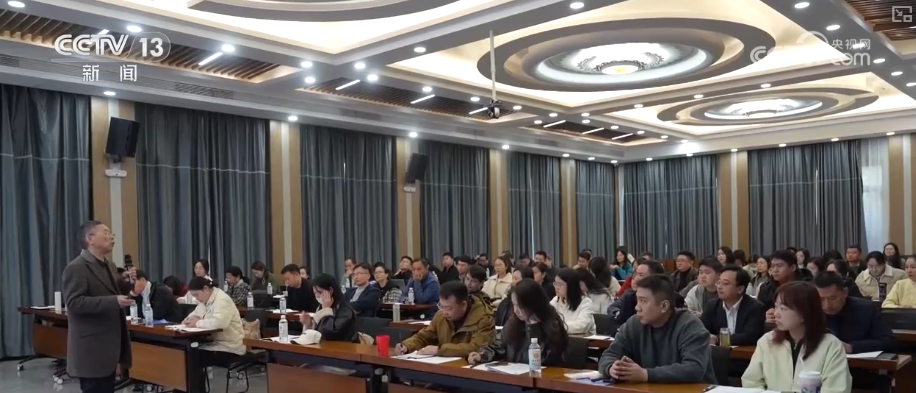
Core Viewpoint - The article emphasizes the importance of cultivating technology managers in Hubei to bridge the gap between scientific research and industry, facilitating the efficient transformation of technological achievements into productive forces [1][11]. Group 1: Training and Development of Technology Managers - A large class on practical skills for technology transfer is currently being held in Shiyan, Hubei, with over 100 technology managers participating [3]. - The training focuses on key aspects such as technology assessment, innovation incubation, and business model design, with experts sharing practical experiences [5]. - The National Technology Transfer Talent Training Base (Central Center) offers over 160 courses and has attracted more than 1,200 technology managers, doubling the number from 2024 [7][9]. Group 2: Impact of Technology Managers - Technology managers in Hubei have facilitated a continuous increase in technology contract transaction amounts, achieving over 100 billion yuan in the past four years [11]. - The average cycle for technology transformation at Hubei University has been shortened by 30%, with annual contract amounts exceeding 30 million yuan [22]. - The establishment of a 25-member technology manager team at Hubei University has led to significant achievements, including a 600,000 yuan technology transfer contract [17]. Group 3: Professional Recognition and Career Development - Hubei University has initiated a professional technical position for technology transfer, integrating technology managers into the civil service system, with over 4,000 certified technology managers in the province [22]. - A new professional title evaluation system for technology transfer has been established, focusing on transaction amounts rather than traditional academic metrics [24][26]. - The reforms in professional title evaluations have provided technology managers with clearer career paths and a sense of belonging, fostering long-term commitment to their roles [29][31]. Group 4: Future Goals and Vision - Hubei aims to cultivate over 20,000 technology managers by 2027, enhancing the application of laboratory results and driving new productive forces [32].

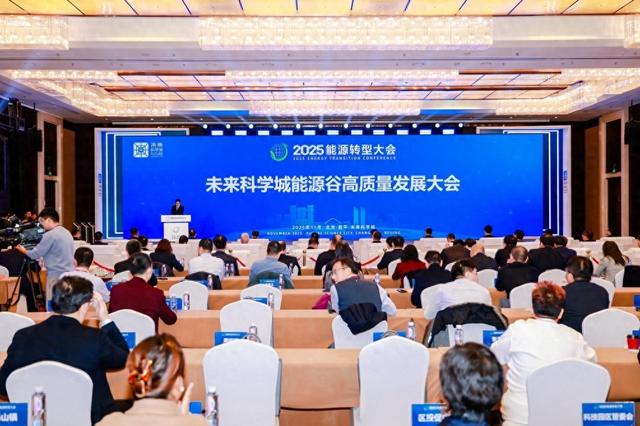
未来科学城能源谷高质量发展大会在北京昌平未来科学城举办
Bei Jing Ri Bao Ke Hu Duan· 2025-11-23 11:05
Core Insights - The 2025 Future Science City Energy Valley High-Quality Development Conference was held in Changping District, Beijing, focusing on the theme of "central-local integration development, deepening collaborative innovation, and promoting the activation and elevation of the Future Science City" [1][3] Group 1: Conference Overview - The conference was organized by the Changping District People's Government and included participation from city-level department leaders, representatives from universities, state-owned enterprises, and high-tech private enterprises, attracting over 400 attendees [3] - The event featured a combination of academic and innovative content, including signing ceremonies for strategic cooperation and project agreements between enterprises and local government [4][18] Group 2: Collaborative Initiatives - The conference emphasized the establishment of collaborative innovation platforms between central enterprises and universities, aiming to facilitate organized technology transfer and deepen the integration of technological and industrial innovation [6] - Notable agreements included partnerships between COFCO Nutrition and Health Research Institute with Beijing University of Chemical Technology, and Beijing New Building Materials Group with Beijing Information Science and Technology University [6] Group 3: Investment and Funding - The Future Science City Advanced Energy Industry Mother Fund was established to promote energy technology innovation and industry aggregation, with government investment leading the initiative [8][9] - The fund aims to create a "financial + industry" integration model, setting a benchmark for green development [9] Group 4: Technological Advancements - The launch of the Future Science City Carbon Monitoring and Management Platform was announced, utilizing Tsinghua University's "electric-carbon coupling" theory and machine learning algorithms to create a precise carbon emission calculation model [11] - This platform aims to support the implementation of carbon emission control tasks and promote regional green and low-carbon development [11] Group 5: Talent Development - The 2025 "Central Enterprise Strong Nation Youth Scientist" initiative was launched to identify and invite 50 young scientists from central enterprises to foster a high-level talent aggregation platform [13][14] - This initiative aims to enhance the integration of innovation chains, industrial chains, financial chains, and talent chains, contributing to the high-quality development of the region [14] Group 6: Research and Innovation Centers - The second phase of the National Electric Power Investment Corporation's research innovation base was inaugurated, focusing on advanced energy technology and serving as a core platform for the integration of large, medium, and small enterprises [16] - The establishment of the Future Science City Central Enterprise Research Institute "Dean Alliance" was also announced, promoting collaborative research and resource sharing among research institutes [18]
全链条创新突围、破解科技成果转化梗阻的湖南—— 从实验室走向生产线 为新型工业化发展注入源源动力
Zheng Quan Shi Bao· 2025-11-21 22:59
Group 1: Core Insights - Hunan Province is leveraging a full-chain innovation approach to overcome the bottleneck of technology transfer, facilitating the transition from "laboratory" to "production line" and injecting momentum into new industrialization [1][2] - The province's modern industrial system is supported by significant growth in sectors such as new energy, electronic information, and quantum technology, contributing valuable experiences for national industrial development [1][2] - The "4×4" modern industrial system strategy aims to rejuvenate traditional industries, strengthen advantageous sectors, and cultivate emerging and future industries through systematic layout [2][3] Group 2: Technological Innovation and Infrastructure - Changsha has achieved a social R&D investment intensity of 3.3%, with over 400 key core technologies developed in the past five years [3] - Zhuzhou is focusing on the "manufacturing plant + research institute" model to deepen the integration of technological and industrial innovation, resulting in breakthroughs in key technologies [3][5] - The establishment of high-level pilot testing platforms is crucial for technology transfer, with the government emphasizing the need for a comprehensive innovation platform system [4][5] Group 3: Role of Enterprises - Enterprises are recognized as the core entities in technology transfer, with Hunan promoting a collaborative model between large and small enterprises to foster innovation [6] - Xiangtan has implemented legislative measures to enhance the technology transfer system, facilitating projects like magnesium-based materials and sodium-ion battery materials [6] - The province has nurtured a tiered innovation enterprise structure, with 4 trillion-level enterprises and 53 billion-level enterprises leading the way in industrial innovation [6][7] Group 4: Case Studies and Achievements - Lean Transmission has developed a comprehensive transmission system design software, filling a gap in domestic capabilities and achieving self-sufficiency in gear transmission system design [7] - The province's approach to innovation is exemplified by various successful case studies, demonstrating the effective transformation of research outcomes into productive forces [7]
科研人跨界创业 让创新不止于实验室
Zheng Quan Shi Bao· 2025-11-21 16:38
Core Insights - The traditional perception that scientists struggle to become entrepreneurs is being challenged by a new wave of technology companies led by top scholars, successfully transforming research outcomes into marketable products [1][2] - A total of 17 companies visited during the "New Industrialization Media Research Tour" are primarily founded by scientists, covering emerging industries such as power semiconductors, medical devices, industrial lenses, and autonomous driving [1] - The success of these ventures is attributed to deep technical expertise and a shift from academic to industrial thinking, allowing scientists to align their innovations with market demands [2] Group 1 - The companies visited include Sideret, focusing on satellite platforms and satellite engineering, and Shanhe Xinghang, specializing in manned light aircraft, drones, and aviation components [1] - These new enterprises are addressing the challenge of converting scientific achievements into practical applications, often referred to as the "last mile" of technology transfer [1] - Founders like He Qinghua of Shanhe Xinghang leverage decades of experience in their respective fields, ensuring a strong foundation for their entrepreneurial efforts [1] Group 2 - The transition from academic to industrial thinking is identified as a critical leap for scientists in entrepreneurship, emphasizing the importance of market adaptability alongside technical feasibility [2] - Support systems at various levels, such as the "pay after use" model in Xiangtan, are being developed to alleviate the challenges faced by scientists in starting businesses [2] - The cross-industry entrepreneurial efforts of scientists are reshaping the innovation ecosystem, providing valuable insights for technology transfer and contributing to the advancement of local manufacturing [2]

全链条创新突围、破解科技成果转化梗阻的湖南——从实验室走向生产线为新型工业化发展注入源源动力
Zheng Quan Shi Bao· 2025-11-21 16:35
Core Viewpoint - Hunan Province is leveraging a full-chain innovation approach to overcome the bottleneck of technology transfer, facilitating the transition of scientific achievements from laboratories to production lines, thereby injecting new momentum into the development of new industrialization [1][2]. Group 1: New Industrialization in Hunan - Hunan is recognized as an important manufacturing base in central China, with significant growth in industries such as new energy, electronic information, and quantum technology, contributing valuable experiences for modern industrial system construction [1][2]. - The "14th Five-Year Plan" emphasizes major progress in new industrialization as a key economic and social goal [2]. Group 2: Technological Innovation and Transformation - The key to effective technology transfer lies in systematic layout, with Hunan's "4×4" modern industrial system strategy aimed at revitalizing traditional industries and fostering emerging and future industries [2]. - Hunan is advancing future industries like artificial intelligence and quantum technology through a project-based approach, creating a distinctive industrial matrix [2]. Group 3: Role of Cities in Innovation - Changsha has implemented various policies to enhance the integration of technology research, application, and achievement transformation, achieving a social R&D investment intensity of 3.3% and breaking through over 400 key technologies in the past five years [3]. - Zhuzhou focuses on the "manufacturing plant + research institute" model to deepen the integration of technological and industrial innovation, achieving significant breakthroughs in key technologies [3]. Group 4: Mid-Stage Testing Platforms - Mid-stage testing platforms serve as incubators and accelerators for technology transfer, with the Ministry of Industry and Information Technology emphasizing the need for a systematic layout of high-level testing platforms by the end of 2027 [4]. - Hunan has established a comprehensive innovation platform system, including national key laboratories and manufacturing innovation centers, to facilitate the transition from laboratory to production line [4][5]. Group 5: Enterprise Innovation - Enterprises are the core entities in technology transfer, with Hunan promoting a model where large enterprises lead and small and medium-sized enterprises collaborate, resulting in a multi-tiered innovation enterprise structure [6]. - Xiangtan has pioneered legislation to enhance the technology transfer system, promoting projects like magnesium-based materials and sodium-ion battery materials [6]. - Hunan has four enterprises with over 100 billion in revenue and 53 with over 10 billion, fostering a total of 72 national manufacturing champions and 593 specialized "little giant" enterprises [6]. Group 6: Case Studies of Innovation - Lean Transmission has developed key core technologies in transmission system design software, filling a domestic gap and achieving self-control in gear transmission system design [7]. - Hunan's full-chain innovation approach is effectively addressing institutional bottlenecks and platform constraints, accelerating the transformation of innovative achievements into productive forces [7].
“双高协同”助力区校一体化发展
Xin Hua Ri Bao· 2025-11-21 07:11
Core Viewpoint - The "Double High Coordination" initiative aims to enhance collaboration between high-tech zones and universities, addressing the challenges of technology transfer and fostering a new development ecosystem that integrates disciplines, industries, and innovation [1][2][7] Group 1: Theoretical and Historical Logic - The initiative integrates universities' knowledge innovation capabilities with high-tech zones' industrial advantages, creating a seamless innovation chain from laboratory to market [2] - Historical shifts in research paradigms, driven by new technologies like artificial intelligence, necessitate this collaboration to transform university innovations into industrial applications [2] Group 2: Mechanisms and Talent Systems - Establishing a dynamic matching mechanism between "discipline clusters" and "industry clusters" is essential, utilizing big data to optimize academic disciplines based on industrial needs [3] - The "dual employment" system allows university faculty to engage directly with industry, enhancing the alignment of talent cultivation with market demands [3] Group 3: Evaluation and Reform - A new evaluation system focused on innovation value is crucial, promoting a "separate management" approach for job-related inventions to empower researchers in the technology transfer process [4] Group 4: Platform and Infrastructure Development - Strengthening pilot and transformation hubs is vital, as these areas often represent a gap in the technology transfer process; collaborative models like the "flying incubator" are being developed to streamline this [5] - Encouraging joint innovation bodies between universities and high-tech zones can enhance technology transfer and commercialization efforts [5] Group 5: Specialized Institutions and Financial Support - The establishment of specialized technology transfer institutions and training for technology managers is necessary to facilitate effective technology transfer [6] - Financial products like "intellectual property loans" are being introduced to convert intellectual property into development capital [6] Group 6: Implementation Significance and Future Directions - "Double High Coordination" is key to overcoming barriers in innovation and industry integration, creating a synergistic effect that enhances competitive advantages [7] - Multi-faceted efforts are required to promote this initiative, including institutional innovation, demand-driven approaches, and the establishment of supportive ecosystems [7]
山东“十四五”科创实现“上天入地下海”多点突破
Zhong Guo Xin Wen Wang· 2025-11-20 11:45
Core Viewpoint - Shandong has prioritized technological innovation as a core element of its development strategy during the "14th Five-Year Plan" period, significantly enhancing its innovation capabilities and achieving its planning goals for high-quality economic and social development [1] Group 1: Technological Achievements - Shandong has made several landmark innovations, including the world's first operational fourth-generation nuclear power plant and the largest solid rocket carrier "Gravity One" [2] - The province has achieved significant breakthroughs in traditional industries, such as the production of the world's thinnest hot-rolled strip steel at 0.6 mm and a 70% reduction in energy consumption in the metallurgy sector [2] - In the chemical industry, Shandong's Dongming Petrochemical developed a technology that reduces crude oil consumption by approximately 60% [2] Group 2: Emerging Industries - Shandong is fostering new industries, with notable advancements in information technology, including the world's first 12-inch silicon carbide substrate and a fully domestically produced server [3] - The province is also making strides in high-end equipment, such as the first semi-fixed rocket sea testing platform in China [3] - In artificial intelligence, Haier launched a smart home model covering nearly 200 million users, while robotics companies are leading in market share for precision gearboxes and collaborative robots [3] Group 3: Technology Transfer and Application - Shandong has implemented 51 technology reform tasks to eliminate barriers to innovation and enhance the service system for technology transfer [4] - The province has initiated 31 provincial-level technology demonstration projects, significantly expanding its hydrogen energy industry from over 500 companies in 2020 to 1,200 [4] - In the first half of the year, Shandong completed 284 pilot projects and verified 318 technological achievements, with 259 successfully transferred to production [4] Group 4: Market and Service Development - Shandong has established a comprehensive technology market that integrates technology trading, enterprise incubation, and financing, with 56,700 technology achievements and a transaction amount of 1.521 billion yuan [5] - The province has built 12 national and provincial-level training bases for technology transfer personnel, training over 8,700 technology managers [6] Group 5: Corporate Innovation Support - Shandong has reinforced the role of enterprises in technological innovation through various supportive policies, with over 90% of major technology projects led by enterprises [7] - The province has allocated over 5.8 billion yuan in financial support to more than 65,000 enterprises, significantly reducing R&D costs and stimulating innovation [8] - Corporate R&D investment has consistently accounted for over 88% of total social R&D investment, maintaining a leading position nationally [8]
力合科创:公司在科技创新服务的过程中形成了独特优势
Zheng Quan Ri Bao· 2025-11-20 10:12
Core Insights - The company, Lihua Science and Technology, has established a unique advantage in technology innovation services, characterized by having innovative resources, understanding cutting-edge technology, being able to transform results, empowering enterprises, and nurturing industries [2] Group 1: Innovation Ecosystem - The company has built a unique innovation ecosystem in collaboration with the Shenzhen Tsinghua University Research Institute, which covers the entire lifecycle of technology enterprises [2] - The company deepens strategic cooperation with key higher education institutions, research institutes, and new R&D organizations to address the source mechanism issues of technology result transformation [2] Group 2: Technology Result Transformation - The company actively participates in the concept verification phase of university research results, identifying early-stage technology projects and providing funding, guidance on industrialization directions, and suggestions [2] - The company helps enterprises cross the "valley of death," enhancing the efficiency of technology result transformation and connecting the entire ecological chain of technology result transformation [2]

力合科创:公司持续与多所高校保持紧密互动
Zheng Quan Ri Bao· 2025-11-20 10:12
Core Viewpoint - The company, Lihua Science and Technology, is actively collaborating with several prestigious universities to enhance its project pipeline and has successfully transformed various technological achievements into early-stage quality projects [2] Group 1: Collaboration with Universities - The company maintains close interactions with multiple universities, including Tsinghua University Shenzhen International Graduate School, Hong Kong University of Science and Technology (Guangzhou), Southern University of Science and Technology, Harbin Institute of Technology (Shenzhen), Beijing Institute of Technology, and Xi'an Jiaotong University [2] - These collaborations aim to broaden the sources of high-quality projects [2] Group 2: Technology Transformation - Since the beginning of the year, the company has successfully transformed technological achievements from institutions such as Beijing Institute of Technology, Harbin Institute of Technology (Shenzhen), and Xi'an Jiaotong University [2] - The company has identified several early-stage quality projects, including intelligent detection and control microsystems, technology-driven component manufacturing, and low-temperature plasma devices [2]
力合科创:公司科技成果转化以产业实际应用为导向,系统推动科技成果转化
Zheng Quan Ri Bao· 2025-11-20 10:12
Core Viewpoint - The company focuses on the transformation of scientific and technological achievements into practical industrial applications, providing comprehensive support for innovation teams and enterprises [2] Group 1: Company Strategy - The company aims to systematically promote the transformation of scientific and technological achievements by deeply exploring and analyzing specific demands from the industry [2] - It seeks to understand the technological achievements and their maturity levels from research and innovation teams, ensuring precise supply-demand matching between the industry and innovation sectors [2] Group 2: Support Services - The company offers one-stop incubation services for achievement transformation projects, including facilities, funding, market access, training, consulting, and competition organization [2] - It provides full lifecycle support for innovation teams and enterprises, facilitating collaboration with large enterprises to meet their transformation and upgrading needs [2] Group 3: Ecosystem Development - The company collaborates with regional governments to create a multi-location innovation ecosystem [2] - It organizes large-scale technology competitions to discover high-quality technological achievements and innovative enterprise resources [2]