
智能驾驶

Search documents
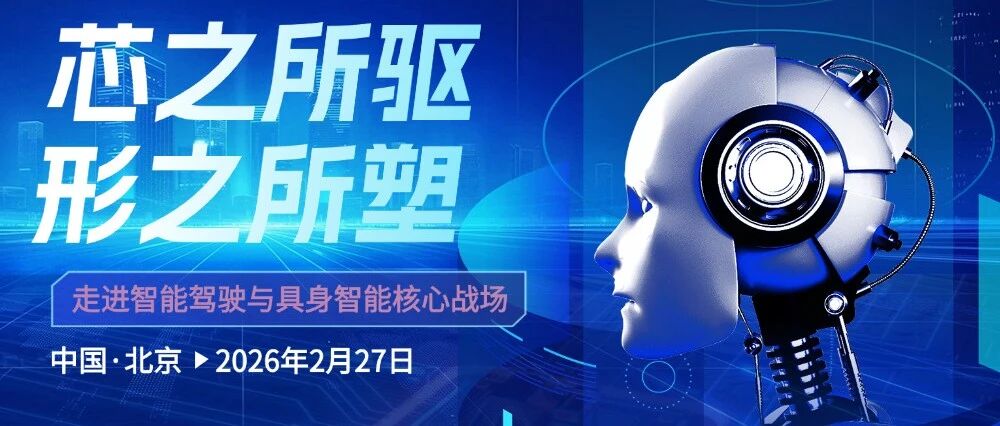
2月北京站:头部智驾企业“盲盒”、天工机器人——芯之所驱 形之所塑
泽平宏观· 2026-01-25 16:06
以下文章来源于泽平宏观商学 ,作者泽平宏观商学 泽平宏观商学 . 前沿科技企业实战研学 读万卷书行万里路 科增行 014> 盲盒:头部智能驾驶企业 当前正处于从 L2 到 L4 自动驾驶迭代、从汽车向 通用机器人跨越的历史拐点。智驾芯片及解决方案市 场正以接近 50% 的年复合增长率奔向万亿规模。公司 凭借国产替代与技术普惠的双重红利,占据了中国智 驾市场的"半壁江山"。 在物理AI加速落地浪潮与国产替代加速的双重β 下,公司作为国产中大型算力芯片头部企业及具备软 硬一体能力的供应商,推动汽车从"功能"迈向"智 能",让机器更懂人类,让出行更安全、更自由。 天工机器人:北京人形机器人创新中心 日程安排 ● ● 国家战略级平台,定义全栈自主新高度 北京人形机器人创新中心于2023年11月成立,是 国内首个省级人形机器人创新中心,也是国内首家具 身智能软硬件全栈科技公司,全面覆盖人形机器人大 脑、小脑、本体与数据的研发攻关并且构建了良好的 开源生态。 2月27日 (星期五) 目前已推出自主研发的全国产化"具身天工"系 列人形机器人和"天轶"系列轮式人形机器人,可覆 盖工业制作、特种作业、物流分拣、商业导览等多元 ...

新春购车窗口期 深蓝汽车推出4款长续航车型购车福利
Bei Jing Ri Bao Ke Hu Duan· 2026-01-25 13:56
Core Insights - Deep Blue Automotive has launched exclusive purchasing policies for four long-range models, including tax subsidies and financing options to facilitate consumer purchases [1][2][3] Group 1: Purchasing Policies - The company offers up to 10,000 yuan in purchase tax subsidies, up to 10,000 yuan in trade-in bonuses, and up to 20,000 yuan in national subsidies for the new year [1] - Additional incentives include various gifts for in-store visits, test drives, and pre-orders [1] Group 2: Model Features - The Deep Blue S07 features a luxurious design, advanced driving assistance systems, and offers a maximum range of 630 kilometers on a single charge [1] - The L06 model includes OTA updates, magnetic suspension, and a maximum range of 670 kilometers, with multiple financing options available [2] - The L07 model supports ultra-fast charging and has a maximum range of 660 kilometers, also equipped with advanced driving assistance systems [3] Group 3: Sales Performance - The Deep Blue S05 has achieved cumulative sales of over 130,000 units globally and is available in over 60 countries, with a range of 620 kilometers [2]
周观点 | 特斯拉计划2027年销售机器人 关注机器人板块【国联民生汽车 崔琰团队】
汽车琰究· 2026-01-25 13:40
Market Performance - The automotive sector outperformed the market this week, with a 2.6% increase in A-share automotive stocks from January 19 to January 25, ranking 14th among Shenwan sub-industries, compared to a decline of 0.6% in the CSI 300 index [1] - Sub-sectors such as automotive services, commercial vehicles, automotive parts, motorcycles, and others saw increases of 6.9%, 4.8%, 4.0%, 1.4%, and 0.7% respectively, while passenger vehicles decreased by 1.4% [1] Investment Recommendations - Recommended core stocks include Geely Automobile, Xpeng Motors, BYD, Bertley, Top Group, New Spring Co., and Chunfeng Power [2] - For passenger vehicles, Geely, Xpeng, and BYD are recommended, with Jianghuai Automobile suggested for attention [5] - In the parts sector, recommendations include Bertley and Horizon Robotics for intelligent driving, and Top Group and New Spring Co. for new forces in the industry chain [5] - For motorcycles, recommended companies are Chunfeng Power and Longxin General [6] - In the tire sector, SAILUN and Senqilin are recommended [7] - For commercial vehicles, recommended companies include Weichai Power and China National Heavy Duty Truck for heavy trucks, and Yutong Bus for passenger vehicles [8] Strategic Collaborations - Changan Automobile signed a comprehensive strategic cooperation agreement with Midea Group to deepen the "people-car-home" smart ecosystem collaboration, allowing users to control 20 types of Midea smart appliances via voice and to check vehicle status remotely [4][11] Robotics Sector Insights - Tesla plans to sell humanoid robots to the public by 2027, with deliveries to enterprises expected to start in the second half of 2026. This development is anticipated to catalyze the robotics sector [3][10] - The focus is on the production and technological iteration of Tesla's robots, with domestic manufacturers like Yushutech expected to enter the IPO phase soon, which could serve as a strong catalyst for the sector [3][10] - Key hardware segments such as dexterous hands and lightweight components are expected to see significant changes, and the valuation of leading automotive robotics manufacturers is anticipated to undergo reconstruction [3][10][23] Policy and Market Trends - The new national subsidy policy for 2026 aims to stimulate demand by extending the scope of vehicle replacement subsidies, which is expected to improve the structure of subsidized models [12][18] - The subsidy for scrapping and replacing vehicles will be based on a percentage of the vehicle price, with electric vehicles receiving up to 20,000 yuan and fuel vehicles up to 15,000 yuan [14][16] - The overall discount rate for vehicles in December 2025 increased compared to November, indicating a competitive market environment [53][54] Motorcycle Market Dynamics - The sales of motorcycles above 250cc reached 69,000 units in December 2025, showing a year-on-year increase of 1.8% and a month-on-month increase of 12.9% [30] - The domestic sales of motorcycles above 250cc in December were 28,000 units, up 32.8% year-on-year, while exports showed a decline [31] Heavy Truck Market Recovery - The heavy truck market saw sales of approximately 95,000 units in December 2025, a year-on-year increase of about 13%, supported by the expanded scope of the vehicle replacement subsidy policy [34] - The average subsidy for scrapping and updating eligible trucks is 80,000 yuan, which is expected to stimulate demand significantly [34][36]





佑驾创新:新获智能驾驶项目定点,订单总金额超13亿元
Xin Lang Cai Jing· 2026-01-25 12:07
Core Viewpoint - Youjia Innovation has received a project confirmation from a well-known automotive company to develop and provide advanced intelligent driving products for a wide range of vehicles targeting both domestic and overseas markets [1] Group 1 - The total order value for the project is expected to exceed RMB 1.3 billion over its entire lifecycle [1] - Mass production for the project is planned to commence in mid-2026 [1]
东方财富策略陈果团队:产业主题与涨价链共舞下的春季行情
Xin Lang Cai Jing· 2026-01-25 12:06
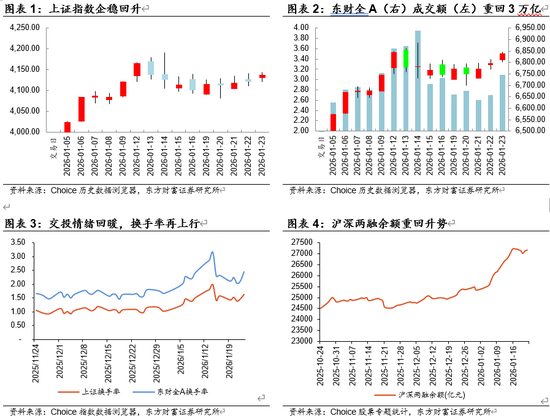
Core Viewpoint - The A-share market has shown a rebound in trading activity, with transaction volume exceeding 3 trillion yuan, indicating strong internal confidence and capital inflow amidst domestic asset scarcity and expectations of RMB appreciation [1][29]. Market Structure and Trends - The market structure has shifted compared to late last year and early this year, with increased activity in the real estate chain, resource products, and price increase chains, reflecting the inflow of medium to low-risk preference capital [1][6][39]. - Recent signals of expanding domestic demand policies have emerged, with expectations of policy enhancements, particularly in real estate prices, infrastructure investment, and service consumption, which are key areas of focus for medium to low-risk preference capital [1][39]. - The expansion of cyclical stocks indicates rising market confidence in re-inflation, with performance spreading from non-ferrous metals to chemicals, building materials, and coal, suggesting strong confidence in the PPI recovery trend this year [1][11][42]. Sector Performance - The small-cap stocks have outperformed large-cap stocks, with indices like the CSI 500 and CSI 1000 showing significant gains of 4.34% and 4.04% respectively, indicating increased participation and liquidity support for small-cap stocks [5][35]. - The real estate chain and cyclical resource products have benefited from warming policy expectations and re-inflation, with recent policy announcements aimed at reversing funding dilemmas in the real estate sector [39][42]. - The communication sector has faced declines, raising concerns about the sustainability of previously favored stocks, as institutional holdings in this sector have not consistently yielded excess returns [19][44]. Investment Focus - Key sectors to watch include semiconductors, non-ferrous metals, computing, media, chemicals, and military industries, with themes such as commercial aerospace, AI applications, robotics, controllable nuclear fusion, intelligent driving, and innovative pharmaceuticals being highlighted [31][37]. - The price increase chain remains a significant investment focus, particularly in areas experiencing supply-demand mismatches, such as AI hardware and upstream raw materials like lithium carbonate and PTA [20][21][23].

喜娜AI速递:今日财经热点要闻回顾|2026年1月25日
Xin Lang Cai Jing· 2026-01-25 12:04
Group 1: Stock Market Trends - A-shares saw significant gains with over a hundred stocks hitting the daily limit, and 27 companies are projected to have over 50% upside potential, focusing on smart driving and innovative pharmaceuticals [2][7] - Six stocks have already doubled in price this year, with Zhizhi New Materials showing a remarkable increase of 256.35% [2][7] - The oil shipping sector has shown strong performance, with companies like China Merchants Energy and COSCO Shipping Energy reaching historical highs, indicating a potential new super cycle in the industry [2][7] Group 2: Technology and Innovation - The photovoltaic sector in A-shares exploded, with over 30 stocks hitting the daily limit following Elon Musk's support for space-based solar power, which is expected to create a demand of nearly 10GW [3][8] - AI marketing is gaining traction, with the market size expanding significantly; leading companies like Zhejiang Wenhu Interconnect have seen stock prices rise nearly 60% in January [5][10] Group 3: Economic Indicators and Future Outlook - Upcoming economic data includes the January PMI report and the Federal Reserve's interest rate decision, with expectations of rates remaining unchanged [4][9] - The Shanghai Composite Index has experienced a rare nine consecutive declines, marking the second occurrence in history, but historical data suggests a high probability of rebound following such streaks [4][10] - A significant amount of capital is expected to flow into the stock market as a large volume of fixed-term deposits matures this year [4][10]




覆盖海内外车型,佑驾创新(02431)获13亿智能驾驶大单
Xin Lang Cai Jing· 2026-01-25 11:01
Core Insights - Youjia Innovation (佑驾创新) has received a project confirmation from a well-known automotive company to develop and provide advanced intelligent driving products for a wide range of domestic and overseas vehicle models, with a total order value exceeding RMB 1.3 billion, expected to start mass production by mid-2026 [1][3] - The collaboration highlights Youjia Innovation's technical strength and commercial value, marking a significant step in the global advancement of passenger vehicle intelligence [1] Group 1: Market Position and Strategy - The automotive industry is shifting its supplier selection criteria, moving beyond single-point technologies to prioritize integrated hardware and software capabilities, production experience, and compliance for global markets [1] - Youjia Innovation has established a strong presence in the intelligent driving and automotive-grade hardware-software integration sectors, achieving mass production for 42 automakers by mid-2025, which reflects high customer recognition [1] Group 2: International Expansion and Partnerships - Youjia Innovation is positioning itself for international expansion, having accumulated compliance experience with EU regulations and successfully assisting automakers in obtaining necessary certifications for multiple export models [2] - A recent memorandum of understanding with Indian parts leader Sterling Tools Ltd. aims to localize production and implement intelligent driving solutions, marking a new phase in its overseas strategy [2] Group 3: Industry Trends and Future Outlook - According to recent research, 2026 may be a pivotal year for intelligent driving suppliers to expand internationally, with Youjia Innovation identified as a top choice in the Tier 1 sector [3] - The project confirmation not only provides Youjia Innovation with significant long-term order expectations but also strengthens its strategic position within the global intelligent driving supply chain [3]
佑驾创新:新获智能驾驶项目定点 订单总金额超13亿元
Zheng Quan Shi Bao Wang· 2026-01-25 10:53
Core Insights - Youjia Innovation has recently received a project confirmation from a well-known automotive company to develop and provide a range of advanced intelligent driving products for various domestic and overseas vehicle models [1] Financial Impact - The total order value for the project is expected to exceed RMB 1.3 billion over its entire lifecycle, with mass production planned to commence in mid-2026 [1]
策略周报:产业主题与涨价链共舞下的春季行情-20260125
East Money Securities· 2026-01-25 10:49
Strategy Insights - The report highlights a strong spring market driven by active trading in small-cap and thematic investments, with A-share trading volume exceeding 3 trillion, indicating robust market confidence and capital inflow [3][8][22] - The report identifies key themes for investment, including commercial aerospace, AI applications, and the price increase chain, which are expected to attract medium-risk capital [3][22] - The report notes a shift in market structure, with increased focus on real estate, resource products, and price increase chains, reflecting a rebalancing of investment styles [3][22] Market Dynamics - The A-share market has shown a recovery with the Shanghai Composite Index stabilizing and trading volumes rebounding, indicating a restoration of investor confidence [8][13] - Small-cap indices such as the CSI 500 and CSI 1000 have outperformed large-cap indices, suggesting a growing interest in mid and small-cap stocks [11][22] - The report emphasizes the importance of supply-demand mismatches in driving price increases across various sectors, particularly in the semiconductor and resource sectors [3][22][27] Sector Focus - The report suggests that the real estate sector is a critical area for investment, driven by recent policy signals aimed at boosting domestic demand, with leading companies in this sector likely to see revaluation opportunities [3][24] - The cyclical resource sector is expected to benefit from rising PPI and inflation expectations, with a notable increase in prices for industrial metals and chemicals [27][28] - Communication stocks, particularly in the optical communication segment, have faced downward pressure, indicating a need for cautious investment in this area despite overall market optimism [29][41]
佑驾创新(02431.HK):新获智能驾驶项目定点
Ge Long Hui· 2026-01-25 10:25
Core Viewpoint - Youjia Innovation (02431.HK) has recently received a project designation notification from a well-known automotive company, indicating a significant opportunity for the company in the smart driving sector [1] Group 1: Project Details - The project involves the development and provision of a range of advanced smart driving products for various domestic and overseas vehicle models [1] - The total order value for the project is expected to exceed RMB 1.3 billion over its entire lifecycle, with mass production planned to start in mid-2026 [1] Group 2: Technological Capabilities - The company possesses deep technical expertise and comprehensive self-research capabilities in the field of smart driving and automotive-grade hardware and software integration [1] - This project designation validates the competitiveness and international potential of the company's integrated smart driving solutions, meeting both domestic and international standards [1] Group 3: Strategic Implications - The collaboration is expected to accelerate the company's globalization strategy and help establish an international business footprint [1] - The project will drive continuous technological iteration and upgrade within the company, facilitating the global application and promotion of its innovative achievements [1] - This initiative holds significant strategic importance for the global proliferation of smart driving technology [1]