AI芯片

Search documents
“炒股30年不如中一签摩尔”!“国产GPU第一股”上市,刷新A股打新纪录
Sou Hu Cai Jing· 2025-12-06 02:35
Core Viewpoint - The recent IPO of Moer Thread has generated significant market enthusiasm, with its first-day performance exceeding expectations, highlighting the potential of domestic AI chip companies in the current market environment [4][8]. Group 1: IPO Performance - Moer Thread's IPO was characterized by a "crazy" level of subscription, with a total subscription multiple of 1572 times and total shares subscribed reaching 704.06 billion [4][6]. - The stock price surged over 500% on its first trading day, leading to a potential profit of over 280,000 yuan for investors who sold at the peak, setting a new record for IPO returns in the A-share market [4][8]. - The IPO process was notably swift, taking only 88 days from acceptance to approval, establishing a new record for the Sci-Tech Innovation Board [8]. Group 2: Financials and Growth - Moer Thread raised a total of 8 billion yuan in its IPO, with a net fundraising amount of approximately 7.576 billion yuan after deducting issuance costs, marking the largest IPO on the Sci-Tech Innovation Board in 2025 [8]. - The company has shown rapid revenue growth, with revenues increasing from 46 million yuan in 2022 to 438 million yuan in 2024, reflecting a compound annual growth rate of 208.44% [11]. - Despite significant revenue growth, Moer Thread has not yet achieved profitability, with cumulative losses amounting to approximately 1.604 billion yuan as of June 2025 [11][12]. Group 3: Strategic Investors and Market Position - The IPO attracted 267 institutional investors, including major players such as China Insurance Investment Fund, Tencent Holdings, and various venture capital firms, indicating strong market confidence [6][8]. - Moer Thread focuses on developing AI chips and has launched four generations of GPU architectures, aiming to provide computing acceleration platforms for high-performance computing applications [9][11]. - The company operates in a competitive landscape dominated by international giants, facing challenges such as high customer concentration and rapid technological advancements [12].


摩尔线程造富:股民一签赚27万,梁文锋一把赚3000万,创始人张建中身价飙至300亿
Sou Hu Cai Jing· 2025-12-05 17:05
Core Viewpoint - The successful IPO of Moore Threads, dubbed the "Chinese version of Nvidia," marks a significant milestone for the domestic GPU industry, with a market capitalization exceeding 300 billion yuan at its peak, highlighting the growing interest and investment in China's semiconductor sector [2][3]. Company Overview - Moore Threads was founded in 2020 amid international restrictions on domestic chip production, with a mission to develop China's own GPU industry, led by former Nvidia executives [3][4]. - The company has raised over 10 billion yuan in funding prior to its IPO, achieving a valuation close to 30 billion yuan [3]. - The IPO raised 8 billion yuan, attracting significant institutional investors, including major insurance and asset management firms [3][4]. Financial Performance - Moore Threads has produced five chips and iterated four generations of GPU architecture, with revenue projected to grow from 46 million yuan in 2022 to 438 million yuan in 2024, reflecting a compound annual growth rate of over 208% [5]. - Despite substantial revenue growth, the company has not yet turned a profit, with cumulative losses reaching 5.7 billion yuan, although losses are narrowing [5][10]. Market Context - The IPO of Moore Threads has initiated a wave of listings for domestic GPU companies, with other firms like Muxi Integration and Biran Technology also preparing for public offerings [6]. - The AI chip market in China is expected to grow significantly, with projections indicating a rise from 142.5 billion yuan in 2024 to 1.3367 trillion yuan by 2029, with GPUs expected to capture an increasing market share [8]. Competitive Landscape - Domestic GPU companies face challenges in technology and market positioning compared to established players like Nvidia, which has a significant advantage in product performance and ecosystem development [8][9]. - The industry consensus acknowledges the high technical barriers to developing autonomous GPUs, necessitating long-term investment and comprehensive technological accumulation [9][10].
美股开盘,道指涨0.08%,标普500指数涨0.17%,纳指涨0.26%。百度(BIDU.O)涨约6%,AI芯片部门昆仑芯被曝计划赴港IPO。
Jin Rong Jie· 2025-12-05 14:52
本文源自:金融界AI电报 美股开盘,道指涨0.08%,标普500指数涨0.17%,纳指涨0.26%。百度(BIDU.O)涨约6%,AI芯片部门昆 仑芯被曝计划赴港IPO。 ...
百度盘初涨超6%,昆仑芯据报计划赴港IPO
Ge Long Hui A P P· 2025-12-05 14:46
Core Viewpoint - Baidu's AI chip business, Kunlun, has completed a new funding round with a valuation nearing $3 billion and is preparing for an IPO in Hong Kong by early 2027 [1] Group 1: Company Developments - Baidu's stock rose over 6% to $126.42 following the news of Kunlun's funding and IPO plans [1] - Kunlun aims to submit its IPO application to the Hong Kong Stock Exchange in the first quarter of 2026 [1] Group 2: Financial Highlights - The recent funding round has valued Kunlun at approximately $3 billion [1]
百度AI王牌昆仑芯赴港IPO,国产算力突围迎关键试炼
Sou Hu Cai Jing· 2025-12-05 14:44
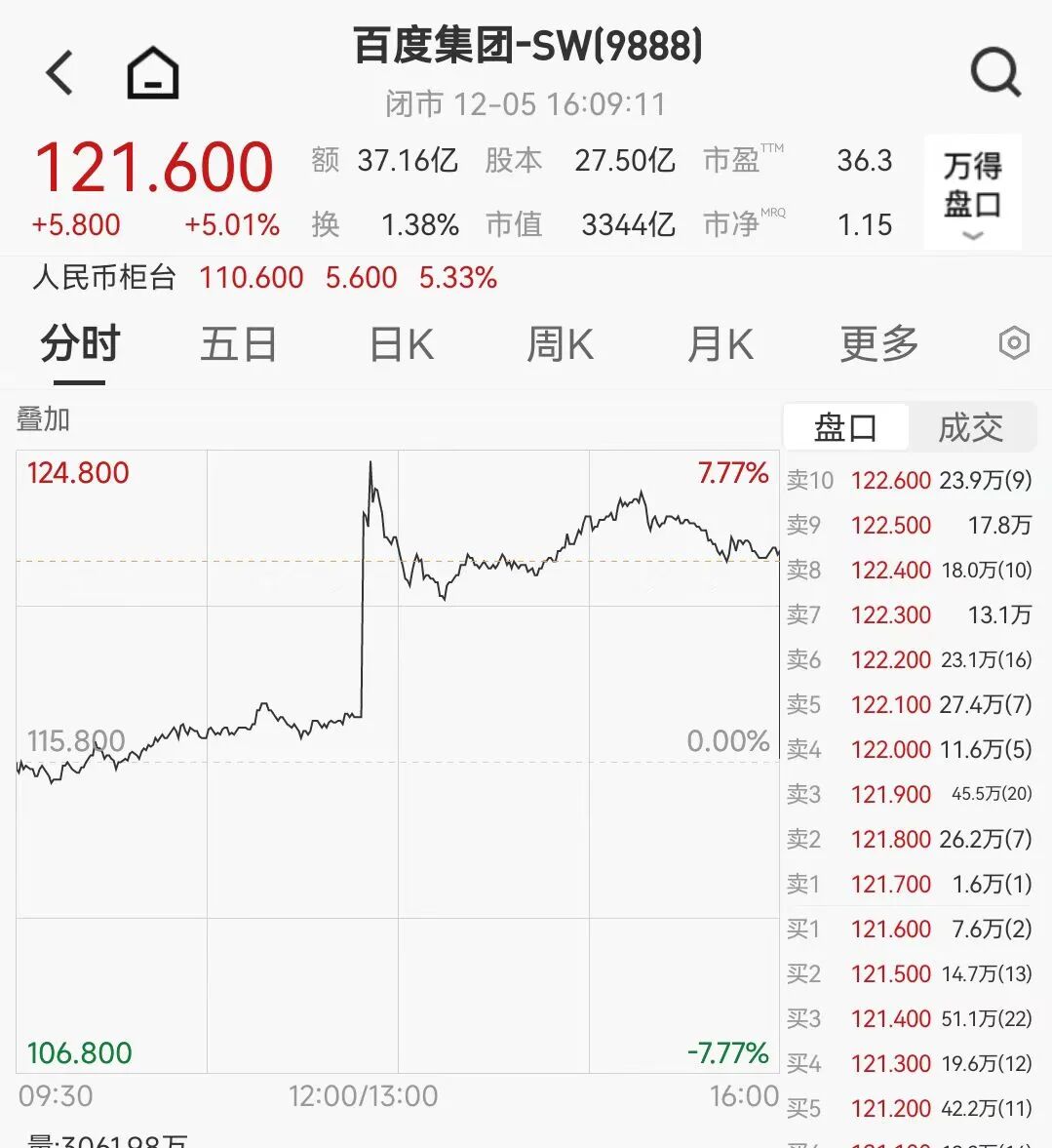
Core Viewpoint - Kunlunxin, a subsidiary of Baidu, is preparing for an IPO in Hong Kong, having completed a new financing round of $283 million, with a post-money valuation of $2.97 billion (approximately 21 billion RMB) [2][3][4] Group 1: IPO Plans and Market Reaction - The IPO preparation for Kunlunxin has entered the preliminary stage, with potential application to the Hong Kong Stock Exchange as early as Q1 2026 [3] - Following the IPO news, Baidu's stock price surged by 7.77%, indicating a market reassessment of its AI computing assets [3] - This is not the first time Kunlunxin has been rumored to go public, but the current preparations appear more substantial [4] Group 2: Company Background and Growth - Kunlunxin originated from Baidu's internal smart chip and architecture department, which became independent in 2021 with an initial valuation of approximately 13 billion RMB [4] - Over four years, Kunlunxin's valuation has increased by nearly 60%, reflecting changing market perceptions of domestic AI chip assets [4][6] - The latest financing round included state-owned entities, enhancing Kunlunxin's credibility for its IPO [5] Group 3: Strategic Considerations for Baidu - Baidu's decision to spin off Kunlunxin aims to unlock value, as the company's market valuation has been hampered by its advertising business [6] - An independent listing could allow Kunlunxin to be revalued according to technology stock metrics, potentially supporting Baidu's second growth curve [6] - The IPO coincides with a critical moment for domestic AI chip companies, as several are also pursuing public listings [6] Group 4: Technological Advancements - Kunlunxin's revenue is projected to exceed 1 billion RMB in 2024, outpacing competitors like Cambricon and Moore Threads [6] - The company showcased its technological capabilities at the Baidu World Conference, introducing new products optimized for large-scale inference and training [7] - The P800 series, a third-generation product, has achieved performance metrics that compete with international giants like NVIDIA [7][8] Group 5: Market Validation and Expansion - Kunlunxin secured a significant order from China Mobile for AI computing devices, marking a milestone in its market penetration [10] - The company has expanded its client base across various sectors, including telecommunications, finance, and energy [12] - Its unique position as a subsidiary of Baidu provides a testing ground for its products, facilitating market entry and product refinement [12][14] Group 6: Challenges and Competitive Landscape - Despite high valuations, concerns about the sustainability of Kunlunxin's revenue model and market competition persist [17][19] - The company faces challenges in building a robust developer ecosystem and competing with established players like NVIDIA [18][22] - Geopolitical and supply chain risks remain relevant, as Kunlunxin relies on global supply chains for chip manufacturing [20] Group 7: Future Outlook and Industry Impact - Kunlunxin's IPO is seen as a litmus test for the maturity of the domestic AI chip industry, with implications for future financing and market confidence [24] - The company must balance technological innovation, ecosystem development, and commercialization to convert valuation expectations into sustainable enterprise value [25]

摩尔线程首日大涨425.46%!中一签赚24万,投资者赢麻了
Sou Hu Cai Jing· 2025-12-05 11:41
Core Viewpoint - The investment in Moer Thread has yielded significant returns for early investors, with some seeing their investments increase over eightfold within a year, driven by the growing demand for GPUs in the AI industry and the company's unique positioning in the market [3][4][11]. Industry Overview - The global AI industry is experiencing rapid growth, leading to an explosive demand for computing power, particularly for GPUs, which is expected to exceed $100 billion this year and grow to over a trillion dollars by 2030, with a compound annual growth rate of around 30% [5][6]. - The Chinese GPU market is projected to grow from 163.8 billion yuan last year to 1.36 trillion yuan by 2029, supported by national policies favoring domestic chip development [8]. Company Insights - Moer Thread's appeal to investors is partly due to its scarcity and the strong background of its core team, many of whom have experience at NVIDIA, including the CEO who worked there for 14 years [10][11]. - The company focuses on developing domestic full-function GPUs and related products, which is a niche area with limited competition in China [10]. Financial Performance - Despite the high market enthusiasm, Moer Thread is currently operating at a loss, with a projected net loss of 1.618 billion yuan in 2024, and its price-to-sales ratio is significantly higher than that of established competitors like NVIDIA [12]. Competitive Landscape - Moer Thread faces substantial challenges in overcoming the technological barriers established by NVIDIA over the past two decades, particularly in chip architecture and software ecosystem development [13][14]. - The company is still in the early stages of building its software ecosystem and developer support, which are critical for competing effectively in the GPU market [13].

昆仑芯拟赴港上市?百度一度涨超7%
第一财经· 2025-12-05 10:26
Core Viewpoint - The article discusses the potential IPO of Baidu's Kunlun Chip, which has positively impacted Baidu's stock price, indicating strong market interest and confidence in the company's chip business [3][4]. Group 1: IPO Plans and Market Reaction - Kunlun Chip has reportedly initiated preparations for its IPO in Hong Kong, aiming to submit its application to the Hong Kong Stock Exchange by Q1 2026 and complete the IPO by early 2027 [3]. - Following the news of Kunlun Chip's IPO plans, Baidu's stock price rose by over 7%, closing up 5% at 121.6 HKD [3]. - Previous rumors about Baidu's use of its self-developed Kunlun Chip P800 for training new models also led to a significant stock price increase of over 10% in September 2024 [4]. Group 2: Company Background and Product Development - Kunlun Chip, established as a separate entity in 2021, has undergone three product iterations, with the third generation, P800, achieving mass production in 2024 [5]. - The company has secured over a hundred clients, including major firms like China Merchants Bank and Geely, with deployment scales ranging from tens to thousands of units [5]. - Future products include the M100, designed for large-scale inference, set to launch in 2026, and the M300, targeting ultra-large multimodal model training and inference, expected in 2027 [5]. Group 3: Financial Performance and Market Position - Although Baidu has not disclosed specific financial data for Kunlun Chip, it is anticipated to reach breakeven this year, with projected revenues soaring from approximately 1.3 billion RMB in 2025 to 8.3 billion RMB in 2026, marking a sixfold increase [5]. - The P800 series has been deployed in tens of thousands of units, with single cluster deployments exceeding 30,000 units [5]. - Baidu's internal operations predominantly utilize the P800 for inference tasks, demonstrating its effectiveness in training large models at a lower cost compared to traditional GPU clusters [6].
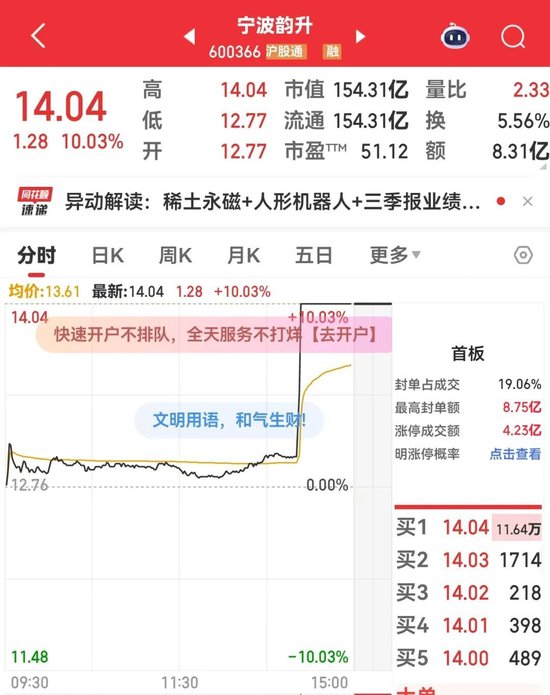
突发,600366直线涨停,发生了什么?新股上市次日怎么走,大数据揭秘
Xin Lang Cai Jing· 2025-12-05 10:23
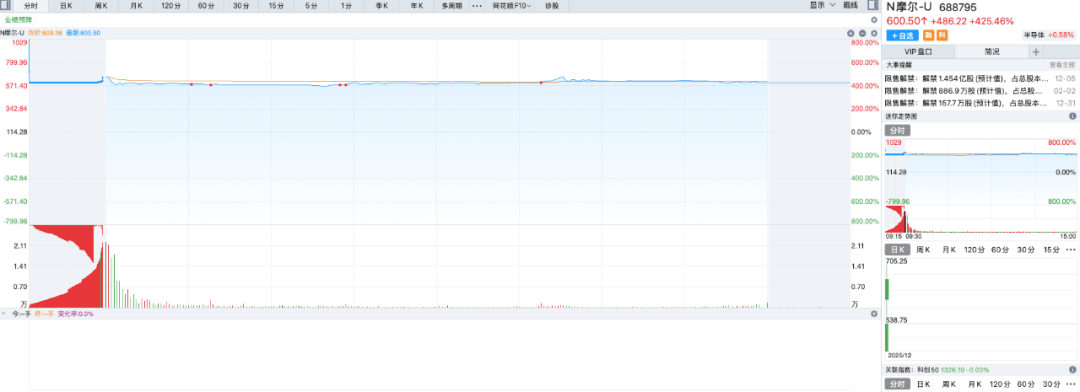
Core Viewpoint - The news highlights significant movements in the stock market, particularly focusing on the surge of rare earth permanent magnet stocks and the impressive debut of the new stock, N-Mole-U, which has achieved remarkable gains on its first trading day. Group 1: Rare Earth Permanent Magnet Stocks - On December 5, the Shanghai Composite Index rose, closing above the 3900-point mark, with notable interest in sectors like superconductors and commercial aerospace [1][16] - Rare earth permanent magnet stocks such as Ningbo Yunsheng (600366) saw a rapid increase, hitting the daily limit within three minutes, while Jinli Permanent Magnet surged over 15% during trading [1][3] - Companies like Jinli Permanent Magnet, Zhongke Sanhuan, and Ningbo Yunsheng have reportedly obtained general export licenses, which will streamline export processes and enhance delivery speeds, benefiting the industry as downstream demand recovers [3][18] Group 2: New Stock Performance - N-Mole-U debuted on the STAR Market on December 5, with an opening increase of 468.8%, leading to a market capitalization exceeding 300 billion yuan, closing at 600.5 yuan per share, making it the third highest-priced stock in A-shares [5][18] - The average first-day gain for new stocks in 2025 reached 254.89%, with 31 stocks experiencing gains over 300%, including notable performers like Dapeng Industrial and Sanxie Electric [10][23] - The highest first-day profit from new stock subscriptions was recorded for N-Mole-U, with a profit of 267,900 yuan for investors who sold at the opening price [20][23] Group 3: Market Trends and Valuation - As of December 5, 2025, new stocks that have seen a price drop of over 30% generally have a rolling price-to-earnings ratio below 40, with three stocks, Tianyouwei, Hai'an Group, and Yongjie New Materials, having ratios below 20 [12][26] - Tianyouwei has the lowest rolling P/E ratio at 14.01, focusing on automotive instrument development, while Yongjie New Materials has shown a 30.99% increase in net profit year-on-year [12][26]

大利好来了!尾盘猛拉
中国基金报· 2025-12-05 10:03
Core Viewpoint - The Hong Kong stock market experienced a significant rise, driven by the financial sector, particularly insurance stocks, following favorable regulatory news from the National Financial Regulatory Administration regarding insurance companies' investment risk factors [2][11][13]. Market Performance - The Hang Seng Index closed up 0.58%, reclaiming the 26,000-point mark, while the Hang Seng China Enterprises Index and Hang Seng Technology Index rose by 1.01% and 0.84%, respectively [4][8]. - The total trading volume for the day reached HKD 210.5 billion, with net inflows from southbound funds amounting to HKD 1.3 billion [7][8]. Financial Sector Highlights - Major insurance stocks saw substantial gains, with China Taiping rising over 7% and China Ping An increasing by 6.71% [2][8][10]. - Morgan Stanley added China Ping An to its focus list, raising its target price for A-shares from RMB 70 to RMB 85 and for H-shares from HKD 70 to HKD 89 [10]. Regulatory Impact - The National Financial Regulatory Administration announced adjustments to the risk factors for insurance companies investing in stocks, aimed at enhancing long-term investment management and supporting the real economy [11][13]. - The adjustments include differentiated risk factor settings based on holding periods for stocks in the CSI 300 Index, the CSI Dividend Low Volatility 100 Index, and stocks on the STAR Market [13]. Technology Sector Performance - Baidu's stock surged over 5%, leading gains among technology stocks, following reports of its semiconductor subsidiary Kunlun Chip planning an IPO in Hong Kong [14][15]. - Other tech stocks such as Kuaishou, Xiaomi, and Meituan also recorded increases [16]. Commodity Sector Insights - The non-ferrous metals sector showed strong performance, with Jiangxi Copper rising by 6.11% and China Aluminum by 5.41% [17][18]. - Reports indicated that companies like Jinli Permanent Magnet and others have received general export licenses, signaling a clearer policy environment for rare earth exports [18]. Tourism and Aviation Sector Challenges - Stocks in the tourism and aviation sectors faced downward pressure, with China Southern Airlines, Air China, and China Eastern Airlines experiencing declines of 3.25%, 1.68%, and 1.04%, respectively [19][20]. - A report highlighted that 34 out of 134 stocks in the tourism and leisure facilities sector were short-sold, with a total short-selling amount of HKD 713 million [21].

百度突然飙升近8%,210亿估值芯片子公司或赴港IPO,年营收超摩尔线程
2 1 Shi Ji Jing Ji Bao Dao· 2025-12-05 09:55
Core Viewpoint - The Hong Kong stock market saw a surge in computing hardware stocks, particularly driven by news of Baidu's Kunlun Chip planning to go public, with a recent funding round raising $283 million and a valuation of $2.97 billion [2] Group 1: Company Overview - Kunlun Chip, a subsidiary of Baidu, is an AI chip company that was incubated internally and completed its independent financing in April 2021, with an initial valuation of approximately 13 billion RMB [2] - Baidu holds a controlling stake in Kunlun Chip, with a shareholding ratio of 59.45% [4] Group 2: Financial Performance - Kunlun Chip's revenue is projected to exceed 1 billion RMB in 2024, surpassing other AI chip companies that have applied for or completed IPOs [8] - Morgan Stanley forecasts that Kunlun Chip's revenue will increase from approximately 1.3 billion RMB in 2025 to 8.3 billion RMB in 2026, representing a sixfold growth [8] Group 3: Product Development - The new generation of Kunlun Chips includes two products: Kunlun Chip M100, designed for large-scale inference scenarios, set to launch in 2026, and Kunlun Chip M300, aimed at ultra-large multimodal model training and inference, expected in 2027 [8] - The recently announced Tianchi 256 and Tianchi 512 supernodes will be launched next year, with the Tianchi 512 capable of training trillion-parameter models [8] Group 4: Market Position and Strategy - Kunlun Chip has completed thousands of deployments, establishing itself as a critical foundation for Baidu's AI capabilities [8] - Baidu's intelligent cloud services leverage Kunlun Chip and the Baidu Barge AI computing platform to provide AI computing power to numerous enterprises [9]