
未来产业

Search documents
第三届雄安未来之城场景汇聚焦前沿技术
Bei Jing Ri Bao Ke Hu Duan· 2025-12-27 23:45
Core Insights - The third Xiong'an Future City Scenario Conference will focus on cutting-edge technologies and future industries, launching 12 specialized competitions to promote the large-scale application and industrialization of new technologies, products, and scenarios in Xiong'an New Area and Hebei Province [1][2] Group 1: Competitions and Events - The conference will feature 12 specialized competitions, including the Xiong'an Aerospace Information Innovation Technology Competition, Xiong'an Low-altitude Transportation Innovation Technology Application Competition, and Xiong'an International Robot Competition, among others, covering a total of 35 tracks [1] - New competitions have been added, such as the Green Energy Competition and Smart Express Logistics Competition, indicating an expansion and optimization of the event compared to previous editions [1] Group 2: Project and Resource Development - The event will leverage the modern urban construction of Xiong'an and the rich resource scenarios in Hebei, identifying nearly 100 key directions for scenario development and a number of major engineering projects to support the implementation of these scenarios [2] - The competitions are scheduled to take place from April to June next year, with online registration already open for participating teams and companies through the official platform [2]


未来产业潜力企业获40多亿金融支持
Sou Hu Cai Jing· 2025-12-27 19:19
记者了解到,在这9场路演活动中,累计近200家投资机构、30家金融机构与150家企业开展对接,其中 脱颖而出的83家企业获得市级财政资金支持。路演活动后续,市经信局还与中国人民银行北京市分行联 合举办了3场金融对接活动,通过金融产品接续赋能企业发展。 据经信局方面介绍,"创赢未来"公开路演活动是北京市建立未来产业投入增长机制的重要举措,聚焦未 来产业重点领域多技术路线布局,持续引导社会资本投入,形成"企业发现—助推成长—产业集聚"的全 链条机制,支持未来产业领域潜力企业成长。 下一步,市经信局将持续组织开展"创赢未来"公开路演活动,发现和支持一批高成长潜力的未来产业企 业,并依托产业链上下游合作机制、中小企业服务体系等,对纳入培育范围的企业实施全周期跟踪服 务。 本报讯(记者 杨天悦)资本赋能是推动未来产业发展的重要因素。记者近日从市经信局获悉,"创赢未 来"公开路演活动已陆续举办9场,搭建起创新企业与社会资本精准对接的桥梁。据统计,共有83家企业 通过上述路演活动获得市级财政资金支持,在后续举行的融资对接活动中,数十家未来产业潜力企业又 获得超40亿元的金融支持。 获得支持的未来产业潜力企业,主要覆盖未来信 ...
国家创投引导基金要答好千亿变万亿的“乘法题”
Xin Lang Cai Jing· 2025-12-27 17:39
Core Viewpoint - The establishment of the National Venture Capital Guidance Fund aims to leverage central government funding to attract participation from various sectors, forming a trillion-yuan fund to support strategic emerging industries and future industries, thereby accelerating the cultivation of new productive forces [4][6]. Group 1: Fund Structure and Objectives - The National Venture Capital Guidance Fund is designed to focus on early-stage investments, particularly in seed and startup companies, which are seen as having high growth potential despite their associated risks [4][5]. - The fund will have a 20-year lifespan, with a 10-year investment period and a 10-year exit period, allowing for long-term capital support for companies [5]. - The fund will operate under a market-oriented model, with government oversight on policy direction while delegating operational management to professional teams [5][10]. Group 2: Investment Strategy - The fund will primarily target high-growth seed, startup, and early-stage innovative small and micro enterprises, acting as an "angel investor" to mitigate market funding shortages [6][12]. - Investment will focus on "hard technology" sectors, aligning with national strategic plans to support original and disruptive technological innovations [6][13]. - The fund will adopt a "four investment" approach: investing early, investing small, investing long-term, and investing in hard technology, ensuring that at least 70% of investments are directed towards seed and early-stage companies [13]. Group 3: Operational Framework - The fund will be structured in a three-tier system: the guidance fund level, regional fund level, and sub-fund level, effectively utilizing central funding to attract social capital [10][12]. - Three regional funds have been established, with a total scale exceeding 50 billion yuan, aimed at enhancing local innovation and entrepreneurship [11]. - The fund will implement a comprehensive risk management system covering the entire lifecycle of investments, focusing on overall effectiveness rather than individual project outcomes [7][13]. Group 4: Future Directions - The fund aims to address the funding shortages in emerging and future industries by gathering various social capital and providing quality services to innovative enterprises [15]. - Continuous efforts will be made to enhance the collaboration between the guidance fund and other government-led funds to create a synergistic effect in supporting innovation [8][15].

1000亿资金进场,风险投资国家队要干件“大”事 | 马上评
Sou Hu Cai Jing· 2025-12-27 14:50
Core Insights - The National Venture Capital Guiding Fund has officially launched with an investment of 100 billion RMB, marking a significant entry into the market aimed at revitalizing the venture capital landscape in China [1][2][9]. Group 1: Fund Structure and Strategy - The fund is structured in a three-tier system: a national fund at the top, regional funds in the middle, and sub-funds and direct investment projects at the bottom, designed to leverage investments and stimulate the market [22][26]. - The national fund has a 20-year lifespan, significantly longer than traditional funds, allowing for more patient capital investment in long-term projects [24]. - The fund aims to invest at least 70% of its capital in seed and early-stage companies, focusing on hard technology sectors such as integrated circuits, artificial intelligence, and future energy [25][16]. Group 2: Market Impact and Objectives - The fund is designed to address the current "money shortage" in the venture capital market, which has been exacerbated by geopolitical factors and a preference for later-stage investments [13][14]. - By eliminating regional investment requirements, the fund allows capital to flow freely to the best projects regardless of location, promoting a unified national market [26][27]. - The initiative is expected to inject significant liquidity into the market, potentially leveraging the initial 100 billion RMB to generate up to 1 trillion RMB in total investment [22][20]. Group 3: Long-term Vision and Challenges - The fund represents a strategic commitment to nurturing innovation and technology in China, responding to the urgent need for investment in critical sectors to maintain competitiveness on a global scale [19][18]. - It acknowledges the high-risk nature of early-stage investments and aims to provide a supportive environment for startups, allowing for a higher tolerance for failure [14][27]. - The fund's establishment is seen as a necessary step to overcome existing barriers in the venture capital ecosystem, fostering a more dynamic and innovative entrepreneurial landscape [3][27].
国家基金助力,A股行情看多
Sou Hu Cai Jing· 2025-12-27 12:54
Group 1 - The National Venture Capital Guidance Fund has officially launched, marking an important financial initiative to implement the "14th Five-Year Plan" [1] - The fund will focus on early-stage investments, allocating no less than 70% of its total scale to seed and startup companies, with valuations below 500 million and individual investments not exceeding 50 million [1] - The investment focus is on strategic emerging industries and future industries [1] Group 2 - The Shanghai Composite Index has achieved an 8-day winning streak, with trading volume increasing to 2.18 trillion [1] - There is a dual drive from human main channels and upstream resources, with upstream resource futures reaching new highs [1] - The Shanghai Stock Exchange has clarified that commercial rocket companies are eligible for the fifth set of listing standards on the Sci-Tech Innovation Board [1] - The first batch of L3 autonomous vehicles in China has begun large-scale road operations [1] - The exchange has announced fee reduction measures for 2026, and the central bank is working to improve the environment for long-term investments [1]
国家创业投资引导基金启动,对集成电路、人工智能等领域早期项目和种子企业加大基金投资
Sou Hu Cai Jing· 2025-12-27 07:09
Core Insights - The National Venture Capital Guidance Fund has been launched, with three regional funds established in the Beijing-Tianjin-Hebei, Yangtze River Delta, and Guangdong-Hong Kong-Macao Greater Bay Area, aiming to create a fund scale of trillions [1][6] Fund Structure - The fund operates under a three-tier structure: "Fund Company - Regional Fund - Sub-Fund," with a 20-year lifespan for the National Venture Capital Guidance Fund Company [2] - Regional funds will focus on seed and early-stage investments, with at least 80% of investments directed towards sub-funds [2][4] Investment Focus - The fund emphasizes early-stage investments, targeting seed, startup, and early-mid stage companies, particularly in cutting-edge technology sectors [3][4] - Investment in small enterprises is capped at a valuation of 500 million, with individual investments not exceeding 50 million [5] Long-term Commitment - The fund has a 20-year duration, allowing for a longer investment horizon and accommodating sectors with extended return cycles, such as innovative pharmaceuticals [5][6] - The fund aims to support the transformation of key common technology achievements and invest in enterprises that have made significant breakthroughs [5][6] Sectoral Focus - The fund will increase investment in early-stage projects and seed companies in fields such as integrated circuits, artificial intelligence, aerospace, and future energy [6][7] - The three regional funds are expected to exceed 50 billion in total scale, with plans to establish over 600 sub-funds to support emerging and future industries [7]

LP周报丨 广东500亿大手笔,仅4天就投进“国家队”
投中网· 2025-12-27 07:02
以下文章来源于LP波谱 ,作者黎曼 作者丨 黎曼 来源丨 LP波谱 广东国资,近期又有大手笔。 12 月 18 日,由广东省财政厅全资控股,注册资本 500 亿元的广东省战略性新兴产业投资引导基金有限责任公司(以下简称 " 广东战略性新兴产业基金 " )在广州正式成立。 成立仅过四天,在 12 月 22 日就闪电般完成首笔对外投资。这一速度从侧面体现处这只基金早已有备而来。 LP波谱 . 本账号专注LP市场报道。"波浪、谱系"是识别市场的维度,也是定义市场的坐标;此外,波谱(Pop Art)也意为放低意义与史诗 的执念,认同商业的日常之美。 将投中网设为"星标⭐",第一时间收获最新推送 聚焦LP出资、新基金、GP招募,捕捉LP圈一周商业情报。 值得细嚼的是,这笔投资没有直接去投具体项目,而是选择将 40 亿巨资注入国家创业投资引导基金旗下的粤港澳大湾区创投 引导基金。 这一基金大有来头。它是"万亿级航母"国家创业投资引导基金于 12 月 22 日同日在北京、上海、深圳三地设立的三只区域子 基金之一,注册资本 450.5 亿元,由国家创业投资引导基金有限公司 ( 出资 200 亿元 ) 、深圳市国创引科创投资合 ...

万亿航母级基金,正式启动
21世纪经济报道· 2025-12-27 06:55
记者丨申俊涵 赵娜 编辑丨林坤 视频丨 柳润瑛 12月26日,"航母级"的国家创业投资引导基金(简称"引导基金")正式启动,为耐心资本实践立下新标杆。 据悉,引导基金使用超长期特别国债资金出资,在国家层面由财政出资1000亿元,在区域基金、子基金层面积极鼓励社会资本参 与。 引导基金发挥中央资金引领带动作用,广泛吸引地方政府、中央企业、金融机构、民间资本等多方参与,形成万亿资金规模,通过 投基金、投企业、投项目,加大对战略性新兴产业和未来产业支持力度,加快培育和发展新质生产力。 在定位上,坚持做早期基金、耐心基金、市场化基金和标杆基金;架构上,开创性设立"基金公司—区域基金—子基金"的3层架构; 投资上,坚持投早、投小、投长期、投硬科技的"4投"导向;期限上,设置20年存续期;绩效考核方面,不简单以单个项目或单一年 度的盈亏作为考核依据。 据悉,在此次的启动仪式上,3只区域基金共与49只子基金、27个直投项目签订投资意向,管理团队已经与各只基金和项目充分沟 通,预计近期可完成一批重点子基金和直投项目投资。未来,引导基金将推动在三个区域设立超过600只子基金,服务新兴产业和未 来产业发展。 "引导基金最大的亮点 ...
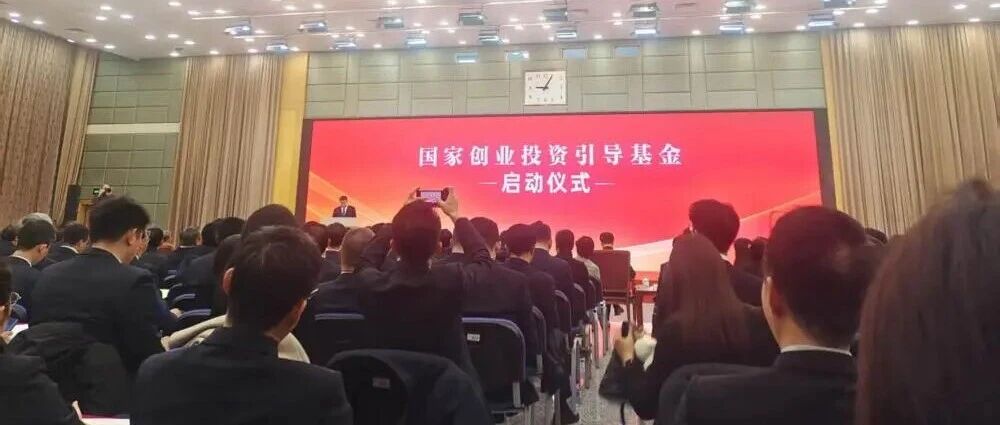
500亿元国家级创投基金重磅落子深圳南山
Nan Fang Du Shi Bao· 2025-12-27 06:08
近日,南山区出资30亿元参与的"粤港澳大湾区创业投资引导基金合伙企业(有限合伙)"(下称"国创 粤港澳基金")在南山注册成立。该基金由国家发改委、财政部牵头组建,目标规模504.5亿元,是南山 区迄今参与规模最大、层级最高的国家级引导基金。此举标志着国家级创投资本与南山创新沃土深度融 合,南山科技与金融融合水平迎来历史性提升。 据悉,基金将重点围绕硬科技领域展开投资,聚焦战略性新兴产业和未来产业领域,采用"子基金投资 +项目直投"相结合的模式,旨在为处于种子期、初创期的科技企业提供长期、稳定的资金支持。这一 投资方向与深圳市及南山区的重点产业规划高度契合,预计将有力推动一批创新主体突破关键核心技 术、加速科技成果转化,为培育和发展新质生产力注入强劲动力。 以此为契机,南山区将进一步优化创新创业生态,吸引全球优质创投机构集聚,持续扩大科创投资"朋 友圈",着力构建"投早、投小、投科技"的良性循环,为打造具有国际影响力的风投创投核心区奠定坚 实基础。 此次国家级基金的落户,不仅是资本层面的重要布局,更是南山深度融入国家创新体系、提升核心竞争 力的里程碑。下一步,南山区将围绕基金运营推出一系列配套服务与联动举措,全 ...

航空航天具身智能等领域再传利好:国家再拿一笔钱投向核心技术攻关
Xin Lang Cai Jing· 2025-12-27 03:17
Core Viewpoint - The National Venture Capital Guidance Fund has officially launched, focusing on early and small investments in the technology sector, which inherently involves high risks [1] Group 1: Fund Characteristics - The Guidance Fund emphasizes strategic emerging industries and future industries, supporting original and disruptive technological innovations and key core technology breakthroughs [1] - Unlike other market-oriented funds, the Guidance Fund prioritizes national strategic service over investment return rates [1] - The fund aims to allocate resources to areas that are "more in need of funding," ensuring that necessary investments for innovation are fully realized [1] Group 2: Institutional Innovations - The Guidance Fund introduces institutional innovations in funding allocation, duration, execution processes, and exit mechanisms, designed to encourage social capital to invest more confidently and profitably [1] - The goal is to leverage a small amount of government funding to attract larger investments from private sectors, enabling more extensive and impactful projects [1] Group 3: Focus Areas - The fund will accelerate the development of strategic emerging industry clusters such as new energy, new materials, aerospace, and low-altitude economy, while also laying the groundwork for future industries [1] - It aims to promote new economic growth points in areas like quantum technology, biomanufacturing, hydrogen energy, nuclear fusion energy, brain-computer interfaces, embodied intelligence, and sixth-generation mobile communication [1] Group 4: Long-term Commitment - National capital is prepared to support technology companies in the long run, allowing social capital to focus on incubating disruptive technologies [2]