绿色低碳发展

Search documents
新疆开放自信气象新
Ren Min Ri Bao· 2025-11-19 22:20
Core Points - Xinjiang is enhancing its tourism and travel experience through technological upgrades and service optimizations, leading to a significant increase in inbound and outbound travel [1][4] - The region is focusing on ecological protection and sustainable development, with extensive afforestation and land improvement initiatives [2] - Cultural heritage preservation and promotion are key to Xinjiang's identity, with efforts to showcase the diverse cultures of its ethnic groups [2] - Infrastructure improvements, including road and air travel enhancements, are facilitating easier access to Xinjiang [3] Group 1: Tourism Growth - Xinjiang's border inspection authorities processed 3.654 million travelers in the first ten months of the year, a year-on-year increase of 36.4%, with foreign travelers accounting for 1.665 million, up 22.3% [1] - The region received over 260 million domestic and international tourists in the first nine months, reflecting an 8.36% increase year-on-year [4] Group 2: Ecological Initiatives - Xinjiang has established a 3,046-kilometer green barrier to combat desertification, with 8.3489 million acres of afforestation and 2.3205 million acres of land improvement during the 14th Five-Year Plan [2] Group 3: Cultural Heritage - The region is utilizing advanced technologies for cultural preservation, such as 3D scanning and AI restoration, to maintain its historical sites and promote cultural tourism [2] Group 4: Infrastructure Development - By the end of 2024, Xinjiang's total road mileage is expected to exceed 230,000 kilometers, with all eligible villages connected by hardened roads [3] - Xinjiang has 28 civil airports, the highest in the country, and has operated 693 domestic and international flight routes in the first ten months of the year [3]

家电再生材料使用规范国家标准发布,要求构建追溯机制
第一财经· 2025-11-19 14:16
Core Viewpoint - The newly released national standard for the use of recycled materials in home appliances aims to enhance the recycling rate and promote green development in the industry by establishing a traceability mechanism and clear guidelines for the use of recycled materials [3][4]. Summary by Sections Standard Requirements - The standard emphasizes three main requirements: 1. Material selection should balance performance and environmental impact, ensuring that recycled materials meet design and usage requirements, with critical components verified for reliability equivalent to virgin materials [3]. 2. A comprehensive quality control and traceability mechanism must be established among manufacturers, ensuring detailed record-keeping of procurement, production, inspection, and sales for at least five years [4]. 3. A unified method for calculating the usage rate of recycled materials post-consumption is introduced, allowing for comparability across different companies and products, with a grading system to guide the industry's green transition [4]. Impact on the Industry - The introduction of the standard is expected to increase the overall utilization of recycled materials in the home appliance sector, as previously, the lack of standards led to uncertainty regarding the sources of recycled materials [5]. - With the new traceability mechanism, companies are likely to feel more confident in using recycled materials, potentially leading to a more efficient recycling process and shorter supply chains for recycled materials [5]. - Compliance with the standard will also enhance the international competitiveness of Chinese home appliances, particularly in the EU market, where there are requirements for the use of recycled materials [5].
家电再生材料使用规范国家标准发布 要求构建追溯机制
Di Yi Cai Jing· 2025-11-19 12:45
相关标准通过明确再生材料评估选择、过程控制、溯源管理要求及使用率计算方法,规范家电产品再生 材料应用,推动行业绿色低碳发展。 11月19日,据市场监管总局官网消息,家电再生材料使用规范国家标准已发布,将于明年5月实施。一 位废旧家电回收处理企业负责人向第一财经记者表示,该标准要求构建追溯机制,这将使家电再生材料 的使用有据可依,促进家电行业资源再利用率的提升。 上述废旧家电回收处理企业负责人向记者分析认为,以前废旧家电回收处理得到的材料,一般降级使用 或不使用,如电视机壳的塑料,只能用来做玩具、塑料桶等;现在家电再生材料利用有据可依,有标准 可以执行,将提高再生材料的利用率。 "这还将提高家电企业对废旧材料的整体利用水平。"这位负责人表示,以前没有标准,回收材料来源不 清晰,家电企业对再生材料的使用有疑虑;现在有了标准,建立了再生材料的溯源机制,家电企业会更 放心地使用再生材料。比如,某空调品牌会更倾向使用从自家品牌废旧空调上回收的再生材料,甚至会 把回收的废旧家电委托给回收处理企业做拆解处理,从而缩短家电再生材料循环利用的链条。 这位负责人还说,欧盟规定家电采用再生材料生产,要有一定的使用率。中国家电产品出 ...
家电再生材料使用规范国家标准发布,要求构建追溯机制
Di Yi Cai Jing· 2025-11-19 12:00
Core Viewpoint - The newly released national standard for the use of recycled materials in home appliances aims to enhance the recycling rate and promote green development in the industry, effective from May next year [4][5]. Summary by Sections Standard Requirements - The standard specifies three main requirements: 1. Material selection must balance performance and environmental impact, ensuring recycled materials meet design and usage requirements, with key components verified for reliability [5]. 2. Establishment of a comprehensive quality control and traceability mechanism among manufacturers and recycling companies, requiring detailed record-keeping for at least five years [5]. 3. Standardization of the calculation method for the usage rate of recycled materials, allowing comparability across different companies and products, with a grading system to guide green transformation [5]. Industry Impact - The introduction of the standard is expected to increase the utilization rate of recycled materials, as previously, materials from old appliances were often downgraded or not used at all [6]. - With the new standards, home appliance companies are likely to feel more confident in using recycled materials, particularly those sourced from their own brand's old products [6]. - Compliance with the standard will also enhance the international competitiveness of Chinese home appliances, especially for exports to the EU, which requires documentation of recycled material usage [6].
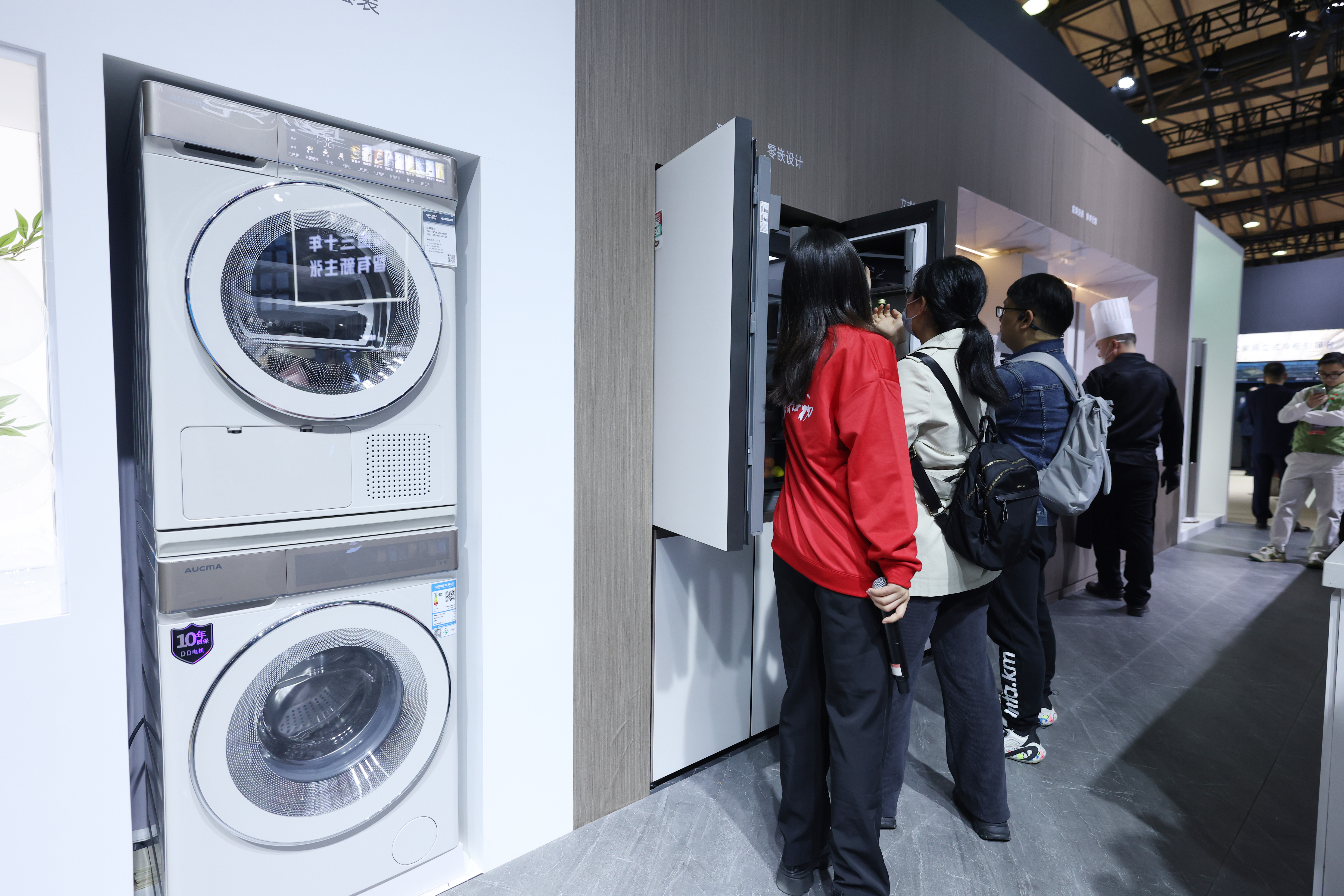
市场监管总局批准发布《家用电器产品再生材料使用规范》国家标准
Zheng Quan Shi Bao Wang· 2025-11-19 06:13
Core Viewpoint - The National Standard for the Use of Recycled Materials in Household Appliances has been approved and will be implemented on May 1, 2026, promoting green and low-carbon development in the industry [1] Group 1 - The standard specifies requirements for the assessment and selection of recycled materials, process control, traceability management, and calculation methods for usage rates [1]
家电再生材料新国标来了 明确使用率计算方法
Yang Shi Xin Wen· 2025-11-19 06:07
Core Viewpoint - The National Standard for the Use of Recycled Materials in Household Appliances has been approved and will be implemented on May 1, 2026, promoting green and low-carbon development in the industry [1] Group 1: Material Selection - The standard requires that recycled materials must meet the design and usage requirements of household appliances, with key components made from recycled materials needing to undergo verification tests to ensure reliability equivalent to that of virgin materials [2] - It emphasizes the priority of selecting recycled materials that are widely sourced, easily recyclable, and environmentally friendly, thereby reducing negative environmental impacts [2] Group 2: Quality Control and Traceability - The standard mandates the establishment of a collaborative traceability mechanism among appliance manufacturers, component manufacturers, and recycled material suppliers, enhancing control over recycled materials throughout their usage [3] - Detailed information records, including procurement records, production records, inspection reports, and sales vouchers, must be maintained for at least five years to ensure the traceability and accessibility of recycled material information across all stages [3] Group 3: Usage Rate Calculation and Classification - The standard standardizes the calculation method for the usage rate of recycled materials in household products after consumption, allowing for comparability of data across different companies and products [4] - It introduces dual indicators of "post-consumer recycled material usage rate" and "post-consumer recycled plastic usage rate" for graded classification, categorizing products into A, A+, and A++ levels, which aids in scientifically guiding the industry's green transition [4]
加快经济社会发展全面绿色转型(学习贯彻党的二十届四中全会精神)
Ren Min Ri Bao· 2025-11-18 23:09
Core Viewpoint - The 20th Central Committee of the Communist Party of China has approved the "Suggestions on Formulating the 15th Five-Year Plan for National Economic and Social Development," emphasizing the importance of accelerating the comprehensive green transformation of economic and social development during the 15th Five-Year Plan period, reflecting the strong will and determination of the Party leadership to prioritize ecological and green development [1][2]. Group 1: Significance of Green Transformation - Accelerating the comprehensive green transformation is essential for promoting high-quality development, as green development is a key characteristic of high-quality growth [3]. - The green transformation is a fundamental strategy to address ecological and environmental issues, aiming to reduce pollution and carbon emissions from the source [4]. - It is also a strategic move to shape new advantages in international cooperation and competition, as global trends are increasingly favoring green and low-carbon development [5]. Group 2: Current Situation and Challenges - The 15th Five-Year Plan period is critical for achieving carbon peak goals, with both historical opportunities and significant challenges ahead [6]. - Domestically, while there have been notable advancements in green transformation, structural issues such as reliance on coal and high emissions remain [7]. - Internationally, competition in the green low-carbon sector is intensifying, with various countries vying for leadership in green technologies and climate governance [8]. Group 3: Key Tasks for Green Transformation - Establishing a new energy system is crucial, as the energy sector accounts for over 85% of national carbon emissions, necessitating a shift towards clean and efficient energy sources [10]. - Implementing a dual control system for carbon emissions is essential, focusing on local, industrial, and enterprise-level management to ensure accountability [11]. - Advancing ecological environment zoning and control measures will help create a spatial framework for high-quality green development [12]. - Enhancing resource management and promoting a circular economy are vital for improving resource efficiency and reducing consumption [13]. - Developing supportive policies for green low-carbon development is necessary to internalize external costs and foster a conducive environment for sustainable practices [14]. - Strengthening international cooperation in green transformation is important for leveraging external opportunities and addressing global environmental challenges [15]. Group 4: Goals and Future Directions - The establishment of a green production and lifestyle is a key goal for the 15th Five-Year Plan, guiding the direction for comprehensive green transformation [16].
开放赋能 合作共赢 盐城经开区书写高水平发展时代答卷
Yang Zi Wan Bao Wang· 2025-11-18 07:30
Group 1 - The 2025 China-Korea (Yancheng) Industrial Park Economic and Trade Cooperation Exchange Conference will be held in Yancheng Economic Development Zone, focusing on deepening economic cooperation and green low-carbon development [1] - The China-Korea (Yancheng) Industrial Park has received several national and provincial-level recognitions since its establishment in 2017, including being a national-level platform for cooperation with South Korea [1] - Yancheng Economic Development Zone has attracted nearly 400 South Korean enterprises, becoming a significant distribution center for South Korean goods exported to China [1] Group 2 - Yancheng Economic Development Zone has actively integrated domestic and international dual circulation, hosting various high-profile events to promote cooperation with both domestic and international enterprises [2] - The Yancheng Comprehensive Bonded Zone has established a complete port function and smart customs clearance platform, enhancing its role in facilitating domestic and international dual circulation [2] - The Comprehensive Bonded Zone improved its national performance ranking by 7 places in the 2024 annual evaluation, highlighting its importance in cross-border e-commerce [2] Group 3 - Yancheng Economic Development Zone promotes the construction of a Korean cultural city, integrating Korean elements into urban development through various cultural projects [3] - The Dongdaemun International District has attracted over 2.5 million visitors annually and has become a vibrant example of cultural exchange and economic cooperation [3] - The integration of trade and cultural exchange is emphasized, showcasing the synergy between economic collaboration and cultural interactions [3]
仲音:从“四本账”说说消费和浪费
Ren Min Ri Bao· 2025-11-18 00:28
Group 1 - The core idea emphasizes the importance of encouraging consumption while opposing waste, highlighting the need for a balance between the two for sustainable economic growth [1] - The "14th Five-Year Plan" suggests expanding domestic demand as a strategic foundation, focusing on improving people's livelihoods and promoting consumption [1] - The integration of consumption and waste reduction is seen as essential for achieving effective demand and high-quality supply, driving the economy's main engine [2][3] Group 2 - The drone industry is highlighted as a key growth point in the low-altitude economy, with the rise of new professions such as drone pilots contributing to quality employment [2] - The electric vehicle market is experiencing growth due to supportive policies, with potential annual earnings of nearly 3,000 yuan for participating vehicle owners [3] - Cultural consumption is on the rise, with significant increases in ticket sales and performance attendance, reflecting changing consumer demands [4] Group 3 - Local governments are focusing on increasing spending on people's livelihoods, with a notable 21.1% year-on-year growth in social spending in Zhejiang province [5] - The emphasis on frugality and avoiding extravagance is seen as a core value of the government, aligning with the broader goal of improving citizens' quality of life [5] - The combination of material and spiritual civilization is deemed necessary for national strength and rejuvenation, promoting high-quality development and living standards [6]
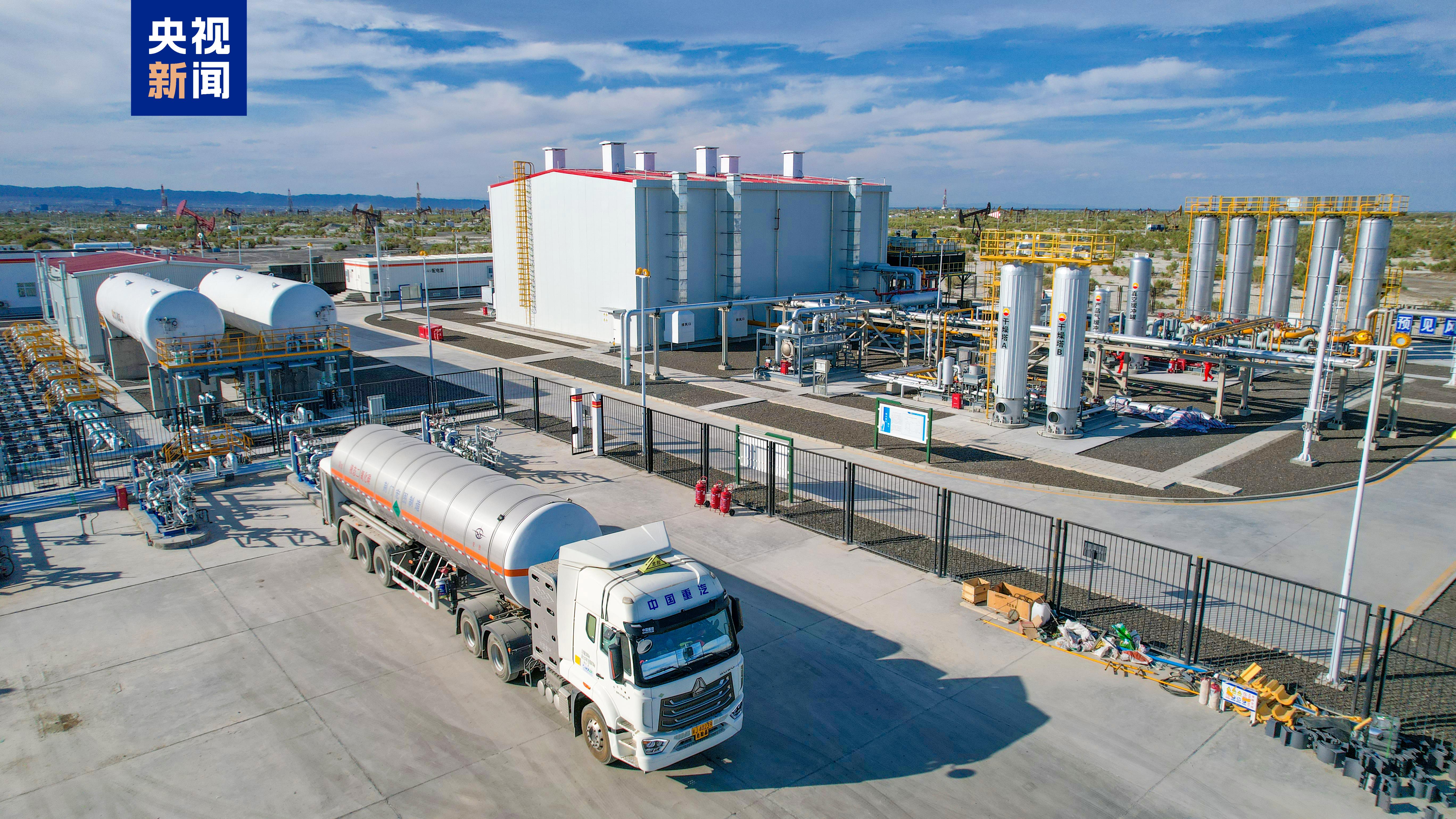
西北地区最大二氧化碳捕集封存与利用项目累计注碳突破200万吨
Yang Shi Xin Wen· 2025-11-17 13:57
Core Viewpoint - The Xinjiang oilfield's carbon capture, storage, and utilization project has successfully injected over 2 million tons of CO2, marking significant progress in large-scale carbon storage in high-emission areas of China, promoting both oil production and green low-carbon development [2][5]. Group 1 - The Xinjiang oilfield project captures CO2 emissions from local coal power and coal chemical enterprises, transporting it to oil extraction sites for underground injection, achieving permanent storage and enhancing oil recovery rates [5]. - In the current year, the project has stored 800,000 tons of CO2, with a total of over 2 million tons injected over two years, increasing daily oil production from 12 tons to 100 tons in the test area [5]. - The eastern, central, and western regions of the Junggar Basin have achieved full coverage of large-scale CO2 injection [7]. Group 2 - The project plans to accelerate the construction of a CO2 transportation pipeline network during the 14th Five-Year Plan, replacing the current truck transport model to reduce costs and promote integrated development of coal power, new energy, and carbon capture and storage [7]. - The goal is to establish a carbon capture and storage base capable of handling tens of millions of tons of CO2 [7].