
跨境电商

Search documents
乌鲁木齐新年第一天就这么“猛”吗?
Xin Lang Cai Jing· 2026-01-04 04:33
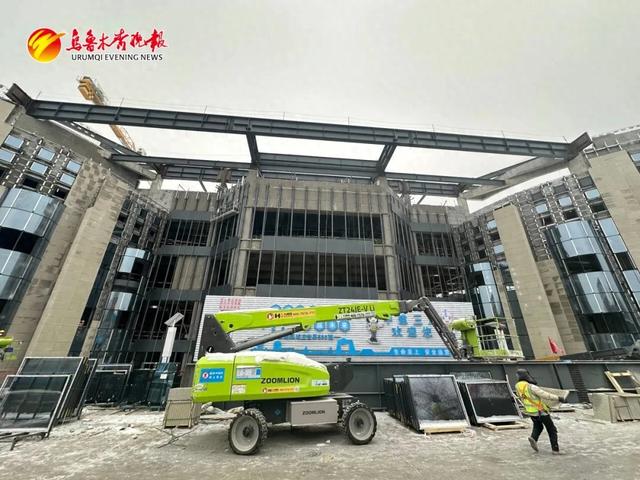
Group 1 - Urumqi is entering 2026 with a strong focus on production, capacity expansion, and market development, aiming to set a grand stage for the year's growth [1] - The Xinjiang Jiangyao Cultural Industry Park project is a key municipal project with a total construction area of over 66,000 square meters, featuring a multi-functional space for cultural and commercial activities [3] - The Xinjiang Zhongyun Intelligent Building Technology Co., Ltd. is ramping up production of modular "Starry Sky Houses," expanding to 13 types and benefiting from local supply chain efficiencies that have reduced production costs by 10%-15% [3] Group 2 - Xinjiang Jiangnan Yitai Building Materials Company is increasing its solid waste recycling rate and aims for a 20% year-on-year production increase by 2026, with significant investments in environmental upgrades [5] - The Xinjiang Medical Device Trading Market has secured a $5 million overseas order for 1,000 blood dialysis machines, highlighting its role as a key trade hub since its operation began in October 2024 [5] - The "Tianshan" multi-modal transport brand has successfully launched its first return train carrying 1,700 tons of flax seeds from Kazakhstan, enhancing international logistics efficiency [7] Group 3 - Xinjiang Panya International Trade Co., Ltd. is implementing a "全民跨境" public training program, covering 530 companies and facilitating digital transformation for 12 traditional businesses [9] - The company has developed a self-logistics system and a cross-border e-commerce service platform that has attracted over 2,000 sellers, achieving sales of 31 million yuan [9] - Urumqi is actively working on creating an open and innovative industrial cluster to contribute to high-quality foreign trade development [9]

新股消息 | 极易科技二次递表港交所 在中国跨境进口电商运营服务商中排名第一
Zhi Tong Cai Jing· 2026-01-02 08:49
Company Overview - Suzhou Jiyi Technology Co., Ltd. (Jiyi Technology) has submitted a listing application to the Hong Kong Stock Exchange, with CITIC Securities as the sole sponsor [1] - The company is a leading digital retail comprehensive operation service provider in China, offering services to both brand partners and large chain supermarkets [4] - Jiyi Technology ranks first in China's cross-border import e-commerce service providers by GMV in 2024, capturing 8.5% of the market [1][6] Business Model and Services - The company provides diversified solutions and asset management capabilities to help brand partners accurately position their brand image and efficiently manage consumer profiles [4] - Jiyi Technology offers both direct-to-consumer and business-to-business solutions, as well as brand asset management and IP commercialization services [4][5] - The company has partnered with over 200 global brands across various categories, including health, beauty, fast-moving consumer goods, and home appliances [5] Financial Performance - Revenue for the fiscal years 2022, 2023, 2024, and the nine months ending September 30, 2025, was approximately RMB 1.117 billion, RMB 1.356 billion, RMB 1.400 billion, and RMB 1.079 billion respectively [7] - Gross profit for the same periods was approximately RMB 194 million, RMB 209 million, RMB 202 million, and RMB 182 million, with corresponding gross margins of 17.4%, 15.4%, 14.4%, and 16.8% [8][11] - The company recorded net profits of RMB 37.58 million, RMB 24.87 million, RMB 49.82 million, and RMB 18.39 million for the respective fiscal years [10][11] Industry Overview - The Chinese retail market is projected to grow significantly, with the e-commerce market expected to increase from RMB 6.6 trillion in 2020 to RMB 13.76 trillion by 2024 [12] - The cross-border import e-commerce GMV is anticipated to rise from RMB 400 billion in 2020 to RMB 689.4 billion by 2024, with a compound annual growth rate (CAGR) of 26.9% [14] - The total GMV for e-commerce operation service providers in China is expected to grow from RMB 586.7 billion in 2020 to RMB 1.2749 trillion by 2024, with a CAGR of 21.4% [21]

“中国购”线上线下活力满满有新意 “新特产”走俏 装满海外消费者“购物车”
Yang Shi Wang· 2026-01-02 07:43
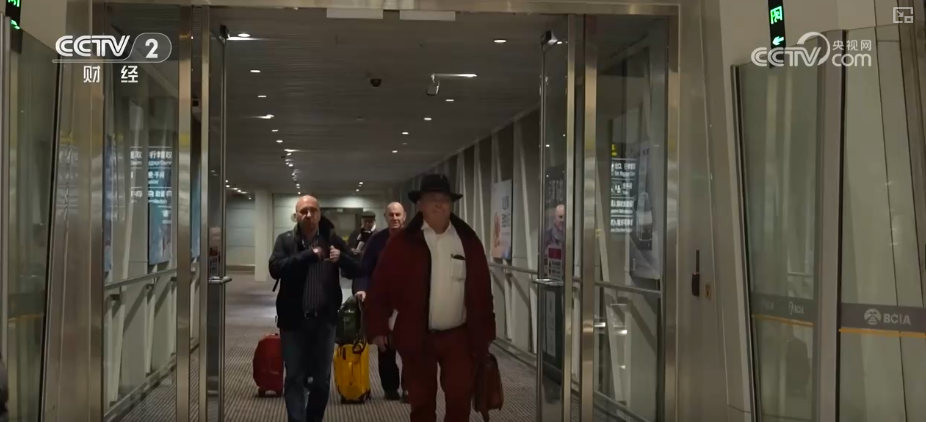
Group 1 - The core viewpoint of the articles highlights the increasing influx of foreign tourists to China, driven by the expansion of visa-free countries and various policy incentives, leading to a surge in international tourism and consumer spending [1][11][20] Group 2 - In Beijing, the first international flight of 2026 brought tourists from Frankfurt, Germany, with welcome ceremonies and travel guides provided [2] - In Chengdu, over 3,000 panda-themed cultural products have become popular among foreign tourists, with a significant portion of sales attributed to traditional crafts [3][7] - In Suzhou, foreign tourists are engaging in immersive experiences of Chinese aesthetics, with activities like boat rides and traditional crafts drawing interest [9] Group 3 - The implementation of a visa-free policy for Russian tourists in Heilongjiang is expected to boost the local tourism market, with a reported 24.7% increase in foreign visitors since the policy's announcement [11][13] Group 4 - Cross-border e-commerce is thriving, connecting Chinese products to international markets, with significant sales growth reported in regions like Hainan and Heilongjiang [15][18] - In Heilongjiang, cross-border e-commerce trade has seen over 50% year-on-year growth, with a strong demand for electronics and clothing from Russian consumers [20]

2025,互联网巨头们开始分化
首席商业评论· 2026-01-02 04:25
Core Viewpoint - The article discusses the performance and market dynamics of China's top internet companies in 2025, highlighting a clear differentiation among them in terms of market capitalization, profitability, and strategic direction as they transition from rapid expansion to a focus on quality growth [5][14]. Group 1: Market Capitalization and Rankings - The top 10 internet companies in China by market capitalization at the end of 2025 show stability in rankings, with Tencent, Alibaba, and Pinduoduo maintaining their positions, while other companies like Xiaomi and NetEase have seen upward movement [6][12]. - Tencent leads with a market cap of $728.7 billion, followed by Alibaba at $351.6 billion and Pinduoduo at $161.6 billion, with significant year-to-date stock price increases of 45%, 77%, and 17% respectively [9][10]. - The second tier includes Xiaomi, NetEase, and Meituan, with Xiaomi's market cap at $131.5 billion and a stock price increase of 14%, while Meituan's market cap has decreased by 32% [11][13]. Group 2: Revenue and Profitability Trends - Revenue growth is observed across the top companies, with only Baidu experiencing a slight decline, while Xiaomi leads with a 32.5% revenue increase [18]. - Profitability shows a stark contrast, with companies like Alibaba, Meituan, and JD.com facing pressure due to high marketing costs, particularly in the competitive food delivery sector, leading to "increased revenue without increased profit" [18][19]. - In contrast, companies like Tencent and NetEase have maintained strong profit margins through their gaming and social media ecosystems, with Tencent's gaming revenue exceeding $180 billion in the first three quarters of 2025 [20]. Group 3: Emerging Players and Market Dynamics - The mid-tier companies ranked 11th to 20th have shown significant stock price increases, indicating market recognition of their potential, with Giant Network leading with a 245% increase [23][24]. - Companies like Tencent Music and Kingsoft Office are highlighted as having potential for upward movement into the top tier, driven by their stable business models and market opportunities [25]. - The article emphasizes that while the top tier remains stable, the mid-tier companies are crucial to watch for future market shifts, as they may capitalize on emerging trends and niche markets [26].






2025年最后一场国常会,为何部署这项重要议题?
2 1 Shi Ji Jing Ji Bao Dao· 2026-01-01 07:16
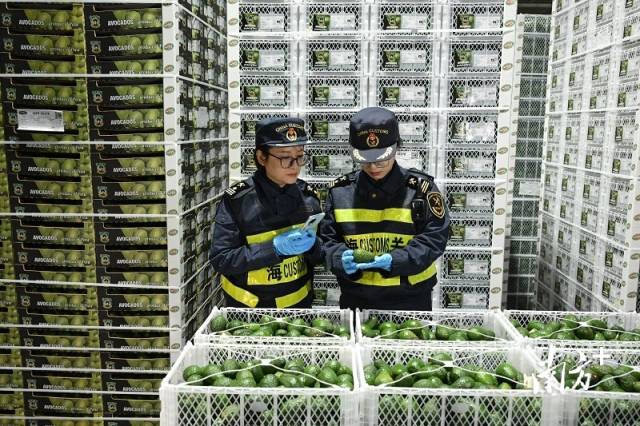
Core Insights - The State Council's meeting on December 31, 2025, emphasized the promotion of cross-border trade facilitation policies, aiming to enhance logistics efficiency, support green trade and cross-border e-commerce, and improve regulatory services [1][11] - The "14th Five-Year Plan" period has seen the introduction of 108 reform measures to facilitate cross-border trade, which have been well-received by businesses [1][11] Group 1: Policy Initiatives - A special action for cross-border trade facilitation was launched on April 24, 2025, covering 25 pilot cities and introducing 29 measures across five areas, including logistics and digital trade [3][14] - The Guangdong Customs has implemented 60 specific measures to expand the initiative from three cities to 21 cities in the province [3][14] - The World Bank's survey in April 2025 ranked China's customs and trade regulations as the best among 53 economies, highlighting improvements in customs procedures [4][15] Group 2: Logistics and Efficiency - The "One Port Pass" regulatory model in the Guangdong-Hong Kong-Macao Greater Bay Area has reduced cargo transfer times from 5-7 days to 2-3 days [5][15] - Fresh fruits from Thailand and Vietnam can now reach Guangzhou in as little as 7 hours and Beijing in 30 hours due to newly established green channels [5][15] - The international trade "single window" system has registered over 11 million users, streamlining cross-border trade processes [19] Group 3: Future Outlook - The meeting highlighted the need to enhance smart regulatory services and promote green trade, with predictions that the global market for electric vehicles and renewable energy technologies could reach $2.1 trillion by 2030 [16] - The export of green products, such as wind power equipment and solar products, has shown significant growth, with wind power components growing over 30% and solar exports exceeding 200 billion yuan for four consecutive years [6][16] - Experts suggest that expanding the pilot experiences of cross-border trade facilitation into national policies will further reduce transaction costs and enhance efficiency [10][20]
重磅会议部署!
Jin Rong Shi Bao· 2026-01-01 02:43
Core Viewpoint - The State Council's recent meeting led by Premier Li Qiang on December 31 outlines a pragmatic policy framework aimed at promoting cross-border trade facilitation, setting the stage for high-level opening-up in the new year amidst complex global trade dynamics [1] Group 1: Cross-Border Trade Challenges and Opportunities - The global trade landscape is undergoing significant adjustments due to geopolitical conflicts and rising protectionism, presenting dual challenges for China's cross-border trade [1] - The integration of digital economy with the real economy and the emergence of green trade trends, along with benefits from agreements like RCEP, provide new growth avenues for cross-border trade [1] Group 2: Logistics and Transportation - The new policy emphasizes the importance of efficient logistics systems, addressing key pain points such as high costs and unstable timeliness in cross-border logistics [2] - Successful models like the China-Europe Railway Express and the Western Land-Sea New Corridor are highlighted, showcasing improved speed and reduced costs through multi-modal transport [2] Group 3: New Business Models and Regulatory Optimization - The meeting stresses the development of new business models such as green trade and cross-border e-commerce, which are crucial for trade growth [3] - In the first three quarters of 2025, China's cross-border e-commerce imports and exports reached approximately 2.06 trillion yuan, marking a 6.4% year-on-year increase [3] Group 4: Smart Regulation and Efficiency - Enhancements in smart regulatory services are identified as key to overcoming traditional regulatory challenges, with a focus on building smart customs and ports [4] - The "single window" for international trade has achieved deep integration with 30 departmental systems, significantly improving customs efficiency and reducing communication costs [4] Group 5: Systematic Policy Integration - The cross-border trade facilitation measures represent a systematic upgrade rather than isolated breakthroughs, aiming to transform localized pilot experiences into nationwide practices [5] - The facilitation of cross-border trade is directly linked to the stability and competitiveness of China's industrial and supply chains, as well as the efficiency of domestic and international market connectivity [5]
国货航(001391):深度报告:跨境电商方兴未艾,航空货运龙头顺势而为
ZHESHANG SECURITIES· 2025-12-31 09:28
Investment Rating - The report assigns an "Accumulate" rating for the company, marking its first coverage [5]. Core Insights - The company is positioned as a leading integrated logistics service provider in air transportation, benefiting from the booming cross-border e-commerce market [1][2]. - The air freight business shows significant profit elasticity, primarily driven by demand from developed economies and cross-border e-commerce [2][3]. - The company has a diversified business model with three main segments: air freight services, integrated logistics solutions, and air cargo station services, with air freight being the most profitable [1][18]. Summary by Sections Company Overview - The company is the only flag carrier cargo airline in China, with a stable and diversified shareholder structure, primarily controlled by state-owned enterprises [1][14]. - Its main operations are based in Shanghai, and it has expanded its business through strategic partnerships and investments [13][14]. Air Freight Market - The air freight market is experiencing a supply-demand imbalance, which is expected to drive up air freight rates [2]. - Demand is closely linked to economic growth in developed markets, with cross-border e-commerce being a key growth driver [2][49]. - Supply constraints are evident, with limited capacity in both freighter and passenger aircraft [2][49]. Financial Performance and Forecast - The company is projected to achieve revenues of 229.5 billion, 249.2 billion, and 268.9 billion yuan for 2025, 2026, and 2027, respectively, with year-on-year growth rates of 12%, 9%, and 8% [4][7]. - Net profit forecasts for the same years are 25.6 billion, 27.1 billion, and 29.0 billion yuan, reflecting growth rates of 31%, 6%, and 7% [4][7]. - The current market capitalization corresponds to a price-to-earnings ratio of 28x, 27x, and 25x for the respective years [4]. Business Segments - The air freight segment contributes significantly to the company's gross profit, with full freighter operations showing high elasticity [1][27]. - The integrated logistics solutions segment is expanding, catering to high-end product logistics needs, and is expected to benefit from the growth in cross-border e-commerce [1][3]. - The air cargo station services are also growing steadily, with a projected gross margin improvement [1][3]. Market Dynamics - The company is well-positioned to capitalize on the increasing demand for air freight driven by cross-border e-commerce, which is expected to grow significantly in the coming years [57][58]. - The report highlights that 80% of cross-border e-commerce goods are transported by air, indicating a strong market potential for the company [57].
源飞宠物涨0.17%,成交额3520.32万元,近3日主力净流入748.34万
Xin Lang Cai Jing· 2025-12-31 09:00
Core Viewpoint - The company, Wenzhou Yuanfei Pet Products Co., Ltd., is actively expanding its business in the pet industry while exploring new opportunities in the trendy toy sector through strategic partnerships and leveraging its existing supply chain capabilities [2][3]. Group 1: Company Overview - Wenzhou Yuanfei Pet Products Co., Ltd. specializes in the research, production, and sales of pet supplies and pet food, with main products including pet snacks, leashes, toys, dry food, and wet food [2][9]. - The company was established on September 27, 2004, and went public on August 18, 2022, with a current market capitalization of 4.516 billion yuan [9]. - As of September 30, 2025, the company reported a revenue of 1.281 billion yuan, a year-on-year increase of 37.66%, and a net profit attributable to shareholders of 130 million yuan, up 8.75% year-on-year [9]. Group 2: Business Strategy and Partnerships - Yuanfei Pet has formed a strategic partnership with the trendy toy brand Heyone, focusing on extending its manufacturing and supply chain management capabilities into the toy sector while maintaining its core pet food and supplies business [3]. - The company emphasizes its experience in quality control, production management, and stable delivery, which are applicable to both pet products and high-quality trendy toys [3]. Group 3: Financial Performance and Market Position - The company's overseas revenue accounted for 85.78% of total revenue, benefiting from the depreciation of the RMB [4]. - The company has established production bases in Cambodia to enhance its global capacity and reduce labor costs, with an average capacity utilization rate of around 80% [4]. - The main revenue sources are pet snacks (52.09%), leashes (24.77%), staple food (9.79%), and toys (5.64%) [9]. Group 4: Market Dynamics - The company is positioned within the pet economy, cross-border e-commerce, and new retail sectors, indicating a diversified approach to market opportunities [9]. - Recent trading data shows a net inflow of 5.2256 million yuan from major investors, indicating increased interest in the stock [5][6].
首都在线:重点对接商业航天、跨境电商、游戏出海等领域客户需求
Zheng Quan Ri Bao· 2025-12-31 08:39
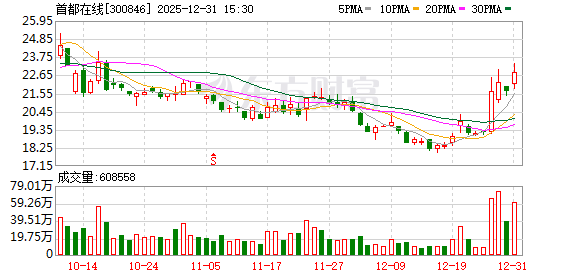
Core Viewpoint - The company is leveraging its Wenchang Aerospace Supercomputing Center to capitalize on the growing demand for high-density, low-latency computing capabilities in the commercial aerospace sector, which includes satellite design, launch control, in-orbit operations, and data processing [2] Group 1: Business Operations - The Wenchang Aerospace Supercomputing Center is strategically located in the Wenchang International Aerospace City and is designed to meet the computing needs of commercial aerospace enterprises for satellite remote sensing data processing, aerospace simulation, and orbital calculations [2] - The center benefits from the Hainan Free Trade Port's "inside-outside" regulatory model and the negative list system for cross-border data flow, facilitating the processing of cross-border aerospace data [2] - The center aims to support cross-border data transmission, storage, and analysis for commercial aerospace companies, leveraging future international submarine cable connectivity [2] Group 2: Industry Integration - Wenchang is a significant aerospace launch base in China, attracting resources from the upstream and downstream of the commercial aerospace industry chain [2] - The Wenchang Aerospace Supercomputing Center integrates into the local industrial ecosystem, providing a comprehensive infrastructure service of "computing power + network + storage" for commercial aerospace enterprises [2] - The company is focusing on meeting the needs of clients in commercial aerospace, cross-border e-commerce, and gaming sectors, aiming to diversify its cloud network service scenarios [2] Group 3: Future Outlook - The company plans to continue leveraging policy, location, and computing facility advantages to enhance its cross-border computing service capabilities [2] - The company will keep stakeholders updated on business progress as it seizes opportunities presented by the closure of borders [2]

跨境电商带动 深圳机场成第三个总货量破200万吨机场
2 1 Shi Ji Jing Ji Bao Dao· 2025-12-31 08:28
Core Insights - Shenzhen Airport is set to exceed 2 million tons in total cargo throughput by 2025, becoming the third airport in mainland China to reach this milestone [1] - The airport's international and regional cargo throughput is projected to surpass 1 million tons in 2025, following Shanghai Pudong and Guangzhou Baiyun [1] Group 1: Cargo Volume Growth - The cross-border e-commerce business at Shenzhen Airport has accumulated over 300,000 tons, with a year-on-year growth of nearly 10%, significantly contributing to the overall cargo volume increase [1] - The airport has successfully attracted 14 airlines, including Atlas Air, UPS, and SF Express, to increase capacity, leading to the opening of 3 new international cargo routes and the enhancement of 16 international cargo destinations [2] Group 2: Infrastructure and Efficiency Improvements - The North Cargo Area of Shenzhen Airport commenced construction in August, which is expected to add over 1.8 million tons of annual cargo capacity upon completion [3] - The logistics facilities are projected to exceed 3 million tons in overall capacity after the completion of ongoing projects, including the second phase of the SF Express South China Transit Center [3] - Shenzhen Airport has implemented a 24-hour customs clearance system at its Shenchang Cargo Station, optimizing the cargo transport process and enhancing logistics efficiency [2][3] Group 3: Strategic Initiatives - The airport is deepening strategic cooperation with domestic and international airports, establishing a forward warehouse in Vietnam, and setting up cargo stations in Urumqi, Xi'an, and Lanzhou to enhance its competitiveness in the Southeast Asian and Northwest Chinese logistics markets [2] - Future plans include building a global cargo route network and improving customs environments in collaboration with inspection units to strengthen Shenzhen's position as a significant global logistics hub [3]
