
共同富裕

Search documents
把握财税体制改革重要原则
Jing Ji Ri Bao· 2025-11-13 22:28
Core Viewpoint - The article emphasizes the importance of a scientific fiscal and tax system as a foundation for national governance, aiming to optimize resource allocation, maintain market unity, promote social equity, and ensure long-term stability of the state [1] Group 1: Fiscal Policy and Economic Development - The "14th Five-Year Plan" suggests leveraging proactive fiscal policies to enhance fiscal sustainability, which is a key component of Xi Jinping's economic thought [1] - The need for deepening fiscal and tax system reforms is highlighted, focusing on the relationship between government and market, efficiency and equity, and growth and sharing [2] Group 2: Central and Local Government Dynamics - The fiscal system should ensure sufficient macro-control capabilities for the central government while granting local governments adequate autonomy and development space [2] - It is crucial to clearly define the responsibilities and expenditure duties of different government levels, matching them with appropriate financial resources [2] Group 3: Balancing Efficiency and Equity - The article discusses the need for a dynamic balance between efficiency and equity in tax design and fiscal expenditure, promoting a virtuous cycle where both aspects enhance each other [3]
持续扩大中等收入群体规模 扎实推进共同富裕(深入学习贯彻习近平新时代中国特色社会主义思想)
Ren Min Ri Bao· 2025-11-13 22:10
Core Points - The expansion of the middle-income group is a crucial aspect of promoting common prosperity in China, as emphasized by President Xi Jinping [1][2][3] - The "15th Five-Year Plan" highlights the optimization of income distribution and the continuous growth of the middle-income group as key economic and social development goals [1][9] - The middle-income group's size and its proportion of the total population reflect a country's economic strength and social conditions, making its expansion vital for national development and social progress [2][4] Group 1: Importance of Middle-Income Group - A larger middle-income group contributes to social stability and higher life satisfaction, as it typically consists of individuals with stable jobs and decent incomes [3][4] - Countries with a significant middle-income population tend to experience less social conflict and greater stability, making the expansion of this group a priority for maintaining social order [3][4] Group 2: Achievements and Challenges - China has over 400 million middle-income individuals, a result of sustained economic growth and improved income distribution mechanisms [5][7] - The goal of increasing the middle-income group to over 800 million in the next 15 years presents significant challenges, particularly in rural areas where income levels remain low [8][10] Group 3: Policy Measures - The government aims to implement various policies to support the growth of the middle-income group, including improving public services, enhancing employment opportunities, and ensuring equitable access to resources [11][12] - Emphasis is placed on the importance of education and training to enhance human capital, which is essential for increasing income levels and expanding the middle-income group [13][14] Group 4: Role of Private Sector - The healthy development of the private economy is crucial for job creation and income enhancement, which in turn supports the expansion of the middle-income group [14] - Policies will be enacted to create a stable and fair environment for private enterprises, ensuring their contribution to economic growth and the increase of the middle-income population [14]
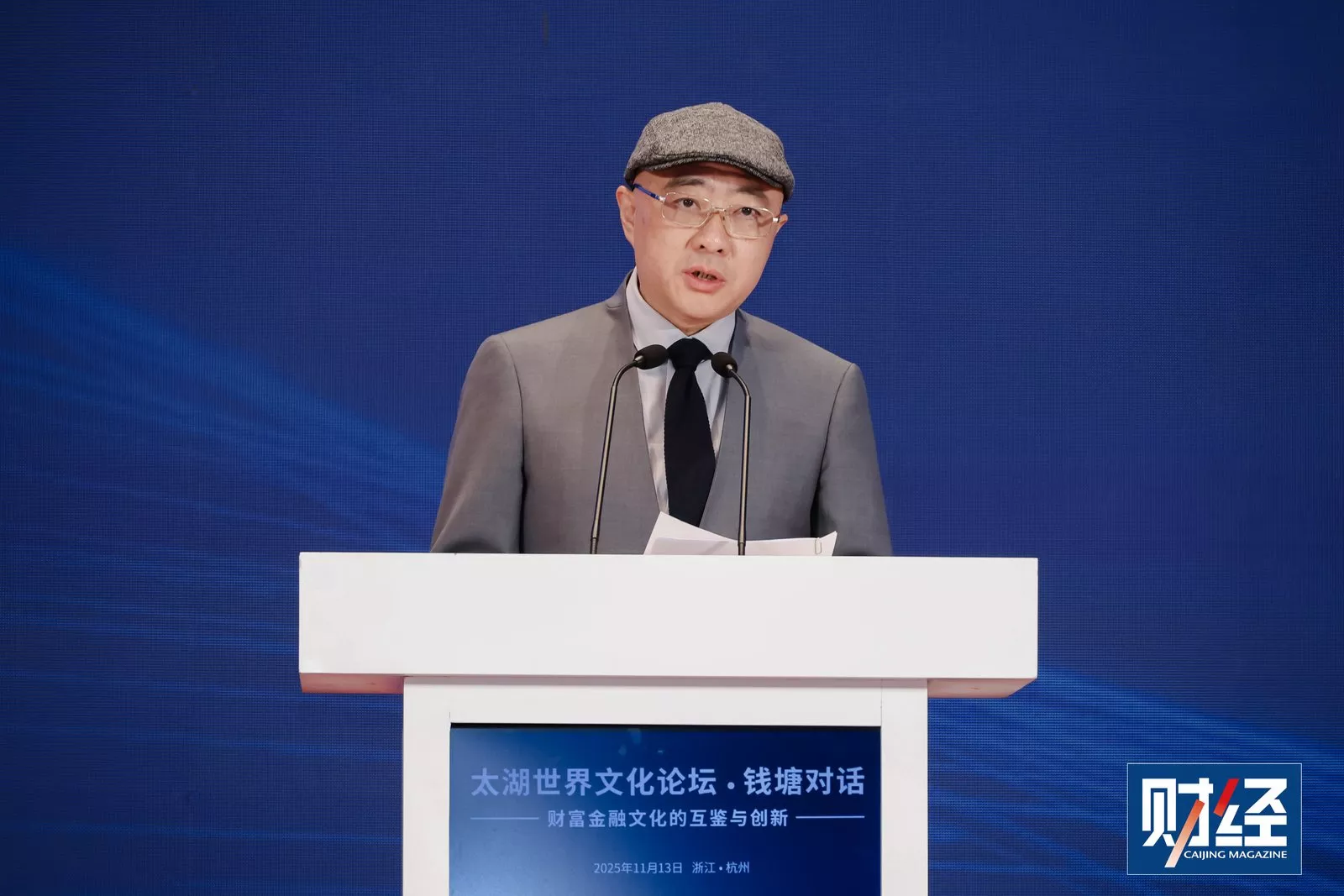
太湖世界文化论坛副主席郑传焮:“AI向善”不是技术命题!让算法有温度,让数据有伦理
Cai Jing Wang· 2025-11-13 06:16
Core Insights - The forum emphasizes the concept of "wealth for good," advocating for a shift from profit-driven capital to capital that nurtures civilization [4][7] - The discussion highlights the dual challenges of wealth and the impact of AI, suggesting that technology should serve human development rather than exacerbate greed [4][6] - The notion of "common prosperity" is presented as a civilizational awareness, aiming to transform wealth from a privilege of the few to the happiness of the many [8] Group 1 - The forum, hosted by the Taihu World Cultural Forum, focuses on the dialogue around wealth and civilization [1] - Zheng Chuanhan, the Vice Chairman and Secretary-General of the forum, articulates that capital should not merely be a tool for profit but a fuel for civilization [4][7] - The idea of "AI for good" is introduced, emphasizing that AI reflects human intentions and should be guided by ethical considerations [4][6] Group 2 - The practice of "capital for good" is described as growing in China, with "common prosperity" framed as a way for the wealthy to uplift the less fortunate [8] - The forum discusses the importance of different cultural perspectives on wealth, highlighting the need for dialogue between Eastern and Western philosophies [8][9] - A new "civilizational contract" is proposed, advocating for wealth to flow with intention, ethics to guide capital, and technology to innovate with warmth [9]

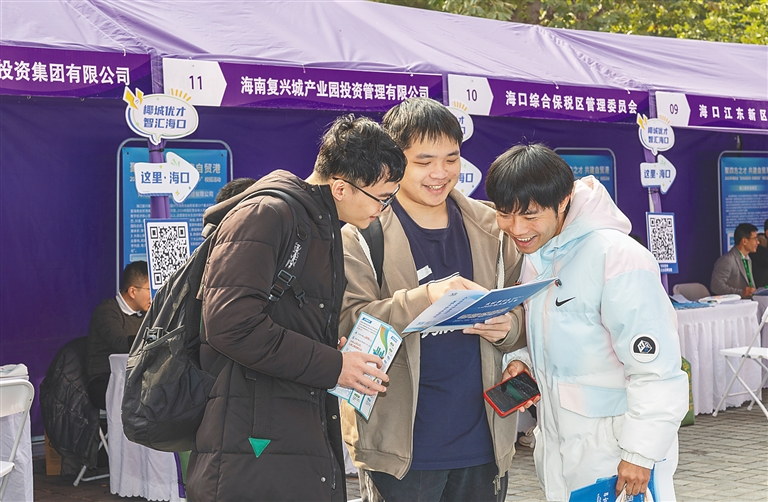
我省持续加强普惠性、基础性、兜底性民生建设,解决好人民群众“急难愁盼”
Hai Nan Ri Bao· 2025-11-13 02:01
Core Viewpoint - The article emphasizes the continuous efforts of Hainan Province to strengthen inclusive, foundational, and safety net social welfare initiatives, addressing the urgent needs of the populace and advancing the goal of common prosperity [6][9][12]. Group 1: Economic Development and Income Growth - In the first three quarters of this year, the per capita disposable income in Hainan reached 26,930 yuan, marking a year-on-year increase of 4.5%. Notably, rural residents experienced a 5.5% increase, outpacing urban growth by 1.8 percentage points, leading to a narrowing urban-rural income ratio of 1.94:1 [5][9]. - The province has unified the urban and rural minimum living standards to 850 yuan per person per month and raised the basic living guarantee for the severely disabled to 1,110 yuan, achieving a significant milestone in social assistance [9][10]. Group 2: Social Welfare and Support Systems - Hainan has established a comprehensive social assistance system, ensuring that no one is left behind in the pursuit of common prosperity. This includes a synchronized adjustment mechanism for minimum living standards and welfare subsidies for disabled individuals and children [10][11]. - The province has allocated 20 million yuan for community rehabilitation services for individuals with mental disorders, establishing 39 rehabilitation service stations that have served over 190,000 people [11]. Group 3: Elderly and Child Welfare - Hainan is focusing on the needs of the elderly and children, enhancing services from elderly care to child welfare, and ensuring a robust support network for these vulnerable groups [12][16]. - The province has implemented a comprehensive funding system for disadvantaged children, ensuring equal access to education and establishing numerous support centers for minors [16][17]. Group 4: Employment and Industry Development - Hainan is driving employment growth through industrial development and skill enhancement, with initiatives like the "Coconut Brand" labor initiative, which has created 656,000 jobs [20][21]. - The province is promoting diverse employment guidance and targeted skills training for rural surplus labor, helping many families regain confidence and achieve stable incomes [20][22]. Group 5: Tourism and Agricultural Integration - The integration of tourism and agriculture is exemplified by the success of local tea businesses, which have become significant sources of income for rural residents, with tourism revenue exceeding 40 million yuan in 2024 [18][19]. - Hainan is fostering a unique industrial development model, encouraging the growth of local specialties and enhancing the income of farmers through effective policy support and technical services [19].
中国推进共同富裕意义深远——访韩国全罗南道前知事朴晙莹
Ren Min Ri Bao· 2025-11-12 22:53
Group 1 - China plays a significant role in the Asia-Pacific Economic Cooperation (APEC), promoting cooperation to higher levels [1] - The former governor of Jeollanam-do, Park Jun-young, emphasizes the importance of enhancing exchanges and cooperation between South Korea and China [1] - Park recalls his meetings with President Xi Jinping, highlighting discussions on historical culture and cooperation in green agriculture [1] Group 2 - Park Jun-young notes the remarkable improvement in air quality in Beijing, reflecting the Chinese government's governance capabilities and efforts for public health [2] - The rapid development and application of technology in China are acknowledged, with a focus on economic, trade, and cultural exchanges as foundations for mutual respect and common development [2]
中国推进共同富裕意义深远
Ren Min Ri Bao· 2025-11-12 22:19
Core Points - China plays a significant role in the Asia-Pacific Economic Cooperation (APEC), continuously promoting cooperation to higher levels [1] - The former governor of Jeollanam-do, Park Jun-young, emphasizes the importance of enhancing exchanges and cooperation between South Korea and China [1] Group 1 - Park Jun-young recalls his meetings with President Xi Jinping, highlighting discussions on Korea-China relations and cooperation in green agriculture [1] - Park Jun-young attended an important speech by President Xi at Seoul National University during Xi's state visit to South Korea in July 2014, noting Xi's deep concern for the people's well-being [1] - The historical elimination of absolute poverty by the Chinese Communist Party and government has significantly improved people's livelihoods and has profound implications for human societal development [1] Group 2 - Park Jun-young observed significant improvements in air quality in Beijing during his recent visit, reflecting the Chinese government's governance capabilities and efforts for public health [2] - The rapid development and wide application of technology in China were noted, with an emphasis on the importance of economic, trade, and cultural exchanges for mutual respect and common development [2]
以文明对话架起理解之桥(国际论坛)
Ren Min Ri Bao· 2025-11-12 22:19
Core Insights - The Spanish-speaking countries are increasingly adopting an open and rational approach towards understanding China, reshaping their relationships with the world while engaging in dialogue with China [2][5] Group 1: Development of Chinese Studies - Over the past 20 years, Chinese studies in Spanish-speaking countries have matured and diversified, with universities and research institutions in Spain, Mexico, Argentina, Chile, and Colombia establishing Chinese research centers and related degree programs [2][3] - The focus of Chinese studies has expanded from language and history to include politics, economics, law, international relations, communication, and culture, forming a systematic body of knowledge [2][3] - The year marks the 20th anniversary of the comprehensive strategic partnership between Spain and China, leading to strengthened academic and research cooperation characterized by a multidisciplinary approach [2][3] Group 2: Academic and Cultural Exchange - Increased economic ties have fostered cultural and educational exchanges, with more Spanish-speaking youth studying in China through scholarship programs and expanding collaborations between Confucius Institutes and universities [3][4] - Joint research, international forums, and collaborative publications are on the rise, laying the foundation for a sustained academic network [3][4] - Current research topics of interest include Chinese-style modernization, international relations, digital economy, green transformation, rule of law, and social governance, reflecting a diverse academic focus [3][4] Group 3: Independent Narratives and Methodologies - Spanish-speaking countries are striving to move away from reliance on Anglo-American academic paradigms, aiming to construct their own distinctive "Chinese narrative" that emphasizes historical connections, social equity, and civilizational dialogue [4] - There is a growing recognition that understanding China's development path and governance concepts should incorporate local cultural traditions and humanistic spirit [4] - The potential for growth in Chinese studies in Spanish-speaking countries is significant, with emerging research areas such as digital transformation, sustainable development, artificial intelligence ethics, and global governance [4][5] Group 4: Generational Shift and Global Civilizational Initiative - A generational shift is evident, with younger scholars in Spanish-speaking countries increasingly viewing China as a partner in addressing global challenges rather than a distant entity [5] - The global civilization initiative proposed by China offers a new platform for equal dialogue among civilizations, aligning well with the cultural traditions of Spanish-speaking countries [5] - The historical experience of multicultural coexistence in Spanish-speaking countries enhances their understanding of the necessity for civilizational mutual learning [5]

保险业:锚定发展目标 助力共同富裕
Jin Rong Shi Bao· 2025-11-12 02:29
Group 1: Core Insights - The insurance industry plays a crucial role in supporting the goal of "common prosperity" by contributing to economic growth and wealth distribution [1][2][3] - The second Fourming Insurance Forum emphasized the need for the insurance sector to find a balance between expanding the economy ("making the cake bigger") and ensuring equitable distribution of wealth ("dividing the cake well") [1][2] Group 2: Industry Development - Ningbo has launched nearly 350 innovative insurance projects, integrating insurance deeply into economic construction, social governance, and public welfare [2] - The insurance sector in Zhejiang Province reported an asset value of 1.2 trillion yuan, a year-on-year increase of 14.5%, with premium income reaching 389.2 billion yuan [2] Group 3: Key Focus Areas - The China Insurance Group highlighted three key areas for the insurance industry: supporting innovation and entrepreneurship, ensuring fair distribution and improving livelihoods, and enhancing economic resilience [3] - Long-term care insurance has emerged as a focal point in addressing the challenges of an aging population, with calls for a statutory long-term care insurance system [4][5] Group 4: Financial Integration and Social Governance - The insurance industry has a significant role in financial integration, with an investment balance of 36.23 trillion yuan as of mid-2023, including over 5.4 trillion yuan in stocks and equity funds [7] - Commercial insurance is essential in various sectors such as healthcare, pension, disaster reduction, and poverty alleviation, contributing to the reduction of public service gaps [7][8]
“推进中国式现代化、实现共同富裕,一个民族都不能少”(总书记的人民情怀)
Ren Min Ri Bao· 2025-11-11 22:40
"推进中国式现代化、实现共同富裕,一个民族都不能少。"2024年9月,习近平总书记在全国民族团结 进步表彰大会上指出。"十五五"规划建议提出,铸牢中华民族共同体意识,推进中华民族共同体建设。 各族人民亲如一家,是中华民族伟大复兴必定要实现的根本保证。从全面建成小康社会,到推进中国式 现代化、实现共同富裕,习近平总书记多次强调"一个民族都不能少"。 ——"一个民族都不能少",中华民族是一个共同体。 "思政课讲近代史吗?"总书记询问。 师生们争相回答:"讲过!鸦片战争、辛亥革命、南湖红船……" 习近平总书记颔首赞许,"要把铸牢中华民族共同体意识作为学校思政课的一个重点"。 今年3月,习近平总书记在云南考察时强调:"引导各族群众自觉铸牢中华民族共同体意识,不断推进中 华民族共同体建设。"8月,习近平总书记在听取西藏自治区党委和政府工作汇报时,要求"进一步铸牢 中华民族共同体意识、推进中华民族共同体建设"。 将"铸牢中华民族共同体意识"写入党章,把铸牢中华民族共同体意识纳入新时代党的治藏方略、治疆方 略…… 在以习近平同志为核心的党中央引领推动下,各民族人心归聚、精神相依,中华民族成为认同度更高、 凝聚力更强的命运共 ...
因地制宜发展新质生产力
Ren Min Ri Bao· 2025-11-11 00:23
Core Insights - The article emphasizes the importance of developing new quality productivity tailored to local conditions as outlined in the 20th Central Committee's Fourth Plenary Session [1][2] Group 1: Historical and Theoretical Significance - The development of new quality productivity has historically driven comprehensive improvements in social productivity, representing the most innovative and forward-looking aspects of productivity [3] - The socialist system's advantages facilitate faster and better productivity development, with significant advancements in key technologies and industries since the 18th National Congress [4] Group 2: Practical Implications for High-Quality Development - Developing new quality productivity is essential for achieving high-quality development and gaining strategic advantages in global competition [5] - New quality productivity encompasses innovation-driven approaches and the integration of new elements, impacting various sectors including agriculture, industry, and services [5] Group 3: Major Tasks and Initiatives - Strengthening technological innovation is identified as the core driver for developing new quality productivity, with a focus on original and disruptive innovations [6][7] - Optimizing and upgrading industrial structures is crucial, with an emphasis on enhancing traditional industries and fostering emerging sectors [8] - Promoting a comprehensive green transformation in economic and social development is vital, aligning with the principles of sustainable development [9] Group 4: Building a Strong Domestic Market - The vast domestic market provides a solid foundation for developing new quality productivity, enabling risk-sharing and demand potential [10] - Strategies to boost consumption and effective investment are essential for leveraging the advantages of the large domestic market [10] Group 5: Fostering Inclusive Development - The development of new quality productivity aims to meet the aspirations of all citizens for a better life, emphasizing the importance of equitable income distribution [11] Group 6: Institutional Support for Production Relations - Adapting existing production relations to support the development of new quality productivity is necessary, focusing on the integration of education, technology, and talent development [12] Group 7: Implementation Requirements - A unified national strategy is essential for the effective development of new quality productivity, ensuring coordinated efforts across various sectors [14] - Encouraging local advantages and tailored strategies for different industries will enhance productivity development [15][16] - Strengthening the role of enterprises, particularly state-owned and private firms, is crucial for driving innovation and competitiveness [16][17] - Expanding high-level openness will optimize resource allocation and promote industrial upgrades, contributing to the development of new quality productivity [17]