橄榄型分配格局

Search documents
制定实施城乡居民增收计划,哪些人群更可能从中获益?
Sou Hu Cai Jing· 2026-01-18 07:25
Core Viewpoint - The central economic work meeting held in December 2025 proposed the implementation of a "rural and urban residents' income increase plan" as one of the eight key tasks for 2026, aiming to address the declining growth rate of per capita disposable income in recent years [2][3]. Group 1: Income Growth and Consumption - The growth of residents' income is closely linked to consumption, with higher current or expected future income leading to increased consumption [4]. - The average disposable income per capita in China grew nominally by 5.3% in 2024, with a real growth of 5.1% after accounting for inflation, indicating a slowdown compared to the nearly 7% growth from 2014 to 2019 [3]. - The current low consumption rate of around 39.9% in 2024 highlights the need for policies that not only increase income but also enhance consumer confidence and spending behavior [25][27]. Group 2: Income Distribution and Policy Recommendations - The income distribution system may undergo adjustments to increase the share of residents' income in national income distribution, which has been declining since the mid-1990s [5][11]. - Structural policies targeting different income groups are recommended to effectively boost consumption and economic growth, particularly focusing on low-income populations [6][7]. - The government is encouraged to enhance social security and improve the income of low-income groups through employment policies and vocational training [6][20]. Group 3: Employment and Economic Challenges - The relationship between income and employment is critical, with economic growth slowdowns posing challenges to job stability and income growth [15]. - The rise of flexible employment and new job forms has created instability in income expectations, necessitating measures to stabilize the labor market [15][19]. - The increasing number of university graduates has led to concerns about declining returns on education, with income disparities among graduates widening [16][17]. Group 4: Pension and Social Security - The government plans to continue increasing the basic pension for urban and rural residents, with suggestions to raise farmers' pensions significantly to improve their economic security [21][22]. - Current pension systems need reform to ensure fairness and equal access, particularly for rural populations, to address the growing income gap [22][23]. Group 5: Consumer Behavior and Savings - The low consumer spending rate is partly due to high levels of precautionary savings, driven by uncertainty about future income and economic conditions [27][28]. - Policies aimed at improving social security and reducing the financial burden of education and healthcare are essential to encourage higher consumption rates [27][29]. - Low-income groups tend to spend a higher proportion of their income, suggesting that targeted income increases for these groups could significantly boost overall consumption [29][30].

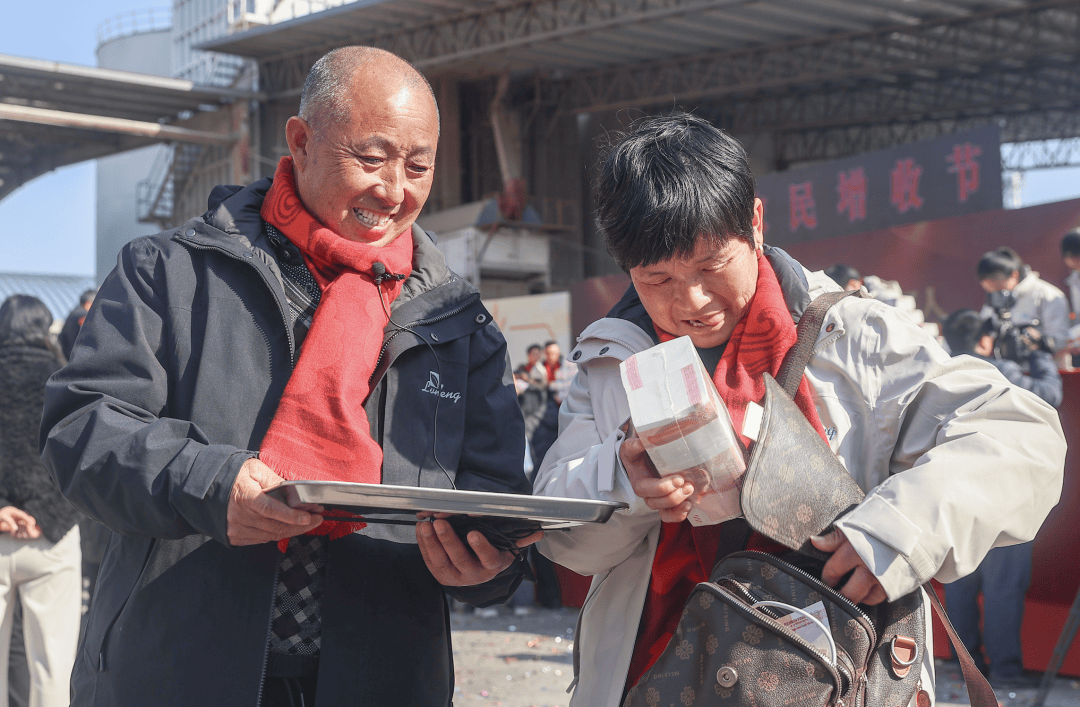
学习规划建议每日问答 | 如何理解推动形成橄榄型分配格局
Xin Hua She· 2026-01-17 06:02
Core Viewpoint - The article emphasizes the importance of establishing an "olive-shaped" distribution pattern in China, which focuses on a dominant middle-income group to ensure equitable sharing of development benefits and promote common prosperity [1][2]. Group 1: Olive-Shaped Distribution Pattern - The olive-shaped distribution pattern is characterized by a majority of middle-income individuals, which helps in sharing the benefits of reform and development, reducing social conflicts, and promoting social harmony [2]. - Since the 18th National Congress, China's distribution structure has been continuously optimized, with the middle-income group expanding. The goal is to have over 800 million people in this group within the next 15 years [2]. Group 2: Initial Distribution Mechanism - To form the olive-shaped distribution pattern, it is essential to enhance the initial distribution mechanism, ensuring that various production factors are evaluated by the market and compensated accordingly [3]. - The focus is on promoting high-quality employment, improving wage determination mechanisms, and increasing the proportion of labor remuneration in the initial distribution [3]. Group 3: Redistribution Adjustment - Strengthening redistribution is crucial to narrowing income gaps across urban-rural, regional, and sectoral lines. This includes optimizing the tax structure and improving social security systems [4]. - The article highlights the need for a robust social assistance system to support vulnerable groups and a well-structured fiscal transfer payment system to reduce regional disparities [4]. Group 4: Promotion of Philanthropy - Encouraging the development of philanthropy is essential for the olive-shaped distribution pattern, with a focus on enhancing charitable activities and ensuring effective supervision of these initiatives [4]. Group 5: Income Distribution Order - Establishing a good income distribution order and a reasonable wealth accumulation mechanism is necessary to support hard work and innovation while preventing illegal profits [5]. - The article advocates for allowing some individuals to become wealthy through innovation while emphasizing the responsibility of the wealthy to contribute to common prosperity [5].
如何理解推动形成橄榄型分配格局
Xin Hua She· 2026-01-17 04:18
Core Viewpoint - The proposal to promote an "olive-shaped distribution pattern" aims to enhance the income distribution system, ensuring that the benefits of modernization are shared more equitably among all people, which is significant for achieving common prosperity and advancing the shared development concept [1][2]. Group 1: Olive-Shaped Distribution Pattern - The olive-shaped distribution pattern is characterized by a majority of the middle-income group, which facilitates the sharing of reform and development benefits, reduces social conflicts, and promotes social harmony and stability [2]. - Since the 18th National Congress, the distribution pattern in China has been continuously optimized, with the middle-income group expanding. President Xi Jinping stated that the goal is to have over 800 million people in the middle-income group within the next 15 years [2]. Group 2: Initial Distribution Mechanism - To form the olive-shaped distribution pattern, it is essential to enhance the initial distribution mechanism, ensuring that various production factors are evaluated by the market and compensated according to their contributions [3]. - The focus will be on promoting high-quality employment, improving wage determination mechanisms, and increasing the proportion of labor remuneration in initial distribution [3]. Group 3: Redistribution Adjustment - Strengthening redistribution is crucial for narrowing income gaps across urban-rural, regional, and sectoral lines. This includes optimizing the tax structure and improving social security systems [4]. - The aim is to enhance the role of social security as an income distribution regulator and to ensure that vulnerable groups receive adequate support [4]. Group 4: Promotion of Philanthropy - Encouraging the development of philanthropy is necessary to complement the olive-shaped distribution pattern, motivating high-income individuals and enterprises to give back to society [4]. - This involves improving regulations in the charity sector and fostering the growth of charitable organizations while ensuring proper oversight of charitable activities [4]. Group 5: Income Distribution Order - Establishing a good income distribution order and a reasonable wealth accumulation mechanism is vital for guiding and constraining behaviors related to wealth creation [5]. - The focus will be on supporting lawful and innovative wealth generation while discouraging unearned income and illegal profits, promoting social responsibility among the affluent [5].
学习规划建议每日问答丨如何理解推动形成橄榄型分配格局
Xin Hua She· 2026-01-17 04:14
Core Viewpoint - The proposal to promote an "olive-shaped distribution pattern" aims to enhance the income distribution system, ensuring that the benefits of modernization are shared more equitably among all people, which is significant for achieving common prosperity and implementing the shared development concept [1] Group 1: Olive-Shaped Distribution Pattern - The olive-shaped distribution pattern, characterized by a majority of the middle-income group, is beneficial for sharing the results of reform and development, reducing social conflicts, and promoting social harmony and stability [2] - The expansion of the middle-income group is a priority, with a goal to exceed 800 million people in the next 15 years, reflecting the commitment to improving living standards [2] Group 2: Initial Distribution Mechanism - To form the olive-shaped distribution pattern, it is essential to enhance the initial distribution mechanism, ensuring that various production factors are compensated based on their contributions [3] - The focus will be on promoting high-quality employment, improving wage determination mechanisms, and increasing the proportion of labor remuneration in initial distribution [3] Group 3: Redistribution Adjustment - Strengthening redistribution is crucial to gradually narrow income gaps across urban-rural, regional, and sectoral lines [4] - Optimizing the tax structure and improving social security systems will enhance the redistributive function of social welfare [4] Group 4: Promotion of Philanthropy - Encouraging the development of philanthropy is necessary to complement the olive-shaped distribution pattern, with a focus on enhancing the regulatory framework for charitable activities [4] Group 5: Income Distribution Order - Establishing a good income distribution order and a reasonable wealth accumulation mechanism is vital to guide and constrain wealth creation [5] - The emphasis will be on supporting legal and innovative wealth creation while discouraging unearned income and illegal profits [5]
【二〇二六中国经济展望②】变民生蓝图为幸福实景
Jing Ji Ri Bao· 2026-01-05 03:19
Core Viewpoint - The article emphasizes the importance of improving people's livelihoods as a fundamental aspect of China's modernization, highlighting various initiatives aimed at enhancing social welfare and ensuring equitable development across different regions and demographics [1][2]. Group 1: Social Welfare Improvements - The average standard of urban and rural subsistence allowances has increased by 22.2% and 23.9% respectively since 2020, with 39.11 million people receiving regular subsistence support and 4.85 million individuals classified as extremely poor [2]. - Basic pension insurance now covers over 1.06 billion people, while the basic medical insurance participation rate remains above 95%, and nearly 300 million people are covered by long-term care insurance [2]. - Over 11 million units of various types of affordable housing have been constructed or renovated, benefiting more than 30 million people during the "14th Five-Year Plan" period [2]. Group 2: Education and Employment - The retention rate for compulsory education is stable at 95.9%, with the gross enrollment rate for higher education exceeding 60%, and the average years of education for the working-age population reaching 11.21 years [3]. - The article highlights the need for employment policies that guide labor towards high-value and innovative sectors, addressing structural employment challenges due to rapid technological advancements [5][6]. Group 3: Aging Population and Future Strategies - The next five years are critical for addressing significant demographic changes, particularly in response to an aging population, with a focus on building a comprehensive and accessible elderly care service system [7]. - The government plans to enhance human resource development, emphasizing the integration of investment in both physical and human capital to ensure high-quality employment and skills training [7][8].
杨伟民:化解供强需弱主要矛盾的症结在于分配
Sou Hu Cai Jing· 2025-12-27 05:11
Core Viewpoint - The key issue in resolving the contradiction between strong supply and weak demand during the "14th Five-Year Plan" period lies in distribution, necessitating significant breakthroughs in optimizing the distribution structure [2] Group 1: Distribution and Economic Growth - The supply structure is a function of the demand structure, which in turn is a function of the income structure; a low proportion of resident income in national income leads to low consumption rates [2] - Optimizing the distribution structure is crucial for comprehensive development and common prosperity, as well as for increasing the resident consumption rate and maintaining economic growth within a reasonable range [2] - The "14th Five-Year Plan" suggests implementing a plan to increase income for urban and rural residents, effectively raising the income of low-income groups and steadily expanding the middle-income group [3] Group 2: Policy Recommendations - Policies should gradually shift from stimulating consumption to adjusting income distribution, including raising minimum wage standards and increasing ordinary employees' wages [3] - The focus of redistribution should be on enhancing the income of low-income groups through increased taxation, social security, and transfer payments, aiming for a faster growth rate of per capita disposable income than economic growth [3] Group 3: Economic Growth Targets - Economic growth should maintain an average annual growth rate of 4.17% from 2025 to 2035, with a target of achieving per capita GDP at the level of moderately developed countries by 2035 [3] - The expected growth rate for the "14th Five-Year Plan" period is around 4.5%, while the "15th Five-Year Plan" period is projected at 4%, leading to an average of approximately 4.2% over the decade [4] Group 4: Challenges and Considerations - The nominal growth rate must remain above 4.5%, as nominal growth has been lower than actual growth since 2023, with a negative GDP deflator index [4] - The growth of urban resident income, corporate profits, and fiscal revenue has been lower than economic growth, exacerbating the issue of insufficient domestic demand [4] - The macroeconomic regulation during the "14th Five-Year Plan" period must prioritize promoting price recovery as a key objective [4]
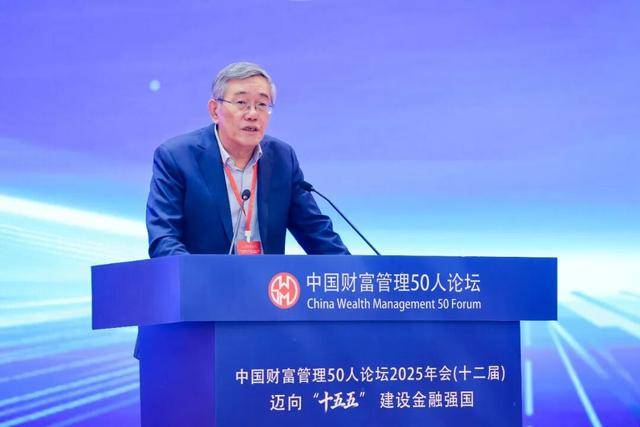
杨伟民:化解供强需弱主要矛盾的症结在于分配
和讯· 2025-12-27 04:47
Group 1 - The core viewpoint emphasizes that resolving the supply-demand imbalance during the "14th Five-Year Plan" period hinges on optimizing the distribution structure, which is crucial for enhancing residents' disposable income and sustaining economic growth within a reasonable range [2][4] - The "14th Five-Year Plan" suggests implementing a rural and urban resident income increase plan aimed at effectively raising the income of low-income groups and steadily expanding the middle-income group, while also addressing excessive incomes and illegal earnings to promote an olive-shaped distribution pattern [2][4] - The article highlights that policies should not only focus on expanding demand and optimizing supply but also on improving distribution, creating a cohesive system of supply, demand, and distribution policies to foster a consumption-driven economic development model [2][3] Group 2 - It is proposed that consumption-stimulating policies should gradually shift towards income distribution adjustment policies, including raising minimum wage standards and enhancing ordinary employees' wages, while increasing the intensity of tax, social security, and transfer payments to boost low-income groups' income [3][4] - Economic growth is expected to maintain an average annual growth rate of 4.17% from 2025 to 2035, with a target of 4.5% during the "14th Five-Year Plan" period and 4% during the "15th Five-Year Plan" period, leading to an average of approximately 4.2% over the decade [5][6] - The article stresses the importance of nominal growth remaining above 4.5%, as since 2023, nominal growth in China has been lower than actual growth, which has exacerbated the imbalance between supply and demand and contributed to insufficient domestic demand [5][6]
“城乡居民增收计划”可从五大维度推进
Sou Hu Cai Jing· 2025-12-24 07:13
Core Viewpoint - The Central Economic Work Conference has proposed the "Urban and Rural Residents Income Increase Plan" as a core strategy to boost domestic demand and build a strong domestic market, marking a shift from principle-based guidance to systematic and actionable promotion [1] Group 1: Employment Foundation - Wage income is the primary component of residents' income, projected to account for 56.5% of disposable income in 2024, making the expansion of high-quality employment essential for increasing wage income [2] - The plan should prioritize stabilizing and expanding high-quality employment, focusing on key groups such as college graduates, migrant workers, and older workers, while establishing a comprehensive employment support system [2] - Measures include enhancing cooperation between universities and enterprises, expanding employment opportunities in emerging industries, and establishing lifelong vocational training systems to address structural unemployment risks [2][3] Group 2: Income Channel Expansion - In 2024, property income is expected to account for only 8.3% and operating income for 16.7% of residents' income, indicating significant potential for growth [4] - The plan aims to activate wealth effects in capital markets, optimize rural asset utilization, and cultivate new business entities to broaden income channels [4] - Strategies include stabilizing stock and real estate market expectations, improving access to investment products for ordinary residents, and exploring trust models for rural land and housing rights [4][5] Group 3: Urban-Rural Balance - Addressing the income gap between urban and rural areas is a core challenge, with a focus on increasing rural residents' income through industrial empowerment and public service equalization [6] - The plan suggests promoting urban industry transfer to rural areas and enhancing rural infrastructure to support new business models like e-commerce and rural tourism [6][7] - It also emphasizes improving public services in rural areas, including education and healthcare, to reduce living costs and indirectly increase disposable income [7] Group 4: Distribution Optimization - The redistribution mechanism in China has room for improvement, with plans to reform the tax system and enhance social security to create a more equitable distribution system [8] - Proposed reforms include increasing the proportion of direct taxes, optimizing personal income tax, and implementing tax credits for low-income earners to stimulate consumption [8][9] - The plan also aims to enhance social security coverage and improve transfer payment structures to support underdeveloped regions and reduce income disparities [9] Group 5: Policy Coordination - The income increase plan requires coordinated efforts across fiscal, financial, industrial, and investment policies to ensure effective implementation [10] - It emphasizes the need for consistent macro policy assessments and the alignment of consumption policies with fiscal and financial strategies [10] - The plan encourages investment in consumption infrastructure and projects that stimulate economic growth, creating a virtuous cycle between investment and consumption [10][11] Group 6: Monitoring and Evaluation - A robust statistical monitoring system for consumption and new business models is essential to accurately track income and consumption dynamics [11] - Establishing an evaluation mechanism for the income increase plan's implementation will hold local governments accountable and encourage practical measures [11] Conclusion - The implementation of the Urban and Rural Residents Income Increase Plan is crucial for addressing global economic changes and achieving common prosperity, focusing on high-quality employment, diversified income channels, urban-rural balance, distribution optimization, and policy coordination [12]
“十五五”目标@奋斗者|扎实推进共同富裕 推动形成橄榄型分配格局
Xin Hua Wang· 2025-12-22 12:35
Group 1 - The core viewpoint emphasizes the implementation of a plan to increase income for urban and rural residents, aiming to promote a more equitable distribution of wealth and enhance the well-being of the population [1][5] - The concept of Chinese-style modernization is highlighted as a modernization that ensures common prosperity for all people, focusing on making the benefits of reform and development more equitable [3] - By promoting income growth and adjusting income distribution, the goal is to enhance social welfare, promote fairness and justice, and better ensure that people share in the fruits of development [5] Group 2 - The news illustrates the importance of ensuring that the achievements of reform and development benefit all citizens, particularly in the new development stage [3] - The focus on creating an "olive-shaped" distribution structure indicates a strategic approach to income distribution that aims to reduce inequality [5] - The ongoing efforts to improve the livelihood of residents and meet their aspirations for a better life are underscored as essential components of the development strategy [5]
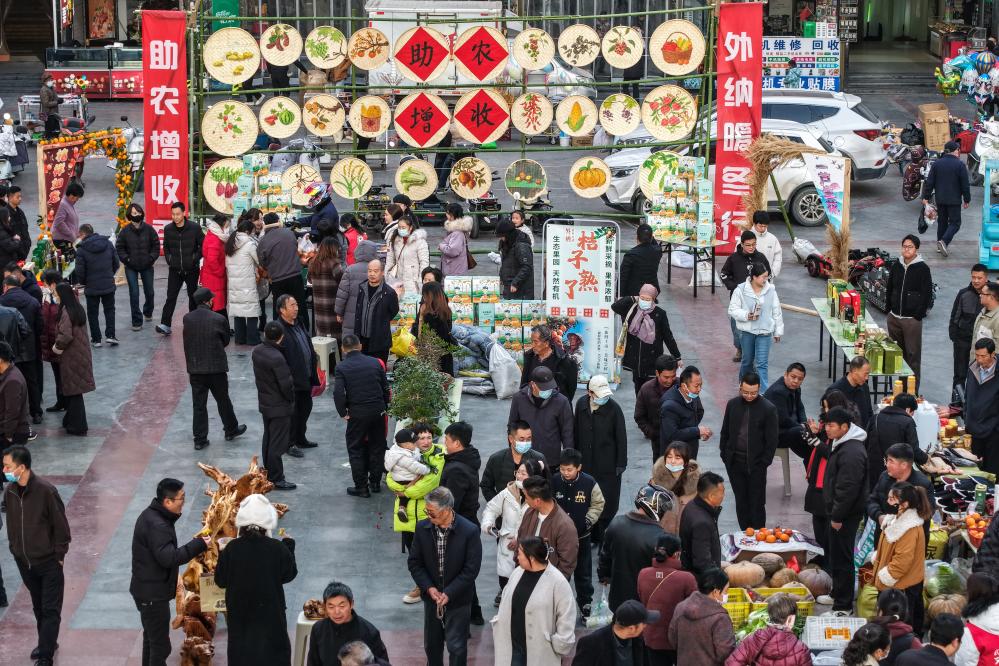
新征程·新蓝图|实施城乡居民增收计划 推动形成橄榄型分配格局
Xin Hua She· 2025-11-24 01:58
Group 1 - The core viewpoint of the article emphasizes the implementation of a plan to increase income for urban and rural residents, aiming to promote common prosperity and improve people's livelihoods [2][4] - During the "14th Five-Year Plan" period, there has been a continuous improvement in people's well-being, with steady progress towards common prosperity [4] - The "15th Five-Year Plan" suggests effectively increasing the income of low-income groups, steadily expanding the middle-income group, reasonably adjusting excessive incomes, and eliminating illegal incomes to promote an olive-shaped distribution structure [6] Group 2 - The olive-shaped distribution structure is characterized by a large middle class and smaller low-income and high-income groups, with research indicating that this distribution pattern is a healthier and more reasonable model for modern society [8]