具身智能

Search documents
硅谷直击:黄仁勋入局龙虾大战,宣告 SaaS 已死,推理算力需求暴涨万倍!
AI科技大本营· 2026-03-17 06:11
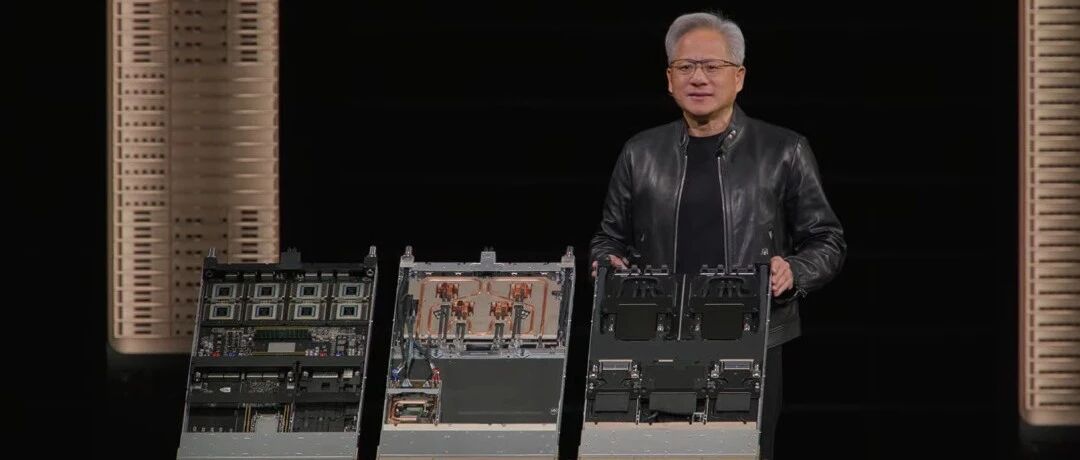
Core Insights - The article discusses NVIDIA's GTC 2026 conference, highlighting CEO Jensen Huang's narrative control and the introduction of new AI technologies and concepts, including the transition from SaaS to Agentic AI [1][3][6]. Group 1: CUDA and Its Impact - CUDA's 20th anniversary marks a significant milestone, transforming GPUs from graphics rendering to general-purpose parallel computing machines [8][10]. - The release of CUDA in 2006 allowed developers to utilize GPUs for various applications, leading to a robust software ecosystem that supports diverse fields [11][15]. - NVIDIA's competitive advantage lies in its extensive CUDA ecosystem, which cannot be easily replicated by competitors [16][17]. Group 2: Evolution of AI - The modern deep learning era began with the success of AlexNet in 2012, showcasing the importance of GPUs in AI development [18][20]. - Huang emphasizes that structured and unstructured data play complementary roles in AI, enhancing the value of existing data assets [22][24][26]. - The focus of AI is shifting from training to inference, with Token Economics becoming a central theme in AI operations [27][28][32]. Group 3: Hardware Developments - The introduction of the Blackwell architecture is seen as a pivotal moment in AI infrastructure, with widespread adoption among cloud providers [43][44]. - Future architectures, such as Vera Rubin, are expected to significantly enhance AI inference capabilities and commercial viability [51][52]. - The transition from copper to photonic interconnects in AI systems is crucial for scaling up performance and efficiency [56][58]. Group 4: Agentic AI and New Paradigms - Huang introduces the concept of Agentic AI, which goes beyond traditional chatbots to perform complex tasks autonomously [72][74]. - The market is shifting from SaaS to Agent-as-a-Service (AgaaS), indicating a new approach to enterprise software procurement [80][79]. - The emergence of NemoClaw represents a significant step in making AI agents more accessible and applicable in the physical world [81][90]. Group 5: Physical AI and Real-World Applications - The integration of AI into physical systems is exemplified by the demonstration of a character from popular culture, illustrating the potential of Physical AI [106][107]. - NVIDIA aims to create a comprehensive pipeline for Physical AI, encompassing data generation, simulation training, and real-world deployment [99][100]. - The narrative emphasizes the transition of digital intelligence into tangible applications, redefining the future landscape of AI technology [107].


汽车行业2026年3月投资策略:用车销量触底回升,新技术与新品周期有望提振板块
Guoxin Securities· 2026-03-17 05:50
Investment Rating - The report maintains an "Outperform" rating for the automotive industry [1][3][4] Core Viewpoints - The automotive sector is expected to see a recovery in passenger car sales, driven by new technologies and product cycles, with a potential upward trend starting in March 2026 [1][3] - The report highlights the importance of domestic brands and the rise of electric and intelligent vehicles, suggesting investment opportunities in companies focusing on these areas [3][27] Monthly Sales Data - In February 2026, retail sales of passenger vehicles reached 1.034 million units, a year-on-year decrease of 25.4% and a month-on-month decrease of 33.1% [1] - Cumulative retail sales for January and February 2026 totaled 2.578 million units, down 18.9% year-on-year [1] - The wholesale volume for passenger vehicles in February was 1.518 million units, a year-on-year decline of 14.3% [1] Market Performance - The CS automotive sector rose by 2.82% in February, outperforming the CSI 300 index by 2.73 percentage points [2] - The automotive sector has increased by 3.16% since the beginning of 2026, compared to a 1.74% rise in the CSI 300 index [2] Investment Recommendations - Recommended companies include Xpeng Motors, JAC Motors, and Geely for their strong product cycles [3][4] - In the intelligent vehicle sector, companies like Coboda, Huayang Group, and Junsheng Electronics are highlighted [3] - For robotics, Top Group and Sanhua Intelligent Control are recommended [3] Profit Forecasts and Valuations - Xpeng Motors is rated "Outperform" with an expected EPS of 0.52 in 2026 and a PE ratio of 152 [4] - Star Universe Co. is also rated "Outperform" with an expected EPS of 7.38 in 2026 and a PE ratio of 18 [4] - Fuyao Glass is rated "Outperform" with an expected EPS of 4.3 in 2026 and a PE ratio of 14 [4] Long-term Industry Trends - The automotive industry is transitioning from a growth phase to a mature phase, with a projected annual growth rate of low single digits [13][19] - The report anticipates that the total vehicle sales in China could reach 40-43 million units annually in the long term, reflecting a growth potential of 42%-53% from current levels [16][19] New Energy Vehicle Projections - New energy vehicle sales are expected to reach approximately 1.868 million units in 2026, representing a year-on-year growth of 14% [28][36] - BYD is projected to achieve sales of 501,000 new energy vehicles in 2026, continuing to expand its market advantage [28][36] Company-Specific Insights - Xpeng is expected to see a significant product launch in 2026, with projected sales of 600,000 units, a 40% increase [34] - Geely's new energy vehicle sales are forecasted to reach 190,000 units in 2026, reflecting a growth of approximately 13% [33] - NIO is anticipated to achieve sales of 420,000 units in 2026, with a growth rate exceeding 28% [35]




阿里建立AI新组织,CEO亲自挂帅,悟空事业部首次公开;山姆紧急下架!网红产品被曝重金属超标;首发价1499元!追觅发布AI戒指Glow
雷峰网· 2026-03-17 04:15
Group 1 - Alibaba has announced the establishment of the Alibaba Token Hub (ATH) business group, directly overseen by CEO Wu Yongming, which includes several divisions focused on AI applications and services [4][5] - The ATH group's core objective is to create, deliver, and apply tokens, marking Alibaba as the first tech giant to structure itself around "tokens" [4] - The newly introduced "Wukong Division" aims to integrate large model capabilities into enterprise workflows, signaling a significant move towards monetizing AI in the B2B sector [5] Group 2 - Sam's Club has urgently removed a popular product, "Botherless Organic Freeze-Dried Strawberries," after reports of heavy metal contamination and pesticide residues [7] - The product was linked to a supplier that had previously faced similar complaints, prompting immediate action from Sam's Club [7] - A public letter from Yonghui Supermarket criticized Sam's Club for unfair competition and emphasized the importance of quality in the industry [8] Group 3 - Vivo and iQOO have announced price increases for some products due to rising semiconductor and storage costs, with the adjustments taking effect on March 18, 2026 [14][15] - The price hikes are a response to significant increases in component costs, with some retailers advising consumers to purchase before the price changes [15] Group 4 - The AI ring "Glow" by ChaseMe Technology has been launched, featuring advanced health monitoring capabilities, including AI-based ECG and heart rate analysis [17][18] - The product is priced at 1,799 yuan, with a promotional launch price of 1,499 yuan, aiming to make professional health management accessible to a broader audience [18] Group 5 - ASML, a leading lithography equipment manufacturer, has confirmed a significant layoff of over 1,700 employees despite reporting record annual revenues of 32.7 billion euros [42] - The layoffs, which represent about 4% of the workforce, have sparked strong employee resistance, raising concerns about job security amid a profitable year [42] Group 6 - Ford's CEO Jim Farley tested several Chinese pickup trucks and acknowledged their competitiveness, although he noted limitations in their load and towing capacities [44][45] - Farley expressed confusion over the profitability of certain models after analyzing their technology and cost structures [45] Group 7 - Nvidia's CEO Jensen Huang projected that AI chips could generate $1 trillion in revenue by 2027, significantly increasing the company's sales expectations [47] - The announcement included the introduction of new hardware, including the Vera CPU, designed specifically for AI applications [47] Group 8 - OpenAI is reportedly in talks with several private equity firms to establish a joint venture, with a pre-money valuation of approximately $10 billion [48] - This move aims to accelerate OpenAI's penetration into the enterprise market while providing support to companies affected by AI advancements [48] Group 9 - Samsung has indicated that the current memory chip shortage may persist until around 2028, driven by structural demand from AI technologies [52][53] - The company is prioritizing high-end products like HBM and advanced DRAM to meet the growing needs of AI servers, which require significantly more memory than standard servers [53]


AWE2026落幕:具身智能企业,站上舞台C位
雷峰网· 2026-03-17 04:15
Core Insights - The article highlights the growing prominence of embodied intelligence at the AWE 2026, showcasing a shift towards consumer acceptance and industrial application of robotics [2][54]. - The event serves as a critical opportunity for companies to display their products, connect with industry resources, and capitalize on emerging market trends [2][54]. Group 1: Key Companies and Innovations - Yushu Technology's booth was a major attraction, featuring performances with robots showcasing dance and combat skills, and highlighting their new lightweight quadruped robot, Unitree As2, designed for inspection and light tasks [5][8]. - Itstone Technology achieved a Guinness World Record with its A1 robot, completing 105 precision tasks in one hour, and introduced the AWE 3.0 model, enhancing operational stability in complex environments [11][13]. - Magic Atom showcased its "Spring Festival" robots, including the MagicBot GEN1 and Z1, designed for various tasks with high degrees of freedom and load capacities [15][16]. - Zhiyuan Robotics presented a diverse range of robots, including the A2 humanoid robot that performed calligraphy and the X2 robot that showcased dance and interactive capabilities [19][20]. - ZhiShen Technology transformed its booth into a practical testing ground, demonstrating the capabilities of its quadruped robot in navigating complex terrains [23][25]. - Luming Robotics launched the FastUMI data collection infrastructure, which includes various hardware aimed at enhancing embodied intelligence training [27]. - Weitai Robotics introduced a series of tactile sensors and data collection systems, marking significant advancements in sensory technology [29][30]. - Chenhun Line Technology presented the TermiPianist, a piano-playing robot that integrates advanced AI for real-time performance [34]. - Roboparty displayed its open-source humanoid robot prototype, targeting educational and research sectors [36]. - VITADynamic showcased the Vbot super intelligent dog, which has received significant pre-orders, indicating strong market interest [39]. Group 2: Market Trends and Applications - The AWE 2026 demonstrated a significant expansion in the application boundaries of embodied intelligence, moving beyond traditional industrial settings to include consumer-oriented scenarios [54]. - The industry is witnessing a dual focus on B2B and B2C applications, with advancements in precision manufacturing and flexible operations on one side, and consumer services and entertainment on the other [54]. - The integration of embodied intelligence into various sectors is expected to enhance operational efficiency and open new market opportunities, indicating a robust growth trajectory for the industry [54].

破解「有身无脑」困局,首届具身智脑技术生态大会即将启幕
机器之心· 2026-03-17 03:58
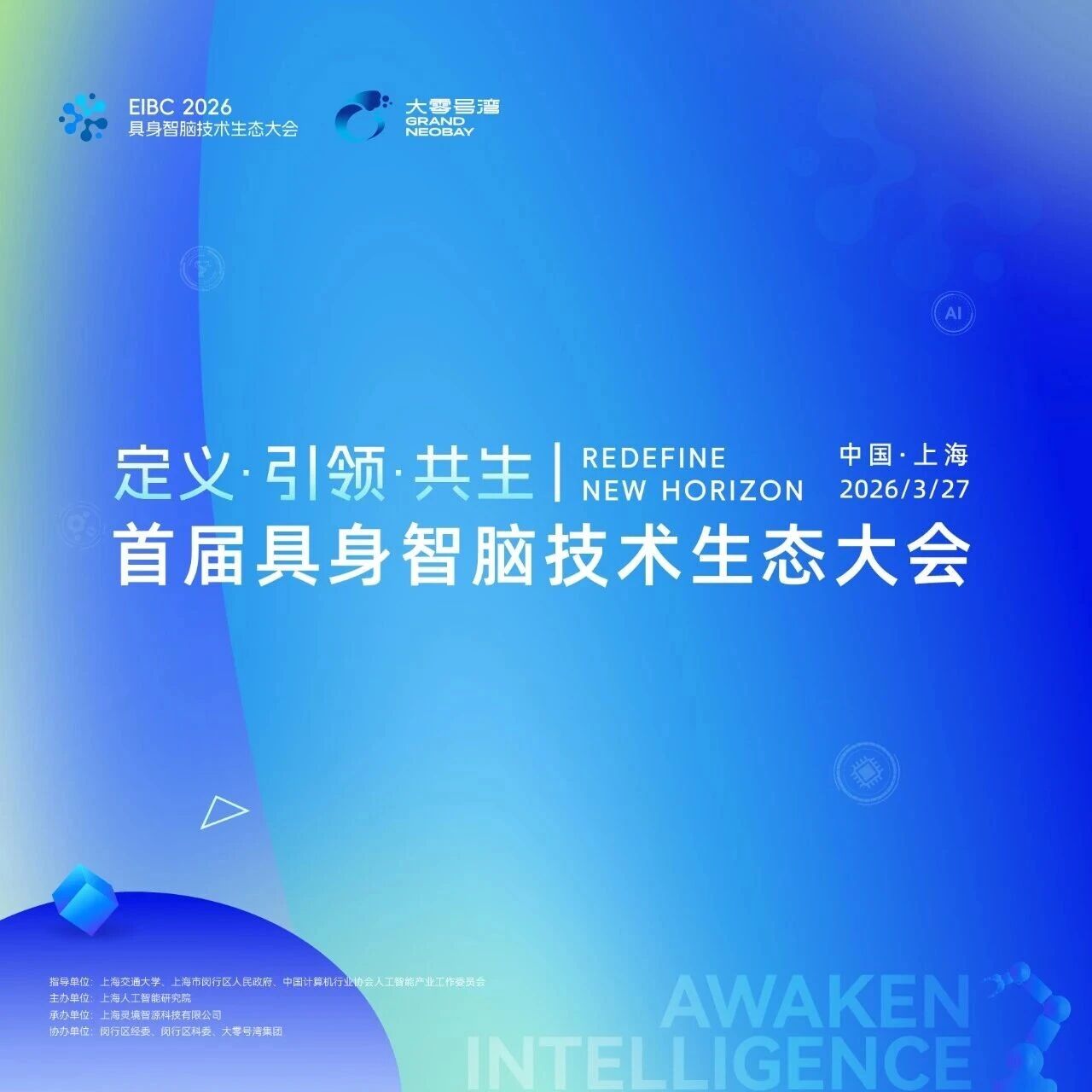
Core Insights - The article emphasizes the rapid transformation of the robotics industry driven by embodied intelligence, highlighting a shift from mere mobility to practical application in real-world scenarios [1] - It points out that while domestic robot manufacturing capabilities are among the best globally, achieving true perception, decision-making, and evolution in robots requires specialized computing solutions rather than generic ones [1] Group 1: Embodied Intelligence Development - Embodied intelligence is moving from "moving" to "using," indicating a critical transition in robotics [1] - The ability of robots to interact with unfamiliar environments, such as kitchens or warehouses, depends on the level of edge intelligence rather than just physical capabilities [1] - Current robotic systems often rely on generic computing solutions, which leads to slow responses and lack of real-time collaboration in dynamic environments [1] Group 2: Technological Innovations and Events - The "First Embodied Brain Technology Ecosystem Conference" will be held on March 27, organized by the Shanghai Artificial Intelligence Research Institute, showcasing significant technological advancements in edge computing and embodied intelligence [2][4] - The conference will feature key industry leaders and experts discussing technology trends, core challenges, and practical implementation paths [4] - The event aims to address the "body without brain" dilemma in robotics and will present four pioneering technological achievements [4]
2026年机械行业春季投资策略:价值反转,科技赋能
Shenwan Hongyuan Securities· 2026-03-17 03:35
Investment Strategy Overview - The report emphasizes the importance of emerging industries, particularly in the context of the government's work report, which highlights the development of traditional, emerging, and future industries in a collaborative manner. The six new pillar industries include integrated circuits, aerospace, biomedicine, low-altitude economy, new energy storage, and intelligent robotics, with a projected output value of nearly 6 trillion yuan by 2025, potentially doubling to over 10 trillion yuan by 2030 [3][4]. Emerging Industries - Key focus areas include: 1. Space Photovoltaics: New technologies such as heterojunction and perovskite are essential for technological advancement, with applications in space photovoltaics accelerating the adoption of these technologies [4]. 2. Robotics: The commercialization of robotics is expected to accelerate in 2026, with attention on Tesla's humanoid robot product iterations and changes in domestic supply chains [4]. 3. 3D Printing: Cost reduction in industrial-grade materials and efficiency improvements in equipment are expected to drive significant growth in 3D printing [4][58]. AI-Driven Opportunities - The report identifies several AI-driven sectors: 1. PCB: Traditional PCB processing methods are becoming inadequate, leading to a shift towards cold processing and ultra-fast laser processing equipment [4]. 2. Tools: Rising tungsten prices are prompting tool manufacturers to initiate multiple price adjustments, with significant profit growth expected in 2025 [4]. 3. Gas Turbines: AI is driving a surge in global demand, with significant supply chain pressures [4]. 4. Semiconductor Equipment: The industry is experiencing a recovery in demand, particularly driven by GPUs [4]. 5. 3C Devices: A significant increase in AI glasses sales is anticipated, marking a prosperous year for the supply chain [4]. Equipment Update Trends - Key areas for equipment updates include: 1. Engineering Machinery: Excavator sales are exceeding expectations, indicating a favorable investment window over the next 3-5 years [4]. 2. Lasers: General laser technology is experiencing rapid growth, while specialized lasers are focusing on new technological changes [4]. 3. Rail Transit: Continued high investment in railways is expected, with passenger traffic reaching new highs [4]. Key Stock Selections - The report suggests focusing on quality stocks within emerging industries, engineering machinery, rail transit, lasers, and robotics, highlighting specific companies such as: - Emerging Industries:卧龙电驱, 恒立液压, 雷迪克, 美湖股份, 三花智控, 震裕科技, 双环传动, 中大力德, 恒而达 [6]. - AI-Driven: 大族数控, 鼎泰高科, 中钨高新, 民爆光电, 新锐股份, 英诺激光, 帝尔激光, 厦门钨业, 华锐精密, 欧科亿, 沃尔德 [6]. - Equipment Updates: 三一重工, 徐工机械, 中联重科, 恒立液压, 中国中车, 思维列控, 中国通号, 时代电气 [6].

滴滴、美团等联合入局!地瓜机器人完成1.2亿美元B1轮融资
Guang Zhou Ri Bao· 2026-03-17 02:51
Group 1 - The core point of the news is that Digua Robotics has successfully completed a $120 million B1 round of financing, bringing the total funding from A and B rounds to $220 million [1] - The financing round attracted top industry investors including Synstellation Capital, Didi, and Meituan Longzhu, along with strategic investment institutions such as Baorui Capital and Jiuyang Family Office [1] - The funding will support the comprehensive development of Digua Robotics' software and hardware technology, enhancing its embodied intelligent technology foundation and driving the industry towards a new cycle of large-scale and inclusive development [1] Group 2 - Digua Robotics aims to meet differentiated market demands for large-scale production of robotic products, ubiquitous robotic innovation applications, and general embodied intelligent robots [2] - The company has established a complete product system from chips and algorithms to software, covering various robotic categories such as humanoid robots, wheeled robots, quadruped robotic dogs, and logistics AMRs [2] - Over the past year, Digua Robotics has collaborated deeply with leading industry clients, producing benchmark products in key scenarios like sweeping machines and drones, thus driving significant advancements in intelligent robotic experiences [2]

融资规模破纪录-具身智能资本化进程加速
2026-03-17 02:07
Summary of Key Points from the Conference Call Industry Overview - The conference call discusses the **embodied intelligence robotics industry**, highlighting significant financing activities in early 2026, with a total amount exceeding **371 billion RMB** in January and February [1][2]. Core Insights and Arguments - **Financing Growth**: In January 2026, there were **21 financing events** totaling **156 billion RMB**, marking a **524% year-over-year increase** and **108% month-over-month increase**. February saw **28 financing events** with a total of **215 billion RMB**, reflecting a **291% year-over-year increase** and **37.8% month-over-month increase** [2]. - **Sector Dominance**: The financing in February was dominated by the **embodied hardware sector**, with **15 companies** in this area, while the **large model sector** had **3 companies** [2][3]. - **Regional Disparities**: Domestic financing comprised **45 events** totaling **161 billion RMB**, primarily in hardware, while the overseas market had **5 events** totaling **30.5 million USD** (approximately **210 billion RMB**), focusing on large models and world models [3]. - **Investment in Large Models**: The large model sector attracted **227 billion RMB** in financing across **16 events** in early 2026, with notable cases including a **1 billion USD** financing for a world models company and **10.3 billion USD** for MIR Labs [4]. - **Valuation Trends**: By early 2026, **12 companies** had secured financing exceeding **1 billion RMB**, with **9 companies** achieving valuations over **10 billion RMB**, indicating a rapid acceleration in capitalization [4]. Additional Important Content - **Government Involvement**: Local government-backed capital is increasingly participating in financing, as seen with the **Beijing humanoid robot innovation center** raising over **700 million RMB** and the **Zhejiang center** raising **450 million RMB** [5]. - **Investment Opportunities**: Key investment opportunities are identified in **core components** such as sensors, motors, lead screws, and dexterous hands, which are critical for enhancing production capacity and cost control in the industry [6].
2026年第40期:晨会纪要-20260317
Guohai Securities· 2026-03-17 01:07
Group 1: Key Insights on China National Heavy Duty Truck Group (CNHTC) - From 2023 to H1 2025, the company's net profit margin is expected to remain around 6%-7%, similar to the previous high prosperity period, but the current profit level is suppressed by several adverse factors [3][6] - The company is transitioning from a traditional cyclical stock to a cross-cycle growth asset, driven by domestic demand cycle reversal, export structure upgrades, and the approaching profitability inflection point for new energy vehicles [3][4] - The domestic replacement cycle and the upgrade to National VII emission standards are expected to drive domestic demand upward, with a potential annual sales peak of 1.52 million units from 2025 to 2029, resulting in a CAGR of approximately 17.8% [4][6] Group 2: International Market Expansion - CNHTC is a leader in the heavy truck export market, with a projected export scale exceeding 500,000 units in the medium term, benefiting from a market share of over 40% [5][6] - The African, Middle Eastern, and Latin American markets are expected to be significant sources of growth, as Chinese heavy trucks continue to replace competitors from developed countries [5] - The Russian market presents opportunities for recovery, with CNHTC's "Shandeka" brand having a good reputation, which could lead to profit elasticity if the economic environment improves [5] Group 3: Financial Performance and Forecast - The company is expected to achieve operating revenues of 110.4 billion, 126 billion, and 135.7 billion yuan from 2025 to 2027, with year-on-year growth rates of 16%, 14%, and 8% respectively [6][7] - The projected net profits for the same period are 6.6 billion, 8.1 billion, and 9.1 billion yuan, with growth rates of +12%, +23%, and +13% [7] - The estimated EPS for 2025, 2026, and 2027 are 2.38, 2.93, and 3.31 yuan, with corresponding PE ratios of 14, 11, and 10 times, indicating a potential for valuation improvement compared to international heavy truck leaders [7] Group 4: Automotive Industry Overview - In the automotive sector, wholesale vehicle sales in January and February 2026 faced pressure, with a year-on-year decline of 9.5% and 8.8% respectively, while commercial vehicles showed positive growth [8][9] - NIO achieved its first quarterly profit in Q4 2025, with a revenue increase of 75.9% year-on-year, while Li Auto's performance faced challenges with a significant decline in net profit [10][11] - The overall automotive industry is expected to face challenges in 2026, but opportunities exist in the high-end upgrade of domestic brands and the acceleration of intelligent technology integration [12]
申万宏源证券晨会报告-20260317
Shenwan Hongyuan Securities· 2026-03-17 00:59
Group 1: Bond Investment Strategy - The report highlights a transition in bond investment strategy towards a "sell on every rise" approach, driven by asset allocation rebalancing and the current weak position of bond assets compared to equities [9][10] - The economic outlook for 2026 is characterized as a "non-typical recovery" period, with a focus on nominal growth recovery, fiscal spending structure, and inflation trends as key indicators for the bond market [9][10] - The report suggests that the 10-year government bond yield may range between 1.77% and 1.95%, with a potential upward breakout above 1.9% [9][10] Group 2: Hong Kong Stock Market Strategy - High dividend assets are expected to remain attractive in 2026, with historical performance indicating that sectors with dividend yields above 3% generally provide absolute returns during periods of RMB appreciation [12][10] - The report emphasizes the importance of consumer sectors, particularly discretionary consumption, which tends to outperform during inflationary periods, suggesting investment opportunities in these areas [12][10] - The technology sector in Hong Kong is anticipated to benefit from RMB appreciation, with a focus on companies that possess unique ecological positions and infrastructure capabilities [12][10] Group 3: U.S. Stock Market Strategy - The U.S. stock market is projected to have limited valuation upside due to geopolitical uncertainties and a shift from light to heavy asset investments, with capital expenditures expected to broaden beyond technology giants [11][13] - The report notes that the S&P 500 index is expected to see stable earnings growth of around 16%, with current valuations at approximately the 70th percentile historically [11][13] - AI investments are highlighted as having potential in upstream and midstream sectors, with opportunities for alpha generation in the value chain [11][13] Group 4: Future Industries - The report discusses significant advancements in future industries, including quantum technology, biomanufacturing, and brain-machine interfaces, indicating a strong trend towards commercialization and technological breakthroughs [15][16] - The approval of the first invasive brain-machine interface for clinical use marks a significant milestone in the industry, reflecting increased investment and interest in this area [15][16] - The report outlines the importance of hydrogen energy and nuclear fusion, with China joining the "Triple Nuclear Declaration" to enhance global nuclear energy capacity by 2050 [15][16]