出口管制

Search documents
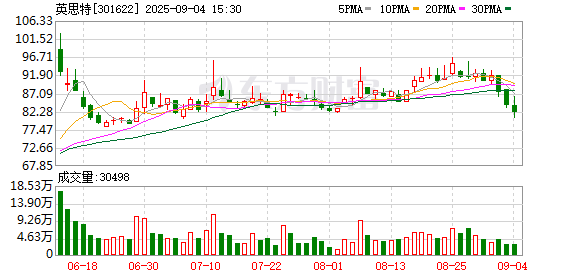
英思特:公司对外直接出口的业务量较小,主要销往国内保税区
Zheng Quan Ri Bao· 2025-09-04 09:08
Core Viewpoint - The company has stated that the current rare earth export controls primarily target seven categories of medium and heavy rare earths, with only a small portion of its raw materials containing "dysprosium and terbium" products falling under these controls [2] Group 1 - The company has complied with national regulations and has successfully obtained the necessary export licenses [2] - The direct export volume of the company is relatively small, mainly selling to domestic bonded zones [2] - Products are generally assembled in domestic factories before entering the market, indicating limited impact from export controls [2]

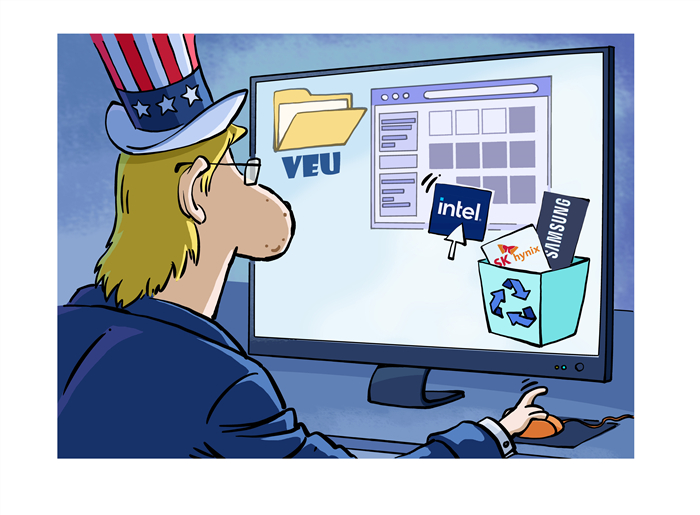
漫评美对三家涉华芯片工厂下黑手:“移除”
人民网-国际频道 原创稿· 2025-09-04 05:42
Core Viewpoint - The U.S. Department of Commerce has removed Intel Semiconductor (Dalian) Co., Samsung China Semiconductor Co., and SK Hynix Semiconductor (China) Co. from the "Validated End User" (VEU) list, requiring them to apply for licenses to import certain U.S. goods, software, and technology for semiconductor production in China [2] Group 1: Impact on Companies - The removal from the VEU list means that the mentioned companies will face additional regulatory hurdles in importing essential technologies from the U.S. for their semiconductor operations in China [2] - This decision reflects the ongoing trend of strict export controls imposed by the U.S. on semiconductor equipment to China, which began in 2022 [2] Group 2: Industry Implications - The semiconductor industry is characterized by its high level of globalization, and the U.S. actions are seen as detrimental to the security and stability of global supply chains [2] - The U.S. approach is perceived as a self-serving tactic that utilizes export controls to manipulate market dynamics [2]

传化智联因出口违规被行政处罚
Qi Lu Wan Bao· 2025-09-03 22:44
Core Points - The Shanghai Pujiang Customs issued an administrative penalty decision against Transfar Zhilian Co., Ltd. for violating export control laws [1][3][6] - The company failed to submit the required export license for a shipment containing 84-86% cyclic phosphonate, resulting in a fine of 10,000 RMB [3][6][8] Financial Performance - For the first half of the year, Transfar Zhilian reported a revenue of 12.23 billion RMB, a decrease of 5.38% year-on-year [10] - The net profit attributable to shareholders was 509 million RMB, an increase of 76.01% compared to the previous year [10] - The net cash flow from operating activities decreased by 72% to 124 million RMB [10] - Basic and diluted earnings per share rose by 76.03% to 0.1843 RMB [10] Company Ranking - Transfar Zhilian ranked 489th on the 2025 Fortune China 500 list, marking its eighth consecutive year on the list with revenues of 3.71 billion USD and profits of 21.1 million USD [11] Company Overview - Transfar Zhilian is a publicly listed company under Transfar Group, primarily engaged in logistics and chemical businesses [15]


台积电:已收到美国政府通知!
国芯网· 2025-09-03 13:14
Core Viewpoint - The article discusses the implications of the U.S. government's decision to revoke TSMC's exemption for shipping critical equipment to its Nanjing factory, which may impact production capacity and delivery timelines [2][4]. Group 1: U.S. Government Actions - The U.S. has notified TSMC that it will revoke the exemption for shipping critical equipment to its Nanjing factory, which could weaken production capabilities and lead to delivery delays [2][4]. - This decision follows a similar action against South Korean chip manufacturers Samsung and SK Hynix, with restrictions set to take effect in 120 days [4]. Group 2: TSMC's Response and Operations - TSMC is evaluating the situation and is committed to ensuring uninterrupted operations at its Nanjing factory, despite the revocation of its "verified end user" status, which will require export licenses for U.S. semiconductor manufacturing tools [4]. - The Nanjing factory currently produces approximately 20,000 wafers of 16/12nm and 40,000 wafers of 28/22nm monthly, primarily for specialized needs such as automotive chips [5]. Group 3: Financial Impact - In the first half of the year, TSMC's Chinese subsidiary reported a net profit of 5.596 billion New Taiwan Dollars (NTD), with the Nanjing factory contributing 14.439 billion NTD, together accounting for about 2.6% of TSMC's total profit [5].


突发!台积电南京厂被美国撤销豁免!
是说芯语· 2025-09-02 16:04
Core Viewpoint - The revocation of TSMC's VEU authorization for its Nanjing plant by the U.S. Department of Commerce signifies a shift from a "one-time approval" model to a "case-by-case approval" process, introducing uncertainties in operations and supply chain management for TSMC and its suppliers [1][5]. Group 1: Impact on TSMC - TSMC's Nanjing plant will lose its VEU authorization effective December 31, 2025, requiring upstream suppliers to apply for U.S. export licenses for controlled goods on a per-item basis, which will increase approval times and uncertainty [3][4]. - The Nanjing plant, which began operations in 2018, contributed only a small portion to TSMC's total revenue last year, and its most advanced manufacturing process is 16nm, indicating limited operational weight in TSMC's overall business [3][4]. - The operational continuity of the Nanjing plant will still depend on the import of equipment, spare parts, and chemicals, making any delays in licensing critical for maintenance, yield, and capacity assurance [3][5]. Group 2: Broader Industry Implications - The U.S. has revoked VEU authorizations for three other semiconductor companies in China, including Intel, Samsung, and SK Hynix, which will also face similar licensing requirements, indicating a broader tightening of supply chain controls [4]. - The U.S. Department of Commerce estimates an additional 1,000 license applications annually due to these changes, reflecting an increased administrative burden on companies operating in China [4]. - The policy shift aims to maintain control over the supply chain, allowing the U.S. to regulate the flow of supplies based on strategic needs rather than an outright ban [5].

美国撤销台积电、三星、SK海力士在华许可!
国芯网· 2025-09-01 11:57
Core Viewpoint - The U.S. Department of Commerce has revoked "Validated End-User" (VEU) authorizations for three major semiconductor companies operating in China, which is expected to significantly impact the global semiconductor supply chain and industry stability [1][3][4]. Group 1: U.S. Actions - The U.S. has withdrawn VEU authorizations for Samsung (Xi'an NAND factory), SK Hynix (Wuxi DRAM factory), and TSMC (Nanjing) [1]. - The revocation prohibits these companies from receiving semiconductor manufacturing equipment, components, and software updates that contain over 25% U.S. technology [1]. - Existing equipment in China will require separate export licenses for remote maintenance, software patches, and technical documentation [1]. Group 2: U.S. Justification - The official rationale provided by the U.S. is to prevent advanced semiconductor capacity from continuing to transfer to China and to reduce China's reliance on U.S. technology [1]. - The U.S. cites the "Chip and Science Act" 2024 fiscal year supplementary provisions, stating that expansion by allied companies in China does not align with U.S. national security interests [1]. Group 3: China's Response - China has expressed opposition to the U.S. actions, emphasizing the globalized nature of the semiconductor industry and the negative impact on the stability of the global supply chain [4]. - The Chinese government urges the U.S. to correct its actions and maintain the security and stability of global industrial and supply chains [5].
美国撤销三星等在华半导体企业“经验证最终用户”授权,意味着什么
Sou Hu Cai Jing· 2025-09-01 07:38
Group 1 - The U.S. Department of Commerce announced the removal of Intel Semiconductor (Dalian) Co., Samsung China Semiconductor Co., and SK Hynix Semiconductor (China) Co. from the Validated End User (VEU) list, effective in 120 days [2] - The VEU list allows companies to import controlled items from the U.S. without needing to apply for individual export licenses, facilitating smoother access to U.S. technology and products [3][5] - The removal of VEU status means that these companies will now require U.S. Department of Commerce approval for using American equipment and components in chip production, leading to uncertainty in production capacity and technology upgrades [3][6] Group 2 - Samsung and SK Hynix, along with Micron Technology, are referred to as the "three giants of memory chips," holding over 90% market share in the storage chip sector [5] - Samsung's investment in its Xi'an factory is projected to reach $26 billion by 2025, making it the largest single foreign investment project in China's electronics sector [5] - SK Hynix has invested approximately $20 billion in its factories in China, including significant upgrades to its Wuxi DRAM plant [5][6] Group 3 - The U.S. action is seen as a pressure tactic on South Korean companies to shift semiconductor manufacturing capacity to the U.S. while also serving as leverage in upcoming U.S.-China rare earth negotiations [6][7] - Both Samsung and SK Hynix have already begun investing in manufacturing facilities in the U.S. to align with the U.S. "manufacturing return" policy [7] - The South Korean government is actively engaging with the U.S. to explain the importance of stable operations for its semiconductor companies in China to the global supply chain [7]
商务部回应美国撤销三星等在华半导体企业“经验证最终用户”授权
Sou Hu Cai Jing· 2025-08-31 07:27
Core Viewpoint - The U.S. Department of Commerce has removed Intel Semiconductor (Dalian) Co., Samsung China Semiconductor Co., and SK Hynix Semiconductor (China) Co. from the "validated end-user" authorization list, which is expected to have significant negative impacts on the global semiconductor supply chain [1][2]. Group 1 - The semiconductor industry is highly globalized, having developed a complex interdependent structure over decades [2]. - The U.S. action is perceived as self-serving and an attempt to use export controls as a tool, which could destabilize the global semiconductor supply chain [2]. - China has expressed strong opposition to the U.S. decision and is urging the U.S. to correct its actions to maintain the security and stability of global supply chains [2].
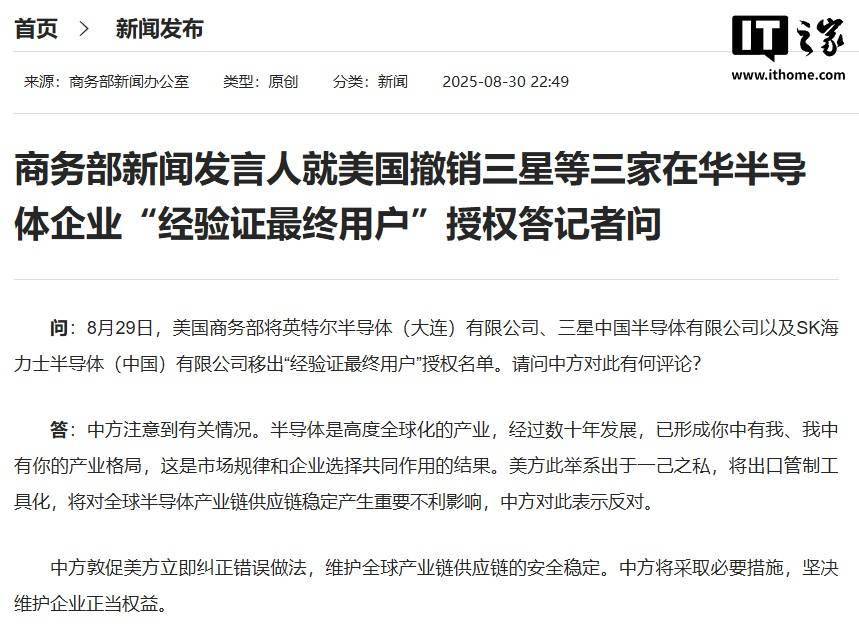
外交部发言人:中方反对美将半导体企业移出VEU名单
半导体行业观察· 2025-08-31 04:36
Core Viewpoint - The Chinese Ministry of Commerce urges the U.S. to correct its decision to revoke the "Validation of End User" (VEU) authorization for three semiconductor companies operating in China, emphasizing the negative impact on the global semiconductor supply chain [1]. Group 1 - The U.S. Department of Commerce announced the removal of Intel Semiconductor (Dalian) Co., Samsung China Semiconductor Co., and SK Hynix Semiconductor (China) Co. from the VEU list [1]. - The Chinese spokesperson highlighted that the semiconductor industry is highly globalized and interconnected, shaped by market forces and business decisions over decades [1]. - The U.S. action is seen as driven by its own interests, transforming export controls into a tool that could severely disrupt the stability of the global semiconductor industry and supply chain [1]. Group 2 - The Chinese government calls for the U.S. to immediately rectify its actions to maintain the security and stability of global industrial and supply chains [1]. - The spokesperson indicated that China would take necessary measures to firmly protect the legitimate rights and interests of Chinese enterprises [1]. - The exemptions for these companies date back to 2023, when the Biden administration allowed South Korean chip manufacturers to procure equipment necessary for their operations in China [1].
商务部就美国撤销三星等三家在华半导体企业“经验证最终用户”授权答记者问
21世纪经济报道· 2025-08-31 00:34
有记者问,8月29日,美国商务部将英特尔半导体(大连)有限公司、三星中国半导体有限公 司以及SK海力士半导体(中国)有限公司移出"经验证最终用户"授权名单。请问中方对此有 何评论? 商务部新闻发言人表示,中方注意到有关情况。半导体是高度全球化的产业,经过数十年发 展,已形成你中有我、我中有你的产业格局,这是市场规律和企业选择共同作用的结果。美方 此举系出于一己之私,将出口管制工具化,将对全球半导体产业链供应链稳定产生重要不利影 响,中方对此表示反对。 8月30日,商务部新闻发言人就美国撤销三星等三家在华半导体企业"经验证最终用户"授权答 记者问。 中方敦促美方立即纠正错误做法,维护全球产业链供应链的安全稳定。中方将采取必要措施, 坚决维护企业正当权益。 来源丨央视新闻 编辑丨金珊 SFC ...